











Relevant Discussion: (FAR 71.41, 91.117, 91.126, 91.127, 91.129, 91.130, 91.131, 91.155, 91.215, AIM 3-2-1, 3-2-3)
Everything Explained: Standard Class B Airport
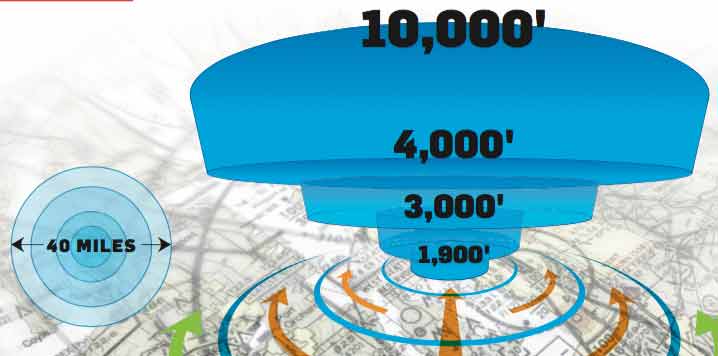

Key Takeaways:
- Class B airspace surrounds the busiest airports, is uniquely tailored (often described as "upside-down wedding cakes"), and strictly requires explicit ATC clearance and continuous two-way radio communication for entry.
- Operations within Class B typically demand at least a private pilot certificate (prohibiting solo student, sport, and recreational pilots) and specific equipment, including a Mode C transponder and ADS-B Out within a 30 nm radius.
- Key operational rules include VFR minimums of 1,000 ft ceiling, 3 sm visibility, and clear of clouds, alongside a firm speed limit of 250 KIAS below 10,000 ft MSL (or 200 KIAS below the Class B floor or in a VFR corridor), which ATC cannot override.
Key takeaways sponsored by Aviator Pro | Start Your Training ->
See a mistake? Contact us.

