How It Works: Yaw Damper

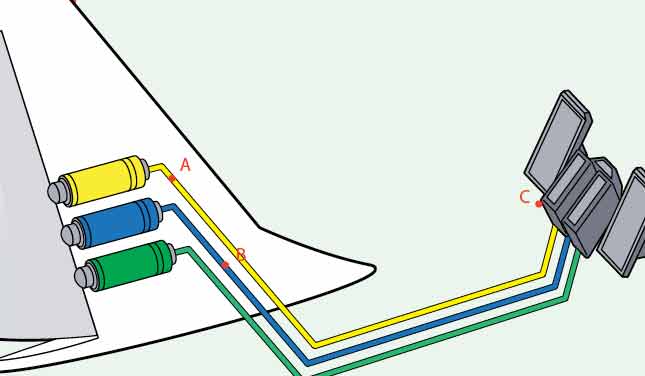
A) The soul of a yaw damper rests with rudder servos, accelerometers and rate sensors, often located in the tail of the airplane. B) In most aircraft, the yaw damper sensors are constantly talking back and forth to the primary onboard reference system, such as the ADAHRS. C) The yaw damper on some aircraft turns on and off automatically, making it one more thing the PIC need not worry about forgetting. Illustration by Tim Barker
Gemini Sparkle

Key Takeaways:

  • A yaw damper automatically stabilizes an aircraft around its vertical axis by applying rudder inputs, reducing fishtailing in single-engine planes and inhibiting "Dutch roll" in swept-wing aircraft for a smoother, more comfortable, and coordinated flight.
  • While some older systems are pilot-controlled, modern yaw dampers can engage and disengage automatically based on altitude, continuously monitoring flight parameters to provide stability and envelope protection.
  • Pilots should be aware that operating with an engaged yaw damper during critical phases like takeoff (in large aircraft) or crosswind landings can limit control authority or complicate emergency procedures, potentially leading to over-reliance and reduced manual rudder coordination skills.
See a mistake? Contact us.

In its most basic form, a yaw damper inhibits movement of an aircraft around its vertical axis, performing like an automated set of feet on the rudder pedals.

A yaw damper pulls aircraft movement information from a series of accelerometers or rate sensors in the rudder and translates it into the proper amount of calming rudder inputs. In a single-engine airplane, the yaw damper smooths out the left-right movements of the vertical stabilizer, often referred to as fishtailing, creating a more comfortable ride for passengers.

The yaw damper on a swept-wing aircraft, especially one with a T-tail, also inhibits the Dutch roll tendency, a wallowing combination of yawing and rolling motions of the wing. When a Dutch roll occurs on an aircraft without a damper, any yawing motion can create corkscrew-like oscillations that continue until they either die out naturally or escalate.

In older straight-wing aircraft, yaw damper functions can be selected on or off by the pilot, while in more recent airplanes, such as the latest model Cirrus SR22, the yaw damper engages automatically once the aircraft climbs above 200 feet agl. The damper system automatically disengages when the airplane descends below 200 feet agl on approach to landing.

Cirrus yaw damper servos in the tail of the aircraft are in constant communication with most of the avionics on board, including the air-data attitude heading reference system. The ADAHRS is, in fact, constantly monitoring every pitch, roll and yaw movement, and the Cirrus provides envelope protection whether the autopilot is engaged or not.

If the computers connected to the rudder sense a yaw movement beyond their preset limit, the yaw damper sends a signal to the rudder servo indicating the proper amount, direction and frequency of rudder pressure that should be added in order to calm the event. Landing an SR22 with the yaw damper on means the pilot must overcome the automation-induced control forces.

On many swept-wing airplanes, the yaw damper is switched on or off from the cockpit, often due to transport category certification requirements.

Attempting a takeoff in a large aircraft with the yaw damper engaged could lead to the airplane correcting on its own for adverse yaw in the event of a power-plant failure. That makes identification of the failed power plant more difficult.

Landing a swept-wing aircraft with the yaw damper switched on, especially in a strong crosswind, could limit the pilot’s available control authority at time of touchdown.

Using the yaw sensors in the tail of the aircraft, a yaw damper will add just the right amount of rudder in a turn for the angle of bank to ensure coordination. Yaw damper automation might explain why so many pilots never touch the rudder pedals when making turns, whether they’re flying a jet or a Cirrus.

A downside for pilots used to flying aircraft with yaw dampers occurs when they transition back to an airplane without a yaw damper or one that’s inoperative.

The first few hours of watching an airplane skid or slip through turns is normally all that’s needed to reacquaint a pilot with the need to decide on their own how much rudder to add to produce coordinated turns.

Rob Mark

Rob Mark is an award-winning journalist, business jet pilot, flight instructor, and blogger.

Ready to Sell Your Aircraft?

List your airplane on AircraftForSale.com and reach qualified buyers.

List Your Aircraft
AircraftForSale Logo | FLYING Logo
Pilot in aircraft
Sign-up for newsletters & special offers!

Get the latest stories & special offers delivered directly to your inbox.

SUBSCRIBE