














Register

U.S. Deploys Long-Range Bombers for Airstrikes in Iraq, Syria

The barrage against 85 targets employed more than 125 precision munitions.

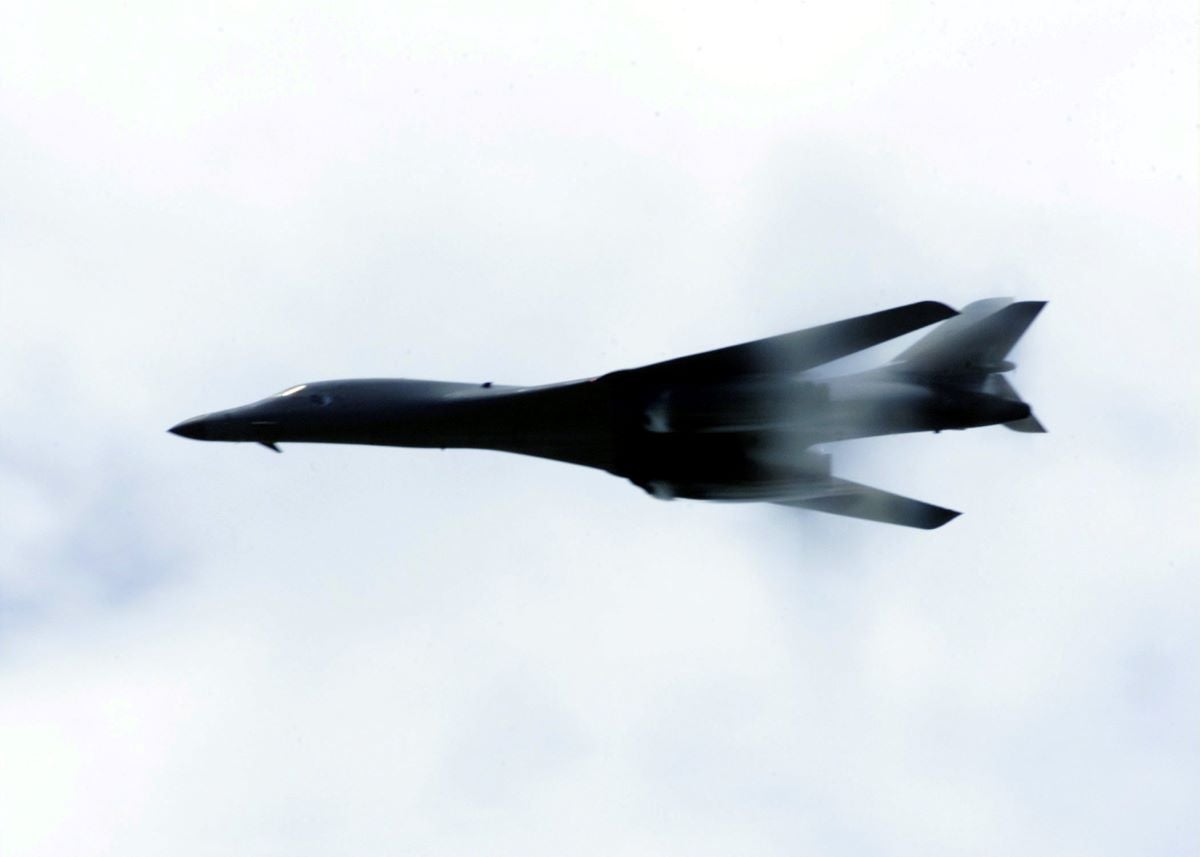
According to a report, B-1B Lancers (such as this one) were used in U.S. airstrikes in Iraq and Syria on Friday. The B-1B's three internal weapons bays can accommodate up to 84 MK-82 general purpose bombs or MK-62 naval mines, 30 CBU-87/89 cluster munitions, or CBU-97 Sensor Fused Weapons. [Courtesy: U.S. Air Force]
Gemini Sparkle

Key Takeaways:

  • The U.S. military conducted extensive airstrikes in Iraq and Syria, targeting Iran’s Islamic Revolutionary Guard Corps (IRGC) Quds Force and affiliated militia groups.
  • These strikes, involving over 85 targets and long-range bombers, were a direct response to a recent drone attack in Jordan that killed three U.S. soldiers.
  • Defense Secretary Lloyd Austin stated this was "the start of our response," with additional actions expected to hold those accountable for attacks on U.S. forces.
  • Targeted facilities included command and control centers, intelligence centers, and storage for rockets, missiles, and unmanned aerial vehicles.
See a mistake? Contact us.

The U.S. military deployed long-range bombers as part of a barrage of airstrikes in Iraq and Syria on Friday, targeting Iran’s Islamic Revolutionary Guard Corps (IRGC), Quds Force, and Iranian-backed militia groups, according to U.S. Central Command (CENTCOM).

The airstrikes, which began around 4 p.m. EST, were conducted on seven facilities and employed more than 125 precision munitions. The attack comes less than a week after a one-way-attack drone struck a remote outpost in Jordan, killing three U.S. Army Reserve soldiers and injuring more than 40 others. 

Ready to Sell Your Aircraft?

List your airplane on AircraftForSale.com and reach qualified buyers.

List Your Aircraft
AircraftForSale Logo | FLYING Logo
Pilot in aircraft
Sign-up for newsletters & special offers!

Get the latest stories & special offers delivered directly to your inbox.

SUBSCRIBE

