











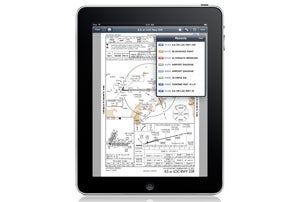


Until recently, Electronic Flight Bags (EFBs) were typically thought of as large computer devices mounted in the cockpits of high-end jets and airliners. They usually relied on a permanent mounting fixture, and needed to be hard-wired into the aircraft’s electrical system. Once installed, these EFBs provided electronic charts, moving map displays and weather in the cockpit. While they could be adapted to general aviation aircraft, the costs usually outweighed the benefits, and they never really gained widespread popularity. During this time consumer electronics manufacturers sold more affordable, tablet-based computers that could be modified to serve as an EFB, but it took a lot of work on the pilot’s end to load software and string around wires in the cockpit.
Apple changed all of this with the release of the iPad tablet computer in the spring of 2010. The iPad solved many problems found in previous EFBs – it has a 10-hour battery life (no need for aircraft power), slim form factor (easy to mount), inexpensive (starts at $499), stable operating system (reliable) and most importantly, offers an impressive collection of third-party aviation software applications, a.k.a. “apps”. With an app like ForeFlight or Garmin Pilot My-Cast, you can easily access every VFR or IFR chart for the entire United States, and see your aircraft depicted on a large moving map. You can quickly view airport information, look up ATC frequencies and even file flight plans on the ground before a trip.

