
Register

A FLYING Origin Story and What Comes Next

Nearly 100 years after its initial issue, the magazine is still inspiring the nation and seeking to meet the needs of the pilots it serves.

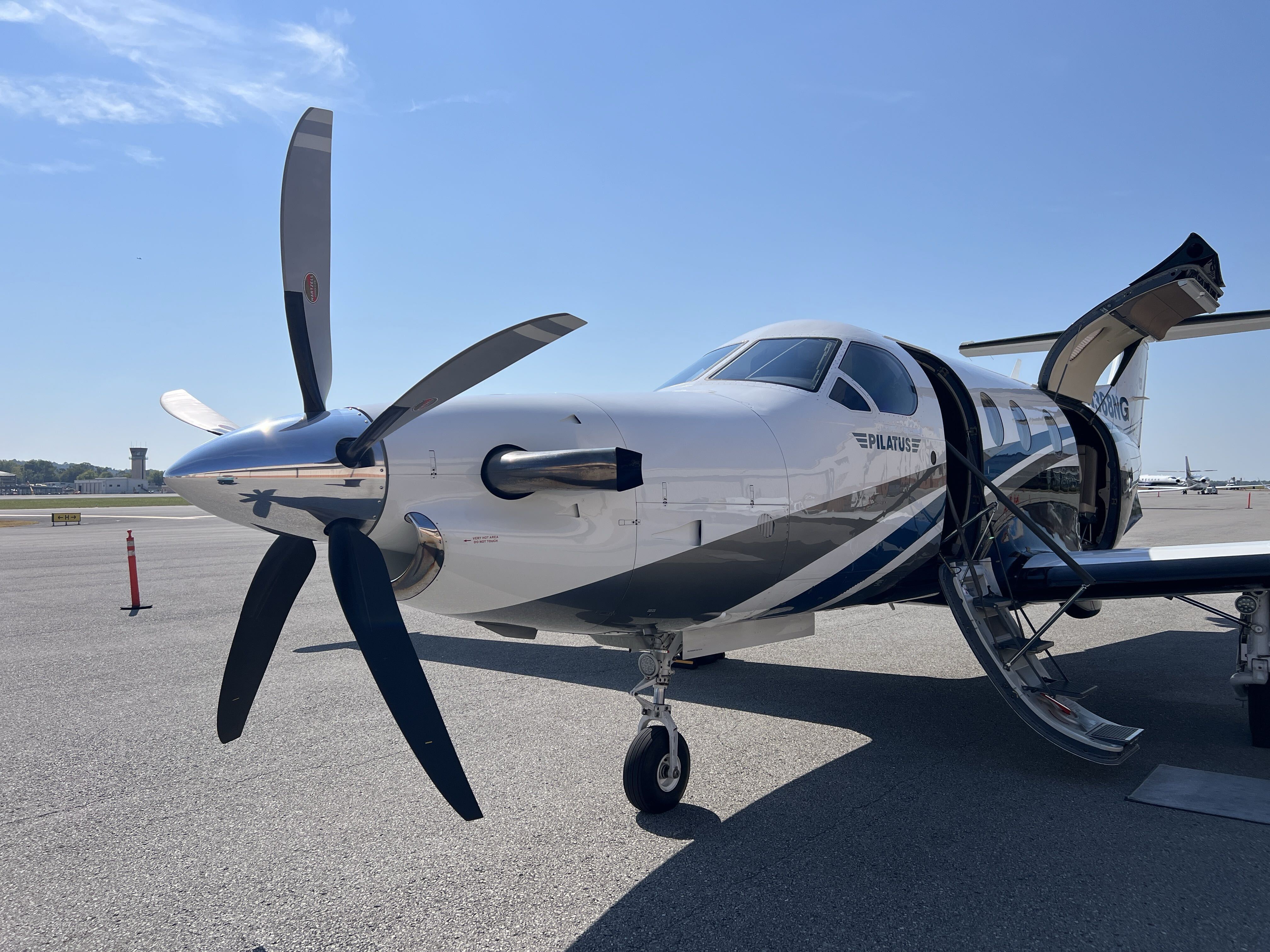
Pilatus aircraft [Credit: Tripp Thurston]

It was the summer of 1927, and Charles Lindbergh had successfully flown the Spirit of St. Louis on a solo non-stop transatlantic flight from New York to Paris that May.

The country was abuzz with possibility, and the formerly impoverished immigrant family of Meyer Guggenheim had gone below agl 0 to build a mining fortune that his family would carry into the skies.

The Guggenheim Tour of 1927 took Charles Lindbergh on a celebratory and promotional flying tour across the United States, visiting 48 states in the promotion of aviation. On August 15, 1927, Charles Lindbergh arrived in Chicago in what would become the origin story for FLYING.

This piece is about how one pilot created a magazine that would grow into more than a dozen recognized aviation brands and include marketplaces, intelligent resources, and an aircraft finance brokerage to serve readers in ever changing ways. 

Popular Aviation

William Ziff was a World War I aviator who, following the war, started an advertising agency for African American newspapers, based in Chicago. By the time Charles Lindbergh arrived that summer, Ziff had freshly entered the publishing world directly, with a magazine called American Humor.

While the hobby magazines and comic books would follow in later decades well after the Roaring Twenties, Ziff followed the momentum surrounding Lindbergh and the Spirit of St. Louis with an initial issue of Popular Aviation (now FLYING Magazine) that same month. 

From that point on, FLYING would become the most widely read aviation magazine, covering the rise of Cessna, the advancements during World War II, the golden age of aviation, the space race, and so many makes and models since.

FLYING’s issues have included notable editors like military aviator and poet Gill Robb Wilson, J. Mac McClellan, and Richard Collins. The content that has inspired millions of readers over the years came to FLYING in part from a roster of well-loved contributors like Martha Lunken, Len Morgan, Gordon Baxter, and Peter Garrison, who served at one point as an associate editor.

While ownership of the publication eventually changed hands from Ziff Davis, and even left the United States for a time, FLYING continued its role as a central figure in the aviation community, a partner of trade associations, and a conduit for the next generation of technologies to reach its avid audience. 

New Age for Aviation

In 2021, ownership returned to America in a major way.

From Ziff’s first issue, which said “the air is free—no rails—no streets”, FLYING was meant to be aspirational and evoke the imagination of pilots and those who dream beyond the confines of today.

It reminds me of a parallel explanation from a captain describing his vessel, popularized on the silver screen in the Curse of the Black Pearl, that, “It’s not just a keel and a hull and a deck and sails, that’s what a ship needs. What a ship is… is freedom.” For those who live to rotate off the runway, everything from the prop to the elevator, every component of a spec sheet, is how we access the freedom found at FL 050, FL 100, and FL 510. 

That freedom and the way we interact with it have changed over the decades.

While six packs still have their place in aviation, new advancements in glass cockpits, including the recent announcements for the Garmin Axis and Airhart Avionics, are changing the narrative, aircraft like the Pilatus PC-12 and Cessna Caravan are ever expanding versatility, and even the backcountry has a turbine now, thanks to the Cubcrafters Carbon Cub ULT.

Powerplant technology continues to evolve, and the ownership implications are improving as gains in fuel efficiency lower direct operating costs and manufacturers like Lycoming extend TBO thresholds. Adding in Autoland safe return becoming standard on many models, and the kind of space in a cabin that means my 6-foot-4-inch frame doesn’t need a yoga lesson to reach the cockpit, and the premiumization of aircraft is moving ahead as fast as any other aspect.

Even my own local airport (KFGU) is stepping up its game, recently adding a jet-A fuel truck and approving a new PAPI lighting system.  

Adapting and Expanding in the New Age

These changes in how we physically interact in aviation are echoed in how our audience finds and interacts with aviation content.

Editors like FLYING editor-in-chief Jessica Ambats, Plane + Pilot editor-in-chief Cayla McLeod, and AvBuyer commissioning editor Matt Harris all face this challenge of evolving content and meeting readers where they are, whether that is in print, in digital editorials and video, through both virtual and live experiences, or at the transaction level.

For most pilots, whether first-time aircraft buyers or those with decades of time spent in their hangar, buying an aircraft is an infrequent event. The advancements in aircraft mean that those who bought an aircraft last decade are met with new aircraft comparisons and new buying and ownership considerations this time around. 

AvBuyer already had the model—a respected marketplace matched with leading editorial intelligence providing the type of environment where an avid buyer becomes a well-informed owner. Firecrown Media added Aircraft for Sale to answer the same need in the owner-flown market, including high-performance pistons, MOSAIC-ready aircraft, and experimental planes.

But the owner-flown market faces a different set of realities when it comes to actually transacting on aircraft, most notably perhaps in financing. 

Reality for Aircraft Financing

Aircraft lending is one of those areas that underwrite just like any personal or commercial loan until you reach the other half of the underwriting: the collateral analysis. Banks, which underwrite both the ability to make payments and the value of the aircraft, generally follow one or more of these three options. 

  • The bank or credit union is willing and able to figure out an aircraft loan on a one-off for a particular client on a legacy aircraft make and model. This is usually inefficient, and as a career banker, it is never fun to explain a one-off to a bank regulator. 
  • The second option is to acknowledge the nuances of collateral that flies with parts that time out and a title company hundreds of miles away in Oklahoma, and specialize in aviation lending. Dedicating bankers and staff to specialized lending teams means the bank believes there will be enough business to make the investment in people and technology worth it, or that there is a competitive disadvantage if the bank does not staff the team. This competitive analysis most directly impacts the ultra-high-net-worth clients found in private banking groups, or middle-market and corporate business clients, both of which tend toward the turboprop and jet markets. This, and the efficiency that comes in making fewer, larger loans, is why so many regional and national banks have minimum thresholds for aircraft lending, usually starting around $3-5 million.
  • The third option is to stick with what you know, and just say no. 

While bankers struggle with “no” more than it may seem, banks and credit unions do have to evaluate these options and make a choice. It is exactly this choice that makes finding the right financing resource a black hole in aviation.

Does my bank do aircraft financing? Does my mission or my aircraft fit what they are willing to lend on? Does my bank do this often enough to understand the value of logbooks, why we speak in hours, not years, and does my bank have the relationships established to keep this lending experience from becoming as bumpy as a new pilot’s first landing? 

Case for FLYING Finance

In July 2023, the ownership behind FLYING and AvBuyer acquired a Las Vegas-based aircraft financing brokerage called Sky Allies Capital. Aptly based in the city that also holds NBAA-BACE each fall, the company was rebranded FLYING Finance and expanded to support what is actually in our readers’ hangars: experimentals, light sport aircraft, high-performance pistons, turboprops, and jets.

The narrow version of why was that FLYING Finance could increase liquidity in the fragmented private aviation marketplace. The truer version is that FLYING’s readers were changing how they found aircraft, how they researched them, and how they bought them, and financing needed to change with them.

Fast-forward to today and FLYING Finance has helped hundreds of pilots secure financing for 60-year-old Piper Cherokees, three-year-old Piper M350s, brand-new Cirrus SR22Ts, and more Cessna 182 aircraft than any other make and model. FLYING Finance understands the Alaskan backcountry and the density altitude of southern summers, and has financed aircraft in 44 of the 50 states.

FLYING Finance has earned the trust of brands reshaping the marketplace with MOSAIC-ready aircraft, including Bristell, Sling Aircraft, and Tecnam, as their official financing partner. The stories behind those numbers are the same ones that fill FLYING’s pages every month: pilots chasing an aspiration, working through a decision, and letting FLYING be part of how they get there.

Whether it’s one of the FLYING Finance commercial-rated pilots walking a client through logbooks alongside an AvBuyer comparison piece, or one of the financing specialists spending the day with funding partners and escrow title companies, the moment a pilot takes delivery is the same moment FLYING has been chasing since Ziff put out that first exhilarating issue in 1927.

What Comes Next

“The air is free—no rails—no streets.” Holding onto that kind of freedom means aviation has to stay honest, transparent, and accessible for this generation of pilots, and the next one behind them. That’s the bar FLYING Finance has been building toward this year: a fuller library of tools and guides on aviation financing, one of the largest free databases for aircraft comparison anywhere, live rates and the Federal Reserve benchmarks behind them posted in the open instead of locked behind a phone call, and real deal counts broken out by state and by aircraft segment so a buyer can see the market instead of taking our word for it.

FLYING Finance’s Market Coverage now walks through all three major segments, backed by the order backlogs of the manufacturers building these aircraft.

More is coming from FLYING. But no amount of it changes the actual job: being there for the reader in front of us, whether that’s a first-time buyer or a pilot trading a piston for a turbine. 

Ziff didn’t set out in 1927 to build a financing company—he set out to build a magazine that promoted innovation in aviation and took pilots seriously. Everything since has been the same publication finding new ways to do that: a broadening to include Plane + Pilot, KITPLANES, Aviation Consumer, AVweb, and other brands; a marketplace with intelligence from AvBuyer and Aircraft For Sale; a flight school guide when options became more varied; and for the last few years, financing, because making getting into the left seat accessible means more than passing the checkride. 

Whether you just took your discovery flight or you’ve flown across the world, you’re the reason FLYING exists. If you’re curious about ownership, or you already have your next aircraft picked out, reach out—pilot to pilot—at 702-757-1176 or flyingfinance.com.


Tripp Thurston

As Group President and CFO of Firecrown Media and COO of Flying Finance, Tripp Thurston brings two decades of commercial banking and specialized lending experience to the FLYING audience. Having served as both a regional credit approver and a Market President, Tripp has a unique "both sides of the desk" perspective and a candid, down-to-earth style of explaining complex transactions. Based north of Atlanta in the Chattanooga area, he spends his downtime exploring the skies in different aircraft or traveling with his wife, two sons, and their husky-lab.

Duffy Ups DOT’s ATC Modernization Ask to $30B

New funding appeal is more than what officials previously requested or said they would be seeking.

U.S. Transportation Secretary Sean Duffy stands at a podium
Transportation Secretary Sean Duffy seeks $30 billion for ATC modernization on top of the $12.5 billion that Congress already allocated for the effort. [Credit: Joshua Sukoff/Shutterstock]

The Transportation Department is upping its funding request for air traffic control (ATC) modernization by several billion dollars as the effort faces cost and schedule concerns.

Reuters reported Tuesday that DOT Secretary Sean Duffy said the agency is “going to ask Congress for $30 billion.” Congress in 2025 allocated $12.5 billion toward the project, known as the Brand New ATC System (BNATCS), and Duffy’s appeal would put the total cost at $42.5 billion.

The DOT in 2025 said the full effort, which involves upgrading ATC facilities, infrastructure, and software, would cost about $31.5 billion.

Duffy and other officials have described Congress’ $12.5 billion allocation as a “down payment.” In August, the secretary said the DOT “would love” another $20 billion for BNATCS by year’s end but would settle for $10 billion. He added that in that case a “second $10 billion” would be needed to fund the “actual bricks and mortar” for new ATC towers and facilities.

Per Reuters, about $10 billion of Duffy’s new $30 billion request would fund replacement of aging ATC towers. Another $10 billion would cover telecommunications and other technology systems, and a third $10 billion would go toward airport facility improvements.

The funding would also support the FAA’s expansion of Strategic Management of Airspace, Routes and Trajectories, or SMART—an AI-based platform that rolled out initially in the Washington, D.C. area this week. The DOT said SMART will synthesize information from hundreds of data streams and use it to make recommendations to controllers, which they could accept or decline.

FAA Administrator Bryan Bedford in August said that BNATCS would “not be successful” unless SMART is rolled out in tandem with the project’s other upgrades.

Duffy’s increased ask follows a telecommunications failure at the FAA’s Philadelphia Terminal Radar Approach Control (TRACON) facility Monday, which disrupted flights throughout the Northeast. The same facility was involved in another series of communications failures affecting New Jersey’s Newark Liberty International Airport (KEWR) in 2025.

Bedford this month said that old copper wiring supporting the ATC telecommunication system would be completely upgraded to fiber, satellite, and wireless connections by September 2027. He said 64 percent of that work is already complete but that other portions of BNATCS face delays.

Upping the Ante

Duffy’s $30 billion request is more than what officials previously requested or said they would be seeking, and it would push BNATCS’ budget higher than the FAA’s previous NextGen modernization effort.

Bedford earlier in September asked Congress for “at least $10 billion” more and said its failure to fund the rest of the effort could “see the [National Airspace] System slip into higher delays, higher cancelations, and a less resilient airspace.”

Bedford said that Phase 1 of BNATCS is “costing $16 billion,” which is what it had requested from Congress in 2025, but the FAA “just didn’t get the funding that we requested” and is now “funding that gap.” He added that “some of the slipping that we’re seeing…looks like it may put pressure on delivering” Phase 1 by 2028.

The Government Accountability Office (GAO) found that NextGen delivered only 16 percent of its promised benefits after 20 years and $36 billion spent. The first phase of BNATCS, which began in 2025, has a much shorter time horizon of about three years.

A more recent GAO report raised concerns that BNATCS could go the way of NextGen without accurate cost estimates and organized planning, which it said the FAA lacked. Bedford pushed back on that assessment and said the agency has “lifecycle cost estimates for the entirety of the project” and a “highly integrated master work schedule.”

Bedford said Congress’ $12.5 billion is “allowing us to build a solid foundation” but that significantly more is needed. The House Appropriations Committee in June approved a $4 billion allocation to the FAA’s facilities and equipment (F&E) account for fiscal year 2027, but Bedford said only $1.5 billion of that is earmarked for ATC modernization.

He said the rest would be used to sustain legacy ATC systems.

“We’re spending the majority of our budget keeping the lights turned on,” Bedford said.

Jack Daleo

Jack is a staff writer covering advanced air mobility, including everything from drones to unmanned aircraft systems to space travel—and a whole lot more. He spent close to two years reporting on drone delivery for FreightWaves, covering the biggest news and developments in the space and connecting with industry executives and experts. Jack is also a basketball aficionado, a frequent traveler and a lover of all things logistics.

Lone Star Flight Museum Hosts 12th Annual Girls in Aviation Day

More than 500 participants gathered in Houston for hands-on STEM activities, flight simulators, and aerospace career inspiration.

Houston’s Lone Star Flight Museum showcases age-appropriate programs during the 12th annual Girls in Aviation Day on Saturday, September 19. [Credit: Lone Star Flight Museum]

Aircraft tours, flashlight construction, and drone soccer highlighted the activities at the Lone Star  Flight Museum in Houston on Saturday as the facility commemorated the 12th annual Girls in Aviation Day.

This is the third year that ExxonMobil has supported the event, making it possible for participants to have free access to the museum for a day filled with aviation-inspired curriculum and activities.

According to Jackie Drake, director of communications for the museum, the event drew more than 500 girls and their parents and siblings from across the Lone Star State. The girls watched demonstrations of technology and participated in hands-on activities designed to spark an interest in STEM vocations.

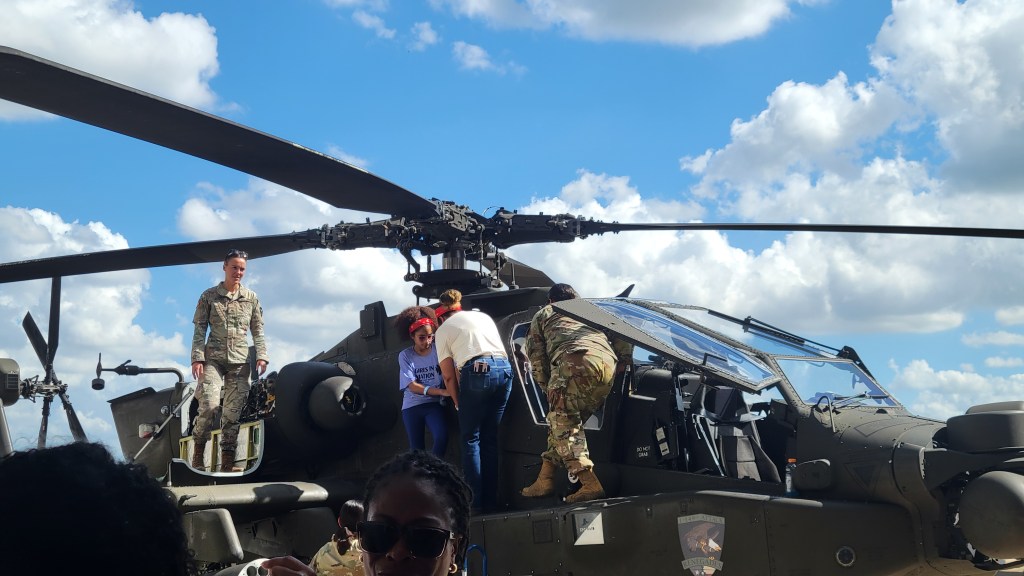
Among the activities were aircraft tours, where the participants were allowed to climb aboard and talk to the pilots. The girls were also given the opportunity to “fly” the LSFM’s state-of-the-art flight simulators for what museum officials described as an immersive experience well beyond those of traditional video games.

Aircraft tours are taken at Houston’s Lone Star Flight Museum during the 12th annual Girls in Aviation Day on Saturday, September 19. [Credit: Lone Star Flight Museum]

One of the more popular hands-on activities was drone soccer, which showcased technology, precision flying, and teamwork.

Because there is more to aviation than being a pilot—for example, engineering—there was also the opportunity to build a working flashlight.

“As they assembled the components, they learned how power sources, switches, and circuits work together to create light, concepts that are fundamental to the technologies used in aircraft, spacecraft, and countless aerospace systems,” Drake said. “As they watched their flashlights illuminate for the first time, this experience connected STEM to science and technology, engineering and aviation.”

There was also the opportunity to learn how to rivet as participants had a chance to create their own commemorative metal dog tag. Riveting has been used in aircraft construction since the 1930s and remains a critical and marketable skill.

Space Technology

Houston has been part of the space program since the 1960s, and one of the more popular demonstrations featured a modern-day spacesuit.

“ILC Dover Aerospace brought ‘Astro’ to Girls in Aviation Day [GIAD] to demonstrate the mobility of their next-generation spacesuit,” Drake said. “Participants were given a behind-the-scenes look at the technology that helps astronauts work and explore in space. Astro showcased advanced mobility features that allow astronauts to bend, reach, kneel, and perform complex tasks with greater ease while in space.”

Houston’s Lone Star Flight Museum showcases age-appropriate programs during the 12th annual Girls in Aviation Day on Saturday, September 19. [Credit: Lone Star Flight Museum]

The demonstration showed the girls the challenges engineers face when designing protective and user-friendly gear for astronauts.

“This experience was a perfect pairing for Girls in Aviation Day,” Drake said. “It was the epitome of how we connect the dots between careers in aerospace, aviation, engineering, and science and what that looks like as a career.”

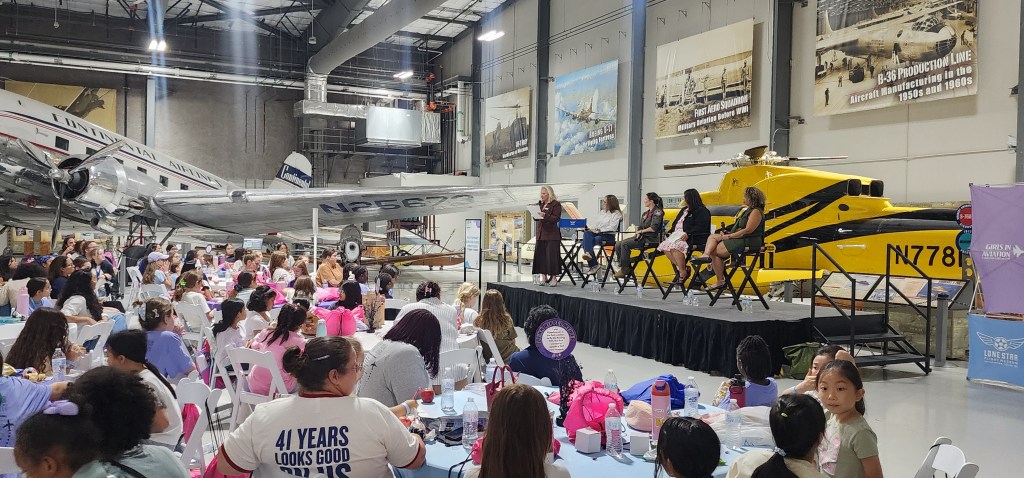
The event also included a luncheon with guest speakers from the aerospace industry, ranging from corporate aviation to airline safety, a U.S. Air Force fighter pilot, and a spacesuit engineer.

Panelists speak at Houston’s Lone Star Flight Museum during the 12th annual Girls in Aviation Day on Saturday, September 19. [Credit: Lone Star Flight Museum]

GIAD has always been part college and career fair, and both were well-represented with people on hand to explain the scope of their jobs and how to prepare for a post-secondary education and a career in the aerospace industry.

About the Museum

The Lone Star Flight Museum is located at Ellington Airport (KEFD) in Houston.

The 130,000-square-foot facility also houses the Texas Aviation Hall of Fame and an eclectic collection of historic commercial, general aviation, and military aircraft, many of which are airworthy.

Warbird rides are available, and the museum hosts STEM-focused educational programs year-round through its Aviation Learning Center and Flight Academy.

Meg Godlewski

Meg Godlewski has been an aviation journalist for more than 24 years and a CFI for more than 20 years. If she is not flying or teaching aviation, she is writing about it. Meg is a founding member of the Pilot Proficiency Center at EAA AirVenture and excels at the application of simulation technology to flatten the learning curve. Follow Meg on Twitter @2Lewski.

This 2001 Cirrus SR22 G1 Is a Transformative ‘AircraftForSale’ Top Pick

Upgraded GTN650s, modern Aspen glass, and factory-rebuilt powerplant highlight composite single-engine platform.

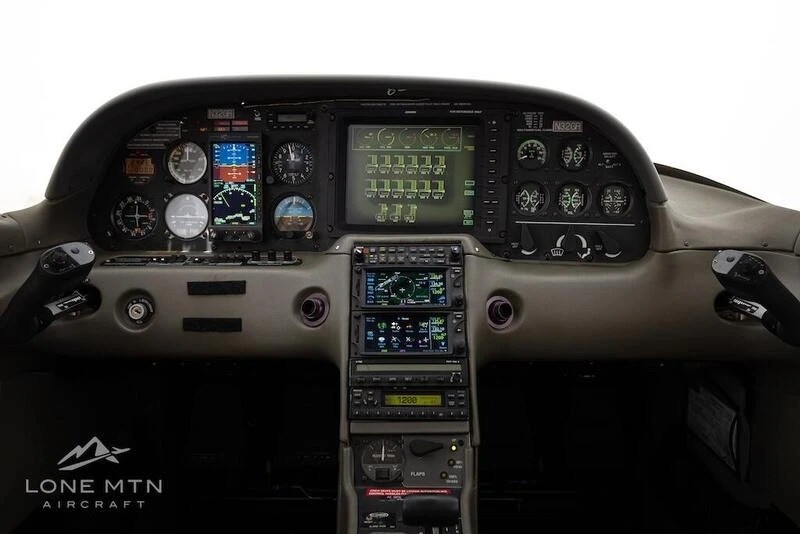
2001 Cirrus SR22 G1 [Credit: Lone Mountain Aircraft]

Every day, the team at Aircraft For Sale chooses an airplane that catches our attention because it is unique, a good deal, or has other qualities we find interesting. You can read Aircraft For Sale: Today’s Top Pick at FLYINGMag.com daily.

Today’s Top Pick is a 2001 Cirrus SR22 G1.

When Cirrus introduced the SR22 G1 in 2001, it forever transformed the general aviation landscape.

The original SR22 set a bold new standard for personal transportation by standardizing the groundbreaking Cirrus Airframe Parachute System (CAPS), replacing conventional control yokes with sidesticks, and prioritizing automotive-style cabin ergonomics. The G1 proved that high-speed cross-country cruising and advanced safety features could seamlessly coexist—ultimately establishing the blueprint for modern owner-flown, single-engine aircraft.

Boasting 2,840 hours on the airframe since new, this particular damage-free G1 presents an outstanding opportunity for prospective buyers. The exterior is elegantly finished in an overall white base with mountain green and silver striping, while maintaining a highly capable 1,122-pound useful load.

Stepping through the upward-swinging doors, pilots and passengers will find a comfortable, well-appointed beige leather interior. The cabin environment is thoughtfully designed to maximize comfort during long flights, keeping crew and guests relaxed from takeoff to touchdown, while benefiting from practical additions like Bose ANR jacks.

Firepower for this composite cruiser comes from a 310 hp Continental IO-550-N engine that was factory-rebuilt in 2020 and features a six-point engine mount. Showing just 650 hours since the factory rebuild, it drives a Hartzell three-blade propeller that also has logged 650 hours since overhaul, ensuring reliable performance for years to come. Additional firewall-forward upgrades include an Airwolf oil separator and a chrome spinner.

2001 Cirrus SR22 G1 [Credit: Lone Mountain Aircraft]

Navigating the skies is a modernized affair thanks to a substantially upgraded avionics suite anchored by an Aspen EFD1000 EFIS and dual Garmin GTN650 GPS/nav/com units. Situational awareness is further elevated by a Garmin GDL88 ADS-B transceiver, Garmin Flight Stream 210, Garmin GTX 327 transponder, Arnav engine monitoring, Garmin GMA 340 audio panel, and S-TEC 55X autopilot with altitude preselect.

Listed at $264,900, this Cirrus SR22 G1 is an exceptionally clean and well-kept machine. With its annual inspection valid through February 2027 and CAPS parachute repacked through May 2032, the aircraft includes transition training through the Cirrus Embark Program and is primed for its next owner.

If you’re exploring ownership options, FLYING Finance can help get you airborne. Use our airplane loan calculator to estimate your monthly payments, or connect with an aviation finance expert at flyingfinance.com.
FLYING Staff

FLYING Magazine is a one-stop resource for everything aviation, including news, training, aircraft, gear, careers, photos, videos, and more.

Is Washing Airplane Part of the Annual?

FAA provides guidance for owners and mechanics.

Owner says their airplane didn’t get a bath, and wonders why not. [Credit: FLYING Archive]

Question: My GA plane recently went through its annual inspection. The shop didn’t wash the airplane. I queried why and was told, “Nobody washes airplanes anymore.” Isn’t this in Part 43, Appendix D, of the FARs? How else can you inspect every square inch of an aircraft’s exterior without giving it a bath? I wonder what other shortcuts were taken with my airplane behind those closed doors, hermetically sealed against aircraft owners’ eyes, by order of insurance underwriters. I’ve heard of owner-assisted maintenance, and I am pretty handy with tools, but the big-box shops won’t let me place one foot on their epoxy-painted floors.

Answer: According to the FAA: “Before an annual or 100-hour inspection, the FAA requires that the aircraft and engine are thoroughly cleaned to ensure there are no airworthiness issues. The FAA provides guidance on cleaning and preventing corrosion damage, which includes instructions on washing the aircraft. Maintenance personnel should follow applicable aircraft and engine manufacturer maintenance instructions for aircraft-specific cleaning methods, materials, and precautions.”


Ask us anything you’ve ever wanted to know about aviation. Our experts in general aviation, flight training, aircraft, avionics, and more may attempt to answer in a future article. Email your questions here.

Meg Godlewski

Meg Godlewski has been an aviation journalist for more than 24 years and a CFI for more than 20 years. If she is not flying or teaching aviation, she is writing about it. Meg is a founding member of the Pilot Proficiency Center at EAA AirVenture and excels at the application of simulation technology to flatten the learning curve. Follow Meg on Twitter @2Lewski.

Pilot Finds His Way to Unexpected Classroom

Decades of aviator experience began not in a sim, but with a book, a mentor, and a high school job.

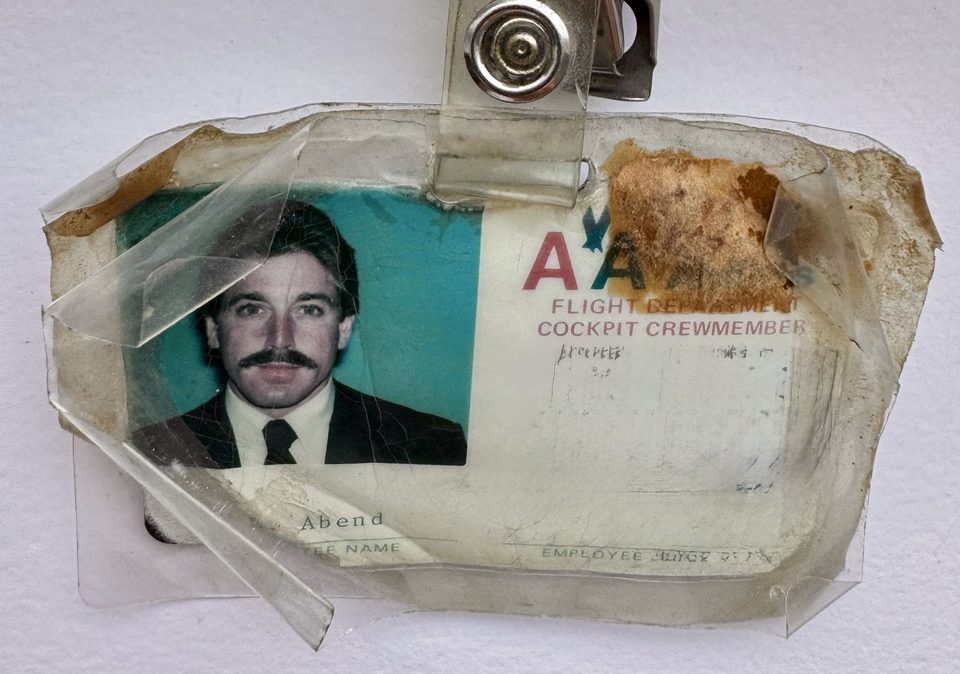
One of the author’s weathered ID badges from American Airlines. [Credit: Les Abend]

When us airline types are asked, “when and where did you first begin training?” we usually respond with day one of company basic indoctrination at our respective training centers. But in retrospect we forget that training began much before our airline employment, with many of us experiencing the gamut from casual to highly structured.

For me, training began with the Private Pilot’s Handbook of Aeronautical Knowledge, at age 15, which was about the time I committed to becoming an airline pilot, specifically for American Airlines. Lacking any firm strategy on just how to finance my budding addiction, I determined it was best to start reading the handbook from cover to cover despite minimal comprehension. 

This Article First Appeared in FLYING Magazine

If you're not already a subscriber, what are you waiting for? Subscribe today to get the issue as soon as it is released in either Print or Digital formats.

Subscribe Now

Although still hopeful that their son’s career plans in a potentially “dangerous” occupation might dissipate, mom and dad acknowledged my addiction with the gift of Charles Lindbergh’s 1927 book, We, an accounting of the iconic aviator’s bond with airplanes and his historic flight across the Atlantic. I read the book as though it was a training manual. 

Just before writing this column I recalled that We was tucked away on a bookshelf. I opened the book. A lump formed in my throat. My parents had collectively written a message on the first page over 50 years ago: “…as a pilot you will discover and share many insights about yourself and about flying that Lindbergh writes about.” I smiled and quietly closed it.

Just before high school graduation, Dad also gifted me Richard Taylor’s 1972 Instrument Flying, a lively, well-written, real-world reference manual. Much of the book is still relevant. It contains the infamous excerpt, “Instrument flying for animal lovers,” recommending a cat and a duck as prime IFR tools. That small part of the book alone was worth the purchase price.

Realizing that the kid he was buckling in behind a Cessna 150 control yoke was truly motivated, an instructor, who eventually became my friend, mentor, and therapist for my parents, conducted a 30-minute introductory flight almost as though it was the first lesson. I happily drank through a fire hose.

The Jeppesen/Sanderson boxed training manuals were my other instructors, acting as the structure to my FAA Part 61 ad hoc flight training. (John and Martha King weren’t in the business just yet.) The Acme guide, containing magical content of questions that closely resembled the FAA test down to the last comma, nudged me through passing the private pilot written exam. 

With a license in my pocket, financed by my line boy salary at the local airport of $1.85 an hour, I committed to a search for colleges with professional pilot training programs. Purdue University was the final choice, a decision I’ll never regret despite the years paying off student loans. Notwithstanding Purdue’s academics, FAA Part 141 provided the first introduction to structured pilot training, a factor that would become an integral part of my future employment.

A trip to the American Airlines flight academy to fulfill the remaining requirements of a flight engineer certificate using an actual B-707 provided a taste of the future. Purdue’s instruction was limited to only a static B-707 simulator. The university contracted with American for students to complete their training in the actual airplane, an incredible experience I’ve never forgotten.

Opportunities to participate as a copilot in an occasional charter operation while working as a flight instructor was part of my early employment. Training consisted of simply studying the airplane flight manual and flying with a qualified pilot—on-the-job training at its finest. It didn’t matter at the time. An Aztec or a Navajo might as well have been a B-747.

My first employment with a commuter airline began as a blur. Less than a week of ground school and my class was off to the races, flying ILS approaches in the real airplane—a Beech 99. I’m still not certain where IOE (initial operating experience) ended and the real passenger flying began. It seemed that every trip and every leg was a learning experience. I applaud the captains that tolerated my new-guy, fresh-out-of-college awkwardness.

After serendipitously being hired by a contract freight carrier operating for UPS, the training became more sophisticated. A five-day basic indoctrination class began the process, followed by airplane ground school and simulator training. I was hired directly into the right seat of a B-727, my first jet experience. 

Having a little difficulty transitioning from an airplane (Twin Otter) that cruised at the same speed that the B-727 landed, I discovered the art of chair flying. I closed my eyes and imagined maneuvering the airplane through engine failures, flight control malfunctions, etc. If hotel housekeeping had barged into the room, they would have found a lunatic attempting to fly a swivel chair. But that training technique and a sympathetic check airman to whom I am grateful helped save the day.

My next employment as a B-727 flight engineer with a long-defunct, Alaskan-based airline presented a slightly different training experience. My selection for an interview and the interview itself was unorthodox. At one point, I was required to consume freshly caught, marinated salmon on a saltine cracker. That said, basic indoctrination with my classmates was thorough but relaxed.

Much to my chagrin, ground school with the Alaskan airline was somewhat abbreviated because of my prior B-727 experience, but I soldiered on. Ironically, the carrier contracted with American Airlines in Dallas for simulator time, all accomplished in the middle of the night, of course. My flight engineer check airman took it upon herself to Scotch tape the hotel room windows with oil skins—high-quality, poster-size color photos of the cockpit. To her credit, the practical instruction she provided was invaluable. I survived the check ride.

When I finally stepped into the flight academy as a real employee of American Airlines, my grin overshadowed my nerves. It took a few moments to assimilate the reality of a dedicated training facility. A reception counter. Classrooms with comfortable chairs and audio/visual aids. Cockpit mock-ups. Cabin mock-ups. Rows of simulator bays. A cafeteria. An airline store. Scheduled hotel transportation. An endless flow of pilots marching down the hallways.

Although the pilot training structure was palatable, it wasn’t until the first day of basic indoctrination class that I uncomfortably learned about conforming to the company culture. Having shown up in my only three-piece suit and pointed dress cowboy boots, I thought to be the epitome of an American Airlines pilot. Unfortunately, the walrus moustache on my face that drooped Sam Elliot-style didn’t cut it. 

In front of my classmates, an instructor read verbatim from the company manual. My mustache had to be trimmed. I was mortified, certain my employment was over before it began. But it was only a problem for the ID photo. That picture with the white spots at the corners of my mouth after shaving remains in my possession till this day.

Hard to believe that reading the Private Pilot’s Handbook of Aeronautical Knowledge pushed me to become an airline pilot. In the end, that’s all that mattered.


This column first appeared in the August Issue 973 of the FLYING print edition.

Les Abend

Les Abend is a retired, 34-year veteran of American Airlines, attempting to readjust his passion for flying airplanes in the lower flight levels—without the assistance of a copilot.

Heart Unveils Redesigned Flagship Hybrid-Electric Airliner, JSX Order

New clean-sheet production aircraft improves on previously announced design’s payload capacity, simplicity, and capabilities.

Heart Aerospace hybrid electric ES-30 airliner with JSX livery
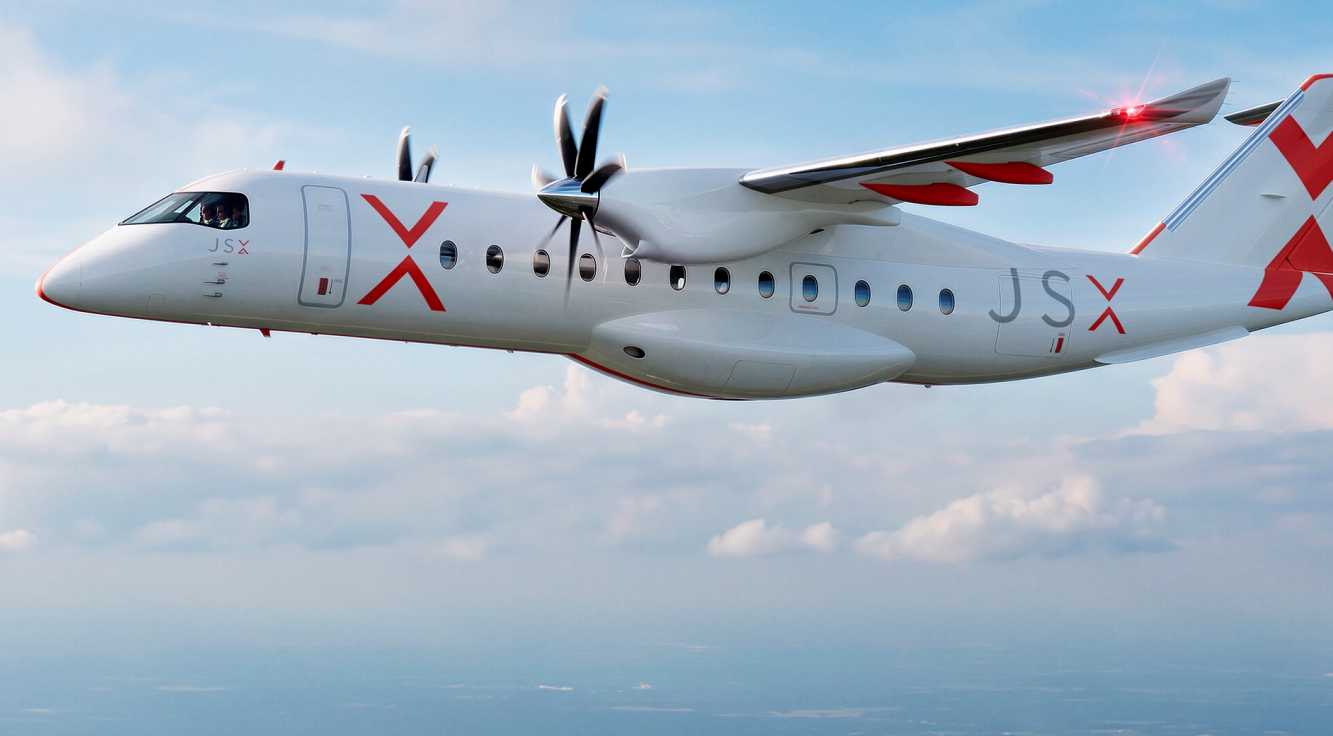
JSX converted its letter of intent for Heart’s ES-30 to a deposit-backed purchase commitment for 50 of the manufacturer’s new flagship ES-36, unveiled Wednesday. [Credit: Heart Aerospace]

Hybrid-electric regional aircraft developer Heart Aerospace has pivoted to a new flagship aircraft intended to deliver 20 percent more passenger and payload capacity and better economics than its previously announced ES-30, with JSX placing a deposit-backed order for the clean-sheet design.

The company’s new ES-36 will have 36 seats, compared to 30 on its previous flagship design, and shift from four nacelles and propellers to two, which Heart said will reduce drag, simplify the integration of the hybrid-electric propulsion system, shrink the size of the wing, and lower maintenance costs. Like the ES-30, the ES-36 targets 40 percent lower operating costs versus legacy regional aircraft.

The ES-36’s propulsion system has also changed. The ES-30’s four-engine “independent hybrid” propulsion system—comprising a pair of turboprops installed on the wing and two inboard electric motors—is gone, replaced by twin series-hybrid powertrains and a turbogenerator. Heart had been planning a series-hybrid configuration with a turbogenerator until May 2024, when it pivoted to the independent hybrid system in order to enable all-electric flight without using the turboprops.

Heart said design changes give the ES-36 a hybrid-electric range of 745 miles plus reserves, up from the ES-30’s 500 miles. It will retain the previous flagship’s 125-mile all-electric range.

JSX has converted its 2023 letter of intent for the ES-30 to a deposit-backed agreement for 50 ES-36 aircraft, with purchase rights for 50 more. The partners said the agreement will underpin a “next-generation regional fleet” intended to expand JSX’s nonstop service at community airports.

Ben Stabler, chief technology officer of Heart, said the ES-36 is a “direct result of what Heart learned designing, building, testing and flying our X1 demonstrator aircraft” and will be “more capable in the air and more productive for operators” than the ES-30.

The X1, which used the four-engine system and was designed to be representative of the ES-30, made its first all-electric flight in August at New York’s Plattsburgh International Airport (KPBG). The company said the demonstrator was the largest aircraft of its kind, by both wingspan and takeoff weight, to achieve first flight. It was originally planned to fly in 2025.

Heart’s website in August indicated a revised Part 25 certification target for the ES-30 of 2031, a slide from 2028. The company said Wednesday that the ES-36 will maintain that certification timeframe. It said the first preproduction aircraft is being built in Los Angeles and targeting first flight in the second half of 2028.

Introducing the ES-36

Each of the ES-36’s series-hybrid powertrains will drive a propeller using a 1.65-megawatt electric motor that provides instant thrust, controlled using a two-lever throttle. The same propellers will be used for electric and hybrid flight modes.

Another major change is a more “aerodynamically optimized” airframe that dedicates about 3 percent more of its maximum takeoff weight to passengers and payload. Compared to the previous flagship, the ES-36 adds 1,415 pounds of payload for a maximum of 8,492 pounds. But it retains the ES-30’s battery capacity and MTOW, which should make the new design more attractive to regional carriers.

Operators seeking to eliminate fuel burn could charge the aircraft’s batteries on the ground for all-electric flights up to 125 miles plus reserves. Range-extending, megawatt-class turbogenerators in each powertrain will enable longer, hybrid-electric missions by supplying power to the batteries in flight. Heart said the design could also enable conventional missions using Jet A. It will operate at about 25,000 feet.

The ES-36’s fly-by-wire flight deck is designed for two pilots (Honeywell was previously announced as the ES-30’s fly-by-wire supplier). It will use “digital assistance” to reduce pilot workload, as well as an architecture that Heart said is “designed to enable progressively greater automation” for single-pilot and even autonomous operation.

The aircraft will offer pilots real-time visibility into system performance for predictive maintenance and quicker troubleshooting. Rather than a centralized hydraulic system, it will use multiple self-contained electrohydraulic actuators that share a common design.

The ES-36’s length of about 84 feet falls between the ATR 42-600 and ATR 72-600. Its 95-foot wingspan is between those twin-engine turboprops and larger narrowbodies like the Boeing 737 MAX 8.

JSX Bets on Heart

JSX’s conversion of its LOI to a deposit-backed purchase commitment signals a newfound vote of confidence in Heart. The public charter air carrier also secured early delivery positions for an unspecified number of aircraft.

JSX also has agreements for up to 150 hybrid-electric 19-seaters from Aura Aero and up to 82 Electra EL9 Ultra Short aircraft, a nine-seat hybrid model. But as of Tuesday, its website said that among the sustainable models it is exploring, Heart’s aircraft “most closely mirror our current existing fleet.”

According to Heart and JSX, the ES-36 will help the carrier expand service at Santa Monica (KSMO), Westchester County (KHPN), Naples (KAPF), and other airports it already serves. The design’s short-field performance could also enable operations at “constrained airfields,” they said, and its curtailed wingspan—about 10 percent shorter than the ES-30’s—will enable higher utilization at busier airfields.

Lower operating costs could open up new, nonstop JSX routes with lower fares for passengers. And the aircraft’s all-electric mode could assuage local communities’ concerns about aircraft noise, such as in Santa Monica, where the airport faces closure due to residents’ complaints.

Alex Wilcox, CEO of JSX, said the carrier is excited to “back the development” of the ES-36 and will work with Heart to tailor it for its operations. The agreement includes what the partners described as a “working partnership,” under which they will jointly enhance the ES-36’s cabin configuration and onboard experience and study charging and turnaround procedures, route planning, and airport readiness.

Heart’s next-largest customer is United Airlines, which placed an order for 100 of the manufacturer’s earlier ES-19 model that it later converted to the ES-30. Michael Leskinen, United’s chief financial officer, in August said the ES-30 would have a “potential future role in United’s network.” The carrier did not immediately convert its order to the ES-36, but it could follow in JSX’s footsteps.

Other ES-30 customers who could pivot to the ES-36 include Mesa Air Group, Air Canada, Loganair, and Scandinavian Airlines, though most of their orders are not firm.

Jack Daleo

Jack is a staff writer covering advanced air mobility, including everything from drones to unmanned aircraft systems to space travel—and a whole lot more. He spent close to two years reporting on drone delivery for FreightWaves, covering the biggest news and developments in the space and connecting with industry executives and experts. Jack is also a basketball aficionado, a frequent traveler and a lover of all things logistics.

Electra’s Fixed-Wing Aircraft Demonstrates ‘Helicopter-Style’ Procedures

Company says its fixed-wing demonstrator began using locations intended for rotorcraft as well as vertical-flight-like instrument procedures.

Electra EL2 hybrid electric demonstrator ultra short takeoff at Virginia airport
Electra’s EL2 demonstrator recently conducted operations out of spaces intended for helicopters at several Virginia airports. [Credit: Electra]

Hybrid-electric regional aircraft manufacturer Electra said its fixed-wing demonstrator aircraft has begun operating using locations intended for helicopters as well as “helicopter-style” instrument procedures.

Electra on Tuesday said it conducted the “first-of-its-kind flights” from a heliport on a commercial airport ramp at Virginia’s Roanoke-Blacksburg Regional Airport (KROA). The company said the flights will help create a “national blueprint for [advanced air mobility] instrument flight networks” using helicopter-style procedures and lay the groundwork for operations of its flagship EL9 Ultra Short, which like its two-seat demonstrator is designed with a 150-foot ground roll.

Electra CEO Marc Allen said the recent campaign “provides a glimpse into the future of flight.”

“We showed that fixed-wing, Ultra Short aircraft can use vertical flight landing areas and a new generation of instrument procedures to reach places conventional airplanes were never designed to access,” Allen said in a statement. “This will both bring air service closer to the passenger and also expand capacity at commercial airports in completely non-congestive ways.”

The EL9 is “designed for helicopter-like access with the benefits of fixed-wing flight,” as Electra put it Tuesday. Its key differentiator is blown-lift aerodynamics that allow its propulsion system to enable takeoffs at speeds around 30 knots. The model is intended for a pilot to fly up to nine passengers plus 50 pounds of luggage each, or about 3,000 pounds of cargo, cruising at 175 KTAS. It is designed for an 1,100 nm ferry range with 45 minutes of reserves.

According to the company’s website, a fly-by-wire system manipulates the aircraft’s flight control surfaces and eight electric motors and “automatically manages the complexity of operating in the slow-speed flight envelope.”

Electra said recent activities with its two-seat EL2 demonstrator were part of one of the eight projects under the FAA’s eVTOL and AAM Integration Pilot Program (eIPP), conducted in partnership with Virginia Tech University and the transportation departments of Virginia (VDOT) and Pennsylvania (PennDOT). PennDOT is leading the project. In August, the EL2 began eIPP operations, data from which will be shared with the FAA, with a flight into Washington Manassas Airport (KHEF) in Virginia.

How It Worked

In addition to conducting eIPP activities, Electra is partnered with Virginia’s Smart Airspace Program, which it said in February aims to design and test a scalable, low-cost instrument flight rules (IFR) network for the EL9 and other AAM aircraft. The network would use GPS navigation and new, FAA-certified “access points.”

Electra believes existing IFR arrival and departure procedures were not designed with these aircraft in mind. The company said in February that the Smart Airspace Program would separate AAM and conventional traffic and collect data on trial operations. Operational data will “inform future evaluation of fixed-wing AAM operations using helicopter-style instrument procedures,” it said Tuesday.

Electra said the recent activities tested “point-in-space procedures and dedicated instrument routings” at Virginia airports, including KROA, Virginia Tech/Montgomery Regional Airport (KBCB), and Blackstone Army Airfield Airport (KBKT), as well as sites in Newport News and Richmond. At each location, the EL2 operated using small heliports, vertiports, taxiways, and other sites that are typically only accessible to helicopters without adding traffic to runways, it said.

In the months leading up to the campaign, the partners designed “flexible” approaches, tested novel instrument procedures, and workshopped new air traffic concepts, all with the fixed-wing EL9 in mind.

Parker Vascik,  Electra’s director of product strategy, called it a “first step toward developing guidelines and procedures for Ultra Short operations at major airports and novel access points.”

Access points are the foundation of Electra’s direct aviation philosophy, which entails bringing air service to locations that are smaller and closer to where people live and work than traditional airports. They would take advantage of the EL9’s 150-foot ground roll and low noise output, which the company estimates at 75 dBA during takeoff and landing.

EL9 access points could include general aviation airports as well as rooftops, parking lots, fields, barges, malls, casinos, or even ski resorts.

Earlier in September, Electra signed an airframe agreement with Atlas that will see the latter manufacture and assemble EL9 airframes for the former’s flight test and certification program. Deliveries are first expected in 2027.

Jack Daleo

Jack is a staff writer covering advanced air mobility, including everything from drones to unmanned aircraft systems to space travel—and a whole lot more. He spent close to two years reporting on drone delivery for FreightWaves, covering the biggest news and developments in the space and connecting with industry executives and experts. Jack is also a basketball aficionado, a frequent traveler and a lover of all things logistics.

Search Suspended for Twin-Engine Plane, Pilot Off Oregon Coast

Beechcraft 95 Travel Air goes down near Newport Municipal Airport.

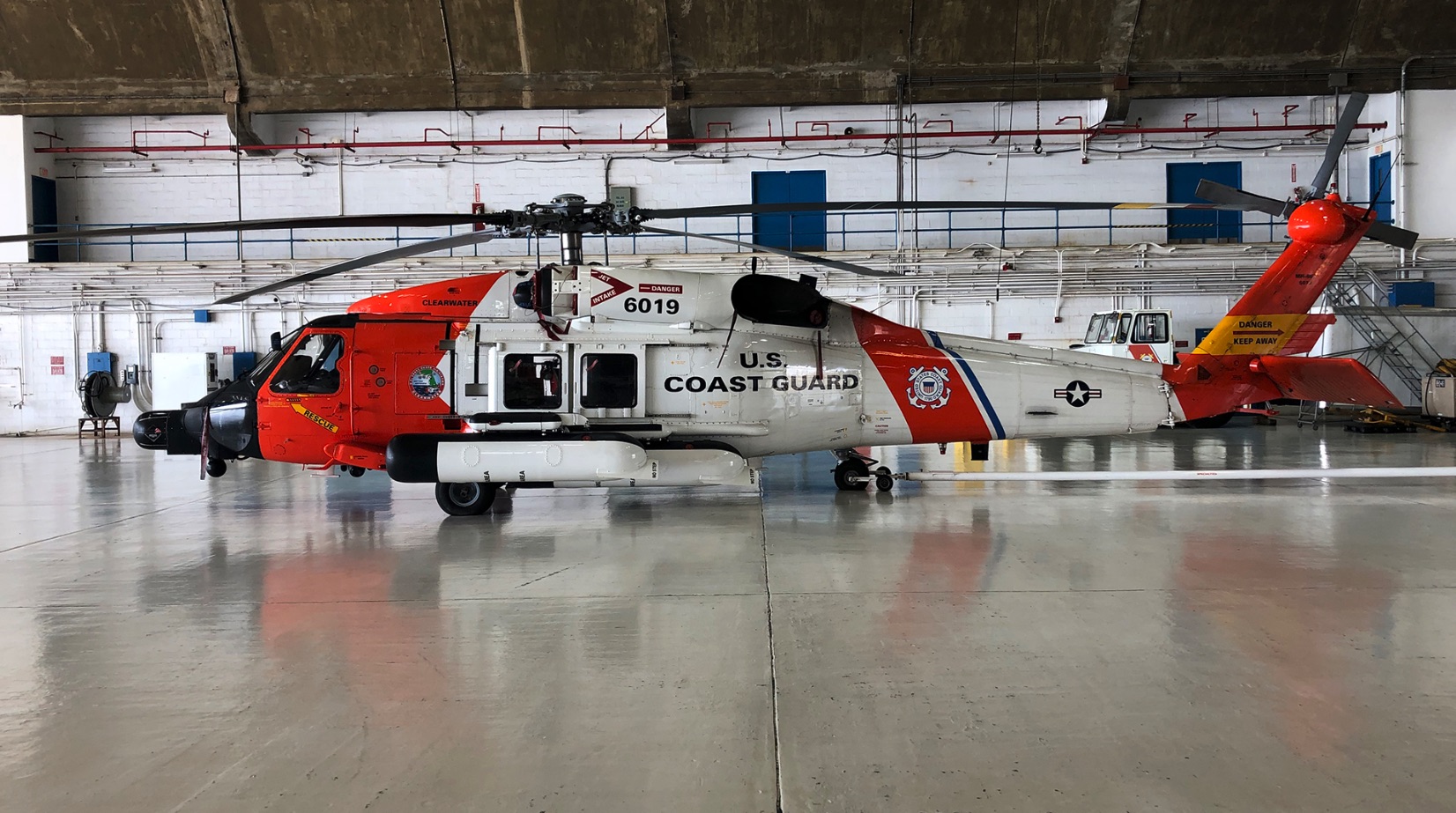
Coast Guard MH-60 Jayhawk helicopter [Credit: U.S. Coast Guard/Carlos Gonzalez]

The U.S. Coast Guard has suspended the search for a twin-engine airplane that went down off the coast of Oregon on Monday. According to authorities, the pilot, a 78-year-old man, was the only person on board the aircraft and has not been found.

A hangar camera captured the 1960 Beechcraft 95 Travel Air (N529RB) departing Newport Municipal Airport (KONP) around 12:33 p.m. PDT. The airport is located on the central coast of Oregon near Yaquina Bay Lighthouse.

Authorities said flight tracking data shows the aircraft circling over the water approximately a half-mile offshore for a few minutes near Yaquina Head before it disappeared from radar.

A local fisherman who witnessed the crash told a local television station he noticed the aircraft flying very low, perhaps 20 feet above the surface, at a high rate of speed, then it plunged into the water and quickly sank. The fisherman headed to the area of impact but could not find the pilot.

The Coast Guard was notified and spent 12 hours searching the area by boat and helicopter, covering 124 square miles. It was joined by first responders and good Samaritans, but no trace of the pilot or aircraft were found.

The aircraft is registered to Ralph Busby III of Newport, Oregon.

According to an FAA preliminary post, the aircraft was destroyed and the accident presumed fatal.

The National Transportation Safety Board is investigating.

Meg Godlewski

Meg Godlewski has been an aviation journalist for more than 24 years and a CFI for more than 20 years. If she is not flying or teaching aviation, she is writing about it. Meg is a founding member of the Pilot Proficiency Center at EAA AirVenture and excels at the application of simulation technology to flatten the learning curve. Follow Meg on Twitter @2Lewski.

CitationJet Owners Can Now Upgrade to All-Garmin Avionics

Textron announces availability of retrofit solution following FAA supplemental type certification.

Textron Aviation Cessna CitationJet
Textron expanded avionic modernization upgrade ability to the original Cessna CitationJet aircraft. [Credit: Textron Aviation]

Textron Aviation on Tuesday announced that owners and operators of the original CitationJet can now install an all-Garmin avionics suite, available for serial numbers 525-0001 through 0359 following FAA supplemental type certification (STC).

The retrofit, which can be completed through Textron Aviation’s service network, gives owners and operators access to cockpit technology available on the CJ1 and CJ2. The upgrades will replace fragmented legacy systems and are designed to reduce pilot workload and add new safety-enhancing technologies.

The all-glass cockpit features two G600 TXi flight displays with a touchscreen interface with advanced multi-function display (MFD) and primary flight display (PFD) capabilities. Primary flight data is displayed on Garmin synthetic vision technology for awareness in IFR, marginal VFR, or nighttime conditions and offers a map view showing weather, traffic, airport diagrams, and more, without requiring a full MFD window.

It also includes the GI 275 standby flight instrument on the pilot side, with an option for an additional instrument on the copilot side, that integrates with the PFDs to sync heading, altimeter, airspeed, and altitude selections.

The flight deck also upgrades to the TXi engine indication system (EIS). Its display includes integrated timers and N1 reference bugs that are computed automatically.

Other features include GTN 750Xi touchscreen FMS/NAV/COMM flight navigators and GFC 600 digital autopilot, as well as stabilized approach monitoring, aural V-speed alerting during takeoff, and other situational awareness features specific to the CitationJet. FAA Data Comm will allow flight crews to communicate with air traffic control via text-based communications and receive departure clearances at over 60 airports, as well as enroute clearances, frequency changes, and more while flying above 16,000 feet in the U.S.

The combination of the GTN 750Xi—which has a 6.9-inch display and enables simplified IFR routings—and digital autopilot enables coupled descent vertical navigation (VNAV), allowing pilots to create and execute holding patterns.

The GFC 600 uses automation to assist with high-workload procedures such as coupled go-around while executing a missed approach. The solution also features an Emergency Descent Mode (EDM) that automatically descends the aircraft to a preset altitude without pilot intervention when loss of cabin pressurization is detected.

Optional upgrades include the GMA 35C audio panel, GTX 345R transponder, GWX 8000 StormOptix weather radar, GSR 56 datalink, and GDL 60 datalink for Garmin’s PlaneSync connected aircraft management system.

PlaneSync automatically downloads avionics database updates and synchronizes them across the displays. Pilots can use the system to remotely check fuel quantity, database status, GPS location, and temperatures, and the system automatically transmits flight and engine log data to cloud storage after landing.

Textron’s three next-generation Citation light jets, the CJ4 Gen3, CJ3 Gen3, and M2 Gen3, come factory-equipped with Garmin Autothrottle and Emergency Autoland. Once the CJ3 Gen3 is certified, Gen2 owners will be able to install Emergency Autoland. All three models include Garmin’s G3000 avionics suite, with the CJ4 Gen3 upgrading to the next-generation G3000 PRIME system.

Textron has secured STCs for other CitationJet upgrades including Starlink WiFi. It announced Starlink’s availability for the Citation X and X+ in March 2025, for the Citation Longitude in October 2025, and for the Citation Ascend in April, all through STCs awarded to AeroMech. Starlink internet for the Hawker 700, 800, and 900 series was announced in September.

Jack Daleo

Jack is a staff writer covering advanced air mobility, including everything from drones to unmanned aircraft systems to space travel—and a whole lot more. He spent close to two years reporting on drone delivery for FreightWaves, covering the biggest news and developments in the space and connecting with industry executives and experts. Jack is also a basketball aficionado, a frequent traveler and a lover of all things logistics.
Pilot in aircraft
Sign-up for newsletters & special offers!

Get the latest stories & special offers delivered directly to your inbox.

SUBSCRIBE