Register

Watch Out for Airplane Solo Endorsement Traps 

Essential requirements and common misconceptions can ground student pilots and CFIs.

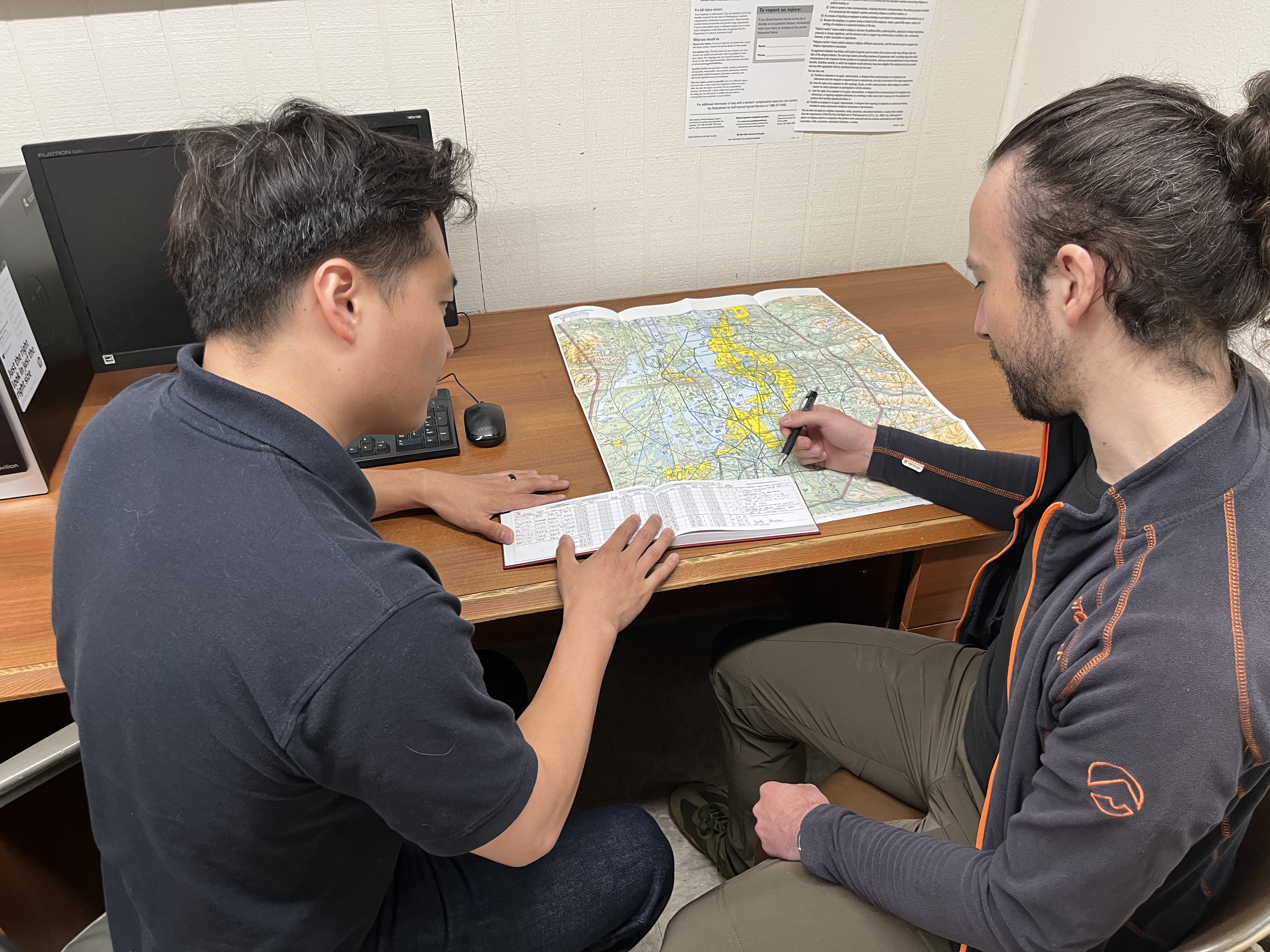
A CFI must work closely with their student pilot to ensure they meet all necessary FAR 61.87 requirements before granting a solo endorsement, prioritizing safety and proper training progression. [Credit: Meg Godlewski]

One of the most common training misconceptions is the first solo usually takes place when the student pilot has logged approximately six hours of dual instruction.

That may have been accurate back when most training was done in NORDO J-3 Cubs operating off turf runways. Today the airplanes and airspace are more complex, have more regulations, and the student pilot has to show proficiency in more maneuvers—ergo, the hours required to solo have increased.

The requirements for solo are found under FAR 61.87 (Solo requirements for student pilots). Both the student and CFI administering training should be familiar with these tasks. 

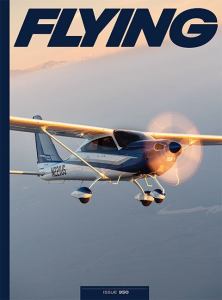
This Article First Appeared in FLYING Magazine

If you're not already a subscriber, what are you waiting for? Subscribe today to get the issue as soon as it is released in either Print or Digital formats.

Subscribe Now
The student pilot must “demonstrate satisfactory proficiency and safety as judged by an authorized instructor on the maneuvers and procedures required in 61.87 in the make and model of aircraft or similar make and model of aircraft to be flown” in order to be granted solo privileges. 

The CFI who provides the solo endorsement is attesting that the student pilot can perform all 15 tasks listed in the regulation. 

But sometimes things are forgotten or perhaps not taught. 

It’s distressing to hear a student pilot on first solo telling the control tower that he can’t perform S-turns in the pattern because he never learned them, despite the fact ground reference maneuvers are part of the 15 tasks.

CFIs, guard yourself against the student pilot who is “shopping for a signature.” These students are close to a solo but jump from instructor to instructor because the endorsement isn’t coming fast enough. Sometimes they target a low-experience CFI they can persuade to endorse them after just flying a few laps in the pattern with no ground work or maneuvers.

Use Syllabus for Success

Both the CFI and student need to have a copy of an FAA-approved syllabus. It keeps training on task, on track, and shows the performance metrics required per the Airman Certification Standards (ACS). 

Most importantly, it makes sure the student’s education is complete and shows their progress. The latter is important as so many student pilots quit because they don’t know if they’re
progressing. 

When learning takes place without a syllabus, it’s commonly known as the folklore method of instruction. The CFI usually teaches as they were taught. It works for some, not for others, and sometimes results in items being missed, especially when rules and requirements change and the CFI isn’t aware.

For example, before April 1, 2016, the medical certificate was also the student pilot certificate. In addition to endorsing the student’s logbook, the CFI endorsed the medical certificate for initial solo and also for each cross-country flight. 

Today, the medical and student pilot certificates are two separate entities. The student pilot certificate is applied for online using FAA form 8710. A CFI must assist the process. A few weeks later the learner receives a plastic student pilot certificate in the mail with a warning on the back that reads: “Carriage of passengers prohibited.”

Unfortunately, there are some CFIs who missed the regulation change regarding the student pilot certificate. This can result in a learner who, lacking a student pilot certificate, logged tens of hours of illegal solo flight. This isn’t often discovered until the student attempts to file an 8710 form application for certification for their private pilot check ride and the savvy DPE catches it.

2 Students, 1 Aircraft, No PIC

Another common misconception is that two student pilots who hold solo privileges can fly together in the same airplane without a CFI on board. This one pops up with alarming frequency in discussions at flight schools, on the ramp, and occasionally in accident
reports generated by the National Transportation Safety Board.

FAR 61.89 (General limitations) states: “A student pilot may not act as pilot in command of an aircraft that is carrying a passenger.”

Translation: One person is the PIC, and the other a passenger. There’s no getting around it, and if the FAA gets wind of it, certificate action is likely. 

The FAA notes that a “student pilot certificate is an FAA airman certificate. A student conducting a solo flight is exercising the privileges of the certificate and is responsible for operating the
aircraft in a safe manner and complying with applicable regulations.” 

Get caught breaking this rule and expect consequences—the least of which will likely be termination from the flight school.

Also realize that being the owner of the aircraft doesn’t grant special privileges to the student pilot. Passengers still aren’t allowed, and neither is making flights contrary to a limitation placed on the solo endorsement, such as “no flight more than 25 miles from (insert home airport identified here).” 

If the CFI learns the student/owner is doing this, expect solo privileges to be revoked and not reinstated. While it may not keep them on the ground, it will protect the CFI’s ticket.

Solo Endorsement Details

The solo endorsement under Part 61 is nontransferable from school to school or from CFI to CFI. When the learner changes instructors, they often have to repeat the pre-solo training. 

Learners should ask the new-to-them instructor to allow a flight that covers all maneuvers listed in FAR 61.87. It will likely be close to two hours (or more), and you can expect at least an hour on the ground to assess your knowledge, but it will provide a solid demonstration of skills. 

Utilize the ACS for private pilots as the performance metric. Expect to take an open-book knowledge test before solo, and document where you obtained the information from and cite it, such as “Checklist for the Cessna 172, emergency procedures.” The solo endorsement is good for 90 days, after which another endorsement can be given if the student has not passed their check ride. You don’t need to repeat the training. 

There are some CFIs who will limit the number of times they give a solo endorsement to a particular learner, because the idea is to pass the check ride, not to be a perpetual student. Both the student and instructor should keep track of the endorsement expiration date. Common limitations on the student solo endorsement include “must obtain weather briefing,” and it should spell out weather minimums. Some instructors will include “must notify CFI before departure on solo flight.” A text message will do. This is particularly important when the training is done under Part 61 and the learner is riding on the CFI’s ticket. 

CFIs should discuss these limitations with the student to make sure they understand them. Limitations aren’t written in stone. They will change as your experience increases. The purpose of solo flight is for the student pilot to gain more proficiency as PIC, so make every flight count.


This column first appeared in the August Issue 973 of the FLYING print edition.

Meg Godlewski

Meg Godlewski has been an aviation journalist for more than 24 years and a CFI for more than 20 years. If she is not flying or teaching aviation, she is writing about it. Meg is a founding member of the Pilot Proficiency Center at EAA AirVenture and excels at the application of simulation technology to flatten the learning curve. Follow Meg on Twitter @2Lewski.

Emergency Autoland Certified for PC-12 Pro

Manufacturer Pilatus said the aircraft’s capability is now certified by the FAA and EASA.

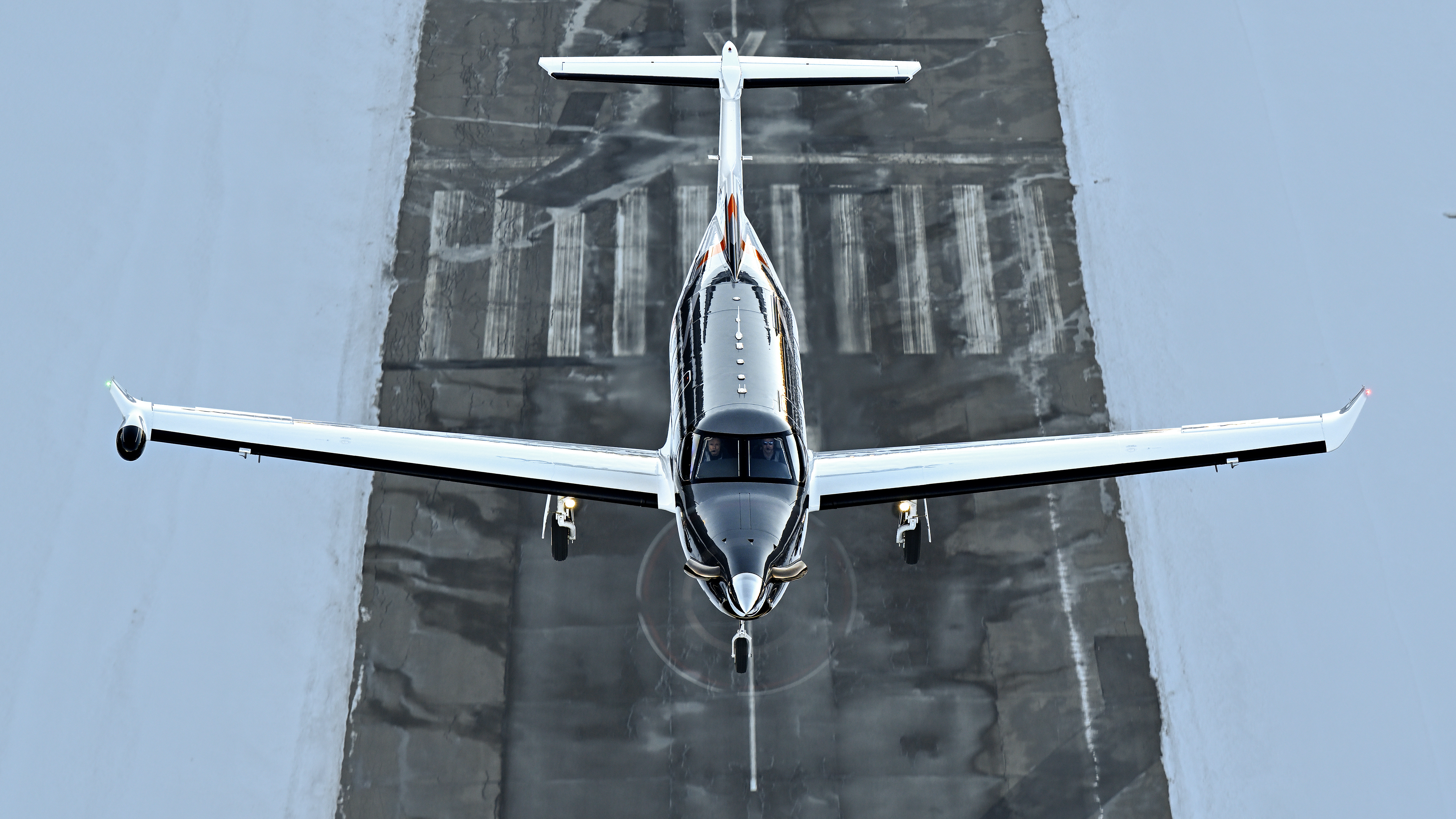
Pilatus PC-12 Pro single engine turboprop aircraft
The Pilatus PC-12 Pro is the first member of the single-engine turboprop family equipped with Safety Autoland. [Credit: Pilatus]

Pilatus on Thursday revealed that Garmin Emergency Autoland, which the manufacturer calls Safety Autoland, is now certified on the PC-12 Pro by the FAA and EASA.

The single-engine turboprop family already owns a sparkling safety record. But the new Pro, unveiled in March 2025, will add another layer of protection to what Pilatus billed as the “most technologically advanced, best performing, most reliable aircraft in its class.”

The biggest difference between the PC-12 Pro and other members of the family is a completely new cockpit with Garmin’s cutting-edge G3000 Prime integrated flight deck, customized for Pilatus. The Aircraft Owners and Pilots Association (AOPA) in 2025 called it the “most advanced cockpit to ever be fitted to a single-engine turboprop.”

PC-12 Pros were initially delivered without Safety Autoland enabled as Pilatus awaited certification, but FLYING previously reported the capability will be added to those models. It will remain unavailable in regions where it has not been certified.

Pilatus said Safety Autoland underwent “extensive testing” during final certification flights. The goal was to demonstrate a fully automated landing—from system activation to safe landing and automated communication and engine shutdown—in real-world conditions.

The Pro’s avionics suite also includes Garmin SurfaceWatch, Emergency Descent Mode, Emergency Return, Autothrottle, Synthetic Vision Technology, Smart Glide, GWX 8000 Digital Weather Radar, and Pilatus’ proprietary Cursor Control Device. Pilots can tailor the flight deck to their liking and easily recall those settings if changed by another pilot operating the same aircraft.

The variant also adds improvements to the PC-12’s integrated Stall Warning and Protection System and Electronic Stability and Protection function.

The Pro uses PC-24 style yokes and comes equipped with Pratt & Whitney Canada’s PT6E-67XP, the same engine as the PC-12 NGX, powered by an electronic engine and propeller control system (EPECS). The Direct Vision cockpit window was removed to improve exterior visibility.

Introducing Autoland

Garmin’s 2020 Collier Trophy-winning Emergency Autoland is designed to handle situations involving sudden pilot incapacitation, such as due to a medical emergency or loss of pressurization. The system can be activated by anyone in the aircraft, including passengers, and be overridden and shut down by the pilot at any time.

In the event of cabin depressurization at high altitude, Emergency Descent Mode activates first, and Autoland activates if the pilot does not interact with the flight deck after descending to a safer altitude. The system will also activate if Electronic Stability and Protection is turned on and senses pilot control inputs that repeatedly exceed given limits.

When the activation button is pressed or Autoland activates on its own, the system takes full control of the aircraft and begins analyzing all available weather, aircraft status, navigation, and other data. Factoring in runway length, wind, weather conditions, remaining fuel, and NOTAMs, it uses that data to choose the best place to land, then calculates a safe route.

While flying autonomously, the system avoids known hazards and communicates its intentions to passengers and ATC on appropriate radio frequencies. It takes command of flaps, landing gear, lighting, and other systems required for landing. Once the aircraft is on the ground, Autoland brings it to a stop on the runway, shuts the engine down, and directs the occupants to evacuate.

Autoland is installed on more than 1,000 select G1000 NXi and G3000-equipped aircraft, which include:

  • Daher TBM 960, 980, and newer 940 aircraft
  • Piper 700 Fury and newer M600 SLS aircraft
  • Cirrus SR22 G7+, Vision Jet G3, and newer Vision Jet G2 and G2+ aircraft
  • Beechcraft King Air 200 and 300 Series
  • HondaJet Elite II
  • Embraer Phenom 300EV

The system will also come equipped on the Beechcraft Denali, Citation M2 Gen3, CJ4 Gen3 and CJ3 Gen3, Epic E1000 AX, and HondaJet Echelon when those aircraft enter service.

Autoland executed its first real-world emergency landing in December after the pilot of a King Air B200 reported a cabin pressurization issue to air traffic control shortly after takeoff. The system activated automatically after the aircraft’s cabin altitude exceeded safe levels, and the conscious crew allowed it to take over. The aircraft landed safely and returned to service the following day.

Another company, Skyryse, is developing an emergency autoland system for both fixed-wing aircraft and rotorcraft. If certified, it would mark the first time autoland capability has been offered for helicopters.

Jack Daleo

Jack is a staff writer covering advanced air mobility, including everything from drones to unmanned aircraft systems to space travel—and a whole lot more. He spent close to two years reporting on drone delivery for FreightWaves, covering the biggest news and developments in the space and connecting with industry executives and experts. Jack is also a basketball aficionado, a frequent traveler and a lover of all things logistics.

Last Flying U.S. DC-8 Gets Permanent Home at Virginia Airport

Aircraft will become part of an interactive museum and pavilion open to the public.

Last flying U.S.-registered Douglas DC-8 in Samaritan's Purse livery taking off
The last flying U.S.-registered Douglas DC-8 was retired and donated to Liberty University in 2025. [Credit: Samaritan’s Purse]

The last flying U.S.-registered Douglas DC-8, retired in 2025, will soon take on a new mission—engaging and inspiring students and members of the public at Lynchburg Regional Airport (KLYH) in Virginia.

The venerable DC-8 was donated to Liberty University by North Carolina-based humanitarian relief organization Samaritan’s Purse. The Christian university plans to turn it into a “permanent, mission-focused landmark” at Lynchburg’s Preston Glenn Field and said Monday that the project is backed by a grant from Boeing.

The aircraft will honor humanitarian air missions and be the “centerpiece” of what Liberty described as an “aviation STEM and workforce-development destination,” the DC-8 Overlook. Its next mission will be to inspire a new generation of pilots, technicians, air traffic controllers, military aviators, and uncrewed aircraft system (UAS) operators.

artist's rendering of Liberty University DC-8 Overlook pavilion at Lynchburg Regional Airport in Virginia

An artist’s rendering of Liberty University’s planned DC-8 Overlook project at Lynchburg Regional Airport [Credit: Liberty University]

Liberty chancellor Jonathan Falwell said in December that people will be able to tour the aircraft and that it will be accompanied by a museum. Also planned is an airplane-themed playground.

Boeing’s grant will support construction of a public pavilion to serve as the location’s “educational center.” It will offer events, programming, museum-style exhibits, and “learning modules tied to aviation careers.” The center will also host guided tours, field trips, and camps for schools and local youth-serving organizations, as well as presentations, mentoring sessions, and technical demonstrations from university faculty, Boeing employees, and veterans.

“By helping preserve this historic aircraft and creating hands-on learning opportunities, this initiative will inspire future aerospace professionals and honor the important role aviation plays in serving communities around the world,” said Lacey Pittman, vice president of global aerospace safety for Boeing, in Liberty’s announcement.

The Venerable DC-8

Samaritan’s Purse donated the four-engine jetliner to Liberty in December following its retirement and final relief mission to Jamaica, which delivered toys, school supplies, and other items to children from areas affected by Hurricane Melissa. It touched down for the final time at Lynchburg Regional on December 7. The university is a longtime partner of Samaritan’s Purse.

The DC-8-72CF—a rare convertible passenger and cargo, or “combi,” variant of the iconic airplane—was built in 1968 and flew for more than six decades. It logged more than 55 million miles and 100,000 flight hours and could fly with up to 74,000 pounds of cargo and 32 passengers.

The DC-8 became Samaritan’s Purse’s primary heavy-lift aircraft following its delivery in 2015. It went on to transport over 9.2 million pounds of cargo across 219 missions spanning six continents.

The type may be the rarest still in operation.

Douglas Aircraft and McDonnell Douglas built 556 DC-8s before production ceased in 1972. Both Planespotters and ATDB.aero identify just one active DC-8 globally—a 56-year-old DC-8-73F operating cargo missions for Peru’s SkyBus Jet Cargo under Peruvian registration OB-2231-P. It was first delivered to Air Canada in 1970.

OB-2231-P is primarily based at Miami International Airport (KMIA). Per FlightAware, its most recent missions in September comprise flights between Miami and Haiti. SkyBus previously operated a larger DC-8 fleet but began winding down operations in 2023. Per Planespotters, four other DC-8s registered to SkyBus are parked.

Earlier in September, a DC-8-73CF registered 9S-AJO and operated by Trans Air Cargo Service in the Democratic Republic of the Congo overran a runway and suffered serious damage. According to Planespotters, it was the only aircraft in Trans Air Cargo’s fleet and is now in storage. It is unlikely to fly again, leaving the SkyBus DC-8 as possibly the final remnant of the type’s decorated service history.

NASA retired its DC-8 Airborne Science Laboratory, a highly modified version of the jetliner acquired in 1985, in 2024. The aircraft was donated to Idaho State University, where it is being used as a training platform for the university’s aircraft maintenance program.

Pilots and planespotters can still occasionally catch the DC-8 at Miami International. But though the type’s service life is coming to an end, universities like Liberty and Idaho State hope to preserve its legacy and embolden future generations to pursue careers in aviation.

Jack Daleo

Jack is a staff writer covering advanced air mobility, including everything from drones to unmanned aircraft systems to space travel—and a whole lot more. He spent close to two years reporting on drone delivery for FreightWaves, covering the biggest news and developments in the space and connecting with industry executives and experts. Jack is also a basketball aficionado, a frequent traveler and a lover of all things logistics.

Bye Aerospace eFlyer 2 Completes First Flight

All-electric aircraft launches flight test program aimed at reducing pilot training costs and emissions.

Bye Aerospace completed the first flight of its eFlyer 2, a two-seat training aircraft featuring an efficient electric propulsion system. [Credit: Bye Aerospace]

Bye Aerospace on Thursday announced the successful first flight of the eFlyer 2, its all-electric aircraft. The flight marks a major milestone for the Colorado-based company and the future of electric training aircraft.

According to company officials, the first flight signifies the launch of the aircraft’s flight test program and advances Bye Aerospace toward FAA certification and customer deliveries. They said the eFlyer 2 is designed to dramatically reduce operating costs and carbon emissions while enhancing the flight experience for general aviation.

The eFlyer 2 is designed specifically for the flight training market, combining an advanced electric propulsion system with a lightweight composite airframe. The company said the safety-focused design reduces operating costs by up to 80 percent while eliminating in-flight emissions.

Bye Aerospace chief test pilot Elliot Seguin was at the controls of the eFlyer 2 as it completed its planned flight test profile from Centennial Airport (KAPA) near Denver. 

The flight enabled the team to perform an initial evaluation of the aircraft’s handling qualities, aerodynamic characteristics, and system performance, while collecting data to support the next phase of flight testing. 

“We included a test pilot early in the assembly and testing phases of the program,” said Rod Zastrow, CEO of Bye Aerospace, in a news release. “[Seguin] was actively involved in planning, troubleshooting, analyses, and decisions tied to engineering and assembly options. He was integrated into the aerodynamics and flight-handling characteristics and preflight analysis.  And he was crucial in helping us upgrade our existing flight simulator to better emulate the anticipated flight-handling and performance characteristics.

“He flew the planned mission at the planned airfield dozens of times to explore various scenarios and practice certain emergency procedures. In short, the collective efforts well prepared him for the first flight, which he executed flawlessly. I could not be more pleased and proud of his performance.”

Seguin also shared his thoughts on achieving this key milestone.

“First flights are always significant moments for any new aircraft program,” said Seguin. “The eFlyer 2 handled well during the flight and validated the work the engineering team has put into designing and testing the aircraft over the past several years. It’s exciting to help advance a platform designed specifically for the future of pilot training.”

Zastrow noted the team took a conservative approach to the first flight profile given the unknowns associated.  

“We planned and executed a single lap in the Centennial Airport pattern at 1,000 feet agl,” he said. “We gathered a lot of initial data from both the aerodynamics, flight handling, and system performance in the two most rigorous phases of flight—takeoff and climb (power and lift performance) and landing (handling characteristics). Our future extensive flight test program will increasingly work to expand the operating flight envelope and handling characteristics.”

Design Details

The eFlyer 2t is powered entirely by electricity.

It features a high-voltage system that operates up to 800 volts, with the batteries, controlled by the power distribution unit, supplying propulsion energy, and, through a DC-to-DC voltage converter, stepping down the 800 volts to 28 volts, which powers the entire low-voltage system (communications, navigation, lighting, etc.)  

“Our ‘fuel tank’ is the battery pack consisting of magniX Samson battery modules, which are located in the forward and aft battery bays,” said Zastrow. “The layout and aero efficiency gained by the electric system included a much sleeker fuselage, starting at the nose. Because there are no fuel tanks there is reduced wing mass and improved aerodynamic characteristics. 

“New airfoils from wing root to tip improved efficiency, slow flight, stall and anti-spin characteristics. Our team stepped up and got it right. And part of that success was that we have great partners for the engine, batteries, and power lever.”

Technology Behind the Achievement

Developing the all-electric trainer required designing and integrating entirely new systems from the ground up, according to Zastrow.

“The novel technology comprises the electric propulsion system that includes changes ranging from the propeller, to the Safran first-ever certified aviation engine, to the electric storage system (battery and power distribution, and charger port), to the power lever and pilot interface,” he said. “We needed new hardware and software for each sub-system and needed to create new software to integrate all those subsystems.”

The eFlyer 2 includes technologies from global aerospace and advanced manufacturing suppliers, including Safran Electrical & Power, MagniX, Siemens, Toray, Composite Approach, Garmin, Sensenich Propeller, Electro.Aero, Flying S, M4 Engineering, Acme Aero, and Risse Racing.

It Takes a Village

The Bye Aerospace team consisted of engineers and technicians who focused on design, assembly, and testing supported by teams dedicated to making sure all of them had the parts, tools, equipment, and software needed to make the eFlyer 2 a reality.

“Key supply contractors were essential participants throughout…, ” said Zastrow. “We had a great project manager augmented by an outstanding supply chain manager who, together, ensured we executed on budget and on time, as circumstances allowed.”

Bye Aerospace said it has over 1,000 total orders with approximately 40 percent being paid, nonrefundable orders, with the rest captured in letters of intent.  

Flight schools will have to pay for added infrastructure in the form of fast-charging capability similar to what is used for electric vehicles but will no longer be relying on fossil fuels to power aircraft.

“Fifty percent of our orders are from international customers from all continents,” Zastrow said. “In short, the eFlyer is attractive to a global need for lower-cost pilot training. The current list price is $745,000. However, customers are compelled by the 80 percent  reduction forecast for the operating costs, including maintenance, scheduled propulsion overhauls, and energy [fuel]. Thus, we are excited to continue with the planned flight test program based on this solid foundation of design, build, test, and flight execution.”

The eFlyer 2 has operating costs forecast at $35-$40 per hour versus legacy aircraft such as Piper, Cessna, Beechcraft, and Diamond that cost approximately $165-$175 per hour to operate.

Bye Aerospace intends for the production eFlyer 2 to have fixed landing gear and a fixed-pitch prop and a top design speed of 140 knots with a design VNE of 160 knots.

Other critical speeds, such as best glide, will be confirmed through future flight testing.

Meg Godlewski

Meg Godlewski has been an aviation journalist for more than 24 years and a CFI for more than 20 years. If she is not flying or teaching aviation, she is writing about it. Meg is a founding member of the Pilot Proficiency Center at EAA AirVenture and excels at the application of simulation technology to flatten the learning curve. Follow Meg on Twitter @2Lewski.

This 1959 Bellanca 14-19-3 Cruisemaster Is a Nostalgia-Inducing ‘AircraftForSale’ Top Pick

Classic single-engine platform boasts fresh 260 hp powerplant, upgraded fuel capacity, and timeless design.

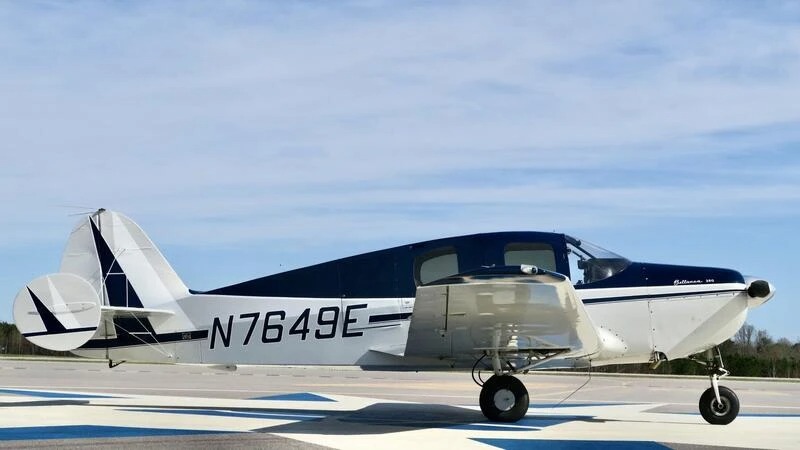
1959 Bellanca 14-19-3 Cruisemaster [Credit: AircraftMerchants]

Every day, the team at Aircraft For Sale chooses an airplane that catches our attention because it is unique, a good deal, or has other qualities we find interesting. You can read Aircraft For Sale: Today’s Top Pick at FLYINGMag.com daily.

Today’s Top Pick is a 1959 Bellanca 14-19-3 Cruisemaster.

The Bellanca Cruisemaster is celebrated for its stunning good looks and solid cross-country performance. Built for efficiency and speed, the historic aircraft boasts a 155-knot cruise speed while burning just 13 gph, making it an excellent platform for vintage aviation enthusiasts looking for a highly capable cruiser.

Showing 1,710 total hours on the airframe, this well-maintained 1959 model offers a compelling combination of utility and aesthetics. The exterior features lifetime Stits fabric painted in an overall light gray base with navy-and-white accents, while the airframe retains a practical useful load of 790.54 pounds.

Moving into the cockpit, the comfortable cabin is outfitted to make cross-country trips enjoyable. The space is finished in light gray and slate, featuring clean vinyl and velour cloth seating and side panels that remain in very good condition.

Thrust is generated by a 260 hp Continental IO-470-F engine that has logged approximately 186 hours since a major overhaul in 2021. This dependable powerplant recently received new lifters, spark plugs, and engine baffling in June 2026, and spins a McCauley two-blade, constant-speed propeller with 642 hours since its own overhaul.

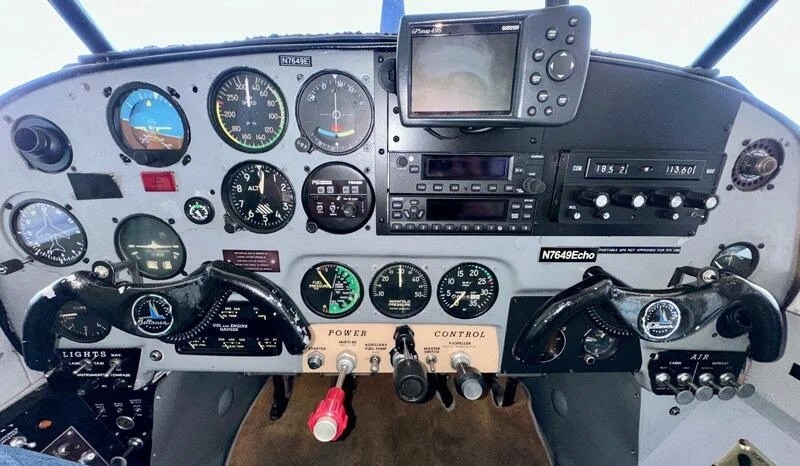
1959 Bellanca 14-19-3 Cruisemaster [Credit: AircraftMerchants]

Flight operations benefit from recent avionics upgrades and a well-equipped panel. Extended range is made possible by an optional 20-gallon auxiliary fuel tank—bringing the total usable fuel to 58 gallons—along with practical additions like a stall warning light and a Brackett air filter STC.

Listed at $74,900, this classic Cruisemaster comes with excellent maintenance records over the past decade and recent servicing, including factory-rebuilt landing gear actuators and new battery. Ready for its next steward, this vintage aircraft is located in North Carolina and stands prepared for new adventures.

If you’re exploring ownership options, FLYING Finance can help get you airborne. Use our airplane loan calculator to estimate your monthly payments, or connect with an aviation finance expert at flyingfinance.com.

FLYING Staff

FLYING Magazine is a one-stop resource for everything aviation, including news, training, aircraft, gear, careers, photos, videos, and more.

Venice Municipal Airport Could See Hangar Rents, Tie-Down Fees Rise

Proposed changes would take effect January 1 should the Florida city council approve them.

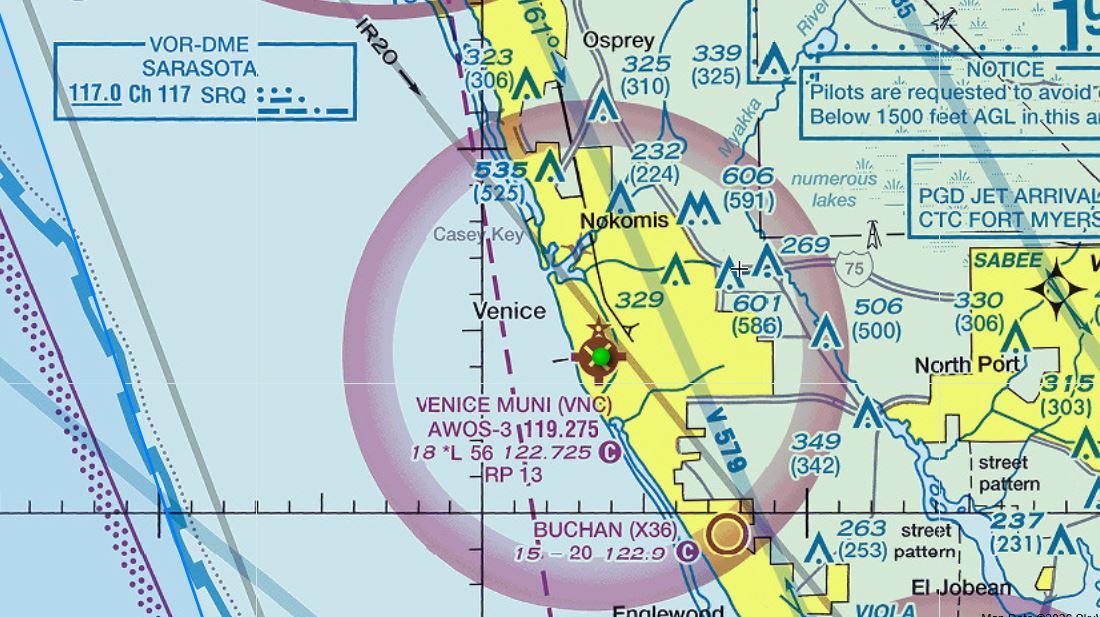
Skyvector map of Venice Municipal Airport in Florida
Venice Municipal Airport users face increased hangar rents, tie-down rates, and fuel flowage fees. [Skyvector]

Tenants and other users of Venice Municipal Airport (KVNC) in Florida could see higher T-hangar rents, tie-down fees, and fuel flowage fees as soon as January.

The Venice City Council on Tuesday heard a presentation about the proposed changes, which could see T-hangar rents increase between 53 and 147 percent depending on the size and type of hangar. Monthly tie-down rates could also rise from the current maximum of $240 to as high as $1,040 for the largest aircraft. Fuel flowage fees would jump from 5 cents to 10 cents per gallon.

According to the presentation, these rates and fees have not been “comprehensively adjusted” since 2007. The changes would take effect starting January 1 and be phased in over three years, after which rates would be adjusted annually using a flat-rate consumer price index average and reassessed every five years through a recurring market appraisal.

A public information officer for the Venice City Manager’s office told FLYING that an “Airport Rate and Fee” public workshop is scheduled for September 30 at city hall. The city council decided Tuesday to have staff bring input from that workshop to its next meeting on October 13 before deciding whether to approve the changes, which were proposed by the airport’s director following an appraisal.

Airport tenants in written correspondence to Venice Mayor Nick Pachota and the city council argued that the rate increases are unjustified in part because the hangars have been poorly maintained.

Airport Users Face Higher Rates

Venice Municipal Airport director Nicholas Dumas requested Tuesday’s city council meeting earlier in September to seek approval for the proposed changes.

Dumas wrote that the city previously commissioned an independent appraisal that examined comparable airports in the region, concluding that Venice’s T-hangar, shade hangar, tie-down, and fuel flowage rates are “well below market levels.” The appraisal screened 131 Florida public airports, excluding large hubs and those with under 30,000 annual operations.

“The proposed adjustments are intended to maintain market alignment, support the Airport Enterprise Fund, and further the City’s obligation to operate the Airport in a financially self-sustaining manner,” Dumas wrote.

The airport operates as an enterprise fund, meaning its expenses are paid through airport revenue and user fees rather than residents’ taxes.

In addition to raising T-hangar rents, the proposal would charge tie-down rates based on aircraft wingspan rather than engine size, as the airport has previously. For the smallest aircraft, the minimum monthly rate would be $120. Those with wingspans greater than 90 feet would face a monthly tie-down charge of $1,040. Daily rates would be 15 percent of the monthly rates.

The current maximum monthly tie-down rate is $240 for aircraft with three or more engines. The presentation argues that the new structure is a “fairer, market-standard measure.”

The city plans to give airport tenants notice and allow a 30-day period for written comments before the changes take effect.

Tenants Push Back

Per the presentation, Venice charges less than half of what comparable regional public airports charge for similar space, and it argues that maintaining its 2007 rates and fees would violate federal policy that requires the city to keep the airport “as financially self-sustaining as possible.”

“Below-market rates encourage speculative and non-active storage,” it reads. “Market rates ensure adequate funding for the infrastructure that serves active aviators.”

The new revenue would be legally restricted to the airport and go toward maintenance, security gates, resurfacing of taxiways and runways, and mitigation projects. The presentation does not say whether it would be used to improve, replace, or build new hangars.

One Florida resident wrote to council members that denying the proposed increases would constitute “reckless dereliction of duty by City Council.”

“The 19 years of rate increases that were never charged are essentially lost revenue that the airport will never recover,” they wrote.

Airport tenants disagreed. One person, who has rented a hangar at KVNC since 2008, said the increases are not justified because the airport has not adequately improved or maintained its T-hangars and discouraged construction of new private hangars. He worried the increases would price pilots out.

“Other airports have replaced weak sliding doors with stronger vertical bifold doors for wind protection, have updated lighting, rust mitigation and other aspects,” he wrote. “Most tenants at KVNC have bird poop and falling rust flakes on their aircraft every time the doors are opened.”

The person added that “there is no argument that we tenants are long overdue for rent increases” but said the airport director’s rationale is faulty and the increases are too high.

Another tenant similarly said the hangars have been poorly maintained and argued higher fees would deter pilots from using the airport.

“I might have to keep a car at KPGD, or fly into KSRQ [Sarasota-Bradenton International Airport] and Uber on the occasions when I must be in town,” he wrote.

The person also disagreed with the airport manager’s contention that below-market rates could be  “deemed revenue diversion and jeopardize future FAA grant funding.” He argued that the FAA considers fair market value to be the “required floor for nonaeronautical use of airport property” and not the “mandated rent for an aircraft stored in a municipal T-hangar.”

Jack Daleo

Jack is a staff writer covering advanced air mobility, including everything from drones to unmanned aircraft systems to space travel—and a whole lot more. He spent close to two years reporting on drone delivery for FreightWaves, covering the biggest news and developments in the space and connecting with industry executives and experts. Jack is also a basketball aficionado, a frequent traveler and a lover of all things logistics.

Best Sites to Find Pilot Jobs

There are many tools and resources available to help aspiring aviators with career opportunities.

A job search can be daunting for pilots, but there are resources that can help applicants throughout the process. [Credit: iStock]

The world of aviation offers a wide range of opportunities for aspiring aviators. After obtaining the necessary licenses and flight experience, pilots will face the all-important task of finding a job.

A job search can be daunting for pilots, but there are resources that can help applicants throughout the process. Here are some of the places where pilots can find job opportunities.

Airline Apps

Airline Apps is a service that has partnered with various airlines in the United States to allow pilots to submit their applications through a single platform. Its partners include many major airlines across the country. The website bills itself as a joint effort between pilots and the hiring departments of participating airlines.

Aviation Job Search is a website that has listings for various industry positions. Many of the opportunities are for engineering and maintenance jobs, but there are also pilot postings on the website. The site allows job seekers to filter postings by location and role. Most of the postings on Aviation Job Search are outside the U.S.

BizJetJobs

Acting both as a staffing agency and job posting website, BizJetJobs connects pilots with employers in the corporate flying world. For companies, the website allows hiring managers to post jobs and manage applicants. Meanwhile, pilots can search through job postings on the website and create candidate profiles that are displayed to employers through the website’s directory.  

FindaPilot.com

FindaPilot is a U.S.-based tool that connects pilots with employers. Pilots can search for and apply to jobs, as well as create profiles that employers can see. The website also helps employers search for pilots, whether it is for a single day contract or for large-scale staffing needs. FindaPilot allows users to filter job postings by position type, aircraft type, type rating, and location.

Pilot Career Center

Pilot Career Center is one of the oldest and most well-established job sites for pilots. The website has dedicated pages for different aircraft types and for different regions of the world, allowing aspiring aviators to narrow their searches and obtain tailored information. Postings include jobs with airlines, corporate carriers, helicopter operators, and seaplane companies. With a staff consisting of current airline pilots, Pilot Career Center also offers additional resources like résumé and interview assistance.

PilotsGlobal

This site allows users to search for pilot job postings around the world. PilotsGlobal allows pilots to filter jobs using variables like the required license, minimum flight time, employer type, and geographical region. The website also has a section with reviews of different employers by current and former pilots.

In-Person Visits

Smaller aviation companies—such as local flight schools or air taxi operators—will sometimes accept in-person job inquiries from prospective applicants. Job seekers can also try calling local employers to ask about available flying opportunities.

Company Websites

Companies seeking new pilots will typically have a job posting available on their website. Many firms also have detailed information on their website about pilot roles, even if they are not actively hiring.

FAQ

What kinds of pilot jobs are there?

Pilots work in many different environments, which means there are a wide variety of pilot jobs throughout the industry. Aspiring aviators have the option of flying for an airline, the military, other government bodies, or corporate aviation services. Other pilot jobs include aerial photography, surveying, flight instructing, and aerial firefighting.

Is being a pilot a high-demand job?

Although pilot hiring has slowed down in some parts of the world, there are still many pilot jobs available. Earlier this year, Boeing projected a need for 674,000 pilots worldwide over the next two decades. Similarly, CAE projected a need for 284,000 new pilots over the next decade.

Do pilots get paid a lot?

Pilot salaries vary greatly depending on the individual’s experience and employer. Entry-level jobs do not pay much, but more experienced pilots—particularly those at major airlines—have very high earning potential.


FLYING may earn revenue from the products available on this page and participate in affiliate programs.

Andrew Chen

Andrew is a lifelong lover of aviation and travel. He has flown all over the world and is fascinated by the workings of the air travel industry. As a private pilot and glider pilot who has worked with airlines, airports and other industry stakeholders, he is always excited to share his passion for aviation with others. In addition to being a writer, he also hosts Flying Smarter, an educational travel podcast that explores the complex world of air travel to help listeners become better-informed and savvier travelers.

Start Lighter, Start Faster, Start Smarter

Mid-Continent Instruments and Avionics president Matthew Harrah shows FLYING how True Blue Power’s lithium batteries are rewriting the rules of aircraft starting.

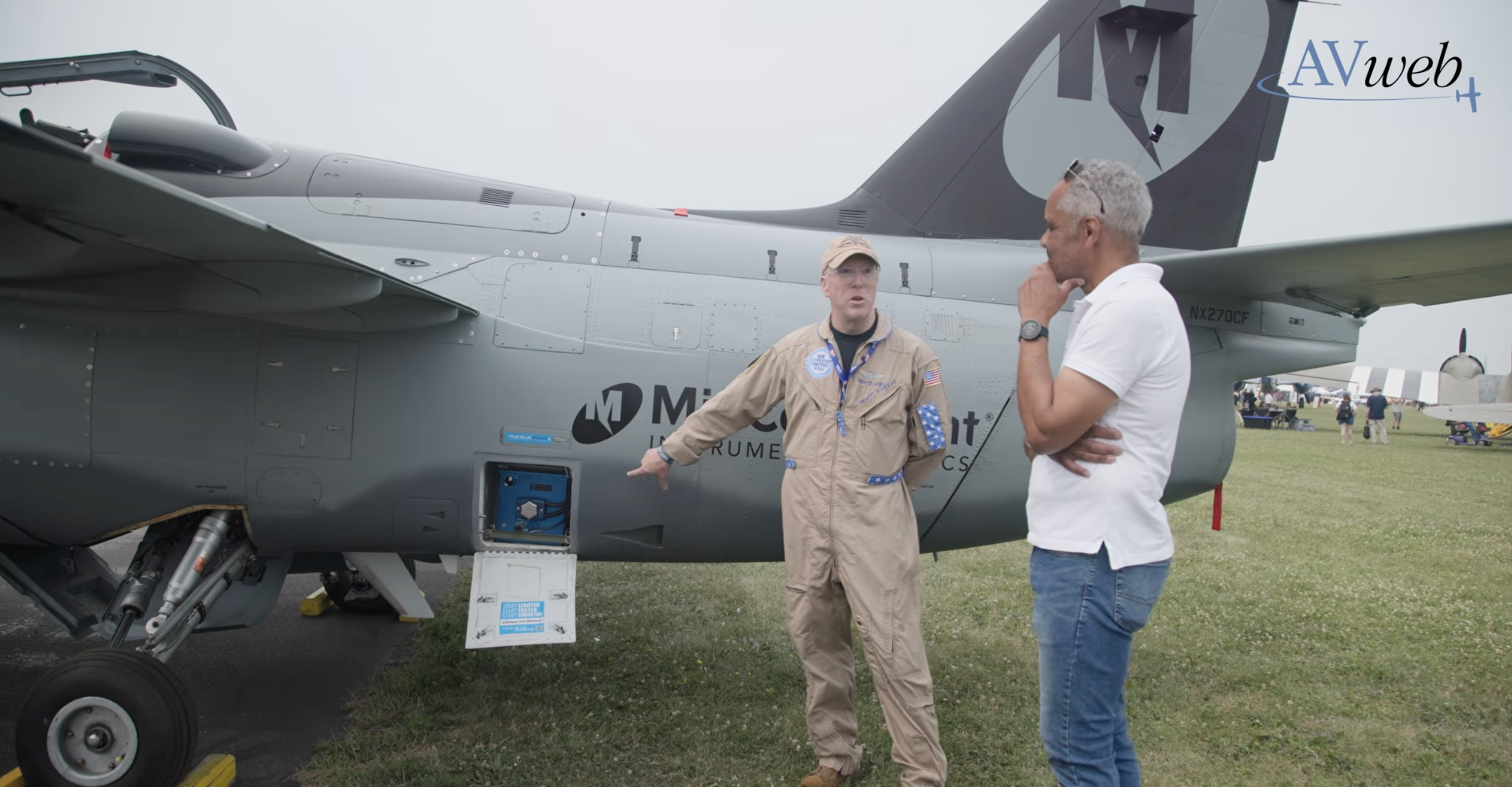
Matthew Harrah (left) talks to The Aviation Consumer lead editor Jonathan Welsh about the True Blue Power Gen5 TB50 at Oshkosh. [Credit: FLYING]
Mid-Continent Instruments and Avionics presidet Matthew Harrah (left) talks to The Aviation Consumer lead editor Jonathan Welsh (about the True Blue Power Gen5 TB50 at Oshkosh. [Credit: FLYING]

At EAA AirVenture 2026 in Oshkosh, Wisconsin, Mid-Continent Instruments and Avionics and True Blue Power president Matthew Harrah stood in front of an  SIAI-Marchetti S.211 jet trainer, one of only about a dozen flying in U.S. civilian hands. It doubled as both a showpiece and working test bed.

As chief test pilot for the company, Harrah uses the airplane to push the company’s instruments and batteries through real flight-test conditions. 

Jonathan Welsh, lead editor of The Aviation Consumer, visited the display to walk through what’s changed under the cowling.

The S.211 itself is a rarity on the American ramp.

Originally SIAI-Marchetti’s jet trainer for the Singapore and Philippine air forces in the 1980s, only about a dozen of the roughly 60 built have found their way into U.S. civilian hands, brokered largely out of surplus military inventories. Harrah’s airplane turns heads at any airshow, but it’s more than a showpiece. 

“The main reason we ended up with this airplane really was for flight tests,” Harrah said. “We do a lot of things that require a high angle of attack, because we do attitude indicators and all kinds of other instruments — all solid state these days. Plus, we still take care of some mechanicals. The simple reality is that we need something that gives us a little bit more safety margin.”

That safety margin, according to Harrah, is the whole point of a flight-test program. 

“Everything you do in a flight test is about risk management,” he said. “We really focused on trying to say, ‘Let’s find the right airplane that’s reliable, that’s efficient, that allows us to do the kind of testing that we do without having any kind of an issue.’”

The centerpiece under the S.211’s cowling is True Blue Power’s Gen5 TB50, a 50 amp-hour lithium-ion, main-ship battery built as a same-size replacement for the lead-acid units that have powered piston and turbine starts for decades. 

Harrah leaned on the company’s long-running tagline to walk through why it matters. 

“We always say, ‘Start lighter, start faster, start smarter,’” Harrah said. “We took 45 pounds out of the airplane just in going to our TB50 lithium battery compared to the lead acid. We’ve got a very narrow center of gravity, so it got us back midrange, right in the middle of the center of gravity envelope, which was fantastic for being able to load up the aircraft.”

The “faster” claim is where the demonstration got specific.

“For us, that’s 10 percent of the high-speed compressor,” Harrah said, describing the moment fuel is introduced on a jet start. “It was taking 12 seconds on the lead acid. We’re now doing it in about four seconds. You basically hit the starter switch and move your hand to the throttle. You’re at 10 percent, and you’re already bringing fuel in.” 

The payoff isn’t just a quicker start, according to Harrah. It’s a cooler, gentler one.

“From there, it means we’re running between 90 and 100 degrees [Celsius] cooler on the start,” he said. “Anybody who flies a large aircraft would recognize it’s a lot less wear and tear on the starter.” 

Brush-type starter-generators are particularly relevant.

“The biggest problem isn’t the energy coming into the starter initially,” Harrah said. “It’s the friction of the brushes on a lot of these brushed starter-generator motors that start to wear and get hot, and that’s the main wear factor. Also, the cooler temps are just a lot easier on the burner section of the engine.”

The “smarter” part is a digital data bus built into the battery itself. 

“We’ve got a data connector on the bottom of the battery, and we’re able to sit there and tell you exactly what the state of charge is and what the health of the battery is,” Harrah said. “So you don’t run into issues with getting into a hot start, because we’re going to tell you you’ve only got a certain percent state of charge left. You’re not trying to force something just off voltage.” 

He noted the voltage difference is dramatic on its own: “Normally on a lead acid, you’d be down to 13 volts at start. We actually stay about 20, 21 [volts].”

Walsh and Harrah turned to Doc, the restored Wichita-based B-29 Superfortress that, coincidentally, flew over the interview mid-taping.

“If you got a big radial engine, like in Doc that we just saw fly over—they’ve got three of our TB40 batteries inside that airplane,” Harrah said. “The difference is just so remarkable…in the way they’re able to turn the prop blades. Normally, for a big radial, you have to count 12 blades. It is amazing how much better they’re now able to motor that thing to get past the hydraulic lock. It’s been really impressive to see, and we’ve been excited to be able to support their efforts.”

Harrah said that same benefit scales down to the S.211’s turbine and up to the biggest warbird piston engines flying today.

“The partnership we’ve had with Doc has been great, and that’s generated quite a bit more of the interest,” he said. “We’re working with everything, T-28s, you get into the big Merlins, the Packard Merlins, 1650s. You pick your motor, and they’re all going to absolutely benefit from it at the end of the day.”

One habit Harrah said has quietly disappeared from his own preflight routine is disconnecting the battery. 

“I am yet to unplug the battery from the airplane,” he said. “A lot of people who fly jets would say if it’s in your lane, you disconnect the battery. If you’ve ever flown a CJ or something like that, that was the first step—you always unplug the battery. We never unplug the battery because of the way the battery management system works. We’re not dealing with this kind of constant draw.”

He offered a real-world number from filming the company’s own testing.

“You can go all the way down to 30 percent state of charge and still get the exact same kind of power out when you start,” Harrah said. 

Recovery was just as quick in testing.

“I was down to 70 percent state of charge,” he said. “Within five minutes I was back north of 90 [percent].” 

Any pilot who flies under 91.187’s 30-minute IFR reserve-power requirement knows that recharge speed is more than a convenience. 

“Now when you take off, that emergency power that you want to have—that 30 minutes of emergency power—it’s pretty much guaranteed you’re going to have it,” Harrah said. “And that’s one of the real safety features that you get behind the battery.”

Longevity is nearly as important, and Harrah said the Gen5 TB50 will be in the test airplane for eight to ten more years.

“They can take 10,000 cycles,” he said. “When you think about what you see out of a lead-acid battery, there’s no way—you’re always going to be less than a thousand cycles.” 

Storage tolerance matters too, particularly for owners who fly seasonally. 

“Easily, you’re going three months without having to put a battery tender on it without any issue,” Harrah said. “The beauty of a lithium-ion battery is they really love to be used…but when it does sit, it doesn’t lose a lot of energy.”

True Blue Power’s lineup now spans a 28 amp-hour, 12-volt battery aimed at the homebuilt and light GA market through 60 amp-hour packs, plus emergency standby batteries used across much of the business jet fleet. 

Harrah singled out one feature built for owners in colder climates. 

“We always think about people up in Canada who are breaking their backs every time they get a cold night,” he said. “If you have to haul a 90-pound battery around, that’s pretty painful. Now you’ve got a 45-pound battery, but you can also just leave it in the airplane because we’ve got the built-in heaters. You just hit a button and it warms itself up. Have a cup of coffee, and then you’re ready to go launch.”

The S.211’s panel doubles as a showcase for the rest of Mid-Continent’s catalog—an MD23 Flex-family standby attitude indicator, altimeter, and the company’s battery status indicator that displays the state of charge right on the instrument, a clock with USB charging ports, and an AC inverter the company has been flight testing in the airplane’s notoriously hot, breezeless nose section to support Starlink connectivity retrofits.

All of it traces back to a simple frustration that Harrah thinks the industry has tolerated for too long. 

“We get used to it—that’s kind of the bad thing in aviation,” he said. “We get used to living with pain, and we shouldn’t have to. So that’s part of our thing when we think about products that we build: How can we make the life of the average pilot, aircraft operator, and owner a lot better.”

Click here to learn more about Mid-Continent Instruments and Avionics and True Blue Power.

Matt Herr

Matt Herr develops sponsored content for clients at Firecrown Media. He is a gearhead and motoring enthusiast with experience in tech, freight and manufacturing. He spends his free time hiking with his wife, son and German shepherds, or reading and writing hobby pieces.

Qantas Plans Nonstop New York-Sydney Service in 2028

Australian carrier confirms its second ultra-long-range Project Sunrise route to be flown with Airbus A350-1000ULRs.

Rendering of Qantas Airbus A350-1000ULR aircraft over New York City
Qantas plans to launch the first nonstop commercial airliner service between Australia and New York in mid-2028. [Credit: Qantas]

Australia’s Qantas said Tuesday it plans to launch direct flights between New York and Sydney in mid-2028, which would mark the first nonstop commercial service between Australia and the Big Apple.

The flights will be handled by Airbus A350-1000ULRs specially configured to fly up to 22 hours nonstop. Qantas said the New York-Sydney route will last about 18 hours, shaving more than three hours off total travel time versus existing one-stop services. The carrier began service to New York in 1958 and operates a daily one-stop service between Sydney and New York via Auckland, New Zealand.

It said tickets for the nonstop route will go on sale in August 2027.

Qantas earlier this year said nonstop service between Sydney and London will begin in October 2027, with tickets going on sale in February, but it gave no hints about a New York launch until this week. Both ultra-long-range routes are part of the carrier’s Project Sunrise, for which it ordered a dozen A350-1000ULRs in 2022. It has estimated three aircraft will be required for nonstop daily service on either Project Sunrise route.

The aircraft will be configured with 238 seats across four cabins, downsizing from the standard A350-1000’s 350 to 410 seats to provide added comfort for the ultra-long-haul service. Qantas said Tuesday that the first test aircraft is nearing completion of its flight test program in France and expected to be delivered in April. The partners had previously targeted first delivery in 2026.

Qantas also said its pilots have begun training on Australia’s first A350 simulator in Sydney. More than 360 pilots and 1,200 cabin crew will be trained to operate the Project Sunrise aircraft.

Qantas Group CEO Vanessa Hudson said announcing the New York-Sydney route’s launch was a “moment of enormous pride” for the carrier, which first challenged Airbus and Boeing to extend the range of their next-generation aircraft in 2017. Boeing had offered its 777-8 as the basis for an extended-range model.

“Conquering the tyranny of distance has been part of who Qantas is from the very beginning,” Hudson said.

The carrier added that demand in and out of New York on Qantas has nearly doubled since 2023.

Qantas’ Ultra-Long-Range Addition

Project Sunrise is named after the long-haul flying boats that the airline flew during World War II. Passengers and crews would see the sun rise twice on 33-hour trips.

Underpinning the effort is the A350-1000ULR, a modified variant of Airbus’ A350 that Qantas has helped develop. It is one of the largest widebodies in production.

The key upgrade is an additional 20,000-liter fuel tank that gives the aircraft a projected range of about 10,000 nm, improving on the standard A350-1000’s range by about 1,000 nm. The A350-900ULR, Airbus’ longest-range aircraft in service, operates nonstop flights between Singapore and New York for Singapore Airlines, the world’s longest such commercial routes spanning about 8,275 nm.

Boeing’s longest-range design in service is the increasingly rare 777-200LR, which flies about 9,400 nm.

The -1000ULR will feature twin Rolls-Royce Trent XWB-97 engines and an intended cruise speed of Mach 0.85. It will also have a new galley air cooling system with lighter refrigeration units that will become standard across the A350 family in the future. Test pilots are evaluating not only the aircraft’s range but its ventilation and temperature control for passenger comfort.

“Flying these distances is only worth doing if our customers arrive feeling their best, and that belief has shaped everything we’ve built,” said Hudson. “Over the past decade, working alongside experts, we’ve designed the aircraft and the onboard experience around the science of ultra long-haul travel, from the lighting to the meals.”

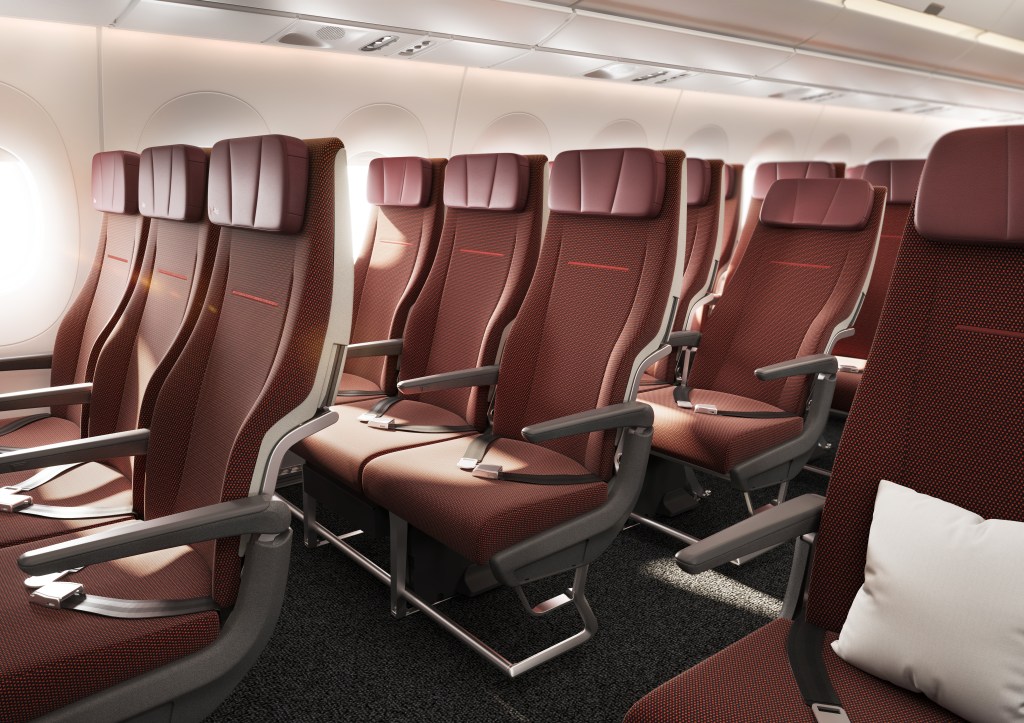
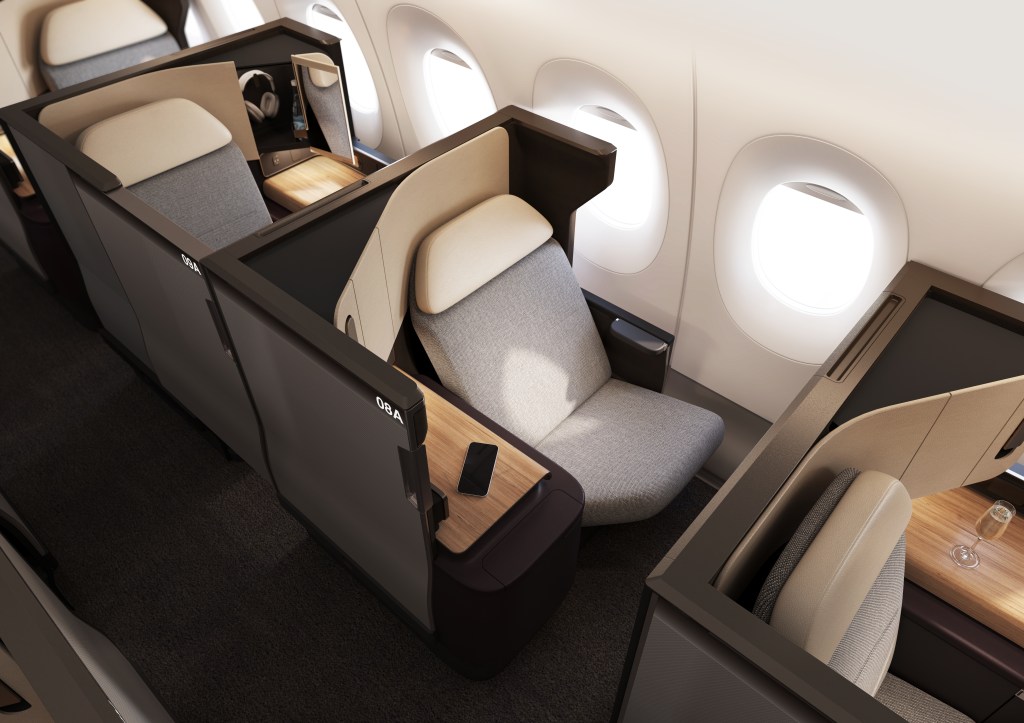
Forty percent of the Qantas -1000ULR’s 238 seats are expected to be premium, including six fully enclosed first-class cabins. Also planned is a “well-being zone” for passengers to stretch their legs and grab a snack.

The first Project Sunrise aircraft began flight testing in June. Airbus said it marked the start of a two-month flight test campaign to certify its range-extending modifications. The manufacturer said a second aircraft, the one it intends to deliver to Qantas in April, was in an “advanced stage of final assembly.”

In July, the first aircraft made history by completing a direct, non-stop, 24-hour and 24-minute flight from Melbourne to Toulouse. The flight spanned 12,460 nm and set new unofficial benchmarks for distance and endurance by a commercial airliner.

Once the testing is complete, the aircraft will be delivered and retrofitted to Qantas’ commercial specifications.

Jack Daleo

Jack is a staff writer covering advanced air mobility, including everything from drones to unmanned aircraft systems to space travel—and a whole lot more. He spent close to two years reporting on drone delivery for FreightWaves, covering the biggest news and developments in the space and connecting with industry executives and experts. Jack is also a basketball aficionado, a frequent traveler and a lover of all things logistics.

Sporty’s Launches Free Avionics and Flight Training Webinar Series

Four upcoming sessions cover autopilots, iPad flight tools, hand-held radios, and new Garmin flight displays.

Sporty’s Pilot Shop is offering free seminars on autopilots, radios, and iPad use. [Credit: Sporty's Pilot Shop]

Having the latest in avionics and pilot equipment doesn’t mean a thing unless you know how to use them correctly.

The folks at Sporty’s Pilot Shop know this and have created a series of free webinars to teach pilots best practices for the use of avionics, autopilots, iPad flight tools, and hand-held radios.

Here’s a rundown of the webinars that will take place over the next four weeks:

Wednesday, September 30

Garmin Axis Flight Displays: A First Look at What’s New

Garmin’s Luke Wickersham, a flight instructor and aviation educator, will share an overview of Axis, including 3D SafeTaxi, onboard data logging, the Flight Management System, and the different models and variants.

Axis was designed to increase safety, and the more a pilot knows about the system and its operation, the more likely that is to happen.

Wednesday, October 21

Beyond the Buttons: Mastering Your Modern Autopilot

Having an autopilot in the aircraft can either be helpful or distracting. It all comes down to the pilot’s understanding of how the system works and best practices for its implementation.

Ryan Koch, who leads the development of PilotWorkshops’ online training courses, will share practical habits for staying ahead of modern autopilots and how to use them for best results and, perhaps most importantly, recognize when they are doing something unexpected and unwanted and addressing the issue.

Wednesday, November 4

Aviation Radios: Choosing the Right Handheld

Every pilot should carry a hand-held radio in their flight bag, but finding the best one to suit your needs can be a challenge.

Sporty’s radio expert Doug Ranly will share his vast knowledge about the latest hand-held aviation radios, explaining their features and what matters most when planning a purchase. The presentation will examine radios from Icom, Yaesu, and Sporty’s, including the new PJ2 GPS, Sporty’s most advanced hand-held yet.

Wednesday, December 2

Flying With the iPad as a Digital Copilot

The iPad can either be a useful tool in the cockpit or a colossal distraction as the pilot, struggling to find the information, drops the airplane to fly the app. Bret Koebbe, an active flight instructor at Sporty’s and editor of iPad Pilot News, will demonstrate practical ways to get more from the iPad and ForeFlight Mobile.

Koebbe’s presentation will focus on using the iPad as a digital copilot, flying with ADS-B weather, and improving planning with ForeFlight.

All webinars begin at 3 p.m. ET and are open to pilots of all experience levels.

Registration and more information for each of the four webinars is available here.

Meg Godlewski

Meg Godlewski has been an aviation journalist for more than 24 years and a CFI for more than 20 years. If she is not flying or teaching aviation, she is writing about it. Meg is a founding member of the Pilot Proficiency Center at EAA AirVenture and excels at the application of simulation technology to flatten the learning curve. Follow Meg on Twitter @2Lewski.
Pilot in aircraft
Sign-up for newsletters & special offers!

Get the latest stories & special offers delivered directly to your inbox.

SUBSCRIBE