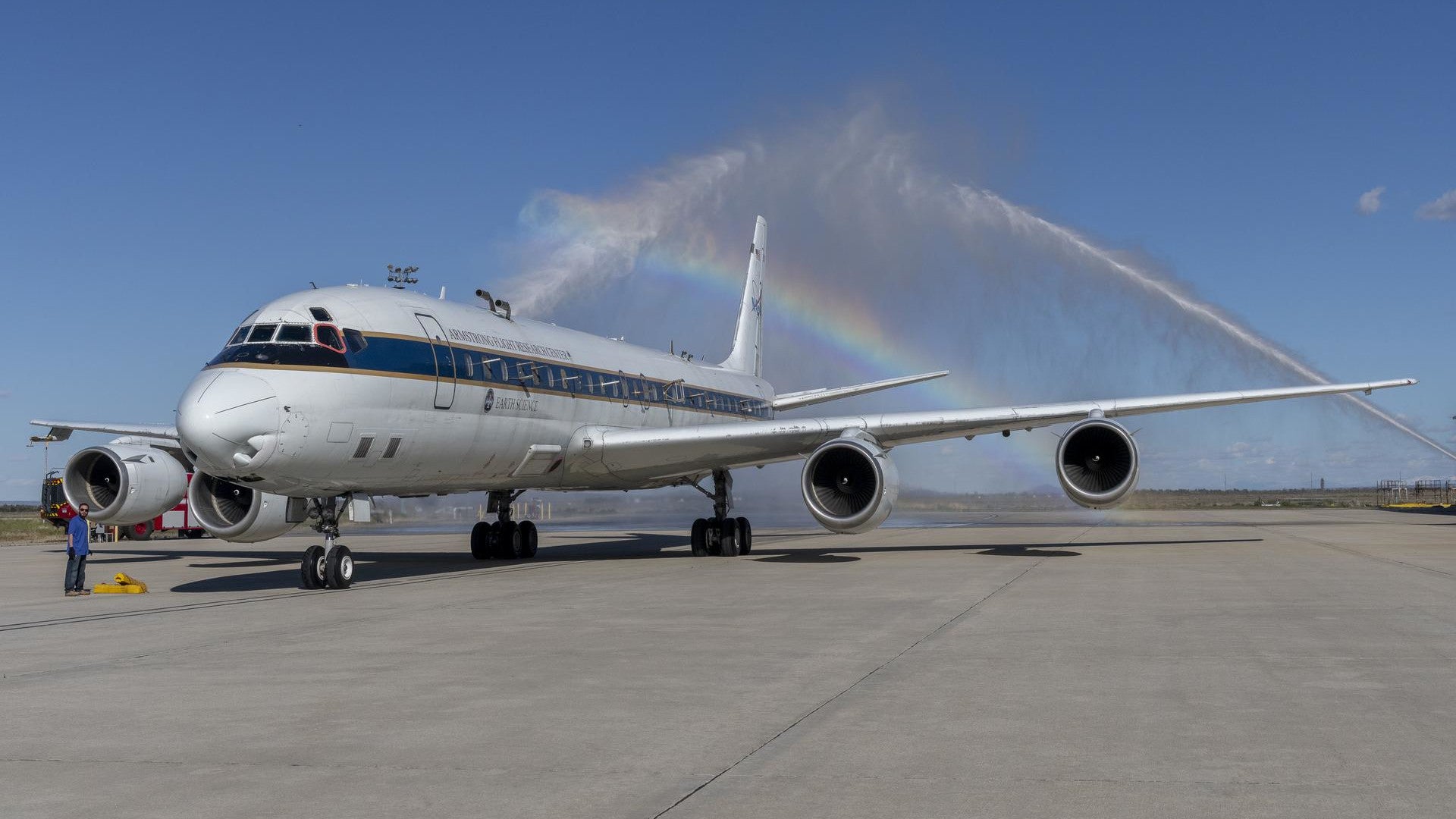
NASA’s DC-8 Airborne Research Laboratory returns to the agency’s Armstrong Flight Research Center at Edwards Air Force Base in California after completing its final scientific mission on April 1. [Courtesy: NASA]
Key Takeaways:
NASA's DC-8 Airborne Science Laboratory, the world's largest flying research aircraft, is retiring after 37 years of service.
The highly modified DC-8 completed 158 science missions, making significant contributions to Earth science, including improved weather forecasting, air quality studies, glacial ice monitoring, and hurricane prediction.
Upon retirement, the aircraft will be donated to Idaho State University to train aspiring aircraft technicians, inspiring a new generation in aviation and research.
The largest flying research laboratory in the world is headed for retirement after 37 years of operation.
NASA’s DC-8 Airborne Science Laboratory on Wednesday will make its final flight to Idaho State University in Pocatello, where aspiring aircraft technicians will train on it through the college’s aircraft maintenance technology program.
CREATE A FREE ACCOUNT
Sign up to keep reading
Create a free account to continue. Already a member? Sign in below.
Jack is a staff writer covering advanced air mobility, including everything from drones to unmanned aircraft systems to space travel—and a whole lot more. He spent close to two years reporting on drone delivery for FreightWaves, covering the biggest news and developments in the space and connecting with industry executives and experts. Jack is also a basketball aficionado, a frequent traveler and a lover of all things logistics.