NextGen Stalls Out After $36 Billion Push

OIG report finds FAA’s 20-year modernization delivers just 16 percent of promised benefits.

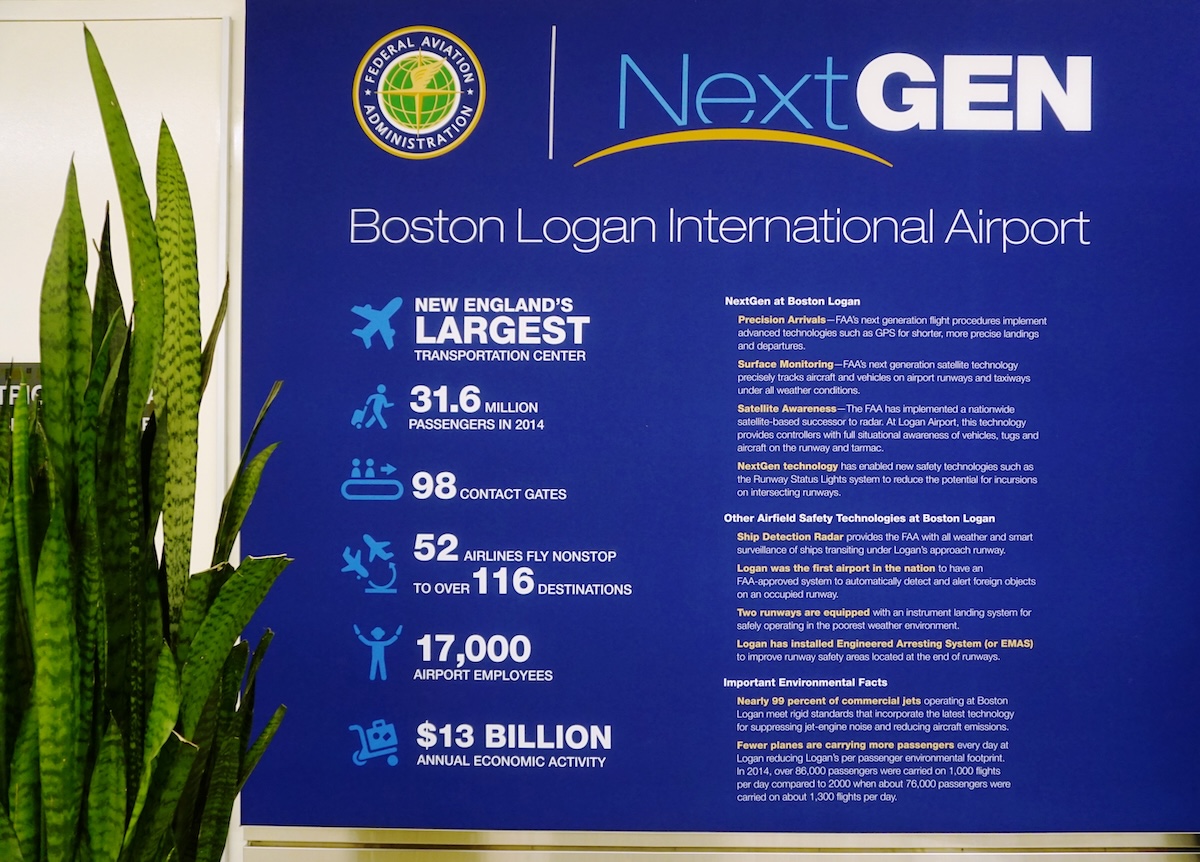
Sign explaining to passengers that Boston Logan International Airport (KBOS) is implementing the Next Generation Air Transport System (NextGen).
Sign explaining to passengers that Boston Logan International Airport (KBOS) is implementing the Next Generation Air Transport System (NextGen). [Shutterstock/EQRoy]
Gemini Sparkle

Key Takeaways:

  • The FAA's NextGen program, a two-decade, $36 billion effort to modernize U.S. air traffic management, has largely failed, delivering only 16% of its promised benefits.
  • A new watchdog report highlighted chronic delays, significant cost overruns, and the scaling back or cancellation of key initiatives, shifting its focus from a sweeping overhaul to incremental upgrades.
  • Originally intended to replace radar with satellite tracking and digitize communications by 2025, NextGen failed to deliver the expected transformation, leaving airlines and passengers with far less than envisioned.
  • With the NextGen office set to close by the end of 2025, the OIG warns that the FAA must apply lessons learned from its failures—including realistic planning and tighter oversight—to avoid similar issues with future modernization efforts.
See a mistake? Contact us.

The FAA’s effort to modernize U.S. air traffic management has failed to achieve the transformation once promised, according to a new watchdog report. 

After more than two decades and an estimated $36 billion investment, the Department of Transportation’s Office of Inspector General (OIG) found that the FAA has delivered only a fraction of the expected benefits.

NextGen, launched in 2003, was billed as a sweeping overhaul of the National Airspace System—replacing radar with satellite tracking, shifting controller communications to digital systems, and introducing advanced automation. By 2025, it was expected to cut delays, boost capacity, and reshape how aircraft move through U.S. airspace. 

Instead, the OIG concluded that as of late 2024, just 16 percent of those promised benefits have materialized, leaving airlines and passengers with far less than envisioned.

“Given the upcoming termination of FAA’s Office of NextGen and the [DOT’s] new infrastructure modernization plans, the memorandum highlights longstanding challenges and barriers that limited FAA’s progress in delivering NextGen capabilities,” the OIG stated. “The memorandum also highlights lessons learned regarding the planning, development, and implementation of NextGen.”

The FAA is scheduled to close its NextGen office by the end of 2025. This move was mandated by the FAA Reauthorization Act of 2024.

Decades of Delays and Cost Overruns

The report details chronic setbacks. Programs such as Data Communications, the NextGen Weather Processor, and the Terminal Flight Data Manager all ran years behind schedule and over budget. Some were scaled back, while others, like the NAS Voice Switch—meant to modernize controller communications—were canceled outright, pushing needed upgrades off by a decade or more.

FAA’s original goal of a transformational shift gave way to a more limited effort focused on incremental replacement of aging infrastructure. That pivot, the OIG said, left the modernization “less transformational” and diminished its long-term impact.

With the office set to close in a matter of months, the FAA has already set its sights on a new $31.5 billion “Brand New Air Traffic Control System” to replace core automation, communications, and surveillance networks. The OIG warned that unless the FAA applies lessons from NextGen—including realistic planning, tighter oversight of acquisitions, stronger cybersecurity protections, and better workforce training—history could repeat itself.

DOT Secretary Sean Duffy
DOT Secretary Sean Duffy [Courtesy: Department of Transportation]

“Over the years, we identified that [the] FAA experienced significant challenges with bridging the gap between long-term planning, requirements, development, and implementation…FAA’s lack of an effective risk identification and management process led to delays and increased the risk that the [agency] may not be able to deliver capabilities and benefits to the NAS as planned,” the report stated.

Despite the shortfall, FAA projects NextGen could still return $36 billion to $63 billion in benefits by 2040. But the OIG emphasized that the effort has missed its central mark of delivering the sweeping transformation promised when the program was launched more than 20 years ago.

Ryan Ewing

Ryan is Sr. Director of Digital for Firecrown's Aviation Group. In 2013, he founded AirlineGeeks.com, a leading trade publication covering the airline industry. Since then, his work has been featured in several publications and news outlets, including CNN, WJLA, CNET, and Business Insider. During his time in the airline industry, he's worked in roles pertaining to airport/airline operations while holding a B.S. in Air Transportation Management from Arizona State University along with an MBA. Previously, he worked for a Part 135 operator and later a major airline. Ryan is also an Adjunct Instructor at Embry-Riddle Aeronautical University.

Ready to Sell Your Aircraft?

List your airplane on AircraftForSale.com and reach qualified buyers.

List Your Aircraft
AircraftForSale Logo | FLYING Logo
Pilot in aircraft
Sign-up for newsletters & special offers!

Get the latest stories & special offers delivered directly to your inbox.

SUBSCRIBE