
Register

A Look at the First ‘Context-Aware’ Avionics Platform for GA

FLYING checks out Airhart Aeronautics’ Oshkosh debut.

Plane + Pilot magazine’s Cayla McLeod (left) talks with Nate Thuli, president of Airhart Aeronautics, at EAA AirVenture in July. [Credit: FLYING]

With jets roaring somewhere overhead, FLYING staff visited Airhart Aeronautics’ booth at this year’s EAA AirVenture in Oshkosh, Wisconsin. Four years and two hardware generations after the company began, Airhart president Nate Thuli was there to discuss what he describes as a fundamentally different starting assumption about how a general aviation cockpit should work.

Airhart has been building toward this moment since it emerged from Long Beach, California, with a mission to make personal aircraft “safe, beautiful, and intuitive-to-fly” enough to give more people the freedom of flight. Airhart has spent the last several years building out a fully vertically integrated avionics platform rather than another display that talks to somebody else’s boxes.

Thuli, a former U.S. Air Force program manager who joined as president to steer the company through this rollout, walked FLYING through exactly what that means on the show floor.

“Airhart is all about making aviation safer and making it more accessible,” Thuli said. “Accessibility both in terms of how approachable a system is, from the user interface to the installation, and also in terms of price point. Aviation is not necessarily the most affordable thing to be into, but we’ve done something really compelling with that as well.”

The hardware on display (a 31-inch housing containing two 14-inch displays) is the Airhart platform, and the company describes it as the first “context-aware” avionics system built for general aviation.

Vertical integration, according to Thuli, means Airhart builds and owns every layer of the stack—the display and user interface, the dual flight computers with embedded software-defined radios mounted behind the panel, and the autopilot servos actuating the flight controls, right down to an embedded microcontroller in every single unit. 

“They’re all intelligently connected, smart units,” Thuli said.

Connecting all of it is a single type of network connector and a single type of power connector shared across the entire system. There’s no proprietary one-off wiring harnesses and no third-party hardware in the loop.

“It slots in, it clicks, you know it’s in there, and then it locks in place,” Thuli said, adding that the approach completely eliminates wiring harnesses and the one-off complexity that has long made avionics upgrades a headache for owners and installers.

That simplicity sits on top of some serious engineering underneath. Every component is weather-sealed, down to a one-way pressure venting valve visible on the back of the unit, and the two flight computers are built with enough redundancy that either one, on its own, can power the entire platform if the other goes offline.

“There’s fault tolerance all the way down to the ball bearings in an autopilot servo,” Thuli said.

The depth of integration is what unlocks the context-aware capability. Because the system is watching every stick input, every screen tap, and everything transmitted over the radios, it is continuously building what Thuli called “a comprehensive pilot proficiency evaluation.” It tracks how a pilot performs across nine phases of flight, in real time, including whether they’re alert or starting to lose focus. That data will feed an upcoming pilot dashboard letting owners plan a flight and see a personal proficiency score phase by phase, rather than simply asking whether they’re legal and current. 

“You get a comprehensive look: here’s where you’re very strong, here’s where it really could be good to focus some of your upcoming training,” Thuli said.

The same hardware and software, in a desktop-mounted trainer configuration, is available as an add-on so pilots can build proficiency at home before they fly.

One of the features generating the most attention on the floor addresses the familiar hazard of a pilot mishearing or losing track of an ATC instruction. Rather than depending on data-linked traffic or weather feeds, Airhart’s system uses its own comm radios, intelligently switching antennas for the best reception and functioning as a software-defined radio that monitors additional frequencies even when the pilot isn’t tuned to them. The payoff is a live text transcript of what’s being said including heading and altitude callouts and one-tap autopilot execution. 

“It gives you the opportunity to not only hear what’s going on but also, as the pilot in command, to verify that your eyes agree with what your ears heard,” Thuli said.

The same architecture is designed to catch a subtler problem in rural or mountainous terrain where a radio handoff can be missed or a connection can drop silently.

“Airhart’s able to look at your flight plan and monitor adjacent frequencies,” Thuli said. “We can alert you if you’ve lost comms with who you were talking to and find your tail number on the next [frequency].”

Airhart’s initial market is the experimental, light sport and newly expanded Part 22 MOSAIC categories. Given how closely the company has worked with the consensus standards bodies shaping that regulatory wave, this was a deliberate choice. The full platform, including all display and computer units, autopilot servos and installation, is priced at $49,900. The desktop trainer is a $5,000 add-on.

“That’s it,” Thuli said. “That’s everything installed.”

FLYING got its closest look at the system installed in a Sling High Wing owned by Linda Sollars, who flew the airplane from California to Oshkosh for the show. The interface’s resemblance to consumer touchscreen products is intentional. 

“That’s the product of really a lot of intentional UI design,” Thuli said. “The focus at Airhart was on developing something that both experienced pilots and non-pilots alike can recognize as familiar but, at the same time, it’s also a breath of fresh air.”

Rather than displaying everything at once, the layout surfaces what’s relevant to the current phase of flight with a primary flight display on the left and multifunction information, including power, vertical speed, and altitude, on the right. Autopilot settings appear as small tabs that expand only when needed, giving the pilot a way to cross-check exactly what the system is set to do before engaging it.

Perhaps the clearest expression of that philosophy is the autopilot itself, which Airhart reduced to a single button. By default, it steers the aircraft along the loaded flight plan. Heading, altitude, vertical speed, and airspeed constraints layer on top as the pilot adjusts them, and a dedicated level button overrides everything instantly if a pilot becomes disoriented or uncomfortable, displaying exactly what wing-level attitude, heading, and altitude it’s rolling out to. 

“That just gives you trust and transparency into the system,” Thuli said. “When you hit that button, you know what’s going to happen, and you’re not left wondering.”

Automatic lights and automatic flaps extend that same context awareness into the sidebar, where the system can factor in real-time density altitude to recommend an optimal flap setting during approach, while still leaving the pilot free to fly it manually. By design, only two physical buttons remain in the cockpit—master power and push-to-start. 

“It’s as simple as it can get,” Thuli said.

Airhart enters the back half of 2026 with two Airhart-equipped aircraft flying. United Airlines Ventures invested in the company earlier this year as it began its first customer installations. For a company whose stated goal is dismantling the barriers between curious would-be pilots and the airplane, the reaction on the show floor suggested it’s making a real first impression. 

Click here to learn more about Airhart Aeronautics.

Matt Herr

Matt Herr develops sponsored content for clients at Firecrown Media. He is a gearhead and motoring enthusiast with experience in tech, freight and manufacturing. He spends his free time hiking with his wife, son and German shepherds, or reading and writing hobby pieces.

Garmin Brings SmartCharts Coverage to Canada and Mexico

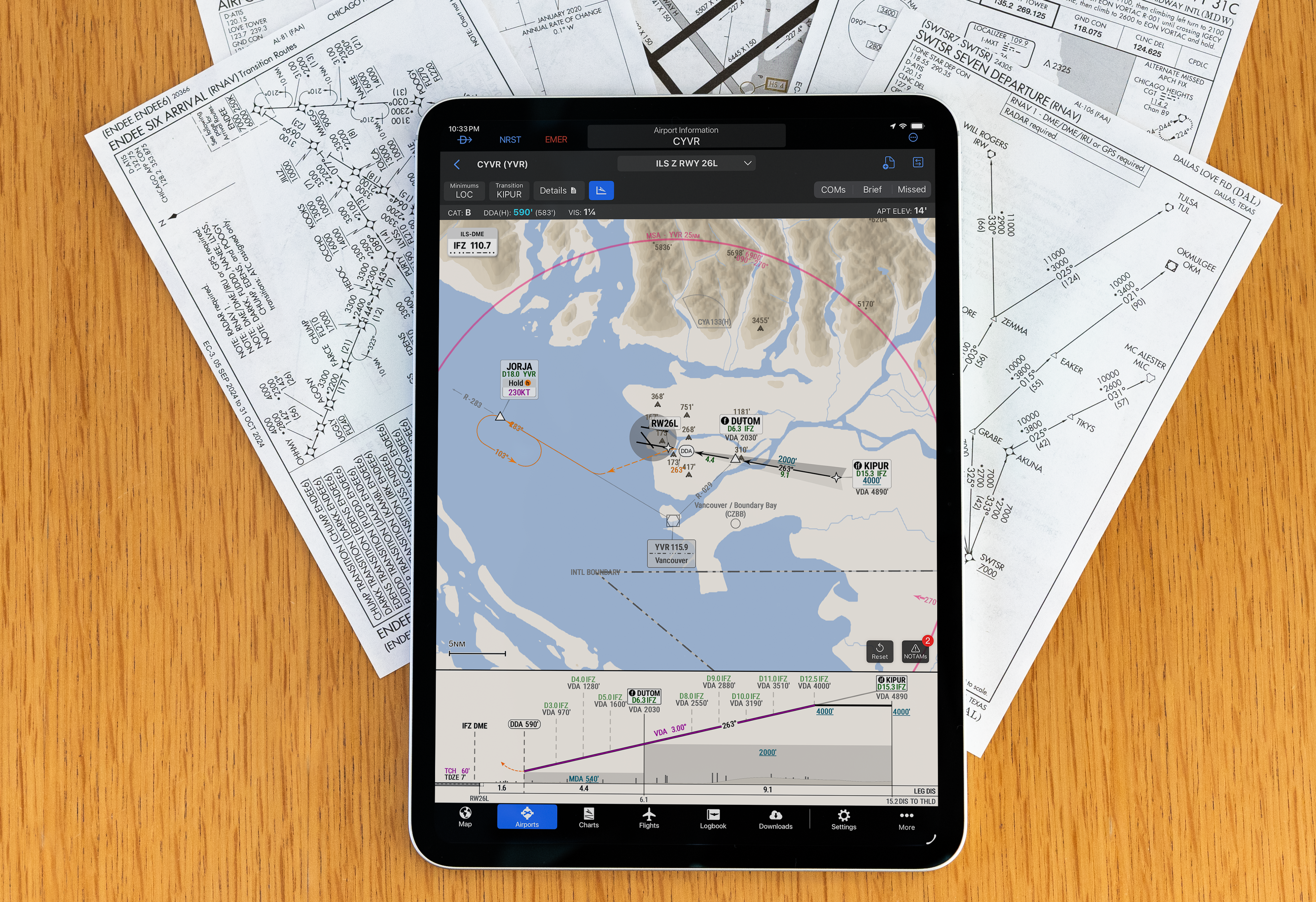
Garmin Pilot Premium users gain access to enhanced instrument procedure data and continuous descent profiles.

Garmin has expanded their SmartCharts offerings to pilots in Mexico and Canada. [Credit: Garmin]

Garmin is expanding its reach of SmartCharts for Garmin Pilot Premium users in Canada and Mexico who utilize both web and Apple mobile platforms. SmartCharts are a digital charting option that puts flight-critical information at a pilot’s finger tips.

Introduced in May of last year, SmartCharts optimize pilot workflow by providing only relevant data. Users can select specific aircraft type, arrival/departure/approach transition fix, and other pertinent information that pilots need to successfully brief and fly the instrument procedure.

Quick-access buttons also reveal pertinent procedure information, such as communication frequencies, and graphical missed approach icons help pilots decipher and keep track of the information they need to maintain situational awareness.

According to Garmin, in addition to all the previously announced SmartCharts features, pilots in Canada and Mexico can now take advantage of the Continuous Descent Final Approach (CDFA) path shown on the vertical profile view, along with cold weather adjustments that allow them to utilize cold-temperature-restricted airports and see the calculations and  corrections.

Additional improvements in this SmartCharts release include a missed approach climb gradient table displayed on approach charts and applicable climb gradient values being shown on departure procedure charts. Since the purpose of the missed approach is to get the aircraft away from the ground in a safe and timely manner, this feature is most appreciated.

SmartCharts are included with a Garmin Pilot Premium subscription for pilots operating in the United States, Canada, and Latin America regions. For pilots who fly across multiple regions, a Worldwide subscription option is also available.

These updates are available now on Garmin Pilot Web. Garmin Pilot mobile users can update to version 26.8 via the App Store.

Meg Godlewski

Meg Godlewski has been an aviation journalist for more than 24 years and a CFI for more than 20 years. If she is not flying or teaching aviation, she is writing about it. Meg is a founding member of the Pilot Proficiency Center at EAA AirVenture and excels at the application of simulation technology to flatten the learning curve. Follow Meg on Twitter @2Lewski.

Electra, Finland’s Capital to Study Off-Airport ‘Access Points’ Bound for U.S.

Manufacturer is also partnered with Signature Aviation to develop infrastructure for its ‘ultra short’ EL9.

Electra EL9 hybrid-electric aircraft
Compact access points at rooftops, parking lots, fields, barges, malls, casinos, or ski resorts could be served by Electra’s EL9, designed for takeoffs and landings with only 150 feet. [Credit: Electra]

Hybrid-electric “ultra short” aircraft developer Electra in July partnered with FBO Signature Aviation to explore “access points” for its flagship EL9, which is designed for takeoff and landing with only 150 feet of ground roll. Now, the manufacturer is working with Finland’s capital to study the same infrastructure it plans to deploy across the U.S.

According to Electra, EL9 access points could be installed at nonairport locations, including rooftops, parking lots, fields, barges, malls, casinos, or ski resorts. Working with the city of Helsinki and Haaga-Helia University of Applied Sciences, the company plans to evaluate the design of that infrastructure as well as the potential spike in demand that the EL9 could create.

According to a market outlook Electra published in March, it estimates that the EL9 could cut travel times by one or more hours for over 2,600 routes that see at least 1,000 daily drivers and span 50 to 265 miles, but which lack reliable air service. The calculation includes flight time, average driving time to or from the access point at the origin and destination, waiting time, and ingress and egress.

Electra, the city, and the university aim to complete the study by the end of 2026.

Evolution of Aircraft Infrastructure?

Electra’s planned study will focus on the twin cities of Helsinki and Tallinn, Estonia.

The cities sit about 80 kilometers apart, separated by the Gulf of Finland. Local officials are exploring ways to shorten trips by air or ferry, including with a proposed undersea tunnel.

Electra estimated that about 7.5 million people travel between the cities each year. But the Helsinki-Tallinn ferry route alone recorded about 7.3 million travelers in 2025, according to local newspaper The Baltic Times. The ferry trip takes about two hours.

Direct flights from Finnish flag carrier Finnair are in the sky for about 30 minutes, though total travel time is closer to that of the ferry due to the time it takes to travel through an airport. Estonia lacks a national airline, and AirBaltic, the Latvian flag carrier, does not offer direct Helsinki-Tallinn flights. AirBaltic flights typically stop over in Riga, the Latvian capital.

Electra believes these characteristics make the region ideal for studying off-airport access points that are closer to where people live and work. The company describes this concept as “direct aviation.”

Electra said it will study how the hybrid-electric EL9 and its associated infrastructure could enable faster and more efficient regional travel while also reducing noise. It plans to study access point design—including sizing and costs for candidate sites identified by the city of Helsinki—as well as operating economics and regulations.

Helsinki and Haaga-Helia University will further evaluate passenger demand by studying existing travel flows by air and ferry. The partners will look to determine whether direct aviation could drive stronger demand for the Helsinki-Tallinn route, as well as how that demand may vary by time of day, day of week, season, and ticket price.

Beyond the twin cities, Electra said the partners will look at “additional regional destinations of interest to Helsinki residents, businesses, and visitors.” The manufacturer said the activities will create a “roadmap” for establishing access points and offering an initial commercial service in the region.

In addition, Electra said the partners will “explore opportunities” for flight demonstrations with the company’s EL2 Goldfinch. The two-seat demonstrator, designed for the same 150-foot ground roll as the EL9, is already flying at airports in New Jersey, Pennsylvania, and Virginia. Later this year, Electra aims to begin similar activities in New York, Florida, and Louisiana.

The company estimates that the EL9 will offer more than 2.5 times the payload, 10 times the range, and 70 percent lower operating costs versus helicopters or eVTOL (electric vertical takeoff and landing) air taxis. It said Thursday that it has over 2,200 letters of intent to purchase aircraft from more than 60 commercial airlines and helicopter operators.

Jack Daleo

Jack is a staff writer covering advanced air mobility, including everything from drones to unmanned aircraft systems to space travel—and a whole lot more. He spent close to two years reporting on drone delivery for FreightWaves, covering the biggest news and developments in the space and connecting with industry executives and experts. Jack is also a basketball aficionado, a frequent traveler and a lover of all things logistics.

What Pilots Often Miss When Reviewing Their Benefits

Allworth Airline Advisors on the HSAs, Roth strategies and coverage gaps pilots miss each fall.

Pilot using a tablet. [Shutterstock]

Open enrollment rolls around every fall, and it’s usually accompanied by a stack of PDFs and deadlines. A lot of pilots handle the process as quickly as they can, re-electing the same plan and same coverage levels as last year simply because that’s what’s already there.

That’s the habit Allworth Airline Advisors set out to interrupt in their recent webinar, “The Open Enrollment Hot Seat.” Rutledge Gordon, CRPC, VP of Advisors at Allworth Financial, hosted airline-specialized financial advisors Gary Krasnov, AIF, CLTC, and James Risalvato for a conversation on the parts of open enrollment pilots tend to skim past, from health savings accounts to cash balance plans to updating beneficiary designations.

The Triple Tax Advantage Hiding in Plain Sight

Krasnov opened with what he considers one of the most underused tools available to high-earning pilots: the health savings account (HSA). 

“HSA is the only vehicle where you take pretax dollars and deposit it in the account,” Krasnov said. “You can control the investment so it can grow tax-free. When you take the money out, as long as you use it for a qualified medical expense, it comes out tax-free. It’s an incredibly powerful tool.”

An HSA account is a long-term investment vehicle in its own right for pilots with the cash flow to cover medical costs out of pocket. 

Banking medical receipts over the years while letting HSA contributions ride untouched is what Risalvato calls the “shoebox method.” 

“This method allows the most tax-advantaged account that we have to continue to do what it does best and save you on taxes with tax-deferred growth, tax-free distributions,” Risalvato said. 

Reimbursement doesn’t have to happen the same year the expense occurred. Pilots can submit older receipts well into retirement. 

“One of my clients recently used that money to go on a cruise,” Risalvato said.

That flexibility doesn’t last forever, though. 

“If I die, my wife inherits my HSA as if it were hers,” Krasnov said. “If we both die, it becomes taxable [to heirs]. So the point of that is: once you retire, start using it.”

Roth or Traditional? 

There’s no universal correct 401(k) contribution strategy, but there are answers that fit a given pilot’s income, tax bracket and career stage.

Traditional contributions defer taxes until retirement, while Roth contributions tax the money upfront in exchange for tax-free growth and withdrawals later. 

“Between these two accounts, what we’re able to do is create a very tax-efficient investment strategy, depending on where you’re at in your earning years,” Risalvato said.

Senior, high-earning pilots in their peak years tend to be in a thirty-seven percent tax bracket.

“That’s a very expensive dollar to put in a Roth,” Krasnov said. His general recommendation for that group is to lean into traditional contributions during peak earning years, then revisit Roth conversions after retiring, when income typically drops.

Younger pilots, still climbing toward those top tax brackets are a different story. 

“If you’re just starting out in your career, you absolutely should be doing Roth contributions,” Krasnov said. “Those are super powerful dollars when you’re in a lower income tax bracket.”

Despite legislative changes that affect catch-up contributions, Krasnov says to keep making those contributions.

“That money is getting taxed one way or the other,” he said. “At least you’re getting to put it in a Roth.”

Risalvato added that tax planning doesn’t stop at the day of retirement.

“As soon as you retire at age sixty-five, your effective income tax drops significantly,” he said. “We actually convert traditional money over to Roth money, taking advantage of these lower effective tax rates during retirement.”

Skip that step, he warns, and you could possibly be leaving tens, if not hundreds of thousands of dollars in federal tax savings over the course of the rest of your life on the table.

Cash Balance Plans

The market-based cash balance plan is a newer option carriers now offer for pilots who max out their 401(k) contributions well before year’s end.

“The major airlines have the three best 401(k) plans in America, bar none,” Krasnov said. The catch is what happens once a pilot’s contributions hit the IRS’s annual limit on tax-deferred savings. Historically, any company contribution beyond that cap simply showed up as taxable income in a paycheck. “It’s really not helping you save toward retirement,” Krasnov said.

The cash balance plan redirects that excess into a separate, professionally managed account instead. “It gets invested by the company,” Krasnov explained. The allocation, he says, leans conservative by design in exchange for a guarantee: “You can’t go negative. You always get your money back.” 

There are some tradeoffs. 

“You cannot control the investments,” Risalvato said. The plan isn’t a fit for pilots who want aggressive growth or need liquidity from those dollars soon. But framed as a tax play for high earners looking to keep deferring income, he says that this plan could potentially save you a lot of money in taxes in the future. Funds can later roll into a traditional IRA.

Coverage Gaps and the Mistakes That Repeat Every Year

Some parts of open enrollment are easy to overlook, including supplemental coverage and beneficiary designations.

Voluntary benefits like critical illness and accidental death and dismemberment coverage, according to Risalvato, can be treated as insurance against a low-probability, high-consequence event, not an expense to minimize. 

“It’s planning for the unexpected,” Risalvato said. 

Beneficiary reviews are a five-minute task that Krasnov says too many pilots skip year after year. “It’s amazing the mistakes we find year over year,” he said, recalling clients discovering an ex-spouse still listed on a policy. He was equally emphatic about naming contingent beneficiaries, not just primary ones, to keep accounts out of probate. 

There’s another coverage gap that’s easy to miss for pilots with a stay-at-home spouse. 

“Caregivers, spouses specifically, are probably the most underinsured demographic in America,” Krasnov said.

Risalvato closed with a case that stuck with him in which a pilot who shattered his ankle in a fall at home and needed long-term disability coverage he never expected to use. 

“His family was completely dependent on that income coming in,” Risalvato said. “If you’re not revisiting your insurances every single year, you’re doing not just yourself, but your entire family, a huge disservice.”

Free Consultations with Allworth Airline Advisors

HSAs, Roth conversions, cash balance plans and supplemental coverage all come with the same caveat: what works depends on your income, career stage, and family situation. The cost of not reviewing these decisions, Krasnov says, is simply too high. 

Allworth Airline Advisors can help you sit down with a specialized advisor before finalizing open enrollment elections, rather than after. 

“It doesn’t need to be a two-hour-long discussion,” Gordon said. “We could probably knock this out in twenty or thirty minutes, just to explain some of these things and what it means if you choose option A versus option B.”

If you want to review your open enrollment options with an airline-specialized advisor, schedule a complimentary consultation with Allworth Airline Advisors at AllworthAirline.com/Consultation or by calling 800-321-9123.

Matt Herr

Matt Herr develops sponsored content for clients at Firecrown Media. He is a gearhead and motoring enthusiast with experience in tech, freight and manufacturing. He spends his free time hiking with his wife, son and German shepherds, or reading and writing hobby pieces.

This 1986 SOCATA TB-21 Trinidad Is an Invested ‘AircraftForSale’ Top Pick

Formidable cross-country machine features full TKS deice system, premium Avidyne avionics, and spacious cabin.

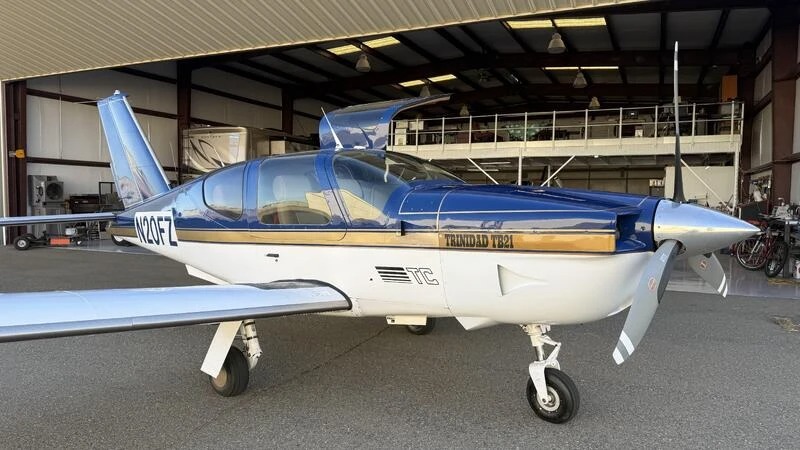
1986 SOCATA TB-21 Trinidad [Credit: Randy Sharp]

Every day, the team at Aircraft For Sale chooses an airplane that catches our attention because it is unique, a good deal, or has other qualities we find interesting. You can read Aircraft For Sale: Today’s Top Pick at FLYINGMag.com daily.

Today’s Top Pick is a 1986 SOCATA TB-21 Trinidad.

Widely recognized for its striking European design and expansive gull-wing doors, this turbocharged SOCATA TB-21 Trinidad stands out in the single-engine piston market for its sports-car-like ergonomics and remarkably spacious cabin. The French-built aircraft has earned a loyal following among owner-pilots who value its blend of excellent visibility, solid handling characteristics, and impressive high-altitude cruising capabilities.

Those occupying the front seats will appreciate the highly upgraded instrument panel, which centers around a modern Avidyne IFD550 GPS/nav fully coupled to an S-TEC 65 autopilot featuring altitude pre-select. The avionics suite also includes an Avidyne SkyTrax200 ADS-B receiver, Avidyne AXP340 transponder, Garmin GNC 255A nav/com, and Shadin fuel flow monitor. 

Moving to the cabin, the updated interior, rated 8/10, treats the pilot and copilot to air-memory-foam seats with matching upholstery, making long-haul missions exceptionally comfortable.

Driving the aircraft is a reliable turbocharged Lycoming powerplant that, while at TBO, is reported to be running remarkably strong with clean oil analysis tracked over the past 15 years. To ensure continued dependable operation, the owner recently invested in new replacements from Lycoming for cylinders one, two, three, five, and six. This proven engine is paired with a three-blade Hartzell propeller that includes TKS deice and represents a $10,000 investment, delivering confident performance for high-altitude missions.

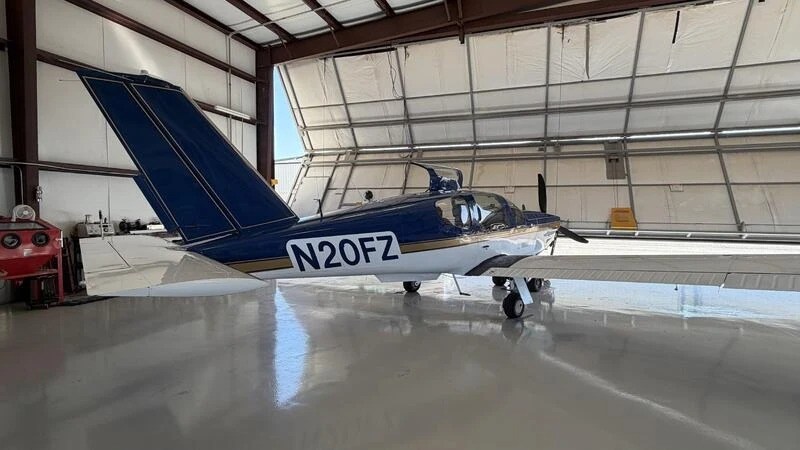
1986 SOCATA TB-21 Trinidad [Credit: Randy Sharp]

Based in Rocklin, California, this 1986 model arrives on the market with just 2,385 total hours on the airframe. The well-cared-for aircraft boasts complete records with no damage history, and it has been meticulously maintained by a professional pilot owner with A&P/IA ratings. Enhancing its all-weather capability, the Trinidad features a unique, fully integrated TKS deice system covering the wings, windshield, tail, and propeller. 

The exterior sports fresh firewall-forward paint on the cowlings and updated LED lighting, earning an overall 7/8 condition rating, while the airframe provides a practical useful load of 1,041 pounds.

Listed at $199,950, this 1986 SOCATA TB-21 Trinidad presents an impressive combination of low airframe time, extensive high-value upgrades, and genuine all-weather capability for the serious traveler.

If you’re exploring ownership options, FLYING Finance can help get you airborne. Use our airplane loan calculator to estimate your monthly payments, or connect with an aviation finance expert at flyingfinance.com.

FLYING Staff

FLYING Magazine is a one-stop resource for everything aviation, including news, training, aircraft, gear, careers, photos, videos, and more.

Dolly Parton International: State Rep Supports Bill Renaming Nashville Airport

Tennessee’s Todd Warner vows to introduce legislation in support of a new moniker.

An aerial view of downtown Nashville's cityscape
An aerial view of downtown Nashville's cityscape. [Credit: Adobe Stock]

A Tennessee state representative appears to have lent support for renaming Nashville International Airport (KBNA) after country singer Dolly Parton, who died at age 80 in Music City on Tuesday.

A petition started by two Nashville residents in early 2025 to rename Nashville International after Parton had only a few thousand supporters earlier this week. Following Parton’s death, the petition has spiked to more than 90,000 signatures as of Wednesday.

The petition is hosted by Change.org, which said its civic engagement team contacts decision makers to inform them of petitions in their community. Those people can then comment on community initiatives.

“Yes I will definitely introduce legislation to rename the BNA airport Dolly Parton International Airport! Thanks, TW,” reads a comment attributed to Tennessee state representative Todd Warner, whom Change.org said responded to the petition via email.

Warner appears to be the first local politician to explicitly support the airport’s renaming.

“The outpouring of support has reinvigorated our mission—to rename the Nashville International Airport to Dolly Parton International Airport,” the petition’s organizers wrote Tuesday. “Tennessee state [Representative] Todd Warner has pledged to introduce legislation to make this change happen. We are so very grateful for his support.”

The Tennessean reported Tuesday that organizers launched the campaign in 2025 in response to previous legislation backed by Warner, which called to rename Nashville International after President Donald Trump. Officials in Florida earlier this year renamed Palm Beach International Airport (formerly KPBI, now KDJT) after Trump following an affirmative vote from local lawmakers.

Atlanta’s WAGA-TV reported in April 2025 that Warner withdrew the legislation one month after filing it, due to pushback from Nashville legislators.

“That bill went down in flames in the transportation committee,” Warner said in March 2025, according to local news outlet The Williamson Scene. “I had numerous emails asking to name it [after Parton,] and I would have no problem with that whatsoever.”

Parton in 2025 gave an exclusive interview to The Tennessean after becoming aware of the petition to rename the airport after her. At the time, it had fewer than 3,000 signatures, the newspaper reported. According to organizers, “tens of thousands of additional supporters” have signed it after Parton’s death.

“It does sound like a lot of fun to say: ‘Your flight is departin’ from Nashville’s D. Parton,’” the singer said.

Parton, 80, was born in Pittman Center, Tennessee, near the town of Gatlinburg. She moved to Nashville shortly after graduating high school, and the best-selling artist became well known for her association with the city.

Though Parton is beloved by Tennesseans, it is unclear whether Nashville International’s proposed renaming could happen any time soon. According to The Tennessean, an airport naming policy introduced in 2020 and updated in 2024 requires airport buildings to be named after people who have been deceased for at least two years.

That means August 25, 2028, would be the earliest that passengers could say they are “departin’ from Parton,” unless the rule is changed.

The newspaper also reported that Nashville airport officials in 2025 estimated it would cost about $10.34 million to rebrand the airport. As is the case with Palm Beach International’s transition to Donald J. Trump International, the rebrand would require new signage, merchandise, uniforms, and possibly a new International Air Transport Association (IATA) identifier.

Local officials will factor in those considerations should Warner initiate the process of renaming the airport.

Jack Daleo

Jack is a staff writer covering advanced air mobility, including everything from drones to unmanned aircraft systems to space travel—and a whole lot more. He spent close to two years reporting on drone delivery for FreightWaves, covering the biggest news and developments in the space and connecting with industry executives and experts. Jack is also a basketball aficionado, a frequent traveler and a lover of all things logistics.

How to Become a Navy Pilot

Naval aviators serve country while working in exciting and rewarding environment.

A Naval jet leaves the deck of an aircraft carrier. [Credit: Shutterstock]

Imagine the thunderous roar of a fighter jet as it takes off from an aircraft carrier, defying gravity and launching into the open sky. Or think of a tactical helicopter hovering over the ocean, lowering a search and rescue crew.

U.S. Navy pilots perform challenging missions like these daily in service of their country. 

Pilots serving in the Navy enjoy a wide variety of opportunities, ranging from flying antisubmarine warfare helicopters to large transport. Whether you are captivated by the speed of a supersonic fighter jet or the challenge of flying under extreme conditions, the allure of naval aviation is undeniable.

The journey to becoming a Navy pilot is not an easy one. It is a years-long process that involves many challenging steps. FLYING breaks down the requirements, selection process, and training sequence for becoming a Naval aviator. 

What Is a Navy Pilot?

Navy pilots are highly trained aviation professionals who operate aircraft in support of the operations of the U.S. Navy. Some are fighter pilots like those seen in the movie Top Gun, but many others fly other aircraft like transport jets and surveillance planes. Pilots in the navy are commissioned officers, meaning that they have at least a bachelor’s degree in addition to their flight training. 

While many navy pilots operate aircraft based on Navy ships, others work from bases located on shore. A career as a Naval aviator also offers many opportunities beyond the operational sphere, including working as a training pilot or as a test pilot. 

As is generally the case for all U.S. military members, Navy pilots can retire with a pension after 20 years of service. Some pilots choose to leave before that or serve for longer, but many go on to pursue second careers in aviation. Former Navy pilots can be found working as flight instructors, airline pilots, or corporate pilots. 

Preparing to Become a Navy Pilot

There are many considerations when deciding to pursue a career as a Navy pilot. Aspiring naval aviators should put in the time and effort to make themselves competitive candidates and set themselves up for success in the process. 

Academic Excellence

Navy pilots are commissioned officers, meaning that they have completed an undergraduate bachelor’s degree. There are a few different ways you can get your degree—which will be discussed later—but you will need to be able to keep up with the academic rigor of a college program. Although having a background in subjects like math and science can benefit pilots, there is no requirement to have a STEM-related degree to become a military pilot.

Physical Fitness

Like all military members, Navy pilots are expected to maintain a high level of physical fitness. Pilots have to perform long missions, experience high G-forces, and work in challenging environments. A high level of physical performance prepares pilots for the realities of an operational or combat situation. 

Skills and Qualities

Those interested in becoming a Navy pilot can also work on general workplace skills that will be beneficial for a career as a future aviator. Given the nature of their work, Navy pilots need to be able to work both independently and as a team. They must have strong communication skills and the ability to work under pressure. Furthermore, you should be able to manage high levels of stress while also making decisions efficiently and accurately. 

Understanding the Lifestyle

The military lifestyle is not for everyone. While serving your country is a rewarding and exciting experience, it also comes with its challenges. Navy pilots will likely have to relocate multiple times throughout their career and serve deployments at sea or abroad. This can mean long periods of time away from friends and family. Aspiring Naval aviators should make sure that they fully understand the implications of military service before pursuing a career in the armed forces.

7 Steps to Becoming a Navy Pilot

The journey to flying in the U.S. Navy can be a long one. Here is an overview of the seven-step process:

1. Meet the basic eligibility requirements

You will first need to meet the general requirements to join the Navy. Commissioned officers need to be U.S. citizens who are willing to serve anywhere in the world. You will also need to pass standardized testing and meet physical and medical requirements. 

2. Obtain a college degree

Navy pilots are commissioned officers, meaning that they must have an undergraduate bachelor’s degree. You can obtain your college education on your own, but there are also two ways to receive it with the help of the U.S. Navy. 

Firstly, you can attend the United States Naval Academy in Annapolis, Maryland. The Naval academy is an undergraduate college, and all students graduate with a Bachelor of Science. Students attend the Naval academy for four years and are commissioned as officers following graduation. 

The second option is to go through the Naval Reserve Office Training Corps (NROTC) program. This program allows you to attend a civilian college and complete military training during the summer months. You can apply for a scholarship that covers your tuition in exchange for a commitment to serve for a certain number of years upon graduation. 

3. Earn your commission 

If you attend the Naval Academy or go through the NROTC program, you will be commissioned after you graduate. If you already have a college degree, you can apply to attend Officer Candidate School (OCS) in Newport, Rhode Island. OCS provides initial training for Navy officers in all fields. Successful candidates are commissioned after completing the 13-week program. 

4. Take the Aviation Selection Test Battery 

To enter the naval pilot training process, you will need to score at least a 35 on the Aviation Selection Test Battery (ASTB). When you take this test will depend on your path to becoming an officer. The test battery consists of six subtests, covering topics like reading, math, and aviation knowledge. 

5. Naval Introductory Flight Evaluation 

Student naval aviators begin their flight training with the Naval Introductory Flight Evaluation (NIFE). This replaced the former Aviation Preflight Indoctrination (API) and Introductory Flight Screening (IFS) programs in 2020. NIFE includes classroom training and ground-based practical training like survival training. There is also a flying phase conducted at civilian flight training schools at Pensacola International Airport (KPNS) in Florida or Gulf Shores International Airport atJack Edwards Field (KJKA) in Alabama. 

6. Primary Flight Training

After successfully completing NIFE, student naval aviators are sent to Naval Air Station Whiting Field in Florida or Naval Air Station Corpus Christi in Texas to complete Primary Flight Training. This program is the Navy’s basic flight training and uses a combination of ground school and flying. Primary Flight Training lasts six months and is conducted in the Beechcraft T-6B aircraft. 

7. Intermediate and Advanced Flight Training

After completing Primary Flight Training, each student is assigned to one of six flight training paths. Students submit their preferences, but assignment is also based on the needs of the U.S. Navy and the student’s performance. The six options are strike (fighter jets), rotary (helicopter), maritime (multiengine patrol and transport aircraft), tilt-rotor, E-2/C-2, and E-6. 

Some training paths have an Intermediate Flight Training phase, while students in other paths proceed directly to Advanced Flight Training. The aircraft used in these phases depend on the specific path. After completing Advanced Flight Training, students receive their wings and are considered naval aviators. They are then typically sent to a Fleet Replacement Squadron for training on a specific aircraft type before being assigned to an operational unit. 

Ready to Become a Navy Pilot?

The path to becoming a pilot in the U.S. Navy is not an easy or short one. However, a career as a Naval aviator is extremely rewarding and exciting. The work demands precision, rapid decision making, and the ability to work in challenging conditions, all while offering the opportunity to serve your country. 

FAQ

How much do U.S. Navy pilots get paid?

The salary of a military officer in the United States includes their base pay, plus additional amounts like housing allowances. Navy pilots can expect to make anywhere from $90,000-$115,000 (including benefits), depending on where they are in their career. Those in more senior officer ranks receive higher salaries beyond that range. 

Is the process of becoming a Naval aviator competitive?

Yes. There are many more prospective pilots than there are positions available. You should work hard to ensure that you have a strong GPA and other relevant skills to ensure that you are a competitive candidate. 

How long does it take to become a Navy pilot?

The time it takes to complete your initial application process and college education depends on your situation. After receiving your commission, flight training can take anywhere from two to three years. The length of training depends on your aircraft path and any waiting periods between the different phases of flight training. 

Andrew Chen

Andrew is a lifelong lover of aviation and travel. He has flown all over the world and is fascinated by the workings of the air travel industry. As a private pilot and glider pilot who has worked with airlines, airports and other industry stakeholders, he is always excited to share his passion for aviation with others. In addition to being a writer, he also hosts Flying Smarter, an educational travel podcast that explores the complex world of air travel to help listeners become better-informed and savvier travelers.

Autonomous Aircraft Vertiport Coming to California’s Hollister Municipal

Wisk Aero says it broke ground on a dedicated site for testing air taxi technology.

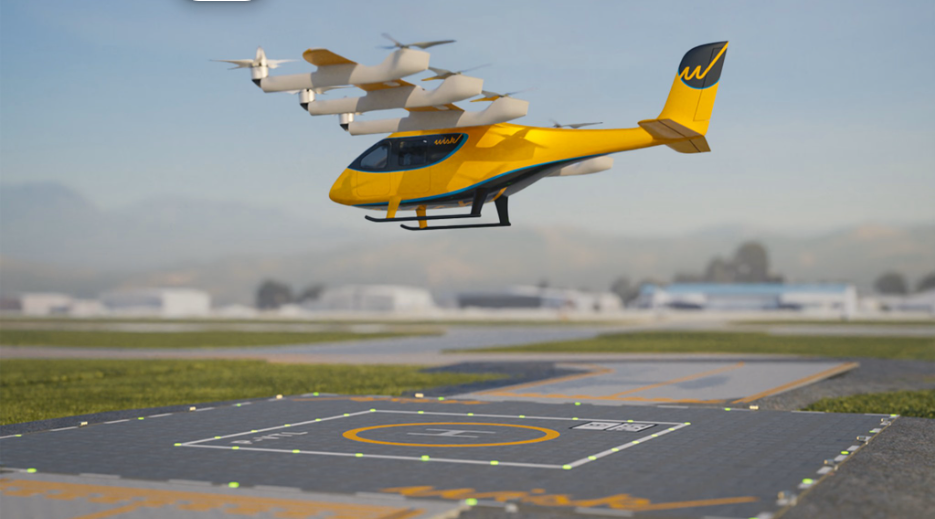
Wisk Aero shared a concept image for a potential vertiport site that could host test flights of its autonomous Generation 6 air taxi. [Credit: Wisk Aero]

Hollister Municipal Airport (KCVH) in California could be among the first in the nation to receive a vertiport for autonomous and eVTOL (electric vertical takeoff and landing) aircraft.

Autonomous air taxi developer Wisk Aero, which Boeing earlier this month agreed to sell to eVTOL manufacturer Archer Aviation, said Wednesday that it broke ground on the vertiport at Hollister, where the company already conducts flight testing. Wisk said the new 100-feet-by-100-feet site will be a “dedicated testbed” for both piloted and unpiloted operations, becoming “one of the first public airport vertiports” designed for that purpose.

Wisk said it will install proprietary transceivers on the vertiport pad in order to prove out the precision landing technologies of its Generation 6 aircraft, which began uncrewed flight testing in December. The transceivers are designed to improve VTOL operations in reduced or zero visibility, including for rotorcraft and other air taxis.

The testing will include operations under nominal conditions, missed approaches, and GPS-denied environments. Wisk said “initial surrogate flights” at the vertiport and later autonomy testing will prepare the Gen 6 for commercial service.

“By testing autonomous and piloted operations on an actual public airport, we are bridging the gap between advanced aircraft development and real-world infrastructure,” said Annie Cheng, senior program manager for operational integration and testing for Wisk, in a statement. “The data and operational learnings generated here will directly feed into our autonomy stack.”

Vertiports are being developed in other locations nationwide. Archer is working toward construction of an off-airport vertiport in downtown Los Angeles, which it hopes to use for air taxi service at the 2028 Olympic Games. Competitor Joby Aviation has teamed with the former CEO of Uber to build a nationwide vertiport network.

Unlike the Gen 6, Archer and Joby’s air taxis are designed to be piloted when they enter service. The FAA does not yet have vertiport standards for autonomous aircraft. However, Cheng said Wisk’s planned testing could help shape the agency’s requirements for future vertiport design.

H2: Wisk’s Vertiport Blueprint

The FAA classifies vertiports as a type of heliport for aircraft with three or more propulsors rather than single, tandem, or dual rotors. That includes eVTOL models being certified as powered-lift or special class rotorcraft.

So far, though, the agency has produced only prescriptive, nonlegally binding guidance in the form of its Engineering Brief (EB) 105A. The brief provides recommendations for establishing an acceptable level of safety and performance, including when modifying existing landing sites. But the goal is to replace EB 105A with a performance-based advisory circular (AC) in the future.

Wisk said it plans to evaluate terminal area flight procedures and collect real-world operational data that could inform a future Vertical Lift Infrastructure AC. It added that the data will “feed directly” into initiatives such as the FAA’s eVTOL Integration Pilot Program (eIPP), a series of real-world activities with precertified aircraft under agency oversight. The eIPP began in July with medical flights in Maryland and Virginia and has since expanded to other states.

Wisk and its Gen 6 are expected to begin eIPP activities in the near future. The company said its Hollister vertiport will produce a “relocatable template” that could see similar infrastructure deployed in Texas and other states where it plans to fly.

Wisk’s construction of a vertiport and subsequent testing could help the FAA determine what future vertiports may look like.

Wisk said it designed the California site in accordance with EB 105A, for which conformity is voluntary. The manufacturer described the site as “modular” and said it includes elevated steel structures, solar panels, power banks, and taxiway connectors.

The FAA considers vertiports distinct from GA heliports because of their specific requirements, such as larger boundaries due to the additional propulsors and their size and distribution. VTOL air taxis such as the Gen 6 typically spread these across a fixed wing rather than concentrating them centrally. Many models feature rotors or propellers that tilt to support both vertical and forward flight.

In the future, vertiport boundaries could shrink if manufacturers demonstrate landing accuracy similar to a helicopter’s during the certification process. But that is unlikely to happen until the FAA finalizes its Vertical Lift Infrastructure AC.

Wisk’s testing at Hollister could accelerate that process. The FAA continues to collect operational VTOL data, which per EB 105A remains “limited.” The data could enable a shift from prescriptive vertiport guidance—using a reference aircraft that incorporates aspects of real models being developed—to performance-based regulations.

The FAA describes EB 105A as a “living document” that will be supplanted by the AC once enough data is collected. In the future, standards could cover operations of autonomous aircraft like the Gen 6, as well as those under IMC or at higher frequencies.

Jack Daleo

Jack is a staff writer covering advanced air mobility, including everything from drones to unmanned aircraft systems to space travel—and a whole lot more. He spent close to two years reporting on drone delivery for FreightWaves, covering the biggest news and developments in the space and connecting with industry executives and experts. Jack is also a basketball aficionado, a frequent traveler and a lover of all things logistics.

New Facility Could Help FAA Address ATC Staffing Woes

Modern voice switch technology would allow the agency to reallocate controller personnel without physically moving them.

FAA Administrator Bryan Bedford ribbon cutting for Maryland voice switch manufacturing plant
FAA Administrator Bryan Bedford (fourth from left) attended the grand opening of Rohde & Schwarz USA’s $40 million, 87,000-square-foot voice switch manufacturing facility in Maryland. [Credit: FAA]

The FAA’s chronic air traffic controller (ATC) shortage is well documented despite the agency’s efforts to ramp up hiring. A $40 million, 87,000-square-foot manufacturing plant in Frederick, Maryland, could help it reallocate those sparse resources where they are needed most.

The FAA on Tuesday announced the groundbreaking of the new facility, which will build digital, internet-based voice switch systems designed to help controllers better communicate with pilots and other facilities. Per the agency’s website, one advantage of replacing aging, analog voice switches with modern systems will be “more dynamic operations,” such as reallocating controllers to different sectors without physically moving them.

“This equipment is a critical part of our landmark air traffic control modernization effort,” said FAA Administrator Bryan Bedford in a statement. “The new facility supports our aggressive schedule to complete the new system by the end of 2028.”

The voice switch is an ATC’s main communication interface. About 450 of them allow controllers to communicate with pilots as well as other facilities by toggling between radio frequencies. Among operational voice switches, the oldest was installed in the 1990s, according to the FAA. The agency considers the technology safety and mission critical, forming the “backbone of aviation safety and the efficient flow of air traffic.”

Voice over Internet protocol (VoIP) voice switches—which the FAA is installing nationwide at towers, en route centers, and terminal radar approach control (TRACON), and combined center radar approach control (CERAP) facilities—digitize verbal ATC communications. The FAA on its website says the VoIP systems would allow it to more dynamically reallocate controllers to different sectors based on traffic levels, weather, or equipment outages without requiring physical movements.

The VoIP Communications Enterprise, or VoICE, is the component of the FAA’s ATC modernization effort tasked with phasing out legacy voice switches for the more modern VoIP systems. It is spearheaded by the FAA’s Voice Switch and Recorder (VS&R) Program Office.

VoICE is also installing air-to-ground protocols (APCs) that will replace older radio control equipment (RCE) units and are designed to interface with both legacy and VoIP systems. National Airspace System (NAS) voice recorders (NVRs)—which resemble an aircraft’s black box but are located on the ground—will replace Digital Audio Legal Recorder (DALR) systems at all ATC facilities to provide improved access to recorded conversations between ATCs, pilots, and facilities, while also raising recording capacity

At the same time, the FAA is sustaining legacy systems that have not yet been replaced.

Progress Report

On Tuesday, the FAA said it had installed 176 IP-based voice switches out of about 450 planned installations. It aims to complete them before the end of President Donald Trump’s second term.

“We’re making sure our air traffic control system is American made,” said Transportation Secretary Sean Duffy in the announcement.

The FAA in April awarded a nearly $5 billion contract to Rohde & Schwarz USA, the American subsidiary of a German electronics manufacturer, to replace legacy voice switches with its Certium voice communication system (VCS). Certium replaces buttons on a switchboard with digital interfaces, color-coded to show the status of different radios, their signal strength, and the number of controllers using them.

The phaseout is being conducted in three “waves.” Wave 1, which the FAA said was recently completed, comprised installations at about 140 small towers that it said have the “least complex operations.” Rohde & Schwarz in April said Certium was also installed at airports in Texas, Delaware, Idaho, and Washington state. The opening of its new Maryland facility may help it accelerate the effort.

Wave 2 of the transition will cover about 250 medium-sized terminal facilities with “more complex operations.” The third and final wave will see deployments to FAA Core 30 airports, CERAP facilities, Tier 1 terminals, and en route centers with the “most complex operations.”

The ATC modernization effort also aims to replace or upgrade hundreds of radios, radars, and other equipment. The FAA said Tuesday that it has converted 63 percent of copper wiring that feeds data to ATC facilities to high-speed fiber, 5G wireless, or satellite connections.

In addition, it said 388 of 1,581 planned radio sites have been converted, and surface awareness initiative (SAI) systems have been installed at 96 out of 220 planned towers. Another 21 towers have transitioned from paper to electronic flight strips, and nine have received new tower simulation systems for training.

Jack Daleo

Jack is a staff writer covering advanced air mobility, including everything from drones to unmanned aircraft systems to space travel—and a whole lot more. He spent close to two years reporting on drone delivery for FreightWaves, covering the biggest news and developments in the space and connecting with industry executives and experts. Jack is also a basketball aficionado, a frequent traveler and a lover of all things logistics.

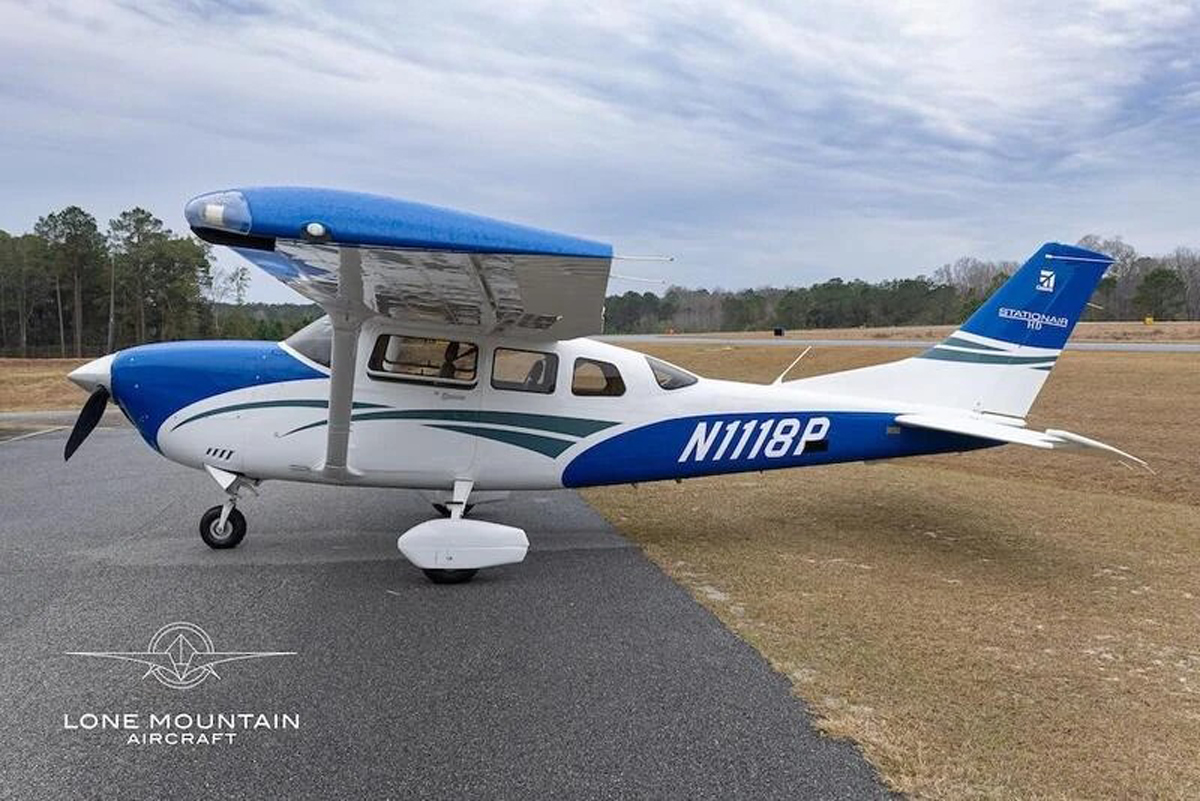
This 2019 Cessna T206H Is an All-Weather ‘AircraftForSale’ Top Pick

Turbocharged Lycoming engine and built-in, six-place oxygen system deliver effortless cross-country capability.

2019 Cessna T206H [Credit: Lone Mountain Aircraft]

Every day, the team at Aircraft For Sale chooses an airplane that catches our attention because it is unique, a good deal, or has other qualities we find interesting. You can read Aircraft For Sale: Today’s Top Pick at FLYINGMag.com daily.

Today’s Top Pick is a 2019 Cessna T206H.

Often celebrated as the ultimate heavy hauler for private pilots, the Cessna T206H Turbo Stationair HD offers an unparalleled mix of rugged utility and passenger comfort. It has cemented its legacy as a go-to platform for operators needing to move substantial cargo or multiple passengers in and out of a wide variety of airstrips.

This beautifully maintained 2019 model boasts just 1,075 total flight hours since new. The aircraft features an overall white exterior with an eye-catching blue-and-charcoal scheme. 

With no damage history, two owners since new, and complete logs, the Stationair boasts a massive useful load of 1,340 pounds. The cabin offers a luxurious beige interior with six seats, factory electric air conditioning, built-in oxygen, and double aft cargo doors for exceptional loading flexibility.

Generating the impressive power for this heavy lifter is a turbocharged Lycoming TIO-540-AJ1A engine that delivers 310 hp and shows 1,075 hours since new. The powerplant features a 2,000-hour TBO and reported strong compressions across all six cylinders. It is matched with a 79-inch McCauley three-blade-metal, constant-speed propeller, which also logs 1,075 hours since new and includes electric heat for added utility.

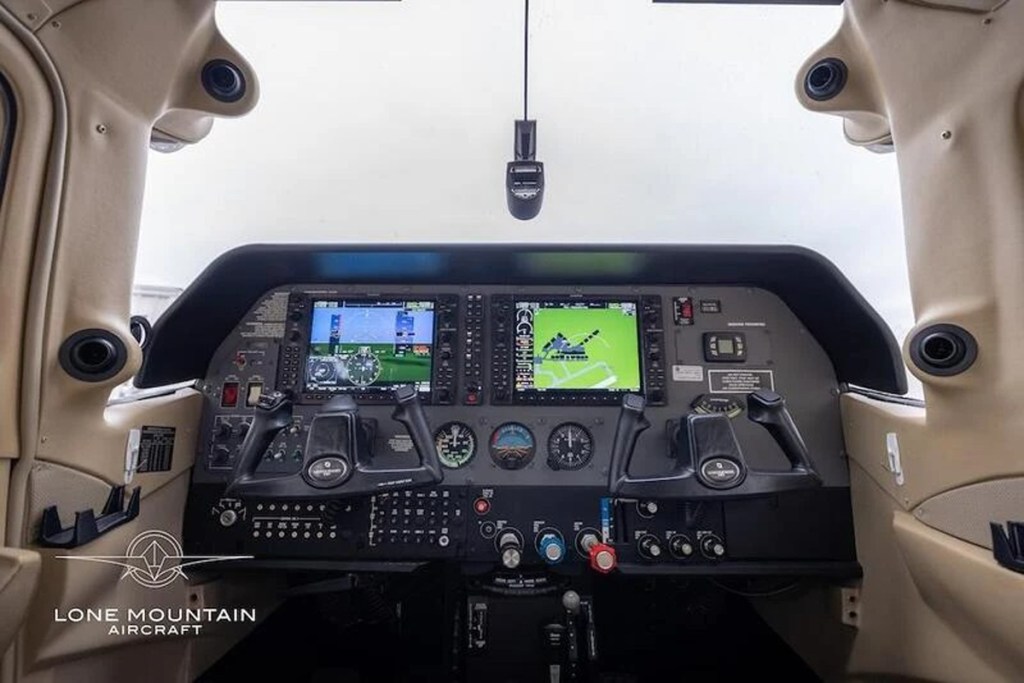
2019 Cessna T206H [Credit: Lone Mountain Aircraft]

Pilots stepping into the left seat will be greeted by a state-of-the-art Garmin G1000 NXi avionics suite displayed across dual 10-inch LCD screens. The highly advanced panel features Synthetic Vision Technology, a Garmin GFC 700 autopilot with Electronic Stability and Protection (ESP), and a Flight Stream 510 for wireless database updates. Situational awareness is further enhanced by a GTX 345R ADS-B In and Out transponder, Garmin Traffic Awareness System, and GDL-69 XM weather datalink.

Offered on the market for $799,999, this 2019 Cessna T206H provides buyers with a thoroughly modern, turnkey utility aircraft capable of handling almost any mission.

If you’re exploring ownership options, FLYING Finance can help get you airborne. Use our airplane loan calculator to estimate your monthly payments, or connect with an aviation finance expert at flyingfinance.com.

FLYING Staff

FLYING Magazine is a one-stop resource for everything aviation, including news, training, aircraft, gear, careers, photos, videos, and more.
Pilot in aircraft
Sign-up for newsletters & special offers!

Get the latest stories & special offers delivered directly to your inbox.

SUBSCRIBE