DOT’s Brand New ATC System Has a Prime Integrator

Agency selects Peraton to ‘guide the modernization effort,’ which officials aim to complete within three years.

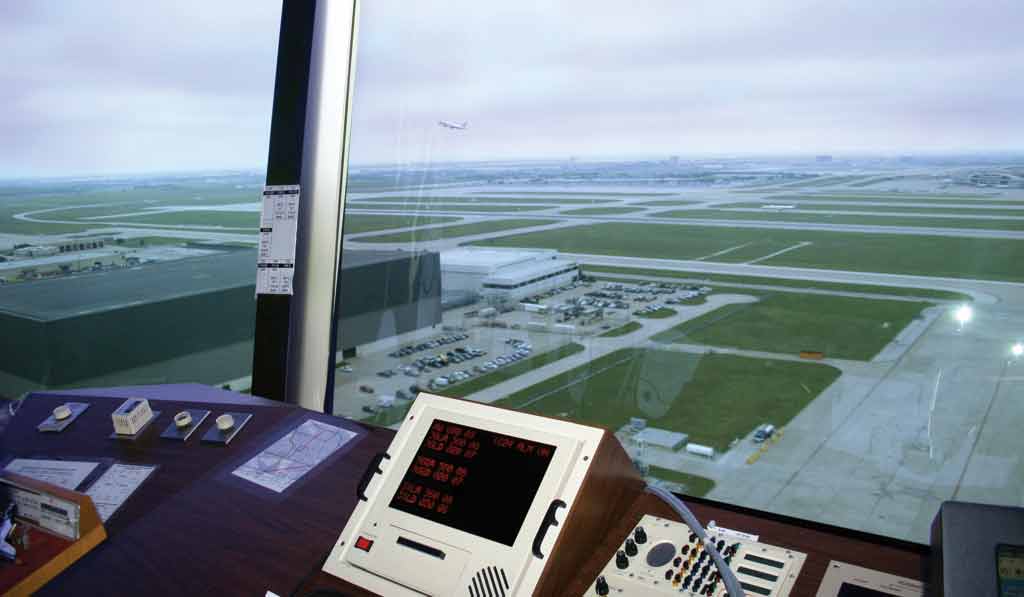
air traffic control tower
The FAA and Department of Transportation are undertaking a three-year effort to modernize the nation’s air traffic control system. [Credit: National Air Traffic Controllers Association]
Gemini Sparkle

Key Takeaways:

  • The U.S. DOT and FAA have initiated the "Brand New Air Traffic Control System" (BNATCS), a multi-billion dollar project to replace outdated air traffic control (ATC) software and hardware with modern technology.
  • Peraton has been selected as the prime integrator for the BNATCS under a performance-based contract, tasked with guiding the modernization effort, which aims for completion by 2028.
  • The project seeks to replace critical infrastructure like copper wiring with fiber optics, build new digital command centers, and upgrade thousands of systems to address safety vulnerabilities and prepare for future air travel demands.
  • While $12.5 billion has been allocated and initial work has begun, an additional $20 billion is needed, facing congressional scrutiny over potential cost overruns and delays, referencing past underperforming modernization efforts.
See a mistake? Contact us.

The U.S. Department of Transportation (DOT) and FAA are overseeing work on what Transportation Secretary Sean Duffy has dubbed the “brand new air traffic control system” (BNATCS), an initiative to replace outdated software and hardware with state-of-the-art technology.

On Friday, the agencies announced a prime integrator—essentially a general contractor—to lead the effort.

Peraton, a Virginia-based national security firm that is often contracted for defense and federal information technology work, won what the DOT and FAA described as a “first-of-its-kind” contract that will reward good performance and penalize delays and poor performance. According to the agencies, the company will “guide the modernization effort, keep it on track, and support the FAA as new capabilities and technologies are deployed” in the National Airspace System (NAS).

The agencies said Peraton would “immediately” begin work on the plan’s early priorities—replacing copper wiring with fiber optic and building a “new digital command center.” Officials aim to complete the multibillion-dollar project by 2028, before President Donald Trump leaves office. Chris Sununu, president of Airlines for America, which represents the nation’s largest carriers, lauded the selection as a “critical step forward.”

Peraton had been competing with a joint bid from Parsons Corporation and IBM since the FAA issued a request for solutions (RFS) in August.

“Peraton comes to the table with fresh thinking,” Steve Schorer, chairman, president, and CEO of Peraton, said in a statement. “Our scale, technical depth, and mission-first culture is well-suited to support this transformational effort, and we are ready to stand with the FAA, and Secretary Sean Duffy to rapidly deliver a safer, smarter air traffic system that meets the needs of today and anticipates tomorrow’s demands.”

Reshaping the ATC System

In the months following January’s fatal collision between a U.S. Army Black Hawk helicopter and commercial passenger jet over the Potomac River in Washington, D.C., Duffy hinted at a major overhaul of antiquated ATC systems, more than one-third of which were determined to be “unsustainable” by a March Government Accountability Office report.

Per a fact sheet summarizing the BNATCS plan, the FAA in 2025 recorded three times as many flight delay minutes due to equipment issues than it did on average between 2010 and 2024. Earlier this year, for example, faulty copper wiring caused 90-second radar and communications blackouts for ATCs overseeing Newark Liberty International Airport (KEWR), creating significant disruptions.

By 2028, the FAA hopes to install thousands of radios and fiber, satellite, and wireless network connections, hundreds of radars and voice switches, and a common automation platform to orchestrate more than 74,000 systems and pieces of equipment. The plan also calls for the construction of new towers, Air Route Traffic Control Centers (ARTCCs) and terminal radar approach control (TRACON) facilities.

The work will be conducted in two phases. The first will focus on addressing existing safety vulnerabilities with the replacement of old systems. The second, which includes the construction of ARTCCs, is intended to prepare the NAS for a spike in volume and new technologies, such as electric vertical takeoff and landing (eVTOL) air taxis.

Speaking at Honeywell’s American Aviation Leadership Summit in Washington, D.C., in November, Duffy said it is “critical” that the integrator—not the FAA—leads the modernization push.

“The FAA does a great job on safety,” he said. “But they’re not builders.”

Peraton will serve as the systems architect, responsible for acquiring and installing new systems and overseeing safety and risk management. The company’s work is tied to a 3.5-year timeline and covers only Phase 1 tasks, but the FAA “reserves the right, at its option and in its absolute discretion” to assign it Phase 2 task orders, per the August RFS.

What’s Next?

Some of the modernization work is already underway.

On Friday, the FAA and DOT said one-third of copper infrastructure had been converted to fiber, satellite, and wireless systems. In addition, the agencies said they deployed surface awareness systems to 44 towers, electronic flight strips to 13 towers, and 148 radios to facilities across the country. A next-generation voice switch has been installed in the control tower for Allegheny County Airport (KAGC) in Pennsylvania.

Those efforts are being funded with about $12.5 billion that was allocated for the BNATCS in the One Big Beautiful Bill Act. But the DOT is seeking more.

“To finish the job—and deliver the safer, more efficient system travelers deserve—we’re going to need another $20 billion,” FAA Administrator Bryan Bedford said Friday. “This is a long-term investment in the future of air travel, and we’re committed to getting it right.”

Securing the remaining money will require convincing Congress that the project will meet its cost and schedule estimates—and that may not be easy.

Representative Troy Nehls (R-Texas), chair of the House Transportation and Infrastructure Committee’s Aviation Subcommittee, worried BNATCS could go the way of the FAA’s NextGen effort. NextGen, which is expected to sunset in 2025, took $36 billion of taxpayer money but delivered just 16 percent of its promised benefits, per a government watchdog.

“I am not just going to throw another $20 billion in their direction if we can’t hold them accountable for the $12.5 [billion],” Nehls said at the Honeywell summit in D.C. last month.

Jack Daleo

Jack is a staff writer covering advanced air mobility, including everything from drones to unmanned aircraft systems to space travel—and a whole lot more. He spent close to two years reporting on drone delivery for FreightWaves, covering the biggest news and developments in the space and connecting with industry executives and experts. Jack is also a basketball aficionado, a frequent traveler and a lover of all things logistics.


Ready to Sell Your Aircraft?

List your airplane on AircraftForSale.com and reach qualified buyers.

List Your Aircraft
AircraftForSale Logo | FLYING Logo
Pilot in aircraft
Sign-up for newsletters & special offers!

Get the latest stories & special offers delivered directly to your inbox.

SUBSCRIBE