Register

Overhauled Before You Need It

How Blackhawk’s new engine exchange is rewriting the economics of PT6A overhauls.

A Blackhawk technician inspects a PT6A engine in the shop. [Credit: Blackhawk]
Blackhawk logo

If you’re an operator whose PT6A-powered King Air, PC-12, or Caravan is due for overhaul, the math has always been inconvenient, if not daunting. Traditionally, you’d have to send the engine out, absorb the downtime, and hope the final bill is close to the estimate.

The Blackhawk Group, the light turbine aircraft services company, built around Blackhawk, AVEX, and Finnoff, knows that operators need a lot more than a hope.

The company’s new Engine Exchange business segment swaps an operator’s core engine for an already-overhauled, ready-to-install replacement. The program collapses the parts delays and queue time that can stretch a single overhaul into a half-year wait down to a two-to-three-day install.

“We deal in the world of engines, so we’re tied into the cycles,” said Dale Morrow, vice president of Blackhawk’s Engine Exchange. “In our experience as a large MRO provider, unforeseen issues with part vendors and supply chains can add a lot to overhaul lead time. What we’re doing is taking that burden up front and overhauling engines to keep ahead of demand. With us, the hard part is already done. If you send your own engine out for overhaul, you have to hope for the best. You can’t guarantee a price or control the downtime.

“Go through us, and we know what it costs and exactly how long the install will take.”

The real unknown rarely has anything to do with a shop’s workmanship. Many issues can delay an engine once it’s in process, such as a backordered part, a vendor’s own queue, or a hold waiting on paperwork. Engine Exchange takes that guesswork out of the equation.

Rather than one engine chasing one overhaul slot, Blackhawk has built inventory ahead of demand, with more than 30 engines in the program at various stages of readiness. Those engines are sourced exclusively through Pratt & Whitney Canada’s Designated Overhaul Facility network.

[Credit: The Blackhawk Group]

The timing tracks with what’s happening across the turboprop fleet. New aircraft production is climbing. The General Aviation Manufacturers Association’s second-quarter 2026 shipment report shows turboprop deliveries up 7.8 percent year over year through the first half, but new-build lead times still stretch out well beyond what a fleet operator or owner-flown Part 91 pilot can plan around.

Meanwhile, the aircraft already flying are working harder. Argus TraqPak’s most recent activity data has turboprops posting the strongest year-over-year flight-hour growth of any business aviation segment, ahead of both light and midsize jets.

These two curves are moving in opposite directions. 

“Market demand is there based on the people who are interested,” Morrow said. “A lot of people in the turboprop space are flying a lot of hours right now. These planes are doing important missions for a lot of people, and that necessitates consistent demand for engines to be available. New production can only do so much, while the engines already in service keep logging more hours.”

More hours flown means more engines approaching TBO sooner and less patience for an open-ended wait on parts and scheduling.

Historically, many operators have leaned on rental engines to bridge overhaul downtime, but Morrow argues that’s a stopgap, not a solution. 

“Rental overhaulers are getting fewer and farther between,” he said. “You’re just buying time when you do it that way. You’re going to have to overhaul your engine eventually, and you can’t rent an engine indefinitely. When you rent, you’re putting the plane down twice. It creates more steps, more downtime.”

The Engine Exchange instead trades a customer’s core for a comparable, already-overhauled engine of the same type. It means there’s a one-time install, no rental bridge, and no second swap. Blackhawk will also buy desirable, well-maintained PT6A cores outright, even from operators who aren’t buying a replacement engine.

The company’s particular interest runs toward larger variants, including the PT6A-60, -62, and -67 series that power aircraft like the King Air 300/350 and PC-12 family. Fleet and Part 135 operators are priority sources, but if you have an engine, they’ll take a look.

The valuation process is more rigorous than a quick offer based on flight hours alone. 

“First, we check the logbook and make sure there have been no major issues,” Morrow said. “We’ll physically inspect it, borescope it, determine the general condition, and ascribe a value.”

According to Morrow, you should be cautious of anyone who gives you an initial offer without doing the research. Straight value based on hours isn’t enough. 

“Our team specializes in the function and sale of aircraft engines, particularly PT6A engines, and we’ll give you real, honest guidance,” Morrow said.

Blackhawk has built its name on performance-upgrade engine programs, and the Engine Exchange is an additional option rather than a replacement for that business. 

According to Morrow, the company has different customer groups with different mission types. New engine upgrades are more time-constrained. The backlog for legacy PC-12 engine upgrades is over 12 months. Engine Exchange is one way that The Blackhawk Group is ensuring it can meet everyone’s engine needs on the right timeline.

“If you need to move on now and the benefits of a full upgrade aren’t as valuable to you, we have an option for you,” Morrow said. “We’re not turning anyone with an engine need away. Whether it’s an upgrade, a replacement, an overhaul, or managing an overhaul while you keep your existing powerplant, we’ll help manage that process.”

The program is beneficial to a range of operators, from owner-flown Part 91 operators to professional fleets running Part 135 operations. Anyone, Morrow said, for whom downtime is a direct hit to the bottom line. 

“When an aircraft isn’t flying, it isn’t making money, and fleets have to generate revenue just to pay for themselves,” he said. “Any downtime is not good. With our Engine Exchange, the only downtime is the two to three days it takes for the physical install. If your aircraft is your livelihood, that’s the way to go.”

Blackhawk showcased the Engine Exchange program, along with the rest of its engine and upgrade offerings during NBAA-BACE in Las Vegas on October 20-22.

Click here to learn more about The Blackhawk Group.

Ashley Coker Prince

Ashley Coker Prince creates sponsored content for clients at Firecrown Media. She is a journalist with more than a decade of experience in B2B and trade publishing. She spends her free time scouring the internet for flight deals, digging into Appalachian history and writing fiction.

3 Dead After Midair Helicopter Collision in Oregon

R22 and Airbus AS350 B3 crash near McMinnville Municipal Airport.

Wreckage of the two helicopters [Credit: Yamhill County Sheriff's Office]

Authorities are investigating a midair collision of two helicopters near McMinnville Municipal Airport (KMMV) in Oregon that killed three people.

According to the Yamhill County Sheriff’s Department, at approximately 2:10 p.m. PDT on Thursday, witnesses notified law enforcement that two helicopters had crashed near the intersection of SE Amity-Dayton Highway, also known as Highway 233, and SE Cruickshank Road, southeast of McMinnville, approximately 33 miles southwest of Portland.

Law enforcement and rescue personnel arrived on scene to find the wreckage of a 1995 Robinson R22 and a 2018 Airbus AS350 B3 in a field adjacent to the highway. There were two occupants in the Robinson helicopter and one occupant in the Airbus—all three were pronounced dead.

The R22 occupants were identified as flight instructor Maddie Aasbo, 22, of Texas, and a student pilot from the United Kingdom. The student’s name was withheld as of Friday morning pending next-of-kin notification. The Airbus occupant was identified as Tyler Delane Sturdevant, 38, of Newberg, Oregon.

The FAA and National Transportation Safety Board responded to the scene. The NTSB will be leading the investigation.

Meg Godlewski

Meg Godlewski has been an aviation journalist for more than 24 years and a CFI for more than 20 years. If she is not flying or teaching aviation, she is writing about it. Meg is a founding member of the Pilot Proficiency Center at EAA AirVenture and excels at the application of simulation technology to flatten the learning curve. Follow Meg on Twitter @2Lewski.

NASA’s Supersonic X-59 Heads for Florida Vacation

Experimental aircraft is rumored to be part of agency’s Max Power expo and airshow at Kennedy Space Center in November.

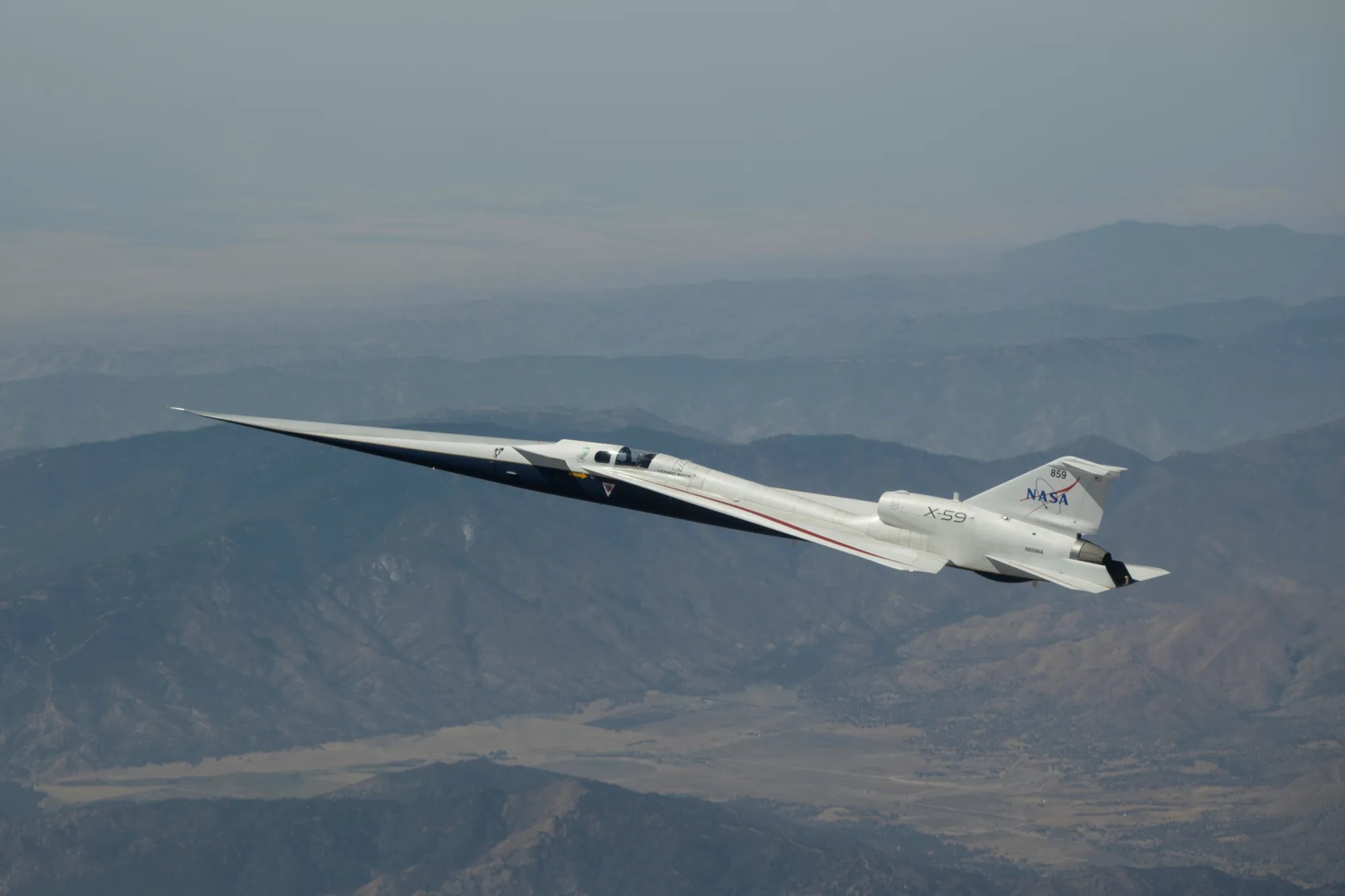
NASA X-59 supersonic experimental aircraft on test flight
The X-59’s distinctive long nose is designed to break up shock waves in front of the aircraft. [Credit: NASA/Jim Ross]

NASA is giving its supersonic X-59 a vacation as the experimental aircraft undergoes a rigorous flight test and envelope expansion campaign.

Space agency Administrator Jared Isaacman said Wednesday that the X-59 is “making her way” to Kennedy Space Center in Florida. Isaacman was replying to a post from Victoria Fontana, a contributor to digital news site The Aviationist who spotted the aircraft overflying Naval Air Station Joint Reserve Base Fort Worth (KNFW).

Briefly visible in Fontana’s video of the X-59 is an F-15 decked out in a patriotic stars and stripes livery. The Eagle is one of several that NASA uses as chase planes. The F-15’s sonic booms drown out any noise created by the X-59, which is designed to help NASA test quiet supersonic flight, but the space agency will use a special probe to measure its shock wave signature.

Also accompanying the experimental airplane are NASA’s Gulfstream C-20A (NASA802) and F/A-18D Hornet chase plane (NASA862). FLYING readers can track the agency’s aerial assets here.

The X-59 will reportedly make an appearance at NASA’s Max Power expo and airshow at Kennedy Space Center in Florida. It is expected to land at the Space Florida Launch and Landing Facility (KTTS) in Titusville this week, per FlightAware. Flyovers are planned during the event on November 8-9, though it is unclear whether the supersonic test article will fly or remain on static display.

Flyovers announced so far include F-16s from the U.S. Air Force Thunderbirds, F-5s flown by Isaacman and his NASA Freedom 250 aerial team, and Isaacman’s personal MiG-29. Also on tap are sorties by the Navy’s F/A-18 Super Hornets, Air Force’s C-17 Globemaster III, Coast Guard’s C-27J Spartan and MH-65 Dolphin helicopters, and NASA’s F-15D and 777-200ER flying laboratories, as well as Rooster Aerobatics’ Pitts S2-B.

What Is the X-59?

The experimental aircraft was developed for NASA by Lockheed Martin. It is designed to turn sonic booms into 75-decibel “thumps,” far quieter than Concorde’s recorded 120-130-decibel booms.

The X-59 is instead projected to sound like a car door closing from about 20 feet away. It is the cornerstone of NASA’s Quiet SuperSonic Technology (Quesst) project, which seeks to validate the aircraft’s sonic boom-cancelling features and emulate how future supersonic commercial airliners may operate.

The X-59’s long, slender nose is designed to break up shock waves in front of the aircraft. It extends about one-third of its nearly 100-foot length, requiring windows to be replaced with an eXternal Vision System (XVS).

The aircraft uses the Super Hornet’s F414-GE-100 engine, which is top-mounted to give it a smooth underside and prevent sound waves from merging in its wake. It also adapts life support systems from the F-15, landing gear from the F-16, control stick from the F-117, and ejection seat and cockpit canopy from the Air Force’s T-38 trainer.

Pilots Behind the Mission

NASA test pilot Nils Larson commanded the X-59’s maiden flight in October 2025. Jim Less, who was the F-15 chase plane pilot for that flight, flew the aircraft’s first supersonic flight in June. The two have alternated piloting duties, taking turns flying the X-59 and chase planes.

Larson in September described his flights as “exciting but uneventful” and said the X-59 “likes to fly fast.” That month, he received the Iven C. Kincheloe Award from the Society of Experimental Test Pilots, becoming the first to receive the honor for a NASA test flight project in 44 years. Larson was recognized for making the X-59’s first flight and subsequent envelope expansion flights.

Mike Lippert, who was added to the test pilot roster in July, made his first X-59 flight on October 21 after months of simulator training and ground preparation alongside Larson and Less. Over more than two decades, Lippert logged more than 2,600 hours of flight time in 60 different types of aircraft, including the F-35 and AV-8B Harrier. But the X-59 is a different animal.

“This flight was very special to me,” Lippert said. “For as long as I can remember, I’ve dreamt of doing exactly what I got to do today, testing a truly unique aircraft and working with the exceptional people on this test team.”

The testing so far has taken place at NASA’s Armstrong Flight Research Center in Edwards, California. Between flights, the pilots work with engineers and maintenance personnel to review data and make any required refinements, such as adjusting the aircraft’s control software.

Completed Testing and Next Steps

NASA on Wednesday commemorated the X-59’s one-year anniversary, saying it has completed 40 flights since its maiden voyage. The aircraft has achieved a maximum altitude of more than 56,000 feet, speeds up to Mach 1.53, and flight time as long as 102 minutes. For comparison, the first flight hit marks of 12,000 feet, 230 mph, and 67 minutes.

Following a series of envelope expansion missions, the X-59 made its first supersonic flight June 5. It reached a speed of Mach 1.4 and altitude of 55,000 feet—the mission conditions for NASA’s planned survey of the aircraft’s noise—on June 12.

Flight 25 came August 21, and the aircraft made six flights in three days in September, setting a record for cadence. NASA is exploring how it performs across a range of speeds, altitudes, and maneuvers.

Next will be a dedicated acoustic validation phase at Edwards Air Force Base (KEDW), planned for later this year, to analyze the X-59’s noise profile. Larry Cliatt, acoustic validation technical lead for Quesst, in September said this phase is “where the real research begins.”

“It will be a complex and demanding flight campaign focused on demonstrating that the X-59 can produce the quiet sonic thump it was designed to achieve,” Cliatt said.

Quesst’s final phase is the community survey, under which NASA will conduct up to five 30-day studies concentrated in different regions. Each will cover 1,000 respondents, and the space agency hopes to solicit 350,000 annual responses. It could fly the X-59 as many as six times daily.

The experimental vehicle will never fly paying customers. But NASA will share data collected from the survey with U.S. and international regulators to guide their creation of noise standards that permit supersonic flight over land.

The FAA has banned the practice since 1973, which limited Concorde mainly to routes out of New York, Washington, D.C., London, and Paris. But in June the agency proposed interim noise-based certification standards under pressure from Congress and the White House to reverse the ban.

NASA will also use the X-59 program to create design tools for aircraft manufacturers, allowing them to validate the noise profiles of their own designs. Only four companies have supersonic special flight authorizations (SFAs) that permit testing, including Boom Supersonic, which in 2025 said it flew a supersonic demonstrator without creating audible sonic booms on the ground.

Jack Daleo

Jack is a staff writer covering advanced air mobility, including everything from drones to unmanned aircraft systems to space travel—and a whole lot more. He spent close to two years reporting on drone delivery for FreightWaves, covering the biggest news and developments in the space and connecting with industry executives and experts. Jack is also a basketball aficionado, a frequent traveler and a lover of all things logistics.

Hal Shevers Was the Force Behind Sporty’s Pilot Shop

Late company founder built GA empire from small, fuel-stained shack at Lunken Airport.

Sporty’s Pilot Shop founder Hal Shevers died on May 12, 2026, at the age of 90. [Credit: Sporty’s Pilot Shop]

This issue’s theme is “The Greats,” which is rather daunting. I think any of us could fill pages with names of genuine aviation heroes.

I’ve been blessed to actually know a few, such as Barry Schiff, Clay Lacy, Bob Hoover, Neil Armstrong, Joe Kittinger and (drumroll) Jimmy Doolittle. And there’s no doubt my list would also feature Juan Trippe of Pan Am, Eddie Rickenbacker of Eastern, Pat Patterson of United, C.R. Smith of American, and those foresighted designers/builders such as Donald Douglas, Walter and Olive Ann Beech, Clyde Cessna, William Piper, and Dale and Alan Klapmeier.

This Article First Appeared in FLYING Magazine

If you're not already a subscriber, what are you waiting for? Subscribe today to get the issue as soon as it is released in either Print or Digital formats.

Subscribe Now

But I think our lists should also include those “unknown greats” we all know, such as my mechanic, Mark Day, and his deceased father, Ralph Day, at Warren County John Lane Field (I68), the Stewart family that operates Red Stewart Field in Waynesville, Ohio (40I), which is one to remember if you want to learn to fly tailwheels and have tons of fun doing it, and the original Hogan brothers (Art, Bill, Joe, and Bernie) at Butler County Hogan Field (KHAO).  

I remember a cold Sunday morning in December 1961 when my sister and I arrived in her VW, fresh from Mass and dressed in our Sunday best. Our directions were to drive down a rough road to a little white shack on the South Line at Lunken Airport. When we opened the door, there was a room filled with five or six men, smoking and arguing about the climb rate of one guy’s Luscombe 8E. Then out of the little office in the back, the manager appeared, a great big guy with a deep voice who laughingly announced that those claims were ridiculous. We told him that a priest, Father Blome, was letting us learn to fly in his Ercoupe. The little airplane was perched out in the grass next to Aero Services. 

The big guy with the loud voice was Hal Shevers.

After addressing a few issues like holes in the fuel tanks and a rotted nosewheel tire, the little dull-grey airplane (N341) was declared airworthy. When we began flying with instructor Larry Whitesell, I fell even deeper in love with airplanes (and, OK, with Larry too). My dad found out what we were doing and called this Shevers guy to say he was holding him responsible for us. Hal agreed to this impossible task. 

Shevers, from Scarsdale, New York, graduated with a degree in engineering from Purdue and learned to fly at the old Aretz grass field near the university. He took a job offer in Cincinnati with Cincinnati Milling Machine Co., but Hal wasn’t a guy who could work for anybody—especially as a cog in a large company. Now he was trying to sell his Comanche to buy gas for an elderly Dodge Dart and pay his share of rent on a huge old house he shared with five other guys called “The House of Bad Dreams.” Bob Herweh hired Hal to manage Aero Services which leased tie-down space, had a couple lease-back airplanes, an 80-octane fuel pump, and some part-time instructors.

This Shevers guy was selling cans of an “amazing exhaust gas stain remover,” which were stashed in the Dodge. I’m pretty sure it was 80-octane avgas. Then, I think his father in New York found a Japanese company selling hand-held radios that monitored aviation frequencies. Hal and Russ, a friend from The House of Bad Dreams, ran ads in Trade-A-Plane, and those radios sold like hotcakes. Hal and Russ were in business, stocking charts, manuals, and headsets, etc., from a small office and showroom in Lunken Airport’s terminal building. A little black-and-white catalog debuted, sales grew, more aviation products were added, and Sporty’s Pilot Shop was born. 

Hal and I were friends, and one day he said, “Marf, I’m nearly 30, and it’s time to get married.” He was dating two women and asked, “Should I marry Sandy or Kay?” 

“C’mon, I can’t tell you that.” 

“Think about it. I respect your opinion.”

“They’re both nice gals but, OK, I kinda like Kay—she’s pretty and talented…”

He not only married Sandy but told her about my advice on their honeymoon. For the next 60 years, she was always a little frosty toward me.

Sporty’s soon outgrew that space and moved across the road to a larger building. It replaced the little black-and-white flyer with a larger, full-color catalog with a lot more products. Hal put together a three-day traveling instrument ground school, sponsored by Beech Aircraft. He hired me and a couple other guys, and we traveled all over the country. I quit in tears in Pittsburgh.

Sporty’s moved to Clermont County Airport (I69) about 12 miles east of Lunken. He started out in the small terminal building but, within a few years, built a large facility with lots of T-hangars across the field. He even got the FAA to make a “cutout” to keep the airport outside of Cincinnati’s Class B airspace.

It was a huge and rapidly growing business. “Sporty’s Europa” was soon born, but selling small airplane products in Europe didn’t work nor did a resort in the Bahamas. However, the original catalog expanded into three with upscale products for home and work. Hal had an Aztec (that’s a story in itself that I’ll save for later) and acquired a Cessna Citation. When I was between a failed marriage and an FAA job, I prevailed on him for a job writing catalogue copy. Before long I was fired.

Hal was good hearted and generous with his employees but also controlling and volatile. His workers, now in the hundreds, were well paid and enjoyed parties, boat rides on the Ohio River, and tickets to baseball and football games. 

But to stay in his employ, you had to accept constant oversight and criticism—no exceptions. Many did, but many left voluntarily or were shown the door. For all his difficult personality traits, Hal Shevers and his company did more for general aviation than any other single enterprise. He was motivated from the beginning by a desire to develop and market GA training. His Part 141 flight school, with films, online courses, and other products have “made” many pilots and saved many lives.

His health began failing after a bad fall and long hospital stay. Although Sporty’s was now employee owned, he tried taking command again, but it didn’t work. Hal and Sandy moved to Florida. 

He was an old man at 90, but it’s nearly impossible for me to believe this larger-than-life man is gone.


This column first appeared in the September Issue 974 of the FLYING print edition.

Martha Lunken

Martha Lunken is a lifelong pilot, former FAA inspector and defrocked pilot examiner. She flies a Cessna 180 and anything with a tailwheel, from Cubs to DC-3s.

Coming in 2027: What GA Pilots Should Know About Mobile Clearance

New digital tool already under evaluation at airports in Texas, Kansas, and Wisconsin is scheduled for nationwide deployment early next year.

GA airplane on the ramp [Credit: Shutterstock]

By early 2027, general and business aviation pilots across the U.S. will be able to shift routine requests from voice radio to a digital format via flight plan service provider applications such as ForeFlight and Garmin.

The FAA has previously said Mobile Clearance—a digital tool it has been developing over the past decade to enable text-based IFR departure clearance requests—would deploy to airports nationwide next year. Agency officials speaking at the National Business Aviation Association Business Aviation Convention & Exhibition (NBAA-BACE) in Las Vegas last week reiterated the early 2027 timeline, Aviation Week reported.

The magazine quoted Paul Diffenderfer, the FAA Mobile Clearance technical lead, as calling the new digital tool a “beautiful thing” for GA pilots. Another agency program executive said the technology is “not a monolithic system unlike typical FAA systems.”

According to the agency’s website, nationwide deployment of Mobile Clearance could begin in February after the end of an ongoing evaluation period.

What Is Mobile Clearance?

The new tool is designed to modernize communications between pilots and air traffic controllers (ATCs) by enabling IFR departure clearance requests with a few taps on a phone or tablet. It will also include an IFR cancellation feature.

Traditional Pre-Departure Clearance (PDC) is limited to one clearance delivery per airport every 24 hours and restricted to registered callsigns. But Mobile Clearance will permit clearance revisions and be available on any aircraft. It will also be usable at non-PDC airports and include features not supported by PDC.

Per the FAA, pilots conduct more than half of 44,000 daily IFR departure requests verbally by contacting the tower, approach control, or center via radio. Switching to digital, text-based requests is intended to reduce readback errors and improve accuracy.

Mobile Clearance is also designed to mimic Controller Pilot Data Link Communication-Departure Clearance (CPDLC-DCL) functions used by commercial airlines and familiar to ATCs.

“Mobile Clearance is a smart, simple improvement that builds on technology pilots already use every day,” said FAA Administrator Bryan Bedford in July.

How It Works

Pilots will be able to access Mobile Clearance from their personal devices through ForeFlight and Garmin applications. It is only available via those two providers, though the FAA has received interest from others that it could onboard in the future.

Using the ground- and cloud-based system, pilots can request and receive IFR departure clearances via the applications they already use for flight planning, navigation, and weather tracking. They will be able to modify or cancel clearances and send responses such as “Accept” or “Wilco” directly to ATC, capabilities not offered by PDC.

Clearance requests can be filed 30 minutes before scheduled departure time. According to ForeFlight, the app will notify pilots when ATC responds and display a full route string and inset map preview. They will have six minutes to accept or reject the clearance before contacting ground.

For controllers, Mobile Clearance requires only an internet connection and commercial off-the-shelf products such as a 24-in. monitor, mini PC, keyboard, and mouse. Per Aviation Week, Diffenderfer said the interface “basically is a web page…and each tower or approach control [facility] has a unique interface with various settings for their facility.” ATCs would not need to phonetically spell out waypoints and T-routes, and they would have better visibility of which pilots are awaiting or have responded to clearances.

Where Mobile Clearance Will Be Available

Mobile Clearance is already available to business and GA pilots at certain airports in Texas, Kansas, and Wisconsin that are part of the FAA’s operational evaluation. Many more will come online next year.

FAA graphic of airports evaluating Mobile Clearance or expected to add it in 2027
Mobile Clearance for GA pilots will be available at these airports in early 2027. [Credit: FAA]

Following 2024 simulation testing, the FAA in May began evaluations at Sugar Land Regional (KSGR), Scholes International (KGLS), David Wayne Hooks Memorial (KDWH), and other Houston-area airports. It has since expanded them to the following facilities:

  • College Station Regional (KCLL) in Texas
  • Austin Executive (KEDC) in Texas
  • Georgetown Executive (KGTU) in Texas
  • San Marcos Regional (KHYI) in Texas
  • New Century AirCenter (KIXD) in Kansas
  • Kansas City Downtown (KMKC) in Kansas
  • Appleton International (KATW) in Wisconsin

According to ForeFlight, Johnson County Executive (KOJC) airport in Kansas is next in line. Per the FAA, the evaluation will soon expand to Nashville. In addition, the IFR cancellation feature—which will help pilots transition to VFR—is expected to be available via Houston’s Terminal Radar Approach Control (I90) this Fall.

The FAA’s website provides a map of airports expected to receive Mobile Clearance in 2027. The agency plans to make the tool available at select nontowered airports and add an IFR release capability for those locations in the future, but the timing of the latter remains up in the air.

Jack Daleo

Jack is a staff writer covering advanced air mobility, including everything from drones to unmanned aircraft systems to space travel—and a whole lot more. He spent close to two years reporting on drone delivery for FreightWaves, covering the biggest news and developments in the space and connecting with industry executives and experts. Jack is also a basketball aficionado, a frequent traveler and a lover of all things logistics.

‘Aviation Start’ Episode 6 Shows How to Build an Aviation Business Right Out of College

Filmmaker and CFI Ethan O'Rourke explains how a side business shooting weddings turned into a production company that flies A-26 Invaders across the Atlantic.

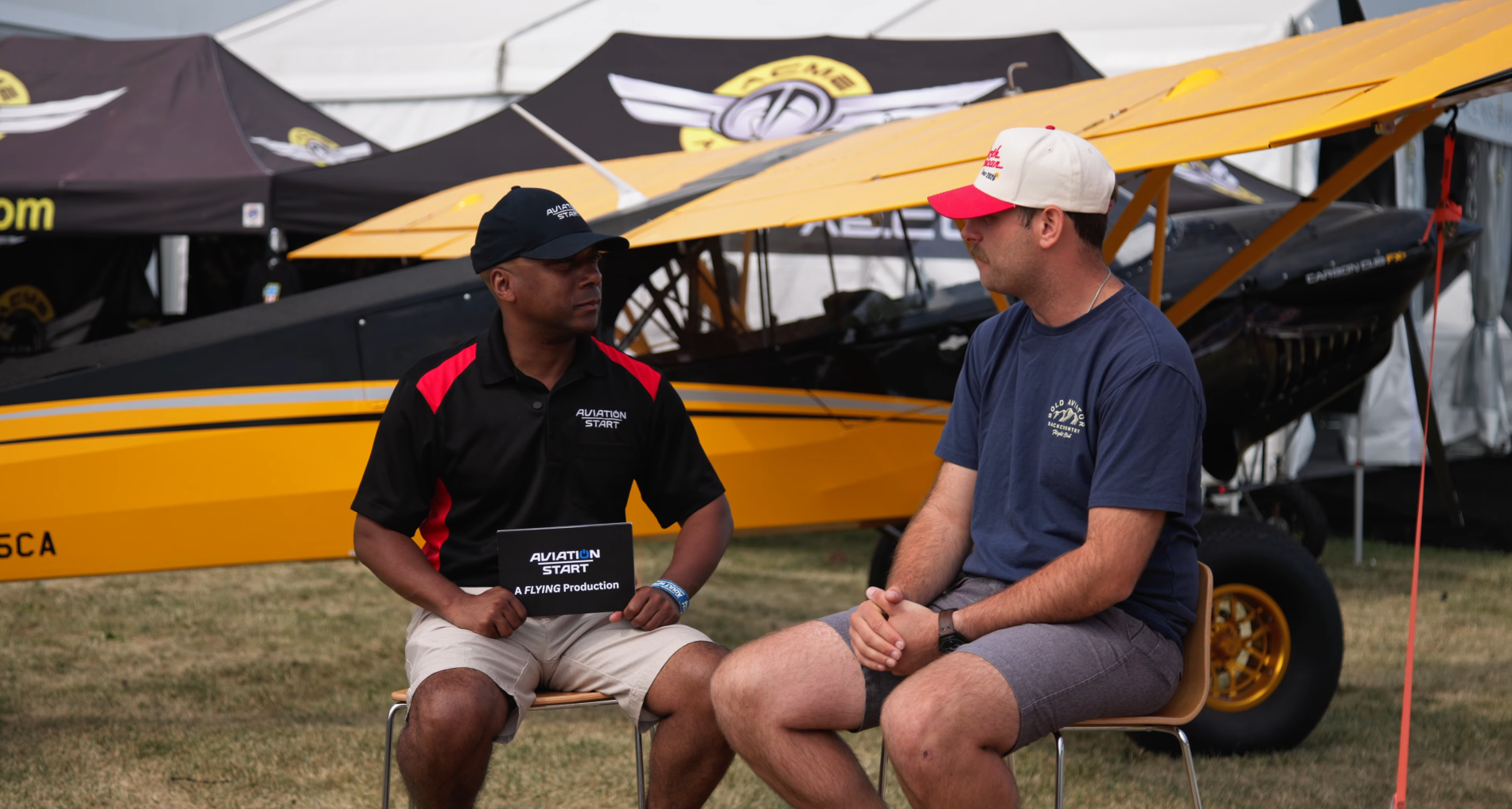
'Aviation Start' Episode 6 with host (left) Jamail Larkins and guest Ethan O'Rourke [Credit: FLYING]
'Aviation Start' Episode 6 with host Jamail Larkins (left) and guest Ethan O'Rourke [Credit: FLYING]

The sixth episode of Aviation Start, FLYING’s career-focused video podcast hosted by Jamail Larkins, looks at a path into the industry that doesn’t run through a flight department or an airline: starting your own aviation business.

Guest Ethan O’Rourke is the founder of DZZY Films, a Wisconsin-based production company that specializes in aviation work, including shoots such as mounting guns on a P-40 Warhawk and flying across the Atlantic in a Douglas A-26 Invader. He is also a CFI, and he built the business before he had graduated.

O’Rourke started flying during his first year of college in the spring of 2020, when campus shut down and he needed something to do. His father and grandfather had both flown recreationally, so he worked nights at Amazon to pay for lessons, flew during the day, and took his classes online.

He was studying film and marketing, not aviation, and the flight training left him with debt to pay off. So around his sophomore and junior years he started filming weddings, building up his camera gear and treating the work as a part-time job while he finished school.

His senior year, before graduating in 2023, he landed the client that pulled him into aviation. Million Air’s chief of marketing sent him a random email after seeing the videos he and his friends were posting of their flying, edited in the style of the hype videos popular in the car world.

“There wasn’t a ton of people doing that at the time. She saw this, she reached out, asked if we did other stuff,” O’Rourke said. “Sent her my portfolio, started working, did a little project, then that turned into a bigger project, and then we built a relationship from there.”

O’Rourke had shot commercial real estate and plenty of other subjects, but none of it was a passion. Aviation was, and since then the company has focused on that community alone.

Trust Comes Before Clients

For anyone set on working for themselves rather than taking a job, O’Rourke said the hard part isn’t finding clients. It’s earning them.

“You’ve got to find your own clients, but you have to build trust with people,” he said. “As you guys probably all know, aviation is more about the people you know than what you know, and what impression you leave on people.”

That means shadowing someone, finding a mentor who will take you under their wing, and showing up with a good attitude and a willingness to work. Industry events are where that happens. O’Rourke credits NBAA-BACE, Sun ‘n Fun, and AirVenture with booking most of his projects, and he said it shows when people in the industry have never attended one.

“You come to one of these shows and you’ll meet a plethora of people that will help you book your next project,” he said.

At AirVenture, where the episode was recorded, O’Rourke had two people filming for his clients while he spent his time walking the booths, checking in with sponsors, and finding out who was working where and whose name he should know. Networking, he said, is keeping up with your people, whether that is sending a Christmas card or showing up to the events they host.

The A-26 project is the payoff of that approach. He had been working the aviation side for two years before an opportunity like it came along, and he was quick to say that luck and timing played a part.

“It doesn’t come overnight,” he said. “A relationship is built over time.”

Social media is the other half of the equation. O’Rourke and Larkins first became friends online, and O’Rourke said a public portfolio is essential for anyone starting out.

“For brand credibility, you need to have a portfolio and it needs to be public, and the easiest way to do that is having a social media profile,” he said. Which platform depends on the corner of aviation you are in: Instagram, TikTok, and Facebook for media, LinkedIn for a more professional audience.

Learn the Craft First

O’Rourke’s biggest piece of advice for aspiring aviation professionals may sound counterintuitive: learn your trade outside of aviation, or alongside it, before you start networking with aviation professionals.

The reason is that the industry is small and reputations travel. Do a bad job on a few early projects and word spreads fast.

“Start figuring out what you’re doing, research it, practice it, and then start booking out,” he said.

That is also why DZZY Films gets selected for shoots around warbirds and running propellers. O’Rourke said production companies unfamiliar with the aviation environment carry more liability because they don’t understand what a pilot takes for granted about who is moving where on a ramp. His portfolio shows that his crew will do the job right the first time and, in his words, “not go get chopped up at a prop.”

The hardest part of starting the business, he said, was the business itself. Film was the passion and marketing was tolerable, but forming an LLC, protecting his assets, allocating money across SEO, post-production, and branding, and learning industry-standard pricing so he didn’t undercut established companies all had to be learned on the fly. He tried to teach himself and wishes he hadn’t.

“I would have saved so much time and money if I just brought in someone to help set it up, teach me the little bit I need to know, and then I focus on what I’m good at, which is the filmmaking and producing,” he said. “Don’t be afraid to bring in partners or mentors or investors. If you want to grow a business, you need investors.”

O’Rourke still instructs, flying 10 to 15 hours a month with students during the summer production season and 30 to 40 hours a month in the off-season. About 80 percent of his work is out of state, which makes being 20 minutes from Milwaukee and 50 minutes from Chicago O’Hare a practical advantage.

The flying has its own rewards. After the A-26 trip to Normandy, he stayed on to film air-to-air intercept missions with a MiG-15 and MiG-17 over Poland. He has ridden in a PBY Catalina on a shoot and logged two hours in the P-40, loops and rolls included.

“It was 100 percent worth it,” he said of the business. “It’s so much more work than I thought it was.”

Episode 6 of Aviation Start is available now on FLYING’s YouTube channel and all major podcast platforms. Aspiring aviation professionals can get matched with eligible scholarships from a database of more than $20 million at aviationstart.org.

FLYING Staff

FLYING Magazine is a one-stop resource for everything aviation, including news, training, aircraft, gear, careers, photos, videos, and more.

NTSB Warns GA Pilots of Fatal Injury Risk From Outdated, Faulty Restraints

GA aviators may unknowingly be flying with systems that do not meet FAA’s latest performance requirements.

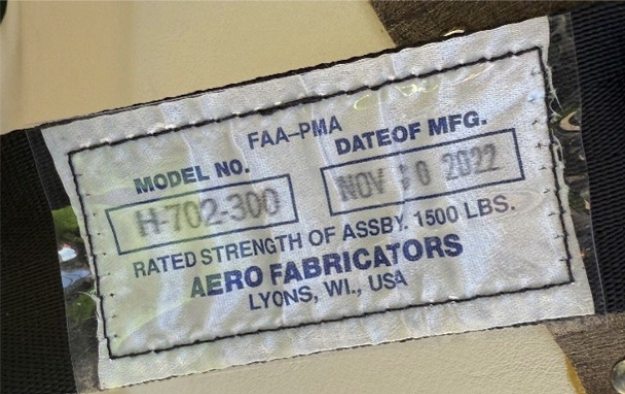
Aircraft sea restraint label depicting rated strength of 1,500 pounds
Seat restraint labels identify the rated strength of lap belts and shoulder harnesses. The example pictured shows a rated strength of 1,500 pounds, which does not meet the latest FAA requirements but is permitted on small GA aircraft weighing 12,500 pounds or less. [Credit: NTSB]

The National Transportation Safety Board on Wednesday issued a new safety alert urging general aviation pilots and owners to inspect and replace certain seat restraints in order to lower the risk of injury or death during aviation accidents.

Among the NTSB’s findings is that pilots may unknowingly be using restraint systems that offer a lower level of protection during an accident because the FAA has permitted the use of systems that comply with earlier, less stringent performance requirements. The agency also noted that serious or fatal injuries can occur during accidents when restraints are not installed or fail due to UV exposure, age, or repeated use.

To combat these potential hazards, the NTSB recommends that pilots and mechanics frequently inspect lap belts and shoulder harnesses, understand how to ensure they are in safe condition, check their rated strength, and replace or install new restraints when necessary.

The NTSB last issued an aviation-related safety alert in January 2026 describing how ballistic parachute recovery systems can pose hazards to first responders at an accident site.

Varied Restraint Performance Requirements

According to the NTSB’s safety alert SA-108, certain GA aircraft may be equipped with seat restraint systems that do not meet the FAA’s latest performance requirements.

Technical Service Order (TSO)-C22f, issued in 1972, required newly manufactured lap belt restraints to have a rated strength of 1,500 pounds. In 1993, the FAA replaced that order with TSO-C22g to “better account for dynamic human ​movement and upper torso forces,” per the NTSB. The latter order required lap belts and shoulder harnesses to have rated strengths of 3,000 and 2,500 pounds, respectively.

However, the regulator permitted small aircraft weighing 12,500 pounds or less to use restraints approved before TSO-C22g’s issuance, citing economic reasons.

“As a result, pilots and mechanics may unknowingly be using safety restraint systems that may offer a lower level of protection during an accident than systems that comply with the enhanced performance requirements of TSO-C22g,” the NTSB said.

For example, the NTSB’s investigation into the 2023 crash of an Aeronca 7CCM Champion found that the airplane’s upper torso restraint and shoulder webbings had a rated assembly strength of 1,500 pounds, which satisfies the FAA’s 1972 order but not the ’93 update.

The Champion suffered substantial damage, and the pilot and passenger were killed. Examination of the wreckage determined that the torso restraint’s threading at the connection to the airframe was separated and found evidence of separation at the Y-junction connecting the two shoulder straps.

intact shoulder harness Y-junction
Example of an intact shoulder harness Y-junction [Credit: NTSB]

In another 2023 accident, the NTSB found that both seats of a Cessna 172N that crashed near Madison County Airport (KUYF) in Ohio used three-point restraints meeting only the less stringent FAA order. A flight instructor and student pilot died in the accident. Similarly, the agency found that the upper torso restraint’s threading was separated.

NTSB Urges Greater Vigilance

The NTSB said GA owners and operators should be aware that they may be flying with restraints that do not meet the FAA’s latest requirements. It urged them to replace those rated below 3,000 pounds for a lap belt and 2,500 pounds for a shoulder harness. The agency also recommended replacing restraints whose strength rating cannot be verified due to missing or unreadable labels. The manufacturer or a mechanic can check the rated strength if the owner or operator is unsure of how to do it.

Also critical are routine preflight and annual visual inspections of the shoulder and lap belt restraints to check for signs of degradation. The NTSB emphasized that “special attention” should be given to the condition of Y-junction shoulder harnesses.

Highlighting the importance of inspections, the agency cited a 2005 accident involving a Taylorcraft F-19 where the pilot died after the airplane crashed. His shoulder harness, which investigators found showed evidence of tensile overload, failed. The passenger’s restraint system was found to be intact, and they suffered serious but nonfatal injuries.

The NTSB also referred to a Survival Factors Factual Report on the fatal 2012 crash of an Aeronca 7AC Champion in which the accident airplane suffered shoulder harness failures. It includes details of three new restraints compliant with the FAA’s 1993 order but shown to fail below the rated strength of 1,500 pounds in testing.

Chapter 9 of the FAA’s Advisory Circular 43.13-1B provides inspection guidance for safety belts. The agency’s Special Airworthiness Information Bulletin 2026-10R1 describes the safety risks of defective torso restraints and safety belts on GA aircraft.

The NTSB also urged GA owners and operators to install shoulder harnesses on airplanes  designed without them. They could do so using a supplemental type certificate (STC) or other FAA-approved method described in the agency’s ACE-00-23.561-01 policy statement.

Jack Daleo

Jack is a staff writer covering advanced air mobility, including everything from drones to unmanned aircraft systems to space travel—and a whole lot more. He spent close to two years reporting on drone delivery for FreightWaves, covering the biggest news and developments in the space and connecting with industry executives and experts. Jack is also a basketball aficionado, a frequent traveler and a lover of all things logistics.

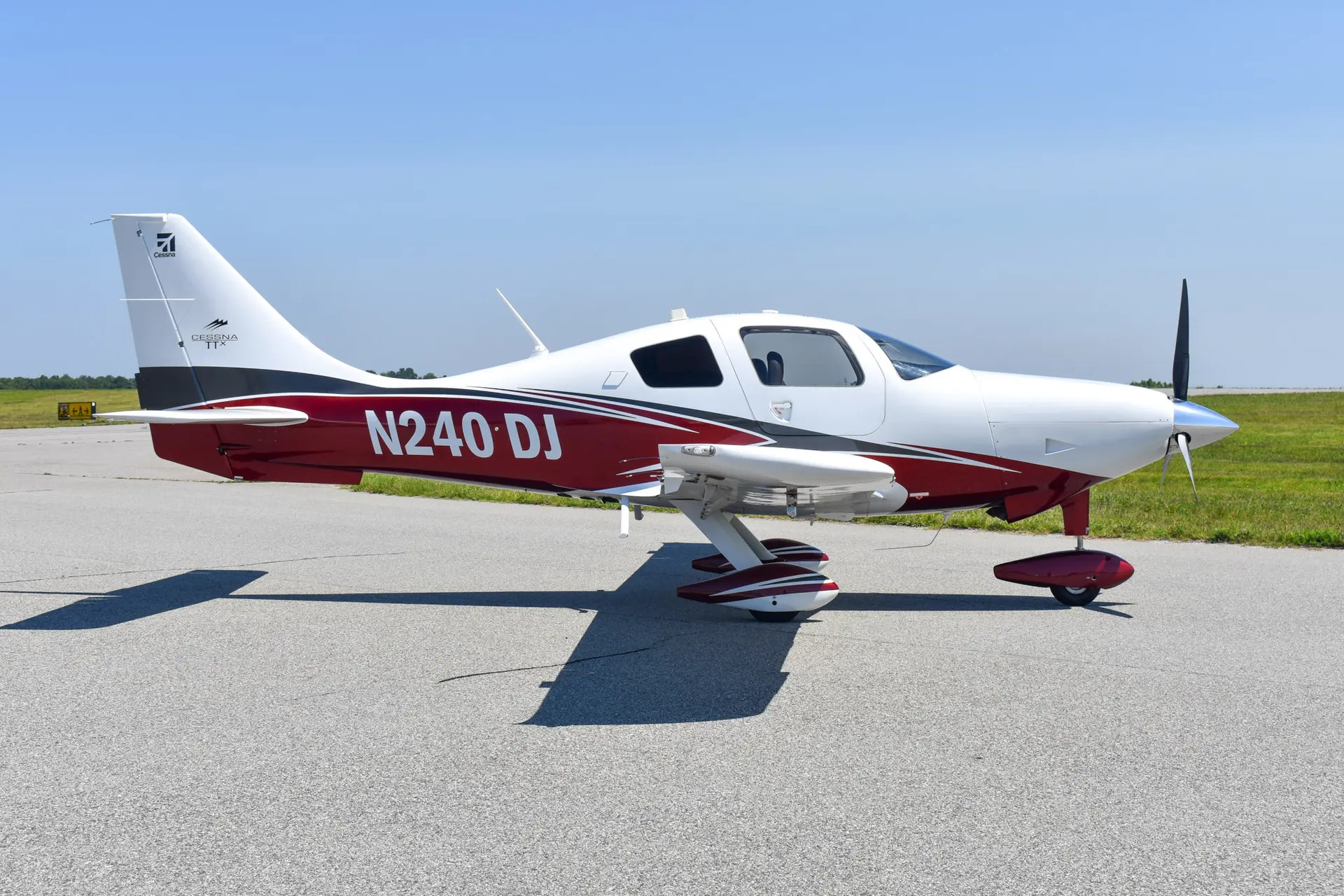
This 2013 Cessna TTx T240 Is a Swift, Twin-Turbocharged ‘AircraftForSale’ Top Pick

Known for cruising faster than its Cirrus rivals, the sleek four-seater often flies under buyers’ radar.

2013 Cessna TTx T240 Aerostar [Credit: NexGA Aircraft]

Each day, the team at Aircraft For Sale picks an airplane that catches our attention because it is unique, represents a good deal, or has other interesting qualities. You can read Aircraft For Sale: Today’s Top Pick at FLYINGMag.com daily.

Today’s Top Pick is a 2013 Cessna TTx T240.

The Cessna TTx T240 for sale today traces its heritage to Lancair, the longtime producer of legendary high-performance kit aircraft for the experimental market. 

TTx T240s are equipped with Garmin G2000 avionics. [Credit: NexGA Aircraft]

As far back as the 1990s, Lancair sought to diversify by building a line of certified aircraft. The result was Columbia Aircraft, a company that produced the Columbia 300 and 400 composite piston singles.

While these airplanes were well regarded, production problems, stiff competition, and other issues led to bankruptcy for Columbia. Soon Cessna, which was looking for a path into the high-performance composite market, purchased  Columbia’s assets and marketed the aircraft under a series of names before settling on the TTx label.

Cessna clearly wanted to compete with Cirrus, and the TTx was a worthy rival with faster cruising speeds, though its sales never caught up with those of the hot-selling Cirrus SR22. While the TTx looks a lot like a Cirrus and has a generally similar composite airframe, it lacks the SR22’s parachute, which is a main selling point for the aircraft. Cessna missed out on many sales by passing on the chute.

For pilots prioritizing cross-country speed, though, the TTx remains an attractive package. Like the Cirrus, it eliminates the complexity of retractable landing gear without compromising its slick aerodynamics.

The TTx interior is comfortably car-like and well-appointed. [Credit: NexGA Aircraft]

I have encountered several TTx owners on airport ramps, and they all have told me that the TTx is an amazing value in terms of performance per dollar. It also is one great-looking machine.

This 2013 TTx has 2,250 hours on the airframe, 325 hours since new on its 310 hp Continental TSIO-55-C engine, and 325 hours since overhaul on the McCauley three-blade propeller. Engine TBO is 2,200 hours.

The aircraft’s panel features the Garmin G2000 Intrinzic flight deck with dual GIA 63W GPS/nav/coms, GDU 1400 PFD/MFD display, GMA 36 remote digital audio panel, GTC 570 touchscreen controller, GTX 33ES transponder, GRS 77 dual AHRS, GDL 69A flight information system, terrain awareness system, Synthetic Vision, electronic stability protection, GFC 700 autopilot, GTS 800 traffic advisory system, ESI 1000 L-3 Trilogy, and integrated CO detector.

Additional equipment includes automatic climate control, built-in, four-place oxygen system, inflatable door seals, speed brakes, and Rosen sun visors.

Pilots shopping for the most effective piston-engine cross-country traveler for up to four people should consider this 2013 Cessna TTx T240, which is available for $599,000 on AircraftForSale.

If you’re interested in financing, you can do so with FLYING Finance. Use our airplane loan calculator to calculate your estimated monthly payments. Or, to speak with an aviation finance specialist, visit flyingfinance.com.

Jonathan Welsh

Jonathan Welsh is Lead Editor of Aviation Consumer and a private pilot who worked as a reporter, editor and columnist with the Wall Street Journal for 21 years, mostly covering the auto industry. His passion for aviation began in childhood with balsa-wood gliders his aunt would buy for him at the corner store. Follow Jonathan on Twitter @JonathanWelsh4

Survey: 3 in 4 European Pilots Report Sleeping on Duty

European Cockpit Association survey finds challenges in managing fatigue-related safety risks.

Pilot wearing headset and looking out cockpit window
The European Cockpit Association urges stronger fatigue-risk management, reporting systems, and protections for pilots who report exhaustion. [Credit: Shutterstock]

A report published this week found that more than 3 in 4 pilots reported falling asleep on duty at least once in the four weeks before being surveyed.

Some 7,200 European pilots responded to the survey, which was conducted by aviation consultancy Baines Simmons on behalf of the European Cockpit Association (ECA). More than three-quarters of them reported that while operating an aircraft, they experienced “microsleeps,” which are typically defined as sleep episodes lasting a few seconds.

According to the FAA, microsleeps are associated with lapses in attention. The agency said in 2010 that in-flight recordings of brain activity show episodes occur most frequently during the cruise portion of long haul operations. They are more than nine times as likely during nighttime flights compared to daytime flights, and their likelihood increases with flight duration.

The ECA survey also found that pilot reports of microsleep, insufficient rest, extending flight duties beyond legal maximums, and fear of reporting fatigue were all unchanged compared to the association’s 2023 study, indicating a persistent problem among European airlines. The group said “significant challenges remain” in managing fatigue-related safety risks and called for stronger fatigue-risk management, reporting systems, and protections for pilots who do report.

To address the issue, the European Union Aviation Safety Agency (EASA) in February published an opinion that would introduce “harmonized and state-of-the-art” flight time limitations for commercial aircraft used in emergency medical service, air taxi and single-pilot operations. The European Commission will decide whether to adopt the proposed measures, which include amendments and changes to certain definitions under the EU regulations governing technical requirements and administrative procedures related to air operations.

“If we are serious about managing the safety risks related to pilot fatigue, the numbers we see in this report—and the lack of any meaningful improvement over the past three years—are a clear wake-up call for airlines, authorities and [EASA] that something must change in the way Europe deals with pilot fatigue,” said Tanja Harter, president of the ECA, in a news release.

Pilot Fatigue: A Widespread, Persistent Problem

The ECA represents over 44,000 pilots from the national pilot associations in 33 European states. The association enlisted Baines Simmons, an aviation safety services company, to survey thousands of pilots in 32 countries between August 4 and September 7. The survey asked them to recount their experiences from the preceding four weeks, giving a window into their experiences during the busy summer period.

“This survey captures how European pilots experience fatigue risk management in practice,” said Ian Holder, managing director of Baines Simmons. “It reflects pilots’ first-hand accounts rather than a direct measure of risk or safety outcomes, which must be assessed through additional means.”

About 77 percent of respondents said they experienced at least one microsleep while operating an aircraft in the previous four weeks. About 11 percent of those flying for low-cost carriers reported more than 10 during that span. Some 34 percent of low-cost carrier pilots reported more than five microsleeps, compared to about 31 percent flying for charter operators, 20 percent flying for network carriers, and 25 percent overall.

In addition, nearly 39 percent of pilots said they “usually or always” lacked sufficient rest to prevent cumulative fatigue. About 77 percent said they lacked sufficient rest at least once.

One of the report’s most concerning findings is the lack of fatigue reporting. About 37 percent of pilots said they report when unfit or fatigued, compared to 24.2 percent who said they do not report and fly anyway. About half of respondents said they flew at least once in the past three months despite realizing they should have reported fatigue in hindsight. More than one-third described a fear of punishment.

“This ‘fear factor’ raises questions about the corporate safety culture at certain airlines and the impact this can have on safety, because no pilot should be flying when fatigued,” said Coen Goerge, board director of the ECA.

About 69 percent of pilots expressed concern about negative consequences if they refused an extension under the European commander’s discretion policy, which typically permits flight-duty extensions beyond legal maximums in exceptional circumstances. That marks an increase from the 2023 report, which the ECA said indicates a weakness in safety culture. About 38 percent of pilots said they extended their duty at least once in the preceding four weeks, while about 15 percent said they did so twice or more.

“Being pushed by your airline to extend a flight duty, to make up for delays or overly optimistic planning, or being reprimanded when refusing to extend are well-known phenomena at certain airlines,” said George. “We have alerted aviation authorities multiple times about such pressures – which are clearly detrimental to our safety margins—but we still wait to see meaningful action to stop this.”

Only about half of pilots said their airline managed fatigue well, and just 12 percent said they trust their carrier’s fatigue reporting system. Pilots working for low-cost and wet-lease operators reported more negative experiences with reporting systems than did those at network carriers. Airlines with air operator certificates in Malta and Ireland faced the most concern, while those with AOCs in Germany, Finland, and the Netherlands demonstrated stronger reporting cultures.

“When pilots fear career consequences, fatigue goes unreported and the risk returns to the cockpit,” said George. “Airlines and authorities must ensure genuinely non-punitive reporting and use of commander’s discretion.”

Harter said the report “provides all the data needed” to enforce nonpunitive fatigue reporting requirements and strengthen EASA oversight of airlines.

“Waiting for another three years to discover that nothing has changed, is simply not an option,” she said. “What is needed now is the political will to act.”

Jack Daleo

Jack is a staff writer covering advanced air mobility, including everything from drones to unmanned aircraft systems to space travel—and a whole lot more. He spent close to two years reporting on drone delivery for FreightWaves, covering the biggest news and developments in the space and connecting with industry executives and experts. Jack is also a basketball aficionado, a frequent traveler and a lover of all things logistics.

Air Defense Systems Deploy to Trump’s Mar-a-Lago

Surface-to-air missiles become the latest layer of aerial defense added near the president’s residence.

President Donald Trump disembarks Air Force One
The president’s residence is also shielded by a year-round, 24/7 temporary flight restriction. [Credit: Official White House photo by Daniel Torok]

Surface-to-air missile (SAM) systems are the latest layer of aerial defense added to deter aircraft from overflying President Donald Trump’s Mar-a-Lago estate in West Palm Beach, Florida.

WPTV-TV in West Palm Beach was first to report the SAM system’s deployment in the area on Friday. The local news outlet received a statement from the North American Aerospace Defense Command (NORAD) and U.S. Northern Command (USNORTHCOM), which said that the U.S. Secret Service requested the protections near Mar-a-Lago.

“Due to security considerations, we cannot provide tactics, techniques and procedural specifics,” they said, referring WPTV-TV to the Secret Service for further comment.

In May, an anti-drone laser, which uses a directed energy beam to counter small uncrewed aircraft, was installed in the area to protect Trump, Mar-a-Lago, and commercial aircraft from potential threats.

NORAD earlier this month told WPTV-TV that more than 60 aircraft had been intercepted near Mar-a-Lago since the beginning of Trump’s second term. On Saturday, the branch used a headbutt maneuver to intercept a general aviation aircraft that violated the round-the-clock temporary flight restriction (TFR) covering the estate.

What We Know About the Air Defense Systems

On Monday, WPTV-TV spotted the SAM systems on a barge floating in the Intracoastal Waterway outside the president’s residence. It reported that they would provide air defense to protect Trump when he visits.

On Tuesday, the outlet reported that air defense assets were also visible near Donald J. Trump International Airport (KDJT). It cited an expert who described them as “trailer-mounted anti-aircraft, anti-drone…defense systems.” Another expert identified the systems as Avenger short-range air defense systems capable of launching Stinger missiles and possibly equipped with machine guns, adding that he was surprised they were only deployed recently.

The reason and duration of the SAM systems’ deployment is unknown. Also unclear is whether the systems’ use will require FAA approval or coordination and whether their presence will be reflected in Notices to Airmen (NOTAMs).

The FAA and NORAD did not immediately respond to FLYING’s request for comment.

Protecting Trump and Mar-a-Lago

In addition to the aerial defense systems, Mar-a-Lago is shielded by a TFR that has created headaches for neighbors.

The FAA implemented the restrictions within 1 nm of the president’s residence in October 2025 and earlier this month extended them to October ’27. The TFR is active even when Trump is not present.

The town of Palm Beach, Palm Beach County, and city of West Palm Beach have challenged the TFR in the U.S. Court of Appeals for the D.C. Circuit. They contend that changes to arrival and departure procedures have shifted aircraft over residential and other noise-sensitive areas and affected the area’s environment and quality of life. They further argued that FAA reviews of the TFR’s potential impacts were insufficient.

The agency in an August brief asserted that it acted within its authority and used a noise analysis that it said showed no significant noise increases. The court case remains open.

The FAA has also proposed a more stringent Special Flight Rules Area (SFRA) near Trump International Airport at the request of the Secret Service. The SFRA would replace the existing TFR and make the restrictions permanent. The agency published a notice of proposed rulemaking (NPRM) in September and ended the public comment period October 2.

The FAA received more than 1,300 comments on the proposed SFRA. One, submitted on behalf of the Palm Beach County Board of County Commissioners, which operates the airport, described the measure as the “best means of protecting the President while also ensuring public transparency and accountability.”

But the county also asked the agency to explain why restrictions are needed even when Trump is not in residence. It called for an evaluation of the SFRA’s impact on airport capacity and noise, an extension of exemptions for military and law enforcement aircraft to approved commercial airlines, and a reduced vertical limit from 2,000 to 1,000 feet. The county also asked the FAA to deactivate the SFRA when Mar-a-Lago is closed.

Jack Daleo

Jack is a staff writer covering advanced air mobility, including everything from drones to unmanned aircraft systems to space travel—and a whole lot more. He spent close to two years reporting on drone delivery for FreightWaves, covering the biggest news and developments in the space and connecting with industry executives and experts. Jack is also a basketball aficionado, a frequent traveler and a lover of all things logistics.
Pilot in aircraft
Sign-up for newsletters & special offers!

Get the latest stories & special offers delivered directly to your inbox.

SUBSCRIBE