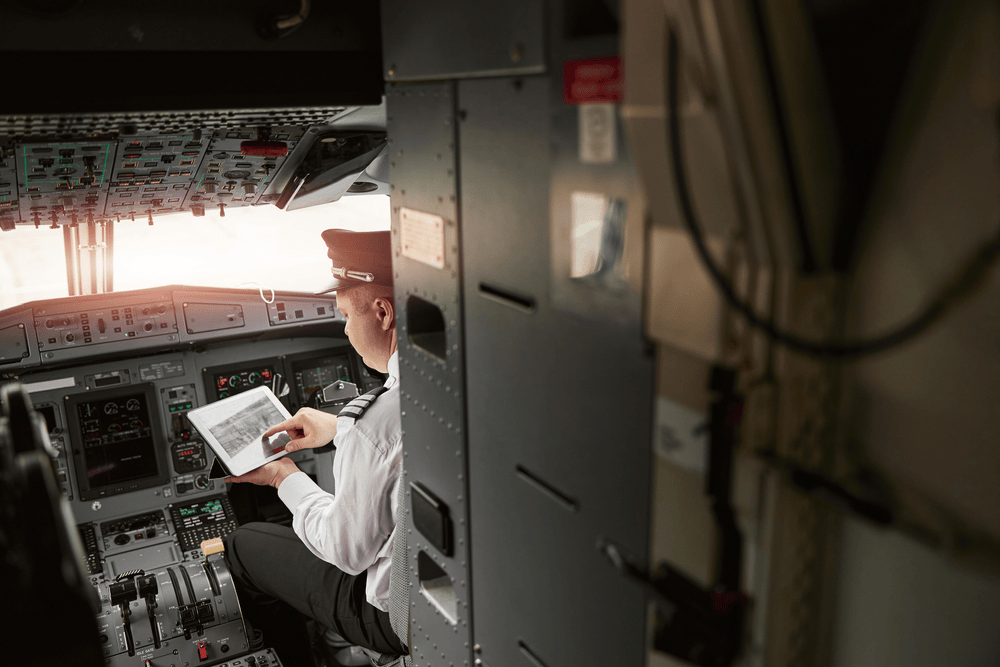
Jeppesen announces it is discontinuing printing paper charts and embraces the digital age. [Credit: Shutterstock]
If you have a factory-printed Jeppesen instrument approach plate in your collection of aviation swag, you might want to have it framed. It’s a collectible now.
On October 31, Jeppesen ForeFlight printed paper charts for the last time.
We knew (for years) that this was coming. The introduction of ForeFlight in 2007 got the attention of the aviation world, and in 2017 Jeppesen, as a subsidiary of Boeing at the time, formed a partnership that combined the legacy of its charts with the new technology from ForeFlight. That partnership made it possible for pilots to leave behind those often cumbersome leather binders with the alphabetized approach plates that expired quicker than you thought they would and had to be manually updated.
Going completely digital appeared to be on the horizon when Jeppesen ForeFlight, under the header “Built for a Digital Cockpit” on its website, stated: “Jeppesen is moving fully to digital charting and no longer printing paper charts. Digital charts work seamlessly with modern EFBs, like ForeFlight, making updates easier and giving you access to features like georeferencing and map overlays.”
For decades pilots received updates to their Jeppesen charts in the mail. At the flight school we’d get packets of them all addressed to CFIs when it was that time of the month. I’m told that if you have one of those paper subscriptions, you will get a credit at Jeppesen.
What this means is, if you want a hard copy of a particular chart, it’s up to you to print it using a digital platform like ForeFlight or JeppView, Jeppesen’s electronic chart application.
As someone who has been printing the National Ocean Service (NOS) approach since 2024, when it stopped producing the loose-leaf packets in favor of the bound ones, I can tell you it’s not terribly difficult or a hardship. I like to have a hard copy in addition to a digital chart in the cockpit and find the bound books can be cumbersome in the cockpit. Sure, it’s fun to pull out a knife and slice the page from the book, but that means it can get lost like a grade school report card—and they do.
Pilot Preference
Which is better, Jeppesen or NOS? That depends on who you talk to.
For many years Jeppesen was the Part 121 standard. At the flight school the CFIs who were aspiring airline pilots proudly used Jeppesen products. You were considered hot snot if you had your chart updates (available by subscription) mailed directly to the flight school. In addition, the ground schools were done using Jeppesen products.
This was a challenge for me at first as I was trained by an Air Force Academy graduate, and the military uses NOS. Its charts were considerably cheaper than Jeppesen and available without a subscription. It was easy to update them, as it was simply a matter of replacing the entire contents of the binder when the new ones came out.
I did discover that it was easier to divide the Pacific Northwest into two binders, A through M and N through Z, because the binder rings strained when you kept the bundle together.
The only time I ran into a challenge being a NOS woman in a Jepp world was when a coworker expressed concern it would be confusing to the students if I was using something else. She’d never used NOS before and didn’t know they were arranged much like Jeppesen.
It’s not the brand of chart you use. It’s the information that’s important.
Start at the top of the page and work your way down. The acronym I use for briefing an approach is MARRTHA: Missed approach (memorize first two steps); Approach type (note equipment and the weather minimums required); Radio frequencies to be used; Radials that define the route if appropriate; Time, if it is a timed approach; Heading when on final; Altitude, how low can you go?
Both Jeppesen and NOS are arranged in blocks. It starts at the top of the page with the briefing strip, plan view, profile view (shows the glide slope), and weather minimums.
Briefing Strip
Brief from the top down—it doesn’t matter if you are looking at NOS or Jeppesen. On the top of the page is the name of the airport and approach. On Jeppesen, you will find the date of the chart publication. On NOS the publication date and expiration date are printed on the right side of the chart.
The next block has radio frequencies you will need for weather and communications, and then you find the missed approach instructions, and the fine print, caveats about things that could mess you up. With Jeppesen, the details are often located here. With NOS, you may have to flip to the front of the binder and look up airport specific information.
Plan View
Provides a bird’s-eye view of the area where the approach is being flown. Pay attention to the obstacles and note the initial approach fixes (IAFs) as that is where the approaches begin.
Profile View
The profile view shows the descent path of the aircraft. Note the headings and altitudes as you pass each fix. Do not descend below the altitudes.
Minimums
Note the weather minimums as in ceiling and visibility required to legally perform the approach to landing. It is not enough to reach the decision altitude (measured in mean sea level) or decision height (measured above ground level) or minimum descent altitude (MDA) broken down by aircraft category, based on speed.
You need to have the ceiling and visibility on the chart (or better) and the airport environment in sight. The colloquial saying for this is “runway paint, pavement and lights,” but it’s actually a bit more involved than that.
You need to see these things before you land and, if you don’t see them, it’s missed approach time— the IFR version of a go-around. Pilots who continue the approach when the weather is below minimums are often the ones we read about on National Transportation Safety Board accident reports.
The chart also has a small airport diagram that includes a depiction of the runway and field elevation. Pull up the bigger diagram for taxiing.
Meg Godlewski has been an aviation journalist for more than 24 years and a CFI for more than 20 years. If she is not flying or teaching aviation, she is writing about it. Meg is a founding member of the Pilot Proficiency Center at EAA AirVenture and excels at the application of simulation technology to flatten the learning curve. Follow Meg on Twitter @2Lewski.
NTSB member Tom Chapman and investigator-in-charge Timothy Monville shared what the agency knows so far about the horrific accident and answered a few questions from the media. Many of the circumstances surrounding the tragedy remain unclear, but Chapman and Monville explained how officials plan to approach the investigation.
More than 4,000 people were in the waiting room for the NTSB’s live stream of the highly anticipated briefing, which began around 1:25 p.m. EST.
“Sadly, all aboard were lost,” said Chapman.
Monville said one person on the ground, who was in a vehicle driving away from the area near the impact, sustained a leg injury. No other injuries or fatalities on the ground have been reported.
“That’s all I’ve been made aware of in terms of injury,” Monville said.
Sequence of Events
Chapman said the NTSB’s early indication is that a cockpit voice recorder (CVR) was installed on the airplane, but it was unclear if the device was still on board at the time of the accident. The agency is seeking to determine if it was and is hoping to recover the CVR.
ADS-B tracking and air traffic control (ATC) audio of the incident paint an initial picture of how the crash unfolded.
According to LiveATC archives, around 12:47 p.m. EST on Sunday, a pilot informed Miami’s air route traffic control center (ARTCC) that the aircraft was encountering light, clear ice as it approached Naples, Florida.
The pilot then radioed that the airplane was experiencing altitude changes of plus or minus 600-700 fpm while picking up ice and flying in moderate turbulence, circumstances they said were manageable. Outside temperature was reported as minus-47 degrees Celsius (minus-52.6 degrees Fahrenheit).
The pilot then asked for a different altitude for a “better ride” or smoother flight, indicating that they wanted to climb from 35,000 to 37,000 feet. ATC approved the altitude change.
Around 12:48 p.m., the Learjet entered a rapid descent. The crew declared an emergency, reporting a rate of descent of 10,000 fpm in an overspeed condition. The pilot then said the aircraft was descending at 22,000 fpm and had entered a bank angle of 60 degrees. According to FlightRadar24, the reported vertical rate during descent exceeded 32,000 fpm.
“We’re going to crash into the ground,” the pilot said.
Chapman said the airplane impacted the ground at about 12:51 p.m. in Palm Beach County, near West Palm Beach.
The Aircraft
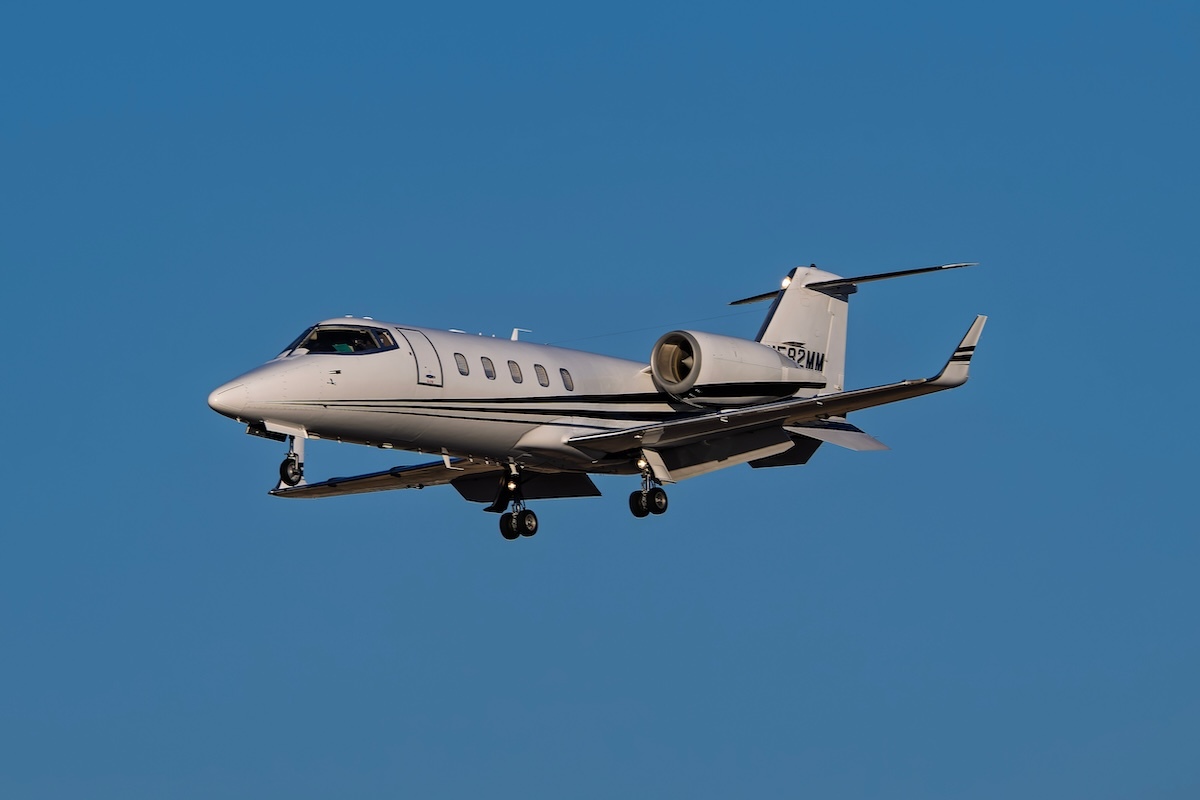
The model involved in the accident was a Bombardier Learjet 60 registered N722BD.
Chapman said the airplane was operated by Aurora Aviation, doing business as Upper Jets, a Fort Lauderdale, Florida-based charter operator. It departed Austin-Bergstrom International Airport (KAUS) in Texas around 10:37 a.m. CDT and was flying to North Eleuthera Airport (MYEH) in the Bahamas as a Part 135 flight.
Images of the crash site show black smoke, a burning wreckage, and a large crater in the street. Monville said the wreckage is scattered over a small area of about 0.4 by 0.5 miles. Chapman said that water filling the crater created by the aircraft’s impact may make recovering its parts difficult.
“That’s something we’re going to be concerned about,” Chapman said.
Footage of the impact captured by vehicle dash cams appears to show that the jet’s horizontal stabilizer was missing. According to Chapman, there is “some evidence” of the aircraft breaking up before impact, but the NTSB is “still seeking to determine that.” Because of the possible breakup, investigators may find parts of the aircraft outside the immediate crash site.
Monville said scoping out the scene will be a “multiday process” and that recovering the wreckage from the roadway will pose the biggest challenge. The NTSB plans to search for and document parts away from the main impact site. The agency’s team includes on-site drone pilots and systems and structures specialists as well as off-site weather and ATC experts. They will be assisted by the FAA, representatives from Learjet, and possibly the accident aircraft’s operator.
According to law enforcement in the area some 70 people were evacuated from the crash site neighborhood and placed into a temporary shelter. Officials have not said when they can return home. Photographs and video of people walking around as wreckage burned on the street speaks to the shock of the crash.
Chapman said the NTSB is not aware of a history of this type of accident involving the Learjet 60, but the agency will examine trends.
It also plans to interview witnesses and encouraged people with photo, video, or other information related to the accident to share it to witness@NTSB.gov. The agency urged people not to move debris if they find it.
The Flight Crew, Passengers, and Aircraft Operator
The NTSB confirmed there were nine people aboard the Learjet, including two crew and seven passengers. Officials could not answer questions about the identities of the occupants.
The aircraft’s copilot was identified to the New York Post on Monday as Nathalia Gadelha Filgueiras, 20, by her mother and stepfather. In an interview with the New York Times, Camila Corteleti, Filgueiras’ mother, said her daughter worked for Upper Jets and had more than 1,300 hours of flight time.
According to FAA records, Filgueiras held commercial pilot certification for both single- and multi-engine land, along with an instrument rating. Her last commercial certificate was issued March 19, and she held a type rating in the Learjet 60. Filgueiras also had a CFI certificate issued in February of 2025.
Filgueiras’ type certification included a pilot-in-command (PIC) limitation, indicating command and specific operational and supervision limitations from the FAA. These typically relate to experience level—the certificate holder must have a specific amount of experience in the aircraft make and model, usually referred to as hours, before the limitations are lifted.
The NTSB said it does not yet know whether the female copilot heard in ATC audio was the pilot flying or pilot monitoring. In two-pilot flight crews, the PIC does the flying while the pilot monitoring handles radios and other tasks necessary during the flight at the instruction of the PIC. If that voice is found to belong to Filgueiras, and considering her type limitation, it is unlikely that she was the PIC.
The Weather Conditions
Chapman said that determining what the weather conditions were like at the accident aircraft’s altitude will be a “major focus” of the NTSB’s investigation.
He could not confirm that the airplane flew through an active thunderstorm, though according to the Aviation Safety Network, there was a convective SIGMET active in the region. A convective SIGMET warns of thunderstorms with intense downdrafts, wind shear, and severe icing.
The flight crew reported that they were encountering clear ice, which tends to be particularly heavy and tenacious and can create abnormal shapes when building up on the wings, destroying lift. Ice accumulation happens quickly and, in addition to adding weight, can affect smooth airflow over the wing.
The pilot’s request for a higher altitude may have been intended to bring the aircraft above freezing conditions, and it was likely encountering freezing rain. Flying above those conditions can prevent the buildup of ice by bringing the temperature of the aircraft’s skin below freezing.
It is unclear whether the airplane’s flight into icing conditions was the responsibility of the crew or ATC. Chapman said that is “exactly what [the NTSB is] trying to determine” and that investigators will look to “sort out who knew what, and when, and what actions were taken.”
Accompanying the archived LiveATC audio is weather information from Miami’s radar station. At 11:53 a.m. Sunday, about one hour before the crash, winds were from 09 at 20 knots and gusting up to 30 knots. Peak wind from 08 at 31 knots was reported at 10:54 a.m.
Visibility was 10 sm in light rain. The first layer of clouds was scattered at 2,100 feet, with another layer at 2,800 feet and a ceiling that was overcast at 5,500 feet. The temperature was 27 C (80.6 F), and dew point was 23 C (73.4 F), indicating a high probability of fog. Thunderstorms began at 11 minutes after 11 a.m. and ended at 38 minutes after the hour.
Next Steps
Chapman said a team of 20 NTSB investigators arrived at the scene Sunday, and more arrived Monday. Specialists from the agency’s Transportation Disaster Assistance Division are also on scene to provide crisis coordination and assistance to the victims’ families.
Chapman said the NTSB aims to determine not just what happened but why it happened, and it hopes to recommend changes to prevent a similar accident.
The NTSB will not issue a determination of probable cause while on scene. It is unclear how long that initial portion of the investigation will last. The agency will eventually issue preliminary and final reports after collecting and analyzing available evidence.
FLYING technical editor Meg Godlewski contributed to this report.
Jack is a staff writer covering advanced air mobility, including everything from drones to unmanned aircraft systems to space travel—and a whole lot more. He spent close to two years reporting on drone delivery for FreightWaves, covering the biggest news and developments in the space and connecting with industry executives and experts. Jack is also a basketball aficionado, a frequent traveler and a lover of all things logistics.
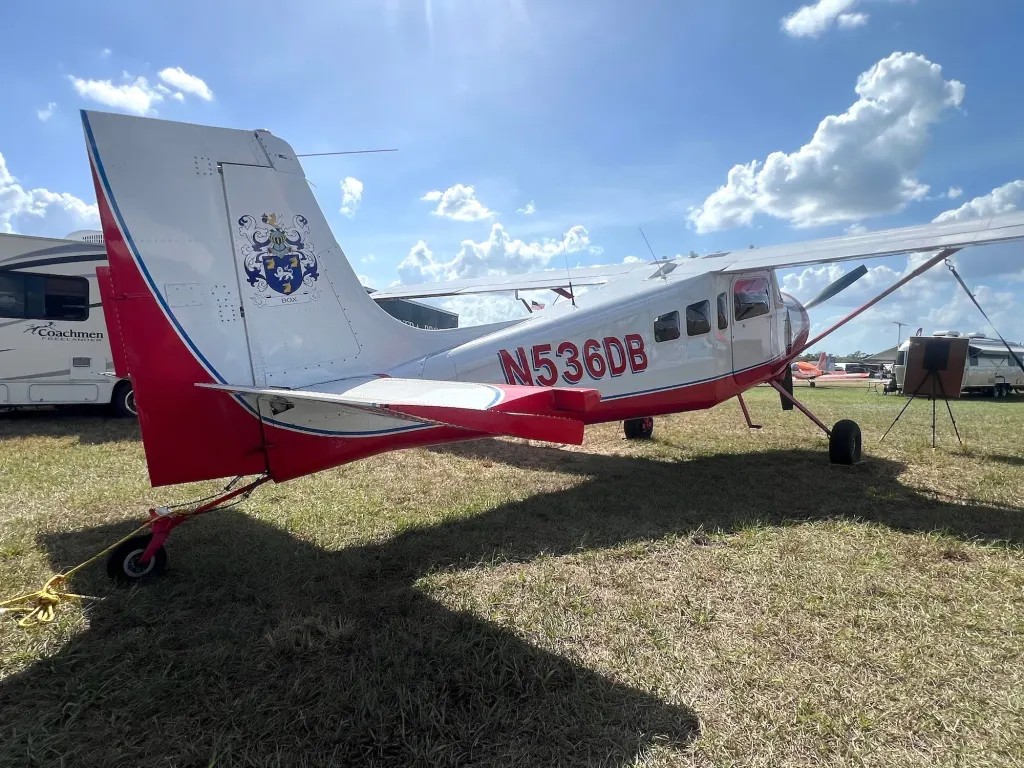
Murphy Aircraft’s model SR3500 Moose can be configured for up to five passengers. [Credit: FLYING Archive]
Canadian kit manufacturer Murphy Aviation is reportedly insolvent and has sold off its physical assets, including manufacturing equipment.
Canadian Aviator was first to report the manufacturer’s insolvency last week, quoting Sam Garandza, general manager of Able Auctions, as saying that “everything sold.” Items available to buyers in the October 22 auction included a laser-cutting machine, 400-ton hydraulic press brake, aluminum stock, and incomplete kit aircraft.
The owner of Murphy Aircraft’s building in Chilliwack, British Columbia, reportedly initiated the court-ordered auction following months of unpaid rent.
Founded by Daryl Murphy in 1985, the manufacturer has produced experimental aircraft kits for more than four decades. In 2025, then-director of sales Steve Drinkwater, the publisher and editor of Canadian Aviator, said the company was “moving ahead, and things are looking up” following its 2022 sale to Chinese conglomerate Duofu Group.
Drinkwater said Murphy Aircraft had sold about 3,000 kits, about half of which had achieved flying status. He said between 300 and 400 Murphy Rebels were flying, about 100 Murphy Elites were airworthy, and a few hundred Murphy Moose kits were completed. At the 2025 Sun ’n Fun Aerospace Expo in Florida, the company promoted the Rebel, Elite, Moose, and its newest design, the Radical.
It is unclear how outstanding customer orders, replacement parts, and technical support for owners and builders of Murphy aircraft will be handled. Also unclear is the fate of the manufacturer’s intellectual property, including aircraft designs and manufacturing documentation. The company has not yet announced plans to resume production or transfer its designs.
Murphy Aircraft’s Legacy
Daryl Murphy’s first design was the fabric-covered, conventional landing gear Renegade aerobatic biplane. The Renegade evolved from a single-seat prototype to a tandem-seat biplane powered by a single Rotax engine. Some are equipped with floats for water operations.
The Renegade is eligible in the U.S. as a homebuilt airplane and in Canada as an amateur-build or ultralight.
The Murphy Rebel, introduced in the 1990s, expanded seating capacity to up to three and introduced a strut braced high wing. The short takeoff and landing (STOL) taildragger monoplane has a useful load up to 750 pounds and is designed as a personal-use bushplane, capable of operating from wheels, floats, or skis.
It was designed for Lycoming or Rotax engines. Murphy Aircraft in 2016 announced that it planned to seek special light sport aircraft (S-LSA) certification for the Rebel and deliver experimental light sport aircraft (E-LSA) Rebel kits.
The Murphy Elite was originally designed as a tricycle gear version of the Rebel, but conventional landing gear is an optional feature. Like the Rebel, it features a strut braced high wing. However, it offers improvements including a reinforced airframe, all-metal control surfaces, split configuration flaps, and upgraded wing attachment points and leading edges. These raised the airplane’s gross weight and allowed it to accommodate higher horsepower engines.
Another staple of Murphy Aircraft is the Moose, a utility light aircraft with capacity for a pilot and up to five passengers. Other designs from the manufacturer include the Super Rebel and Maverick.
Daryl Murphy in 2014 said he was “approaching retirement, with the desire to spend more time with family and pursue other interests.” This prompted him to seek “someone who can take the company to the next stage of development,” per a news release. The company was offering eight aircraft models and three sizes of straight and amphibious floats.
In 2016, Murphy Aircraft announced the Radical, a propeller STOL airplane that was being designed for a higher gross weight, more wing area, and the use of engines up to 220 hp. Per a news release, it would combine “many of the best features” of the Rebel, Elite, Maverick, and Super Rebel.
AVweb in 2016 reported it would feature bike racks on the wings and useful load up to 950 pounds.
A Radical prototype flew soon after the announcement, and production was forecast to begin in 2017. However, AVweb in 2023 reported that the Radical had not yet hit full production. It appears only a limited number have been produced.
Following Murphy Aircraft’s 2022 sale to Duofu, Canadian Aviator reported the plan was to return the company to profitability through parts sales and the relaunch of Rebel, Moose, and Elite production while continuing to develop the Radical. According to the magazine, sales grew, but signs of financial stress arose earlier in 2026, and suppliers began demanding money up front before deliveries.
In July, Duofu Group’s owner and founder, Hu Xingrong, was placed under unspecified “compulsory measures” by authorities in China, according to Chinese financial publication Yicai Global. Yicai reported that Duofu was facing liquidity issues.
Per Canadian Aviator, control of Duofu is no longer in Xingrong’s hands, and financial support for Murphy Aircraft dissipated.
Jack is a staff writer covering advanced air mobility, including everything from drones to unmanned aircraft systems to space travel—and a whole lot more. He spent close to two years reporting on drone delivery for FreightWaves, covering the biggest news and developments in the space and connecting with industry executives and experts. Jack is also a basketball aficionado, a frequent traveler and a lover of all things logistics.
For decades, light twins provided the natural step-up option for pilots of high-performance singles who wanted faster climb and cruise speeds, higher payload capacities, and the security of a second engine when flying at night or over water, mountains, and other difficult terrain.
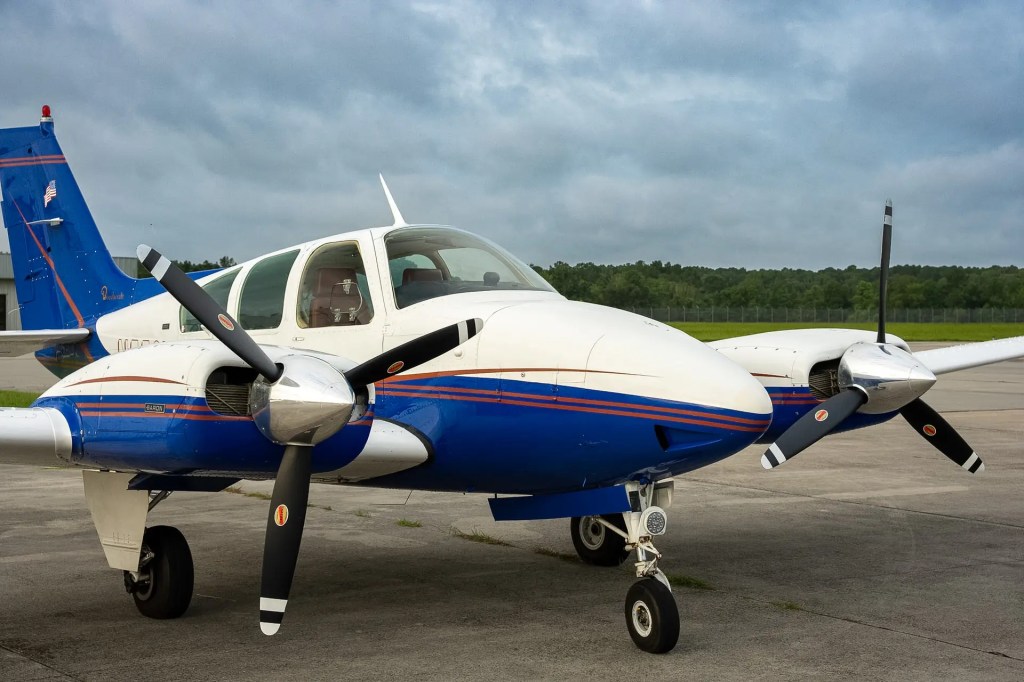
This Baron is equipped with highly regarded Continental IO-470-L engines. [Credit: Hunter Dunlap]
Today, many experts will tell you that turboprop singles have largely eclipsed light twins in the performance stakes while allowing pilots to skip the rigors of earning multiengine ratings. In reality, though, there is demand for both types of aircraft, with twins often emerging as the more economical choice for many missions.
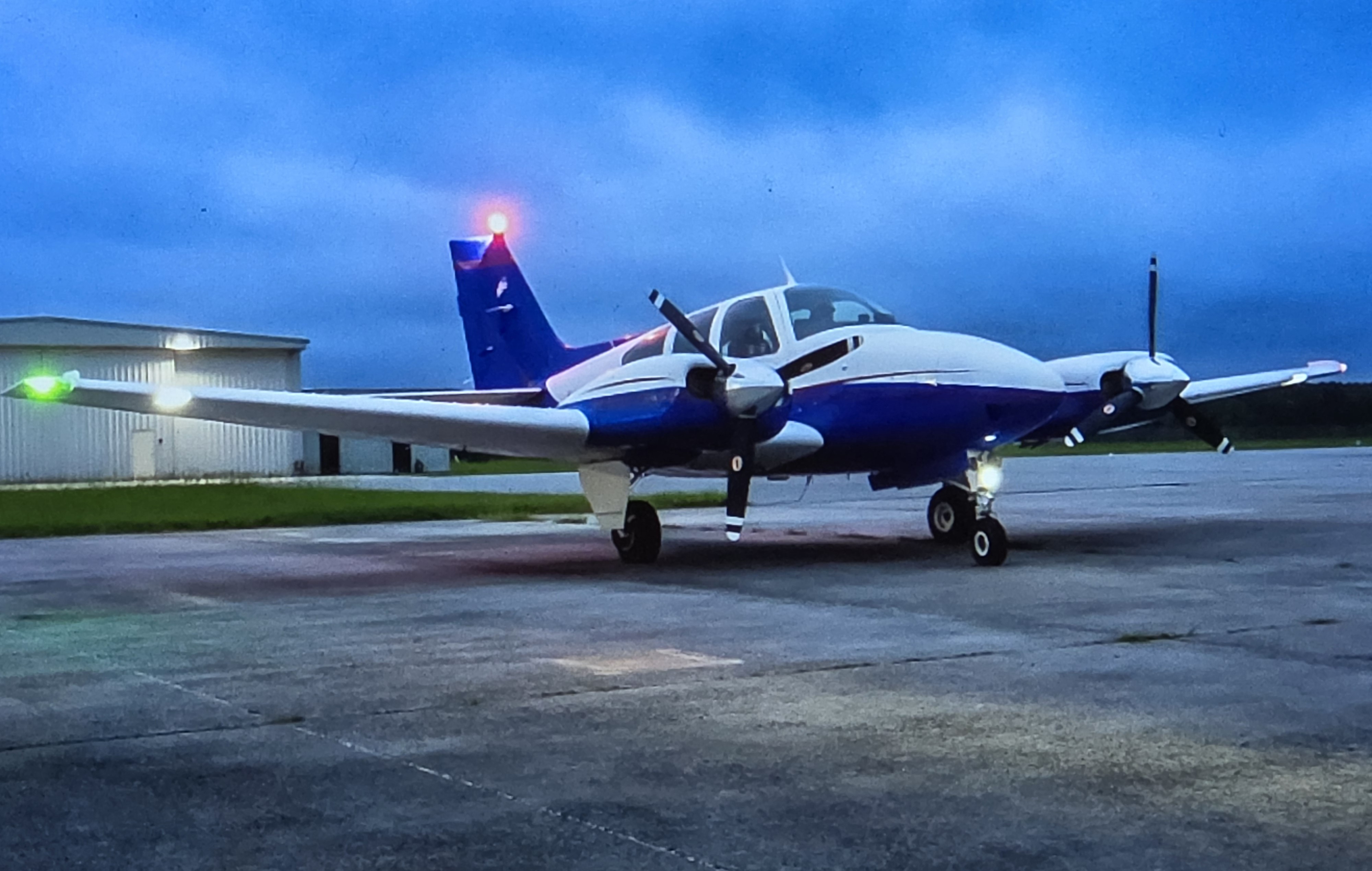
The aircraft for sale today is a great opportunity for buyers who plan to make frequent cross-country trips business and personal flights, and who value the advantage in flexibility that a fast piston twin can provide over airlines or larger turbine models that cannot access some smaller airports.
This 1974 Beechcraft Baron B55 has 2,830 hours on the airframe and 1,225 hours since overhaul on each of its 260 hp Continental IO-470-L engines, which have a 1,500-hour TBO.
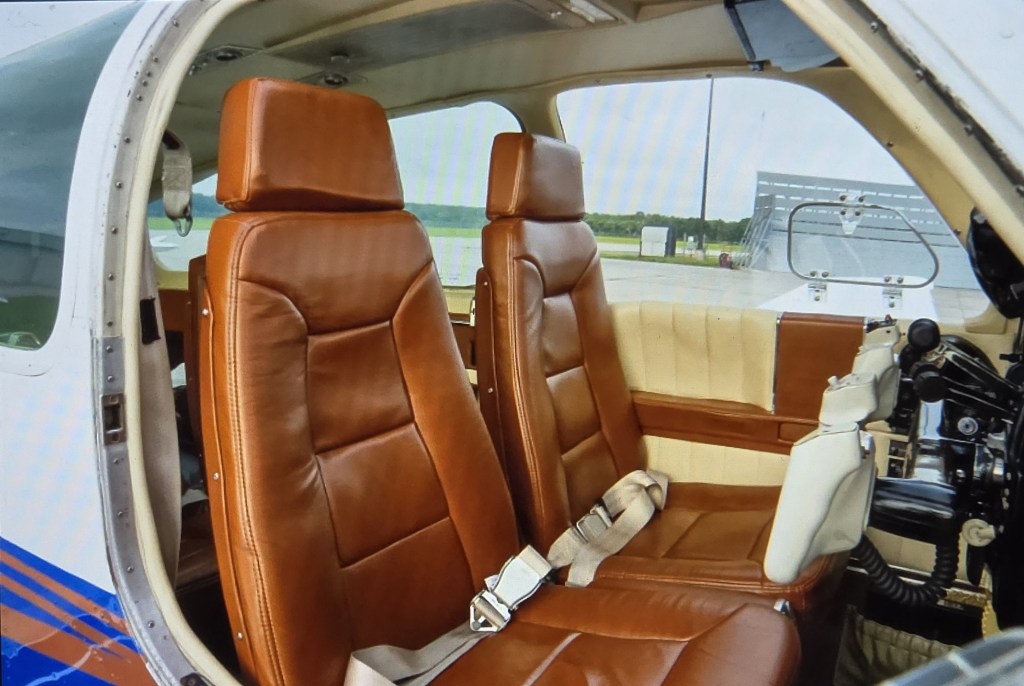
The Baron B55’s interior was redone about a decade ago and shows very well. [Credit: Hunter Dunlap]
The engines, which are equipped with Airwolf remote oil filters, received new baffling and air boxes in 2024, and their magnetos were replaced in 2025. The aircraft has a fuel capacity of 136 gallons and is equipped with a Janitrol combustion heater.
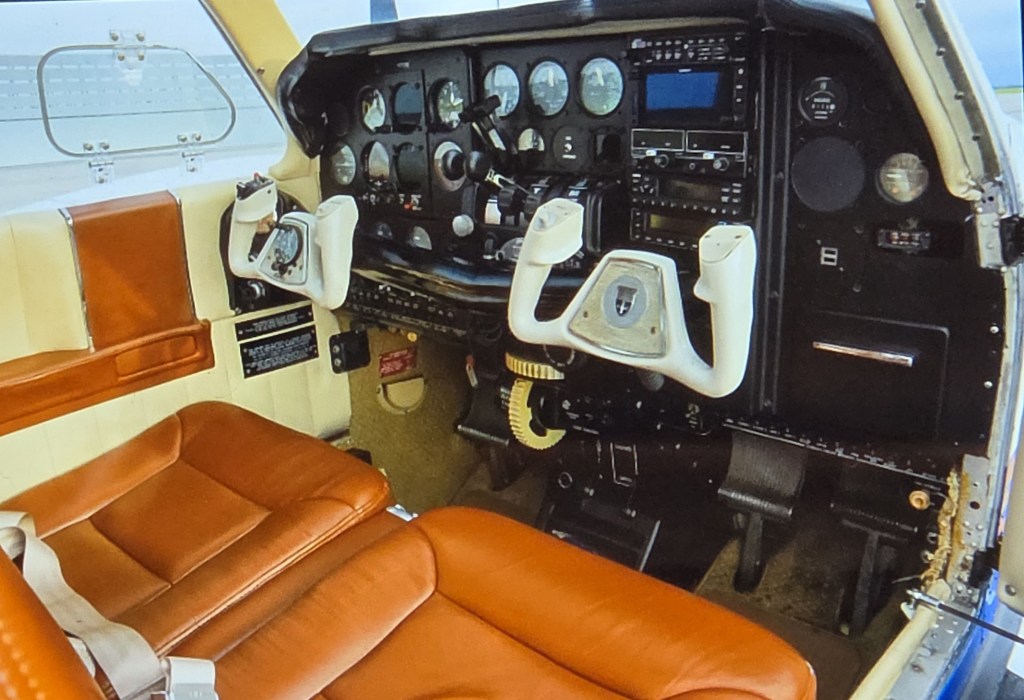
The nicely updated panel includes a Garmin GTN 650 GPS/nav/com, dual GI 275 flight instruments, GFC 600 autopilot, JPI EDM 760 engine monitor, and Aerospace Logic fuel gauges and totalizers.
The aircraft’s IFR panel includes several desirable updates. [Credit: Hunter Dunlap]
The Baron is equipped with D’Shannon vortex generators, shoulder harnesses for front seats, Door Steward for main door and Spring Thing to hold nose baggage door open while loading. The cabin was reupholstered in 2015, its exterior repainted in ’20, and the nose baggage compartment fitted with custom carpeting in ’25.
Pilots who wish to step up to a classic, fast piston twin with new paint and nicely updated panel and interior should consider this 1974 Beechcraft Baron B55, which is available for $265,000 on AircraftForSale.
If you’re interested in financing, you can do so with FLYING Finance. Use our airplane loan calculator to calculate your estimated monthly payments. Or, to speak with an aviation finance specialist, visit flyingfinance.com.
Jonathan Welsh is Lead Editor of Aviation Consumer and a private pilot who worked as a reporter, editor and columnist with the Wall Street Journal for 21 years, mostly covering the auto industry. His passion for aviation began in childhood with balsa-wood gliders his aunt would buy for him at the corner store. Follow Jonathan on Twitter @JonathanWelsh4
NTSB logo and websites [Shutterstock/T. Schneider]
A business jet carrying nine people crashed into a South Florida neighborhood on Sunday, narrowly missing homes and cars on a busy street.
Car dash cams caught the image of the Learjet 60 as it nose-dived into the ground and exploded in flames in Palm Beach County. It appears part of the jet’s tail, the horizontal stabilizer, was missing.
According to U.S. Transportation Secretary Sean Duffy, all nine people on board were killed. There were no reports of casualties on the ground.
Images of the crash site show black smoke, burning wreckage, and a large crater in the street.
The aircraft identified as N722BD was a Bombardier Learjet 60 registered to LR60271 LLC out of Wilmington, Delaware.
The privately owned aircraft was on a flight from Austin-Bergstrom International Airport (KAUS) to the North Eleuthera Airport (MYEH) in the Bahamas.
The aircraft took off at 10:37 a.m. CST and climbed to an altitude of 41,000 feet. At 12:35 p.m., as the aircraft approached Naples, Florida, the flight crew contacted air traffic control and reported picking up ice and moderate turbulence with altitude changes of plus or minus 600 to 700 feet per minute. The outside temperature was reported at negative 47 degrees Celsius. The crew asked for a different altitude for a “better ride,” which is pilot-speak for a smoother flight.
In the next transmission the pilot noted they needed to climb. At 1:35 p.m. the crew began a descent to 35,000 feet.
At 1:48 p.m., the aircraft had entered a rapid descent and the crew declared an emergency, reporting they were descending at 10,000 feet per minute and in an overspeed condition.
The pilot stated the aircraft was descending at a rate of 22,000 fpm and had entered a bank angle of 60 degrees.
“We’re going to crash into the ground,” the pilot stated. The screams of the crew, and what sounds like a man saying the Lord’s Prayer, is heard, and then the recording ends.
The National Transportation Safety Board (NTSB) and FAA are sending teams to the crash site.
This is a developing story and will be updated as more information becomes available.
Meg Godlewski has been an aviation journalist for more than 24 years and a CFI for more than 20 years. If she is not flying or teaching aviation, she is writing about it. Meg is a founding member of the Pilot Proficiency Center at EAA AirVenture and excels at the application of simulation technology to flatten the learning curve. Follow Meg on Twitter @2Lewski.
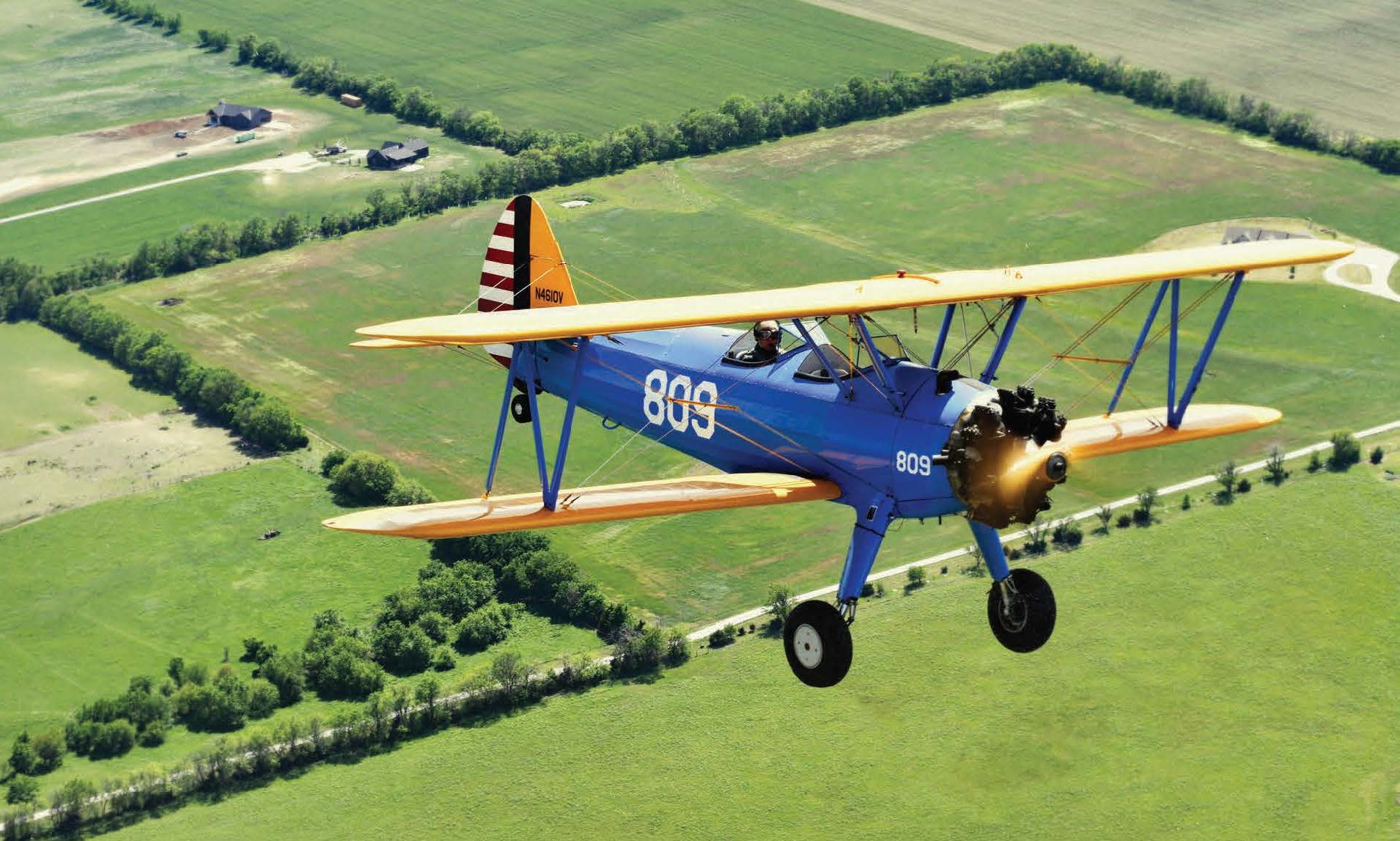
A Boeing Stearman soars over the plains of Kansas east of Wichita. [Credit: Grant Boyd]
Chances are, an aircraft you have flown was built in Wichita, Kansas. After all, more than half of all general aviation aircraft were built in the famed aviation city that is also known as the “Air Capital of the World.”
Names such as Clyde Cessna, Walter and Olive Ann Beech, Lloyd Stearman, Bill Lear, Russ Meyer Jr., and others defined the south central Kansas town’s worldwide impact through aircraft manufacturing. It is the birthplace of famed manufacturers like Beechcraft, Cessna, Learjet, and Mooney. At one point, there were nearly three dozen aircraft manufacturers in town and approximately 300,000 aircraft had been built there.
Not only do manufacturers still proudly call Wichita home, hundreds of other aerospace companies, large and small, are based there. The talent pipeline in the metropolitan area of 650,000 residents is multigenerational, and many residents have either worked in the aviation industry or know someone who has.
If you're not already a subscriber, what are you waiting for? Subscribe today to get the issue as soon as it is released in either Print or Digital formats.
There is no shortage of landing options to consider when visiting Wichita, as there are more than a dozen airports within a 25-mile radius of downtown.
The commercial service option, Wichita Dwight D. Eisenhower National Airport (KICT), offers the longest runways and boasts two full-service FBOs. Among other companies, Textron Aviation and Bombardier house facilities there, with business jets a common sight in the pattern.
This airport is also closer to downtown than the other main option, Colonel James Jabara Airport (KAAO) in the northeastern part of the city. This airport is untowered but is quite busy and has a 6,101-foot-long runway. Jabara is conveniently located near major Wichita shopping centers, as well as Wichita State University.
KAAO is the northernmost of three airports oriented in nearly a straight line. At night, especially, it is imperative to be mindful of where you are in relation to these airports and the corresponding airspace. That said, the air traffic controllers (ATCs) exude Midwestern hospitality and are helpful getting you where you need to go.
The facility directly to the south of Jabara is Beech Factory Airport (KBEC), a private facility that is owned and operated by Textron Aviation. With a history rooted in Beech’s early days, its runway has hosted the inaugural flights of thousands of Bonanzas, Barons, King Airs, and more.
McConnell Air Force Base (KIAB) serves as host to 18 Boeing KC-135s and 24 KC-46s, with members from the U.S. Air Force’s 22nd Air Refueling Wing, Kansas Air National Guard’s 184th Wing, and Air Force Reserve’s 931st Air Refueling Wing based there. Other military aircraft can frequently be seen in the skies over Wichita en route to McConnell.
The nearest civilian airport is Cessna Aircraft Field (KCEA), a privately owned facility that has a long history with its namesake manufacturer. Two other airports you may hear mentioned in the Wichita area include Augusta Municipal Airport (3AU) and Cook Airfield (K50). These airports are about a 20-minute drive from downtown.
Another airfield worth considering is Clyde Cessna Field (9K8) in Kingman. The airport has been called the “Birthplace of the Cessna 172” due to its importance during the venerable aircraft model’s flight test regiment.
Things to Do
Kansas Aviation Museum
One of Wichita’s must-see galleries, the multistory facility is housed in the former Wichita Municipal Airport terminal building, which at one point was the fourth-busiest airport in the country. The last commercial airline passenger walked across the terrazzo marble floor in 1954, and the historic, 48,000-square-foot building was turned into a museum in 1991.
The museum highlights well-known and forgotten aircraft built in Wichita and beyond, and also boasts an impressive collection of other artifacts, original technical documents, and photographs. The intentional curatorial work undertaken by staff and volunteers ensures that local and statewide aviation history is not forgotten.
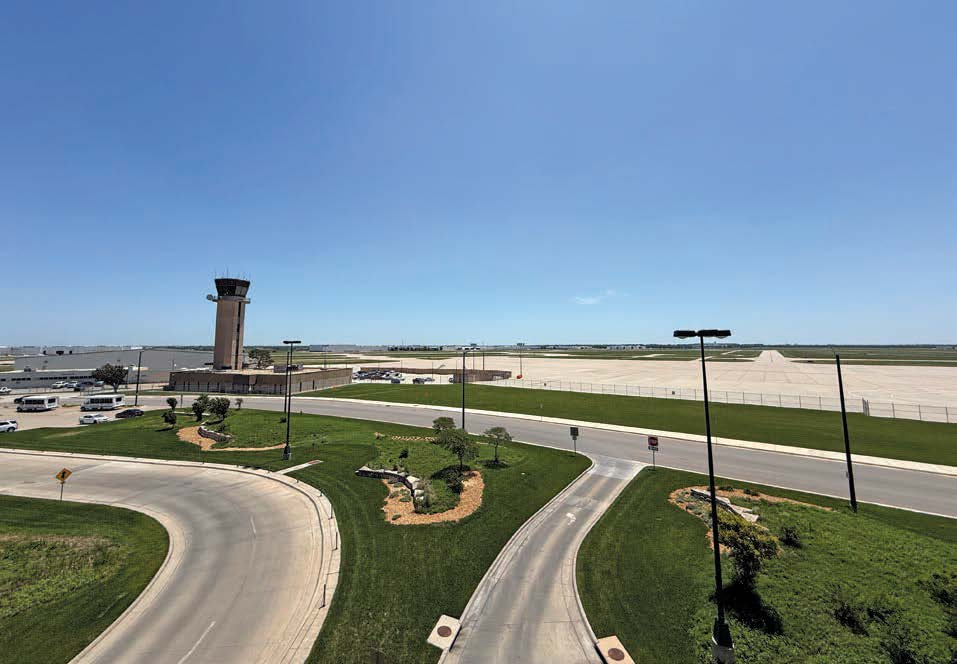
From the bustling runways of Wichita’s Eisenhower National Airport (left) to the historic charm of Beaumont’s 1885-built Frisco Water Tower, Kansas offers pilots an unforgettable journey through aviation’s storied past. [Credit: Grant Boyd]
Aircraft exhibits are housed inside the terminal building, as well as on the expansive ramp. Some of the highlighted aircraft include a Laird Swallow, Stearman Model 4D, Cessna 500 Citation (serial number 2), Learjet 23, Beechcraft Starship, and Cessna T-37 “Tweety Bird.” Visitors can step aboard several of the aircraft parked on the ramp, including the Boeing 727 with FedEx livery and Boeing KC-135E.
The outside exhibits are easily visible from the third story’s accessible control tower. This room has sweeping views of McConnell AFB, which is adjacent to the museum. Fuselages and other airframe components built at the Boeing facility there can be seen from this vantage point before they are transported to Seattle, with some flown aboard the Dreamlifter.
For those interested in getting into the nitty-gritty of aviation history, there are ample opportunities to dig into the town’s rich heritage. A new offering is archive tours, which are hour-long, docent-led excursions that take you behind the scenes.
A few of the most talked about documents in the archives include a multidecade collection of original FAA aircraft registration cards, newspaper articles going back to the early days of Wichita aviation, and aircraft blueprints from Swallow, Travel Air, and Cessna. There is also an active restoration shop on-site, with current restoration projects including a Cessna 310 and Beechcraft Bonanza.
The staff and volunteers aim to bring aviation to the next generation through field trips and summer camps, with a children’s area outfitted with simulators and age-appropriate learning opportunities. The museum hosts a number of events throughout the year, from murder mystery nights to paranormal investigations, and also serves as a popular wedding venue.
Exploration Place
This popular spot for pilots and non-pilots alike highlights its hands-on science fun for the whole family. There are a handful of permanent exhibits, ranging from human health to an interactive medieval castle, as well as rotating special exhibits.
One of the most popular features is the “Design Build Fly” exhibit, which brings aircraft manufacturing and physics together in many activities. You can design an airplane seat, test landing gear, and rivet a wing. You can also sit behind the controls of a King Air simulator or in the seats of a Hawker 4000.
One can discover the heart of American aviation in the Wichita, Kansas, area. From legendary factories to hidden museums and historic airfields, there are many remarkable stories from where aircraft have defined the skies for nearly a century. [Credit: Grant Boyd]
Exploration Place’s newest permanent exhibit, the Adventure Playscape, opened to much fanfare in the spring. The roughly 6.5-acre outdoor space features 10 themed play areas for children of all ages and abilities. A crowning jewel of the playscape is the Textron Aviation Flight Adventure attraction, which boasts a red Beechcraft Staggerwing mock-up perched almost 30 feet into the air. The blue-and-white Cessna Citation jet is also visually compelling and an exciting challenge for kids to climb, as is the 40-foot-tall rocket.
The museum is located downtown along the Arkansas River. It sits across the street from the Wichita Public Library, which has a collection of original aviation texts and documents, and near the town’s Double-A Wichita Wind Surge’s baseball stadium. The dining scene in Wichita is varied, and acclaimed spots range from dive bars to formal eateries.
Aviation Restaurants
Unsurprisingly, aviation has found itself intertwined into the design of a handful of local restaurants. Places like Hangar One Steakhouse (just off airport property at KICT), Scotch & Sirloin, and Flight 1868 feature airplane-heavy decor themes. There is a Subway sandwich shop inside of Yingling Aviation, a local MRO and FBO.
A popular fly-in option is Stearman Field Bar & Grill at Lloyd Stearman Field (1K1) in Benton, a small town just northeast of Wichita. The aptly named airfield is home to nine Stearman biplanes, which frequently delight diners below with low passes and formation flying. These impromptu displays are not the first to wow the crowd there, as the 1969 movie The Gypsy Moths was filmed at the airfield and highlighted three barnstorming skydivers.
Other vintage, as well as homebuilt, military, and GA aircraft make the airspace around 1K1 quite busy at times. It is not uncommon to see a dozen airplanes sitting on the ramp next to the 5,106-foot-long paved runway during its fly-ins, car shows, or weekend breakfasts. There is also a residential fly-in community at the other end of the airport, which is one of the half dozen or so in the Wichita area.
Another memorable choice when searching for the $100 hamburger is the historic Beaumont Hotel. Situated in the picturesque Flint Hills region of Kansas, it first opened in 1879 and is a short taxi from Beaumont Hotel Airport (07S). Once you plant your aircraft’s wheels on the 2,400-foot-long, slightly sloped runway, you must take a few-minutes taxi through town to reach the restaurant.
Visiting Beaumont feels like a step back in time to when things were simpler and offers a welcome respite for pilots near and far. You never know who you are going to run into, or what they are flying. The hotel itself is on the National Register of Historic Places, as is the 1885-built Frisco Water Tower. The water it held was used for steam locomotives and is believed to be the last remaining one of its kind in the country. Another point of interest is that the hotel is home to Barry Seal’s 1949 Twin Beech D18S. Seal infamously was an international smuggler and was portrayed in the 2017 film American Made starring Tom Cruise.
Hutchinson
Just about 40 minutes northwest of Wichita, a fly-in dining option is the Airport Steakhouse at Hutchinson Regional Airport (KHUT). This facility has three paved runways, the longest of which is 7,003 feet.
One of the world’s best aerospace museums is based in Hutchinson, a town of roughly 40,000 residents. This is just one of the attractions that visitors are surprised to find there, with two others being Prairie Dunes Country Club, a golf course consistently ranked in the top 30 worldwide, and Strataca, a salt mine tour experience that brings visitors 650 feet underground. Another reason to visit Hutchinson is the Kansas State Fair each September.
Established in 1962, the Cosmosphere has been called the “greatest space museum on planet Earth.” The 105,000-square-foot facility seeks to inspire the future through space exploration and does so through educational programming and a comprehensive history overview. Its 10,000-plus item collection includes the most Russian space artifacts outside of Moscow and is only second in size to the Smithsonian’s National Air and Space Museum, in terms of American space artifacts.
The SR-71 Blackbird takes center stage in the Cosmosphere’s grand lobby, which shares the space with a Northrop T-38 Talon and a full-scale replica of the space shuttle Endeavour. Another collection is the V-2 Gallery, which highlights the rocket technology that Nazi Germany developed during World War II.
The museum highlights all other space eras after that, including supersonic aircraft development, Cold War programs, and human spaceflight. All artifacts are either from actual missions, built for that purpose, or carefully created replicas. Some artifacts of note are the Apollo 13 Command Module Odyssey, Sputnik satellites, the engine from the Bell X-1 Glamorous Glennis flown by Chuck Yeager, and the Mercury space capsule “Liberty Bell 7.”
One of the Cosmosphere’s most important elements is the SpaceWorks team that runs its restoration operation. This team has restored artifacts showcased there and at other museums, as well as for Hollywood-produced movies. The facility states on its website that “SpaceWorks artisans reproduce historically authentic replications so accurately that even astronauts can’t tell they aren’t real!” One of the current in-work projects is the restoration of an F-104 Starfighter.
The museum continues to receive international attention, including an April visit from NASA Administrator Jared Isaacman. An astronaut himself, Isaacman was on-site to help celebrate the newly renovated Hall of Space Museum.
Gliders and Warbirds
Wichita is known as a powered aircraft mecca, but aviators take advantage of the Great Plains winds via unpowered aircraft as well.
Sunflower Aerodrome Gliderport (SN76) is located 11 miles south of KHUT, which was first known as Naval Air Station Hutchinson during World War II. Its military service lasted until 1957 and is now the site for two active glider clubs. Members of the Kansas Soaring Association and Wichita Soaring Association fly more than half a dozen gliders, and the large facility is a frequent host for regional soaring competitions.
McMaster Gliderport (29KS) is another spot for soaring. It is located 4 miles northeast of Jabara airport and is home to the Wichita Skylarks Soaring Association. Scenic and aerobatic flights, as well as instruction, are available in its Schweizer SGS 2-33 glider.
While general aviation and business aviation aircraft are most often associated with the Air Capital of the World, its factories have produced thousands of military airplanes as well.
One of Wichita’s proudest products is the B-29 Superfortress No. 44-469972, now known as Doc, which was one of the 1,644 B-29’s manufactured in Wichita during WWII.
The Keeper of the Plains is a 44-foot tall sculpture standing at the point where two rivers join together in downtown Wichita. [Credit: Adobe Stock]
For more than four decades, the aircraft was parked in the Mojave Desert. In 1998 it was rescued from China Lake Naval Station and the U.S. Navy by a team of volunteers in California. In 2000, it was brought back to Wichita by a team of volunteers that subsequently spearheaded a more than 450,000-hour restoration process over 16 years to bring it back to airworthy condition. The aircraft now shines as brightly as it did when it rolled off the assembly line and was delivered to the U.S. Army Air Corps in March 1945.
The B-29 Doc Hangar, Education and Visitors Center was built to house the historic aircraft and does so with class. The building sits near the end of Runway 19L at KICT and is almost entirely fronted by windows, with the four-engine bomber seen from the road when it is not out flying. The 42,000-square-foot facility hosts exhibits related to the aircraft and its long history, and visitors can also frequently see it undergoing routine maintenance.
Do not pass up the chance to take a cockpit tour or flight. At select times, including during nationwide airshows that the aircraft visits, passengers can pay to fly aboard Doc. The best spot in the house is the bombardier seat, which is positioned in the aircraft’s nose. The hangar will occasionally also host other warbirds from around the country, from other bombers to fighters.
Warbird enthusiasts visiting Wichita should also know that there is a Commemorative Air Force chapter. The Jayhawk Wing has a hangar at Westport Airport (71K), which is often referred to as “Dead Cow International,” and has several flying aircraft, including a Cessna UC-78 “Bamboo Bomber.”
Whether you are in town for an event, business, or simply passing through, take time to look beyond the airport. Some of Wichita’s most remarkable aviation stories are not found on a map. They are tucked into ordinary buildings, forgotten airfields, and unexpected corners of the city.
That is just one part of what makes exploring the Air Capital of the World so rewarding.
This feature first appeared in the September Issue 974 of the FLYING print edition.
Grant Boyd is a private pilot with eight years of experience in aviation business, including marketing, writing, customer service, and sales. Boyd holds a Bachelor's and a Master's of Business Administration degree, both from Wichita State University, and a Doctor of Education degree from Oklahoma State University. He was chosen as a NBAA Business Aviation ""Top 40 Under 40"" award recipient in 2020.
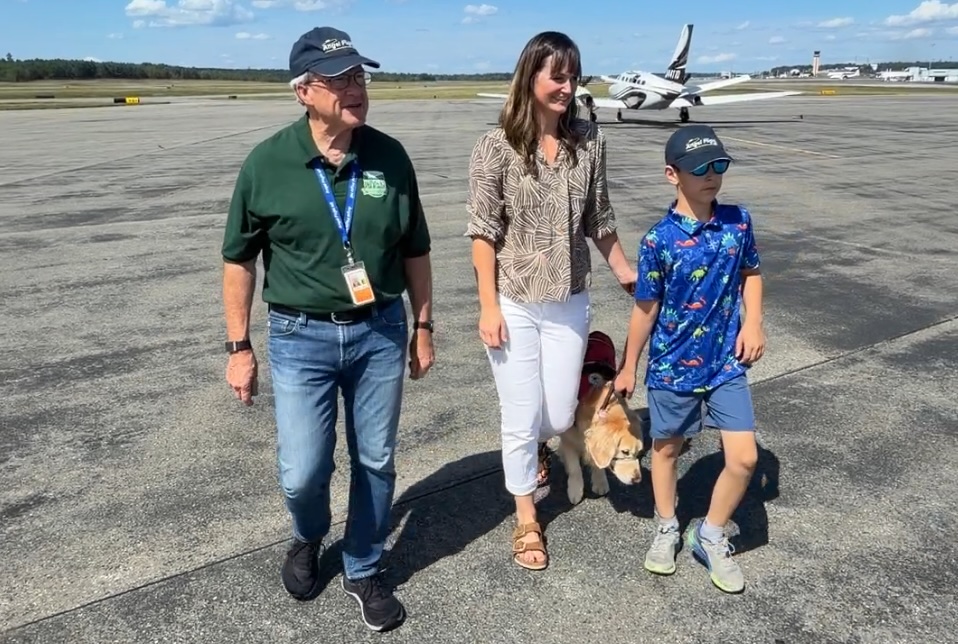
Angel Flight pilot Kirk Walters (left) walks next to Ali Hamm, Lava, and her son, Calvin, who has flown on nearly 50 Angel Flights. [Credit: Matt Leighton]
For millions of Americans, living in rural areas means access to healthcare can be a challenge, especially for those living with rare conditions. Getting to and from appointments or seeing specialists can be an all day ordeal or even take days.
When Calvin Hamm was a baby, he started experiencing seizures, something his mom Ali said they never experienced.
“The local rural hospitals are amazing, but we’re nervous, and they couldn’t tell us a lot of information,” Ali Hamm said. “So we started getting stuck in third and fourth opinions. So that brought us to Boston, which runs at that point five hours one way.”
Calvin was diagnosed with Dravet syndrome, a rare form of epilepsy. The family lives in northern Maine, near Bangor, and Ali said they had decisions to make.
“Getting that news was devastating,” Ali said. “And a panel of doctors, they were amazing. But they were like, you know, you’re in northern Maine. Maybe that’s something that you can think about moving to Boston, to Massachusetts.”
Where the family lives is a nearly five hour drive from the world-class hospitals in Boston, but said she found out about Angel Flight Northeast through a family member.
“Boston Children’s was like, you know, one step at a time,” Hamm said. “[They said]…you have family in Maine. You have jobs in Maine. You have a house in Maine. What can we do [that gets] you established in Boston but still have the best quality of life for Calvin. Angel Flight came in and help us do that.”
Angel Flight Northeast, a 501c3 nonprofit, based at Lawrence Municipal Airport (KLWM), was founded by Reverend Larry Camerlin, a priest and pilot. They began operating in 1996 and since then have coordinated more than 115,000 missions over 17 million miles to 750 medical centers across the United States.
Angel Flight was able to take the family to Dartmouth in New Hampshire, where Calvin’s mom said he was able to take part in a drug trial that was approved and one that he is still on today.
“I reached out to them and I was like is there any way you think that we can do…one trip a month to Dartmouth and they said absolutely,” she said. “[They said] we will make it work. We will put you on the list and we’ll see what we get for pilots, and that’s life-changing for us.”
In 2025, Angel Flight Northeast coordinated nearly 3,800 missions for nearly 900 patients. The nonprofit has more than 300 volunteer pilots, one of whom, Kirk Walters of Vermont, has been flying for more than 50 years. He has been a volunteer for nearly 20 years and said his first flight hooked him.
“The ability to make somebody’s life a whole lot easier in terms of what they are trying to do in medical appointments, treatments, different things, it’s great,” Walters said.
Walters flies those Angel Flight passengers in his Cessna 414 that he keeps out of Burlington International Airport (KBTV).
Walters has done hundreds of charity flights and said every one he does he feels humbled.
“Every experience is different, and in some ways you’re very blessed when you get situations where we have families with children that we’ve now done for multiple years, and you’re able to see, see how they’ve grown and how life’s changed for them,” he said.
Walters has flown many flights but has developed a close bond with Calvin and the Hamms.
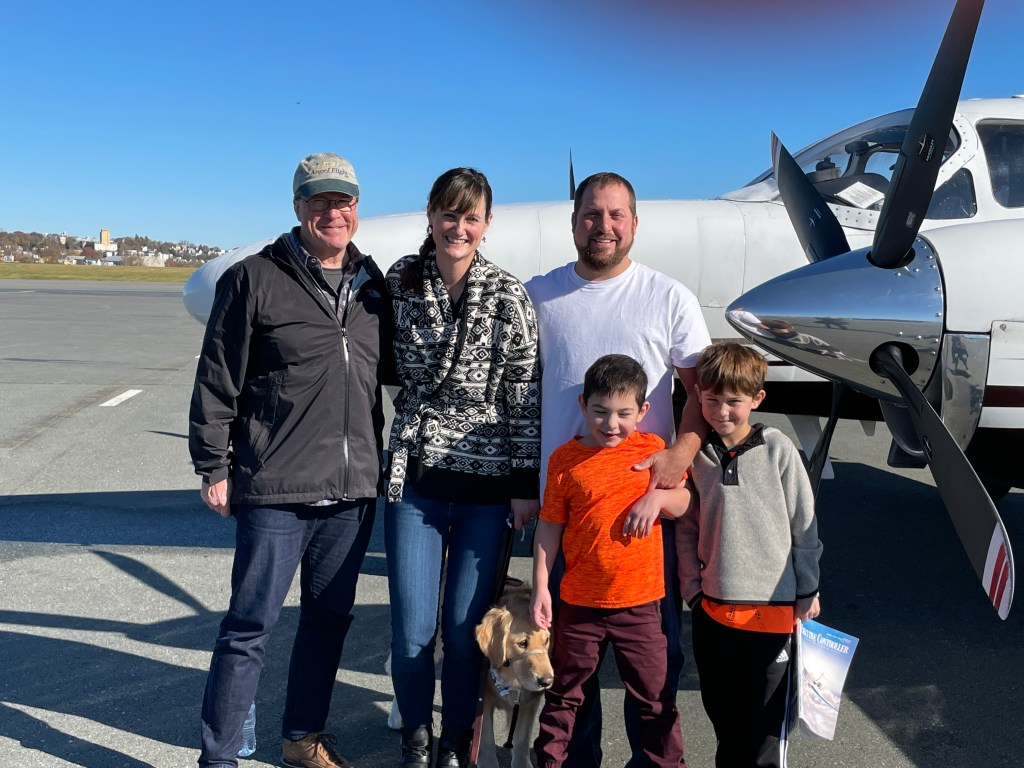
Pilot Kirk Walters (left) poses with the Hamm family before an Angel Flight. [Credit: Ali Hamm]
Since 2018, Calvin has had 48 flights with coordinated ground transportation through Angel Flight Northeast.
One of the flights that was brought up by both Ali and Walters was when the family flew to Ohio to train and pick up a seizure alert dog, they call Lava, for two weeks. Walters picked up the family to fly them back to Maine, where Hamm said from then on they felt like family.
“I feel like all of the pilots, they go above and beyond,” she said. “I definitely know Kirk and I have a relationship. If Calvin goes to Boston in November. now I text him.”
The nonprofit doesn’t charge patients for anything. It’s completely free.
“It surprises them initially when you run into somebody and you say, why aren’t you use an angel flight? And you describe it to them and they’re like, yeah, there’s got to be a hook or there’s got to be something,” he said.
Walters said it is some of the best money he has spent, and the group couldn’t do it without the corporate sponsors they have. The former bank executive sits on the board of directors for M&T Bank, which has given more than $200,000 in sponsorships and grants to the nonprofit.
“There’s never going to be a charge, never any expense to it,” he said. “And like I mentioned before because of the corporate sponsors we have, we are able to also provide the other parts of it, the, getting the Uber rides to the hospitals or the Earth Angels. We have a lot of Earth angels that really are angels.”
The nonprofit organization has 50 volunteer Earth Angel drivers in addition to having community ambassadors who help spread the word of the mission.
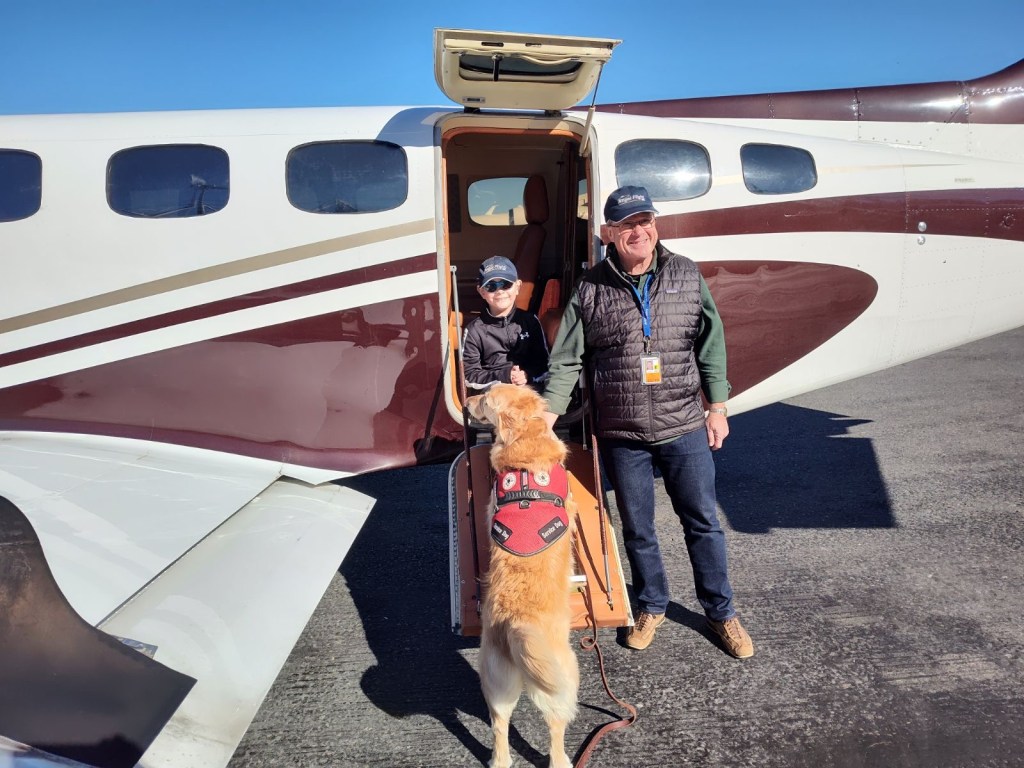
Kirk Walters (right) with Calvin and Lava [Credit: Ali Hamm]
“Angel Flight changed our lives where Calvin gets the best care,” Hamm said. “Calvin gets doctors that know his diagnosis well, and then we’re not staying there or having hours and hours of car drives, which is unsafe for Calvin with being in traffic.”
Walters said this has been some of the best flying he has ever done. For those pilots out there thinking about volunteering, he said they should at least just do one.
“I think once you do one and you start doing a few, you’ll find that the reward that you get is much greater than what people perceive you are putting out,” he said.
Hamm also said they will not regret it.
“I think they would love it, and you get to become part of the family,” she said. “I hope some day I can help them as much as they’ve helped me.”
Angel Flight has chapters across the country. To find your nearest chapter, click here.
Matt is the Social Media Editor for aviation brands. Previously, Matt worked in television news and spent the last decade working and interning in newsrooms across New England. He is excited to bridge his two passions of aviation and storytelling in this role.
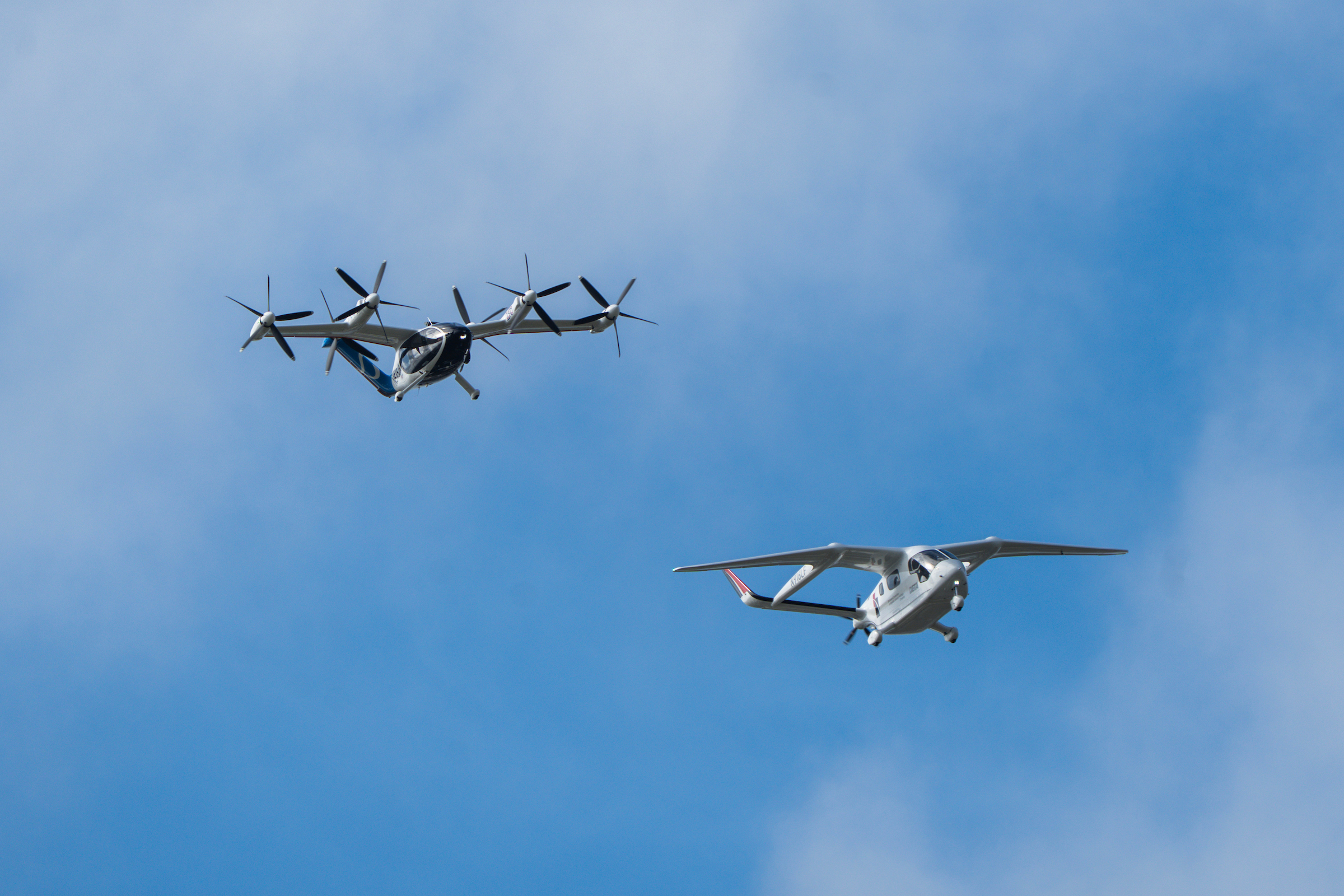
Joby Aviation's vertically capable electric prototype (left) flies in formation with Beta Technology's conventional takeoff and landing electric prototype. [Credit: Beta Technologies]
A pair of electric aircraft prototypes landed on the runway at Tampa International Airport (KTPA) on Friday as Florida looks to evaluate a planned aerial highway network.
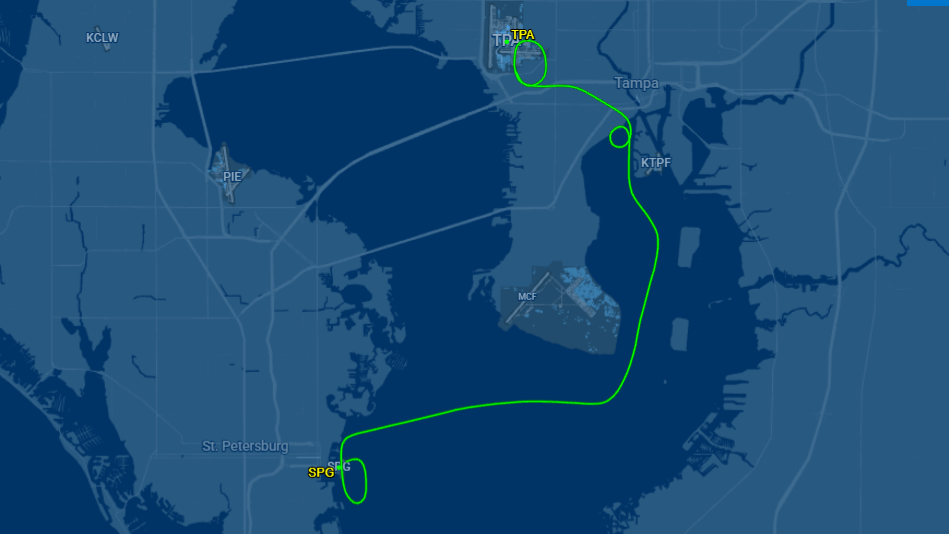
According to FlightAware, Joby Aviation’s electric vertical takeoff and landing (eVTOL) prototype registered N545JX took off from Albert Whitted Airport (KSPG) in St. Petersburg at 10:01 a.m. EDT and landed at Tampa International (KTPA) 20 minutes later. Per audio captured on the ATC app, the air taxi circled in the Tampa area before entering Class B airspace. It then made a low approach and entered the right downwind to land at Tampa International’s Runway 1R.
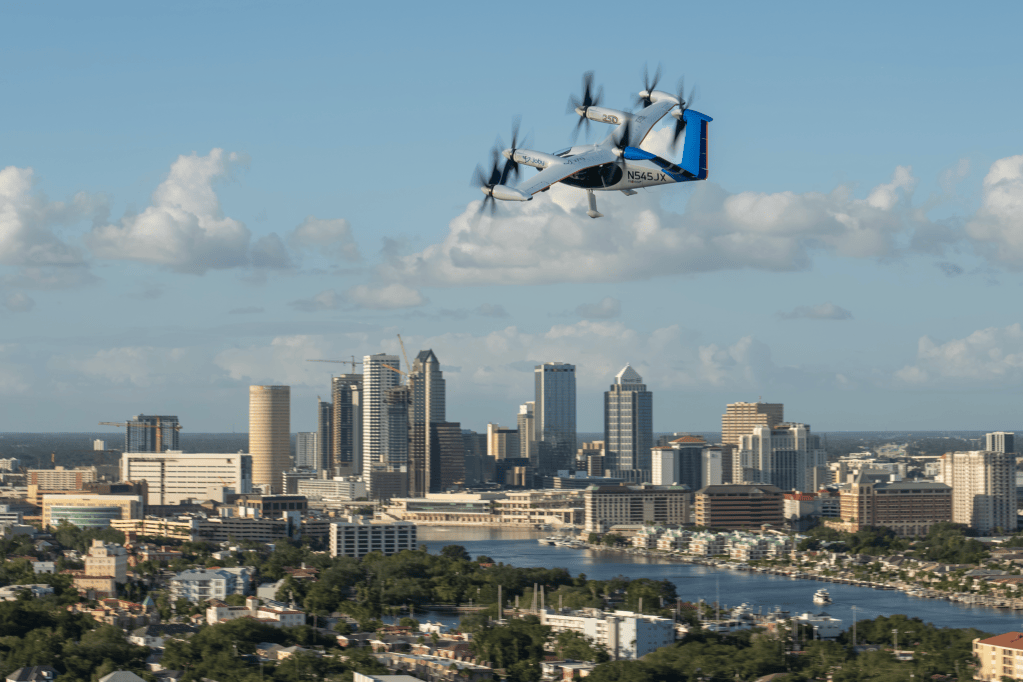
Joby’s electric vertical takeoff and landing (eVTOL) air taxi prototype flies over Tampa, Florida, on Thursday, October 29, ahead of the state’s first activities under a federal evaluation program. [Credit: Joby Aviation]
The model is a preproduction prototype of the manufacturer’s planned eVTOL air taxi, which is designed for a pilot to fly up to four passengers on quiet, zero-emission trips reaching speeds up to 200 mph. It has six tilting propellers that give it VTOL capability while also supporting wingborne cruise. It is unclear whether the model landed vertically or conventionally at Tampa, but it did take off vertically from Albert Whitted.
Beta Technologies’ CX300, a conventional takeoff and landing (CTOL) electric prototype, took off from Albert Whitted’s runway and joined Joby’s air taxi in a formation flight, also landing at Tampa. St. Petersburg-based digital news outlet I Love The Burg shared footage of the two aircraft flying together.
A closer look at Beta’s CX300 on the tarmac, with Joby’s eVTOL prototype in the background [Credit: Beta Technologies]
The CX300 is designed for a pilot and up to five passengers or up to 1,250 pounds of cargo, cruising at up to 153 knots. It has a demonstrated range of 336 nm. Whereas Joby is primarily focused on commercial passenger operations, Beta bills the CX300 as a multiuse aircraft for regional passenger, cargo,medical, and emergency response services. It is also developing an eVTOL aircraft, the Alia 250, and an MV250 defense variant.
Florida Governor Ron DeSantis and other officials attended the demonstration.
Tracing Jannus’ Pioneering Route
Joby said Friday’s flight was intended to trace the route flown by pioneering aviator Tony Jannus on January 1, 1914, which is recognized as the world’s first scheduled commercial airline flight.
According to the Tony Jannus Distinguished Aviation Society, a nonprofit that bestows an annual award named after Jannus, the pilot had little to no formal aeronautical training. On New Year’s Day in 1914, Jannus and the mayor of St. Petersburg embarked on a flight across Tampa Bay in a Benoist XIV flying boat and landed in Tampa about 23 minutes later.
The flight path of Joby’s air taxi prototype on Friday [Credit: FlightAware]
The flight was the first of the St. Petersburg-Tampa Airboat Line, considered the first fixed-wing scheduled airline in the U.S. The one-way fare was $5, and every seat was a window seat.
Jannus died in 1916 during a Curtiss Model K boat crash over the Black Sea, and his body was never recovered. In 1964, the Tampa and St. Petersburg Chambers of Commerce established the Aviation Society in his name.
More Electric Aircraft Activities Planned
Joby and Beta said the activities inaugurated the Florida Department of Transportation (FDOT)-led eVTOL Integration Pilot Program (eIPP) project, which is designed to collect operational data on the novel, precertified aircraft. Data will be shared with the FAA to help the agency create rules and guidance for their safe integration.
FDOT’s project is the seventh of eight to get underway. It will trial cargo delivery, passenger transport, automation, and medical response.
“Each flight provides crucial data and lessons learned that will help establish safety standards for everyday operations,” FAA Administrator Bryan Bedford said in a news release Friday.
Joby characterized Friday’s sortie as the first in a weeklong Florida demonstration campaign. The company’s testing will focus on passenger operations.
According to Joby, the prototype air taxi will conduct out-and-back flights at Orlando International Airport (KMCO) in early November. It said FDOT recently built a vertiport near the airport’s Terminal C, which will be used for the demonstrations. DeSantis in April signed a bill that authorized FDOT to fund the construction of such facilities, which will be similar to heliports but equipped with electric chargers and other infrastructure to accommodate eVTOL models.
Joby in 2024 partnered with the FAA, Greater Orlando Aviation Authority, and Orlando air traffic controllers to conduct simulations of the integration of eVTOL vehicles with other traffic a the airport. But the upcoming activities will represent a real-world test.
Joby’s eVTOL will also conduct demonstration flights at the Shuttle Landing Facility at NASA’s Kennedy Space Center as part of the 2026 UP.Summit, which runs November 4-6.
Beta, in partnership with Republic Airways, Brickyard Connection, and Metro Aviation, is also part of FDOT’s eIPP. It has also flown out of Orlando International and St. Pete-Clearwater International Airport (KPIE). The company said the CX300 has already logged nearly 700 nm across 14 flights in Florida.
Through an agreement with FDOT, Beta has also installed electric chargers at nine Florida sites—including general aviation airports—with more to come. It plans to trial cargo and medical logistics operations across the state.
In November, FDOT and Electra will conduct flight tests in several locations throughout central Florida, according to the U.S. Transportation Department. They will demonstrate “access points” that are designed to allow Electra’s flagship EL9 Ultra Short to operate from unused parking spaces, piers, barges, malls, and even destinations such as casinos and ski resorts.
FDOT is also partnered with eVTOL air taxi developer Archer Aviation, which has yet to announce flights under the project.
Florida’s Aerial Highway Network
FDOT for about five years has been developing plans for an interstate aerial highway network that will make use of electric and eVTOL aircraft for passenger transport, cargo delivery, and other applications. In 2025, it released a proposal and phased plan to introduce intercity AAM operations statewide, from Pensacola to Key West.
Phase one calls for aerial corridors over Florida’s Interstate 4 and along the coast from Miami to Port St. Lucie. Three more routes would connect Tampa and Naples, Miami and Key West, and Pensacola and Tallahassee. A second phase comprises routes connecting Daytona Beach and Jacksonville, Orlando and Lake City, Tampa and Tallahassee, Jacksonville and Tallahassee, and traveling east and west out of Sebring.
Joby said its Friday flight and upcoming activities are taking place at sites that will become some of the first hubs in the aerial network.
The highway-in-the-sky system would require vertiport installations at the state’s major airports, such as the one recently constructed at Orlando International. The bill DeSantis approved in April will allow private companies to assist with vertiport design, building, construction, financing, management, and operation.
Jack is a staff writer covering advanced air mobility, including everything from drones to unmanned aircraft systems to space travel—and a whole lot more. He spent close to two years reporting on drone delivery for FreightWaves, covering the biggest news and developments in the space and connecting with industry executives and experts. Jack is also a basketball aficionado, a frequent traveler and a lover of all things logistics.
An American Airlines Boeing 737 Max 8 [Credit: Shutterstock | Wenjie Zheng]
First-time customers of TLC Jet have the opportunity to earn 100,000 air miles when booking between now and December 31.
The on-demand private aviation provider Wednesday announced the limited-time offer, which is available for new customers and eligible American Airlines AAdvantage members. The promotion offers 100,000 AAdvantage miles for customers who book their first holiday travel, business trips, or other private charter services with the company.
Qualification and mileage fulfillment are subject to the full TLC Jet promotional terms and applicable AAdvantage program terms, the company said. Customers can contact TLC Jet to get full details on the promotion and confirm their eligibility.
The company’s fleet comprises 15 aircraft types, including turboprops and light, midsize, super-mid, and heavy jets. Among them are Cessna Caravan, Embraer Phenom 300, Hawker 800XP, Bombardier Challenger 300/350, and Gulfstream GIV-SP.
AAdvantage Perks for TLC Jet Customers
The offer launched Wednesday builds on TLC Jet’s partnership with American, announced in April. The program allows customers to earn miles automatically without prepaid deposits or minimum commitments. It is free to join, though AAdvantage members must be in good standing.
The collaboration allows eligible AAdvantage members to earn 1 mile and Loyalty point for each dollar spent on qualifying TLC Jet charter travel, calculated using base flight charges excluding taxes and fees. It may take up to 30 days for miles to appear in the customer’s account. Air miles earned on TLC Jet flights do not qualify towards American’s Million Miler program.
Steve Johnson, American’s vice chair and chief strategy officer, said in April that “today’s travelers are seeking more premium experiences.”
“Our mutual clientele can now optimize every dollar spent, whether traveling privately or commercially, while enjoying an elevated travel experience,” added Justin Firestone, founder and president of TLC Jet.
Earlier this month, TLC Jet partnered to offer private aviation services for guests traveling to WIMCO St. Barth Properties, including last-mile air connectivity between San Juan and St. Barth. Flights will use late-model Pilatus PC-12 aircraft with seating for up to eight passengers.
The company in August also acquired Privaira Private Aviation to expand its private charter, aircraft management, and aviation support services businesses. TLC Jet inherited Privaira’s aircraft management and FAA Part 135 charter and brokerage certificate and gave Privaira clients access to its AAdvantage partnership.
Jack is a staff writer covering advanced air mobility, including everything from drones to unmanned aircraft systems to space travel—and a whole lot more. He spent close to two years reporting on drone delivery for FreightWaves, covering the biggest news and developments in the space and connecting with industry executives and experts. Jack is also a basketball aficionado, a frequent traveler and a lover of all things logistics.
If the Hiller UH-12A’s clear, bubble-shaped cockpit and sharply angled tail boom look familiar and make you think of “Bond, James Bond,” it might be due to a similar aircraft’s supporting role in the 1963 spy thriller From Russia With Love.
In the movie, henchmen from the Spectre criminal organization pursue protagonist Bond, played by Sean Connery, in a yellow Hiller much like the aircraft for sale today. The aircraft appears to be a decent platform for machine gun and grenade attacks, but during several strafing and bombing runs, the antagonists repeatedly miss their target.
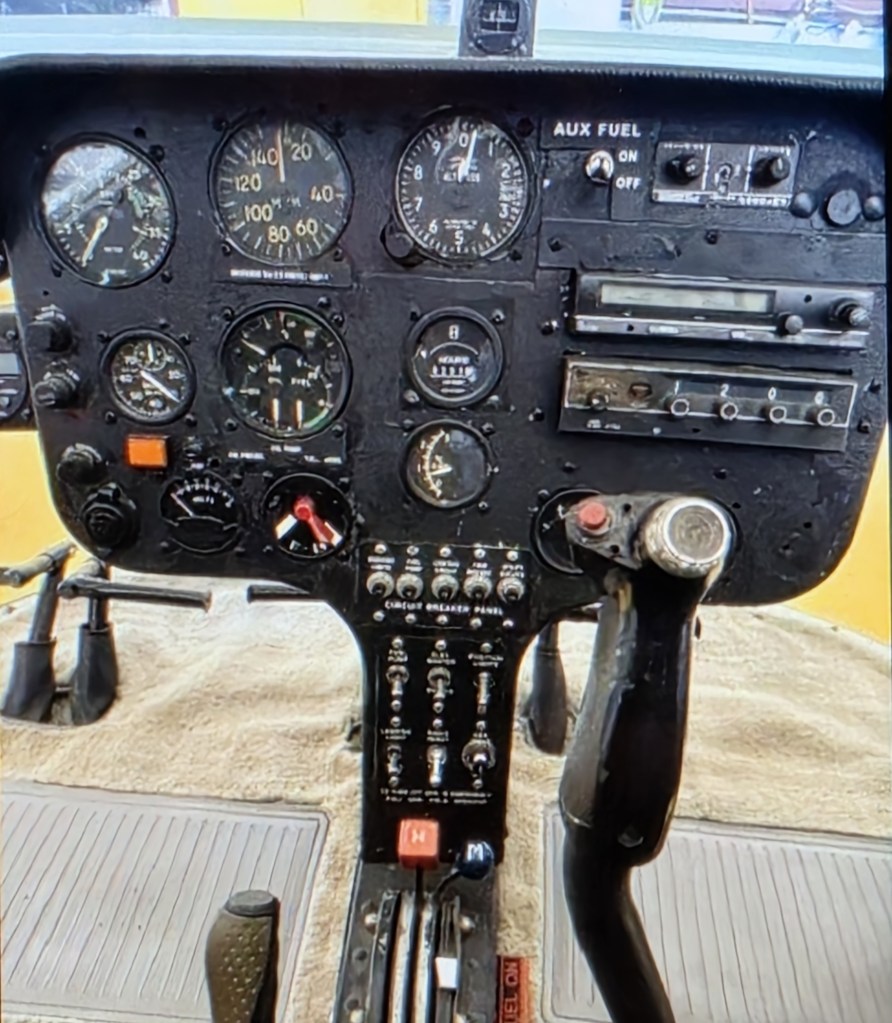
This Hiller UH-12A features basic, traditional VFR instrumentation. [Credit: Scott MacDonald Aircraft Sales]
Bond eventually brings the helicopter down by shooting the copilot as he prepares to toss another grenade, causing him to drop the explosive in the cockpit. The aircraft explodes and falls dramatically to earth.
Fortunately for helicopter shoppers, the Hiller is better known in aviation circles as a versatile machine that served for decades as an effective trainer and utility aircraft that is compact and maneuverable enough to operate from confined spaces. The model remains a simple, reliable aircraft ideal for pilots working toward rotorcraft ratings or seeking an economical helicopter for a variety of personal missions.
This 1949 Hiller UH-12A has 1,095 hours on the airframe and 292 hours since overhaul on its Franklin 6V335 engine. Its panel includes an Icom digital com radio, King KT 76A Mode C transponder, and PM 1000 Intercom.
Pilots looking for a helicopter that exudes vintage charm while remaining practical and capable as a trainer or personal aircraft for commuting, travel, and airshow events should consider this 1949 Hiller UH-12A, which is available for $60,000 on AircraftForSale.
If you’re interested in financing, you can do so with FLYING Finance. Use our airplane loan calculator to calculate your estimated monthly payments. Or, to speak with an aviation finance specialist, visit flyingfinance.com.
Jonathan Welsh is Lead Editor of Aviation Consumer and a private pilot who worked as a reporter, editor and columnist with the Wall Street Journal for 21 years, mostly covering the auto industry. His passion for aviation began in childhood with balsa-wood gliders his aunt would buy for him at the corner store. Follow Jonathan on Twitter @JonathanWelsh4
Sign-up for newsletters & special offers!
Get the latest stories & special offers delivered directly to your inbox.