














FAA Reauthorization Deadline Extended (Again) to March

The House Transportation and Infrastructure Committee passed a second extension of FAA authorization as lawmakers quibble over a contentious bill.

FAA reauthorization
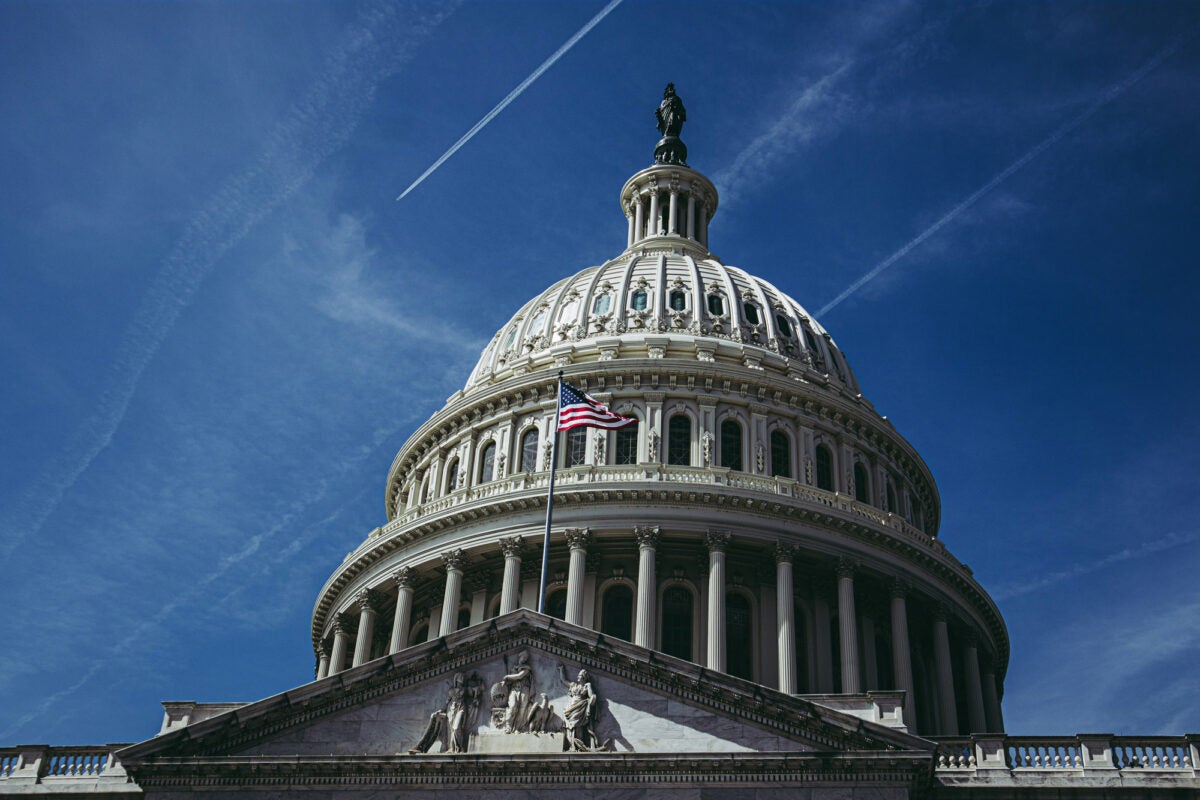
The deadline for FAA reauthorization has again been extended, this time to March 8. [Courtesy: Alejandro-Barba/Unsplash]
Gemini Sparkle

Key Takeaways:

  • The FAA reauthorization deadline has been extended for a second time, pushing it to March 8, 2024, as the Senate has yet to act on a long-term bill.
  • The House passed a comprehensive reauthorization bill in July, but the legislation is stalled in the Senate over disagreements on provisions such as pilot training, air traffic control shortages, and pilot retirement age.
  • Lawmakers from both parties and a broad coalition of aviation industry stakeholders are strongly advocating for a swift, long-term reauthorization to avoid detrimental impacts on FAA operations, safety, and innovation.
  • While progress has been reported on some contentious issues like pilot training requirements, the full bill's approval is crucial to ensure continued federal funding and critical policy updates for the U.S. aviation system.
See a mistake? Contact us.

The deadline for FAA reauthorization has been extended…again.

After approving a three-month extension in September that keeps the FAA funded through December 31, the House this week passed a second elongation that will stretch the deadline out to March 8. The House signed off on an FAA reauthorization bill in July, but the legislation has stalled in the Senate as lawmakers quibble over provisions such as pilot training.


The FAA’s current authorization dates back to 2018, when the most recent reauthorization bill was passed. The agency must be reauthorized every five years or risk being cut off from federal funding, which would be the likely outcome should the government fail to approve a new bill by March 8.

“We remain committed to enacting a comprehensive, long-term FAA reauthorization bill as soon as possible,” said House Transportation and Infrastructure Committee Chairman Sam Graves (R-Mo.), Aviation Subcommittee Chairman Garret Graves (R-La.), and respective ranking members Rick Larson (D-Wash.) and Steve Cohen (D-Tenn.) in a joint statement. “Such a bill is vital to ensuring the United States continues its global leadership in aviation and remains the gold standard in aviation safety.”

The lawmakers continued: “Our long-term bipartisan bill…passed the House by a wide margin nearly five months ago, but the Senate has yet to act on our bill or a bill of their own. Because of the Senate’s inaction, [this] extension is necessary to ensure the continued safe operation of our aviation system. But make no mistake—the Senate must promptly act on a long-term bill, as a series of short-term extensions hamstrings FAA operations, maintains outdated policies, and fails to provide critical policy updates for aviation safety, efficiency, innovation, and more.”

Calls for a swift, final FAA reauthorization bill—and not a series of short-term extensions—have rung out on Capitol Hill from lawmakers on both sides of the aisle, and even from Joe Biden administration cabinet members.

So far, those calls have gone unanswered as Washington weighs how best to address issues such as the air traffic control shortage, pilot retirement age, and the integration of new aircraft—such as electric air taxis—into the national airspace.

Earlier this month, a collective of stakeholders representing the General Aviation Manufacturers Association (GAMA), National Air Traffic Controllers Association (NATCA), American Association of Airport Executives (AAAE), and Transport Workers Union (TWU) gave their feedback at an aviation subcommittee hearing. All of them urged the Senate to act quickly.

The groups’ testimony echoed the sentiments of other industry stakeholders, 28 of which penned the FAA a letter in September. Among them were GAMA, the Aircraft Electronics Association (AEA), Aircraft Owners and Pilots Association (AOPA), Experimental Aircraft Association (EAA), and National Business Aviation Association (NBAA).

The letter was addressed to Senate Majority Leader Chuck Schumer (D-N.Y.), Senate Minority Leader Mitch McConnell (R-Ky.), Senate Commerce, Science and Transportation Committee Chair Maria Cantwell (D-Wash.), and Ranking Member Ted Cruz (R-Texas).

The Senate may be making progress on at least one provision included in the proposed FAA reauthorization bill. In November, it was reported that lawmakers were nearing an agreement on relaxing airline pilot training—the legislation calls for the number of loggable simulator hours to be raised from 100 to 150.

According to Senator John Thune (R-S.D.), who serves on the Senate Commerce, Science, and Transportation Committee, an agreement is in place that “deals with the pilot shortage, pilot supply issue and incorporates some of the best and greatest technology.”

Still, the Senate has yet to approve the bill in full, which has kept fresh funding behind bureaucratic red tape and could stymie recently appointed FAA Administrator Michael Whitaker. The good news is it will have a few more months to deliberate.

Like this story? We think you’ll also like the Future of FLYING newsletter sent every Thursday afternoon. Sign up now.

Jack Daleo

Jack is a staff writer covering advanced air mobility, including everything from drones to unmanned aircraft systems to space travel—and a whole lot more. He spent close to two years reporting on drone delivery for FreightWaves, covering the biggest news and developments in the space and connecting with industry executives and experts. Jack is also a basketball aficionado, a frequent traveler and a lover of all things logistics.

Ready to Sell Your Aircraft?

List your airplane on AircraftForSale.com and reach qualified buyers.

List Your Aircraft
AircraftForSale Logo | FLYING Logo
Pilot in aircraft
Sign-up for newsletters & special offers!

Get the latest stories & special offers delivered directly to your inbox.

SUBSCRIBE
