Register

WATCH: ‘Ultra-Quiet’ Electric Aircraft Engines Power First Piloted Flight

Swift 3 glider with Whisper Aero’s propulsion system begins testing.

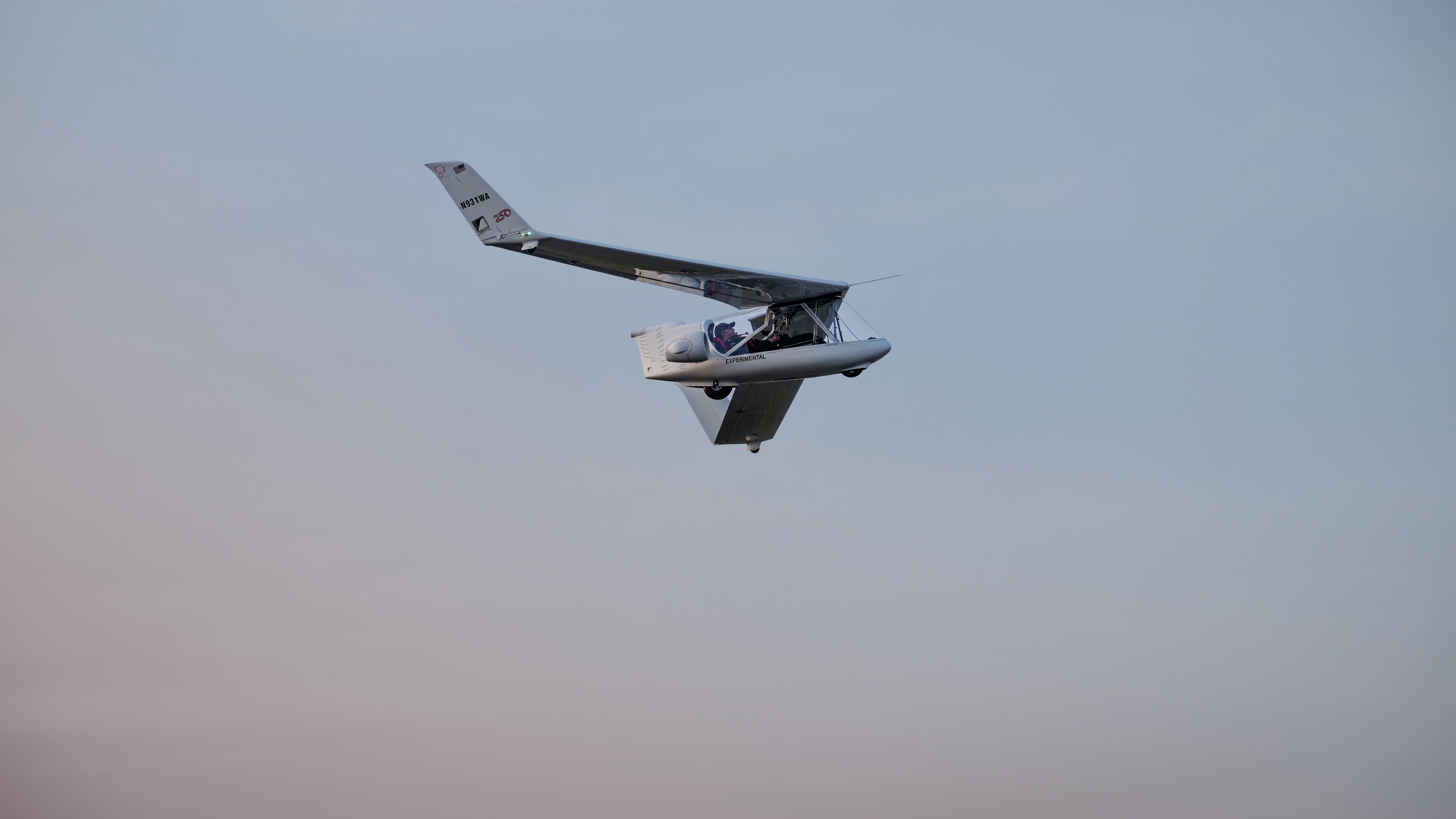
Whisper Aero eQ250 electric quiet propulsion system powers Swift 3 glider on piloted test flight
Whisper used a modified Aériane Swift 3 glider to conduct the first piloted tests of its eQ250 electric ducted fan propulsion system. [Credit: Whisper Aero]

An electric aircraft engine designed to reduce operational noise to a whisper is now powering piloted aircraft.

Whisper Aero on Wednesday revealed that its “ultra-quiet” eQ250 electric ducted fan propulsion system is being put to the test in Tennessee under an FAA special airworthiness certification. The company said it installed a pair of eQ250s on a modified Aériane Swift 3 glider, with which test pilot Zac Majors conducted three flights spanning 130 minutes, or about 43 minutes on average.

Majors said the aircraft, which the company refers to as the Whisper Powered Swift, produced more thrust and was quieter than the standard propeller version of the glider, “but still great handling.”

“[I] could really do whatever I wanted with it,” Majors said in a statement. “Look forward to flying it again.”

Fortunately for him, the campaign is only just beginning.

Whisper plans to continue testing the Swift in Tennessee before advancing to flight tests and evaluations with “government customers” later this year. The company is under contract with the U.S. Air Force to develop a new family of quiet, efficient, autonomous aircraft for contested logistics, with initial testing planned for 2027.

How It Works

The eQ250 is the flagship product of Whisper’s electric quiet (eQ) engine series.

According to the company, it produces up to 85 pounds of static thrust for fixed-wing aircraft. It can also power Group 3 uncrewed aircraft systems (UAS)—which have maximum weight of 1,320 pounds and speed under 250 knots—or larger drone platforms.

The specialized electric ducted fans are 10 inches in diameter and produce about 20 dB less noise than “comparable quiet propulsion systems,” while also being 20 percent more efficient, according to Whisper’s website. For short takeoff and landing (STOL) aircraft, the eQ250 is designed to enable coefficients of lift as high as 14.

The propulsion system is intended to unlock short-to-medium-range regional air mobility services using small airports. The idea is similar to Electra’s concept for “direct aviation,” which involves the company’s “ultra-short” takeoff and landing EL9. The goal is to replace trips that would take about 90 minutes driving with air service that takes closer to 20 minutes.

Whisper said the Swift’s 26:1 lift-to-drag ratio made it ideal for evaluating handling qualities and the propulsion system’s performance, integration, and acoustics.

Video: Whisper Aero

The glider’s eQ250s are powered by five Epic 1.0 Energy modules from Whisper partner Electric Power Systems (EPS). According to EPS, they provide 60 minutes of usable flight time with 30 minutes of reserve for trainer, eVTOL (electric vertical takeoff and landing), and “thin-haul” aircraft, which are used for very short trips with a handful of passengers.

Whisper said the aircraft “completed its planned objectives,” which included validating its propulsion integration, battery, control, and other systems. At full throttle at 100 feet agl, Whisper said the engines were quieter than the airframe itself. Ian Villa, co-founder and chief operating officer, told The Air Current that the glider can generate substantial noise without engines.

Flown during the early morning, the aircraft produced about 52 dB(A) of noise compared to 34 dB(A) background noise, Whisper said.

“The ability to fly within the soundscapes of even rural environments…will be critical for flights of FAA MOSAIC aircraft,” the company added.

The Modernization of Special Airworthiness Certification (MOSAIC) took effect in phases over the past few months and permits electric propulsion systems in the light-sport aircraft (LSA) category.

More to Come

Whisper said the test campaign “reduces risk” for the eQ250’s larger civil and defense applications.

The company is developing its JetFoil integration for STOL and VTOL aircraft, designed to enable runway independence. The JetFoil distributes ducted fan engines across the entire leading edge of the wing and would enable near-vertical takeoffs with 50 feet of ground roll. Whisper claims it will do so using half the thrust of tilt-rotor VTOL aircraft while offering more range and double the payload.

Villa earlier this year told FLYING that Whisper is in talks with government customers to build and fly JetFoil-equipped prototypes, the idea being that they could be transitioned to commercial manufacturers who could bring them to market. For example, one could swap the de Havilland Twin Otter’s high wing for a JetFoil and hybrid-electric powertrain.

Whisper said the testing will further support its Collaborative Logistics Aircraft (CLA) program with the U.S. Air Force.

The CLA concept is similar to the service’s Collaborative Combat Aircraft (CCA) framework, which pairs crewed fighter jets with uncrewed “loyal wingmen.” Instead, CLA aircraft would carry between 500 and 3,000 pounds of cargo and operate from austere or degraded runways.

Whisper is studying two CLA concepts that incorporate 12 and 30 eQ250 engines on the leading edge of the wing, using the JetFoil integration. According to the company, at 250 knots, the CLA aircraft would generate reduced noise and heat signatures compared to models they could replace.

Whisper in May 2025 said that initial CLA flight testing would begin in 2027 at White Sands Missile Range in New Mexico.

The company has also shared concepts for a regional Whisper Jet and more robust 100-seat model, both based around its ducted fan and eQ technology.


Jack Daleo

Jack is a staff writer covering advanced air mobility, including everything from drones to unmanned aircraft systems to space travel—and a whole lot more. He spent close to two years reporting on drone delivery for FreightWaves, covering the biggest news and developments in the space and connecting with industry executives and experts. Jack is also a basketball aficionado, a frequent traveler and a lover of all things logistics.

National Aviation Day Observes Rich History of Flight

Industry reflects on century of innovation on anniversary of Orville Wright’s birthday.

Introducing the next generation to aviation [Credit: Meg Godlewski]

Every year on August 19, National Aviation Day offers pilots and aviation enthusiasts a chance to celebrate the ability to take to the skies.

Three men are responsible for the creation of the day: Orville and Wilbur Wright, who successfully achieved powered heavier-than-air-flight in 1903 at Kill Devil Hills near Kitty Hawk, North Carolina, and Franklin D. Roosevelt, who established the observation with a presidential proclamation in 1939.

August 19 was selected because it was Orville Wright’s birthday. Wright was 68 at the time and had watched aviation evolve from the Wright Flyer made of wood and fabric cobbled together in a bike shop to the mass production of the J-3 Piper Cub, which is still a favorite of aviators today.

Although just 36 years had passed since that historic first flight, the aviation industry had evolved from wood-and-fabric airplanes to metal designs. The open-cockpit biplanes used during World War I were now obsolete and as another conflict loomed aircraft designs began to progress.

The birth of military designs, such as the Boeing B-17 and the Lockheed P-38, came in 1939.

Overall, 1939 was a big year for aviation, as it was the year the Aircraft Owners and Pilots Association (AOPA) was founded, and the Ninety-Nines: International Organization of Women Pilots were celebrating its 10 year anniversary.

Wilbur Wright did not live to see the creation of the national holiday, dying at  45 in 1912 from typhoid. However, Orville Wright, who died in 1948 at 76, did live to see the dawn of the jet age. During World War II he remarked that he did not regret his role in the invention of the airplane, although he did not like the destruction airplanes caused when used as weapons.

The celebration of National Aviation Day is a matter of personal preference. Most pilots do so by flying, but if you can’t get off the ground Wednesday, you can observe the occasion by sharing the joy of aviation with others through trips to aviation museums or airports, especially those that are more user friendly than others and have aircraft viewing areas.

For a more down-home celebration, aviation movies are always a good choice, such as The Rocketeer, Top Gun, and Top Gun: Maverick, The Great Waldo Pepper, Memphis Belle, and The Aviator.

Many pilots celebrate by introducing a youngster to the world of aviation. You just may be the person who sparks a lifelong interest.

Meg Godlewski

Meg Godlewski has been an aviation journalist for more than 24 years and a CFI for more than 20 years. If she is not flying or teaching aviation, she is writing about it. Meg is a founding member of the Pilot Proficiency Center at EAA AirVenture and excels at the application of simulation technology to flatten the learning curve. Follow Meg on Twitter @2Lewski.

This 1998 Cessna 182S Skylane Is a Multi-Use ‘AircraftForSale’ Top Pick

Garmin glass upgrades, complete logs, and rock-solid ownership pedigree highlight versatile workhorse.

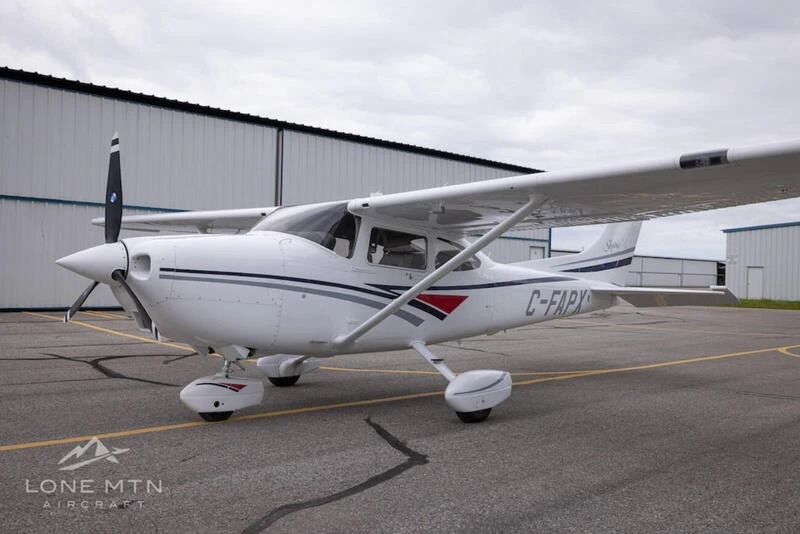
1998 Cessna 182S Skylane [Credit: Lone Mountain Aircraft]

Every day, the team at Aircraft For Sale chooses an airplane that catches our attention because it is unique, a good deal, or has other qualities we find interesting. You can read Aircraft For Sale: Today’s Top Pick at FLYINGMag.com daily.

Today’s Top Pick is a 1998 Cessna 182S Skylane.

Regarded as aviation’s ultimate Swiss Army knife, the Cessna 182 Skylane holds a legendary reputation for its remarkable hauling capability, short-field prowess, and straightforward handling characteristics. It is an airplane that comfortably bridges the gap between a dependable trainer and high-performance, cross-country traveler, making it a perennial favorite for both families and backcountry adventurers.

Based in Ontario, this exceptionally maintained 1998 airframe comes to the market with 1,780 flight hours since new and zero damage history. The exterior wears a classic Cessna Skylane scheme with a white base and navy, grey, and red accents, further enhanced by paint-matched wheel pants, matching spinner, and Whelen LED lighting. Despite its Canadian location, it offers a simple N-registration process for prospective U.S. buyers.

Under the cowling rests a dependable Lycoming IO-540-AB1A5 engine, also showing 1,780 hours since new with consistently strong compressions reported at its recent annual. The powerplant has been thoughtfully enhanced with a SureFly magneto and a Sky-Tec lightweight starter, and it turns a McCauley three-blade propeller that has logged 765 hours since its last overhaul. With a useful load of 1,178 pounds, the aircraft easily accommodates passengers and luggage for longer trips.

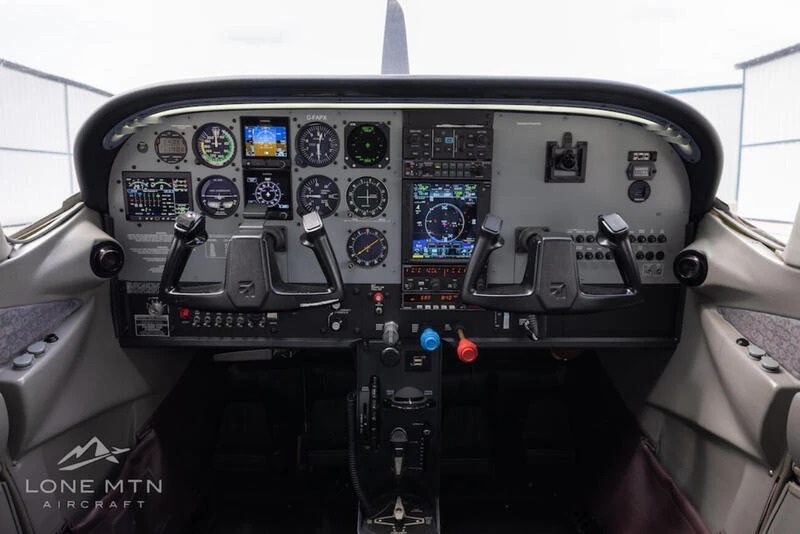
1998 Cessna 182S Skylane [Credit: Lone Mountain Aircraft]

Stepping into the flight deck reveals a thoroughly modernized IFR environment tailored to reduce pilot workload and maximize situational awareness. The panel has been transformed with dual Garmin G5s and a Garmin GTN 750 GPS/nav/comm, all seamlessly tied to a highly capable Garmin GFC 500 digital autopilot. Additional technology includes a Garmin GTX 345R transponder for ADS-B In and Out, Garmin GTS 800 Active Traffic, Garmin Flight Stream 210 for wireless connectivity, and JPI EDM 900 engine management system. Passengers will also enjoy a clean and comfortable gray leather interior.

Listed at $299,900, this 1998 Cessna 182S Skylane presents an outstanding opportunity to own a meticulously upgraded, turnkey example of general aviation’s most versatile single.

If you’re exploring ownership options, FLYING Finance can help get you airborne. Use our airplane loan calculator to estimate your monthly payments, or connect with an aviation finance expert at flyingfinance.com.

FLYING Staff

FLYING Magazine is a one-stop resource for everything aviation, including news, training, aircraft, gear, careers, photos, videos, and more.

FLYING Launches New ‘Aviation Start’ Podcast

Career-focused show debuts with a look at how flight instructors can build six-figure businesses.

Jamail Larkins
Jamail Larkins [Credit: AviationStart]

FLYING is expanding its career coverage with the launch of Aviation Start, a new video podcast designed to help aspiring aviation professionals turn their interest in flight into a viable career.

The show debuted Wednesday, August 19, in recognition of National Aviation Day. The annual observance was established by President Franklin D. Roosevelt in 1939 and coincides with the birthday of aviation pioneer Orville Wright.

Aviation Start is hosted by Jamail Larkins, an aviator, entrepreneur, and founder of AviationStart, a career platform that connects aspiring aviation professionals with more than $20 million in scholarships, training programs, and career resources.

Larkins began flying at age 12 and became one of the youngest Americans to solo a powered aircraft when he flew alone in Canada at 14. He later became an airshow performer and was appointed the FAA’s first Ambassador for Aviation and Space Education.

“For almost 100 years, FLYING Magazine has been one of the most widely read aviation magazines in existence,” Larkins said in announcing the show. “It has literally been the voice of aviation.”

The new podcast series will focus on the questions that often stand between an aspiring aviation professional and a sustainable career: how to pay for training, where to find scholarships, which career paths are available, and how to build the industry connections needed to move forward.

While pilots will be a major focus, the show will also examine opportunities for aircraft mechanics, air traffic controllers, airport operations professionals, and others entering the aviation workforce. Episodes will feature practical conversations with people working across the industry, with an emphasis on the information newcomers may not know to seek out.

“You don’t know what you don’t know,” Larkins said. “We’re here to help you.”

Can a CFI Earn $100,000?

The debut episode features Cole Melby, a Reno, Nevada-based flight instructor behind Tahoe Flight Academy. Melby provides personalized training throughout the Reno-Tahoe area, including mountain flying, instrument instruction, and advanced training for aircraft owners.

The conversation challenges the long-standing assumption that working as a CFI means earning only $20,000 to $30,000 per year while building time for an airline job.

Melby acknowledges that a CFI working exclusively for one flight school and relying only on traditional instruction may earn closer to $40,000 annually. But he argues that instructors can increase their income by treating flight instruction as a business and developing additional revenue streams.

“If you want to treat it as a business and add other revenue streams to it…[earning considerably more becomes possible],” Melby said.

The episode explores how instructors can move beyond the traditional time-building model, position themselves as career professionals, and create a more sustainable living while continuing to teach.

The first episode of Aviation Start premiered August 19, and can be found on FLYING’s YouTube channel along with all podcast platforms. Additional episodes will continue examining the training, financial, and professional questions facing the next generation of aviation workers.

FLYING Staff

FLYING Magazine is a one-stop resource for everything aviation, including news, training, aircraft, gear, careers, photos, videos, and more.

Electric Aircraft Firm Beta, Operators Hold ‘Discussions on Larger Platforms’

Manufacturer said it will respond to customer needs as it builds out its product portfolio.

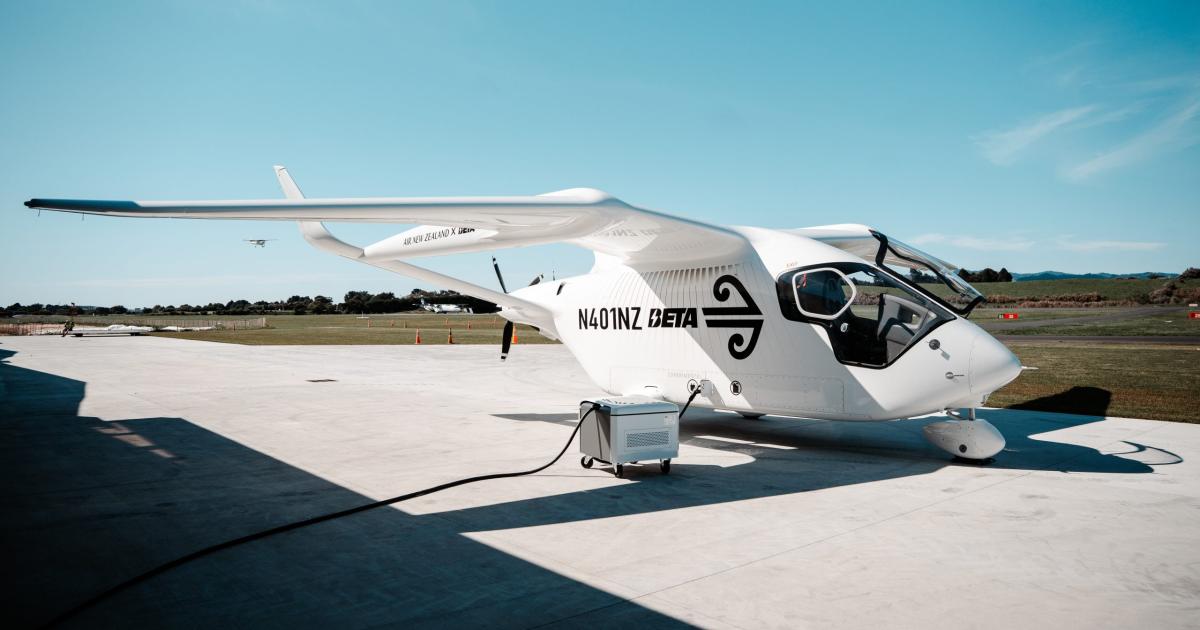
Beta Technologies Alia electric aircraft Air New Zealand
Air New Zealand leased an all-electric Beta Technologies Alia CX300 aircraft for a test campaign that concluded in February. [Credit: Air New Zealand]

Updated 9:42 a.m. EDT on August 21, 2026, with Air New Zealand’s comments on the carrier’s view of its relationship with Beta.

Electric aircraft manufacturer Beta Technologies is in “discussions on larger platforms” with operators, Simon Newitt, the company’s global head of sales and support, told FLYING.

“We’re discussing with and listening to those operators as to what they want, and if they’re interested in larger platforms, that’s just good information for us as we consider our product strategy and roadmap as we go forward,” Newitt said.

New Zealand-based online media outlet Newsroom reported, based on an interview with Air New Zealand CEO Nikhil Ravishankar, that the airline asked Beta to design a “larger-format” electric aircraft because it believes the company’s Alia CX300—which seats five passengers plus a pilot—is too small to make the economics of regional electric service work.

Air New Zealand has an agreement with Beta covering one firm CX300 order, two options, and rights for a further 20 aircraft, for a total of 23.

A spokesperson from Air New Zealand’s communications team told FLYING that Newsroom’s report is not quite accurate. Though the airline said it is indeed in discussions with Beta on how larger next-generation aircaft could fit into its network, it said it continues to explore future opportunities for the CX300.

Per Newsroom, Ravishankar said he does not believe a “pure electric aircraft is going to replace a [Boeing] 787 Dreamliner any time soon.” But Newitt said that the CX300 was never intended to replace an aircraft as large as the Dreamliner. He said the five-passenger Alia does “not necessarily” have “no room or no place.”

“It’s obvious that a large airline like Air New Zealand would be wanting to look at something larger,” Newitt said. “They operate Dash 8s. They have an aging fleet. They have all that regional connectivity that New Zealand requires for their transportation.”

He emphasized that Beta will respond to the market and needs of its customers regarding size and other aspects. The company has conducted extensive flying with precertified Alia aircraft under market survey programs, racking up nearly 200,000 nm through testing and demonstrations and gathering feedback.

Newitt said existing electric propulsion technology is “supporting a specific category and size of aircraft, but all of that technology is scalable.” According to Beta’s initial public offering (IPO) filing last year, the company is in the “development phase” for a larger, 19-seat model, with no timeline yet for certification.

“We believe this product will further expand our market share by creating new opportunities for operators to realize the benefits of electric aviation in large aircraft,” the S-1 filing reads.

Beta continues to identify Air New Zealand as a commercial civil aircraft customer and launch operator for the CX300, according to its most recent annual report in March. The report added that Beta works with the carrier to “design systems for the safe, efficient transportation of passengers.” It plans to pursue Civil Aviation Authority of New Zealand validation of Alia’s FAA type certification.

Mission Next Gen

Due to lengthy development and certification timelines, several firms originally focused on fielding all-electric passenger airliners have switched to hybrid propulsion systems, pivoted to defense applications, scaled back their workforces, or gone bankrupt.

Beta is concurrently developing hybrid-electric propulsion in partnership with GE Aerospace. Its U.S. customers include Republic Airways, Metro Aviation, and Surf Air Mobility. In July, Loganair signed a term sheet for five CX300s and five options.

Setbacks have hampered Air New Zealand’s “Mission Next Gen Aircraft” initiative, which seeks to replace its domestic fleet of de Havilland Dash 8 regional turboprops with more eco-friendly alternatives. The carrier has been hiking fairs amid a jet fuel crisis spurred by U.S. military intervention in the Middle East.

Last year, the airline lowered its 2030 emissions reduction target. It is now targeting a 20 to 25 percent reduction in “well-to-wake” jet fuel net emissions rather than a 16.3 percent reduction in absolute emissions.

“Generally, the progress around next-generation aircraft, or different engine type aircrafts, is not progressing at the speed it was a few years ago,” said Kiri Hannifin, chief sustainability officer for Air New Zealand, in a January 2025 interview with Newsroom.

Air New Zealand announced Alia as its first Mission Next Gen Aircraft in 2023. The carrier said Alia would join its fleet by 2026 and initially fly a cargo-only service with New Zealand Post (NZ Post), eyeing routes about 150 kilometers in length.

Greg Foran, Air New Zealand’s CEO at the time, clarified that Alia would “add to, not replace our existing fleet.” 

However, Foran said by “flying the ALIA, we hope to advance our knowledge and the transformation needed in the aviation system in [New Zealand] for us to fly larger, fleet replacing, next generation aircraft from 2030.”

The airline in 2024 picked Wellington Airport (NZWN) as its base for the CX300, with plans for commercial demonstrator flights with NZ Post between Wellington and Marlborough Airport (NZWB) in 2026.

Air New Zealand faces delays to its partnership with Airbus to build a 100-seat, hydrogen-powered airliner. The partners in 2021 agreed to study potential hydrogen-powered operations within Air New Zealand’s network. The collaboration further includes ATR, Heart Aerospace, and Embraer. But Universal Hydrogen, the partner responsible for developing hydrogen retrofit kits for the Dash 8, ceased operations in 2024.

Airbus’ own hydrogen ambitions have faced setbacks, with the carrier last year delaying its timeline for introducing a hydrogen-powered model.

Air New Zealand has also explored aircraft from VoltAero and Eviation, placing an order for up to 23 of the latter’s all-electric Alice in 2022. Eviation last year halted Alice’s development.

Finding a Fit

In February, Air New Zealand and Beta completed a four-month Alia test campaign that comprised more than 100 flights spanning 13,000 kilometers and 12 airfields. Two Air New Zealand pilots participated.

The carrier said the campaign included New Zealand’s first low-emissions IFR operation. The airline said Alia flew between Wellington and Blenheim using only about $20 of electricity compared to about $110 in fuel costs for a Cessna Caravan.

The aircraft was on lease and was returned to Beta following the campaign.

Newitt called the exercise a “remarkable success” and emphasized that it informed the product roadmap for both companies.

“The objective of that exercise was learnings,” he said. “Learnings on both sides, not just one-sided assessments…This was a great way to identify where could [Alia] fit into their operation, where could it work in terms of passenger or cargo.”

He added that Air New Zealand will be “looking to see who’s going to be developing larger platforms over time” and framed the campaign as an early element of the partnership.

“We know that this sub-100-seat market has been in decline for quite some time,” he said. “If this technology that we’re developing can provide an economic proposition that works, then, of course, we’re going to be responding to that.”

Jack Daleo

Jack is a staff writer covering advanced air mobility, including everything from drones to unmanned aircraft systems to space travel—and a whole lot more. He spent close to two years reporting on drone delivery for FreightWaves, covering the biggest news and developments in the space and connecting with industry executives and experts. Jack is also a basketball aficionado, a frequent traveler and a lover of all things logistics.

What Is the Best Source for GPS Overlay on IFR Approaches?

Pilots must navigate rules for using GPS info as a substitute means of navigation to stay legal.

Most private pilot candidates usually don’t learn about the IFR approaches until they begin their instrument training. [Credit: Meg Godlewski]

Question: I am getting back into instrument flying after a 15-year break, and I’m a little confused about flying a non-precision approach with a GPS overlay. I’m getting conflicting information from the instructors at the flight school. Some say I don’t need to know it since there are always RNAV approaches at airports. It seems like GPS overlay means GPS can be used to fly any approach, but then I hear there are all sorts of caveats. What is the best source of reliable information?

Answer: Your best bet is to go to the agency that makes the rules and establishes the procedures, and by that I mean of course the FAA. Get your hands on the most recent version of the agency’s Instrument Procedures Handbook (FAA-H-8083-16) and read Chapter 4, which explains an RNAV system (GPS) may be used as a substitute means of navigation when a VOR, DME, TACAN, VORTAC, VOR/DME, NDB, or compass locator facility are out of service.

The FAA has also published Advisory Circular 90-108:Use of Suitable Area Navigation (RNAV) System on Conventional Routes and Procedures.

The AC is particularly useful as it contains details on what is considered an “approved GPS receiver” and therefore can be used to fly a non-precision instrument approach—for example, an NDB. Spoiler alert: The latter is legal only if you possess the current approach plate for the airport and it has “or GPS” in the title—for example, Runway 24 NDB or GPS. 

According to the FAA’s Instrument Flight Procedures (IFP) Inventory Summary, there are just 76 NDB-related approaches left in the U.S.. If you can find them, fly them now as they will likely be removed from the National Airspace System (NAS) by 2030. Just for comparison, there are approximately 6,956 RNAV approaches in the U.S.


Ask us anything you’ve ever wanted to know about aviation. Our experts in general aviation, flight training, aircraft, avionics, and more may attempt to answer in a future article. Email your questions here.

Meg Godlewski

Meg Godlewski has been an aviation journalist for more than 24 years and a CFI for more than 20 years. If she is not flying or teaching aviation, she is writing about it. Meg is a founding member of the Pilot Proficiency Center at EAA AirVenture and excels at the application of simulation technology to flatten the learning curve. Follow Meg on Twitter @2Lewski.

Airline Pilots Called It ‘Rolling the Dice’

Years of gambles and gut decisions shaped this American Airlines veteran’s trajectory.

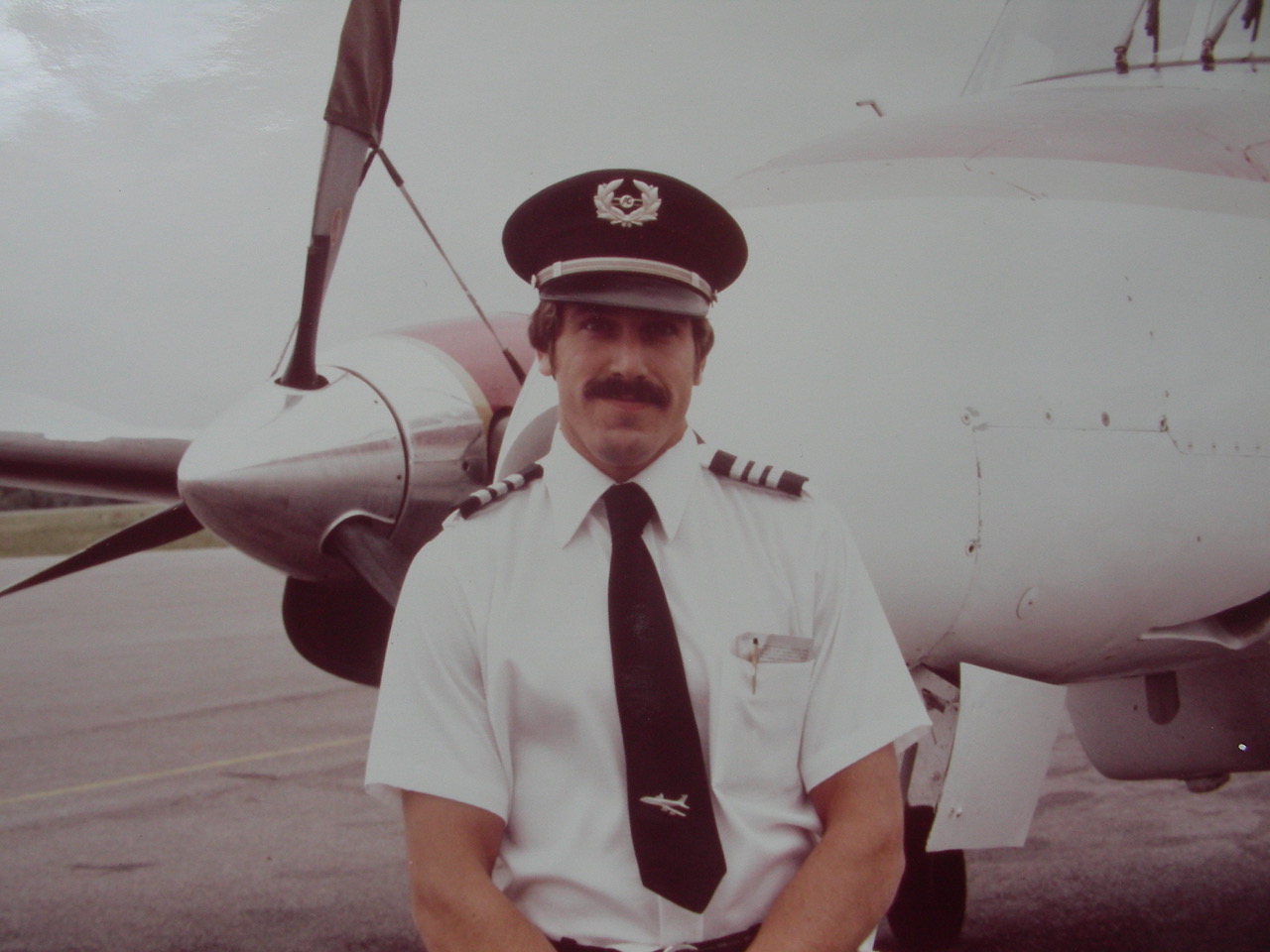
Les Abend’s first step toward an airline career as a Beech 99 copilot. [Credit: Les Abend]

After typing a couple of paragraphs, it took a moment to realize that the topic I had originally intended for this column had disappeared. Instead, the words I had written became a trigger for reflection, which is not a process I often entertain.

The reflection involved decisions that significantly affected the trajectory of my career path. Perhaps the insight will help guide those following in similar footsteps.

For me and my colleagues, the phrase “rolling the dice” meant it was a gamble as to what airline would prove to be a successful career choice. The same is true today and will be tomorrow. It doesn’t matter whether an aspiring pilot enters an airline-sponsored ab initio program that has a direct career path or climbs the aviation employment ladder from the outside. No one can predict an airline’s prosperity and how a pilot’s advancement through the ranks will be affected over the years.

This Article First Appeared in FLYING Magazine

If you're not already a subscriber, what are you waiting for? Subscribe today to get the issue as soon as it is released in either Print or Digital formats.

Subscribe Now

In this column, I’ll encapsulate my own dice rolling throughout my airline career. First and foremost, at 6 years old, American Airlines became my chosen employer simply because my spirited mother had heralded me into the cockpit of a Lockheed Electra, whereupon I received a certificate that entitled me to an interview 20 years later with the company’s chief pilot. The certificate was signed by the captain.

To this day, I think it was a class act for the airline to consider their future pilots. My parents, who thought airplane flying was probably a dangerous occupation, quietly wrung their hands, hoping it would just wither away as a childhood fantasy. It didn’t.

Perhaps age 6 was atypical for committing to a career path, but if today’s airline pilot chooses ab initio training sponsored by a major carrier, essentially the dice has been rolled. Granted, that pilot can elect to apply elsewhere, but the change of heart may involve more competition and possibly a financial liability in regard to student loans. 

As a side note, my dream airline pursuit wasn’t done in a vacuum. I did my research. It was also a real possibility that I would have to accept employment elsewhere.

Another dice roll involved my choice of education. At that time—the middle 1970s—a four-year degree was a must in order to compete against other airline pilot applicants, notwithstanding the traditional American belief that college was the background for success in all endeavors. My search involved universities with flight schools. Two remained as the final contenders.

Although Purdue University had accepted me into their management program, my out-of-state B-plus grade-point average wasn’t quite smart enough for the limited enrollment of the flight program. Whereas Southern Illinois University (SIU) had welcomed me with open arms. But two weeks before freshman orientation, with boxes and bags labeled for an Illinois address, I changed course. 

At the time (50 years ago), SIU’s flight training was more like an elective than a major, with some of the academics selected in an a la carte fashion. Today, SIU has an enviable aviation program. Although no guarantees were given for becoming a general flight technology student (GFT), I felt Purdue had more structure and was more established.

My first semester at Purdue included bike rides from campus out to the airport, where I diplomatically made myself known to the GFT department head. Fate alone wasn’t going to decide my career. I’m certain the eventual acceptance into the flight program was either the result of sympathy or the best solution to end my relentless airport visits.

Upon graduation from Purdue, I returned home to continue my employment as a flight instructor. The dice were rolled again. Within months I literally charted a course to knock on doors of commuter and charter airlines in the Northeast. Good fortune was on my side, because Chautauqua Airlines in Jamestown, New York, was my first and only stop. I was interviewed and hired as a Beech 99 copilot. The job was a game changer. Turbine time would soon be in my logbook and on my résumé.

Unfortunately, I experienced my first furlough with Chautauqua Airlines. Within a month, after days of research and phone calls, I was in a Twin Otter training class with Southern Jersey Airways (SJA), another Allegheny Commuter. The opportunity eventually put me in the left seat with an ATP certificate at 24, an accomplishment that I hadn’t expected until further down the road.

About three years into my employment at SJA, a colleague offered intel about openings for B-727 copilots. Making use of jumpseat privileges to hopscotch across the country, I arrived in McMinnville, Oregon, about 60 miles southwest of Portland. The objective was to literally knock on the chief pilot’s door of Evergreen International Airlines and request an interview. Rolled the dice. Knocked. Interviewed. Got the job. 

After about a month of training with Evergreen, and a rough start of transitioning from an airplane whose cruise speed was the same as the B-727 approach speed, I joined the cadre of shiny brown-and-white airplanes in Louisville, Kentucky. To compete with Federal Express, UPS had contracted with various cargo and on-demand charter carriers to begin its package air delivery service before the company operated its own airline. Aside from the attitude that airplanes were just trucks with wings, it was an opportunity of a lifetime.

Having maintained contact with a Wien Air Alaska captain that I met the day before our basic indoctrination started, I got a phone call less than a year into my Evergreen employment. The captain offered me an opportunity to interview for a B-727 flight engineer position. If I didn’t drool or pick my nose, most likely the job was mine, which was a welcome relief because American Airlines had turned me down for reasons I still don’t know until this day. Apparently, I wasn’t the only one, but it involved a glitch in the extensive medical testing part of the interview.

Unexpectedly, furloughs were announced at Wien about four months into my employment. Unexpectedly, American called me back to complete the interview process. Unexpectedly, Eastern Airlines had left a message on my answering machine, offering me a flight engineer position on the Airbus A300 shortly after I arrived home from the interview. Meanwhile, because of the furlough, I had been employed as the worst used Toyota car salesman in Seattle. 

Then the phone rang with the call of a lifetime. American was offering me a job. Rather than continue to decimate the business at the Toyota dealership, I asked for an earlier training class date. That roll of the dice placed me about 100 numbers ahead of other new hires.

The final roll of the dice came after much soul-searching. American had introduced B-scale pay rates, but Eastern had not. My reverence was always for American, and my gut told me that Eastern seemed to be on the precipice of serious financial problems. Two weeks into training at American, I turned down Eastern. Despite the turmoil created by two separate pay scales at the airline, I looked back only once. 

For 34 years, fate was on my side. I am grateful. Rolling the dice isn’t for the faint of heart.


This column first appeared in the July Issue 972 of the FLYING print edition.

Les Abend

Les Abend is a retired, 34-year veteran of American Airlines, attempting to readjust his passion for flying airplanes in the lower flight levels—without the assistance of a copilot.

How PGA Tour Pro Maverick McNealy Buys Back Time in a Cirrus

From Q-School to the flight deck of his Cirrus, personal aviation lets McNealy keep golf second to family.

Maverick loads his golf clubs and gear into the spacious baggage compartment of his Cirrus SR22T G7+ before departure. [Credit: Cirrus]

Most professional athletes measure success in trophies and rankings. Maverick McNealy measures it differently. Ask him what he wants people to remember, and the PGA Tour pro doesn’t mention a leaderboard.

“I think what I’m going to care about is whose lives I made better along the way, and the connections I made,” McNealy said in a recent sit-down interview with Cirrus.

McNealy, a Stanford University product now in his seventh season on tour, has structured his life around the people in it, including his wife, Maya, their infant daughter, his three younger brothers, and his parents. That’s why, a few years into his professional golf career, he decided to learn to fly.

McNealy grew up in a golf family before he was a golf pro. He and his three brothers shared a single room as kids, four beds in a row, and the family’s shared obsession was golf.

“Golf was where we spent most of our time together as a family,” McNealy said. “We’d play six of us in the same group and play really fast. We had a ton of fun and lots of great memories there.”

He didn’t set out to turn that pastime into a career, even after walking onto Stanford’s golf team. 

“I never thought I’d be good enough [to play professional golf],” McNealy said.

After flying himself to Palm Springs, Maverick enjoys an afternoon on the golf course. [Credit: Cirrus]

That changed during his college years, and by his senior year the decision had crystallized into something closer to a debate with his father, who laid out every reason McNealy shouldn’t turn pro.

“I came back and thought about all those reasons and gave him a list of reasons why I did,” McNealy said.

He turned pro, made it through PGA Tour Q-School, and has spent his career chasing the same thing that drew him to the game as a kid.

“Every day I just want to get the best out of myself,” McNealy said. “I want to improve. I want to get better. And I just want to see how good I can get.”

McNealy said that much of his identity depends on the people around him rather than what score he shoots on a given day. He credits his parents for introducing him to golf, his youngest brother Scout for caddying for him, and his wife for running the household that makes his travel schedule possible.

“She is the quarterback of the most important things in my life, which is my family and our daughter,” McNealy said. “And I wouldn’t be able to do both without her.”

The arrival of his daughter reset his priorities in a way he didn’t fully anticipate. Golf, which had occupied the No. 2 spot in his life behind family for as long as he could remember, suddenly had company.

Maverick enjoys an afternoon at home with his wife, Maya, and daughter, Adeline. [Credit: Cirrus]

“It was a little bit scary to think that something I poured my entire life’s work into was now going to be second to something else,” McNealy said. “But I will say that every parenting cliché I’ve ever heard has never rung more true. It’s fun walking off the green whether I played well or whether I played poorly. My daughter really doesn’t care what I shot that day, and that really grounds me.”

McNealy carried an interest in aviation since childhood but pushed it aside for years as he pursued sports and his education.

Then, during the 3M Open in Minnesota in 2021, that interest suddenly resurfaced when a single-engine piston flew over McNealy’s car on the way to the golf course.

“I thought that looked pretty cool. That looks like a lot of fun,” he said.

He happened to be paired that day with a tour player who had flown himself to events for two decades, and the questions he asked during a rain delay stuck with him.

“It was that day that I decided that I was going to sign up for my discovery flight when I got home,” McNealy said.

What kept him in the airplane after that first flight was less the novelty and more the process, something he recognized immediately from golf.

“I see so many similarities between the process of preparing to compete in golf and preparing to fly,” McNealy said. “I felt like flying was something that I could get good at.”

The practical case for flying arrived early. A trip that once cost McNealy the better part of a day in the car became something else entirely once he had a set of wings.

“The first time I flew down to Thermal [California] and turned a four-and-a-half-hour drive into a one-hour flight, I knew this was different,” he said.

Choosing Cirrus

McNealy arrived at Cirrus on a recommendation he had no reason to question and never second-guessed afterward.

“One of my dad’s friends flies a Vision Jet, and when my dad heard that I was going to take flying lessons, he said, ‘Call Earl,’” McNealy said. “He said, ‘You have to fly out of All In Aviation [in Las Vegas], and you have to fly a Cirrus.’ I blindly followed his directions, and it was the best advice I’ve ever gotten in my aviation career.”

The airplane’s role in his life has since become less about the machine and more about what it buys him back.

Maverick McNealy departs Las Vegas aboard his Cirrus SR22T G7+, bound for Palm Springs. [Credit: Cirrus]

“This airplane is the most important tool, bar none, of my aviation career,” he said. “What this airplane does for me is it buys me time to be with my family, in addition to all of my other obligations and training and tournaments and outings.”

McNealy plans his days off based on what his Cirrus can do for him. A round of golf with his father, once an all-day proposition by car, now fits into an afternoon.

“I would never make a day trip in a car down to Palm Springs. It’s too far,” McNealy said. “But I’ve made a ton of trips—day trips—in my airplane. I can leave after breakfast, play a round of golf, and be home by dinnertime.”

Asked to describe his ideal day, McNealy reaches for a schedule only a personal aircraft makes possible.

“If I were to draw my perfect day, it would be to wake up with my family, fly with people that are important to me, play golf, fly home… and be home by dinner with my family,” he said.

Safety and the Parachute 

Some people are hesitant before flying, but McNealy points them to statistics as much as his own comfort level in the aircraft.

“Flying is safer than driving. It’s statistically and anecdotally true,” McNealy said. “My airplane can land itself in the case of an emergency, which is really, really nice in single-pilot operations. And the more I’ve flown, the more I’ve gotten to appreciate having the Cirrus Airframe Parachute System backup for those few seconds that you may not have another option in the air.”

That layered redundancy, he said, is what separates flying a Cirrus from flying in general.

“I really appreciate how Cirrus has redundant safety systems to help me out in many different situations, some that are within or out of my control,” McNealy said. “That lets me rest easy at night.”

The Real Payoff

The return on flying isn’t measured in hours logged or airports visited, McNealy said. It’s measured in evenings at home with his wife and daughter, which otherwise wouldn’t exist.

“Every time I fly, I come home more energized than when I left out the door in the morning,” he said. “Knowing that I can continue to get the best out of myself by competing and preparing for my job, do something that I absolutely love, and still be the present father and husband and family member that I want to be—that ticks every box that I could ever want in my life.”

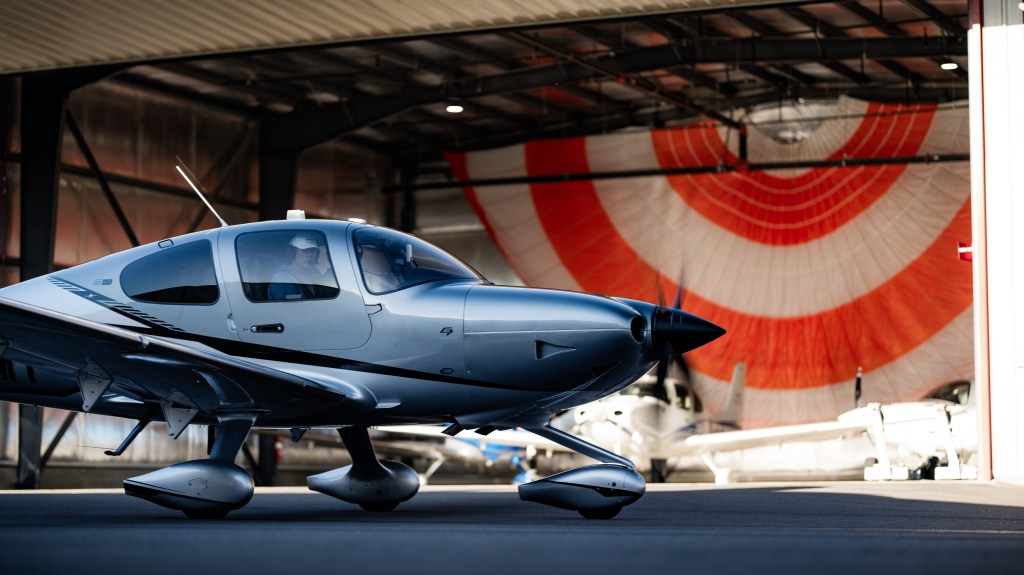
Maverick McNealy with his Cirrus SR22T G7+ at All In Aviation in Las Vegas, Nevada. [Credit: Cirrus]

It’s also the part of his story he hopes his daughter remembers, even after the golf scores fade.

“I think when she looks back on how I am as a father, she’ll know the lengths at which Maya and I have gone to spend that quality time with her,” McNealy said. “Because at the end of the day, the real currency is the amount of time we get to spend with her.”

Click here to learn more about Cirrus.

Matt Herr

Matt Herr develops sponsored content for clients at Firecrown Media. He is a gearhead and motoring enthusiast with experience in tech, freight and manufacturing. He spends his free time hiking with his wife, son and German shepherds, or reading and writing hobby pieces.

Hybrid-Electric Aircraft Trials Begin in Virginia, New Jersey, Pennsylvania

Electra, which conducted the flights with its EL2 demonstrator, says the campaign aims to demonstrate a new way of flying.

Electra EL2 hybrid electric demonstrator aircraft flying in Atlantic City New Jersey
Electra’s hybrid-electric EL2 Goldfinch demonstrator soars past casinos in Atlantic City, New Jersey. [Credit: Electra]

The FAA on Tuesday said prototype hybrid-electric aircraft recently began a series of demonstration flights in Virginia, New Jersey, and Pennsylvania that are expected to continue for three years.

Manassas, Virginia-based Electra, which conducted the flights using its EL2 Goldfinch demonstrator, said it connected Philadelphia International Airport (KPHL) to four small airports across the three states. The EL2 flew into Washington Manassas Airport (KHEF) in Virginia, Millville Executive Airport (KMIV) in New Jersey, and Northeast Philadelphia Airport (KPNE) in Pennsylvania.

On Thursday, the Goldfinch touched down at Atlantic City Bader Field (KAIY) in New Jersey, where Charles Lindbergh landed after his transatlantic flight in the Spirit of St. Louis in 1927.

“Nearly a century later, Bader Field is once again helping us demonstrate what’s possible in aviation,” Electra wrote in a LinkedIn post.

Per the FAA, the flights, conducted in partnership with the Pennsylvania Department of Transportation (PennDOT) and New Jersey Department of Transportation (NJDOT), are intended to test future hybrid-electric routes. The EL2 is Electra’s demonstrator for its flagship, nine-passenger EL9 Ultra Short.

Electra on LinkedIn said the activities will show how “general aviation airports, parking lots, and other convenient locations” can serve as “access points” for direct aviation—the company’s philosophy of flying people from where they are directly to where they want to go by eliminating airport chokepoints. Access points could also include rooftops, fields, barges, malls, casinos, or ski resorts.

Electra believes the EL9 can unlock these sites due to its 150-foot ground roll requirement, achieved using a unique blown-lift propulsion system that enables takeoffs at about 30 knots. It estimates that, compared to driving, travelers could save an hour or more on over 2,600 EL9 routes that span 50 to 265 miles and lack commercial air service within 40 miles of the origin or destination.

“For Atlantic City, that could mean direct flights to destinations like New York City and Washington, D.C.…making the region more accessible for tourism and business,” Electra said.

More to Come

PennDOT is one of eight lead participants for the FAA’s eVTOL (electric vertical takeoff and landing) Integration Pilot Program (eIPP). It is leading a consortium of states and manufacturers including Electra.

Per the FAA, the eIPP “creates one of the nation’s largest real-world testing environments for next-generation aircraft.” Data collected from the activities will be shared with the regulator to guide future operational requirements and study different use cases, from passenger transport to emergency response.

Spanning three years and 26 states, the eIPP will see electric, autonomous, and other novel aircraft technologies operate at airports. By its conclusion, participants believe the FAA may even permit passenger operations for revenue.

“They’re giving us an operational context now to show what our aircraft can do,” Marc Allen, CEO of Electra, told FLYING earlier this year.

For example, revenue-generating activities could help Electra determine future ticket prices. The company has not shared specific pricing but claims the EL9 will operate at one-third the cost of helicopters or eVTOL air taxis.

Over the course of the three-year campaign, Electra hopes to transition from the Goldfinch to the EL9. Working with PennDOT, it plans to demonstrate 50-to-500-mile links between Atlantic City and airports such as Philadelphia International.

Electra will also demonstrate a proposed New York City–New Jersey route with infrastructure partners Signature Aviation and Vertiports by Atlantic. The plan is to use existing helicopter infrastructure rather than build a dedicated vertiport with electric charging, since the EL9 is designed to recharge its batteries while flying.

“It’s an extraordinary opportunity to do things people had thought about before, like taking an airplane from the parking lot next door to an Atlantic City casino and flying it directly into one of the major airports in the neighborhood,” Allen said. “Or flying it into the vertiport at the south end of Manhattan, down by Wall Street.”

Electra is further working with the Florida Department of Transportation and supporting a Louisiana-led eIPP project in partnership with Bristow Group.

Beta Technologies’ Alia CX300 conducted the first eIPP activities in July, delivering organs in Maryland and Virginia. Herman Cueto, its chief technology officer, said last week that Beta will begin operations in Texas and Louisiana in the “next four to six weeks.”

Ampaire and the Utah Department of Transportation began the second eIPP project earlier this month, conducting hybrid-electric flights between California and Utah using the company’s hybrid-electric EEL, a modified Cessna Skymaster.

Joby Aviation plans to develop vertiport sites in Florida, New York, and Texas ahead of its planned terminal area activities in those states. It also anticipates autonomous flight operations in Utah and North Carolina.

Archer Aviation earlier this month conducted the first intercity flight of its Midnight eVTOL, which CEO Adam Goldstein said will serve as a “template” for its eIPP activities in New York, Florida, and Texas.

Other key states expected to host eIPP flights include New Mexico, California, Massachusetts, Illinois, and Alaska.

Jack Daleo

Jack is a staff writer covering advanced air mobility, including everything from drones to unmanned aircraft systems to space travel—and a whole lot more. He spent close to two years reporting on drone delivery for FreightWaves, covering the biggest news and developments in the space and connecting with industry executives and experts. Jack is also a basketball aficionado, a frequent traveler and a lover of all things logistics.

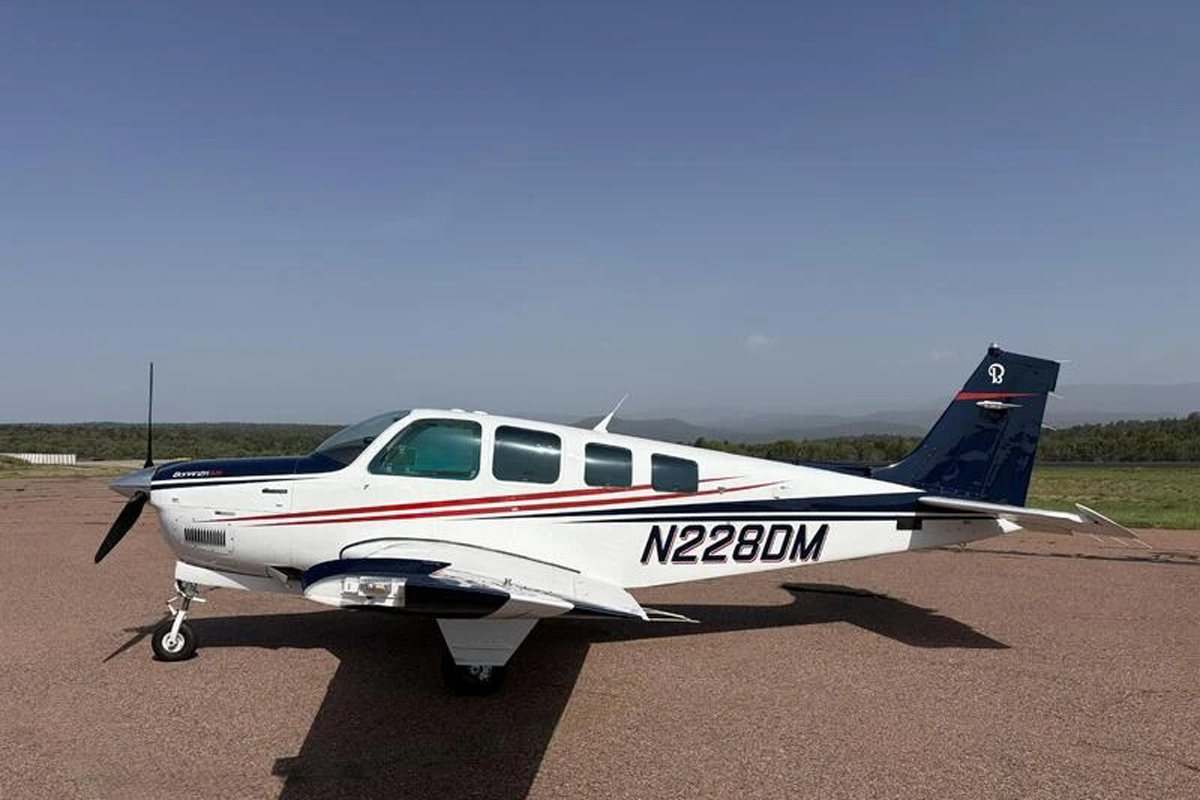
This 1991 Beechcraft A36 Bonanza Is a Sharp ‘AircraftForSale’ Top Pick

Legendary six-seater features air conditioning, extensive Garmin glass, and D’Shannon baffle kit.

1991 Beechcraft A36 Bonanza [Credit: Southwest Aero]

Every day, the team at Aircraft For Sale chooses an airplane that catches our attention because it is unique, a good deal, or has other qualities we find interesting. You can read Aircraft For Sale: Today’s Top Pick at FLYINGMag.com daily.

Today’s Top Pick is a 1991 Beechcraft A36 Bonanza.

Renowned for over seven decades as a titan of the single-engine, high-performance category, the Beechcraft Bonanza needs no introduction. While the standard A36 is already highly regarded for its rock-solid stability and cavernous cabin, this specific aircraft has been transformed into a true cross-country behemoth. It operates as a machine completely designed to conquer the flight levels with the same ease it handles a short local hop.

A fuel-injected Continental IO-550-B1F 300 hp engine is at the heart of the airframe, showing 870 hours since major overhaul. The powerplant is modernized with an Electroair electronic ignition system and benefits from a D’Shannon baffle kit that allows for a gross weight increase. Up front, it turns a McCauley three-blade propeller. logging 870 hours since overhaul, while a B&C standby alternator ensures electrical redundancy.

This 1991 model has accumulated 3,540 total flight hours. The hangar-kept airframe shows no known damage history and maintains complete logbooks. It provides a useful load of 1,267 pounds and carries 74 gallons of usable fuel for extended range.

In the cockpit, the technology suite has been completely reimagined for modern IFR environments. A dual Garmin GI 275 primary instrument stack anchors the panel, paired seamlessly with a Garmin GTN 750Xi and GTN 650Xi touchscreen navigators. 

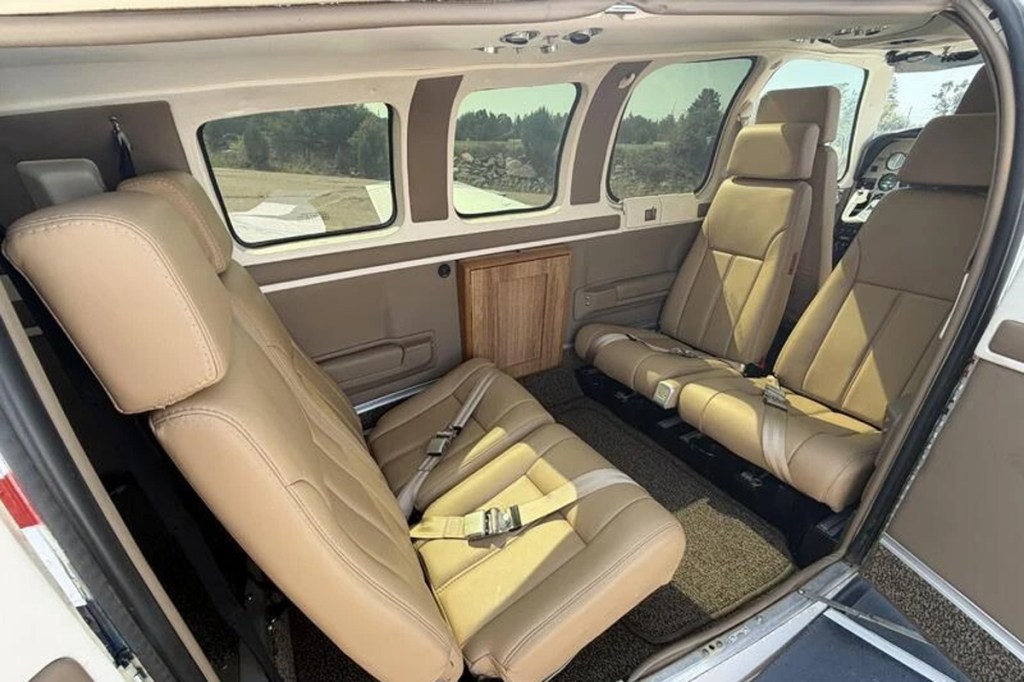
1991 Beechcraft A36 Bonanza [Credit: Southwest Aero]

The highly capable Garmin GFC 500 digital autopilot drastically reduces pilot workload, while a GTX 345 transponder provides full ADS-B In and Out capabilities. A Flight Stream 510 offers Bluetooth connectivity, a GDL 69 receiver brings in SiriusXM data, and a JPI EDM 700 engine monitor accurately tracks the Continental’s vitals.

Passengers will appreciate a comfortable environment featuring A/C Systems air conditioning, tan leather seating with coordinating side panels and carpets, and G&D Aero tinted window inserts. 

On the outside, the aircraft boasts a striking white paint scheme with blue-and-red accent striping, further enhanced by full Whelen LED lighting and a recently replaced windshield.

Listed at $439,000, this 1991 Beechcraft A36 Bonanza perfectly pairs classic aviation craftsmanship with highly desirable modern upgrades.

If you’re exploring ownership options, FLYING Finance can help get you airborne. Use our airplane loan calculator to estimate your monthly payments, or connect with an aviation finance expert at flyingfinance.com.

FLYING Staff

FLYING Magazine is a one-stop resource for everything aviation, including news, training, aircraft, gear, careers, photos, videos, and more.
Pilot in aircraft
Sign-up for newsletters & special offers!

Get the latest stories & special offers delivered directly to your inbox.

SUBSCRIBE