Report: Airbus Has Spent $1.7B on Stalled Hydrogen Ambitions
Manufacturer in February scaled back development of a hydrogen-powered aircraft, which it said may arrive a decade later than its original 2035 target.
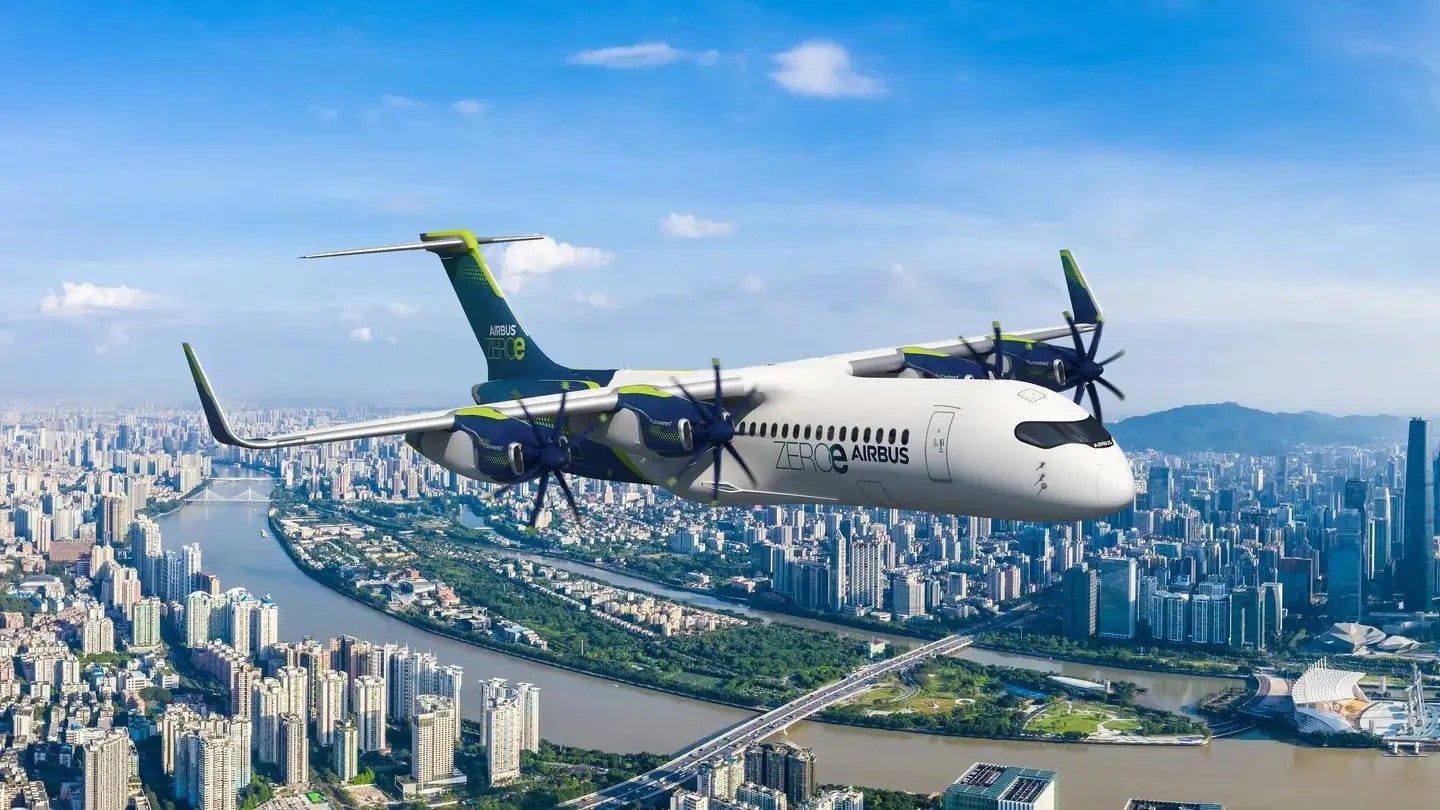
Airbus in March revealed this concept image for a hydrogen fuel cell-powered ‘ZeroE’ aircraft. [Courtesy: Airbus]
Key Takeaways:
Airbus has significantly scaled back its "ZeroE" hydrogen-powered aircraft program, attributing the delay to the global "hydrogen economy" developing 5-10 years slower than 2020 assumptions.
The company has invested over $1.7 billion in the project, consolidating from four initial concepts to a single, less ambitious design with a smaller passenger capacity and range.
The original 2035 target for a zero-emission hydrogen aircraft is no longer feasible, with a potential delay of up to a decade, though Airbus maintains its commitment to developing the technology.
Updated Thursday, April 24 at 4:40 p.m. EDT with comment from an Airbus spokesperson.
Airbus has pumped the brakes on its development of a hydrogen-powered aircraft concept. On Sunday, new details emerged about just how much the manufacturer has spent on the stalled project.
CREATE A FREE ACCOUNT
Sign up to keep reading
Create a free account to continue. Already a member? Sign in below.
Jack is a staff writer covering advanced air mobility, including everything from drones to unmanned aircraft systems to space travel—and a whole lot more. He spent close to two years reporting on drone delivery for FreightWaves, covering the biggest news and developments in the space and connecting with industry executives and experts. Jack is also a basketball aficionado, a frequent traveler and a lover of all things logistics.