Whenever I visit William T, Piper Memorial Airport (KLHV) in Lock Haven, Pennsylvania, which seems to hide in the shadow of Bald Eagle Mountain, I try to imagine the scene in 1956 when Piper’s new PA-24 Comanche made its first test flights. It must have been an exciting time.
Even though it took a decade for Piper to answer the challenge of rival Beechcraft’s Bonanza, the all-metal PA-24, with its sleek profile and low, drag-cheating, laminar-flow wing must have looked like a spaceship compared with the company’s long-running series of high-wing Cubs, Colts, Pacers, and Vagabonds. I am sure onlookers were impressed as it rose quickly above the ridge and scooted out of sight on the other side.
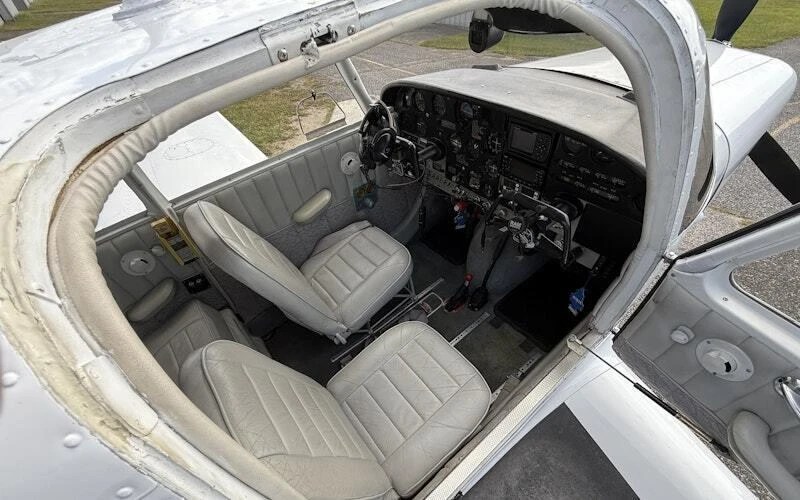
This Piper has a neat, uncluttered, and inviting cabin and panel. [Credit: Rich D]
Anyone familiar with Lock Haven knows that Bald Eagle stands just over 2,100 feet, so some might argue it is just a hill. The Cessna 172 that I flew on my first trip to the field powered its way over the peak without too much effort, so the high-performance Piper should make short work of it. I am talking about visual and emotional effects, though, so just try to play along.
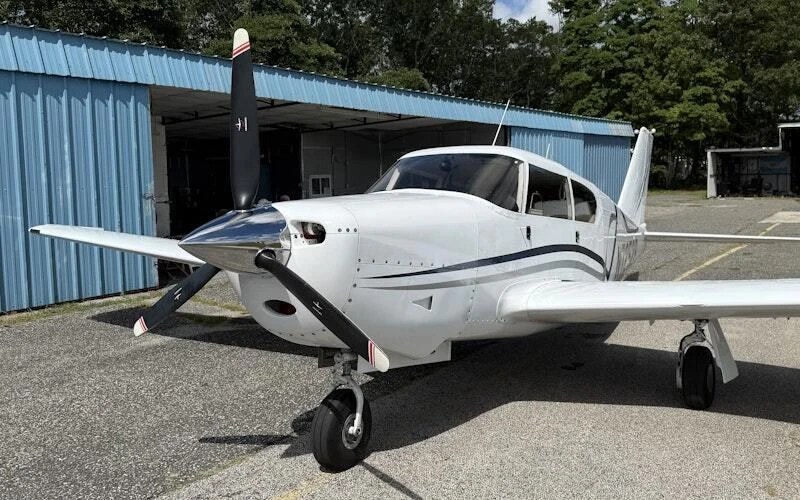
The aircraft for sale today could give its next owner a sense of those heady mid-century days when civilian aircraft with the formidable combination of power, speed, and sophistication were still new. At the same time, this PA-24 will fit right into the modern era, making long-distance trips seem a lot shorter for the family members and friends you choose to take along for the ride.
This 1961 Comanche has 2,489 hours on the airframe, 868 hours on its 250 hp Lycoming O-540-A1D5 engine, and 171 hours on its McCauley three-blade propeller. The aircraft carries 90 gallons of fuel and has a useful load of 1,100 pounds.
The panel includes a Garmin GNS 430 GPS/Nav/Com, GPSmap 496, JPI EDM 830 engine monitor, and Narco AT-150 transponder. Additional equipment includes a factory-installed oxygen system, Cleveland brakes, and SureFly ignition. The aircraft received new interior trim in 2004, new paint in 2005, and new fiberglass cowling and exhaust system in 2017.
Pilots looking for a stylish, efficient and economical traveling airplane should consider this 1961 Piper PA-24-250 Comanche, which is available for $155,000 on AircraftForSale.
If you’re interested in financing, you can do so with FLYING Finance. Use our airplane loan calculator to calculate your estimated monthly payments. Or, to speak with an aviation finance specialist, visit flyingfinance.com.
Jonathan Welsh is Lead Editor of Aviation Consumer and a private pilot who worked as a reporter, editor and columnist with the Wall Street Journal for 21 years, mostly covering the auto industry. His passion for aviation began in childhood with balsa-wood gliders his aunt would buy for him at the corner store. Follow Jonathan on Twitter @JonathanWelsh4
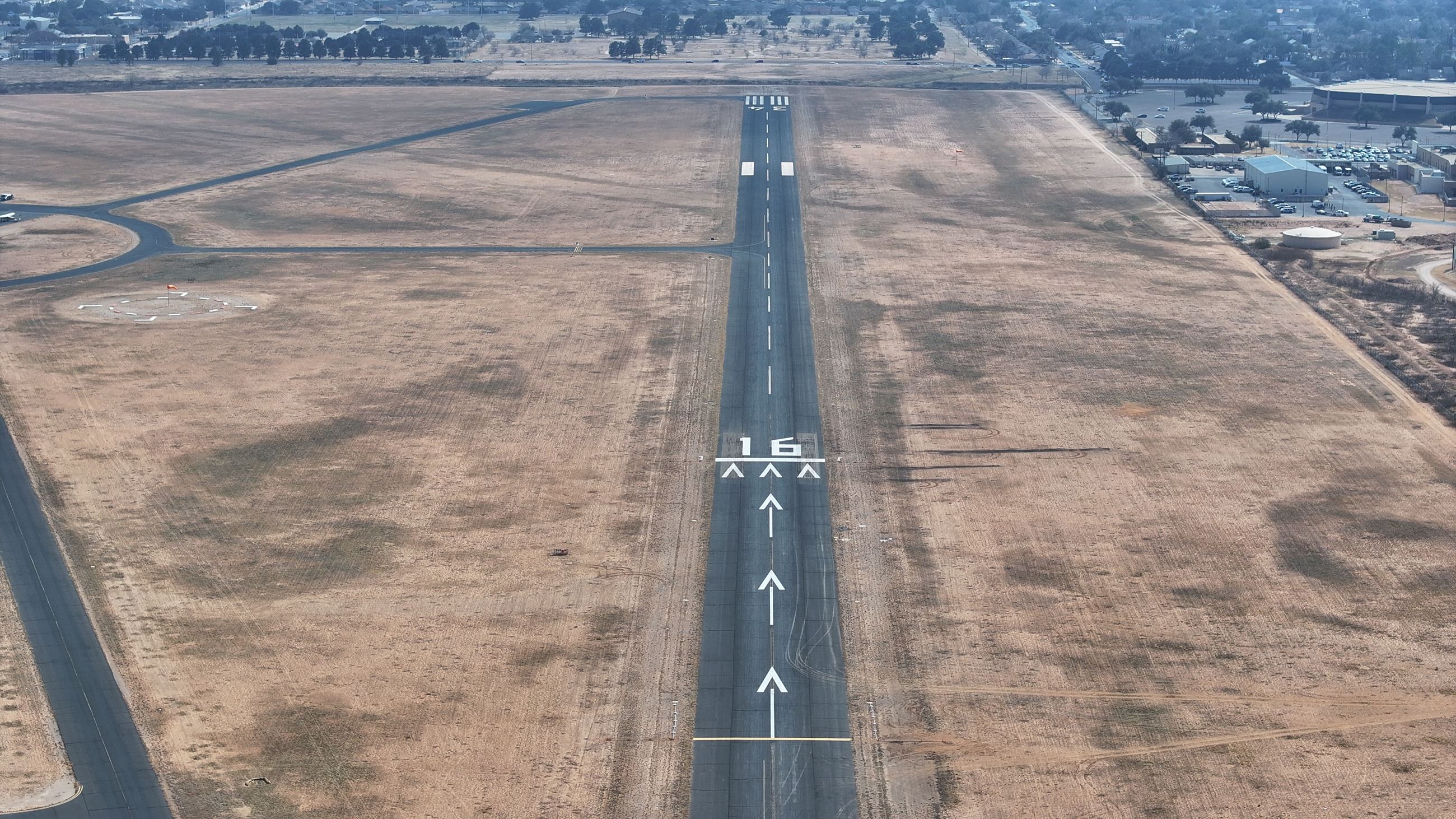
The FAA on Thursday said Midland International Air & Space Port (KMAF) in Texas received $21.5 million for runway rehabilitation, out of a total of about $615 million in fresh grants. [Credit: Midland International Air & Space Port]
The FAA has poured nearly $1.5 billion into new and upgraded airport runways, terminals, towers, passenger areas, and other infrastructure in the month of August alone.
The agency on Thursday announced a fresh round of Airport Improvement Program (AIP) grants for airports in 42 U.S. states and two territories. A total of about $615 million spread across 238 grants will support runway and taxiway infrastructure improvements, airfield safety upgrades, and “family-friendly” terminal additions, the FAA said.
“We’re prioritizing these grants in a time when Americans are traveling more than ever, ensuring we fulfill our promise to transform the passenger travel experience,” FAA Administrator Bryan Bedford said in a statement.
On August 10, Bedford said the FAA projects the annual number of passengers flying through the National Airspace System (NAS) will double from 1 billion to 2 billion over the next two decades.
AIP funding is intended to support infrastructure projects involving runways, taxiways, signage, lighting, markings, and other safety-related needs.
The program was established by the Airport and Airway Improvement Act of 1982. The money is drawn primarily from the Airport and Airway Trust Fund’s Grants-in-Aid for Airports account, which is funded by taxes on fuel, tickets, domestic flight segments, international passenger arrivals and departures, and other user fees. In recent years, the FAA’s General Fund has supplemented funding.
About $19.5 million of the AIP grants announced Thursday will support the construction of a new airport in Noatak, Alaska. The FAA and Alaska Department of Transportation and Public Facilities have been planning a relocation of Noatak Airport (PAWN), with construction scheduled to begin in 2027.
Another $8 million will go toward building a new terminal at Lynchburg Regional Airport (KLYH) in Virginia. The city of Lynchburg this week said the funds will be used for expanding the airport’s existing passenger terminal, improving passenger flow, and increasing capacity to accommodate future growth. The project includes plans for a wider, automated TSA exit lane and several sustainability and accessibility improvements.
Other airports receiving a chunk of the grant money include:
Midland International Air & Space Port (KMAF) in Texas—$21.5 million for runway rehabilitation
San Diego International Airport (KSAN)—$15.3 million for noise mitigation
Gary/Chicago International Airport (KGYY) in Indiana—$8.3 million for a new contract tower
Wilmington International Airport (KILM) in North Carolina—$6.3 million for runway extension
Sacramento International Airport (KSMF) in California—$2.4 million for new passenger boarding bridges
With Thursday’s AIP award, the FAA’s sixth since March, the agency has now allocated about $2.67 billion in AIP grants for fiscal year 2026 (FY26).
In June, the House Appropriations Committee approved a FY27 transportation spending bill that calls for $4 billion in traditional AIP grants, plus another $271 million for supplemental AIP grants and $303 million for the federal contract tower (FCT) program.
The FAA also supports these projects through the AIG program, which this year was allocated a fifth and final $2.89 billion installment. FY26 marks the conclusion of the AIG program, which was established in 2022 by the Infrastructure Investment and Jobs Act.
In addition to the nearly $1.5 billion the FAA has spent in August, the agency in July allocated $1.776 billion in grants—an homage to America’s 250th birthday.
Earlier in 2026, the Transportation Department (DOT) invested $800 million to replace air traffic control (ATC) towers and terminal radar approach control (TRACON) facilities.
Jack is a staff writer covering advanced air mobility, including everything from drones to unmanned aircraft systems to space travel—and a whole lot more. He spent close to two years reporting on drone delivery for FreightWaves, covering the biggest news and developments in the space and connecting with industry executives and experts. Jack is also a basketball aficionado, a frequent traveler and a lover of all things logistics.
The author shares 50 years of memories with dear friend and great pilot Mike Melvill. [Credit: Peter Garrison]
In May 1978, a 37-year-old machinist and his wife flew their odd-looking homebuilt airplane from Indiana to Mojave, California, to show it to its designer, Burt Rutan.
Rutan, who had founded the Rutan Aircraft Factory (RAF) several years earlier and was now selling plans for VariEzes, looked over the plane, an all-wood canard pusher called a VariViggen, and admired the workmanship. He promptly invited the visitor and his wife to join his little company. They accepted.
Rarely are lives so entirely reshaped by a single decision.
If you're not already a subscriber, what are you waiting for? Subscribe today to get the issue as soon as it is released in either Print or Digital formats.
The new fellow’s name was Mike Melvill, and his wife’s name was Sally. Originally from South Africa, they had been together since their teens and had two sons. Sally became RAF’s office manager, Mike shop foreman and editor of the company newsletter, The Canard Pusher.
In 1978 I was a regular visitor at RAF, flying up from Los Angeles on Wednesdays for lunch at Reno’s Cafe. My arrival, usually with flying buddy and erstwhile FLYING contributor Jerry Slocum, was the signal that lunch was at hand. “Squeet! Squeet!” Rutan would exclaim, and we all trooped toward the door.
So I got to know Mike and Sally from the start. But my memories of those days, 50 years ago, have faded. Only a few episodes survive.
One is Burt and Mike coming down to Whiteman Airport (KWHP) to show me how to lay up fiberglass in Melmoth 2, the new all-composite plane I began to build in 1981. They did the inner skin of the aft fuselage that day. Another indelible picture in my memory is of standing beside an anxious Sally on the ramp at Mojave in 2004 and watching a plume of white smoke grow upward toward the edge of the sky. Atop that slender pillar was Mike, heading for space.
Another is the time I made an unplanned landing at Porterville, California, with what turned out to be a broken crankshaft. I called Mike, who lived in the mountains nearby. He flew down in the VariViggen and delivered me to my car at Whiteman. A few minutes later I was watching the VariViggen’s lights climb away from Runway 12 and swing northward toward home, and reflecting that Mike was a good friend to have.
Mike was always generous, always helpful, always ready to make things—especially airplanes—better. When, 20 years after that first layup, it came time to move Melmoth 2 from Whiteman to Mojave for flight testing, Mike supplied a trailer and lent me one of his hangars.
It was late in May when he winched the plane off the trailer. It was not until the end of October that the FSDO inspector, who I think was annoyed that I had not hired a (hugely overpriced) private inspector, finally signed off Melmoth 2 for flight. By then Mike must have been dying to get his hangar back, but he never said a word.
Mike was flying chase when I cycled the landing gear for the first time and found that I couldn’t get it fully down and locked because of drag on the nosewheel. Burt’s brother Dick later informed me that I uttered an impermissible expletive on the frequency. Mike’s patient advice—basically, slow down and cut the power to idle—proved correct.
Maybe because he wanted the hangar back, but more likely because he loved flying any new airplane, he lost no time helping get the required 25 hours flown off. After I made the first few flights, I gave him a couple of pages entitled “What You Need to Know to Fly Melmoth 2,” thinking that he would study them that evening and we would discuss them before he made his first flight.
When I showed up the next day, he had already put a couple of hours on the plane. Over the next weeks he flew it 11 hours, collecting reams of performance data and, one weekend when I was out of town, replacing the rudder pedal linkage with a superior version of his own. He later replaced the brake cylinders with better ones, also without asking. Mike opened the flight envelope of Melmoth 2 to VNE. He did the first stalls and the first rolls. He would later be the first to fly the plane with four aboard.
The phrase “a pilot’s pilot” is so hackneyed as to be all but meaningless, but Mike really was someone pilots would look up to in the way that some non-pilots look up to pilots. He had flown an incredible variety of airplanes, flown them all over the world, and had made the first flights in nearly all the weird designs Rutan dreamed up. Just for the heck of it, he and Dick Rutan had flown around the world in two Long-EZs, 38,000 miles, mostly ocean. Mike’s Long-EZ had 4,500 hours.
Mike was brave. He had his share of near-death experiences. One that was caught on video took place during a test flight in SpaceShipOne. Something went wrong with an electric actuator, making it impossible to configure the spaceplane properly for reentry.
Mission control at Mojave was in a panic. Mike, aware that the flight might turn out to be his last, took a handful of M&M’s from a pocket of his flight suit and released them into the cabin. They floated weightless around him like so many little comets and asteroids. I never see M&M’s without thinking of Mike, distant and alone in that seemingly doomed capsule, but still self-possessed and even whimsical.
Mike did far more favors for me than I was ever able to do for him. But I did open a door that I think gave him a lot of joy late in his flying career. I introduced him to Javier Arango, who had a collection of extremely accurate reproductions of World War I fighters. Arango, a consummate pilot himself, detected in Mike that “ability in the abstract”—the knack of doing everything well—that set him apart from the common run of flyers.
Javier’s airplanes, fitted with rotary engines most of which were century-old survivors of the Great War, were tricky to master, but Javier trusted Mike with them. I think flying a Sopwith Camel put a nice bookend to a career anchored, at its other extreme, by SpaceShipOne.
Mike accumulated countless trophies and honors, including that of becoming the “first civilian astronaut” during SpaceShipOne’s successful campaign to win the $10 million Ansari X Prize. But the litany of his accomplishments omits what was most essential about him—that he was a modest, uncomplicated, sweet-natured guy, completely forthright and entirely loyal.
He was as capable of anger as of forgiveness—I was at times the object of both—but he was untainted, as far as I could tell, by ego and ambition.
Mike Melvill died in March. In my life, at least, he cannot be replaced.
This column first appeared in the July Issue 972 of the FLYING print edition.
Peter Garrison taught himself to use a slide rule and tin snips, built an airplane in his backyard, and flew it to Japan. He began contributing to FLYING in 1968, and he continues to share his columns, ""Technicalities"" and ""Aftermath,"" with FLYING readers.
Max Trescott is a nationally recognized flight instructor, aviation educator, author, and media host. [Credit: Max Trescott]
The National Association of Flight Instructors (NAFI) has inducted Max Trescott, host of the popular Aviation News Talk podcast and regular FLYING Magazine contributor since 2024, into the Flight Instructor Hall of Fame.
Trescott, who has 50 years of flying experience, four airline transport pilot (ATP) certificates, 11,500 hours of dual instruction, and in 2008 earned National Certificated Flight Instructor (CFI) of the Year, was announced as the 2026 Hall of Fame honoree at EAA AirVenture in Oshkosh, Wisconsin, in July. He was officially inducted earlier in August.
“I feel that I’m accepting [the honor] on behalf of the thousands of other CFIs who are dedicated to their craft and working tirelessly every day to help people fulfill their aviation dreams,“ Trescott told FLYING. “I’ve met many CFIs who are incredibly accomplished and equally deserving of this recognition.“
Brian Wynne, president and executive director of NAFI, in a statement said Trescott is a “perfect example of the professionalism and dedication the Hall of Fame was created to recognize.”
Trescott passed his CFI on September 10, 2001, the day before the deadliest incident in aviation history. He described himself as an “accidental CFI.“
CFI Max Trescott [Credit: NAFI]
“I’d never planned on becoming one until a friend, Tim Johnson, said to me ’I’m getting my CFI this summer, you should too,’“ he said. “I’m grateful to him for that gentle nudge, as teaching flying and helping others achieve their objectives while staying safe is very satisfying. These days, whenever I encounter someone who I feel would be a good teacher, I always encourage them to become a CFI.“
Trescott is known for his mastery of Cirrus aircraft, with nearly half of his instructional hours on the manufacturer’s airframes. He holds type ratings for the Cirrus Platinum CSIP and SF50, as well as the Embraer Phenom 100, plus a commercial pilot certification for helicopters. His ATP certifications cover each fixed-wing aircraft category and class.
Trescott is also recognized for his expertise on Garmin avionics, and his G1000 Glass Cockpit Handbook is considered required reading in many CFI circles. He later published a guide on G3000 and G5000 avionics and has written many other handbooks as president of Glass Cockpit Publishing.
Trescott has completed National Transportation Safety Board (NTSB) training for accident investigation.
“Flight instruction is often given short shrift, yet it’s the backbone of our entire industry,” he said. “I hope my induction brings some attention to this important work and motivates a few other people to become CFIs and contribute to aviation.“
Beyond flight instruction, Trescott built a career as an educator, author, and media host. He covers general aviation and safety on Aviation News Talk, which frequently ranks among the top industry podcasts on streaming services and is known for a no-nonsense style. He co-hosts the NTSB News Talk podcast.
Amazingly, all of that came after Trescott’s 25 years as an engineer for Hewlett-Packard. He was a consultant at NASA’s Ames Research Center in California from late 2012 to mid-2015.
“Combining his technical expertise with a passion for teaching, he has made a lasting contribution to general aviation education and safety,” NAFI said.
Jack is a staff writer covering advanced air mobility, including everything from drones to unmanned aircraft systems to space travel—and a whole lot more. He spent close to two years reporting on drone delivery for FreightWaves, covering the biggest news and developments in the space and connecting with industry executives and experts. Jack is also a basketball aficionado, a frequent traveler and a lover of all things logistics.
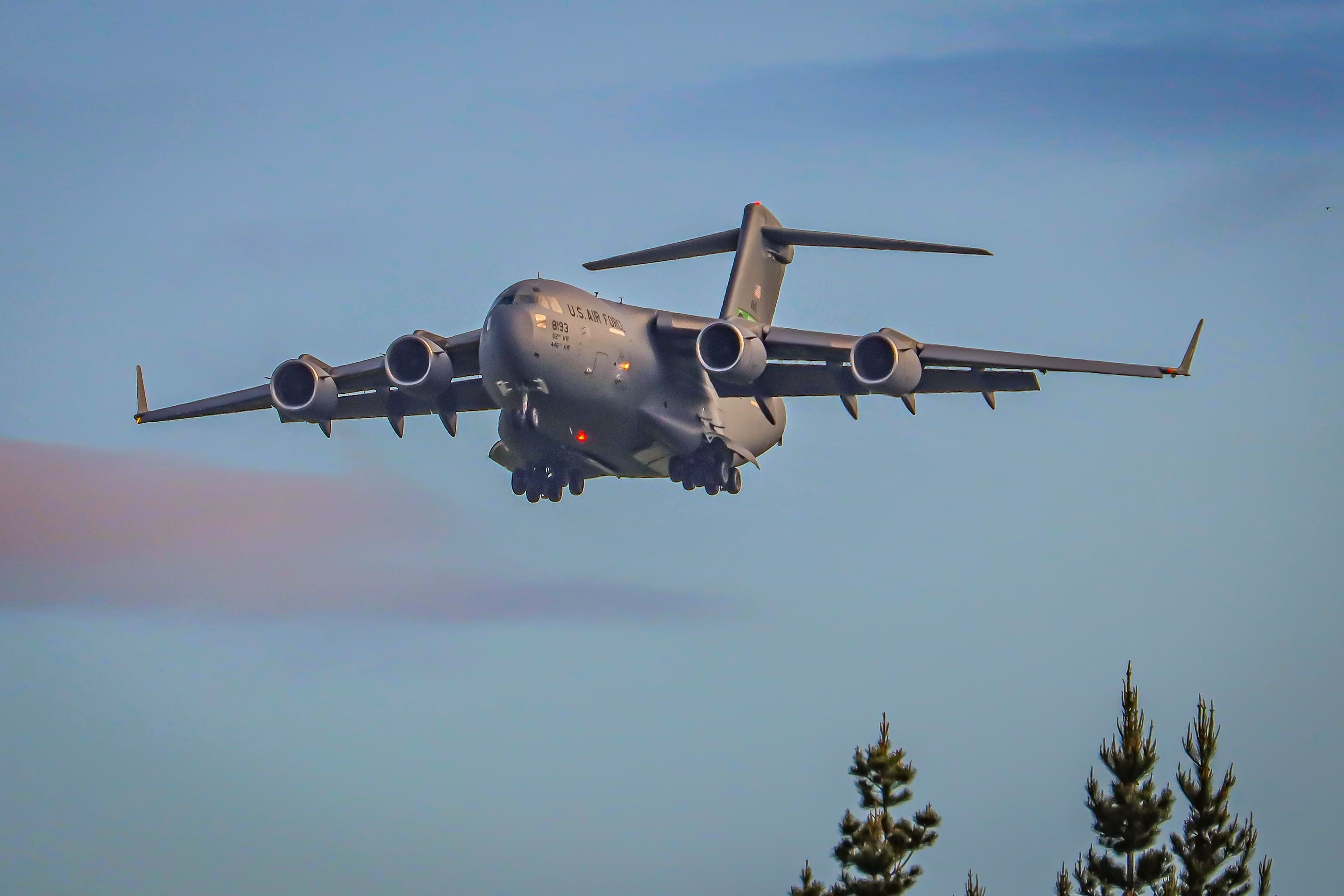
A U.S. Air Force C-17 Globemaster III assigned to the 62d Airlift Wing prepares to land at Christchurch International Airport (NZCH) in New Zealand. [Credit: Air Force Reserve Command/Graham Fisher]
A U.S. Air Force Boeing C-17 Globemaster III on a mission from New Zealand to Antarctica turned back this week after being warned of a Russian “planned missile launch,” New Zealand’s Civil Aviation Authority (CAA) told FLYING.
A spokesperson said Thursday that the agency was alerted to the “potential hazard” by the Russian Air Traffic Management Centre, after which it issued a NOTAM and created a danger area.
“This does not prevent aircraft from flying through the area, operators make their decisions based on the information available,” the spokesperson said. “Our role is to make sure operators know about aviation hazards.”
CNN reported that the CAA in an earlier statement said the threat was related to space activity.
In a statement to FLYING, U.S. Pacific Air Forces Command (PACAF) similarly described the hazard as “space-related” and said the C-17 flew back to Christchurch International Airport (NZCH) “on the advice” of the CAA.
The FAA earlier this year warned pilots to “exercise extreme caution” when flying below the trajectory of commercial spacecraft, which it said have the potential for “catastrophic failures resulting in debris fields.” Twice in 2025, SpaceX’s Starship rocket exploded during test missions and disrupted about 240 flights, per the agency. After a mishap, the FAA creates debris response areas that allow it to clear the airspace.
The CAA’s NOTAM covered New Zealand’s Oceanic Flight Information Region (FIR), which spans international waters. Options for diversion are limited in the vast, desolate swath of ocean between New Zealand and Antarctica. The U.S. Antarctic Program’s (USAP) Interagency Air Operations Manual identifies Christchurch as the primary recovery base for the C-17, with Auckland Airport (NZAA) as a backup.
Christchurch is about 2,100 miles away from Antarctica’s McMurdo Station by air, a trip that takes the C-17 roughly five hours. The U.S. base is a key site for American research efforts in the region.
What Was the C-17 Doing?
PACAF said the Globemaster was flying a routine resupply mission scheduled for this time of year.
Since the 1950s, the U.S. military has delivered hundreds of personnel and thousands of pounds of cargo to Antarctica each year in support of Operation Deep Freeze. The mission provides logistical support to the National Science Foundation-led USAP. Operation Deep Freeze is led by Joint Task Force-Support Forces Antarctica (JTF-SFA) and comprises active duty and reserve Air Force units as well as Coast Guard, Navy, and Army personnel.
According to a 2011 PACAF news release, Operation Deep Freeze begins with the annual winter flight period, or WINFLY, which typically launches in August or September and relies heavily on the C-17 for transport.
Operation Deep Freeze airlift operations include active duty and Reserve C-17s from Joint Base Lewis-McChord in Washington state; LC-130 Skibirds, the ski-equipped variant of the C-130 Hercules, from the New York Air National Guard; sealift support from the Coast Guard and Military Sealift Command; and cargo handling from the Navy.
The operations are largely carried out by the 62nd Airlift Wing and its Reserve 446th Airlift Wing, stationed at Lewis-McChord (KTCM), which together form the 304th Expeditionary Airlift Squadron. The 304th is a provisional Air Force unit based at Hickam Air Force Base (PHIK) in Hawaii. Christchurch is the staging point for the missions.
According to Fairchild Air Force Base (KSKA), airmen transported 1,076 passengers, 900 tons of cargo, and 120,000 gallons of fuel to Antarctica during the 2024-25 Operation Deep Freeze mission.
A 2012 Air Force news release notes that pilots flying to Antarctica contend with extremely low temperatures, long periods of darkness, and a runway that is literally carved out of the ice at McMurdo Station’s Phoenix Airfield (NZFX).
Jack is a staff writer covering advanced air mobility, including everything from drones to unmanned aircraft systems to space travel—and a whole lot more. He spent close to two years reporting on drone delivery for FreightWaves, covering the biggest news and developments in the space and connecting with industry executives and experts. Jack is also a basketball aficionado, a frequent traveler and a lover of all things logistics.
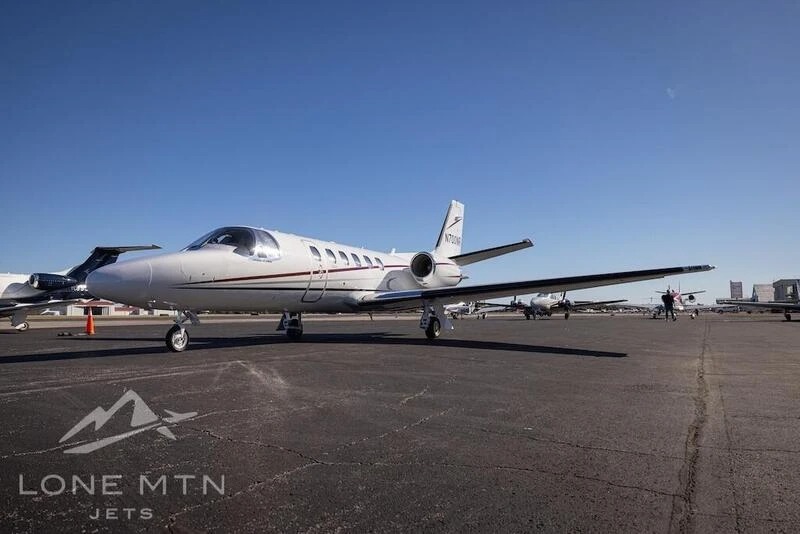
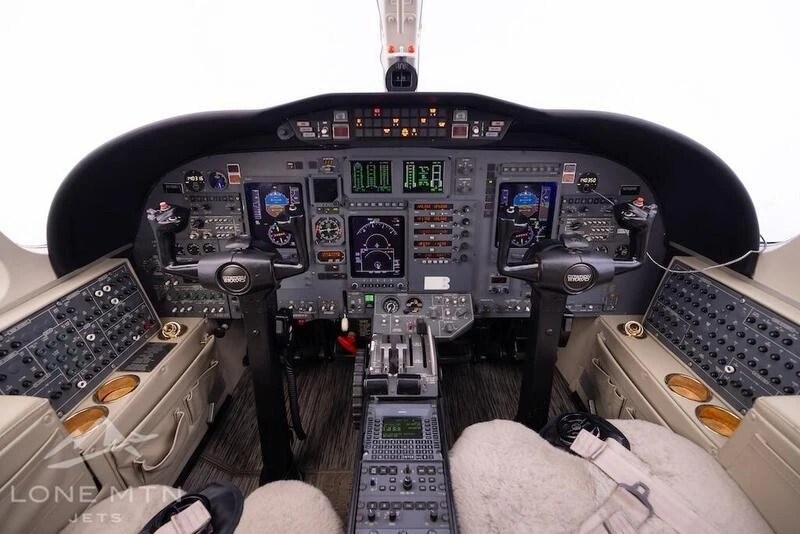
The Cessna Citation Bravo has long been a favorite for jet operators seeking a balance of proven performance and reasonable operating costs. It builds on the immense success of earlier straight-wing Citation models, standing out as an aircraft that owners can be genuinely proud to fly.
Located in Tulsa, Oklahoma, this beautiful 2005 model enters the market with 5,850 total airframe hours and 4,365 landings. It features a fresh 2025 paint job utilizing a classic white base complemented by maroon-and-gray striping. Meticulously maintained and professionally flown throughout its life, the Bravo maintains complete logbooks and tracks its maintenance events on CESSCOM.
Supplying the thrust for the jet are twin Pratt & Whitney PW530A turbofan engines equipped with thrust reversers. Engine one shows 1,766 hours since its last major overhaul, while engine two has logged 1,893 hours since overhaul. The powerplant data is clearly displayed on LCD engine instruments and utilizes a Safe Flight N1 computer to assist the flight crew during various phases of flight.
Refurbished completely in 2025, the luxurious cabin accommodates up to nine passengers in stylish comfort. The thoughtfully designed layout features a center four-place club seating arrangement, two-place, side-facing seats, two aft forward-facing seats, and an aft belted lavatory.
Equipping the flight deck is a highly capable Honeywell Primus flight system and autopilot, alongside a Universal UNS-1Lw flight management system with WAAS/LPV capabilities. Situational awareness and communication are heavily bolstered by a Honeywell Mark VII TAWS-A system, aTPU-67A traffic system, Honeywell RT-300 radar altimeter, and dual Honeywell KY-196B comms, ensuring the RVSM-compliant aircraft is fully ready for modern airspace.
Listed at $2,750,000, this 2005 Cessna 550 Citation Bravo stands out as an excellent opportunity for buyers looking to step into the world of turbine-powered travel.
If you’re exploring ownership options, FLYING Finance can help get you airborne. Use our airplane loan calculator to estimate your monthly payments, or connect with an aviation finance expert at flyingfinance.com.
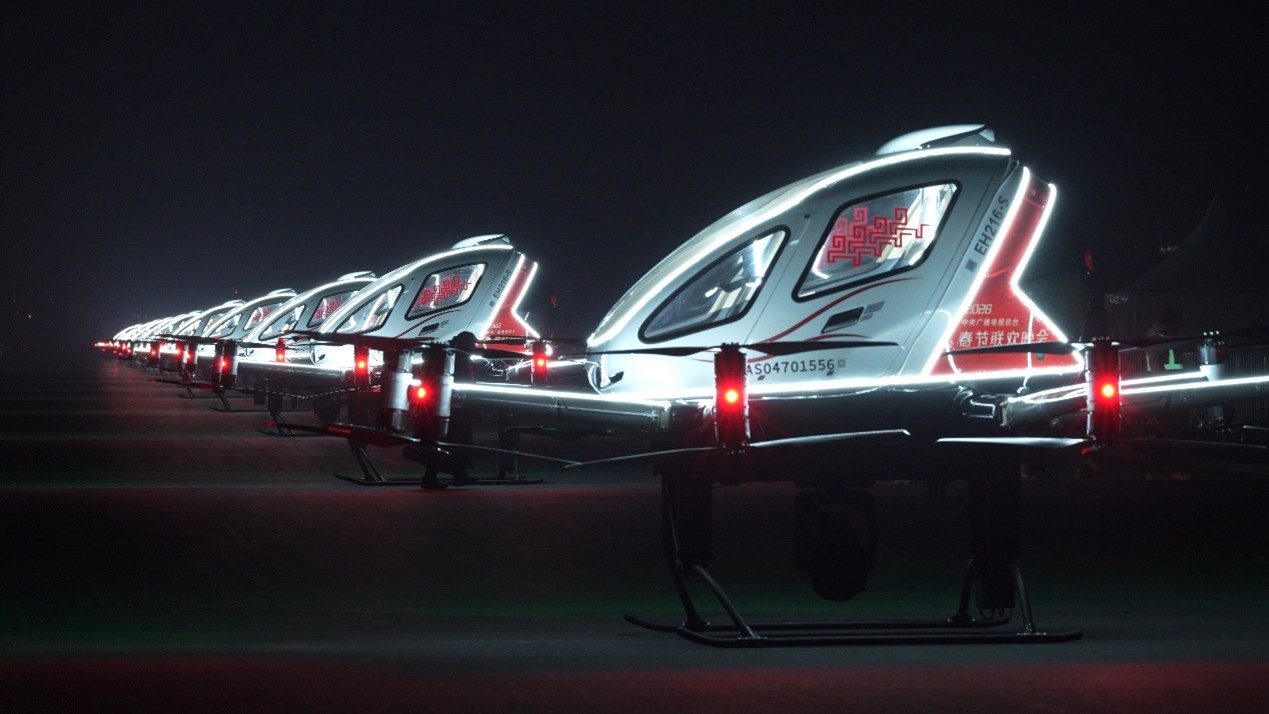
EHang’s EH216-S is the first passenger-carrying, pilotless eVTOL aircraft to obtain standard airworthiness certification from a regulator. [Credit: EHang]
A Chinese manufacturer of autonomous eVTOL air taxis wants to help other nations evolve the technology from evaluation to introduction in as little as four months.
EHang—whose EH216-S earned the world’s first type certificate, production certificate, and standard airworthiness certificate for pilotless, passenger-carrying electric vertical takeoff and landing aircraft—on Wednesday launched its “Global Fast Track Program,” naming Sri Lanka as its inaugural member.
The company described the program as a “validation‑driven pathway” that will leverage the certifications it has obtained from the Civil Aviation Authority of China (CAAC), as well as “years” of engagement with other civil aviation authorities. The aim is to “compress timelines from years to months,” EHang said in its announcement.
Daminda Rambukwella, director general and CEO of the Civil Aviation Authority of Sri Lanka (CAASL), clarified that the four-month schedule is a “proposed implementation timeline” that will hinge on the partners satisfying regulatory, technical, operational, and safety requirements.
U.S. officials have similar ambitions to spread American eVTOL technology worldwide.
At the 2025 Paris Air Show, U.S. Transportation Secretary Sean Duffy and then-FAA acting Administrator Chris Rocheleau unveiled a multinational agreement between the FAA and aviation regulators in the U.K., Canada, Australia, and New Zealand. The goal is to harmonize the regulators’ standards for advanced air mobility (AAM) aircraft—including eVTOLs—such that a manufacturer with certification in one country could swiftly validate that approval elsewhere.
In July, the FAA’s eVTOL Integration Pilot Program (eIPP) officially began in Maryland and Virginia. The three-year program, which has since spread to other states, is allowing AAM manufacturers to take precertified aircraft out of the sandbox and into real-world airport environments. Data collected from these activities is expected to shape future regulations.
The U.S. even has a National Strategy for AAM that provides a blueprint for commercializing the technology. Duffy in remarks framed its introduction as a competition with China.
“America is going to beat China and lead the way in aviation!” he wrote on X in December.
Duffy has been the most outspoken U.S. official regarding China’s progress on AAM.
“If it doesn’t happen in America, it doesn’t mean it won’t happen. It’ll happen in places like China,” he said last year on the Fox Across America radio show. “And then amazing technology will come from China, and we’ll be using their technology in our vehicles…or their Ubers in the air to move our people.”
The FAA has not yet certified any eVTOL aircraft, which it categorizes as powered lift. Several American manufacturers are routinely test flying passenger-carrying eVTOLs, but none have advanced to type inspection authorization (TIA).
Wisk Aero, which Boeing sold to Archer Aviation in August, is the only manufacturer planning to introduce an autonomous eVTOL before a piloted model. Others plan to incorporate autonomy in the future.
EHang’s Fast Track
EHang’s pilotless, two-seat EH216-S has been conducting “routine internal trial commercial operations” since last year, the company said in its first-quarter 2026 earnings report.
Two of its subsidiaries have CAAC air operator certification and have completed 3,000 missions with zero accidents or safety violations, EHang said. The company said it has built an operating framework that covers ticket pricing, customer service, standard operating procedures, and more.
The manufacturer has not yet advanced to what it described as “public ticketed flight services.” But it said its customers and partners have stood up more than 40 eVTOL operating sites across China. The CAAC earlier this year published pilot training requirements for large, civil, autonomous aircraft, and the company plans to begin standardized training once it is approved.
EHang’s subsidiaries obtained air operator certification in March 2025, nearly 18 months ago. However, the firm believes it can expedite the commercialization process elsewhere.
“By enabling civil aviation authorities to validate an already-certified aircraft rather than start from scratch, the Fast Track Program is expected to turn regulatory exploration into actionable progress effectively,” said Huazhi Hu, founder, chairman, and CEO of EHang.
The program comprises four phases.
First, EHang and the regulator would determine a validation pathway for the aircraft and establish a workflow. Next would be the designation of test sites and deployment of infrastructure, followed by sandbox flights conducted under international aviation safety standards. Finally, the regulator would grant operational approval.
Anura Karunathilaka, who leads Sri Lanka’s Ministry of Ports and Civil Aviation and Ministry of Energy, said Fast Track “offers a structured approach that aligns well with our development priorities.”
EHang and CAASL will jointly plan sandbox flights and operational scenarios in Sri Lanka’s capital Colombo, “where eVTOL operational services will be established,” the company said. Potential applications include sightseeing trips, shuttle services, and uncrewed maritime cargo logistics.
Hu said the manufacturer is in “active dialogue with civil aviation authorities in several other markets.”
EHang is further developing L and F variants of the EH216 for cargo logistics and emergency response, respectively. The company’s smaller GD 4.0 supports aerial light shows, while the larger VT35, introduced last year, is designed for longer range passenger operations.
Jack is a staff writer covering advanced air mobility, including everything from drones to unmanned aircraft systems to space travel—and a whole lot more. He spent close to two years reporting on drone delivery for FreightWaves, covering the biggest news and developments in the space and connecting with industry executives and experts. Jack is also a basketball aficionado, a frequent traveler and a lover of all things logistics.
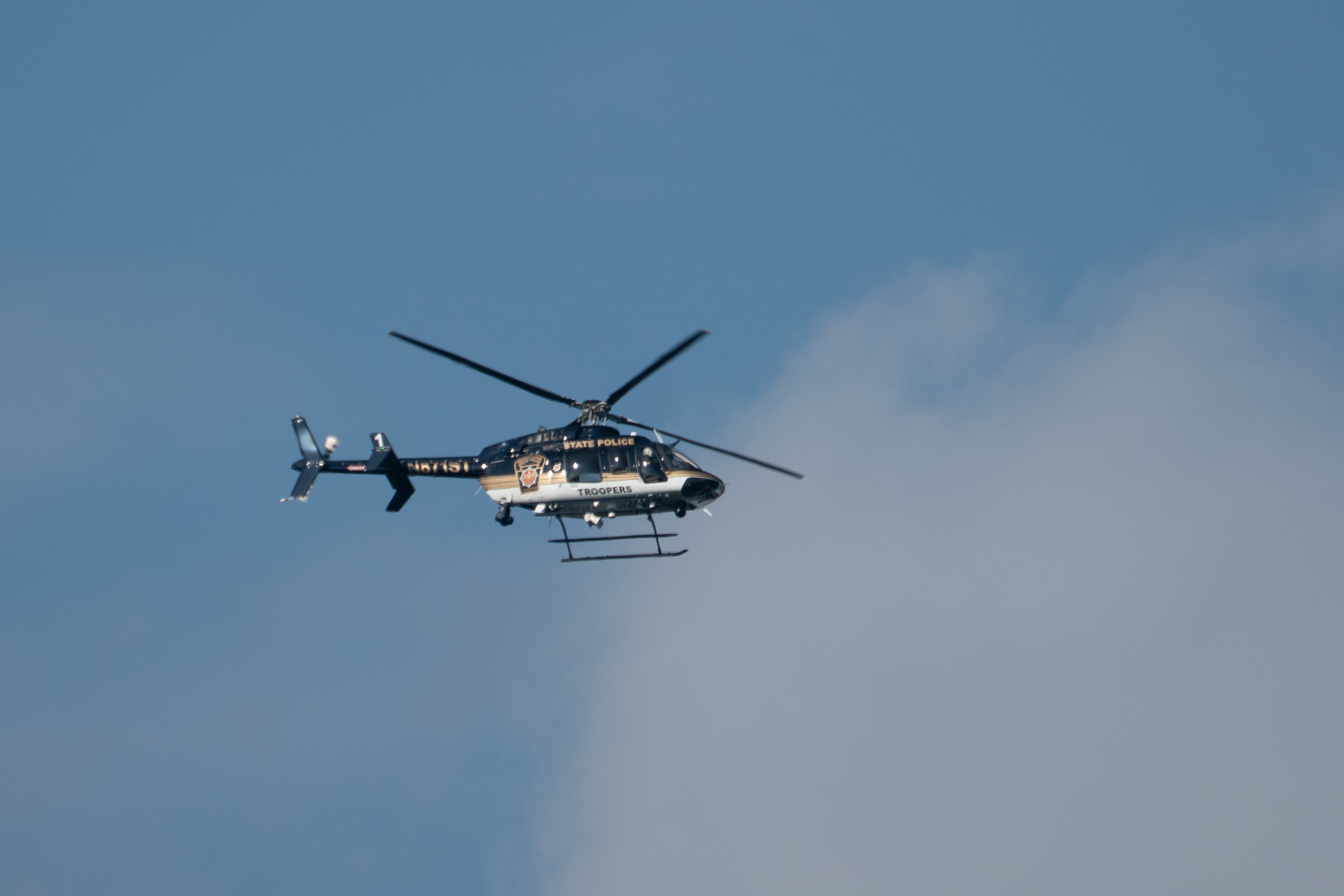
A Pennsylvania State Police Bell 407 was struck by Cessna 150 flying in the pattern at a nontowered airport west of Harrisburg. [Credit: Shutterstock]
One person was killed and two others injured in a midair collision between a Pennsylvania State Police helicopter and a Cessna 150. The accident happened just before 7 p.m. EDT Wednesday over Carlisle Airport (N94) west of Harrisburg.
Images of the accident released on social media show the helicopter laying on its side in the grass next to the runway. There was a massive police and fire presence with lots of vehicles and flashing lights. According to authorities the Bell 407 helicopter was approaching from the east.
FlightAware shows the Cessna had come from Harrisburg and was doing laps in the pattern at N94 when its track abruptly ended. Carlisle is a nontowered airport located 20 miles west of Harrisburg with a runway aligned 10/28.
According to officials investigating the event, the Bell 407 was hovering in the grass area next to the runway. The Cessna was approaching the runway behind the helicopter when it suddenly veered to the right but was unable to avoid a collision. The Cessna hit the tail rotor of the helicopter and then the main rotor. The wreckage of the airplane came down in pieces.
The occupants of the helicopter, although injured, were able to escape out a window.
The FAA and National Transportation Safety Board (NTSB) are investigating the accident.
Meg Godlewski has been an aviation journalist for more than 24 years and a CFI for more than 20 years. If she is not flying or teaching aviation, she is writing about it. Meg is a founding member of the Pilot Proficiency Center at EAA AirVenture and excels at the application of simulation technology to flatten the learning curve. Follow Meg on Twitter @2Lewski.
Many corporate pilots work for charter companies that operate private aircraft. [Credit: Adobe Stock]
Beyond the hustle and bustle of a busy airport terminal, there is a whole other world of passenger aviation in our skies. Corporate aircraft and their pilots serve travelers all around the globe each and every day.
Although it is easy to assume that being a pilot means working for an airline, corporate aviation also offers exciting careers for aviators. Corporate pilots have unique opportunities when it comes to their lifestyle, workplace, and travel destinations. Here is what you need to know about becoming a corporate pilot.
What Does a Corporate Pilot Do?
There are a few different types of employers that hire corporate pilots. Some nonaviation companies—such as Walmart and the Las Vegas Sands Corp.—have fleets of private jets. These companies hire pilots to fly their executives and employees for business purposes.
It is also possible to work for an individual or family that owns a private jet. Certain businesspeople, celebrities, and other individuals with significant wealth have their own aircraft and hire personal pilots to operate them.
Many corporate pilots work for charter companies that operate private aircraft. Individuals and companies who do not have their own aircraft but want to fly privately can hire these companies on an as-needed basis. Pilots working for these companies often have the opportunity to serve a variety of clients and fly to a diverse range of destinations.
Corporate pilots fly many different types of aircraft, with the exact type depending on their employer. While some corporate pilots fly single-engine propeller aircraft, others fly heavy passenger aircraft in a business jet configuration.
This license will give you the basic skills to fly an airplane or helicopter and allow you to fly small aircraft recreationally. Minimum requirements for a private pilot certificate include being 17 years old and obtaining an FAA medical certificate.
The next step is to earn a commercial pilot certificate. This is what gives you the ability to be paid as a pilot and allows you to start your aviation career.
Although you can land some corporate pilot jobs with only a commercial pilot certificate, employers will often require significant flight time before you are eligible—typically 1,500 hours. So you will need to build your hours before entering the corporate pilot world.
Luckily, there are many jobs available as a low-hour commercial pilot, including air tours, surveying, and instructing.
Some corporate pilot jobs will require you to have the top-tier pilot license, airline pilot transport certificate, or ATP certificate. Pilots must have a minimum of 1,500 flight hours to obtain this certification.
Each employer has its own requirements, but corporate first officer jobs will typically need 1,500 hours of flight time, a FAA first-class or second-class medical certificate, a valid passport and the legal authorization to work in the United States, and a Federal Communications Commission radio operator license. Captain jobs will require more flying experience.
FAQ
How long does it take to become a corporate pilot?
The amount of time that it takes for you to complete your flight training depends on how often you fly. Once you have your commercial pilot certificate, you can hit the 1,500-hour threshold in as little as two years if you have a full-time flying job.
How much do corporate pilots make?
The salary of a corporate pilot can vary greatly depending on their work hours, aircraft type, geographic location, and employer. Given the current demand for pilots, salaries are fairly competitive with the airlines. New first officers can expect to make around $70,000 to $100,000 per year, while senior captains can have annual salaries of over $300,000.
How much does it cost to become a regional airline pilot?
If you are starting from no flying experience, getting a commercial pilot certificate in the United States will cost around $100,000. Once you have an entry-level pilot job, your costs will be offset by your pay, and your overall income and any debt will depend on your circumstances.
Andrew is a lifelong lover of aviation and travel. He has flown all over the world and is fascinated by the workings of the air travel industry. As a private pilot and glider pilot who has worked with airlines, airports and other industry stakeholders, he is always excited to share his passion for aviation with others. In addition to being a writer, he also hosts Flying Smarter, an educational travel podcast that explores the complex world of air travel to help listeners become better-informed and savvier travelers.
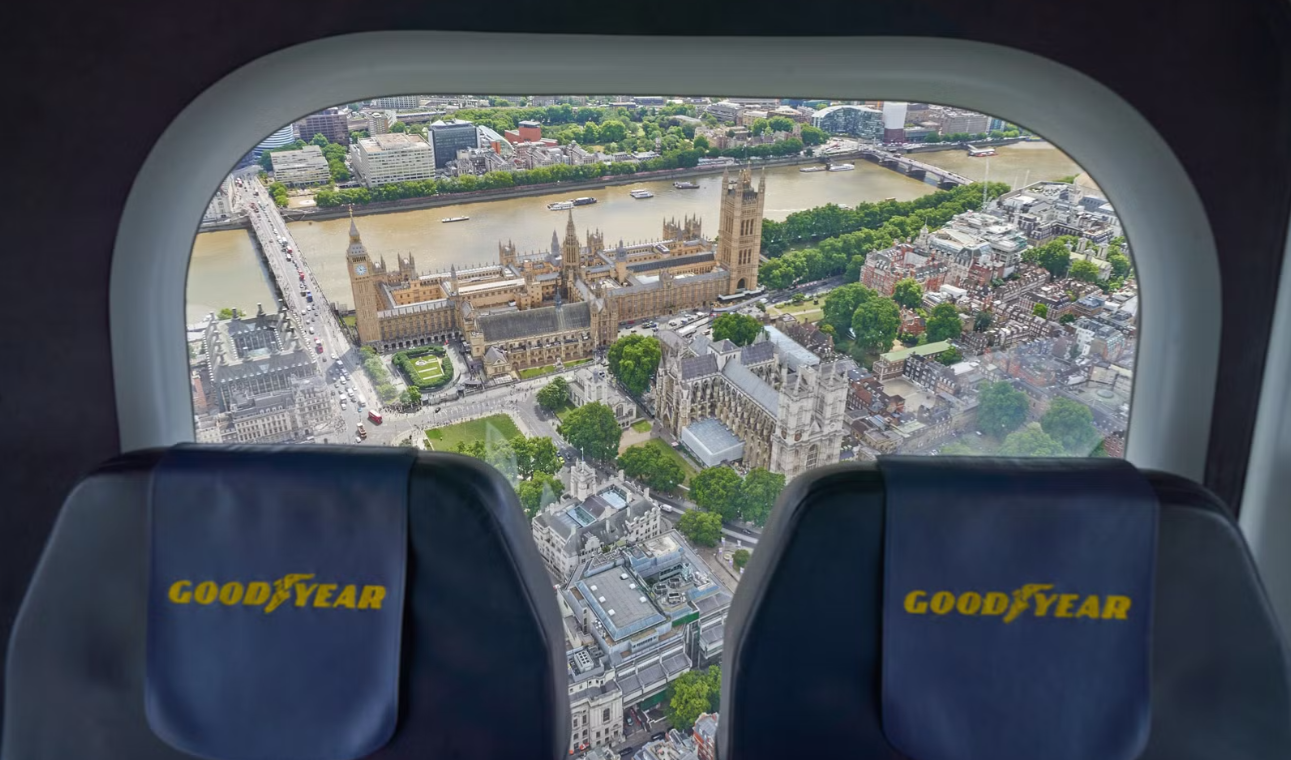
View of London landmarks Big Ben, Buckingham Palace, and Westminster Abbey from inside the Goodyear Zeppelin NT [Credit: Uwe Stohrer]
Airships have always garnered attention, from the first experimental flights in Germany in 1895 when the zeppelin design was patented to the modern Goodyear blimps flown over sporting events.
Today the Goodyear Zeppelin NT (New Technology) provides scenic flights over Europe, resulting in a travel experience like no other. Jürgen Schelling was a passenger during a flight over central London in July and said the view is incredible from the airship and the ground.
“Because the airship moves slowly at an altitude of just 1,000 feet above the ground, thousands of passersby have plenty of time to marvel at this unique sight,” said Schelling, who is an airplane pilot and aviation editor at German newspaper Frankfurter Allgemeine Zeitung. “It makes a leisurely journey through the metropolis at 35 knots, traveling along the Thames past Tower Bridge, Big Ben, the Houses of Parliament, and Buckingham Palace, coinciding with the Changing of the Guard.”
The Goodyear airship is usually based at Lake Constance southeast of Germany’s Black Forest, which borders Switzerland.
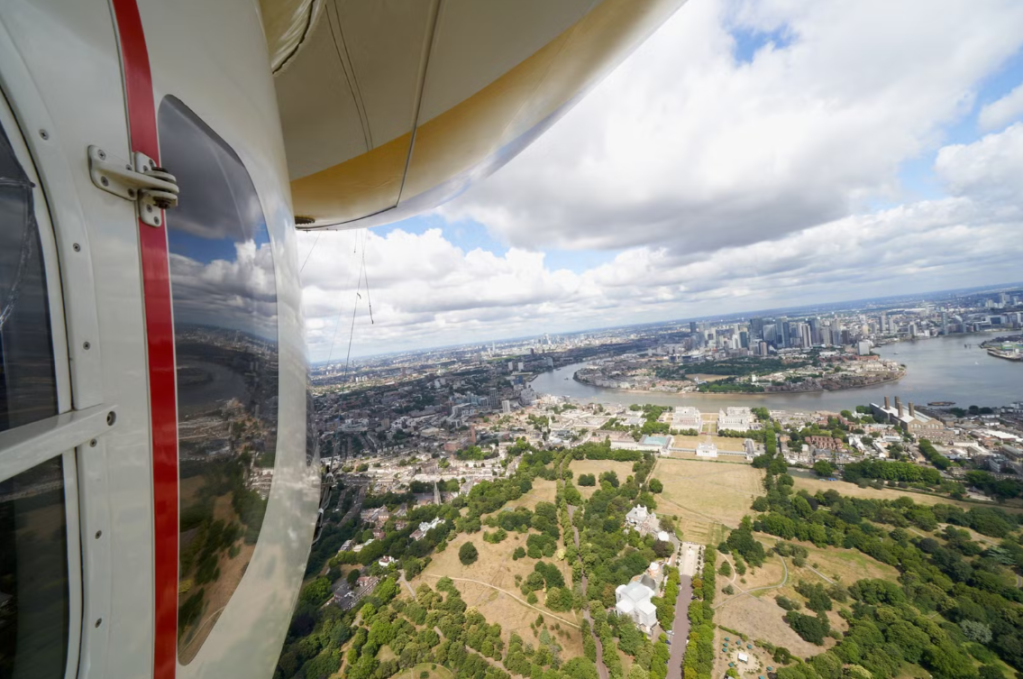
The airship arrived on July 1 via Calais, France, overflying the English Channel and the White Cliffs of Dover before heading to London.
The zeppelin operated out of Damyns Hall Aerodrome (EGML), a facility north of London where vintage aircraft launch off grass runways. For two weeks the airship made daily flights on behalf of the Goodyear Tire & Rubber Co.
Schelling describes the daily routine.
“Each morning, after warming up the three Lycoming IO-360 engines, the pilot signals the ground crew to prepare for liftoff,” he said. “Then [the] non-flammable helium-filled airship, owned by Deutsche Zeppelin-Reederei in Friedrichshafen, is then uncoupled from the overnight mooring mast mounted on a large truck. The truck driver quickly moves the vehicle away from the Zeppelin’s designated flight path. The flight crew advances the throttles and the airship climbs steeply. London comes into view just seconds after liftoff, and cruising altitude is reached shortly thereafter. From there, the journey continues at the speed of a small motorcycle.”
The flight crew is made up of captain Marko Hollerer, captain Kate Board, and on several occasions, Zeppelin chief pilot Fritz Günther. The three take turns alternating between the roles of pilot flying and pilot monitoring.
Typically, the Goodyear Zeppelin operates out of Friedrichshafen or Essen-Mülheim in Germany from aerodromes with significantly less traffic. London can present a challenge, so crew coordination is critical.
As a native of Great Britain, Board handles radio communications with English ATC controllers with ease. London’s airspace is among the busiest in Europe. The London City Airport (EGLC) is on the Thames River in the city center, so getting permission from ATC to enter the airspace there requires a mix of luck and timing.
View of the approach to London from inside the Goodyear Zeppelin NT [Credit: Uwe Stohrer]
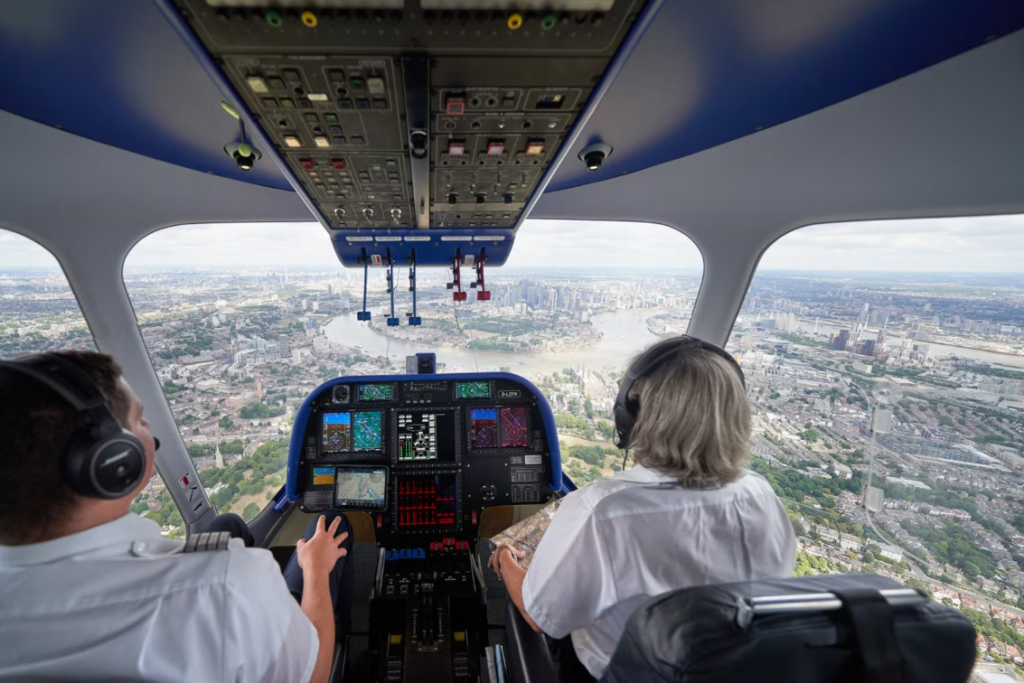
Once clearance is granted, the crew must remain highly vigilant in this geographically unfamiliar and busy operational environment. Navigation is done by specific landmarks in London. The zeppelin cannot fly any lower than 1,000 feet agl. The pilots split their time between looking outside through panoramic windows and glancing at the Garmin 500H avionics, which display the ship’s performance numbers and aid in navigation.
Zeppelins are very weather sensitive. Flights sometimes have to be canceled on short notice because the winds are too strong. German Zeppelin NTs fly under EASA regulations—VFR by day or night.
When the weather is good, the sightseeing flights take place daily, concluding with landings at Damyns Hall Aerodrome, where the ship takes on 100LL avgas.
Technical Specifications
The zeppelin measures 246 feet long—about the same as a Boeing 747 fuselage—and 63 feet wide, with a seating capacity of up to 15 passengers.
Despite the size, the airship is remarkably agile with the ability to change direction much faster than a blimp, a non-rigid airship. The Zeppelin NT can even perform a 360-degree turn on the spot, much like a helicopter, can fly backward, and hover.
Airships have always had endurance beyond airplanes and helicopters, making them the perfect platform for environmental research flights over the ocean.
The airship has a maximum airspeed of 60 knots and a service ceiling of 9,000 feet. Despite its slow speed the pilots must always be prepared for a sudden need for a change of plans.
“With fixed-wing aircraft, you only need plan A or B,” said Günther, the chief pilot. “With a zeppelin, you always have to have plans A, B, C, and D ready.”
The Zeppelin NT is certified for single-pilot operations, however, two pilots are used during multihour ferry flights or international journeys.
Günther, a former military pilot, has logged thousands of flight hours. Board also boasts thousands of hours and is one of only two women certified as zeppelin pilots in the world. Hollerer is the youngest member of the team but also has thousands of hours in the cockpit.
Pilot Training and Requirements
Becoming a zeppelin pilot in Europe requires a combination of flying skills, luck, and timing. There are just six Zeppelin NTs in the world—three flown by Goodyear in the U.S.. The airships in America are permitted to operate under IFR to better facilitate long-distance ferry flights across North America.
Professional pilots with hundreds or thousands of hours in airplanes or helicopters must significantly adjust their mindset to fly a zeppelin. It has significantly less thrust than most airplanes and helicopters and a large surface area exposed to the wind. Things happen much slower in a zeppelin than they do in an airplane or helicopter.
The Deutsche Zeppelin-Reederei in Friedrichshafen, a subsidiary of ZLT Zeppelin Luftschifftechnik, trains its own airship pilots. Applicants must come to training with a commercial pilot certificate, ideally for helicopters rather than airplanes. Helicopter pilots are already proficient in hovering and accustomed to flying backward, though fixed-wing pilots can also make the switch to lighter than air (LTA) if they demonstrate the right aptitude.
Crew of the Goodyear Zeppelin NT at the controls in the cockpit [Credit: Uwe Stohrer]
Applicants must have a minimum of 1,000 flight hours as PIC to be considered for employment.
The training course consists of 93 hours of theory and at least 50 hours of flight training. After training is completed the candidate takes the airship pilot examination for EASA’s Commercial Pilot License Airship (CPL-A). Even then, a newly qualified zeppelin pilot must fly for 150 hours under supervision of an experienced captain before being allowed to fly solo with passengers.
On days when British ATC does not grant clearance for flights over central London, the pilots explore the surrounding region instead. A “midfield crossing” of London’s Gatwick Airport (EGKK), one of Europe’s busiest, offers a welcome change of pace for the pilots.
Other favorite flyovers are the Brands Hatch motor racing circuit or the famous Canterbury Cathedral.
Passenger changeovers at the end of each flight are done efficiently, safely, and quickly, with the engines still running, thanks to the experienced ground crew. Most people get off the ship grinning and with the story of a lifetime to share.
Meg Godlewski has been an aviation journalist for more than 24 years and a CFI for more than 20 years. If she is not flying or teaching aviation, she is writing about it. Meg is a founding member of the Pilot Proficiency Center at EAA AirVenture and excels at the application of simulation technology to flatten the learning curve. Follow Meg on Twitter @2Lewski.
Sign-up for newsletters & special offers!
Get the latest stories & special offers delivered directly to your inbox.