














NTSB Cites Multiple Factors Behind Washington Midair Collision

Agency’s final report expected within two weeks.

U.S. Air Force Black Hawk helicopter Reagan Airport KDCA
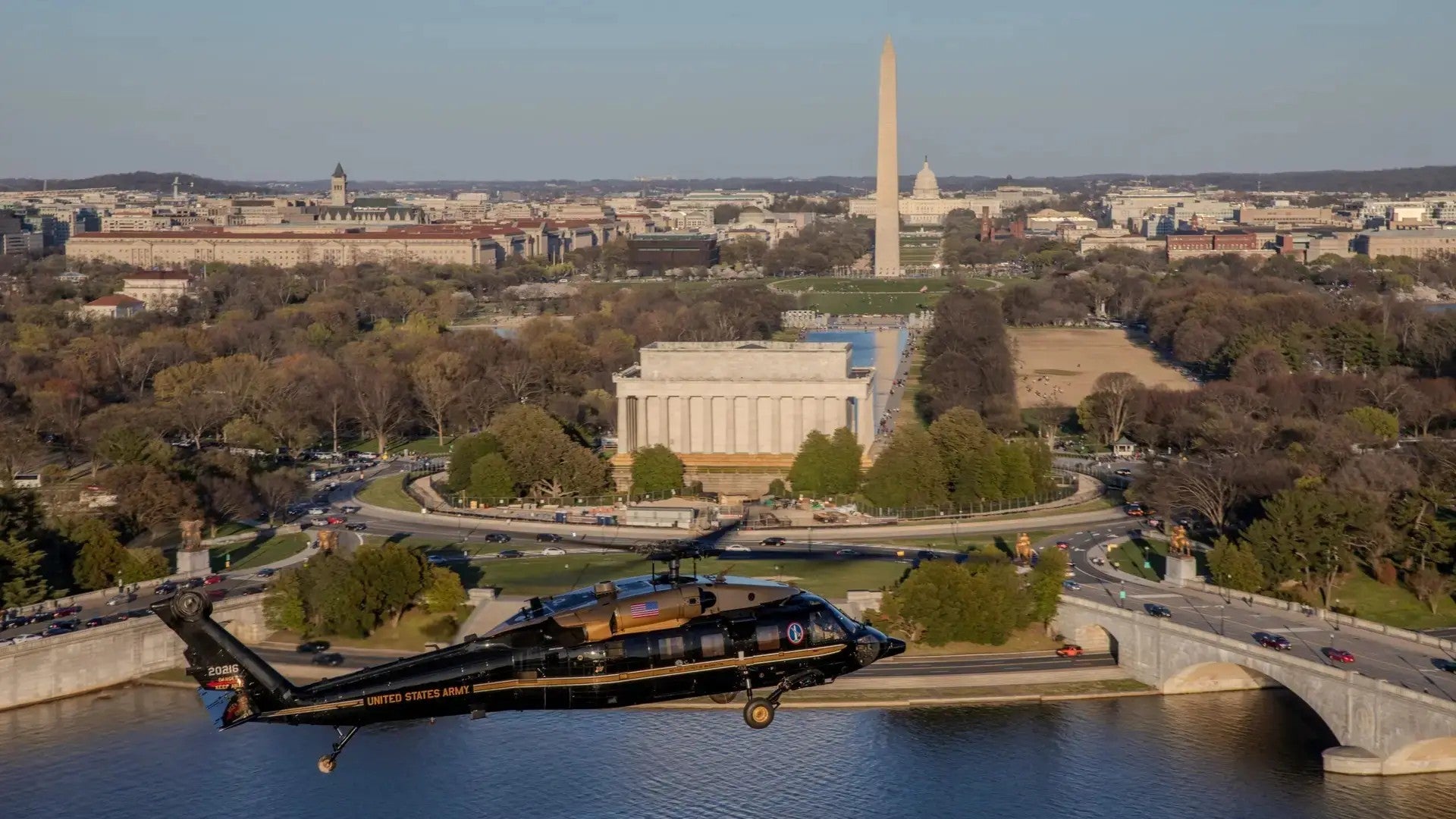
A Black Hawk helicopter over Washington. [Credit: Nicholas Priest/U.S. Air Force]
Gemini Sparkle

Key Takeaways:

  • Multiple factors contributed to the deadly midair collision near Washington National Airport (KDCA), including a helicopter route in close proximity to the runway, mechanical errors in Black Hawk altimeters causing altitude discrepancies, and high air traffic controller (ATC) workload.
  • The NTSB investigation revealed that the single ATC managing both helicopter and fixed-wing traffic experienced reduced situational awareness and did not issue timely safety alerts or traffic advisories.
  • A lack of ADS-B In technology on the commercial jet was noted as a missed opportunity for the flight crew to receive earlier warnings, prompting an NTSB recommendation for its adoption.
  • Following the accident, the FAA implemented immediate safety measures, including restricting helicopter traffic, removing the problematic Route 4, reducing the airport's arrival rate, and increasing ATC staffing.
See a mistake? Contact us.

The placement of a helicopter route in close proximity to the runway approach path at a busy commercial airport, a lack of warning to U.S. Army aviators about errors in the barometric altimeters in Black Hawk helicopters, and air traffic controller (ATC) workloads were all mentioned this week as probable causes behind the deadly midair collision near Ronald Reagan Washington National Airport (KDCA) in 2025.

On Tuesday, the National Transportation Safety Board (NTSB) heard hours of testimony regarding the collision between an Army helicopter and American Airlines Flight 5342.

January 29 marks the one-year anniversary of the accident, which killed 67 people.

The Details

Just before 8:46 p.m. EST, Flight 5342, a Bombardier CRJ-700 operated by PSA Airlines on behalf of American Airlines, was on final approach to Washington National.

There were 60 passengers and four crewmembers on board the aircraft, which had departed from Wichita, Kansas, earlier in the evening. The pilots were anticipating landing on Runway 1, then instructed to circle to land on Runway 33.

According to hearing testimony, as the jet began to maneuver, it was struck from below by the Army helicopter. The helicopter was on a training flight along Route 4, which ran past the airport. The three crewmembers on the helicopter were also killed, and both aircraft plunged into the Potomac River.

The hearing lasted more than eight hours and was the result of a yearlong investigation that produced a 17,820-page docket, with hundreds of pages of interviews, technical information about the jet and helicopter, photographs of the wreckage, and digital images of the path of both aircraft prior to the collision.

The airport is in a metropolitan area with significant light pollution. Depending on the point of view, it is difficult to discern if a light in the distance is an aircraft, a star, an automobile on the ground, or a building. The latter is significant, as one of the first things student pilots learn is that when there appears to be no movement between you and another aircraft, you are on a collision course. But if the pilot mistakes the light as being attached to a building, they may not recognize the danger.

Several security cameras that face the Potomac River caught the midair collision.

crash site Washington, D.C.
The crash site in the Potomac River [Credit: Getty Images/Win McNamee]

At the time of the accident there was a helicopter route in close proximity to the airport, and there was one ATC working both airplane and helicopter traffic. According to the NTSB investigation, this increased the ATC’s workload and reduced situational awareness.

It was noted that the ATC might have been overwhelmed and fatigued trying to keep up with the traffic, and would have benefitted from additional staffing in the control tower.

FAA Takes Action

Immediately following the accident, the FAA restricted helicopter traffic in the vicinity of the airport as it worked to establish procedures to eliminate the mixing of helicopters and fixed-wing traffic. It ultimately removed Route 4.

The night of the accident, recordings of ATC audio captured a Traffic Alert and Collision Avoidance System (TCAS) warning indication. The local ATC is heard asking the pilots if they have the CRJ—Flight 5342—in sight. The pilots reply they do.

According to the NTSB, a review of ATC recordings and transcripts indicates the controller did not warn Flight 5342 about the proximity of the helicopter. The first conflict alert was heard when the aircraft were approximately 1.6 miles apart and less than 30 seconds before impact.

It was noted that all three crewmembers of the helicopter were wearing night vision goggles, which provide better visual acuity but not detail.

There were several radio missions that were “stepped on” during the ATC’s attempts to communicate with both aircraft. It was noted that the helicopters and fixed-wing aircraft operated on separate frequencies.

Video Recreation

The hearing began with three video simulations of the accident as seen from the cockpits of both aircraft, and from the control tower at KDCA. The NTSB cautioned the audience before the videos played out of consideration to the families of the victims in the room or watching online.

Each video was a few minutes in length, and was shot from specific perspectives that accounted for the physical structure of the cockpit or the ATC cab.

The helicopter version is shot from the viewpoint of the right seat, which is typically the position of the pilot in command (PIC). The time code on the video shows 8:46:15 when a magenta circle labeled Flight 5342 appears on the upper right side of the screen. The video had the cockpit conversation transcript on the left and the control tower conversation transcripts on the right.

A few seconds later a TCAS warning sounds in the control cab, and the ATC asks the pilots of the helicopter if they see the CRJ. It was noted that there were several aircraft on approach to KDCA at the time, some lined up for Runway 1, while Flight 5342 had been cleared to Runway 33. The helicopter video cuts to black at the moment of impact.

KDCA airport air traffic control
Ronald Reagan Washington National Airport (KDCA) [Credit: Mark Stebnicki/Pexels]

In the control tower video, the TCAS is heard in the background, and at the moment of impact several exclamations of surprise are heard from different voices inside the control tower.

The video of Flight 5342 includes the transcript of the cockpit voice recorder (CVR), which ends with exclamations of surprise as the helicopter comes from beneath and on the right. The animation shows the crew’s viewpoint as the helicopter collides with the jet.

One of the questions asked during the hearing was why the ATC did not issue a safety alert and traffic advisory to the aircraft using the clock reference for position awareness.

“Had a safety alert been issued, it would have increased the situation awareness of both crews and alerted them of their close proximity to one another,” said NTSB investigator Brian Soper. “Additionally, a timely safety alert may have allowed action to be taken by one or both crews to avert the collision.”

The aircraft had ADS-B Out, also known as Automatic Dependent Surveillance Broadcast, which has been required in most aircraft since January 2020.

NTSB Chair Jennifer Homendy stated that ADS-B In would have made it possible for the pilots to see each others’ position.

According to the investigation, the crew of Flight 5342 would have been alerted some 59 seconds before to take action, and the helicopter crew would have had 48 seconds to react to avoid the collision. Homendy added that the NTSB has recommended to the FAA the adoption of ADS-B In, but the FAA has not approved it for installation in the CRJ-700.

The Army installed ADS-B In after the accident.

FAA Response

The congested airspace and ATC workload were discussed, with the conclusion that situational awareness suffered. Homendy mentioned that the control tower supervisor was apparently unaware of the number of helicopters in the area at the time of the accident, stating there was just the one, but in reality there were a total of five.

It was also noted that the investigation discovered mechanical issues that caused discrepancies in the altimeters aboard the Black Hawk, resulting in the pilots flying higher or lower than assigned altitudes by as much as 200 feet. Helicopters routinely fly lower than fixed-wing aircraft, often just a few hundred feet above terrain. At the time of the accident the Black Hawk was higher than it was supposed to be, as the crew were not aware of their true altitude.

Traffic congestion at the airport was also mentioned, as part of the evidence presented in the NTSB investigation docket was documentation that there were reports of helicopters flying within 75 feet of fixed-wing aircraft.

According to an FAA spokesperson, immediately following the accident the agency acted to improve safety, which included reducing the airport’s hourly arrival rate from 36 to 26 and restricting helicopter traffic in the surrounding airspace.

“We gradually increased the arrival rate to 30 after determining that uptick,” the agency said. “The FAA also moved quickly to bolster the DCA tower staffing. We increased the number of authorized certified professional controllers (CPCs), support managers, support staff specialists, operations managers, and operations supervisors, while simultaneously filling those additional positions. DCA is authorized 30 CPCs. Right now, there are 22 working in the tower with eight controllers in training. We have temporarily assigned four additional controllers from other facilities to augment staffing while we focus on certifying controllers in training.

“The FAA values and appreciates the NTSB’s expertise and input. We have worked side-by-side with the NTSB throughout this accident investigation and acted immediately to implement urgent safety recommendations it issued in March 2025. We will carefully consider the additional recommendations the NTSB made today.”

The NTSB’s final report with recommendations is expected to be released within two weeks.

Meg Godlewski

Meg Godlewski has been an aviation journalist for more than 24 years and a CFI for more than 20 years. If she is not flying or teaching aviation, she is writing about it. Meg is a founding member of the Pilot Proficiency Center at EAA AirVenture and excels at the application of simulation technology to flatten the learning curve. Follow Meg on Twitter @2Lewski.

Ready to Sell Your Aircraft?

List your airplane on AircraftForSale.com and reach qualified buyers.

List Your Aircraft
AircraftForSale Logo | FLYING Logo
Pilot in aircraft
Sign-up for newsletters & special offers!

Get the latest stories & special offers delivered directly to your inbox.

SUBSCRIBE
