Brian Rohloff (pictured) is expected to assume leadership of Textron Aviation on August 31, replacing Ron Draper. [Credit: Textron Aviation]
Textron Aviation is shaking up its leadership ahead of its parent company’s planned restructuring of its businesses.
Textron on Monday said it appointed Brian Rohloff as president and CEO of Textron Aviation, which confirmed that Rohloff’s predecessor, Ron Draper, plans to retire. The leadership change is expected to take effect August 31, putting Rohloff in charge of marquee general aviation brands, including Cessna, Beechcraft, and Pipistrel.
Textron said Draper will stay on through the end of 2026 as a senior adviser. The company described the move as a “deliberate succession plan designed to ensure continuity while positioning Textron Aviation to continue advancing aviation.”
“During his tenure, Draper helped strengthen the company’s global leadership position, advance its product portfolio, invest in its people and culture, and guide the business through significant industry opportunities and challenges,” Textron Aviation said in a news release.
Draper spent more than 27 years with Textron, including eight leading Textron Aviation, which he called the “greatest honor of my career.”
“Together, we’ve navigated challenges, celebrated successes and continued advancing aviation while staying true to our commitment to our customers, communities and each other,” Draper said in remarks accompanying the announcement. “I’m deeply grateful for the opportunity to be part of this team.”
He added that he has “tremendous confidence in Brian [Rohloff] and the future of Textron Aviation.”
Rohloff has worn many hats in his nearly three decades with the company, from customer support and sales to supply chain and quality. Most recently, he was senior vice president of the company’s global customer support unit. Previously, Rohloff served as senior product director for the Cessna Citation XLS+ and Citation X platforms.
Lisa Atherton, president and CEO of Textron, said Rohloff has shown to be a “proven leader who brings a deep understanding of our business, our products, our customers and our industry.”
“Brian has demonstrated strong leadership across multiple functions and has built trusted relationships with employees, customers and suppliers,” Atherton said. “I am confident he will continue to build on Textron Aviation’s strong foundation and drive the business for growth and continued success.”
New Textron
As CEO, Rohloff figures to be a key piece of what Textron in April described as the “New Textron”—a pure-play aerospace and defense business.
Textron said it intends to spin off its industrial segment from its core business, building the New Textron around Textron Aviation—including the Cessna and Beechcraft brands—Bell, and Textron Systems. The company said it aimed to complete the split within 12 to 18 months.
The goal is to increase the core business’ revenue growth and operating margins. The company said the New Textron has expected 2026 revenue of more than $12 billion, combined with a backlog it valued at $19 billion.
Rohloff would also oversee Textron Aviation’s work to certify three next-generation Citation light jets. The manufacturer’s Citation M2 Gen3, CJ3 Gen3, and CJ4 Gen3 are all in flight testing. It aims to commercialize the next-generation M2 and CJ3 in 2027, followed by the CJ4 Gen3 in 2028. Among other upgrades, the three models come factory equipped with Garmin Autothrottle and Emergency Autoland.
Adding to momentum for the Citation family, NetJets in May took delivery of the first three Cessna Citation Ascend jets, for which it was the fleet launch customer. Also in May, German charter operator Platoon Aviation signed a fleet purchase agreement for multiple Citation Longitudes, which according to Textron will make Platoon Europe’s largest operator of the type after deliveries begin in 2027.
Textron Aviation in July said the clean-sheet, single-engine Beechcraft Denali is working through the final stages of flight testing.
The company will look to Rohloff for steady leadership as it seeks to enter the pure-play space and roll out new models.
Jack is a staff writer covering advanced air mobility, including everything from drones to unmanned aircraft systems to space travel—and a whole lot more. He spent close to two years reporting on drone delivery for FreightWaves, covering the biggest news and developments in the space and connecting with industry executives and experts. Jack is also a basketball aficionado, a frequent traveler and a lover of all things logistics.
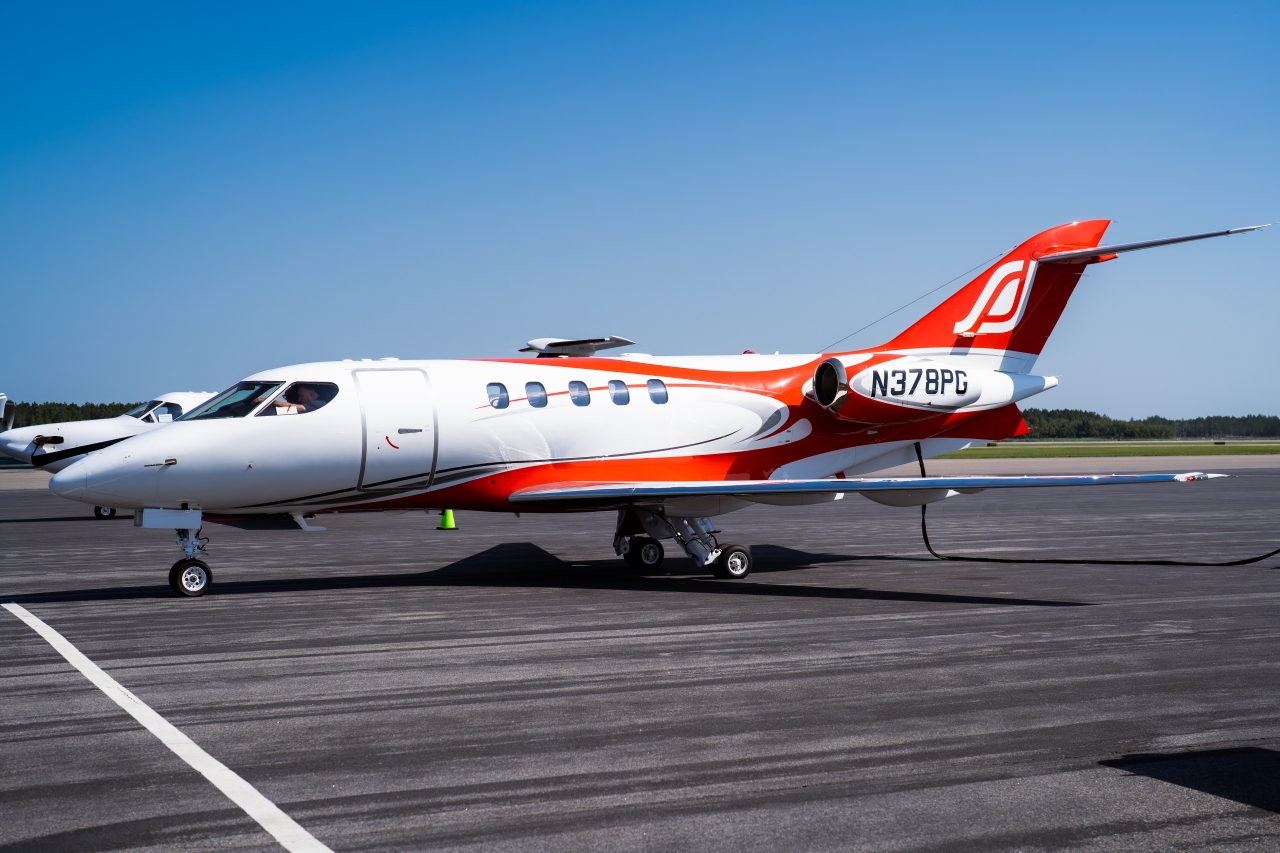
SyberJet’s SJ30-2 sits on the ramp ahead of an unofficial record flight from Florida to California this past week. [Credit: SyberJet Aircraft]
Arizona-based SyberJet has made an unofficial claim for the East-to-West transcontinental speed record in the C-1.f aircraft class as the manufacturer mounts a comeback.
SyberJet said Friday in a news release that its SJ30-2 flew nonstop from Jacksonville International Airport (KJAX) in Florida to Brown Field Municipal Airport (KSDM) in San Diego, logging an average speed of 505.3 mph. The company said the light business jet—for which production ceased in 2009—made the journey in about 4 hours and 7 minutes.
Under the Fédération Aéronautique Internationale’s (FAI) record classification system, C-1 denotes landplanes, and the “f” indicates weight between 6,000 and 9,000 kilograms, or about 13,228 to 19,842 pounds. SyberJet said the unofficial record is under review, with certification expected in about 90 days.
If that timeline holds up, the record would be certified about one month after SyberJet’s planned debut of its next-generation SJ36 light business jet at NBAA-BACE 2026 in Las Vegas in October. The company bills the SJ36 as a stretched, upgraded successor to the SJ30-2.
The Record Claim
According to SyberJet’s website, the unofficial record flight was conducted on August 18 and covered 1,831 nm of track. The company noted that the average speed of 505.3 mph was for the course recognized by FAI, which is shorter and more direct than the route the aircraft actually flew.
An interactive replay of the flight can be found on the site.
SyberJet said the SJ30-2 beat the previousrecord set by Embraer’s Phenom 300 in 2013, which it said flew at an average of 339.4 mph. That trip comprised two legs, from Melbourne, Florida, to El Paso, Texas, and from El Paso to Long Beach, California.
Per the company’s news release, Gordon Bryan piloted the flight with SyberJet CEO Trevor Milton on board. According to the FAA’s registry, the aircraft (N378PG) was manufactured in 2009, the year SJ30-2 production ceased. It is registered to Isso LLC, which TechCrunch reported is the entity that Milton used to evaluate a bid for his former, defunct startup, battery-electric automobile developer Nikola.
The record claim should be viewed with some skepticism given its unofficial status and Milton’s history.
The Securities and Exchange Commission (SEC) in 2021 charged Milton with fraud, alleging he and Nikola misled investors. In 2023, he was sentenced by the U.S. Attorney for the Southern District of New York to four years in prison for securities and wire fraud. In March 2025, President Donald Trump pardoned Milton, and the SEC filed to dismiss its civil enforcement action against him in September. Milton was appointed SyberJet CEO in October.
SyberJet said N378PG will be on display at NBAA-BACE’s Aircraft Connection showcase at Henderson Executive Airport (KHND) in Nevada.
Milton added that one of the aircraft would be used as a testbed for the SJ36’s avionics and larger Williams International FJ44-4A engines. The SJ30-2 uses FJ44-3AP-2A turbofans and has a top speed of Mach 0.83.
For the nine-passenger SJ36, SyberJet is targeting a top speed of Mach 0.88 and range up to 3,000 nm, which it said would make the model the fastest, farthest-flying light jet in history. The company on its website describes the SJ36 as a “direct evolution” of the SJ30-2 with an additional four feet of cabin length, SyberVision avionics, and fly-by-wire controls.
The model has a $14 million price tag, with SyberJet targeting flight testing in 2027 and certification and deliveries in 2032.
The company plans to unveil the SJ36 at its SyberWorld event in conjunction with NBAA-BACE.
Jack is a staff writer covering advanced air mobility, including everything from drones to unmanned aircraft systems to space travel—and a whole lot more. He spent close to two years reporting on drone delivery for FreightWaves, covering the biggest news and developments in the space and connecting with industry executives and experts. Jack is also a basketball aficionado, a frequent traveler and a lover of all things logistics.
A rendering of the Ascend Summit [Credit: Ascend Flight Training Summit]
It is a given that most pilots who aspire to a job at the airlines build their flight experience as certificated flight instructors. Working as a CFI is seen as a stepping stone, and over the past 10 years that has created a culture where pilots acquire hours but not so much knowledge and skill.
The Ascend Flight Training Summit, a joint venture between AeroSummit and the National Association of Flight Instructors (NAFI) on September 8-10 in Dallas, seeks to change that.
Built as a joint venture, Ascend expands upon the foundation of the annual NAFI Summit while introducing broader programming, deeper academic content, and stronger focus on career readiness and professional progression across the aviation training ecosystem.
“This is not just a conference—it is a next step for aviation education,” summit organizers said of the event at the Crowne Plaza Dallas Market Center near Love Field (KDAL).
According to Anthony Geraci, the co-founder and co-CEO of AeroSummit and Stratus Financial, the Ascend Flight Training Summit is a national education-forward aviation conference designed to support every stage of the pilot training journey. Geraci said Ascend brings together student pilots, CFIs, and flight school leadership in one unified learning environment.
“What we’re trying to do is put the entire pilot community together,” he said. “We want the students, we want CFIs’ education, and we want people to have an ecosystem to build and really connect people together, so the students will get more jobs, and the airline’s getting more, qualified pilots.”
The summit is much more than a trade show for current and aspiring instructors, according to Geraci, who described the event as a way for people to make contacts at the student pilot level that will allow them to be nurtured through their instructor certifications and beyond.
“Someone you meet at the conference could give you your next job,” Geraci said. NAFI chair Karen Kalishek agrees with the premise as a means of broadening the educational experience.
“Following the success of previous National Association of Flight Instructors (NAFI) conferences, we are excited to expand the audience by partnering with AeroSummit,” Kalishek said. “The co-hosted Ascend Flight Training Summit (Ascend) offers student pilots, flight instructors, and flight school owners great networking and educational programming with industry-expert panels, presentations, and roundtable sessions. Attendees can also meet with airline representatives and those experienced in aviation careers, such as ATC, AME, DPE, A&P, military, and airline pilots. It’s moving to know that participants will make long-term and life-changing connections at Ascend.”
Geraci noted there will be multiple vendors on-site in support of aviation education. Expect to see flight schools and products that make them more efficient, such as scheduling software and student-tracking programs.The event will also feature multiple seminars and mixers that will allow attendees to make contacts in the industry and perhaps find mentors to help them grow.
“Our goal is to get everybody in the same room,” Geraci said. “Annd whether you’re a CFI, whether you’re a student, if you’re there, you’ll pick up some knowledge, something that you’d like to achieve.”
In addition to networking, the event will offer seminars that can be used to obtain FAA WINGS Pilot Proficiency Program credits that can help a pilot maintain proficiency and perhaps lower insurance costs.
Meg Godlewski has been an aviation journalist for more than 24 years and a CFI for more than 20 years. If she is not flying or teaching aviation, she is writing about it. Meg is a founding member of the Pilot Proficiency Center at EAA AirVenture and excels at the application of simulation technology to flatten the learning curve. Follow Meg on Twitter @2Lewski.
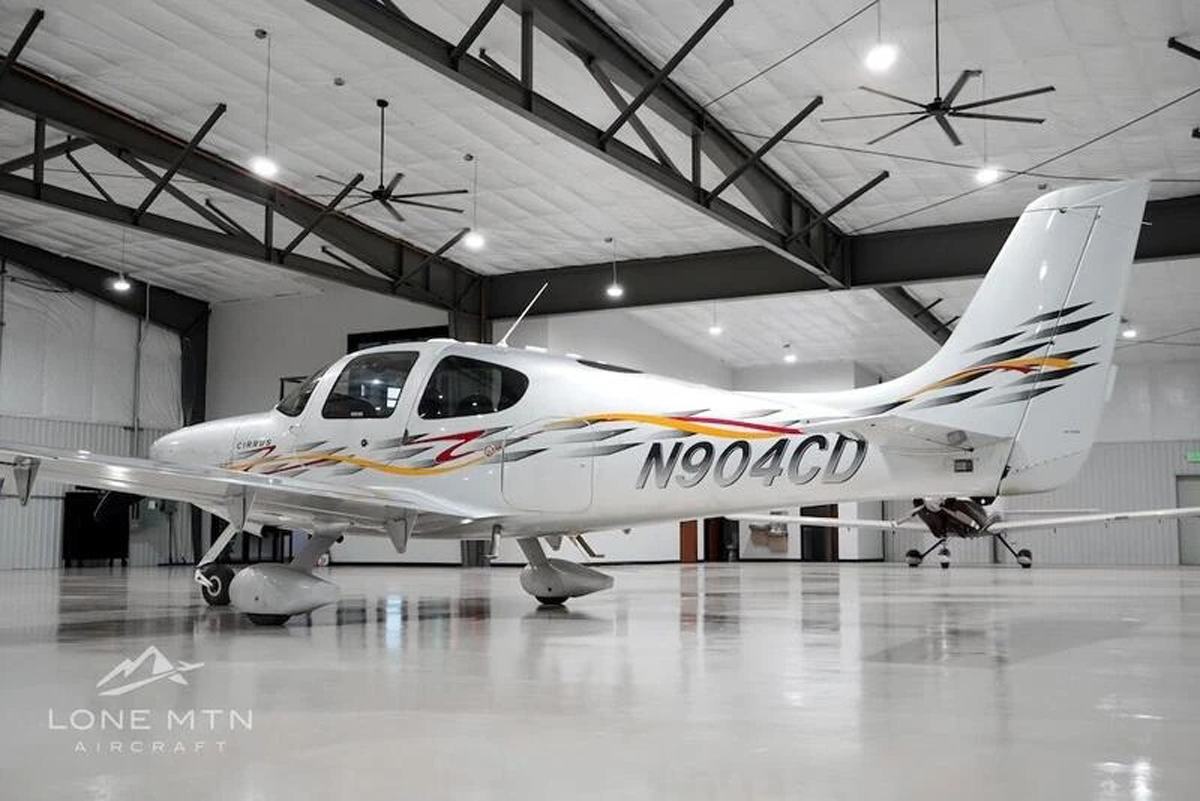
Renowned for its sports-sedan comfort and impressive cross-country speeds, the Cirrus SR22 series completely upended the modern single-engine-piston market by combining composite construction, fixed landing gear, and the groundbreaking Cirrus Airframe Parachute System (CAPS).
Based in Mesa, Arizona, this 2006 Signature Edition SR22 G2 boasts just 2,050 total hours on the airframe since new and no known damage history. The exterior turns heads with a sterling-silver finish enhanced by the Signature Edition stripe package. Inside, the cabin features premium Signature Edition black leather seats and AmSafe airbag seat belts, while a TKS deicing system and built-in oxygen add immense utility for longer missions.
Thrust is provided by an upgraded Continental TSIO-550-N1B factory turbocharged engine, delivering 315 horsepower at 2,500 rpm. This STC upgrade—distinct from a turbonormalized setup—provides the impressive performance characteristics of later SR22T models. Installed as a factory-rebuilt engine in October 2016, it has logged 635 hours since new. It is paired with a Hartzell three-blade composite propeller that also shows 635 hours since major overhaul.
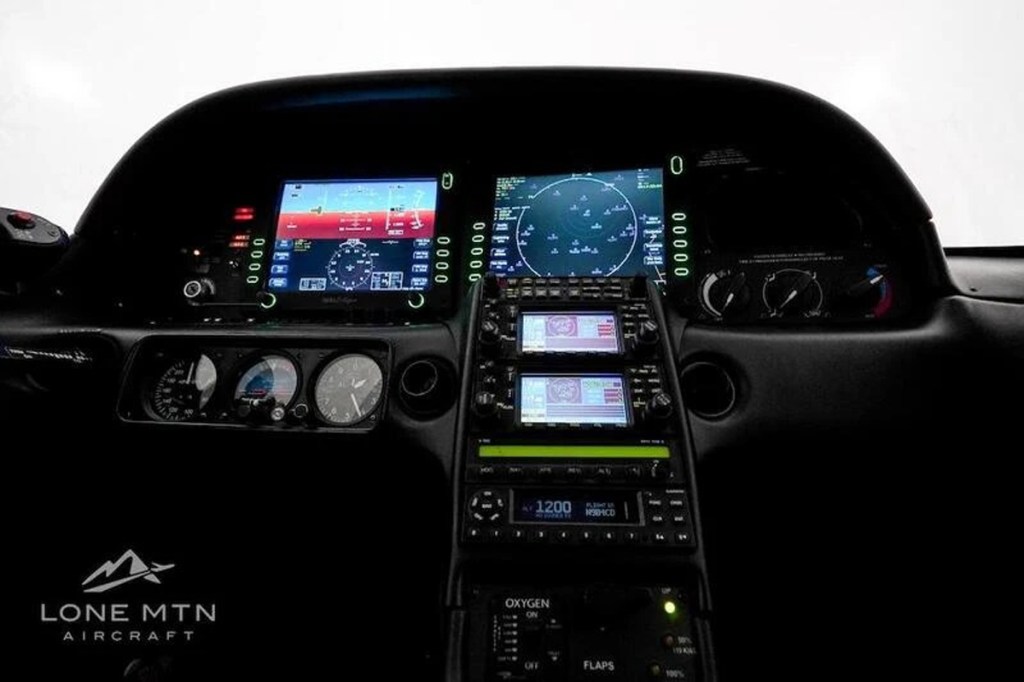
The flight deck is built around the Avidyne Entegra Primary Flight Display (PFD) and EX 5000 Multifunction Display (MFD). Navigation and communication are handled by dual Garmin GNS-430 WAAS GPS/NAV/COM units, fully integrated with an S-Tec 55x autopilot featuring altitude preselect.
The highly capable suite also includes a Garmin GTX 335 ADS-B Out transponder, E-TAWS enhanced terrain warning, L3 SkyWatch traffic, L3 Stormscope lightning detection, and XM Datalink weather. Maintenance is highly up to date, with a recent annual inspection completed in July 2026 and a CAPS repack finished in June 2026.
Listed at $325,000, this 2006 Cirrus SR22 G2 represents a superb value, offering the turbocharged performance and advanced safety features of later models at a highly attractive price point.
If you’re exploring ownership options, FLYING Finance can help get you airborne. Use our airplane loan calculator to estimate your monthly payments, or connect with an aviation finance expert at flyingfinance.com.
Advanced air mobility covers novel propulsion systems, airframes, and other tech. [Credit: Adobe Stock]
Advanced air mobility (AAM) has become a popular buzzword in aviation circles. The FAA is developing regulations for it. Airports and airlines are preparing for it. But what exactly is AAM, and what will it mean for pilots?
AAM broadly covers any novel aircraft, airframe, or propulsion technology. That includes electric vertical takeoff and landing (eVOTL) air taxis, small cargo drones, and aircraft that fly with little to no pilot input, using complex arrays of cameras and sensors.
Later this year, the FAA will oversee operational testing of these technologies—with real airports and air traffic controllers (ATCs)—under its eVTOL and AAM Integration Pilot Program (eIPP). The effort, spanning at least three years and 26 states, will for many provide a first glimpse at the new entrants.
If you're not already a subscriber, what are you waiting for? Subscribe today to get the issue as soon as it is released in either Print or Digital formats.
That’s only the beginning of what could enter U.S. skies in the next five to 10 years. Some manufacturers are developing electric trainers. Others are pursuing personal eVTOL models that could be stored in a garage and used to commute to work. A few are even advancing so-called “flying cars,” designed to lift off from a freeway and soar over traffic. Under the FAA’s refreshed Modernization of Special Airworthiness Certification (MOSAIC) rule, general aviation pilots may soon be able to fly these models and others, including those with simplified pilot controls.
Still other manufacturers are rethinking the airframe itself.
Not all of these new entrants will survive the development phase. Some that do may have brief operational lives. But with financial war chests and high-ranking officials backing them, chances are that many will at least achieve certification.
“I think there’s a lot of dynamic impact that these new technologies will bring to transportation writ large,” Kristie Greco Johnson, senior vice president for government affairs for the National Business Aviation Association (NBAA), told FLYING.
At scale, AAM aircraft could be everywhere—air taxis at major hub airports, electric jets at regional airfields, flying cars and drones in suburban neighborhoods. Vertical takeoffs and runway independence would unlock flights out of parking garages, stadiums, ski resorts, and other previously inauspicious locations. With that innovation will come disruption. The good news for pilots? Per Greco Johnson as well as Sergio Cecutta, who leads SMG Consulting’s AAM Reality Index, the new aircraft mostly will expand aviation services rather than replace them.
“I think America in particular has done an exceptional job of understanding how to integrate new entrants safely into the system,” said Dan Hubbard, senior vice president of communications for NBAA.
A construction company that flies helicopters, for example, could deploy an eVTOL for shorter operations that require greater accuracy.
“You could do things with more precision if you have these complementary tools available to you,” said Hubbard.
Largest Market
The FAA in 2024 published a special federal aviation regulation (SFAR) that created training requirements for the initial cohort of eVTOL pilots. Airline pilots may want to keep that in mind. According to Cecutta, SMG views air taxis as the largest future AAM market.
He said that comes with a caveat—air taxi services are a “pot of gold at the end of the rainbow.”
In other words, adoption will take time. Organizers of the 2028 Olympic Games in Los Angeles envision eVTOLs ferrying spectators and athletes between venues. However, Cecutta predicted it will be a decade before OEMs achieve meaningful scale, which SMG’s AAM Reality Index defines as producing thousands of commercial units annually.
A few factors drove that conclusion. For one, the energy density of today’s electric batteries caps range and limits most eVTOL designs to five or six seats.
“If you could put eight seats, nine seats, 10 seats in an eVTOL, you would,” Cecutta said.
Beta Technologies’ all-electric Alia CX300 takes off conventionally. [Credit: Beta Technologies]
He added that by combining the runway independence of helicopters and efficiency of fixed-wing planes, air taxis unlike regional AAM models (more on those later) are manufacturing a new use case rather than disrupting an existing one. Combined with what will likely be premium pricing, that could make demand unstable.
Because they are optimized for forward flight, eVTOLs will never fully replace helicopters. Conventional rotorcraft will remain optimal for situations that require prolonged hovering, such as aerial newsgathering or policing. Air taxis are not a “miracle cure” for alleviating ground traffic, either.
“That’s very cute,” Cecutta said. “It’s a very good goal from Silicon Valley. Not going to happen anytime soon—probably never.”
But he added that eVTOLs would complement other transportation systems to shorten trips across a city, while reducing emissions and noise. That value proposition has been strong enough to get the attention of the four largest U.S. airlines, all of which have placed conditional or firm orders for air taxis.
American eVTOL manufacturers are among the world’s leaders, with several planning activities under the eIPP. Once operational, they intend to fly in major cities such as New York and Los Angeles, ferrying passengers between airports and city centers, taking tourists on aerial sightseeing flights, and shuttling sports fans to suburban stadiums.
Beyond the Skyline
Electric aircraft won’t be limited to intracity operations.
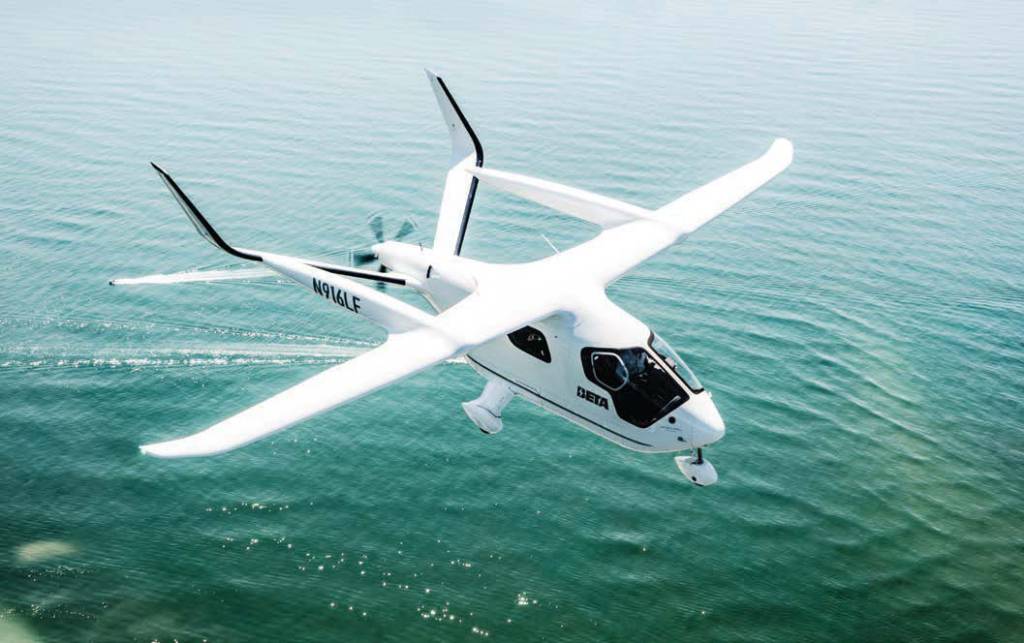
Models that take off conventionally—such as Beta Technologies’ all-electric Alia CX300 or hybrid-electric models being developed by Boeing-backed Evio—will have less endurance than conventional turboprops. But they are expected to have enough range to connect regional city pairs. Florida is planning a network of aerial highways that could link Tampa and Naples or Miami and Key West, for example.
Other developers aim to retrofit existing regional aircraft with novel powerplants.
Ampaire’s flagship models are the Eco Caravan and Eco Otter—a Cessna 208B and de Havilland DHC-6, respectively, modified with hybrid-electric powertrains. ZeroAvia, which develops hydrogen-electric power trains for aircraft with up to 80 seats, is retrofitting the Caravan and others through partnerships with Textron Aviation, de Havilland, Airbus, and more.
Regional AAM models promise to reduce noise, emissions, and operating costs due to their cheaper energy sources. Cecutta pointed out that as conventional OEMs have been forced to add seats to keep their aircraft economically viable, regional air mobility (RAM) could enable smaller, more affordable hub-and-spoke operations.
Pivotal’s BlackFly has already been delivered to a few private owners. [Credit: Pivotal]
Crucial to that will be the ability for the new models to land on airport taxiways and other non-runway locations. That would allow them to feed larger hubs without taking away precious slots from large passenger jets.
“We already don’t have enough, and we definitely don’t have enough to give away,” Cecutta said.
An aircraft such as Electra’s EL9—which uses a unique blown lift propulsion system to take off from runways and unimproved surfaces with just 150 feet of ground roll—could fit the mission. Eventually, Electra aims to make the airport optional, instead operating from locations like malls, casinos, piers, and unused parking spaces.
Like eVTOL air taxis, electric and hybrid regional aircraft will face obstacles to adoption due to battery density and accessibility. Cecutta is skeptical of the pitch many of these developers make—that AAM can restore activity at dormant regional airports.
“It’s like saying everyone that has a backyard will have a pool,” he said, “and that’s not the case.”
Cecutta was even more skeptical of some manufacturers’ promise of supersonic travel in the post-Concorde era.
The most prominent is Boom Supersonic, which in 2025 completed several supersonic demonstrator flights without an audible sonic boom reaching the ground. The company is developing a commercial jet for about 60 to 80 passengers. Cecutta said that while there is “definitely an interest there” among airlines, the companies leading the way may not be first to market.
“There’s noise. There is pollution. There is consumption of fuel,” he said. “And last but not least, there is the cost of the airplanes themselves.”
Cecutta said supersonic jets’ premium pricing may make them a better fit for business aviation than commercial. Boom and others will also need to limit their speed over land to about Mach 1.5—significantly slower than Concorde—to minimize sound waves. The phenomenon is highly dependent on atmospheric conditions, which could make scheduling a headache for airlines.
Greco Johnson believes business aviation will serve as a proving ground for AAM before the technologies are adopted by large carriers.
“It is where new technologies are incubated and born,” she said. “And we’ve seen that from winglets and composites and GPS to now eVTOL propulsion systems, hybrid-electric propulsion systems.”
Rethinking the Airframe
Many AAM developers are reimagining propulsion systems. Others are rethinking the airframe entirely.
Blended-wing body (BWB) aircraft—which merge the wing and fuselage and eliminate the tail section—represent a fundamental shift from the tube-and-wing architecture that dates back to early airliners like the Boeing 707. NASA and Boeing flew two subscale BWB demonstrators between 2007 and 2013. More than a decade later, carriers including United Airlines and Alaska Airlines are exploring adding BWB models to their fleets.JetZero and Natilus claim their respective Z4 and Horizon aircraft will reduce fuel burn by 30 percent and 50 percent versus models they are designed to replace. For Natilus, including the Boeing 737 and Airbus A320neo.
Because of their efficient airframes, BWBs can use older, smaller, less complex engines. JetZero’s Z4 demonstrator—being developed for U.S. Air Force demonstrations in 2027—will use Pratt & Whitney’s low-bypass PW2040 turbofan, which entered service in the 1980s. Merging the wing and fuselage creates vertical interior walls that require cabin windows to be swapped out for digital screens. But that provides more space for passengers (up to 200 for Horizon and 250 for the Z4), luggage, or even large tanks for storing hydrogen fuel.
Cecutta said that certifying a clean-sheet, 200-passenger aircraft for Part 25 operations is “probably the most difficult thing you can do” as a startup and questioned whether any will produce enough BWBs to be viable. If JetZero and Natilus succeed, though, large and hyper-efficient aircraft could create a massive disruption.
With thousands of aircraft in their backlogs, Boeing and Airbus have little incentive to spend millions developing a clean-sheet design. That creates a window for startups that survive the development phase. Boeing and Airbus themselves have forecast demand for 43,000 new commercial jets by 2045 and could struggle to meet all of it.
Another OEM, Otto Aerospace, aims to disrupt the business and light utility sectors with its laminar-flow Phantom 3500, targeting the realm of manufacturers like Dassault and Gulfstream. It promises to cut fuel burn by nearly 60 percent by dramatically reducing drag, while also offering a longer range and larger cabin than others in its class.
Cecutta estimated it will cost less to develop the Phantom compared to a BWB. The main roadblock will be mass production—achieving laminar-flow requires eliminating microscopic defects or even specks of dust that can disrupt the delicate airflow, undermining its defining advantage. That will make manufacturing incredibly complex.
MOSAIC of New Options
Recreational pilots are expected to be some of the first to get their hands on AAM aircraft. A handful of private owners have already taken delivery of Pivotal’s BlackFly—a prototype of its flagship Helix—and Jetson’s Jetson One. Both are single-seat eVTOL models controlled using simple joysticks and fly-by-wire controls. Similarly, Lift Aircraft offers training and experiential flights with its Hexa eVTOL at dedicated centers.
Because they are Part 103 ultralight models, Helix, Jetson One, and Hexa pilots do not require FAA certification. Though they face heavy restrictions, such as being limited to daytime flights, owners would be able to store the aircraft in their backyard or garage, fly out of non-airport locations, shorten their commute to work, and spend less on maintenance.
The FAA’s refreshed MOSAIC rule allows aircraft with electric powerplants in the light sport aircraft (LSA) category. Florida’s Doroni Aerospace, another personal eVTOL developer, is explicitly targeting LSA certification for its H1-X.
MOSAIC also removes the previous LSA weight limit and permits simplified flight controls. Skyryse took hundreds of components out of Robinson Helicopter’s R66 to create its Skyryse One, with which it has demonstrated finger-swipe pickups and touchdowns. The company’s technology also streamlines fixed-wing aircraft.
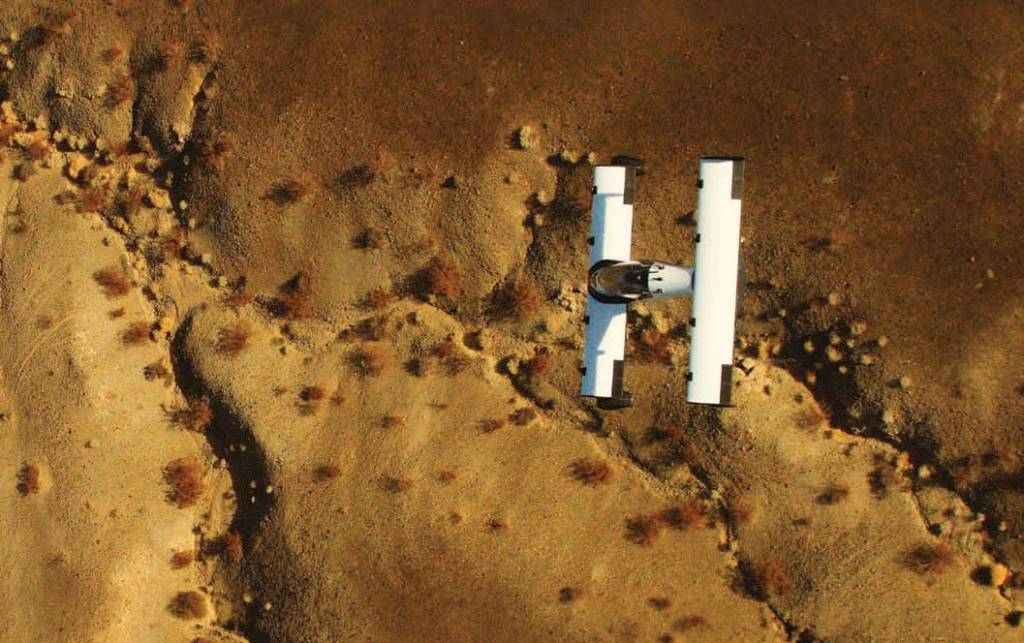
At least one developer of so-called “flying cars” is even targeting LSA approval. Alef Aeronautics has an agreement for test flights at Half Moon Bay (KHAF) and Hollister Municipal (KCVH) airports in California. It plans to ramp up to testing with its VTOL Model A, which is designed to lift off from roads and soar over traffic. Once in the air, the vehicle is designed to rotate 90 degrees so that its sides become upper and lower wings. The driver’s seat—now a cockpit—gyrates forward to face what used to be the roof in car configuration. These drive-and-fly vehicles will take longer to achieve certification, if they ever do.
Early Adopters
Like GA pilots, military aviators will be among the first to incorporate AAM. Air taxi developers Beta, Joby Aviation, and Archer Aviation have all delivered aircraft to the U.S. Air Force under early research and development contracts, which are enticing for AAM startups. Each is pursuing a different autonomous, hybrid-electric variant.
Joby and L3Harris’ concept could serve as a sensor or surveillance platform. Archer and Anduril’s model could autonomously pair with crewed fighters to serve as a loyal wingman. Beta’s Alia MV250 is designed to meet military needs for runway independence, high payload, and extended range for regions such as the Indo-Pacific.
“Helicopters don’t have the range and are very expensive to operate compared to these vehicles,” Cecutta said.
Reliable Robotics and Merlin Labs are retrofitting a range of airframes with flight automation systems designed to reduce two-person crews or enable uncrewed, remotely piloted operations for cargo and military users. The Air Force has already purchased and plans to deploy the former’s modified Cessna operationally.
Middle-mile logistics is another sector ripe for AAM. Per Cecutta, demand will be strong as supply chains become increasingly spread out and warehouses move outside cities. Cargo operators will also encounter less risk than passenger operators.
“You don’t need to convince packages to fly,” Cecutta said.
He added that just about every AAM manufacturer is targeting the health and public safety sector. The California Department of Forestry and Fire Protection (Cal Fire) is exploring fleet automation with Skyryse, while Sikorsky is developing an autonomous firefighting helicopter. Pivotal and emergency services in Hyde County, North Carolina, are testing the former’s BlackFly under a pilot program.
Adoption in these industries may be slower. Air taxis lack the specialized features—such as clamshell doors for loading bulky cargo—to meet their demands. Many AAM models also lack the payload and hovering capabilities of rotorcraft.
“They’re not going to replace helicopters anytime soon,” Cecutta said.
The FAA’s attitude toward its proposed Part 108 rule—which would unlock larger operations for small drones—could telegraph its approach to regulating future AAM aircraft.
Drone delivery is already spreading nationwide in states such as Texas, Arizona, and Florida, and it will only continue to grow once Part 108 does away with limitations that restrict range. However, pilots broadly disagree with the drone industry on issues such as right-of-way, with thousands submitting comments on the proposal. If the FAA sides with pilots, it could continue to restrict drone operations near airports and grant crewed aircraft right of way. If the agency listens to the industry, Part 108 could create an entirely new framework that puts the onus on pilots to avoid uncrewed aircraft in some scenarios.
Rules for larger AAM aircraft are much less clear. But the outcome of Part 108 could illuminate which voices have the FAA’s ear and could sway what it permits in the future.
This column first appeared in the July Issue 972 of the FLYING print edition.
Jack is a staff writer covering advanced air mobility, including everything from drones to unmanned aircraft systems to space travel—and a whole lot more. He spent close to two years reporting on drone delivery for FreightWaves, covering the biggest news and developments in the space and connecting with industry executives and experts. Jack is also a basketball aficionado, a frequent traveler and a lover of all things logistics.
Phase 2 of MOSAIC took effect July 24, and most coverage has centered on what pilots are now allowed to fly.
Now that the rule has gone fully propulsion-agnostic, there are a lot of parameters that broaden the scope of the discussion for light sport aircraft (LSA). What’s received less attention, now that the rule is live rather than pending, is the cost of getting into various compliant aircraft.
MOSAIC Phase 2 formalizes two distinct paths into the same regulatory category, and now that Part 22 certification provisions are in force, they’re pricing out differently in the real market.
Two Ways Into Same Category
Path one includes legacy certified aircraft that happen to stall slow enough to qualify. Path two is the new-production wave purpose-built for the rule, namely, Tecnam’s MOSAIK59 family, Bristell’s RG and B23M lines, and others engineered from the outset around the 59-knot clean stall speed threshold.
Both paths land the pilot in the same expanded sport pilot privilege set, but the costs are not remotely the same.
Legacy Path
MOSAIC replaced the old 1,320-pound weight cap with a stall-speed test. Sport pilots can now fly LSAs that meet their limitations and a clean stall speed (VS1) at or below 59 knots calibrated airspeed. That single change reaches as much as 70 percent of the current general aviation fleet.
Legacy models such as the Cessna 172 are now flyable by sport pilots. The Cessna 172, Cessna 182, and Piper Cherokee/Archer family are commonly qualifying examples, though eligibility still depends on the specific model year and configuration. Qualifying aircraft keep their standard airworthiness certificates rather than converting to special light sport aircraft (S-LSA).
Pricing on that legacy fleet is well established and skews low. Used Cessna 172 asking prices run from roughly $12,000 to $599,000, with a median around $129,500, and Aircraft For Sale’s own buyer’s guide can give you more detail.
Piper’s Cherokee/PA-28 family prices similarly. Decades of production volume and a deep, liquid used-aircraft market keep the acquisition cost of a compliant legacy airframe low relative to anything coming off a factory line today.
New-Build Path
Purpose-built MOSAIC aircraft are priced like the clean-sheet designs they are, and with Part 22 now in effect, that pricing is what buyers are being quoted rather than a prelaunch estimate.
Tecnam’s MOSAIK59 line remains booked into 2027 production slots even with the rule live, and the company is still holding buyers to a fully refundable $10,000 deposit just to reserve a place in line for Q1/Q2 2027 delivery.
The rule taking effect this summer didn’t shorten that wait or reduce prices. Bristell’s RG, likewise, lists across dealer inventory from roughly $100,000 to $320,000 depending on engine choice and equipment, with the fully MOSAIC-configured B23M variant (1,653 pounds MTOW, BRS parachute standard, Garmin G3X Touch) at the top of that range as a factory-fresh airplane.
Within the same category, the price gap can run into six figures depending on which route you take.
None of this is arbitrary. Legacy aircraft are riding decades of amortized tooling and a used-aircraft market with deep liquidity—for example, a 1970s-era 172 is a known quantity to lenders, insurers, and mechanics. New-build MOSAIC aircraft carry the cost of retractable gear, constant-speed propellers, modern glass panels, and engineering to a stall-speed and structural standard that didn’t exist as a design target until recently.
The rule taking effect gave manufacturers legal cover to deliver these configurations, but it didn’t touch the underlying cost of building them.
The production bottleneck compounds it. When demand outruns near-term supply, list prices don’t tend to soften.
There’s an argument that the new aircraft are worth the premium on a cost-per-mission basis. Modern Rotax powerplants sip fuel compared to the O-320s and O-360s in most legacy trainers, useful loads under MOSAIC are significantly higher than the old 1,320-pound LSA cap allowed, and warranty coverage on a factory-new airframe isn’t something a 50-year-old Cessna can offer.
But “worth it” and “cheaper” are different questions, and the second one is where financing decisions actually turn.
What This Means for Financing Conversations
The acquisition-cost gap flows straight into how these purchases are financed, even without pinning down specific rates.
A legacy 172 or Cherokee financed under MOSAIC’s expanded sport pilot privileges is a known asset class to lenders. It’s the same airframe that’s been financed for decades, just newly opened to a different pilot population. Underwriting looks a lot like it always has. Airframe age, engine time since major overhaul, and damage history drive the conversation.
A new-production Tecnam or Bristell is a different underwriting exercise entirely. These are newly introduced airframes in a rule category that has only just fully been phased in. Lenders are still building loss-history and resale-value assumptions for aircraft that, in some configurations, didn’t exist as financeable products eighteen months ago. A few weeks of Part 22 being in force hasn’t produced a resale track record to underwrite against.
If you’re trying to decide between the two paths, just know that going the legacy route buys a lower entry price and a well-understood financing product today, in exchange for older equipment and a smaller useful-load margin. Going new buys modern capability and warranty coverage, in exchange for a materially higher purchase price, a wait for delivery, and financing terms that are still being priced by a new market.
MOSAIC Phase 2 is mostly a technology and regulation story, but it’s more impactful for pilots to know the straightforward ownership-economics details that are still normalizing. The rule created two legitimate ways to end up flying under the same expanded privileges, and the price tags attached to each are still not close.
Talk to our team at FLYING Finance today to figure out which path is right for you.
Matt Herr develops sponsored content for clients at Firecrown Media. He is a gearhead and motoring enthusiast with experience in tech, freight and manufacturing. He spends his free time hiking with his wife, son and German shepherds, or reading and writing hobby pieces.
Aircraft in Alaska [Credit: Adri.Travis | Shutterstock]
Authorities in Alaska are investigating the crash of a chartered aircraft in a remote part of the state that killed all eight people on board.
The aircraft, a Cessna 441, was chartered by the U.S. Army Corps of Engineers for travel to Cape Newenham Long Range Radar Site Airport, approximately 450 miles west of Anchorage. The twin-engine Cessna had two pilots and was carrying six passengers. The military described the aircraft as a “civilian contracted aircraft.”
The crash happened at approximately 12:15 p.m. According to preliminary information, it was foggy at the time of the accident. The National Transportation Safety Board (NTSB) and the FAA are investigating.
The names of the deceased have not been released.
According to the military, the radar site, managed by the Pacific Air Forces Regional Support Center, is part of a network of remote radar sites that tracks aircraft operating in Alaska’s airspace and along its borders. The site was established in the 1950s during the Cold War.
Meg Godlewski has been an aviation journalist for more than 24 years and a CFI for more than 20 years. If she is not flying or teaching aviation, she is writing about it. Meg is a founding member of the Pilot Proficiency Center at EAA AirVenture and excels at the application of simulation technology to flatten the learning curve. Follow Meg on Twitter @2Lewski.
One thing I learned in banking that persists today is how to catch up quickly. In banking, I had clients who would call me with an idea already baked the night before, and maybe even with a Letter of Intent (LOI) already struck. My job: get up to speed quickly and make sure that deal was structured to not just close but benefit the owner for years to come.
Today, my job is similar. I receive an email that simply says “+[me]”, and whether it is real estate, a business, or an aircraft, getting up to speed to see the deal through is one aspect that makes my job so enjoyable. When it comes to aircraft, the price is usually set, the pictures have been taken for friends and family, and the avionics and powerplant confirmed. My tasks are the less exciting aspects that go with finance and asset management, the things often overlooked or mismanaged: ownership structures that balance privacy and depreciation, dry or wet leases, sales tax and fly-away exemptions, and charter offset arrangements with management companies.
Before you yawn and scroll away, here’s why these matter, without feeling like you just read a textbook.
Ownership Structures: Privacy, Liability and Depreciation
One of the early decisions we start a conversation on is ownership. There is often a tendency to say “Oh, this can go in the LLC with the other one.” But most attorneys would tell you that an accident or issue with one asset in an entity may quickly become an issue for all of the assets in that entity. The clearest example of this is a judgment lien. Something happens in aircraft A, a lawsuit is filed, a summary judgment is awarded, and suddenly all of the assets in the entity are exposed. I saw this a lot during the years following the financial crisis. Working with our general counsel, we start by asking about the aircraft ownership entity.
While none of this is meant to be legal or tax advice, we at FLYING Finance talk with hundreds of pilots each quarter and ownership is a common question. Remember the Taylor Swift airplane tracking debacle from a few years ago? You may not be as famous as Taylor Swift, but privacy is still a valid aim. In the piston world, we usually see the debate being whether to own an aircraft in your personal name or in a limited liability company, and how that LLC should be owned. Those that own businesses, real estate, or have owned aircraft before are often the ones that default to an LLC. It is what they know, what their general corporate attorney is most likely to recommend, and if they have the LLC registered through the attorney or another third-party agent, there are privacy benefits that just do not exist if the aircraft is titled in a personal name.
Then add in the opportunity for bonus depreciation, now restored to 100%, and a clean limited liability company with a dry lease to the operating business and appropriate documentation of your flights and expense handling, and many pilots are ready to start a flight plan.
Then there are those that want to do it the aviation way. Ask many aviation advisors, and you are likely to hear a preference for aircraft ownership trusts versus LLCs. Owners receive the privacy and bonus depreciation opportunities similar to an LLC, but avoid the arm’s length and self-dealing questions that may come with LLCs. In an aircraft owner trust, the third-party trustee registers and administers the trust for the beneficiary, which may be a business entity or an individual. Without getting too complicated with layers of trusts and LLCs, a trust setup with an operating company as the beneficiary passes the depreciation opportunity onto the operating company.
In either the limited liability company or the aircraft owner trust case, the bonus depreciation is only eligible if the aircraft is actually used primarily for business purposes and the documentation shows the related expenses like the fuel and pilot(s) are being paid by the operating company, not the aircraft ownership trust or limited liability company holding the aircraft. That’s the tension. Folks do not always want to keep up with the records and the IRS may claim an illegal charter and disallow bonus depreciation if the paperwork doesn’t hold up.
Dry or Wet Lease: Who Pays Who
Once ownership is settled, the next question is how the aircraft gets used when you’re not the one flying it. A dry lease hands over the aircraft alone, the lessee supplies the crew and operational control, and it’s treated very differently by the FAA than putting someone else in the left seat under your own certificate. A wet lease includes the crew, which usually means you’re operating under charter rules, with everything that brings: Part 135 oversight, insurance requirements, and a very different tax treatment on the transportation itself.
For owners that have businesses to run, jobs to do, or real estate projects to manage, a lease by any other name, to paraphrase Shakespeare, may sound as sweet, and lead the romance of flying straight into a tragedy.
One way we look at handling this, primarily for turboprops and jets, is through a management company, where the aircraft may be maintained and hangared with a management company, and even placed under a Part 135 charter for the management company to coordinate, including supplying the pilot, making it a wet lease with any third-party looking to charter the aircraft. The wet lease chartering activity may offset some of the fixed costs related to the aircraft, but keep in mind that the maintenance is going to come around faster than if you are the only one going up.
Having the aircraft with a management company to provide limited charter operations does not disallow us from using a dry lease between related parties, where the aircraft entity is only receiving payment for direct use of the aircraft, and any pilot, fuel or other expenses are paid directly, including directly to a management company where the invoice is solely for those related expenses.
It all depends on the mission for the aircraft, or missions, and how we need to come around the structuring to ensure all objectives, at closing and in the future are set up. For anyone considering this Part 91 with limited charter route, it is important to understand and document the expectation for how much charter activity you are allowing, how the scheduling will work, and what fee the management company is going to assess on the charter revenue for making sure all passengers fly safely and enjoyably.
Sales Tax and Fly-Away Exemptions: Where the Money Actually Leaves the Deal
Once the ownership and mission are understood, the management company is engaged and expectations are set, we can begin thinking about how and where the closing and delivery will take place. If the closing requires financing, FLYING Finance is engaged to effectively communicate the mission(s), secure the loan structuring, and coordinate with the insurance and escrow title agencies the team speaks with every day.
For closing, one of the often overlooked or underappreciated aspects is sales and use tax. Some states charge sales tax, some charge use tax, some have fly away exemptions, and some may try to charge you six months later when you visit. Understanding sales and use tax by state is why the Daher TBM team that recently took our own Jonathan Welsh up in the TBM 980 seems to always be coming from a delivery somewhere. Sales and use tax on an aircraft purchase can run into the hundreds of thousands of dollars, and it’s entirely a function of where you take delivery, where you base the aircraft, and how quickly you move it out of the taxing state. This last note is what is called a fly-away exemption, where a state may not charge sales tax for an aircraft purchased in the state, as long as the aircraft departs for its out-of-state home within a certain timeframe.
While there are times where this focus can turn into a countrywide cross-country flight plan, let’s take, for example, a current transaction with a Tennessee resident purchasing a new aircraft from North Carolina. Buying in North Carolina has a $2,500 simple sales tax, and use in Tennessee has a 7 percent state sales and use tax, plus potential county and local taxes. Assuming a $1 million purchase price, the total tax bill could be around $100,000 using 2.25-2.75 percent for the county and local tax. If the transaction were in reverse, a North Carolina buyer purchasing an aircraft in Tennessee, the buyer could buy the aircraft and fly it out of Tennessee within 30 days under the Tennessee fly-away exemption, returning home to North Carolina with a total tax bill of $2,500.
For those that live along a state border, understanding ad valorem taxes may also sway where the aircraft is hangared. Georgia charges ad valorem tax on personal property but personal aircraft in Tennessee do not have an annual tax. You may not be willing to move your residence just to save on sales and use tax, but an extra few minutes to get to the hangar may be worth tens of thousands of tax dollars each year.
As with the paperwork for documenting flight use for bonus depreciation and the dry lease, keeping clean records may also help you stave off states like California and Florida that look for aircraft visiting shortly after an out-of-state purchase, and by shortly, I mean within 12 months. That family trip to Universal or Disney is expensive enough, without adding a use tax.
The +[me] Moments
Whether it is an aircraft, real estate, or a new or expanding business venture, proper paperwork is like a preflight, never to be overlooked. We all know the value a complete set of logbooks provides for an aircraft, and the implications when pages go missing. The same level of attention applies to how and where you buy an aircraft. If you are debating between a Cirrus or a Diamond, an Epic E1000 or a Pilatus PC-12, or a CubCrafters and a Bearhawk, let us know. Send us the listing or spec sheet to + Flying Finance. We will get up to speed quickly, and you can focus on sharing those pictures and planning for that first rotation off the runway.
As Group President and CFO of Firecrown Media and COO of Flying Finance, Tripp Thurston brings two decades of commercial banking and specialized lending experience to the FLYING audience. Having served as both a regional credit approver and a Market President, Tripp has a unique "both sides of the desk" perspective and a candid, down-to-earth style of explaining complex transactions. Based north of Atlanta in the Chattanooga area, he spends his downtime exploring the skies in different aircraft or traveling with his wife, two sons, and their husky-lab.
A Kenmore Air de Havilland DHC-3 Otter [Credit: Stephen Yeates]
The pilot of the de Havilland DHC-3 Otter floatplane that crashed last month in Washington state was trying to avoid inclement weather, according to a preliminary report released by the National Transportation Safety Board (NTSB).
The accident took place on July 23, around 5:20 p.m. local time near Eastsound. The aircraft, N709KA, was substantially damaged and the pilot and two passengers were seriously injured. Eight passengers sustained minor injuries in the crash. The airplane was operated by Kenmore Air as a Part 135 scheduled air taxi flight.
Per the NTSB, the operator reported the flight originated from Kenmore Sea Base (W55), Seattle, at 4:30 p.m. local time with scheduled stops at Roche Harbor (WA03) and Friday Harbor (W33) in Washington.
According to preliminary ADS-B data, the aircraft flew at an altitude of 500 to 1,000 msl over the water as it headed north over the Rosario Strait. When northwest of Lummi Island, the airplane turned west and passed north of Sucia Island.
At this time the pilot radioed the operator at the base at Kenmore to report inclement weather, which precluded the flight from continuing to Roche Harbor. The pilot stated he would return to Sucia Island and land to wait for the weather to improve. According to the operator, there were multiple bays around Sucia Island where the pilot was authorized to land.
According to ADS-B data, at approximately 4:19 p.m. the airplane was about 11 miles northeast of Roche Harbor when it turned to a heading of 180° and flew towards Sucia Island, which was approximately 5 miles away.
Video shot by a witness near Shallow Bay, Sucia Island, shows the aircraft a few feet over the water in a nose-high attitude as it descends. Per the NTSB report, “When the airplane was about 4 ft above the water, the left wing dropped and the left wingtip and left pontoon float impacted the water. The airplane then landed with both pontoon floats on the water and continued forward where it subsequently impacted rocks.”
Chapter 3 of the FAA’s manual on seaplanes (FAA-H-8083-23-2) notes many of the operational differences between land planes and seaplanes relate to the fact that seaplanes have no brakes. The text goes on to note, “The seaplane continues moving after the engine is shut down, and this energy, along with the forces of wind and current, is typically used to coast the seaplane to the desired docking point.”
The day of the accident the Otter struck the rocks hard. Several small boats arrived immediately to remove passengers from the aircraft.
The aircraft subsequently caught fire after the passengers had exited. The wreckage was recovered and moved to a secure hangar for further examination.
The NTSB’s final report is likely 18 months to two years away.
Meg Godlewski has been an aviation journalist for more than 24 years and a CFI for more than 20 years. If she is not flying or teaching aviation, she is writing about it. Meg is a founding member of the Pilot Proficiency Center at EAA AirVenture and excels at the application of simulation technology to flatten the learning curve. Follow Meg on Twitter @2Lewski.
Tillamook Air Museum [Credit: Tillamook Air Museum]
The Tillamook AirMuseum will soon be under the operational umbrella of the Vintage Aviation Museum, a Utah-based 501(c)(3) nonprofit organization.
On August 20, the Port of Tillamook Bay Commissioners approved a term sheet for the land lease and future sale of Tillamook’s historic World War II-era Hangar B with the understanding that the Vintage Aviation Museum will assume operation of the museum from the Port of Tillamook Bay and become its future owner.
The air museum is located in Oregon, west of Portland. During World War II, the facility housed blimps used for reconnaissance.
According to a statement from the Port, “An exciting new chapter is beginning for the museum. But one important thing will not change: we will continue to be the Tillamook Air Museum. Our identity is deeply connected to Tillamook, Naval Air Station Tillamook, historic Hangar B, and the people and stories that have shaped this remarkable place for more than eight decades. Preserving and sharing that history will remain at the heart of everything we do.”
The TAM shut down in December 2025 when the hangar was damaged by a windstorm. There is a 200-foot hole at the crown of the roof, and a large section of roofing was still tethered to the building for several months as Port officials debated what to do.
The museum has been closed to the public since the storm, as museum and Port officials had concerns about the structural integrity of the building. The wooden hangar is 192 feet high and 296 feet wide and spans 1,072 feet long. A few weeks ago the preparation for the repairs began.
The Vintage Aviation Museum plans to relocate most of its aircraft collection to Tillamook, bringing additional historic aircraft to Hangar B and expanding the museum’s aviation collection. Looking ahead, the vision is to utilize the entire historic blimp hangar for aviation-related exhibits, aircraft displays, preservation, education, and visitor experiences.
Work is already beginning behind the scenes to prepare the museum for reopening.
According to museum officials, “The future of historic Hangar B will remain a priority. Following the Museum’s reopening, efforts will continue toward the repair, restoration, and long-term preservation of this extraordinary piece of Oregon and American aviation history so that it can be preserved and enjoyed by visitors for generations to come. Operating as part of a nonprofit organization will provide greater flexibility to pursue new opportunities, partnerships, funding sources, and projects as the Museum moves forward. Visitors can expect us to keep pursuing ambitious projects exploring new ideas and creating opportunities that keep the Museum moving forward.”
Museum officials thanked the Port of Tillamook Bay, which has owned and operated the Tillamook Air Museum for more than a decade, saying, “We have enjoyed a strong and supportive relationship with the Port, and the Museum would not be what it is today without their trust, support, and belief in our mission. We are deeply grateful for everything they have done to help us grow and look forward to continuing that relationship into the future.”
The museum will continue working with the community to develop educational outreach programs with local schools and developing partnerships throughout the community.
The relationship with the Friends of the Tillamook Air Museum (FOTAM) will also continue, described as “an important part” of the museum’s future. FOTAM’s volunteers have provided continuous and tireless support to the museum and its mission, and are dedicated to its survival.
For those who would like to be part of this next chapter, contributions to the Vintage Aviation Museum can help support exhibit preparation, restoration, and other work associated with preparing the Tillamook Air Museum to once again welcome the public.
Meg Godlewski has been an aviation journalist for more than 24 years and a CFI for more than 20 years. If she is not flying or teaching aviation, she is writing about it. Meg is a founding member of the Pilot Proficiency Center at EAA AirVenture and excels at the application of simulation technology to flatten the learning curve. Follow Meg on Twitter @2Lewski.
Sign-up for newsletters & special offers!
Get the latest stories & special offers delivered directly to your inbox.