That’s how the conversation usually begins when the partially trained client is looking for a new instructor.
When the question is addressed to a CFI who has the space on their schedule to accommodate a new-to-them client, it’s often greeted enthusiastically—as it should be. But if a client has been flying with someone else, you need to tread carefully.
That first flight with a new-to-you client is a bit like going on a first date with someone who is on the rebound. You’ll likely hear about “the ex” CFI and how they did things differently.
Expect this, and stress the use of an FAA-approved syllabus and Airman Certification Standards (ACS) as learner guidance for lesson structure.
Change Is Inevitable
There are multiple reasons learners seek a change of instructor.
Often it is about availability. The learner has the time and money to fly four days a week and twice a day, but the CFI they have been assigned to at the flight school already has a full schedule that can’t accommodate that.
Or perhaps there is a “personality clash,” which can mean anything from the learner who resents taking instruction from someone who younger than their adult children to a learner who doesn’t want the structure of a syllabus to the CFI who resents “having to be a teacher” to build their hours for the next job.
Sometimes it’s the CFI who facilitates the change. Perhaps the client isn’t following directions and, after an attempt or two to establish better communication, the CFI realizes they’re not the right instructor for the client.
More often than not, though, a change of instructor happens because a CFI moves on to a different job. When the airlines are hiring at a brisk place, it’s to be expected. When it happens frequently at a particular flight school after airline hiring has slowed, it’s often a red flag about the school’s culture.
Process of Change
Just as the student pilots don’t know what they don’t know, the inheriting CFI often doesn’t know what the learner doesn’t know, the experience they have, and the skill level they present.
For this reason, it’s best to begin the instructional relationship in the classroom. Establishing the client’s knowledge level can help create more effective flight lessons. While it’s easy to demonstrate a maneuver or inflight procedure in the airplane, if the learner doesn’t understand why it’s being taught or the science behind it, they’re getting short changed.
Depending on where the learner is in the training process, the CFI might throw in questions appropriate to a stage check for their experience level. You don’t expect them to have all the answers—make sure to stress this— and if they don’t, teach them where to look up the information.
It’s particularly gratifying to see a well-trained learner who determines aircraft performance before each flight and uses the checklist during the preflight inspection, taking their time to make sure they don’t miss a thing. This usually happens when their previous CFI models good behavior.
Other behavior results in a surprise, such as the learner who during the takeoff roll put both hands on the yoke and held the aircraft down until the nosewheel started to shimmy, then yanked the aircraft off the ground. That was a new one for the replacement CFI.
This habit was quickly traced back to a particular instructor who had recently departed the school. It took a while for his former students to unlearn the two-hands-on-the-yoke-during-takeoff behavior and recognize and call out airspeed and liftoff speed while allowing the airplane to take off normally.
Sometimes It’s an Airport Challenge
Negative transference, doing something that’s the correct procedure at airport A but the wrong procedure for airport B can also be a challenge.
An example is a pilot trained at a nontowered airport and therefore accustomed to making position reports in the pattern. The tower controllers are usually polite when they advise the pilot that this isn’t required unless requested.
Close-to Check-Rides Change
Change of instructor when the client is relatively close to the check rides is particularly painful.
To the clients: There is a chance the new-to-you CFI or even the owner of the flight school will claim you need to repeat all the training sometimes with vague excuses like insurance purposes or citing school policy. Always ask to see the policies in writing—they often don’t exist.
To the CFIs: Initiate a mock check ride using the ACS as the metric of evaluation. Make it the full ride, beginning with an oral exam followed by a flight with certificate and rating appropriate maneuvers. This lets both the CFI and client know what, if any, work needs to be done to reach check ride status and gets rid of some of the test anxiety.
The CFI should take careful notes during the process. This is also an opportunity to go through the client’s logbook to determine if all the requirements for the certificate or rating have been met and what experience needs to be acquired or polished before the big test.
Instructor Learning Curve
When working with a new-to-you client, there’s a learning curve for flight instructors.
Your job is to teach the learner how to fly, and for best results you need to approach this responsibility with a mixture of enthusiasm, confidence, and patience. The latter is the most important, in my opinion, because both the learner and CFI will have their good days and bad days. You need to get to know the client’s personality and adapt your teaching style to their learning style so you can meet them where they are.
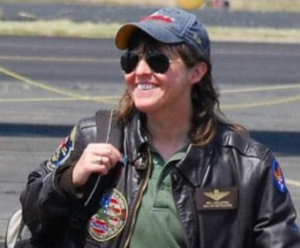
Meg Godlewski has been an aviation journalist for more than 24 years and a CFI for more than 20 years. If she is not flying or teaching aviation, she is writing about it. Meg is a founding member of the Pilot Proficiency Center at EAA AirVenture and excels at the application of simulation technology to flatten the learning curve. Follow Meg on Twitter @2Lewski.
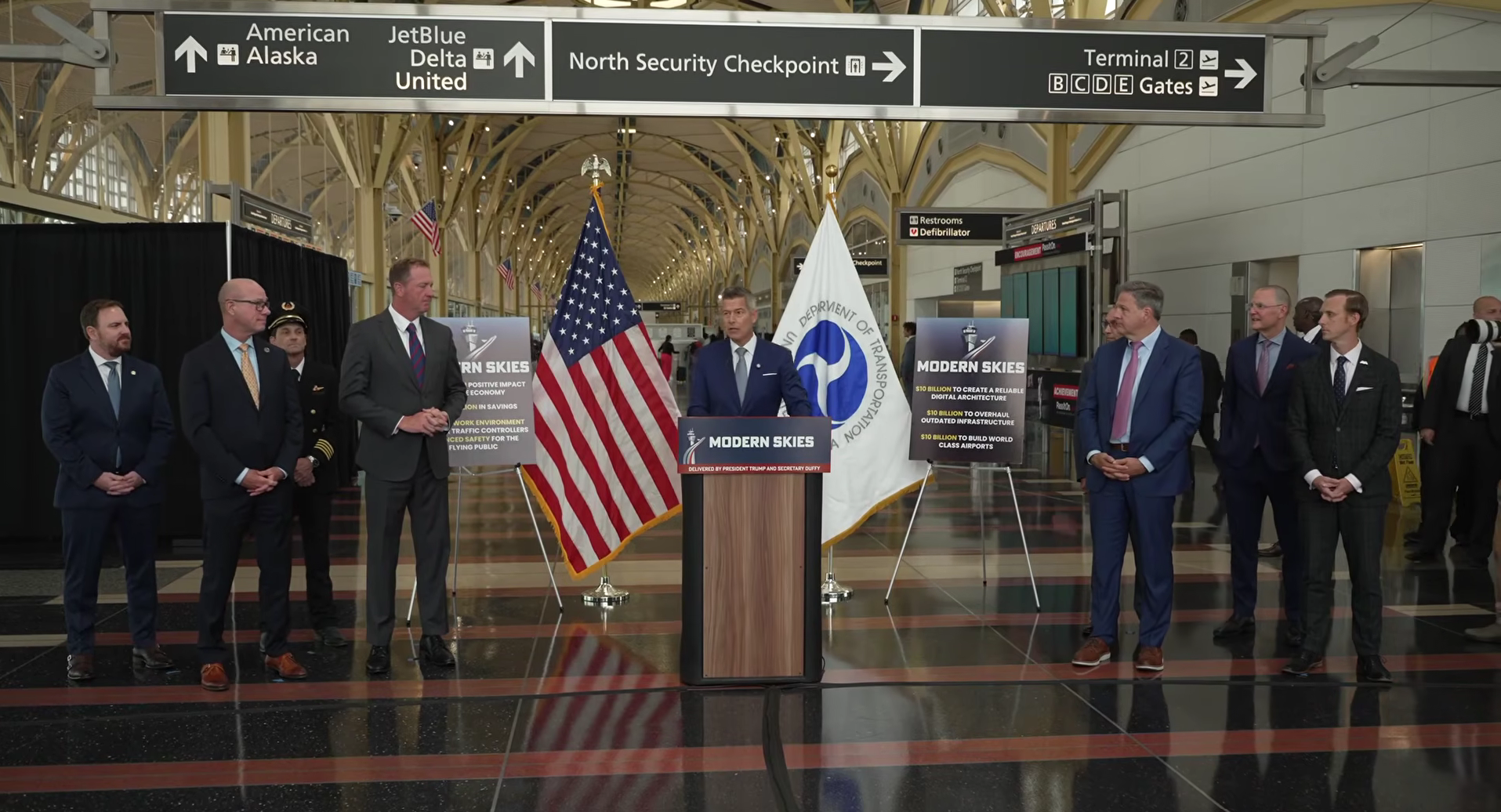
U.S. Transportation Secretary Sean Duffy speaks at a news conference Monday with FAA Administrator Bryan Bedford and other aviation stakeholders. [Credit: U.S. Transportation Department]
U.S. Transportation Secretary Sean Duffy, FAA Administrator Bryan Bedford, and a coalition of nearly 60 aviation organizations have urged Congress to consider new legislation that would funnel an additional $30 billion toward modernizing key aviation systems and upgrading airport infrastructure.
The $30 billion, split into three “tranches” worth $10 billion each, would cover a range of improvements, from the FAA’s new AI-based SMART (Strategic Management of Airspace, Routes and Trajectories) system to new airport runways and taxiways. Senator Eric Schmitt (R-Mo.) introduced the Modern Skies Act, which outlines how the funding would be used, on Monday.
Duffy said earlier this month that he would ask Congress for the $30 billion. Combined with $12.5 billion that lawmakers in 2025 allocated for Phase 1 of the DOT’s Brand New Air Traffic Control System (BNATCS) effort, the new request would total $42.5 billion for aviation upgrades. Officials previously said the cost of BNATCS would be about $31.5 billion.
Duffy during a news conference Monday said Congress has been “reticent” to pour more money into modernizing the National Airspace System (NAS) due to the FAA’s earlier failures. Its previous NextGen effort delivered only 16 percent of its promised benefits after 20 years and $36 billion spent, the Government Accountability Office (GAO) said in 2024.
“A lot of money was spent, a lot of promises were made, but not a lot was delivered on behalf of the American people,” Duffy said, adding that this time around, the DOT and FAA are “actually meeting the promises that we made.”
He called BNATCS “probably the most bipartisan effort in Washington, D.C.” and said President Donald Trump is also “helping us push for this $30 billion.”
“We remember how past modernization efforts went, which is why we keep pushing for stronger oversight,” Jason Ambrosi, president of the Air Line Pilots Association (ALPA), said at the conference.
Duffy and Chris Sununu, president and CEO of Airlines for America (A4A), said the DOT is completing Phase 1 of BNATCS—using the initial $12.5 billion from Congress—under budget and ahead of schedule. But that conflicts with what officials said earlier in September.
Bedford during a hearing said it is “costing $16 billion to do Phase 1,” which seeks to replace or upgrade thousands of radios, radars, voice switches, facilities, and other infrastructure by the end of 2028. He added that “some of the slipping that we’re seeing” during Phase 1 “looks like it may put pressure on delivering that schedule.”
The Modern Skies Act is backed by the Modern Skies Coalition, which includes Airlines for America (A4A), the Association of Value Airlines (AVA), Air Line Pilots Association (ALPA), National Air Traffic Controllers Association (NATCA), American Association of Airport Executives (AAAE), and General Aviation Manufacturers Association (GAMA).
“If you don’t want to do it now, when do you want to do it?” Duffy asked of Congress.
Where the $30B Would Go
According to a DOT news release, the Modern Skies Act would help “modernize the digital architecture our air traffic control system relies on, replace crumbling aviation infrastructure, and build world-class airports across the country.”
The agency called it the “crucial final step” and “third pillar” of its effort to bring the NAS into the 21st century, the other two pillars being Congress’ earlier $12.5 billion allocation and the rollout of SMART. It promised the additional $30 billion would help prevent incidents such as the recent telecommunications failure at a Terminal Radar Approach Control (TRACON) facility that disrupted flights across the Northeast.
Digitizing the System
Duffy said the first tranche of $10 billion would support replacing the NAS’ “underlying architecture in telecom,” which he said dates to the 1980s. Much of the infrastructure is analog, antiquated, and aging.
“We have redundant lines that go through a single point of failure, and when those go down…you have mass disruption,” he said.
Specifically, $7.2 billion would fund a new common automation platform (CAP) to unify the FAA’s STARS and ERAM platforms; $2 billion would support the FAA Enterprise Network Services (FENS); $600 million would complete the rollout of SMART and a new Flow Management Data and Services (FMDS) system; and $300 million would be used to consolidate terminal ATC facilities.
The FENS is designed to provide secure communications and information-management services across roughly 4,500 FAA facilities.
“If we don’t fix the architecture around aviation, you’re going to continue to have these problems,” Duffy said.
Added Bedford, “If we had a modern, resilient system, we could save, over 20 years, conservatively $300 billion.”
The FMDS is intended to replace the existing Traffic Flow Management System (TFMS).
SMART—a piece of the FMDS that is designed to synthesize information from hundreds of data streams and make recommendations to controllers, which they could accept or decline—rolled out in the D.C. area this month and is billed as the crown jewel of the BNATCS effort. Duffy said the $600 million would support a new “operating system” for SMART. He said the current system dates to the 1990s.
Notably, NATCA last week told FLYING that it has not been “involved in the design, testing, or implementation of SMART.” Ambrosi and Daniels on Monday said the people using the system should have input on its development and deployment.
“Air traffic controllers, the subject matter experts, need to be at the table,” said Daniels. “The best technology and system is technology and a system designed with the professionals who use it.”
Improving Airports
DOT said the second $10 billion tranche would help replace airport towers, facilities, runways, and other infrastructure.
The Modern Skies Act requests $5 billion in Airport Terminal Program discretionary grants, $3 billion in Airport Improvement Program discretionary grants, and $2 billion to construct, replace, and improve FAA-owned towers. Duffy said many of those towers were built decades ago and that controllers have reported issues including leaking roofs and faulty elevators and air conditioning.
He said the money would also support new runways and taxiways to match the growth of airports.
The final $10 billion would create a “new pilot grant program for transitional airports, which lack access to capital but service between 5 million and 25 million passengers annually.” It would cover new terminals, capacity upgrades, and cargo expansions at these airports.
“It’s our mid-sized airports that are having a difficult time accessing capital,” Duffy said, adding that they “don’t have the resources to go from the airport that was built in the ‘50s or the ‘70s to an airport that can serve their communities today.”
The Modern Skies Act would also give the FAA “transfer authority” to use Congress’ $12.5 billion to continue its deployment of radars, radios, electronic flight strips, surface awareness tools, and other equipment by the end of 2028.
Duffy said the DOT is spending “half a billion dollars, roughly, on just…keeping our old telecom up to speed.” He added that if Congress awards the $30 billion, the “core infrastructure that we use, the software that we use” would be upgraded on the same timeline.
United Front
Bedford called the $30 billion request “peanuts” and said it would provide “significant returns for the aviation industry.
“We have a system today that is over capacity based on the infrastructure that we have,” he said. “This really isn’t a choice.”
Others who spoke at Monday’s news conference echoed that sentiment.
“In the past year, DOT has proven their ability to use taxpayer dollars wisely, tackling numerous navigation and telecom projects at record speed,” Sununu said, citing that as evidence that the $30 billion would be a smart investment.
Jonathon Freye, executive director of AVA, added that the “FAA has never moved with such definitive momentum before.”
“Airline pilots have watched the system fall behind for decades,” Ambrosi said. “Our flight decks run on digital data, but in too many places, the ground side of our system still runs on copper wire, aging radios, and paper flight strips…We’re flying 21st century airplanes through a 20th century system.”
Jack is a staff writer covering advanced air mobility, including everything from drones to unmanned aircraft systems to space travel—and a whole lot more. He spent close to two years reporting on drone delivery for FreightWaves, covering the biggest news and developments in the space and connecting with industry executives and experts. Jack is also a basketball aficionado, a frequent traveler and a lover of all things logistics.
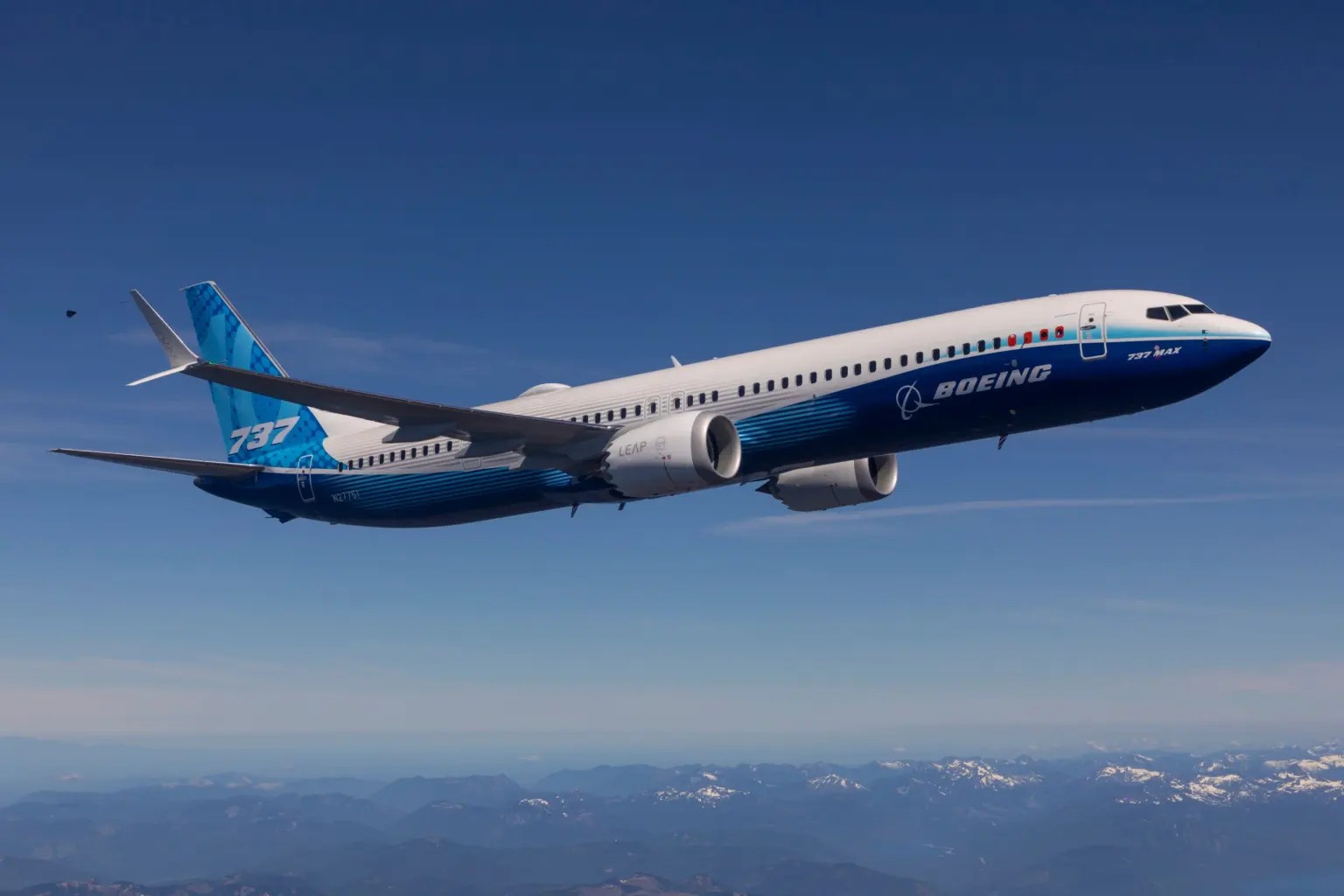
The 737-10 is the largest member of Boeing's 737 MAX family. [Credit: Boeing]
The FAA is investigating whether a glitch stemming from a software update to the flight management computer (FMC) on Boeing 737 Max aircraft poses a safety concern for pilots, as the manufacturer works to resolve the potential issue.
The glitch, which according to Aviation Week could incorrectly disengage the 737 Max’s vertical navigation system (VNAV) and transition to simpler automated guidance during certain landing scenarios, was first reported Saturday by the Wall Street Journal. Per the report, Boeing was first made aware of it in 2024 and in September convened a formal safety review board, which has shared its findings with the FAA. The glitch had not been disclosed publicly.
Citing company documents, the Journal reported that Boeing has informed airlines the glitch does not pose a safety concern. But several 737 Max 7 and Max 10 customers have said they will not take delivery of aircraft with the software update.
According to the Journal, jets flying for Alaska Airlines, American Airlines, Southwest Airlines, and United Airlines do not use the new software. However, CBS News reported that the Max 7 and Max 10 each use versions of it.
“The FAA is aware of a potential issue in a software update for the flight computers on certain Boeing 737 Max airplanes and is working closely with Boeing and the airlines,” the agency told FLYING. “The FAA will convene a Corrective Action Review Board (CARB) and will take immediate action if it identifies a safety concern.”
The CARB will comprise FAA safety experts and is intended to determine whether the issue is a safety concern and, if so, how to address it. The agency said it will review Boeing’s proposed solution to the glitch.
“We shared information with operators that reinforced existing pilot procedures for safely handling such cases,” Boeing said in a statement to the Journal. “Our engineers are working on a software update to permanently address the issue.”
According to the report, Boeing is developing a procedure that would allow pilots to re-enable VNAV if needed. The company in August told 737 Max operators that more guidance will be forthcoming in November and a permanent fix for the glitch could arrive by 2028, adding that it is working to accelerate those timelines.
Glitch in the System
The Journal reported that the 737 Max software glitch emerged following a cockpit software update developed by GE Aerospace, which it said is working with Boeing and the FAA to study it.
A Max operator informed Boeing of the issue in November 2024, but the company in early 2025 determined it did not require an internal safety review, according to CBS News. Citing an unnamed source, CBS said Boeing launched a formal review in September after obtaining “additional information from operators” earlier this year. Its findings have been shared with the FAA and will be reviewed by the CARB.
According to CBS, the software glitch could activate under rare circumstances, typically near airports at low-altitude where pilot workload is already high, and require added manual control.
According to Aviation Week, the issue manifests when a pilot flying a precision approach with autopilot engaged initiates a missed approach, the instrument version of a go-around. During a missed approach, the aircraft is supposed to climb. The malfunction causes the automated flight guidance system to incorrectly drop from VNAV to basic pitch control—which requires the pilots to handle pitch and navigation adjustments—if the preprogrammed flight plan is changed.
VNAV follows the vertical profile computed by the FMC using the flight plan’s altitude and speed limits. Neither level change nor vertical speed modes, which respectively hold a target airspeed and rate of climb or descent, follows the FMC’s vertical profile, which would require pilots to manage constraints manually should VNAV be disengaged.
A Boeing spokesperson told CBS that autopilot will continue to function even if VNAV disengages and that pilots are trained to land safely without it.
“This is not considered a safety issue, we have standard operating procedures and training to mitigate this type of event,” Canada’s WestJet told the Journal.
CBS reported that the glitch appears in Versions 14 and 14.1 of the 737 Max FMC’s operating system. The Max 7 was certified in August with Version 14, and the Max 10 used Version 14.1 during its certification testing, per the report.
“United does not currently have any 737s operating with this new FMC software, and we are not taking deliveries of new aircraft with the new FMC software,” the carrier told digital aviation news outlet Simple Flying.
Similarly, Southwest told CNBC that “none of our fleet is equipped with Version U.14, including new deliveries of Max 8 airplanes.”
Citing unnamed industry officials, the Journal reported that both carriers do not want new 737 MAX planes equipped with the software update and have requested an earlier version of it.
Boeing told the Journal it is working on an accurate count of the number of jets flying with the flawed software. It is unclear how many aircraft flown by non-U.S. operators or undelivered jets may use it. Per Cirium data, there are approximately 2,400 Max 8 and 9 models in operation globally.
Ripple Effect
Though the potential safety issue stemming from the glitch does not appear to affect 737 Max aircraft currently operated by U.S. airlines, it may impact deliveries of the Max 7 and certification of the Max 10.
The FAA in August awarded Boeing an amended type certificate for the Max 7, clearing it for service once deliveries begin. The Max 10 is not yet certified, but Reuters last week reported that Alaska expects that to happen in September, with deliveries and commercial launch following in the spring.
However, Boeing told Airways Magazine that it had no further information on whether 737-7 deliveries could proceed with an earlier version of the software, as Southwest and United reportedly requested. Also unclear is whether the MAX 10 could be certified with an earlier version, or if the FAA’s CARB would need to conclude before that happens.
Delta Air Lines, United, American, and Alaska are among the airlines with orders for the 737-10, whose certification has been delayed for years. Alaska is the intended launch operator.
Southwest has placed over 300 orders for the 737-7 and is the launch customer for the type, comprising the bulk of its order book. The carrier aims to begin flying them next year and has already waited several years for delivery.
Should the FAA determine the glitch to be a safety concern, it could spell more trouble for the long-beleaguered 737 Max family.
The agency grounded hundreds of Max 8 aircraft in 2019 following two fatal accidents that killed a total of 346 people. The incidents occurred less than five months apart and were linked to the activation of the jets’ Maneuvering Characteristics Augmentation System (MCAS). Boeing removed a description of MCAS, which was found to have a design flaw, from the Max 8’s manual before it entered service.
MCAS was designed to automatically adjust the aircraft’s horizontal stabilizer to push down the nose and prevent pilots from flying at too steep an angle, but operators were given inadequate information about how to disable it. During the two fatal crashes, MCAS activated without pilot input due to false sensor data and repeatedly pushed down the jets’ noses. Crews were unable to identify the problem and recover in time.
The FAA ended the Max 8’s grounding, which was the longest ever for a U.S. airliner and resulted in hundreds of cancelled orders and billions of dollars in losses for Boeing, in November 2020. In early 2024, the agency briefly grounded Max 9 aircraft following the Alaska Airlines door plug blowout.
The groundings delayed FAA approval of newer versions of the Max. Boeing will hope to avoid a similar outcome should the agency deem the new software glitch to pose danger.
Jack is a staff writer covering advanced air mobility, including everything from drones to unmanned aircraft systems to space travel—and a whole lot more. He spent close to two years reporting on drone delivery for FreightWaves, covering the biggest news and developments in the space and connecting with industry executives and experts. Jack is also a basketball aficionado, a frequent traveler and a lover of all things logistics.
New public backcountry aviation access has opened at the 45 Ranch in Idaho’s Owyhee Canyonlands. [Credit: Jim Richmond Backcountry Aviation Foundation]
According to the JRBAF, the land is 136 acres of mountain meadows and groves of mature ponderosa pines surrounded by Plumas National Forest land near Reno, Nevada, approximately15 miles west of the popular High Sierra Fly-In site at Dead Cow Lakebed.
According to the foundation, there are plans to develop the Meadow View Peak property as a new public backcountry airstrip with day use facilities, camping, and other amenities.
“We’ve closed on the land, and now we have the opportunity to create an amazing new public backcountry airstrip,” said Brad Damm, JRBAF’s executive director, in a news release. “Our goal is a place where pilots can land, camp, and experience this landscape for years to come. We’ve already had encouraging conversations with Plumas County, and we’re ready to begin the planning and approval work needed to bring that vision to life.”
To pay for the project the JRBAF has launched Phase 1 of a capital campaign with a goal of raising $200,000.
Half of the goal is marked to pay off the $100,000 seller-financed note on the property. Foundation officials say the remaining $100,000 will be used to pay for a site survey, fencing, airstrip and site improvements, mowing equipment, camping facilities, spring-fed water system, and off-grid power and communications.
“Acquiring the property is a major step, but opening it to the public will take a community effort,” said Joe Dory, chair of JRBAF’s board of directors. “This capital campaign gives pilots, aviation businesses, and everyone who values backcountry access a chance to help build something lasting from the ground up.”
The JRBAF has created other recreational aviation destinations, including the 45 Ranch and Star Valley Ranch in Idaho.
About the Foundation
The JRBAF was established in memory of Jim Richmond, the founder of CubCrafters, the manufacturers of aircraft designed with backcountry aviation in mind. Richmond died in November 2021.
Richmond was known for his passion for aviation and efforts to make backcountry flying more accessible and environmentally friendly.
“Jim believed in the freedom and connection that flying into wild places can bring,” said Susan Richmond, Jim’s widow, speaking on behalf of the Richmond family. “Our family is grateful to see that spirit carried forward through Meadow View Peak. We hope it becomes a place where people make memories and discover why access to the backcountry matters.”
The foundation hopes to open Meadow View Peak by summer 2027.
To learn about the Meadow View Peak project, or to contribute to the JRBAF’s capital campaign to develop this property for public aviation access, visit here.
Meg Godlewski has been an aviation journalist for more than 24 years and a CFI for more than 20 years. If she is not flying or teaching aviation, she is writing about it. Meg is a founding member of the Pilot Proficiency Center at EAA AirVenture and excels at the application of simulation technology to flatten the learning curve. Follow Meg on Twitter @2Lewski.
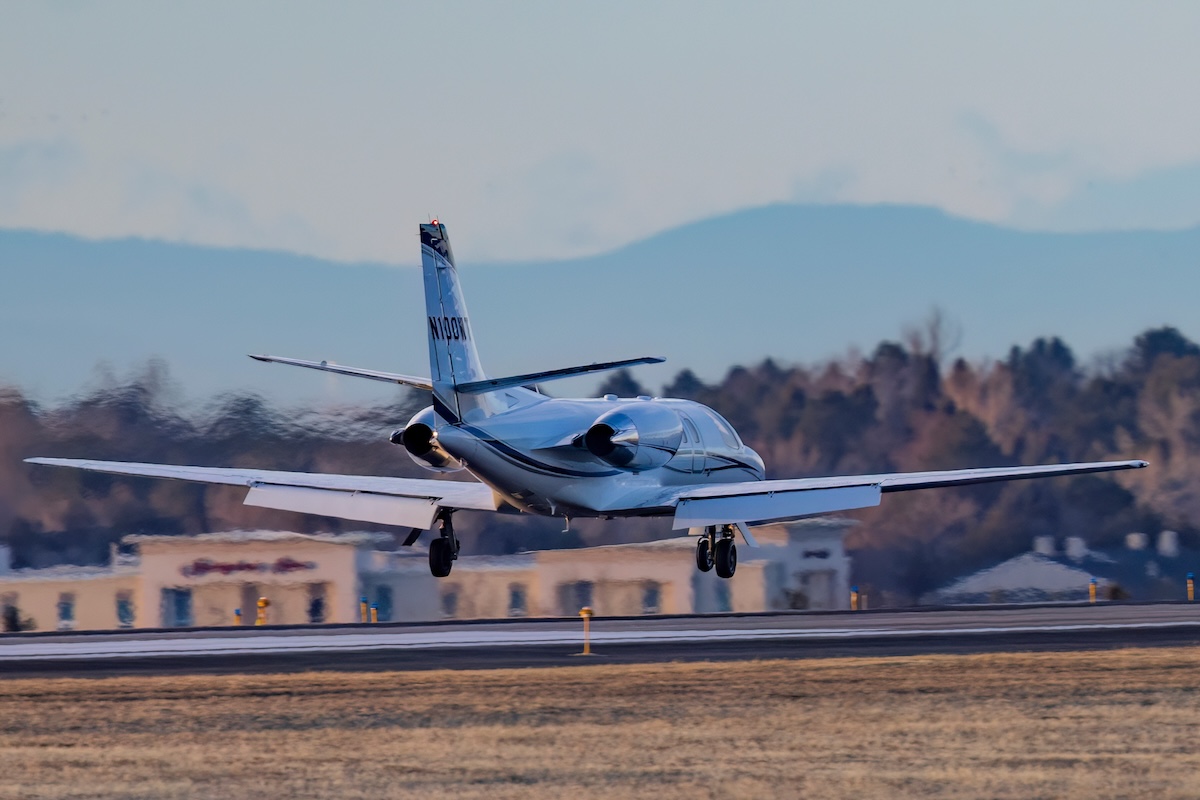
The FAA is halting single-pilot operations in certain models of Cessna Citation jets, citing safety concerns and “widespread noncompliance” with training exemptions.
On Friday the FAA issued a formal “Notice of Policy Change and Rescission of Single-Pilot Training Exemptions for Certain Cessna Aircraft.” The six-page report notes the change is based on safety concerns resulting from a review that “revealed widespread non-compliance with the exemptions,” which prompted the FAA to cease issuing exemptions that allow certain Cessna jets that require two pilots to be flown as a single-pilot operation.
The FAA issued the first CE-500 single-pilot exemption to Cessna Aircraft in 1984. At the time there was no data that specifically showed a degradation of safety between single-pilot operations in Part 23 CE-500 aircraft and two-pilot operations in Part 25 CE-500 aircraft.
The agency stated that a grant of exemption would serve the public interest by providing operators with increased operating flexibility and reduced economic burdens and would provide the FAA with data that could be used to help assess the need for general rulemaking.
This data was gathered and eventually the FAA began granting exemptions to training providers under 14 CFR Parts 61, 141, and 142. These exemptions permitted these training providers to conduct single-pilot operations.
The aircraft that require two pilots as listed in the notice are the model 500 Cessna Citation and Citation I, 550 Citation II, S550 Citation S/II 2, 552 Navy T-47A, 560 Citation V and Citation Ultra, 550 Bravo, 560 Encore, and 560 Encore+.
“Current exemption holders are being notified that their exemptions will be rescinded by separate action,” the FAA notice states. “This notice also serves to inform pilots who obtained single-pilot endorsements from training providers that held exemptions that they must cease single-pilot operations in aircraft that require two pilots under the regulations as they have no relief from the regulations.”
The FAA noted that the accident rate for single-pilot Citation jets is twice that of those crewed by two pilots. In addition, the agency investigated the practices of 14 organizations that provide training and pulled the single-pilot exemptions for 13 of them for acts of non-compliance, which included incomplete records, conducting required flight training in an advanced aviation training device (AATD) contrary to the conditions and limitations (C&Ls), and improper checks by DPEs that included falsified records.
“As a result, 13 of the 14 Part 61 exemption holders were denied an extension or had their exemption rescinded either for failing to respond to information requests or for non-compliance with the C&Ls.”
Meg Godlewski has been an aviation journalist for more than 24 years and a CFI for more than 20 years. If she is not flying or teaching aviation, she is writing about it. Meg is a founding member of the Pilot Proficiency Center at EAA AirVenture and excels at the application of simulation technology to flatten the learning curve. Follow Meg on Twitter @2Lewski.
Long appreciated for its fighter-like canopy and agile handling, the Grumman American AA-5 offers a unique blend of efficiency and sportiness. This particular model has been elevated into a highly capable cross-country machine thanks to a host of modifications that improve climb, cruise speed, and takeoff performance, making it a fun and practical choice for a commuter or trainer.
Logging 4,195 total hours on the airframe to date, this 1973 model retains an impressive 906-pound useful load and a 37-gallon fuel capacity, augmented by a cost-saving unleaded autogas STC. The exterior is finished in overall striking white with gray lower section and black accent stripes, giving it a classic and clean ramp presence that is further enhanced by Pulselite strobes.
Peeking inside reveals a well-maintained cabin designed with a retro aesthetic. The interior remains in good condition, featuring distinctive red seating and side panels, red carpets, and burled walnut paneling that adds a touch of classic warmth.
Driving this Traveler forward is a Lycoming O-320-E2G engine that boasts a 160 hp STC modification. With just 234 hours since major overhaul, the upgraded powerplant turns a Sensenich propeller, which carries an STC that eliminates a McCauley airworthiness directive (AD), showing approximately 773 hours since new.
1973 Grumman American AA-5 Traveler [Credit: AircraftMerchants]
Modernizing the cockpit is a highly capable avionics package anchored by a Garmin GNC-355 IFR GPS/comm and Garmin GI-106A indicator. Pilots will appreciate the addition of a uAvionix tailBeacon for ADS-B Out compliance, Insight GEM-602 graphic engine monitor, JPI Fuel Scan 450 fuel flow computer, and PS Engineering PMA-600M audio panel equipped with marker beacons and four-place intercom.
Listed at $89,500, this Grumman Traveler has been carefully hangared. With all logs and records intact, it is an excellent opportunity for anyone seeking a fun and efficient personal airplane.
If you’re exploring ownership options, FLYING Finance can help get you airborne. Use our airplane loan calculator to estimate your monthly payments, or connect with an aviation finance expert at flyingfinance.com.
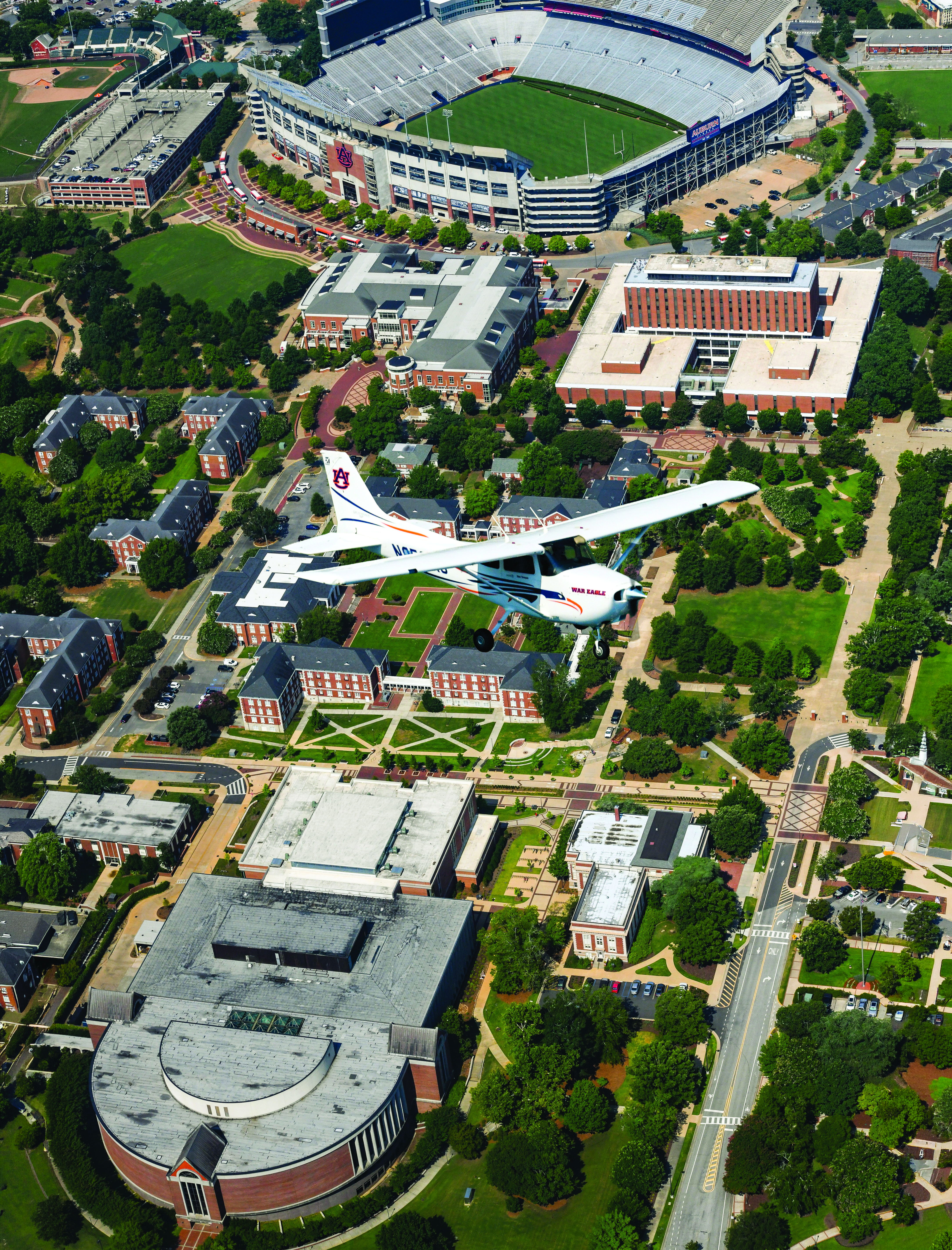
Auburn University in Alabama boasts a fleet of G1000-equipped aircraft, including 56 Cessna 172s. [Credit: Auburn University]
For some, the most appealing and memorable spot on a college campus is the football stadium, where they tailgated and cheered on their team to victory. For others, it’s the lecture hall or library, where they met their significant other or decided what they wanted to pursue as a career.
For many pilots though, the most important place during those college years is the airport.
While there are many active collegiate aviation programs in the U.S., only a handful of students at these programs train at a university-owned airport. Just as there are tales about campus buildings’ storied pasts and purpose, diving into the history of these special airports is an interesting endeavor.
If you're not already a subscriber, what are you waiting for? Subscribe today to get the issue as soon as it is released in either Print or Digital formats.
Here are four college aviation programs conducting student pilot training at their own airports.
Purdue University
Purdue University was founded in 1869 in West Lafayette, Indiana, and Purdue University Airport (KLAF) opened 61 years later in 1930. The airfield has been an important training site for aviators since its early days, and the famed aviatrix Amelia Earhart was a faculty member at the school for several semesters.
The Lockheed Model 10 Electra that Earhart flew on her ill-fated mission around the world was purchased for her by the Purdue Research Foundation. Some other famous aviators with Purdue ties include Neil Armstrong, Gus Grissom, Iven Kincheloe Jr., Jerry Ross, Chesley “Sully” Sullenberger, and Heather Penney.
Adam Baxmeyer, a Purdue alumnus, serves as the airport director. Baxmeyer notes that the airport’s storied past serves a strong foundation for its current-day importance as a general aviation facility that hosts a bevy of activity from an array of aircraft types.
“Our airport has a unique ethos centered on education, innovation, and transportation. The airport is often called the largest classroom on the West Lafayette campus,” said Baxmeyer, noting that this informal distinction goes back decades.
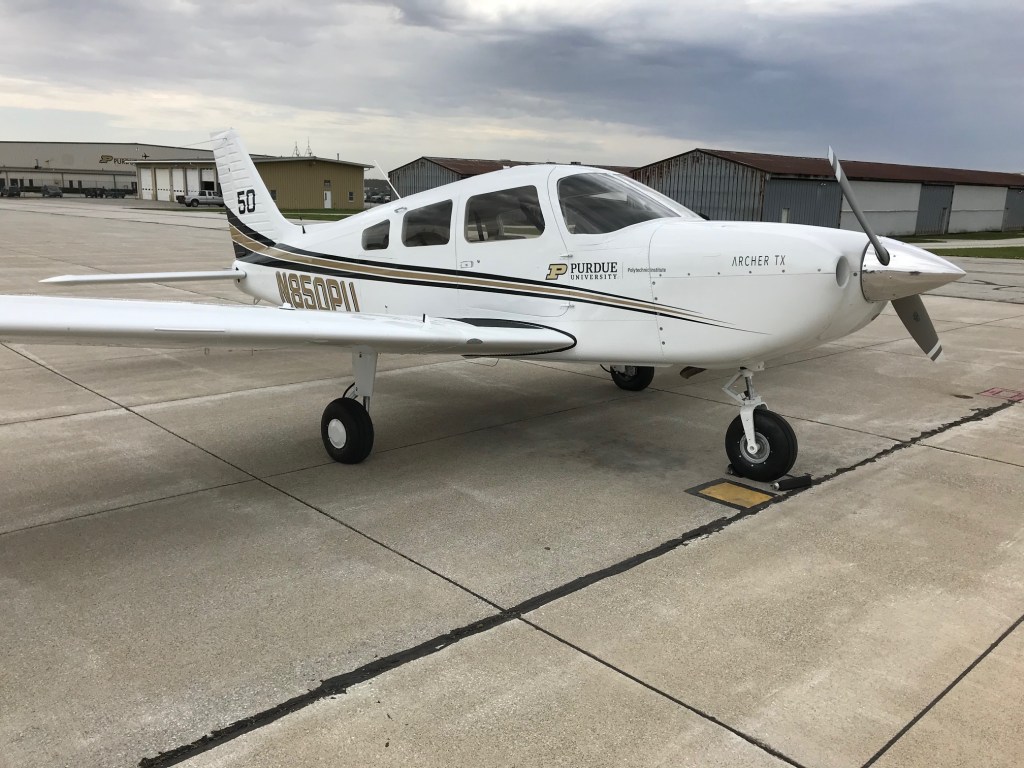
The university’s trainer fleet consists of 18 Piper Archers, four Piper Seminoles, and one Super Decathlon. Other frequent users of the airspace include United Airlines, being that there is a twice-daily flight to Chicago, as well as business, military, and cargo aircraft. The airport services about 200 charter flights per year for the Purdue University athletics department and its opponents. Corporate flights have become increasingly common, as the area is home to many major companies’ facilities, including Caterpillar, Subaru, GE Aviation, Rolls-Royce, SK Hynix, and Saab.
A Piper in the Purdue University fleet [Credit: Purdue University]
Purdue’s School of Aviation and Transportation Technology offers four majors—aeronautical engineering technology, aviation management, professional flight, and unmanned aerial systems. Many students who are pursuing the three non-flying degrees still opt to pursue ratings, even though it is not a requirement to graduate.
“We have two Part 141 schools based at the airport,” Baxmeyer said. “One is Purdue University’s School of Aviation and Transportation Technology, for Purdue students pursuing a degree in professional flight. They fly university-owned aircraft. Anyone else interested in learning to fly can do so through Purdue Aviation, which is an independent FBO based here at the field. They have flight students from many different majors as well as individuals from the Greater Lafayette community.”
The towered airport has two runways, the longest of which is 6,600 feet long. The airport isn’t only the “largest classroom on campus” for flight students, as non-flying majors frequently use it in their coursework as well. For example, students in the airport management and airport operations programs witness airfield inspections firsthand, which includes examining the runways’ condition, the fuel farm, snow removal equipment, and emergency equipment. Students also hold positions both in airport operations, as well as at the FBO, flight school, and airline ground handling.
Purdue’s other aviation facilities are robust. The Holleman-Niswonger Simulator Center houses a Boeing 737 and Airbus A320 flight training devices (FTDs), as well as a Hawker 900XP Level D full-motion simulator. There is an Operations Control Center, where students can watch and support program flight operations—of which there are more than 100 per day. There are also powerplant, electronics, materials, and advanced materials labs, which are used by aeronautical engineering technology students.
Purdue Aviation Day took place in April and drew more than 8,000 attendees to learn more about the airport and the university’s aviation programs. This annual event is Purdue’s largest that is student-run.
Ohio State University
Ohio State University in Columbus offers three aviation degree programs—a bachelor’s degree in aviation, a bachelor’s in air transportation, and a bachelor’s in aviation management. In total, there are about 500 students enrolled in aviation at Ohio State, 155 of whom are actively flying the university’s trainer aircraft. The program boasts 19 Cessna 172s and one Piper Seminole.
The degree offerings, fleet, and facilities have changed significantly over the past century. Aviation, though, has always been an integral part of the university’s identity.
“We started aviation here in 1917, and our first training class was for the U.S. Army Air Corps program,” said Brian Strzempkowski, an Ohio State alumnus and an assistant professor and assistant director of the Center for Aviation Studies. “We are the only school left that still has an aviation program from that original group of 10 schools that started training pilots for World War I. Our initial airport was centrally located on the main campus. Then the football stadium was built on that site, and we moved to the airport where we are now, which was built in 1942.”
Ohio State University Airport (KOSU) serves as home to over 180 aircraft and three runways, with the longest being 5,004 feet long. It is a Class D facility with a control tower and varied traffic types, making for a distinctive training environment.
“One of the unique features of the airport is that, depending on the year, it is either the third or fourth-busiest airport in the state of Ohio,” Strzempkowski said. “KOSU and Cincinnati Lunken [KLUK] go back and forth [for third], with Cleveland and Columbus being bigger. We have about 80,000 operations per year here, and probably around 30 to 40 percent of those are for training. The nice part about training here is that our students get mixed in with business jets, helicopters, and different types of aircraft that aren’t generally present at most GA facilities.”
Another benefit of the airport being university-owned is that everyone working on-site is an Ohio State employee.
“If our planes need to go into the maintenance shop, we have a maintenance shop and are not scheduled as an outside facility,” said Strzempkowski, noting that many of the airport jobs are held by student employees. “If student aircraft need to get fuel, the university fuel truck is right there.”
Strzempkowski pointed out that these opportunities present a great way for students to gain industry experience in a real environment and start an aviation career. Some of the roles include working at the FBO front desk or on the flight line or supporting the flight education program.
An integral part of the airport property is the Austin E. Knowlton Executive Terminal & Aviation Learning Center, which opened in 2019. Within the facility, there are three classrooms where ground schools are conducted for private, instrument, flight instructor, and commercial ratings. The terminal space is where the FBO is located, allowing students to conveniently network with pilots and aviation crewmembers. There are indoor and outdoor seating areas overlooking the airfield, including the NetJets Observation Deck.
A highly anticipated annual event at the airport is the free community open house, which is tentatively scheduled for September. The airport is also the site for EAA Young Eagles flights throughout the year and hosts a Youth Aviation Adventure (YAA) educational outreach each spring and fall.
Auburn University
Auburn University Regional Airport (KAUO) in Alabama may be one of the best airport investments of all time. James Birdsong, who serves as the director for Auburn’s School of Aviation, said that the university purchased the land where the airport now sits for $375 in 1939. The initial goal was to turn the previously privately owned airfield into a Civilian Pilot Training Program site.
About 1,100 pilots were trained there during World War II, and the flight training endeavor has since morphed into Auburn’s two aviation degree offerings—aviation management and professional flight.
“We have just under 1,000 students, and about 600 are in the flight program,” said Birdsong. “About 90 percent to 95 percent of the flight students qualify for the FAA Restricted Airline Transport Pilot [R-ATP] certification and go to the airlines. A few will go corporate, and a handful will join the military, typically in the [National] Guard or Reserves.”
Birdsong said Auburn has a large fleet of modern, G1000-equipped aircraft. The school also sports 56 Cessna 172s and 11 Piper Seminoles.
The capstone course for flight students takes advantage of the university’s Airbus A320 simulator located in the 23,000-square-foot Delta Air Lines Aviation Education Building. Opened in 2018, the facility houses a collection of other advanced aviation training devices (AATDs), as well as classroom facilities. The building’s eponym underscores the aviation program’s strong relationship with Delta, which has headquarters less than a two-hour drive from campus. The professional flight program has partnered with Delta through its Propel Pilot Career Path Program, which provides a clear pathway for the airline to hire students after graduation. Delta also has provided endowed professorships to attract and retain experienced faculty.
Another important industry partnership seeks to support the growing need for aviation maintenance technicians.
Southern Union State Community College’s A&P program opened a hangar this spring that’s located at the Delta Air Lines Aviation Education Building. This provides a convenient way for Auburn students interested in aviation maintenance to learn more and complete coursework on the field.
Birdsong advised that with around 150,000 residents in the local area, Auburn is predominantly a college town but there is local industry, including a GE Aerospace manufacturing facility. He said the airport is an integral part of the community’s transportation needs and, due to the growing traffic, there is a mobile ATC tower that will be replaced by a permanent facility. The 109-foot-tall tower is expected to open later this year.
“There is a lot of corporate traffic [coming in here], so it can get really crowded sometimes,” he said. “We actually are the busiest airport in the state of Alabama some days with our traffic count. On game days there is a temporary flight restriction [TFR] that goes up for home [Auburn Tigers] football games because the airport is only 3 miles from the stadium. During SEC games we can get about 250 transient aircraft, and the airport closes the shorter of the two perpendicular runways to park small GA aircraft there and put large traffic on the main ramps. Football brings a lot of energy, and the airport is definitely a barometer for how well the season is going. It’s a really cool environment.”
Auburn’s aviation program hosts prospective student tours every Friday. These are typically well attended and help future pilots and aviation leaders see what makes the program a leader within the collegiate aviation training environment. The program is set to host the annual Auburn Business Aviation Days showcase on September 23-24, as well as a Women in Aviation International (WAI) Girls in Aviation Day on October 3 at the airport.
University of Oklahoma
Located about three and a half miles from the heart of campus in Norman, Oklahoma, Max Westheimer Airport (KOUN) is where all major-specific courses are taught for the University of Oklahoma’s five aviation degree offerings. The 720-acre site boasts two paved runways, a control tower, classrooms and simulator lab, as well as hangar space for the school’s 33 training aircraft.
Eric Wydra, director of OU’s School of Aviation, said a student flight club was started in the late 1920s. That effort predated the university being gifted money by Westheimer, a pilot during WWI, that was used to purchase the land that turned into the airport. In 1942 the airport became home of Naval Air Station (NAS) Norman, which was used as a training site for pilots, mechanics, and other personnel. There have been 6,284 pilots to have graduated from NAS, according to the Norman World War II Museum, which is located on-site. OU’s aviation program was founded in 1947, and the airport has continually served as an important place for aviation education.
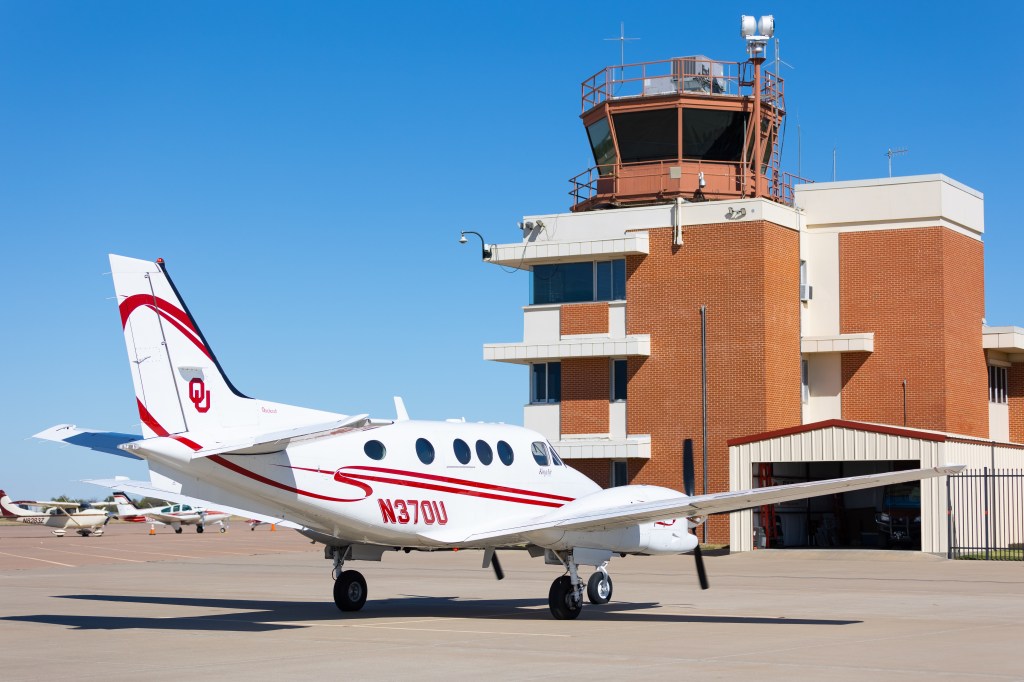
The University of Oklahoma’s King Air C90B turbine trainer at Max Westheimer Airport (KOUN). [Credit: University of Oklahoma]
“About four years ago, the university made a partnership with Norman Public Schools, and they are in the process of building an aviation high school here, which will be completed this fall,” Wydra said. “There will be a 10,000-square-foot building that includes four classrooms, office space, and a library for students [high school and college].”
Wydra said this project will more than double the current classroom footprint. Once constructed, the space will also be the site for future Sooner Flight Academy activities, including its summer camps.
“The airport is growing right now, and they’re in the process of building a new $16 million control tower that should be done by the end of the year,” he said. “And we just received about $31 million from both state and federal grants to extend our long runway to about 6,400 feet.”
One of the program’s many headwinds is its proximity to Oklahoma City, and the FAA’s office located there. That’s why one of the OU School of Aviation’s areas of focus is its air traffic management degree.
“We were the first four-year collegiate program to be certified by the FAA for what they call the Enhanced Air Traffic-College Training Initiative [E-CTI],” Wydra said. “That’s where our ATC students go directly to a control tower if they successfully complete the program, which is housed out here in our simulator building. We have both en route and tower ATC sims.”
The school offers a bachelor’s degree in aviation with five concentrations. Aviation management is becoming an increasingly popular option, with 90 students in the program and an incoming freshman class of around 40. The airport serves an important purpose to these students as well, since they can gain job experience through shadowing or an internship. The airport is less than a 20-minute drive from the National Weather Center, where students can learn more about meteorology.
Flight students utilize a fleet of Piper Warriors, 100is, and Seminoles. Those taking the turbine transition course fly a Beechcraft King Air C90B. Students pursuing their professional flight/helicopter degree complete rotorcraft coursework in a two-seat Guimbal Cabri G2. The maintenance hangar for all aircraft is based at the airport, so students can witness the return-to-service requirements for the aircraft that they are flying—an added bonus, as some schools perform their fleet’s maintenance off-site.
More than 100 students per year earn their private pilot certificate at the Norman airport, which is an important local economic engine in addition to being an integral flight training facility.
This feature first appeared in the August Issue 973 of the FLYING print edition.
Grant Boyd is a private pilot with eight years of experience in aviation business, including marketing, writing, customer service, and sales. Boyd holds a Bachelor's and a Master's of Business Administration degree, both from Wichita State University, and a Doctor of Education degree from Oklahoma State University. He was chosen as a NBAA Business Aviation ""Top 40 Under 40"" award recipient in 2020.
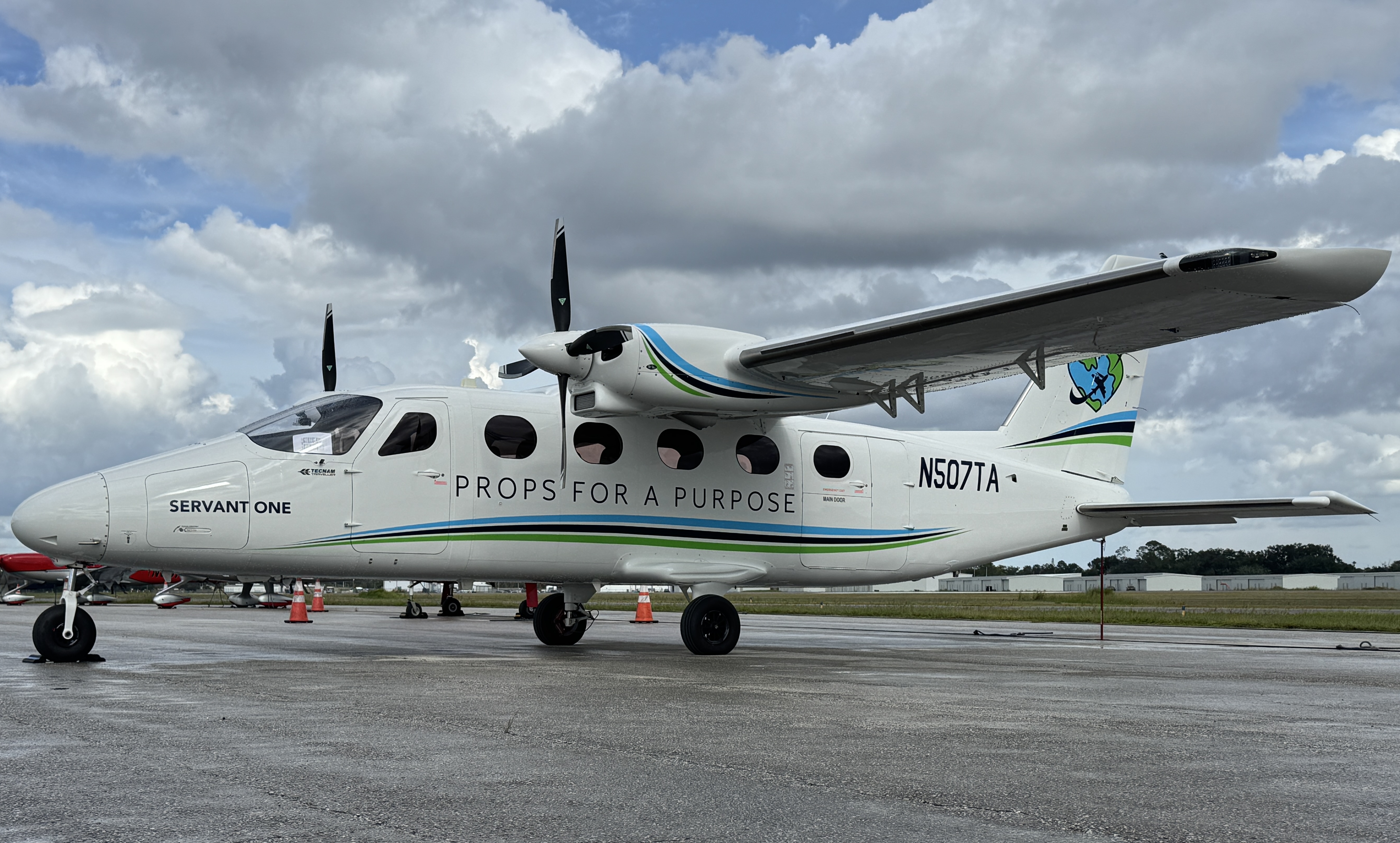
Props For A Purpose, an all-volunteer aviation group that relies on privately owned aircraft to provide relief efforts, has a 10-year lease to use Tecnam’s twin-engine workhorse, the P2012 Traveller. [Credit: Tecnam Aircraft]
Props For A Purpose, a U.S.-based nonprofit humanitarian aviation organization created in 2024, has acquired its first dedicated aircraft— a Tecnam P2012 Traveller.
“Soaring to Serve” is the motto of the Christian faith-based organization that boasts a nationwide network of 500 pilots and other aviation professionals that provide disaster relief, search and rescue, humanitarian response, and animal rescue using volunteers with privately owned aircraft.
According to Jacob Bealle, CEO of Props For A Purpose, the organization began in December of 2021 when devastating tornadoes tore through communities in western Kentucky where he lived.
“At the time, I made a simple Facebook post asking if any local pilots would be willing to help move supplies into the affected areas,” Bealle said. “The response was incredible. We began collecting supplies at our local FBO in Hopkinsville, Kentucky, and volunteer pilots used their own aircraft to fly them into surrounding communities in need.”
Bealle said the organization grew and evolved, assisting with relief efforts both in the U.S. and internationally.
“We responded to the flooding in Kerrville, Texas, [in 2025] transporting search and rescue personnel and resources into the region,” he said. “We also supported Hurricane Helene and Hurricane Melissa relief efforts in Jamaica [both in ’25], utilizing aviation to move critical supplies and personnel. Outside of major disasters, our work continues year-round. We coordinate flights for medical patients who need access to care away from home, transport medical personnel and supplies when needed, and conduct other humanitarian and animal-rescue missions through our volunteer pilot network.”
The organization evolved into a 501(c)(3), and since then has flown some 300 missions to date.
Bealle called the acquisition of the P2012 Traveller a major step forward for the group, as it no longer must strictly rely on volunteer aircraft.
“For the first time, we have a dedicated aircraft that gives us the capacity, flexibility, and efficiency to respond to a much wider range of missions…,” he said. “The Traveller allows us to respond faster, carry more, and support our partners in ways we simply could not before. This is the beginning of a new chapter for Props For A Purpose, and we are proud to introduce Servant One as a platform built to serve others.
“We are incredibly grateful for the Tecnam team and everyone who has helped make this next chapter possible, and we are excited to see how many lives can be impacted through this aircraft.”
About the Aircraft
The Tecnam P2012 is a twin-engine design known for its easily configurable cabin, making it a good choice for entities that need flexibility for both passenger transport and cargo operations.
Props For a Purpose acquired the aircraft through a 10-year-long term lease agreement with AeroSpring Leasing, a national company that brokers both aircraft and aviation training devices.
“I’m incredibly proud that AeroSpring has the opportunity to play a part in the mission of Props For A Purpose,” said Josh Colton, managing partner at AeroSpring Leasing, said in a news release. “Aircraft are remarkable tools, but what matters most is what we choose to do with them. This P2012 will be used to reach communities in times of need, support disaster-relief efforts, transport patients, and help people when aviation can make a real difference in their lives. Knowing that an aircraft we acquired will be serving that kind of purpose makes this transaction especially meaningful to me. We’re honored to partner with Props For a Purpose and Tecnam to help make that mission possible.”
The mission of Props For A Purpose is the kind of flying the Tecnam P2012 was designed for, according to Francesco Sferra, Tecnam P2012 special mission platforms sales and business development manager.
“The Traveller was designed with versatility and reliability at its absolute core, making it the perfect platform to seamlessly switch between passenger transport, cargo, and medical relief,” Sferra said. “Knowing that a Tecnam aircraft will be deployed as Servant One to save lives, provide hope, and support communities in need is the greatest testament to our design philosophy. We are proud to support this incredible mission.”
How Pilots Can Get Involved
Pilots who wish to participate in Props For A Purpose disaster-relief missions need to meet the following requirements:
Valid and current private pilot certificate or higher, with the appropriate class/type ratings and endorsements for the aircraft being flown
Instrument rating
Current third-class medical certificate or higher
At least 250 hours of PIC experience
Twenty-five hours make and model for single-engine aircraft
Seventy-five hours make and model for turbine and multiengine aircraft
Fifty hours PIC within the previous 12 months, which may be waived with a recent flight review or completion of a WINGS phase within the previous three months
Meg Godlewski has been an aviation journalist for more than 24 years and a CFI for more than 20 years. If she is not flying or teaching aviation, she is writing about it. Meg is a founding member of the Pilot Proficiency Center at EAA AirVenture and excels at the application of simulation technology to flatten the learning curve. Follow Meg on Twitter @2Lewski.
Airbus’ first A350F test aircraft, MSN700, rolls off the assembly line ahead of its planned maiden flight. [Credit: Airbus]
Aviation enthusiasts who have waited patiently for the maiden flight of Airbus’ next-generation A350F freighter will have the opportunity to view it live.
Airbus said Friday that it will broadcast the first flight live on X on September 29 at 4:20 a.m. EDT. The company noted that the milestone will be subject to weather conditions and other “essential operational requirements.”
The A350F flight test program has faced delays stemming from supply chain issues, staffing shortages, and challenges with production of the aircraft’s largest-in-class, main-deck cargo door. Its entry into service has been delayed from 2025 to the second half of ’27, per Airbus’ latest estimate. The manufacturer confirmed the freighter was under development in July 2021.
The A350F is built on the passenger A350-1000, though Laurent Bussiere, lead flight test engineer for the program, said this month that the freighter’s design is “between both” the A350-1000 and A350-900.
Bussiere said it has “unique dimensions” due to its fuselage configuration, which is “equivalent to an A350-900 forward fuselage [length] mated to an A350-1000 rear fuselage [length] and A350-1000 wings.”
“This creates a new aerodynamic model which affects flight control, while the new geometry for the landing gear affects ground maneuvering,” he said.
The type will use specialized nose landing gear that developer Liebherr-Aerospace began delivering to Airbus in April.
The manufacturer’s global A350F certification campaign aims to rack up 400 flight hours over nine months, using two aircraft with different flight test instrumentation.
What to Watch For
The aircraft planned to fly next week, MSN700, will study the type’s aerodynamic performance, handling qualities, and autopilot systems. The initial flight profile will be executed under manual control without flight envelope and stability protections. Five-person test crews will comprise two pilots and three engineers, whom Bussiere said have been trained to handle any first-flight contingencies.
A trailing cone will measure data such as airspeed, altitude, and Mach number and compare those measurements to the aircraft’s internal instruments.
The second test A350F, MSN701, is intended to fly with flight envelope and stability protections following MSN700’s validation of manual control. It is designed to test various systems in hot and cold weather. Airbus will gauge the model’s fire and smoke detection systems by piping in smoke on the ground and during flights. According to Airbus, this will eventually allow MSN700 to fly with real cargo.
“Our target is to be able to load and unload various representative containers and payloads every day after flight,” Bussiere said.
Some operators will be permitted to test the airplanes’ cargo loading and unloading capabilities themselves.
The European Union Aviation Safety Agency (EASA) will greenlight the initial flight test plan. Bussiere said EASA pilots and flight engineers will also be passengers on A350F performance flights and “become extensively involved in the formal certification phase planned in 2027.”
Airbus said the upcoming campaign follows “five years of detailed planning, component and demonstrator testing.”
Airbus personnel rehearse the A350F’s first flight in a simulator. [Credit: Airbus]
Earlier in 2026, the manufacturer completed what it calls a Virtual First Flight (VFF), designed to clear the aircraft’s new systems, validate flight control laws, and evaluate its behavior under “specific systems failure combinations.” A simulator was connected to real avionics systems test benches, including the A350F’s actual flight controls and digital engine control systems. Bussiere said the setup is “90 percent representative of the physical aircraft.”
The VFF campaign comprised 13 simulation sessions lasting approximately five hours each.
“This allows the team to assess failure criticality, determine appropriate reactions, and decide whether existing A350-1000 procedures…need to be adapted,” Bussiere said. “The only significant variable left to prove in the sky is the freighter’s specific aerodynamic model.”
What’s New on the A350F?
The freighter’s combination of advanced aerodynamics, weight-saving materials, carbon airframe, and Rolls-Royce Trent XWB-97 engines is intended to offer 20 percent lower fuel burn and carbon emissions versus aircraft it is designed to replace. With a range of about 4,700 nm, it would be capable of flying from Hong Kong to Anchorage, Alaska, at its full payload of 111 metric tons (nearly 245,000 pounds). A flight crew rest compartment with two beds will give pilots space to relax on long journeys.
The A350F’s massive cargo door is designed to fit everything from small e-commerce shipments to oversized cargo such as large aircraft engines, as well as items requiring temperature control.
The type will be capable of using up to 50 percent sustainable aviation fuel (SAF) at launch, but Airbus aims to increase that to 100 percent by 2030.
Airbus entered 2026 with 81 next-generation freighters on order but as of August had orders for 115 from at least 14 customers. The largest order is from Atlas Air with 20, followed by Air China Cargo and Cathay Pacific.
The A350F will rival Boeing’s upcoming 777-8F, which has 81 confirmed orders and is also targeting a 2027 service entry. The 777-8F is designed to carry slightly more cargo and fly 300 nm further than Airbus’ design.
Jack is a staff writer covering advanced air mobility, including everything from drones to unmanned aircraft systems to space travel—and a whole lot more. He spent close to two years reporting on drone delivery for FreightWaves, covering the biggest news and developments in the space and connecting with industry executives and experts. Jack is also a basketball aficionado, a frequent traveler and a lover of all things logistics.
Aviation professionals must disclose medical conditions and medications to the FAA, but many do not for fear of career repercussions. [Credit: iStock]
The U.S. Senate on Friday unanimously passed two bipartisan bills that aim to address stigmas around mental health in aviation and clarify what medications pilots can take.
The John A. Hauser Mental Health in Aviation Act (MHAA) would reduce barriers to seeking mental health treatment, accelerate the FAA’s medical approval process, increase funding to the Office of Aerospace Medicine, and implement other recommendations from the agency’s Mental Health and Aviation Medical Clearances Aviation Rulemaking Committee (ARC).
Pilots and other aviation professionals must disclose to the FAA any physical and psychological conditions as well as medications they are taking, but many do not for fear of career repercussions.
The Aviation Medication Transparency Act (AMTA) would create a comprehensive list of medications safe for pilots, air traffic control (ATC) specialists, and trainees. It would also indicate what period of time individuals holding an FAA medical certificate must have limited or no duties while taking certain medication.
The Aircraft Owners and Pilots Association (AOPA) maintains a list of what medications are appropriate for use as a general aviation pilot. But the FAA lacks such an index.
The Pilot Mental Health Campaign (PMHC), which has advocated for both bills, called the legislation “long-needed reform.” Its executive director, Chris Finlayson, said they are “landmark pieces of legislation that will begin to shift an archaic and regressive system surrounding mental health in aviation.”
“For far too long, pilots have faced a difficult choice between seeking necessary mental health care and maintaining their careers,” said Jason Ambrosi, president of the Air Line Pilots Association (ALPA), which co-chaired the Mental Health and Aviation Medical Clearances ARC. “When pilots know that reporting treatment won’t sideline them for months on end, they’ll come forward, and the FAA gets the information it needs to make sound medical decisions.”
Kristie Greco Johnson, senior vice president of government affairs for the National Business Aviation Association (NBAA), said the legislation “takes a meaningful step toward increasing transparency and erasing the stigma often associated with reaching out for support—ultimately strengthening business aviation’s safety culture.”
The National Air Traffic Controllers Association (NATCA) said in a statement shared with FLYING that controllers who seek mental health care “face significant obstacles.”
“The current system perpetuates a culture of silence and stigma that must be addressed,” NATCA said.
In addition to the PMHC, ALPA, NBAA, and NATCA, the bills are supported by Airlines for America and other pilot and airline associations.
The U.S. House passed its version of the MHAA earlier this year, and the House Transportation and Infrastructure Committee approved its variant of the AMTA last week.
“We urge both chambers to quickly resolve any differences between the bills and pass identical versions when they return in November,” NATCA said.
Addressing Mental Health in Aviation
ALPA said the MHAA would fix the FAA’s medical certification process, which “can keep pilots who seek mental health treatment grounded for more than a year.” It said delays in FAA medical approval “discourage pilots from seeking help and pose unacceptable safety risks.”
The bill is named after University of North Dakota student John A. Hauser, who took his own life in an airplane crash in 2021 while training to become a commercial pilot.
“He spelled it out very clearly to us in his letters that he wanted to get help but that he would have to give up flying if he got help, and, in his words, he said life is not worth living if he could not fly,” his father, Alan Hauser, said in 2022.
He added that John Hauser wrote a letter urging changes to the FAA’s rules “so that other young pilots don’t have to go through what I went through.”
The ARC’s final report found that about 20 percent of pilots and controllers who report a mental health diagnosis are initially disqualified. That leaves them unable to work until the FAA resolves their case. Less than 1 percent are denied, but the approval process can stretch for months.
The MHAA aims to expedite that process. It would require annual review of the FAA’s Special Issuance Medical Certification process, encourage pilots to seek help early, and expand peer-support programs that train them to confidentially discuss concerns and find resources.
The legislation would also increase funding for aeromedical examiners and mental health training with annual installments of $15 million to the Office of Aerospace Medicine over four years. Another $1.5 million annually would support a public information campaign to reduce stigma and raise awareness of the new policy.
The AMTA would give pilots and medical providers clarity on which medications they can and cannot take. Within one year of enactment, the FAA would need to publish a comprehensive list of medications designated as “can be safely prescribed,” “Do Not Issue,” or “Do Not Fly.” The list would be updated annually.
“There is a culture right now, which is not surprising to me, that you either lie or you seek help,” said NTSB chair Jennifer Homendy during the agency’s 2023 mental health summit. “We can’t have that. That’s not safety.”
Jack is a staff writer covering advanced air mobility, including everything from drones to unmanned aircraft systems to space travel—and a whole lot more. He spent close to two years reporting on drone delivery for FreightWaves, covering the biggest news and developments in the space and connecting with industry executives and experts. Jack is also a basketball aficionado, a frequent traveler and a lover of all things logistics.
Sign-up for newsletters & special offers!
Get the latest stories & special offers delivered directly to your inbox.