Register

This 1979 Piper PA-28-201T Turbo Dakota Is a High-Flying ‘AircraftForSale’ Top Pick

Integrated G3X glass, GFC-500 autopilot, and fresh turbocharged engine bring elite situational awareness.

1979 Piper PA-28-201T Turbo Dakota [Credit: AircraftMerchants]

Every day, the team at Aircraft For Sale chooses an airplane that catches our attention because it is unique, a good deal, or has other qualities we find interesting. You can read Aircraft For Sale: Today’s Top Pick at FLYINGMag.com daily.

Today’s Top Pick is a 1979 Piper PA-28-201T Turbo Dakota.

Offering pilots the ability to fly high, cruise fast, and carry an impressive amount of gear, the Piper PA-28-201T Turbo Dakota sets a benchmark for single-engine versatility. Designed to get above the weather and handle high terrain with ease, this specific aircraft combines excellent situational awareness with raw performance, making it a rare find for owners who want to go everywhere and carry everything.

Accumulating 4,250 total hours on the airframe to date, this model boasts a formidable 1,166-pound useful load to maximize its hauling capabilities, aided by the removal of the air conditioning system. The exterior is maintained in very good condition, featuring a 1993 paint scheme with a gray lower section, white upper, and red accent stripes, while aerodynamic and operational additions like vortex generators, Met-Co-Aire fiberglass wingtips, LED lighting, and wheel pants enhance its overall ramp presence.

Exploring the cabin highlights a well-kept interior environment tailored for utility and comfort. Occupants are treated to comfortable tan leather seating, gold carpets, custom instrument panel, and practical baggage area complete with hat rack to easily stow travel essentials.

Providing the muscle for those high-altitude missions is a factory-new, turbocharged Continental TSIO-360-FB9B engine that was installed in April 2023 and is kept ready for cold weather with a Tanis engine preheater. This fresh powerplant turns a dynamically balanced McCauley three-blade propeller, which utilizes an STC and an AeroTechnologies governor for smooth, reliable thrust.

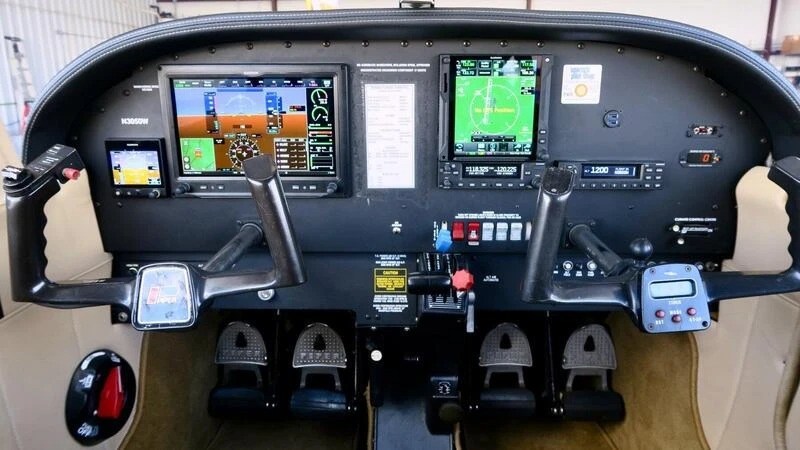
Scanning the upgraded flight deck reveals an incredibly modern, custom avionics suite anchored by a Garmin G3X Touch PFD with engine information and lean assist, alongside a Garmin GTN-750 WAAS IFR GPS/nav/comm. The all-glass setup is further augmented by a Garmin GFC-500 autopilot with pitch trim, Garmin G-5 standby ADI, GTX-345 transponder with ADS-B In/Out, Garmin GNC-225 comm, and GMA35C remote audio panel featuring Bluetooth and a four-place intercom.

Listed at $239,500, this hangar-kept machine has transparent logs detailing a minor 1983 hangar rash repair. It represents an exceptional opportunity for pilots seeking modern technology paired with heavy-lifting performance.

If you’re exploring ownership options, FLYING Finance can help get you airborne. Use our airplane loan calculator to estimate your monthly payments, or connect with an aviation finance expert at flyingfinance.com.

FLYING Staff

FLYING Magazine is a one-stop resource for everything aviation, including news, training, aircraft, gear, careers, photos, videos, and more.

Does ATC Know When Your Altimeter Is Set Incorrectly?

How transponders, pressure altitude, and controllers spot aircraft flying at the wrong altitude.

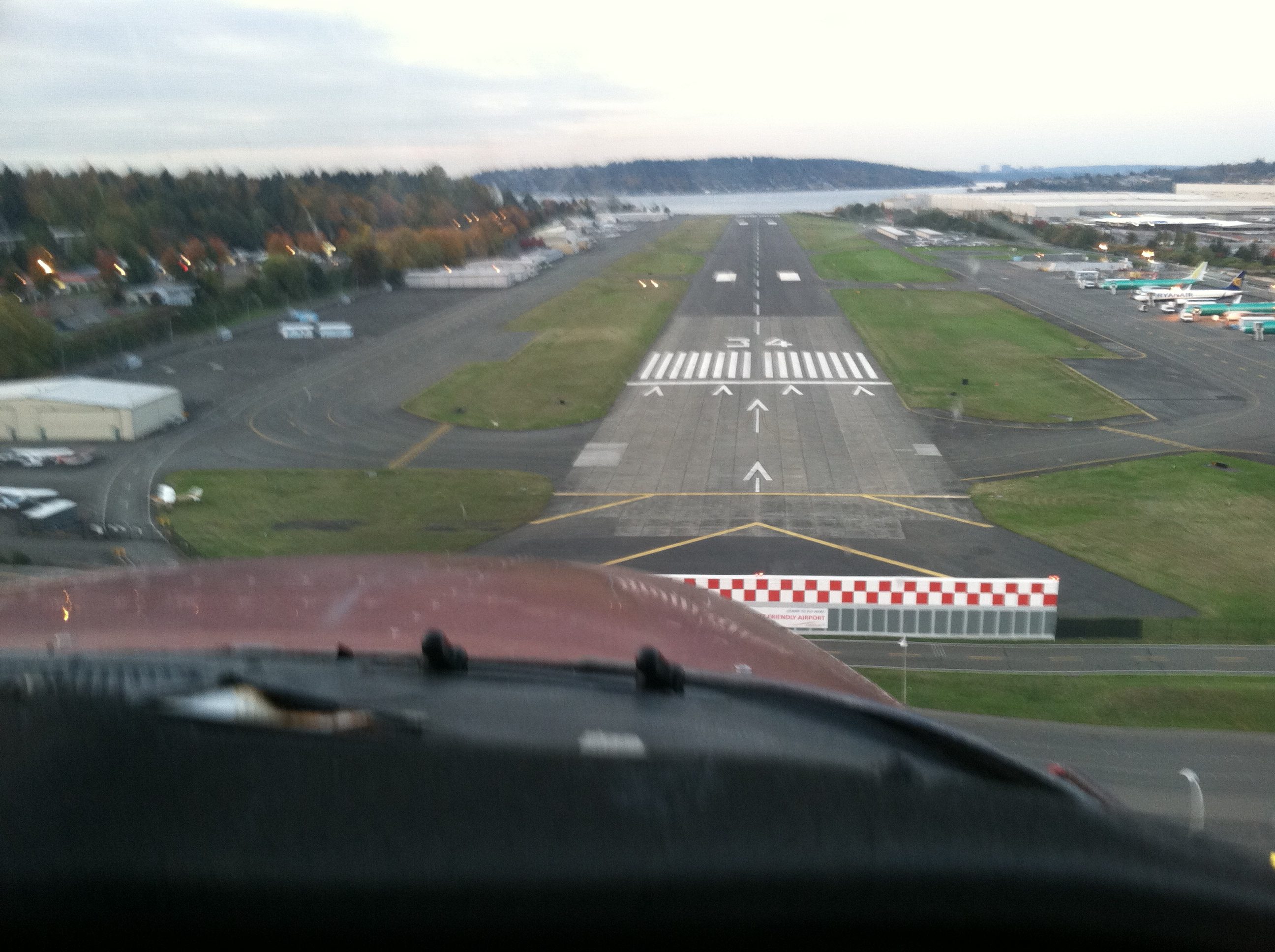
Cockpit of aircraft on final approach [Credit: Meg Godlewski]

Question: I’m a student pilot with about five hours experience and yesterday the CFI distracted me and, when I looked away, he reset the altimeter so it was a couple of hundred feet off. Of course, I didn’t catch it until after we landed. I know you can get into trouble for flying at the wrong altitude. Does ATC know it when you don’t set the altimeter correctly? I am flying out of a nontowered airport if that makes a difference.

Answer: Air traffic control reads altitude from the aircraft’s transponder. The transponder receives its information from the aircraft’s encoding altimeter, which measures the pressure in reference to 29.92 Hg (inches of mercury), also known as pressure altitude.

When a pilot adjusts the barometric scale using the Kollsman window, the data sent to the transponder is not affected, and therefore ATC isn’t going to see a dramatic change in the transponder reading. However, if you are off altitude, perhaps flying at 2,000 feet indicated because that’s what controllers assigned, and ATC shows you at 1,500, they will likely give you a low altitude alert and an updated altimeter setting to get you back where you should be. 

“Correcting” is the pilot’s response as they make the change.

Just an FYI, the sneaky reset of the altimeter is a CFI trick to teach you to listen to the automated weather to verify the altimeter setting before entering the pattern. Many student pilots have landed with the altimeter not quite right.

That being said, it is a proud day when the learner recognizes they are slightly too low or too high in the pattern as they know the sight picture and then double-check the altimeter to fix it.


Ask us anything you’ve ever wanted to know about aviation. Our experts in general aviation, flight training, aircraft, avionics, and more may attempt to answer in a future article. Email your questions here.

Meg Godlewski

Meg Godlewski has been an aviation journalist for more than 24 years and a CFI for more than 20 years. If she is not flying or teaching aviation, she is writing about it. Meg is a founding member of the Pilot Proficiency Center at EAA AirVenture and excels at the application of simulation technology to flatten the learning curve. Follow Meg on Twitter @2Lewski.

Off Target: The High Cost of Trying to Salvage a Bad Approach

It wasn’t that important for one Georgia pilot to get it right.

Mastering the 180-degree, power-off approach requires not just accuracy, but the judgment to go around when conditions fail. Pilots must remember that a missed maneuver is a learning opportunity, not failure. [Credit: Glenn Watson]

A Georgia pilot, 52, had 380 hours, an instrument rating, and a Cirrus SR22. He was working on his commercial.  He had the day free, so he called an instructor friend and arranged to do some flying.

One of the skills tested for the commercial license—it used to be required for the private as well, but no longer—is the 180-degree, power-off approach to a landing. You cut power to idle on the downwind leg abeam a target point on the runway. You have to touch down on or beyond that target, but within 200 feet of it. It’s a routine landing for a sailplane, but in a powered airplane it has the exotic flavor of an emergency. 

The pilot and his instructor, evidently practicing this maneuver, flew several circuits on Runway 20 at Barwick-LaFayette Airport (9A5). The most likely target point on that runway would be the displaced threshold—the runway numbers are placed a convenient 200 feet beyond it. The displaced threshold is 610 feet from the approach end, so you can arrive short and still alight on the pavement.

This Article First Appeared in FLYING Magazine

If you're not already a subscriber, what are you waiting for? Subscribe today to get the issue as soon as it is released in either Print or Digital formats.

Subscribe Now

On the first circuit, judging from the accident report’s depiction of the download from the airplane’s data recorder, the Cirrus was high crossing the threshold and landed long. The second circuit ended the same way. In fact the pilot may have gone around without even touching down. During both approaches, he made a continuous turn from downwind to final.

On the third attempt, the pilot flew his downwind leg closer to the runway and started his turn earlier. Possibly he hadn’t used flaps on the previous approaches, but he did on this one, and his rate of descent was about 200 fpm greater. Despite a light headwind on base, he misjudged his turn rate and had to bank steeply to avoid crossing the extended centerline. And now he was low as well, with the target spot still hundreds of feet ahead. He began to raise the nose, hoping to delay the touchdown.

The Cirrus stalled and crashed 150 feet short of the threshold, sliding past it before coming to rest in the grass beside the runway. The airplane was consumed by fire—both men died.

The National Transportation Safety Board (NTSB) blamed the accident on two factors: the pilot’s exceeding the critical angle of attack and the instructor’s failure to intervene in time to stop him. 

The instructor’s electronic log revealed that of his 1,600 hours he had flown 382 over a five-year period between 2019 and ’24. That’s low for an active instructor, but the pandemic would account for a lapse in activity during part of that period. He had ceased logging time during the past year, and so his recent flight experience, if any, went unrecorded. In 2024, he had been hired as a first officer by a fractional corporate business jet operator, but he received unsatisfactory marks on several simulator sessions and resigned after two months.

A few details emerged from the data recorder. The propeller was in flat pitch. The greatest bank angle attained during the final turn was 48 degrees, about 80 feet above the ground. The stall occurred at around 72 kias, 8 knots below the handbook value for a 45-degree bank with half flap.

We don’t know how many times the pilot had attempted this maneuver in the past, but it’s the sort of thing that requires some feel, and feel is acquired by repetition. That he had trouble executing it isn’t surprising. It’s not as simple as it sounds. Two hundred feet goes by in less than two seconds. It’s difficult to judge the touchdown point when the airplane isn’t facing the runway. A little wind, from no matter which direction, can throw things off. A glider pilot has spoilers to manage the glide path. Multiple methods are available to a power pilot, including ground track, speed, flaps, the forward slip, and propeller pitch. But the very number of options increases the complexity of the task.

Flight tests require you to perform certain tricks with a certain degree of accuracy. You can learn to do the power-off approach by memorizing some power settings, altitudes, and turn points. But real emergencies don’t set themselves up as neatly as flight test maneuvers do, and so practicing to get the power-off 180 right counts for less than just doing lots of power-off approaches from various locations and altitudes. The thing that you’re after is the feel of the maneuver, and for that, accuracy isn’t as important as just doing it over and over.

Possibly the pilot, having begun his turn closer to the runway than on the two previous circuits, became preoccupied with managing his turn rate so as not to cross the centerline, and in the process lost focus on his altitude. But in that case it should have been up to the instructor either to advise him to go around, or caution him not to bank too steeply, or take over control and fly the airplane safely away before unloading on the pilot some familiar boilerplate about why extreme maneuvering at low level isn’t a good idea.

We can ponder why the instructor didn’t intervene, but we can’t be certain that he didn’t.  He may have tried and been too late, or the pilot may have ignored his warnings. The instructor might have anticipated that the position of the airplane, and its rates of turn and descent, were not going to lead to a successful completion of the approach, but he couldn’t foresee that the pilot would make such a drastic effort to salvage it. During the final seconds events may have unfolded so quickly that an attempted intervention came too late.

The fact that the student and the instructor were friends could have played a role. The instructor might have had a more indulgent view of his friend’s airmanship than was warranted, or been reluctant to offend him, and the pilot, conversely, might have felt that because he was with a friend he was allowed to fly a little more flamboyantly than he would with a more censorious instructor.

But that’s just speculation. It’s not necessary to apportion blame for their common catastrophe between the two men. If there’s a lesson to be found in this accident, it’s that some mistakes aren’t worth trying to fix. Even a failed maneuver can have value. It’s just as important to know what “wrong” feels like as what “right” feels like. Going to extremes to rescue a failed approach risks an even worse failure. Instead, practice recognizing a bad approach and going around. It’s better piloting and a better use of training time.

Needless to say, if the pilot had banked 45 degrees two wingspans above the ground on a commercial check ride, he would have gone home then and there. 


This column first appeared in the August Issue 973 of the FLYING print edition.

Peter Garrison

Peter Garrison taught himself to use a slide rule and tin snips, built an airplane in his backyard, and flew it to Japan. He began contributing to FLYING in 1968, and he continues to share his columns, ""Technicalities"" and ""Aftermath,"" with FLYING readers.

Airbus A350F Makes First Flight

Freighter is intended to offer 20 percent lower fuel burn and carbon emissions versus aircraft it is designed to replace.

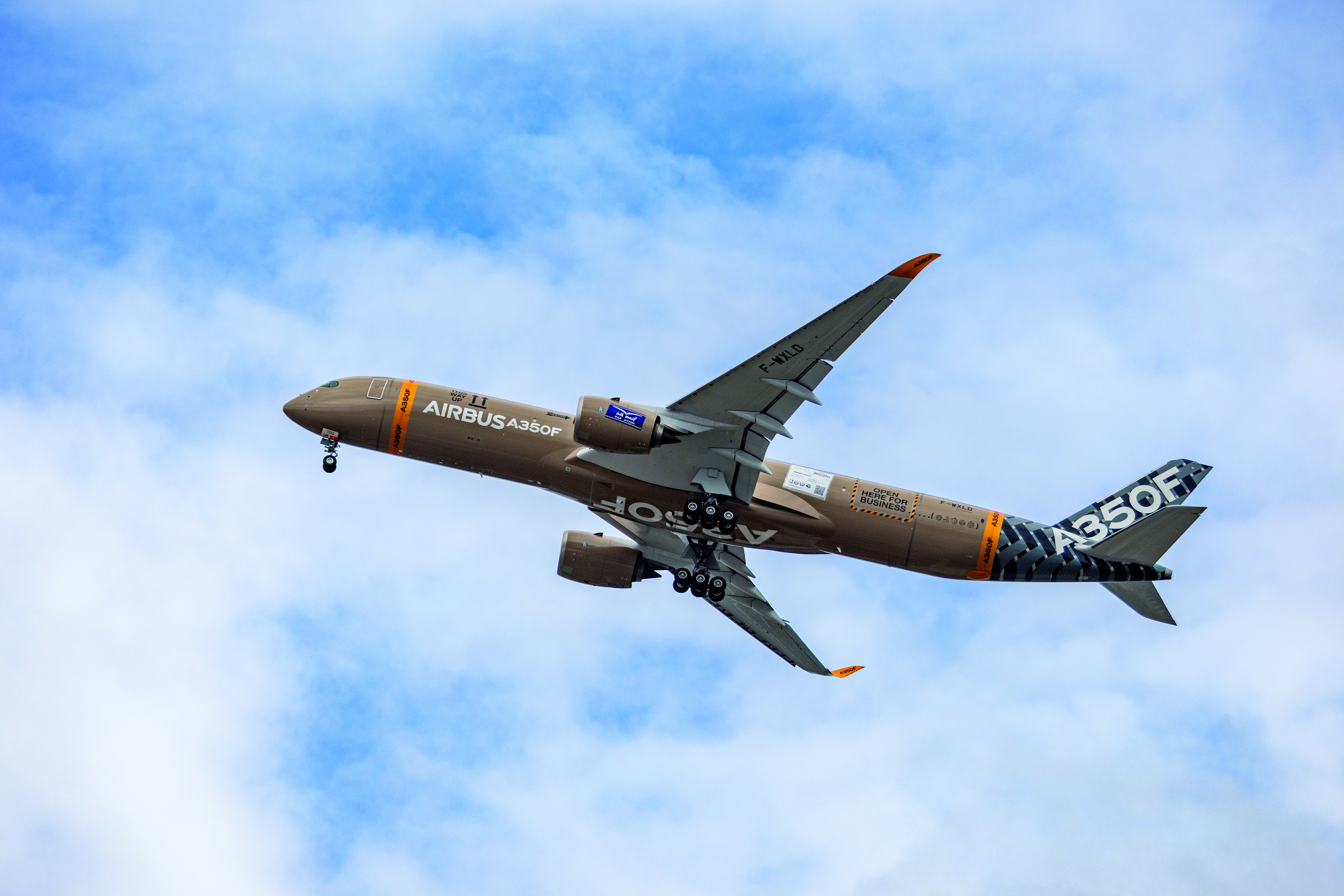
Airbus A350F test aircraft first flight
Airbus’ first A350F test aircraft completed its maiden flight Tuesday in France. [Credit: Airbus]

Airbus’ next-generation A350F freighter, which the manufacturer confirmed to be under development in July 2021, has finally conducted its maiden flight.

The aircraft, registered F-WXLD and referred to as MSN700 by Airbus, is the first of two test aircraft the manufacturer will use for a more-than-nine-month test campaign. It aims to rack up more than 400 flight hours before moving into formal certification in 2027, with deliveries expected in the second half of the year.

A dedicated Airbus crew of five flew MSN700 for 4 hours and 10 minutes, reaching an altitude of 25,000 feet. FlightRadar24 said close to 1 million people tracked the flight.

The A350F’s debut was streamed live during the early hours of Tuesday morning for American aviation geeks, but Airbus captured the moment the freighter first took to the skies.

Lars Wagner, CEO of Airbus Commercial Aircraft, called the A350F a “true game-changer for the air cargo market, combining unmatched operational flexibility, fuel efficiency, and range.”

The freighter is intended to offer up to 40 percent lower fuel burn and carbon emissions versus aircraft it is designed to replace. Its projected range of about 4,700 nm at full payload of 111 metric tons (nearly 245,000 pounds) would enable trips between cities such as Hong Kong and Anchorage, Alaska.

The A350F’s massive cargo door is designed to be the largest in its class and fit everything from small e-commerce shipments to oversized cargo such as large aircraft engines, as well as items requiring temperature control.

The Airbus crew carried out a battery of tests on the aircraft, which is fitted with special flight test instrumentation. They focused on verifying its basic airworthiness, gauging fundamental flying qualities, and ensuring basic systems performed as predicted. Airbus said earlier this month that a trailing cone will measure data such as airspeed, altitude, and Mach number and compare those measurements to the aircraft’s internal instruments.
The manufacturer said its second A350F prototype (MSN701) is in an advanced stage of final assembly and will get a paint job in the “next few weeks.”

What’s Next for the A350F?

The A350F flight test program has faced delays stemming from supply chain issues, staffing shortages, and challenges with production of the main-deck cargo door. Its entry into service has been delayed from 2025 to the second half of ’27, per Airbus’ latest estimate.

Laurent Bussiere, lead flight test engineer for the program, said this month that the freighter has “unique dimensions” due to its fuselage configuration, which is “equivalent to an A350-900 forward fuselage [length] mated to an A350-1000 rear fuselage [length] and A350-1000 wings.” Bussiere described it as “between both” the A350-1000 and A350-900.

“This creates a new aerodynamic model which affects flight control,” he said.

Bussiere added that the aircraft’s specialized nose landing gear, developed by Liebherr-Aerospace, “affects ground maneuvering.”

The prototype that flew Tuesday is intended to study the A350F’s aerodynamic performance, handling qualities, and autopilot systems. The initial flights are being executed without flight envelope and stability protections to validate flying under manual control.

The second test aircraft, MSN701, will fly with those flight envelope and stability protections and is designed to test various systems in hot and cold weather. For example, Airbus will gauge the model’s fire and smoke detection systems, which it said will eventually allow MSN700 to fly with real cargo. Some operators will be permitted to test the airplanes’ cargo loading and unloading capabilities themselves.

“Our target is to be able to load and unload various representative containers and payloads every day after flight,” Bussiere said.

European Union Aviation Safety Agency (EASA) pilots and flight engineers will be passengers on A350F performance flights and “become extensively involved in the formal certification phase planned in 2027,” he added.

The freighter’s combination of advanced aerodynamics, weight-saving materials, carbon airframe, and Rolls-Royce Trent XWB-97 engines is intended to enable long-range, fuel-efficient operations. A flight crew rest compartment with two beds will give pilots space to relax on long journeys.

Airbus said “advanced materials” comprise over 70 percent of the A350F’s airframe, giving it a maximum takeoff weight (MTOW) that is 46 metric tons lighter than competitors. The manufacturer said it is the first new freighter to fully meet the International Civil Aviation Organization’s (ICAO) latest carbon emission standards It will be capable of using up to 50 percent sustainable aviation fuel (SAF) at launch, but Airbus aims to increase that to 100 percent by 2030.

Airbus said Tuesday that it had recorded 115 A350F orders from 14 disclosed customers at the end of August, which it said represents a 59 percent market share in the large freighter category. It entered 2026 with 81 on order. Atlas Air is the largest customer, with 20 orders.

The A350F will rival Boeing’s upcoming 777-8F, which has 81 confirmed orders and is also targeting a 2027 service entry. The 777-8F is designed to carry slightly more cargo and fly about 300 nm further than Airbus’ design.

Jack Daleo

Jack is a staff writer covering advanced air mobility, including everything from drones to unmanned aircraft systems to space travel—and a whole lot more. He spent close to two years reporting on drone delivery for FreightWaves, covering the biggest news and developments in the space and connecting with industry executives and experts. Jack is also a basketball aficionado, a frequent traveler and a lover of all things logistics.

Report Finds General Aviation Contributes $339B to U.S. Economy

New study details GA’s multibillion-dollar impact and support for over 1.3 million American jobs.

Airplane on a runway [Credit: Shutterstock]

General aviation supports about 1.33 million jobs and contributes an estimated $339.2 billion to the U.S. economy, serving as a significant economic engine despite common perceptions that it is primarily a tax-supported hobby for the wealthy, according to a recent report by the American Association of State Highway and Transportation Officials. The report, officially entitled “The Impact of General Aviation on State and Local Economies,” was created by AASHTO, the Alliance for Aviation Across America, and the National Association of State Aviation Officials (NASAO).

Designed as a communication resource for state aviation and transportation officials, the report lists the economic impact of general aviation (GA) for each state and notes the total for the country.

According to the report:

  • GA supported 1,330,200 jobs nationally and generated $107.5 billion in labor income.
  • GA contributed $178.1 billion to gross domestic product.
  • More than 4,400 public-use airports across the country can be accessed by GA, compared with 549 airports served by scheduled commercial airlines.

The report figures were drawn from Contribution of General Aviation to the U.S. Economy in 2023, released in February 2025 by PricewaterhouseCoopers.

“For thousands of communities, general aviation airports are an essential part of the broader transportation system, connecting people and businesses to jobs, markets, health care, emergency services, and destinations across the country,” said Devin Osting, executive director of the Alliance for Aviation Across America, in a news release. “This report gives state and local transportation leaders the data and examples they need to show how those airports contribute to a prosperous economy and a connected, resilient national transportation network.”

GA as a Lifeline

The report notes that California leads the nation in GA economic impact at $39.8 billion. The Golden State’s aviation boom can be attributed in part to World War II when Southern California became the home of multiple aircraft manufacturers, such as the Douglas Aircraft Company, McDonnell Aircraft, North American Aviation, Consolidated Aircraft (Convair), Northrop Corporation, Vultee Aircraft, Hughes Aircraft Company, and the Lockheed Corporation.

After the war many of the factories transitioned to civilian aircraft manufacturing. Several companies consolidated and are still there today producing aircraft.

Many of the airports now in use by GA also trace their roots to WWII. Built for the war effort, when no longer needed they were sold to the municipalities for $1 with the understanding that they would be kept as airports in perpetuity. Those airports, once on the edge of a rural community, are now much closer to populated areas and provide access to air travel and air cargo that supports other industries.

Meg Godlewski

Meg Godlewski has been an aviation journalist for more than 24 years and a CFI for more than 20 years. If she is not flying or teaching aviation, she is writing about it. Meg is a founding member of the Pilot Proficiency Center at EAA AirVenture and excels at the application of simulation technology to flatten the learning curve. Follow Meg on Twitter @2Lewski.

Skydivers Jump to the Rescue After Wisconsin Plane Crash

Emergency leap into a cornfield assists four survivors following an unscheduled off-airport landing.

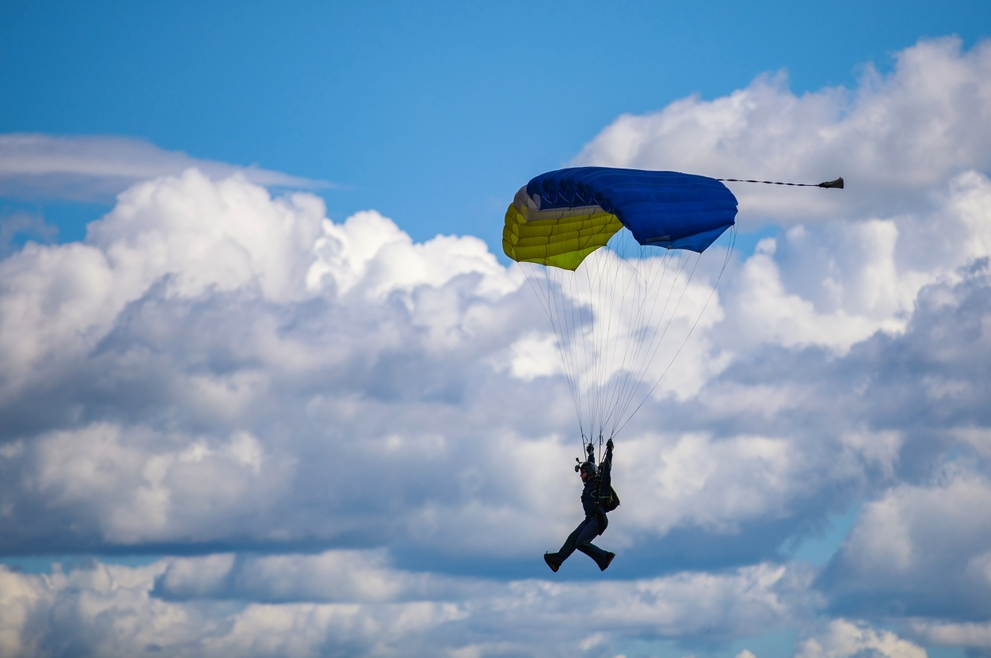
Skydiver with parachute deployed [Credit: Shutterstock]

Three skydivers in Wisconsin witnessed a small airplane perform an unscheduled off-airport landing in a corn field and literally jumped into action.

The airplane in distress was identified as a Beechcraft 35-A33 Debonair. The skydivers told authorities they witnessed the small plane take off from East Troy Municipal Airport (57C) around 1:30 p.m. ET on Sunday then disappear behind a tree line. When it didn’t reappear, they wondered if it had crashed.

The airport is located in a rural area approximately 23 miles southwest of Milwaukee.

According to a statement from Skydive Milwaukee, the skydivers who came to the rescue were aboard a Cessna Caravan jump plane when they observed the Debonair go down in a cornfield.

Because the location was difficult to reach from the road they decided to jump in. One of the skydivers was a former EMT and instructed the pilot of the jump aircraft to get them close to the crash site.

According to local firefighters who responded to the scene, the skydivers assisted the four people on board the aircraft until help arrived. The pilot and three passengers aboard the Debonair sustained non-life-threatening injuries. Three were taken to a local hospital as a precaution, and the fourth occupant was treated at the scene and released.

Video images of the crash site captured by WISN News Chopper 12 shows the aircraft in the field.There is a wide swath cut in a corn field and the Debonair resting slightly on its left side with the door open. There were no signs of fire.

The FAA and National Transportation Safety Board are investigating the accident.

Meg Godlewski

Meg Godlewski has been an aviation journalist for more than 24 years and a CFI for more than 20 years. If she is not flying or teaching aviation, she is writing about it. Meg is a founding member of the Pilot Proficiency Center at EAA AirVenture and excels at the application of simulation technology to flatten the learning curve. Follow Meg on Twitter @2Lewski.

FAA Proposes Relaxing Part 135 and 91 Oxygen Mask Rules

Pilots of pressurized aircraft would be able to fly at any certified altitude without supplemental oxygen if quick-donning masks are available.

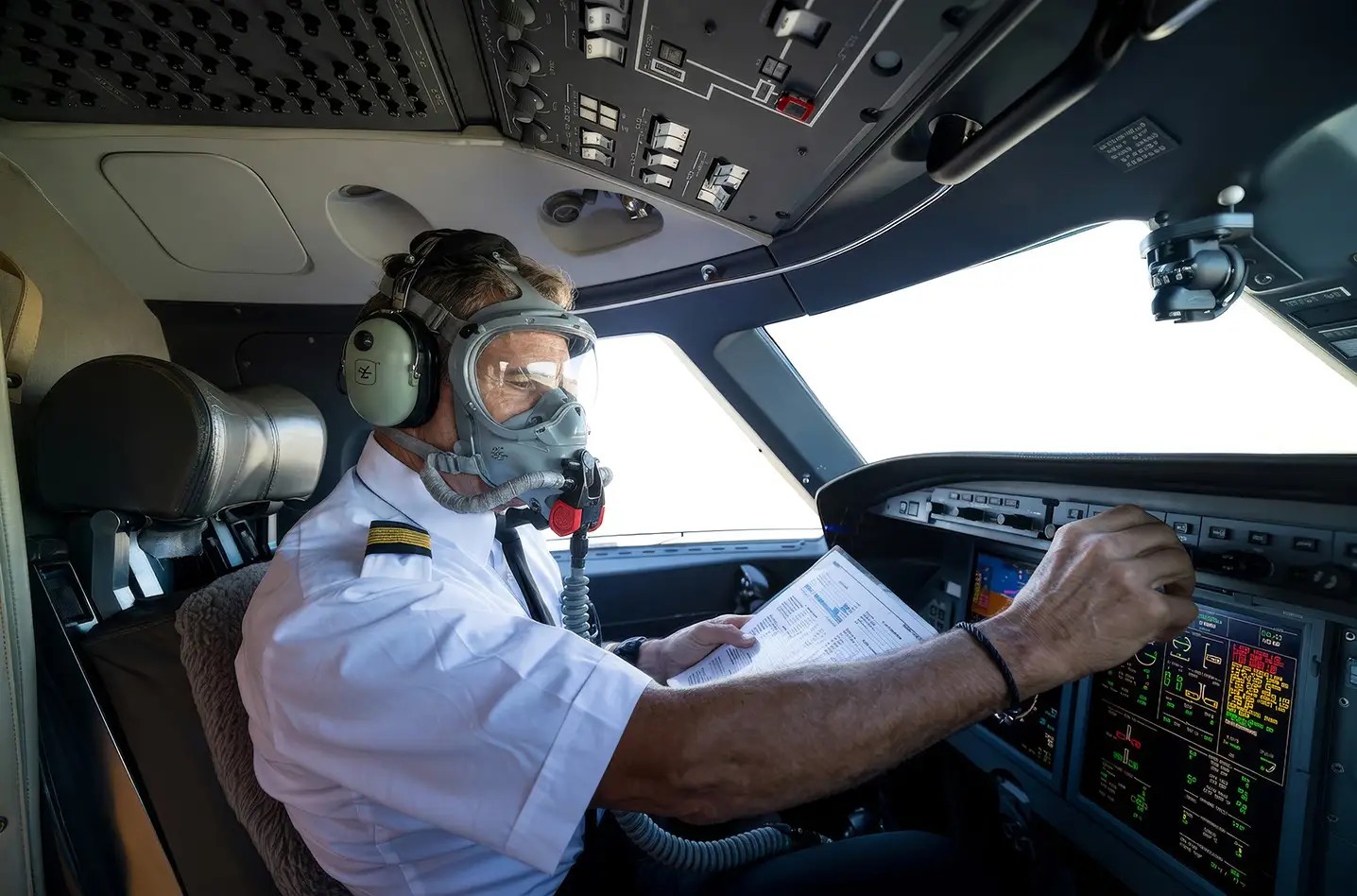
pilot in cockpit wearing oxygen mask
Evolution of aircraft design and low rate of pressurization failures at high altitude prompted FAA to review its existing oxygen mask requirements for Parts 135 and 91. [Credit: NBAA]

The FAA has proposed a new rule that would relax oxygen mask requirements for Part 135 and 91 operations, arguing that the changes would save operators millions of dollars annually without adversely affecting safety.

In a notice of proposed rulemaking (NPRM) published last week, the agency said the new rule would raise the altitudes at which at least one pilot at the controls must wear and use an oxygen mask during Part 135 commuter and on-demand operations. It would also permit Part 91 pilots of pressurized aircraft to fly at any certified altitude without a mask, if quick-donning masks are available. Comments on the proposal are due November 23.

The FAA defines a quick-donning mask as capable of being placed on the face with one hand within five seconds, without disturbing eyeglasses, delaying emergency duties, or disrupting normal communications.

The agency said its existing regulations are stricter than International Civil Aviation Organization (ICAO) standards. It said the rulemaking is justified due to improvements in pressurization and warning systems in modern aircraft, as well as the low rate of pressurization failures at high altitude. The agency reviewed over 20 million flight hours flown above FL250 by part 91 and part 135 operators and found only 200 instances of decompression events, with only a quarter of them above FL410.

According to the NPRM, the changes would reduce regulatory and economic burdens on Part 91 and Part 135 fleet operators to the tune of $4.7 million to $18.6 million annually for every 1 percent reduction in applicable servicing requirements. It estimated oxygen servicing costs are between $100 and $400 per fill.

Changes for Part 135 and Part 91

The proposed rule would raise the two-pilot quick-donning oxygen mask threshold under Part 135 from FL350 to FL410. It would also raise the single-pilot Part 135 mask threshold from FL 250 to FL350.

Section 834 of the FAA Reauthorization Act of 2024 directed the agency to consider whether to revise certain oxygen mask requirements for pilots aboard pressurized aircraft operating under Part 135 if the aircraft is flying below FL410.

Under existing Part 91, one pilot must wear and use an oxygen mask above FL350, but two-pilot crews equipped with quick-donning masks are exempt through FL410. The proposed rule would extend that exemption to all certified altitudes. Without quick-donning masks, at least one pilot must wear an oxygen mask above FL350, the same as the existing rule.

Justifications for the Changes

According to the FAA, since 1979, there have been 46 petitions for exemption from Part 135 oxygen mask rules, as well as six requests for relief from Part 91 rules requiring one pilot to wear and use an oxygen mask. The agency said it denied all of these “because the petitioners did not present safety mitigations unique to their operations.”

In 2021, for example, Merck petitioned for an exemption that would allow it to fly above FL410 without one pilot wearing an oxygen mask. It argued that design features of the Gulfstream G550/650 aircraft are designed to reduce the likelihood of decompression and provide for an automated emergency descent in the event of a decompression.

The National Business Aviation Association (NBAA) in support of Merck’s petition argued that wearing an oxygen mask decreases overall safety, due to modern aircraft design mitigations that make the requirement obsolete when quick-donning masks are available for two-pilot crews

The NBAA said Monday that it and other organizations “built the safety-data case that altitude-based mask thresholds set in the 1950s and 1960s don’t reflect modern aircraft design.”

“In the years following the exemption denials for both parts 91 and 135, FAA gathered and analyzed millions of hours of flight data at high altitude,” the agency said in the NPRM. “This information has significantly enhanced understanding of the effects and likelihood of decompression, crewmember best practices, improved design features, and common causes of decompression. Despite these advancements, current regulations have not been updated to reflect this new information and improved practices.”

Jack Daleo

Jack is a staff writer covering advanced air mobility, including everything from drones to unmanned aircraft systems to space travel—and a whole lot more. He spent close to two years reporting on drone delivery for FreightWaves, covering the biggest news and developments in the space and connecting with industry executives and experts. Jack is also a basketball aficionado, a frequent traveler and a lover of all things logistics.

NetJets Plans Private Terminal in Texas, Filings Show

Fractional ownership and private jet card company could break ground on new facility near Austin-Bergstrom in January.

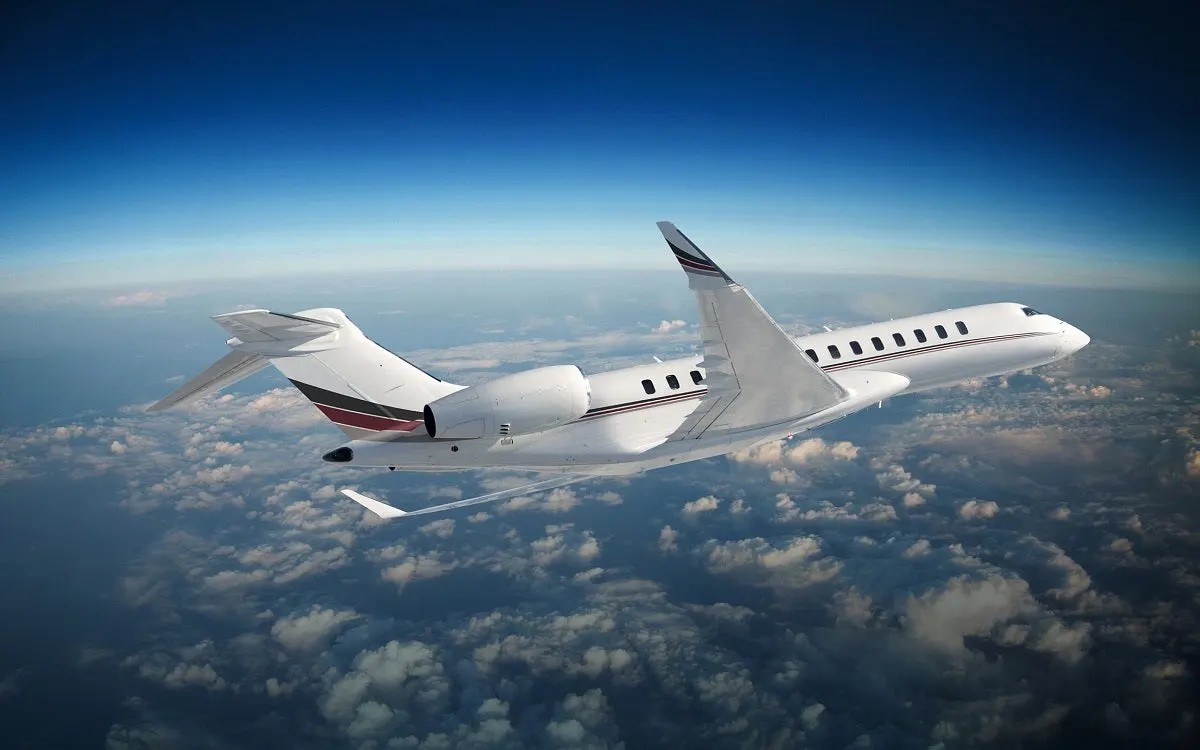
NetJets Bombardier Global 8000 private jet
NetJets is the world’s largest operator of private jets such as the Bombardier Global 8000. [Credit: NetJets]

NetJets, the world’s largest operator of private jets by fleet size and flight hours, is looking to build a new private terminal near Austin-Bergstrom International Airport (KAUS) in Texas, according to a public filing with the Texas Department of Licensing and Regulation.

The Austin Business Journal was first to report on the filing, which says that construction of an 8,000-square-foot private terminal could begin as soon as January 2027 and be complete by June 2028. The project, called “Signature Aviation Terminal Project for Netjets,” also includes 106,000 square feet of airside ramp space and a parking lot. It would be located at 2500E State Highway 71 down the road from Austin-Bergstrom, which is one of the nation’s busiest private jet airports.

The project has an estimated cost of $19.5 million, per the filing. NetJets, which offers fractional aircraft ownership and private jet card programs, would be the tenant of the Signature Aviation-owned facility.

The design firm for the project is listed as HDg Architecture of Orlando, Florida, which according to its website has worked on over 200 aviation projects at airport locations in the U.S. and worldwide.

The company’s projects include commercial and FBO terminals, corporate and maintenance hangars, VIP terminal lounges, airport traffic control towers, and ground support equipment maintenance buildings.

According to Private Jet Card Comparisons, NetJets operates private terminals in New York, New Jersey, Florida, California, Arizona, Colorado, Ohio, and Montana, with future terminals planned for Harry Reid International Airport (KLAS) in Las Vegas and Augusta Regional Airport (KAGS) in Georgia.

According to another public filing with the Texas Department of Licensing and Regulation, the company is also exploring a “Dallas NetJets Campus” at Dallas Love Field’s (KDAL) Hangar E. The $35 million project would comprise an 80,000-square-foot aircraft hangar and 18,000 square feet of shops and office space. Construction could begin as soon as November and finish by May 2028, per the filing.

The Austin-Bergstrom and Dallas Love Field facilities would be NetJets’ first private terminals located in Texas.

Jack Daleo

Jack is a staff writer covering advanced air mobility, including everything from drones to unmanned aircraft systems to space travel—and a whole lot more. He spent close to two years reporting on drone delivery for FreightWaves, covering the biggest news and developments in the space and connecting with industry executives and experts. Jack is also a basketball aficionado, a frequent traveler and a lover of all things logistics.

FAA: Software Glitch Will Delay 737 Max 10 Certification

Administrator Bryan Bedford says aircraft are safe but that approval will be delayed ‘until we’re satisfied that we don’t have an issue.’

Boeing 737 Max 10 completes certification flight testing
The Max 10, the largest member of Boeing’s 737 Max family, completed certification flight testing in July. [Credit: Boeing/Ryan Coe]

FAA Administrator Bryan Bedford said Monday that the agency will delay certification of Boeing’s 737 Max 10 as it works to determine whether a newly reported software glitch “is a safety of flight issue or not.” Certification of the Max 10 was expected as soon as this month, but Bedford said that will not happen “until we’re satisfied that we don’t have an issue.”

The Wall Street Journal, which was first to report the glitch on Saturday, said it emerged from a software update developed by GE Aerospace for the 737 Max flight management computer’s (FMC) operating system. The issue reportedly manifests when a pilot flying a precision approach with autopilot engaged initiates a missed approach. The malfunction causes the jet’s  automated flight guidance system to incorrectly drop from VNAV to basic pitch control—which requires the pilots to handle pitch and navigation adjustments—if the preprogrammed flight plan is changed.

The Journal reported that Boeing was made aware of the issue in 2024. In September, the company convened a formal safety review board which has shared its findings with the FAA. The agency in a statement said it would launch a Corrective Action Review Board (CARB) to review the findings and determine whether the glitch is a safety of flight concern.

Boeing has reportedly informed airlines the glitch does not pose a safety concern. Asked whether 737 Max aircraft are safe, Bedford said the “answer is the aircraft are safe.”

“Like you would see with an iPhone or with Microsoft, not every software is perfect,” the administrator said Monday during a news conference. “The issue that we’re looking at right now is the workload component under these more obscure situations and how we feel about that.”

What We Know About the Glitch

Bedford said the software update in question is version 13. CBS News reported that the glitch is linked to versions 14 and 14.1. Per that report, the Max 7 was certified in August with version 14, and the Max 10 used version 14.1 during recent certification testing.

Alaska Airlines, American Airlines, Southwest Airlines, and United Airlines all told the Journal they do not operate any jets with the software update.

The update “fixed a known bug on the vertical navigation system [and] unexpectedly introduced a new bug…on potential go-around situations, where we’re seeing the absence of vertical navigation guidance under those conditions,” Bedford said. He added that the new bug is “smaller” and said that “unlike [the Maneuvering Characteristics Augmentation System], it doesn’t take control away from the pilots.”

“The pilots remain in control of the airplane,” Bedford said. “They train for these scenarios.”

The Maneuvering Characteristics Augmentation System (MCAS) was linked to two fatal 737 Max 8 crashes in 2018 and 2019 that killed 346 people and grounded the Max 8 for close to two years.

MCAS was designed to automatically adjust the aircraft’s horizontal stabilizer to push down the nose and prevent pilots from flying at too steep an angle, but operators were given inadequate information about how to disable it. During the two fatal crashes, MCAS activated without pilot input due to false sensor data and repeatedly pushed down the jets’ noses. Crews were unable to identify the problem and recover in time.

“When you do software fixes, you package them up into large articles,” Bedford said. “Airbus does this as well. All aircraft manufacturers do this, try to fix a lot of small problems in one load.”

The Journal reported that Boeing is working on a permanent fix for the glitch by 2028 as well as procedures and guidance to mitigate it in the interim. Bedford said that “GE may try to get this software correction in much quicker” but was not sure if that would take days, weeks, or months.

Boeing told Airways Magazine that it had no further information on whether 737 Max 7 deliveries could proceed with an earlier version of the software, as Southwest and United reportedly requested. Also unclear is whether the Max 10 could be certified with an earlier version.

Delta Air Lines, United, American, and Alaska are among the airlines with orders for the Max 10, whose certification has been delayed for years. Alaska is the intended launch operator.

Jack Daleo

Jack is a staff writer covering advanced air mobility, including everything from drones to unmanned aircraft systems to space travel—and a whole lot more. He spent close to two years reporting on drone delivery for FreightWaves, covering the biggest news and developments in the space and connecting with industry executives and experts. Jack is also a basketball aficionado, a frequent traveler and a lover of all things logistics.

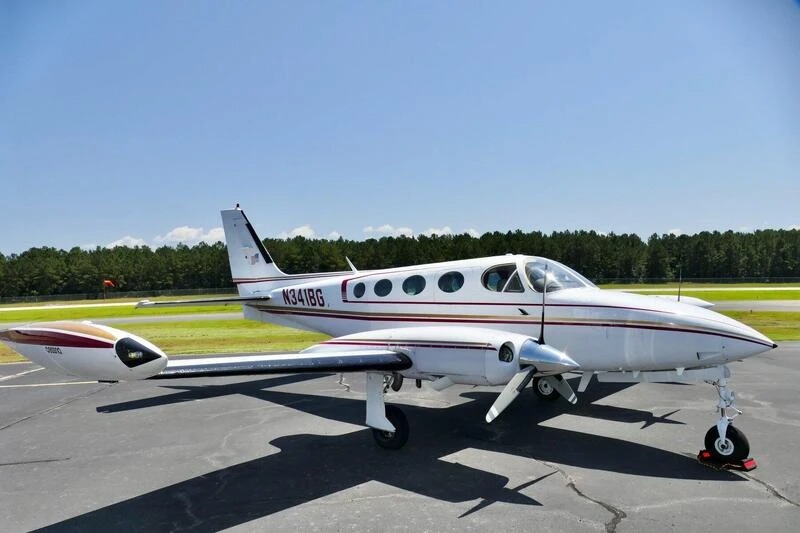
This 1973 Cessna 340 Is a Pressurized ‘AircraftForSale’ Top Pick

Twin features upgraded 310 hp engines, factory-new left powerplant, full deicing, and 1,800-pound useful load.

1973 Cessna 340 [Credit: AircraftMerchants]

Every day, the team at Aircraft For Sale chooses an airplane that catches our attention because it is unique, a good deal, or has other qualities we find interesting. You can read Aircraft For Sale: Today’s Top Pick at FLYINGMag.com daily.

Today’s Top Pick is a 1973 Cessna 340.

Few general aviation platforms hit the sweet spot quite like the Cessna 340, delivering true cabin-class pressurization and multiengine reassurance without jumping into turboprop operating budgets. Built to cruise comfortably above turbulent weather, this pressurized twin remains a benchmark choice for owner-pilots who want true all-weather, long-distance utility.

Carrying 5,544 total airframe hours, this 1973 model gains a major operational edge from a Vortex Generator STC, pushing its useful load to a robust 1,800 pounds. Paired with a deep 203-gallon fuel capacity, the airframe offers exceptional weight-and-fuel planning flexibility.

On the outside, it sports a Jet Glo exterior painted in overall white with red and gold accents, backed by full deice boots and an alcohol-equipped windshield.

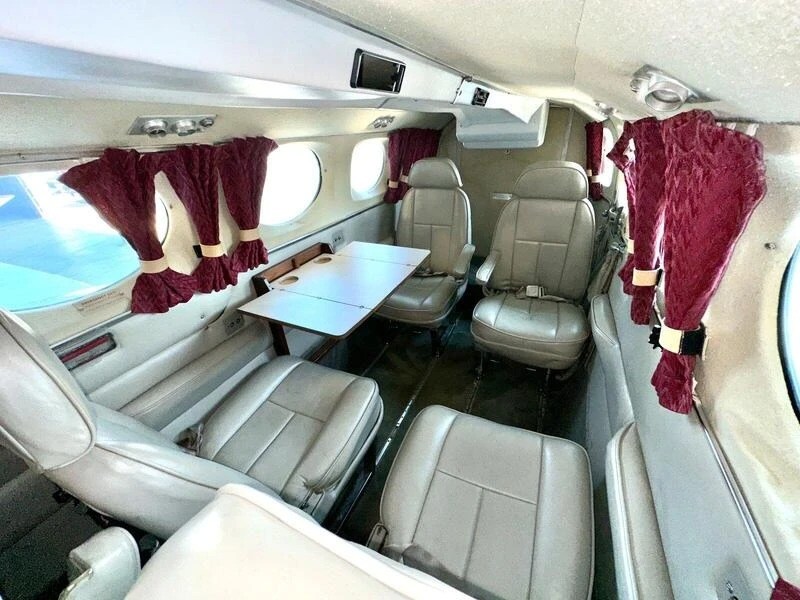
Climbing into the cabin reveals a flight environment focused on passenger comfort. The pressurized six-place interior features club seating finished in gray leather with refined accents, an executive folding table, J.B. Systems air conditioning for hot weather ground operations, and an 11-cubic-foot oxygen system for high-altitude peace of mind.

Under the cowlings, power comes from upgraded 310 hp Continental TSIO-520-NB engines equipped with performance-enhancing Riley intercoolers. Giving the twin a fresh operational boost, the left engine was replaced with a factory-new unit in 2023 and has logged just 58 hours, while the right engine shows 1,024 hours since overhaul. Both engines turn McCauley three-blade, constant-speed propellers showing 416 hours since their 2016 overhauls.

At the flight deck, pilot workload is reduced through an avionics layout anchored by a Garmin GNS-530W WAAS GPS/nav/comm and King KCS-55A HSI. Operational safety and engine management are simplified by a primary JPI EDM-930 graphic engine monitor, Garmin GDL 69 XM weather receiver, Stratus ESG ADS-B transponder, full copilot instrumentation, and Cessna 400A autopilot with yaw damper.

Listed at $174,500, this hangar-kept Cessna 340 includes intact logs, maintenance records, and stands ready for its next owner.

If you’re exploring ownership options, FLYING Finance can help get you airborne. Use our airplane loan calculator to estimate your monthly payments, or connect with an aviation finance expert at flyingfinance.com.

FLYING Staff

FLYING Magazine is a one-stop resource for everything aviation, including news, training, aircraft, gear, careers, photos, videos, and more.
Pilot in aircraft
Sign-up for newsletters & special offers!

Get the latest stories & special offers delivered directly to your inbox.

SUBSCRIBE