












Register

Pilots Must Be Prepared for ‘Unacceptable Stall Behavior’

Routine post-maintenance check flight turns catastrophic.

Even a slight alteration in the position of a stall strip can change the stalling behavior of an airplane. [Credit: Adobe Stock]
Gemini Sparkle

Key Takeaways:

  • An accident occurred during a post-maintenance stall check of a Hawker Beechcraft 900XP, where experienced pilots deviated from safety protocols, conducting the test at an unsafe altitude and in probable icing conditions.
  • The probable ice contamination triggered an unexpected, violent stall, to which the pilot instinctively reacted by pulling back on the control column instead of pushing the nose down, leading to a fatal flat spin.
  • The NTSB cited the crew's decision to test in icing conditions and the manufacturer's failure to establish adequate training and experience requirements for pilots performing stall tests as principal causes.
  • The incident highlights how an unexpected stall can trigger a "startle-driven, back-stick reaction" in pilots, overriding training and knowledge, even for highly experienced individuals.
See a mistake? Contact us.

It is a truth universally acknowledged that when an airplane stalls, the pilot must push its nose down. And yet it sometimes happens that even quite experienced pilots do the opposite. That was the case in February 2024, when two airline transport pilots, who had a combined total of more than 23,000 hours in their logbooks, conducted a post-maintenance stall check on a Hawker Beechcraft 900XP.  

The stall check is required after the leading edges of the wings have been removed for a routine, every-four-years inspection. The purpose is to confirm that some subtle, perhaps invisible distortion of leading-edge contour or change in the position of a stall strip has not changed the stalling behavior of the airplane. 
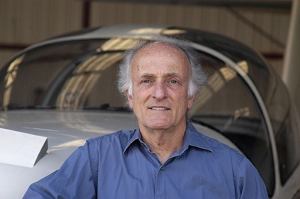
Peter Garrison

Peter Garrison taught himself to use a slide rule and tin snips, built an airplane in his backyard, and flew it to Japan. He began contributing to FLYING in 1968, and he continues to share his columns, ""Technicalities"" and ""Aftermath,"" with FLYING readers.

Ready to Sell Your Aircraft?

List your airplane on AircraftForSale.com and reach qualified buyers.

List Your Aircraft
AircraftForSale Logo | FLYING Logo
Pilot in aircraft
Sign-up for newsletters & special offers!

Get the latest stories & special offers delivered directly to your inbox.

SUBSCRIBE



