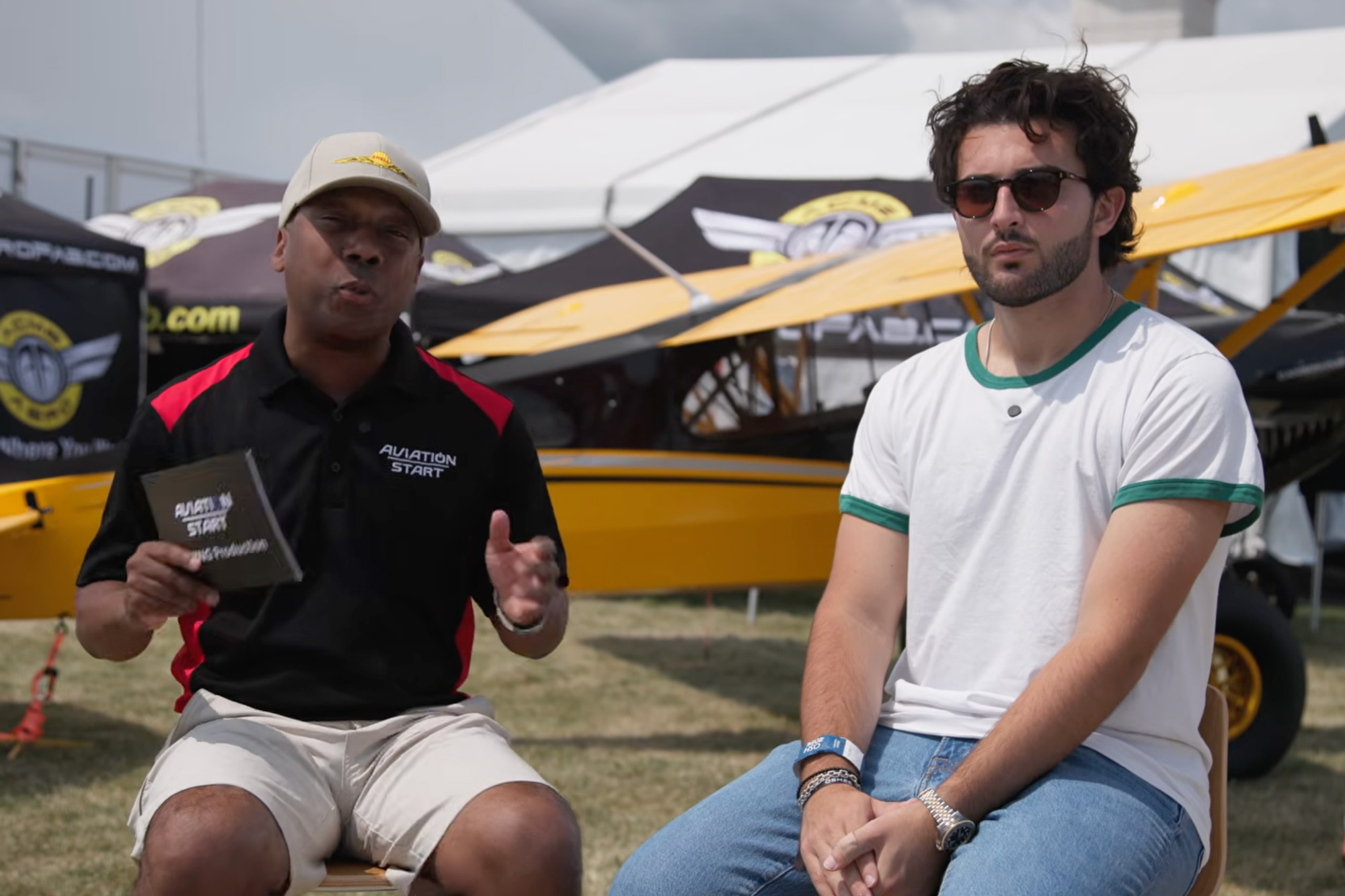
FLYING ‘Aviation Start’ podcast host Jamail Larkins (left) speaks with contract pilot Jay Kadir during the latest episode. [Credit: FLYING]
The fourth episode of Aviation Start, FLYING’s career-focused video podcast hosted by Jamail Larkins, takes on one of the most talked-about and least understood ways to earn a living in the cockpit: contract corporate flying.
“People believe you can go and make 50, 60, $70,000 a month,” said guest Jay Kadir, a 26-year-old contract pilot who flies the Gulfstream G-IV. “It’s true. I’ve seen it. I know people who’ve done it. It’s not as easy or simple as just that. It takes a long time.”
Kadir grew up largely in Dubai, and summer trips home to the U.S. aboard 777s and A380s convinced him he had to learn to fly them. He earned his certificates in Bozeman, Montana, assuming, like most new commercial pilots, that the airlines were the only destination.
Seeing private jets on the ramp and watching friends fly contract corporate changed his mind.
Rather than instruct at a flight school, Kadir worked as an independent CFI, setting his own rates and schedule, and used that flexibility to pursue contract second-in-command work in the Eclipse 500, HondaJet, and Citation 500, 501, and 525 series. About a year and a half ago he moved into the G-IV, which is now his primary aircraft.
Larkins noted the demand behind the opportunity: More than 59,000 corporate pilots fly in the U.S. today, and nearly 33,000 more will be needed over the next decade.
What the Day Rates Look Like
Contract pilots are paid by the day, and the rate tracks the airplane. A single-engine piston such as a Bonanza A36 pays roughly $500 to $750 per day, Kadir said, while day rates on newer Gulfstreams and Bombardier Globals run as high as $4,500.
“You mentioned $50,000 months. That is 100 percent real,” Kadir said. “But you have to be on consistent trips and you have to be in the aircraft that provides you with a day rate like that.”
The trade-off is that a Part 91 contractor is self-employed, typically working through an LLC on a 1099 basis, and funds all of his own training. Any jet, or any aircraft over 12,500 pounds maximum gross takeoff weight, requires a type rating, and where a Part 135 operator would pay for an employee’s type, the contractor writes the check himself.
Kadir considers that an advantage.
“I always say try to self-pay if you can, because at that point you’re not indebted to anyone,” he said. “You’re able to completely control who you work for. And that’s the beauty of being a contract pilot, the flexibility.”
The Other 360 Days
“Contract flying is all foundational,” Kadir said. “It’s literally about who you know. You have to build your network. And building your network does not happen overnight.”
Kadir and Larkins first met at a Corporate Angel Network event at NBAA-BACE, and Kadir still attends the convention specifically to meet aircraft owners. Jet owners know jet owners, he said, and a strong reputation with one client becomes a referral to the next.
Larkins encouraged aspiring corporate pilots to start that work before the commercial certificate is in hand: Attend the monthly meetings of state and regional aviation associations, show up at chief pilot forums, and volunteer at events, even if it’s working the registration desk.
In-person events only go so far, Kadir added. NBAA-BACE, AirVenture, and Sun ‘n Fun together account for about 10 days a year.
“The other 360 days of the year, how are we all talking and connecting? Social media,” he said.
His approach is outreach rather than content. He searches an airport’s location tag on Instagram, finds photos of aircraft that have passed through, and messages the pilot who posted: “Hey, I saw that you flew this Citation into Wichita. I’m a contract Citation pilot. If you ever need someone to fly as your SIC, let me know.”
Most never respond, he acknowledged, but done in volume, the replies turn into work. And while his nearly 50,000 followers are on Instagram, he said a lot of his business actually comes from Facebook, where type-specific, contracting, and regional pilot groups are where trips get passed around.
The payoff for building that pipeline is control of the calendar. Kadir calls AirVenture his favorite week of the year and simply declines trips that would conflict with it, something no airline bid or Part 135 rotation can guarantee.
“Being a contract pilot allows for me to ensure that I’m here,” he said. “I control my schedule. I am asked whether or not I want to work.”
His closing advice to student pilots who decide on day one that they are headed to the airlines: “Have those goals, but be open-minded to different possibilities.”
Episode 4 of Aviation Start is available now on FLYING’s YouTube channel and all major podcast platforms. Aspiring aviation professionals can get matched with eligible scholarships from a database of more than $20 million at aviationstart.org.
Avoid common automation surprises by focusing on critical flight priorities during complex instrument approaches. [Credit: Max Trescott]
Pilots are taught to “stay ahead of the airplane,” but there’s relatively little guidance on exactly what that means and how to do it. Years ago, a high-time CFII asked me if I knew the most important thing in instrument flying. I don’t recall my answer, but his was brilliant.
He said the most important thing was the “next two things.”
Often when I ask pilots flying technically advanced aircraft (TAA) to tell me the next two things they need to do, they almost never mention the need to push any buttons. Instead, I get generalizations about descending and turning, and so on.
If you're not already a subscriber, what are you waiting for? Subscribe today to get the issue as soon as it is released in either Print or Digital formats.
But to make those things happen, one has to push the right buttons. Figuring out which buttons to push in advance can simplify a high-workload situation such as a missed approach. Part of the problem is prioritization.
We’re often faced with multiple tasks that need our attention, and figuring out which ones are most important can be challenging. I teach pilots that generally the three highest priorities are rolling out on headings, leveling off at altitudes, and intercepting final approach courses. When these things are happening, you need to focus on them, and other tasks can usually wait.
The highest workload usually occurs toward the end of a flight, when flying an instrument approach or approaching a traffic pattern. A good practice is to try to move some of that workload earlier in the flight by doing setup tasks as soon as possible. But working ahead can sometimes lead to errors and automation surprises. Here are some that I’ve recently encountered.
A lot of pilots are confused about when to “activate an approach.” If you’re flying to an initial approach fix (IAF), there’s nothing you need to activate. Once you’re direct to the IAF, autosequencing of waypoints should occur without any further action from a pilot. However, if you’ve loaded an approach with vectors, typically you’ll later need to “activate vectors to final.”
Activating vectors to final draws a 30 nm line that extends out from the final approach fix (FAF). Once that’s been done, an autopilot can couple to the final approach course. However, you don’t want to activate vectors to final until you’re finished using your en route flight plan. As soon as a controller starts issuing headings to vector you to final, you’re done using the en route flight plan, and it’s a good time to activate vectors to final.
Last year, I was flying with a client in his Cirrus Vision Jet on an arrival to a Southern California airport, and we had been cleared to “descend via.” He had used the autopilot’s VNV key to select the vertical navigation mode. The autopilot was automatically flying the stepdowns on the arrival, and life was grand.
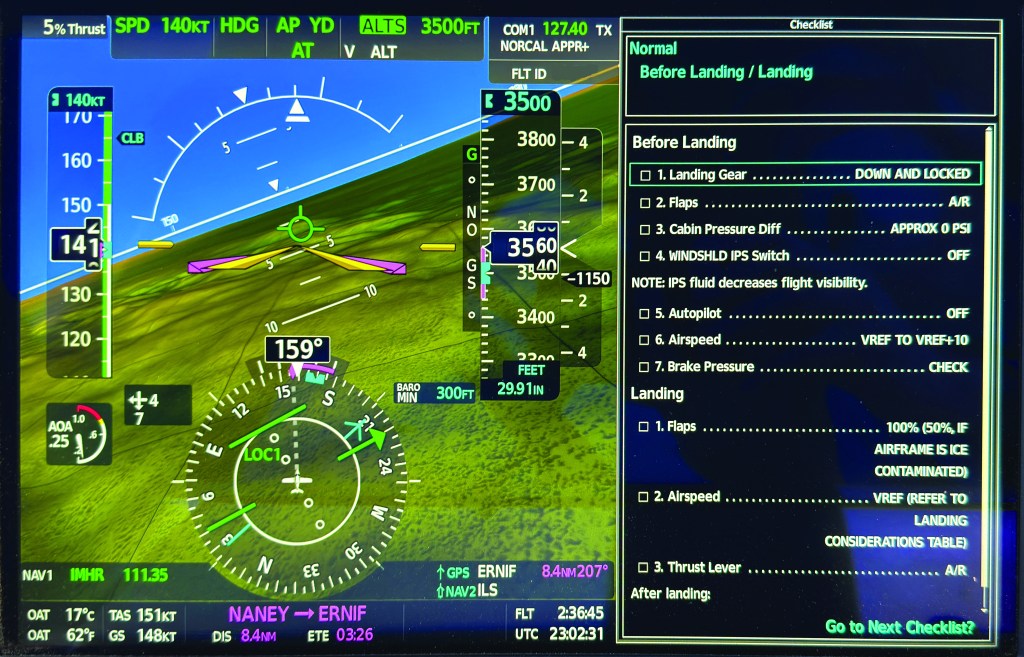
During the descent, the pilot began working ahead and loaded the ILS, which made sense. However, I heard him quietly say, “and now I need to activate the approach.” Before I could stop him, he had activated vectors to final, and life suddenly got complicated. Activating vectors to final caused the HSI’s course pointer needle to change from magenta (for GPS) to green (for the localizer), and the autopilot reverted to ROL mode (for wings level), and we were no longer following the arrival. Worse, vertical navigation mode was no longer active, as the autopilot had reverted to pitch mode.
Avoid common automation surprises by focusing on critical flight priorities during complex instrument approaches.[Credit: Max Trescott]
We were now descending at greater than 1,000 fpm over the San Gabriel Mountains, which rise as high as 8,000 feet. We no longer knew which waypoints we were between on the arrival and whether we were at a safe altitude.
After thinking about this for a moment, I pushed the autopilot’s ALT key, which caused us to immediately level off somewhere around 9,000 feet. I then called SoCal approach and explained that we accidentally “blew out our programming” and asked whether we were safe to fly at the present heading and altitude. The controller replied that we were safe, and then the hard work began.
Having good knowledge of your avionics and how to accomplish a task in more than one way is a valuable skill. That’s why I recommend that pilots use a simulator and spend hours trying out different ways to accomplish a task. More importantly, they need to know how to undo a task if they’ve started down the wrong rabbit hole.
In this case, I tried three different ways to get the arrival back before I succeeded. I don’t remember the exact sequence I tried, or which one finally won the day, but I believe they included:
» Activating the leg of the arrival we thought we were on.
» Reloading the arrival procedure using the PROC key.
» Reloading the entire flight plan.
Ultimately, we got back on the arrival within a minute or two. But it was a bit of a scramble to fix things.
More recently, I was working with a Vision Jet pilot who had just taken delivery of his airplane but hadn’t finished his type rating. We had previously talked about ways to reduce the workload when flying an approach with a series of stepdowns. Using the VNV key for vertical navigation is usually the easiest way to do that, but sometimes that mode won’t do the last one or two stepdowns.
I had pointed out that flying stepdowns manually is a lot of work using the autopilot, or hand-flying with the flight director, as each stepdown requires five separate actions. They are:
» Setting the ALT selector to a lower altitude.
» Pushing the VS (vertical speed) key.
» Setting the descent rate.
» Reducing the thrust lever or throttle.
» Increasing the thrust lever or throttle as the aircraft levels off.
I had pointed out that one way to work ahead is to preset the ALT selector to the next altitude, but that could only be done after the autopilot had leveled off at the prior altitude and was in ALT hold mode.
While approaching the pilot’s home airport, the approach controller gave us a series of stepdowns. One of them was from 6,000 feet to 5,000 feet. I noted that the pilot properly set the autopilot to level at 5,000 feet, and then I went back to reviewing a chart for the approach, as I hadn’t flown that one in years.
What I didn’t notice was that as we were passing through about 5,200 feet the pilot changed the ALT selector to 4,300 feet, which would be the next altitude after we joined the approach. But my mistake was bigger than his. I failed to monitor the altitude as we approached 5,000 feet and verify that the aircraft leveled at that altitude. Instead, I relied on having seen the autopilot set correctly. I didn’t anticipate that it would be changed later.
As I said earlier, leveling off at altitude is one of the top three priorities of an instrument pilot, and it takes precedence over reviewing a chart.
We subsequently flew below 5,000 feet and were called by ATC. We then climbed back up to 5,000 feet. We were never in danger, as we were in VMC, but a similar mistake in IMC could be catastrophic.
You may be wondering how I know now that the ALT selector was changed to 4,300 feet as we were passing through about 5,200 feet, if I didn’t notice that change when it occurred. It turns out that in some aircraft, ADS-B Out reports the altitude at which the ALT selector is set. After reviewing the ADS-B data for that flight, I could see when the ALT selector was set to 5,000 feet, and when it later changed to 4,300 feet.
Working ahead on the “next two things” and doing them as early as possible is a good strategy. But it doesn’t change the more important priorities of verifying that the autopilot rolls out on the desired heading, levels off at the selected altitude, and intercepts and joins the final approach course.
This column first appeared in the August Issue 973 of the FLYING print edition.
Max Trescott is the host of the Aviation News Talk podcast, which focuses on GA and safety. He’s the author of Max Trescott’s G1000 and Perspective Glass Cockpit Handbook and another book on the G3000. He was inducted into NAFI’s Flight Instructor Hall of Fame in 2026 and earned the 2008 National CFI of the Year.
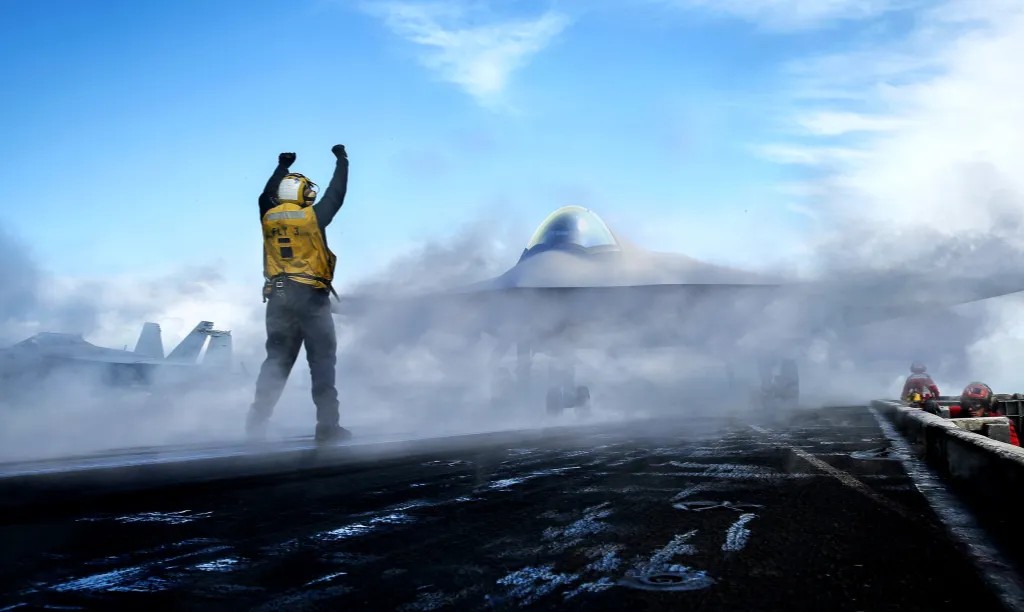
This artist’s rendering released by Naval Air Systems Command is one of the few early hints at what the F/A-XX may look like. [Credit: Boeing]
With the Pentagon’s announcement this week that Boeing will develop the U.S. Navy’s F/A-XX carrier-based fighter, the manufacturer now faces pressure to deliver on two key next-generation fighter programs by the 2030s.
Boeing in 2025 won a contract valued at over $20 billion for the U.S. Air Force’s sixth-generation F-47 program to replace its F-22 Raptor fleet, with first flight targeted for 2028.
Like the F-22s, the Navy’s F/A-18E/F Super Hornets and EA-18G Growlers are tentatively scheduled to be retired in the 2030s. Both branches are now relying on Boeing to deliver an improved replacement.
According to the Pentagon, Boeing’s full-scale development contract for the F/A-XX is similarly valued north of $20 billion. It will cover the procurement of multiple aircraft for ground, airworthiness, systems, and weapons integration testing. Future production contracts would fund manufacturing of operational fighters designed to complement the Navy’s F-35Cs.
The Pentagon in its announcement of the contract said the F/A-XX will aim to extend the range of Navy aircraft carriers. The branch is seeking to improve the range of its fighters by about 25 percent, though it is unclear exactly how far the F/A-XX would be designed to fly. The Air Force is targeting a combat range of about 1,000 nm for the F-47.
Crucially, the F/A-XX is intended to be capable of teaming with uncrewed aircraft platforms, such as the four Collaborative Combat Aircraft (CCA) the Navy is exploring under contracts with Boeing, General Atomics, Anduril, and Northrop Grumman—the other company that was competing for the contract that went to Boeing.
The sixth-generation fighters and CCA are part of the Navy’s Next Generation Air Dominance (NGAD) program, which seeks to augment existing capabilities by allowing crewed jets to command swarms of uncrewed drones. The Pentagon said the F/A-XX would “increase the capability of every CCA it teams with.”
Michael Duffey, under secretary of defense for acquisition and sustainment, said the sixth-generation fighter will “dominate contested airspace, extend operational reach, and deliver a decisive combat advantage for the warfighter,” calling it a “crucial, non-negotiable investment in America’s national security and long-term air combat capabilities.”
Despite expending resources on both the F/A-XX and F-47 programs, Boeing believes it will be able to deliver what the Navy seeks.
“Solidified by the investments we’ve made in new facilities uniquely suited to build multiple products with next generation capabilities, our dedicated and talented team is ready to execute this critical program,” Steve Parker, president and CEO of Boeing Defense, Space and Security, said in a news release.
One Company, 2 Key Programs
The Navy began exploring concepts for the F/A-XX in 2008 after identifying a need to eventually replace its existing fighters. In the years since, it has been relatively quiet about the program’s current requirements and cost.
Boeing in its news release said the jet will feature advanced mission systems, extend the reach and capability of carriers, and advance an open mission system architecture. The Navy encourages a Modular Open Systems Approach (MOSA), with hardware and software designed to certain standards so that it can be seamlessly updated, swapped, or scaled as technology and missions evolve.
The manufacturer said technical and programmatic details of the F/A-XX remain classified. The fighter will get an official designation at a later stage.
Production capacity concerns and funding disputes have posed obstacles to the F/A-XX program.
The Navy in recent years has sought to delay program funding to prioritize near-term investments. For fiscal year 2026 (FY26), the branch requested just $74 million for it, but the program ultimately received about $1.7 billion. The Navy made another low request, about $140 million, for the F/A-XX in FY27, but lawmakers have similarly stepped in to raise that allocation to about $915 million.
The F-47 program received close to $3.5 billion in FY26, and the Pentagon is seeking about $5 billion in 2027. The Air Force wants some 200 next-generation fighters, which like the F/A-XX would be capable of teaming with CCA.
Boeing on Tuesday downplayed the potential risk of allowing one manufacturer to take the lead on both multibillion-dollar projects.
“Delivering two advanced fighters in parallel was always our plan, and we invested accordingly,” said Parker. “We are ready and able to build multiple concurrent future combat aircraft franchise programs.”
The company has been undertaking a multibillion-dollar expansion of its facilities in St. Louis to support its next-generation fighter efforts. It is building what it claims will be the largest secure manufacturing facility in the U.S. and one of the world’s most advanced.
Jack is a staff writer covering advanced air mobility, including everything from drones to unmanned aircraft systems to space travel—and a whole lot more. He spent close to two years reporting on drone delivery for FreightWaves, covering the biggest news and developments in the space and connecting with industry executives and experts. Jack is also a basketball aficionado, a frequent traveler and a lover of all things logistics.
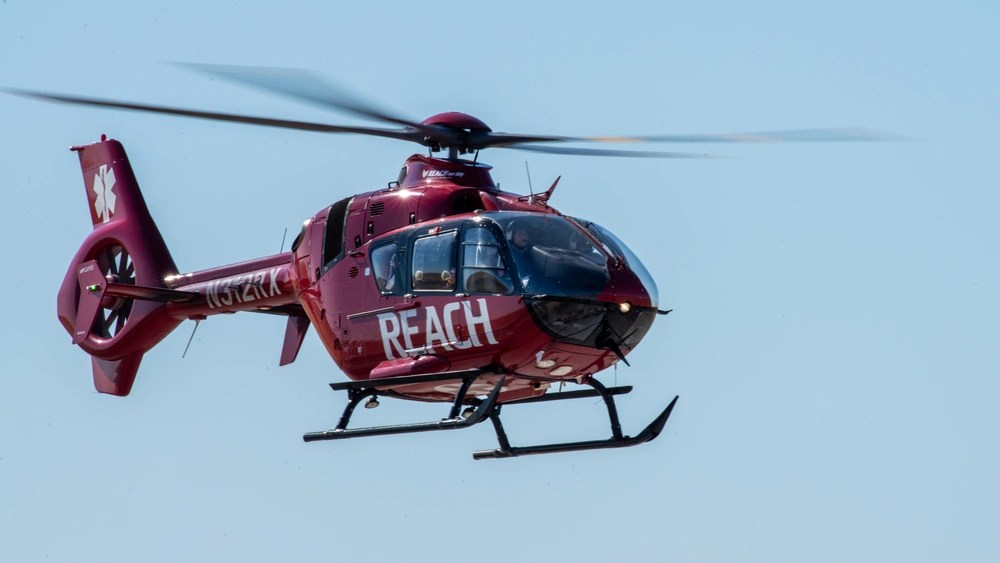
Reach Air Medical Services helicopter [Credit: U.S. Air Force/Kenneth Abbate]
The U.S. Coast Guard is searching for one person unaccounted for after a medevac helicopter carrying five people crashed shortly after takeoff from California’s Catalina Island on Wednesday night.
“Four individuals were recovered from the water,” the Coast Guard said in a statement. “Two of the individuals were transferred to a hospital on the mainland and two were pronounced deceased.”
The helicopter (N313RX) is identified as a Eurocopter EC 135P2+. According to FAA records, it is owned by Reach Air Medical Services, based in Santa Rosa, California.
Per FlightAware.com, the helicopter, operating as Reach Air Medical 16, took off from the Oceanside, California, fire department at 6:40 p.m. PDT and landed at Pebbly Beach Helispot in Avalon on Catalina Island around 7:03 p.m. According to timeanddate.com, sunset was at 6:37 p.m., and civil twilight ended at approximately 7:02 p.m., putting most of the flight under darkness.
On the last flight the helicopter reached an altitude of about 1,200 feet with an airspeed of approximately 160 mph when the altitude decreased to 900 feet, leveled off momentarily, then the airspeed dropped to 120 mph, and the aircraft entered a rapid descent.
Shortly before 8 p.m., authorities, including the Coast Guard, LA County Fire Department, and LA County Sheriff’s Department, responded to the call of the downed aircraft using multiple boats and air assets that included an MH-60 Jayhawk helicopter.
Meg Godlewski has been an aviation journalist for more than 24 years and a CFI for more than 20 years. If she is not flying or teaching aviation, she is writing about it. Meg is a founding member of the Pilot Proficiency Center at EAA AirVenture and excels at the application of simulation technology to flatten the learning curve. Follow Meg on Twitter @2Lewski.
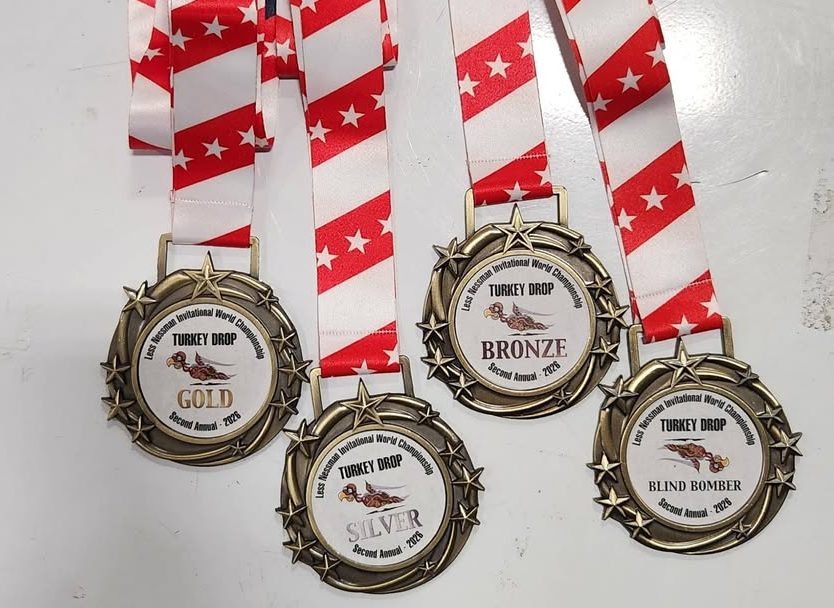
Medals to be awarded for the International Invitational World Champion Rubber Turkey Drop [Credit: Larry Kelley/Facebook]
The International Invitational World Champion Rubber Turkey Drop has been part of Wings & Wheels, the annual fall festival at Delaware Coastal Airport (KGED) in Georgetown for many years.
That’s why Larry Kelley, co-founder of the event, said he was surprised when he saw a message on the museum contact page about the event, scheduled for Friday and Saturday:
“Please reconsider your support of the Wings and Wheels turkey drop this Saturday, October 3, 2026. This is animal abuse, and I would think you would like to distance yourself from a display of animal cruelty, especially in front of children who are likely to be attending the otherwise fun event. Thank you so much.”
According to Kelley, the “’turkey drop” is inspired by an episode of the 1970s sitcom WKRP in Cincinnati.
In one famous episode, on Thanksgiving the radio station does a live remote at a turkey giveaway at a shopping center. The station manager, unaware that domesticated turkeys can’t fly, throws live turkeys out of a helicopter while WKRP newsman Les Nessman narrates the event.
It turns out to be a disaster as described by Nessman: “Oh, the humanity! The turkeys are hitting the ground like sacks of wet cement!” At one point, the surviving birds turn on the radio crew.
Museum officials called the people who left the message and explained the turkey drop is actually a rubber chicken drop over a target placed on the ground. It has been a regular part of the festival for years.
“They were very nice about it,” said Kelley, who is also co-founder and executive director of the Delaware Aviation Museum Foundation. “We’ve been laughing for 24 hours.”
Kelley said Olympic-style medals are given to the winners of the drop contest. A photograph of the medals and meme celebrating this understanding were posted on his Facebook page.
The chicken target is painted on a large tarp that is staked down between the runway and a taxiway at the airport.
“It’s a version of flour bombing, which involves dropping paper lunch bags with a streamer attached containing lime over a grass target,” Kelley said. “The lime is basically fertilizer, and at the end of the competition the paper bags are picked up and disposed of. The rubber chickens, on the other hand, are picked up and put away for another year.”
Wings & Wheels is a two-day celebration. On Friday the airport welcomes sophomores and juniors from the local high schools for Pathways to Aviation, an age-appropriate career fair. The kids will hear from speakers ranging from airline pilots to military recruiters and aviation maintenance professionals.
Representatives from aviation colleges will also be there.
Friday night there is a USO-style hangar dance, and Saturday the Wings & Wheels car show and aviation display takes over the airport. Expect to see vintage and carefully restored aircraft and automobiles.
The show is billed as family friendly as there are crafts, a World War II living history display, food trucks, flyovers, and the U.S. Naval Academy Parachute Team is scheduled to appear.
According to Kelley, there will be a few warbirds—the B-25 is one of them—that will be offering rides for a price, but most of the aircraft will be on static display.
Entry to the show is free, but there is a $5 charge for parking, which is used to pay for the portable toilets that are necessary for the anticipated large crowd.
Meg Godlewski has been an aviation journalist for more than 24 years and a CFI for more than 20 years. If she is not flying or teaching aviation, she is writing about it. Meg is a founding member of the Pilot Proficiency Center at EAA AirVenture and excels at the application of simulation technology to flatten the learning curve. Follow Meg on Twitter @2Lewski.
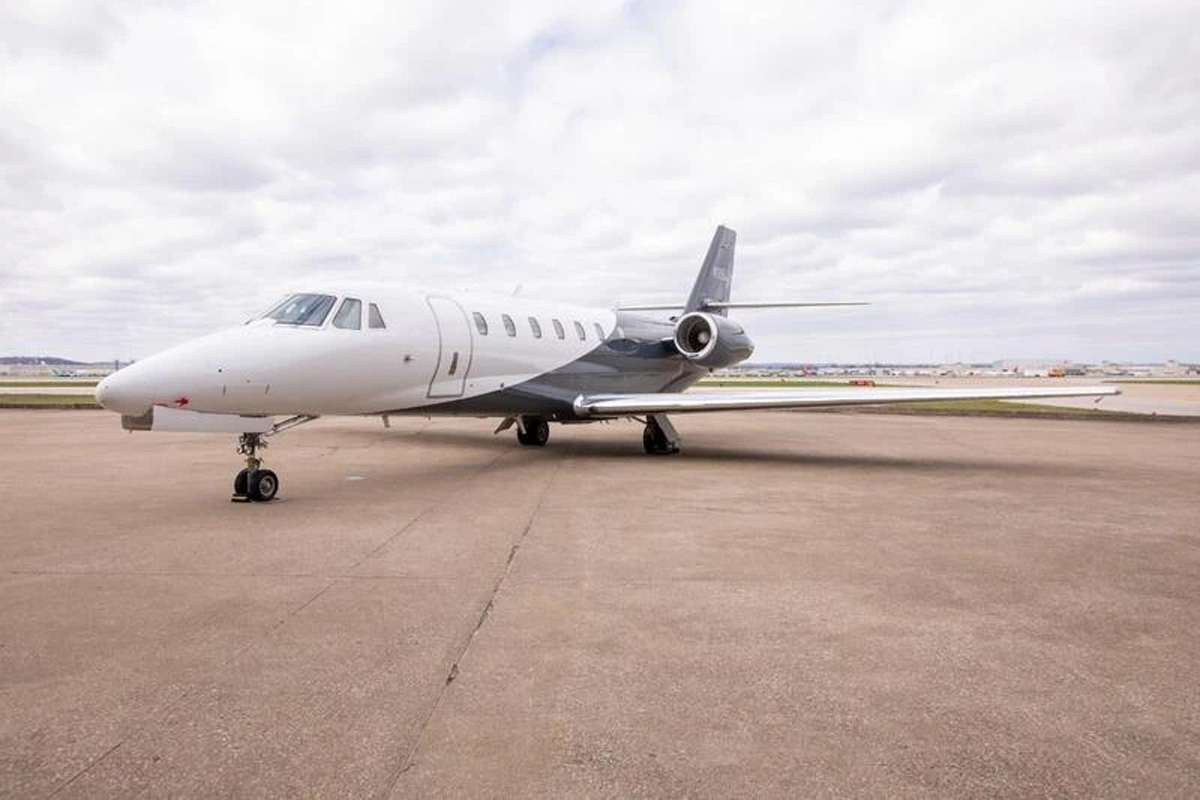
Standing out as a perennial favorite for corporate flight departments, the Cessna Citation Sovereign balances short-field agility with transcontinental legs. Offering a generous 3,010 nm range and swift 460 ktas cruise speeds, this super-midsize workhorse excels at slipping into demanding regional airports while giving passengers true coast-to-coast freedom.
Providing reliable muscle for transcontinental trips is a pair of Pratt & Whitney 306C turbofans, both fully enrolled on the ESP Silver Lite engine program. On the ground or at altitude, cabin climate and electrical systems are managed by a Honeywell RE-100CS auxiliary power unit covered under Honeywell’s MSP program.
In the cockpit, pilots command an integrated Honeywell Primus Epic glass suite anchored by four DU-1080 EFIS displays. The flight deck is equipped for modern airspace with dual WAAS-capable FMS units, ADS-B Out compliance, TCAS-II, Honeywell Mark V EGPWS with wind shear detection, and dual HF-1050 radios with SelLCaL for overseas oceanic ops.
With an extensive 13,205 hours recorded on the airframe and 8,862 landings, this 2004 model continues to present a sophisticated ramp presence. The exterior, beautifully repainted in 2020, showcases a white-and-blue base, elegantly accented with metallic-and-gray striping.
2004 Cessna 680 Citation Sovereign [Credit: Southern Cross]
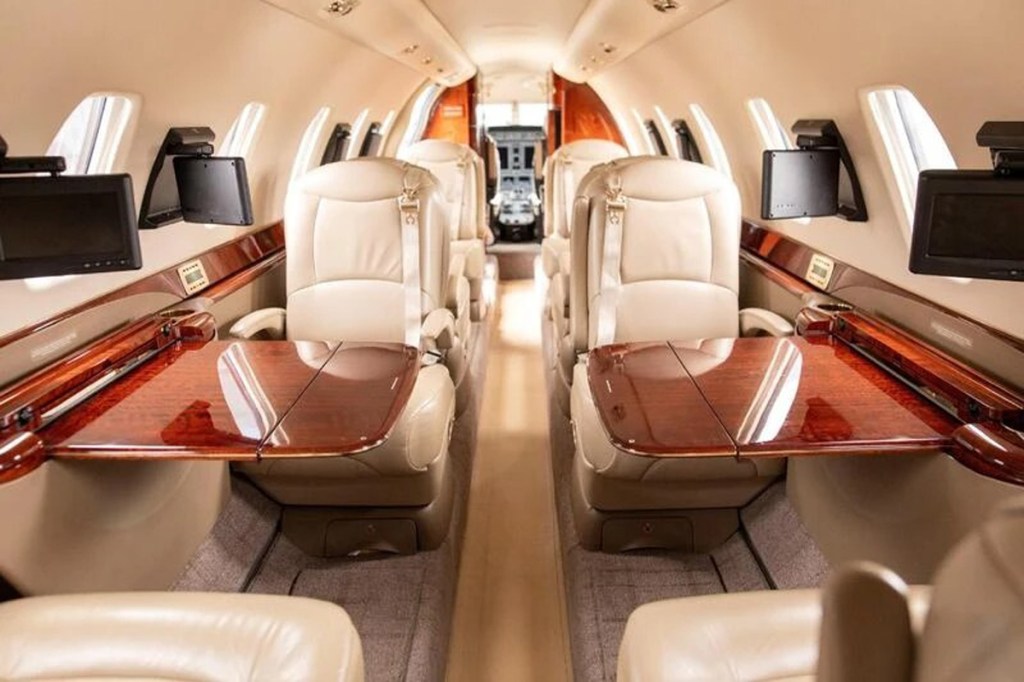
Stepping aboard this business jet introduces passengers to a luxurious eight-passenger executive configuration. The interior features a double-club layout adorned in almond leather, complemented by gloss Mozambique veneer cabinetry, polished champagne gold hardware, L3 AVANCE high-speed Wi-Fi, and an aft private lavatory to ensure maximum comfort on long cross-country flights.
Listed on a “make offer” basis, this Sovereign is fully tracked on CAMP maintenance and features extra safety equipment like dual VisionSafe EVAS (Emergency Vision Assurance System).
If you’re exploring ownership options, FLYING Finance can help get you airborne. Use our airplane loan calculator to estimate your monthly payments, or connect with an aviation finance expert at flyingfinance.com.
Charter pilots often specialize in a small number of aircraft types. [Credit: Shutterstock]
Charter pilots play an important role in the aviation industry.
Instead of flying large planes to big airports with hundreds of people on board, these pilots are tasked with transporting individual customers to specific destinations.
Many of the most important items for becoming a commercial pilot still hold true, but there are additional things to consider when starting a career as a charter pilot.
Types of Charter Pilots
There are a number of different ways to become a charter pilot.
Among the most common is to operate for a charter company—commercial operators that sell seats or a certain amount of flight time per year on private jets. These firms then hire pilots to operate their aircraft.
Many charter companies, especially well-known operators such as NetJets or Flexjet, require just as much flight experience as large commercial airlines. Building time as a flight instructor or pipeline patrol pilot, and maybe even flying for a regional airline, is just as important for these companies as it is for career airline pilots.
The range of passengers on a commercial operator like this may be quite substantial. Some may be one-off passengers who need a pilot and plane for one flight or a defined trip. However, pilots can also fly regular customers who have purchased a fractional share of an aircraft for long-term use.
Some charter pilots work for hybrid companies that regularly fly for only one client. These companies, however, sometimes find it practical to charter out their aircraft if it’s not being used for an extended period. These operations give pilots the stability of flying one single airplane, or a small number of the same type, for a familiar customer with the diversity of a charter operation.
Still other charter pilots work as full-time contract pilots. These pilots don’t work for a specific operator but instead sell their own time on a day-to-day basis to private aircraft owners or operators who need a pilot for one defined mission.
This may often arise in cases where a regular company pilot is out sick or just left for another position, leaving a temporary vacancy that must be filled. However, sometimes opportunities also lead to long-term partnerships that offer consistent work for a small group of clients.
How to Succeed as a Charter Pilot
Charter companies look at things beyond just total flight time when hiring pilots.
Though, as with the big companies, a certain amount of total time and turbine time is important, charter pilots also need to be cognizant of how much they advertise the amount of time they have in different aircraft types.
Charter pilots often specialize in a small number of aircraft types, often defined roughly by families like the Cessna Citation series. Having more time in a certain type of aircraft allows a pilot, especially a contract pilot, to market themselves to people and companies that operate that specific type of airplane.
Upon reaching a specified amount of total time, pilots often fly for a charter company to build their total time in a certain type of aircraft, thereby making it easier to take other jobs flying that aircraft or other similar ones.
This does not make it impossible to move from one type to another. Building connections is critically important in charter aviation, and many pilots get new jobs simply because of who they know.
Meeting new people, attending job fairs, and even just hanging around a local airport can be highly beneficial to charter pilots looking to change jobs or move to a new operator.
Charter flying is an incredibly rewarding career path. It allows pilots to fly to an incredibly wide range of airports, fly a range of aircraft, and meet various people.
The path to success is convoluted at times, but building the right experience and making the right connections will do wonders for launching a career into the flight levels.
John McDermott is a student at Northwestern University. He is also a student pilot with hopes of flying for the airlines. A self-proclaimed ""avgeek,"" John will rave about aviation at length to whoever will listen, and he is keen to call out any airplane he sees, whether or not anyone around him cares about flying at all. John previously worked as a Journalist and Editor-In-Chief at Aeronautics Online Aviation News and Media. In his spare time, John enjoys running, photography, and watching planes approach Chicago O'Hare from over Lake Michigan.
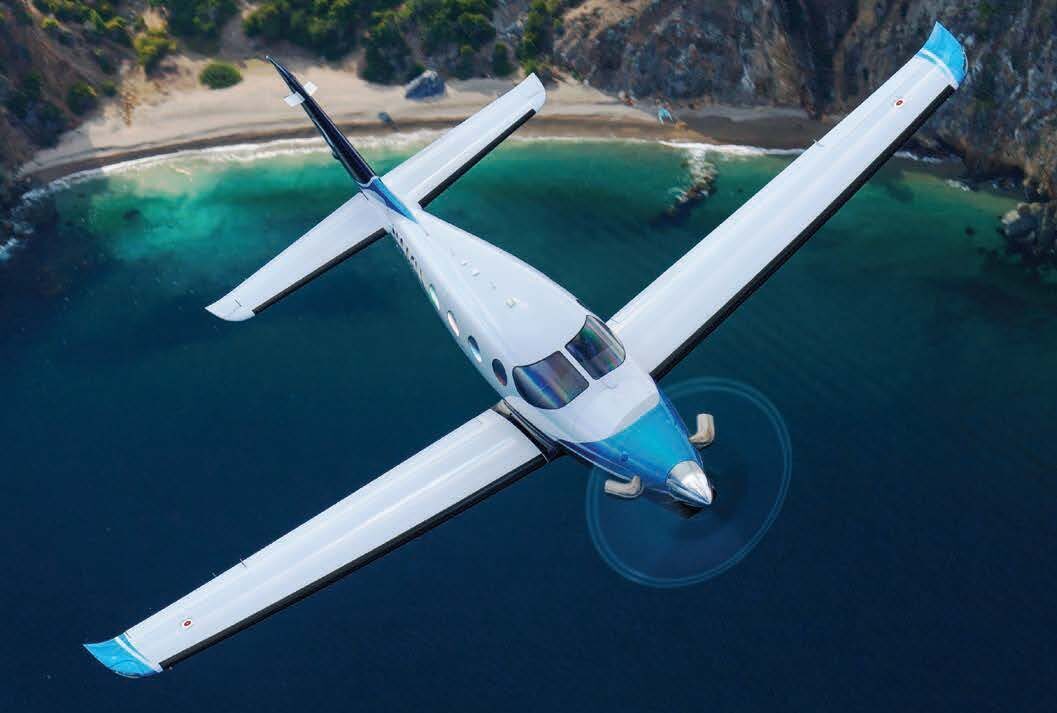
Epic Aircraft, the manufacturer of high-performance, single-engine turboprops, announced Wednesday that the FAA has certified Garmin Autoland for the E1000 AX.
Autoland is designed to make flying safer in the event the pilot becomes incapacitated.
One of the features of Autoland is that it does not have to be accessed from the cockpit, which can be a confusing place for non-pilots who don’t know one instrument from another or how to read them.
“Only the E1000 AX offers multiple Autoland button locations throughout the cabin, placing this potentially lifesaving technology within easy reach of passengers, providing them great peace of mind,” said Doug King, CEO of Epic Aircraft, in a news release.
Epic, based in Bend, Oregon, designs and builds all-composite, single-engine turboprop aircraft. The E1000 AX, the company’s newest model, received FAA type certification in 2025.
Autoland in Action
Garmin Autoland can be activated with the push of a dedicated button. The system will also engage automatically if it determines the pilot is incapacitated.
Once activated, the system evaluates nearby suitable airports for landing, factoring in distance to the field, runway length, fuel range, terrain, and weather, then selects the most suitable runway to land on. Autoland flies the aircraft to the selected runway while automatically communicating its intentions to passengers and air traffic control (ATC).
Upon reaching the airport, Autoland lands the aircraft and shuts down the engine, bringing it to a safe and complete stop without pilot input.
Autoland is fully integrated with the Garmin G1000 NXi avionics suite, working in concert with Garmin Autothrottle, which is also a feature on the E1000 AX. Autothrottle manages engine power throughout the flight to keep the aircraft on speed.
Meg Godlewski has been an aviation journalist for more than 24 years and a CFI for more than 20 years. If she is not flying or teaching aviation, she is writing about it. Meg is a founding member of the Pilot Proficiency Center at EAA AirVenture and excels at the application of simulation technology to flatten the learning curve. Follow Meg on Twitter @2Lewski.
AOPA and other groups have urged the FAA to rethink decision to rescind single-pilot exemptions for certain Cessna Citation aircraft. [Credit: Shutterstock]
Pushback to the FAA’s sudden and unexpected move to halt single-pilot operations in certain models of Cessna Citation jets continued this week, with the Aircraft Owners and Pilots Association (AOPA) becoming the latest to urge the agency to rethink the decision.
The FAA announced the change in a Federal Register notice, citing safety concerns and a 2024 review that “revealed widespread noncompliance with the exemptions.” The agency began granting single-pilot exemptions for Citation aircraft in 1984. Many of them went to training providers under 14 CFR Parts 61, 141, and 142, allowing them to conduct single-pilot operations.
The FAA said it will rescind and cease issuing these exemptions and immediately require two-pilot operations for the following aircraft originally certified for two-pilot crews under Part 25:
Citation and Citation I (Model 500)
Citation II (Model 550)
Citation S/II (Model S550)
Navy T–47A (Model 552)
Citation V and Citation Ultra (Model 560)
Bravo (Model 550)
Encore (Model 560)
Encore+ (Model 560)
As a result of prior exemptions, many of these aircraft since the 1980s have regularly operated with a single pilot. Current exemption holders will have their exemptions rescinded through separate action.
The rule change does not impact single-pilot operations of Citation jets certified as single-pilot aircraft. Citing registration data, AeroTime reported that about 1,250 U.S.-registered Citation models are covered by the policy.
AOPA Pushes Back
The FAA’s decision to rescind and cease granting the single-pilot exemptions caused confusion among operators and industry associations.
The rule change followed high-profile crashes involving Citation aircraft, one of which killed former NASCAR driver Greg Biffle and six others. However, the retired airline pilot involved in that incident—which the FAA cited—flew without a qualified copilot despite lacking a single-pilot exemption.
NTSB investigations of the accidents cited by the FAA remain open and have not determined probable cause.
In a letter to FAA Administrator Bryan Bedford, David Boulter, AOPA’s vice president of regulatory affairs, called the FAA’s decision “all or nothing” and said it “makes no sense to punish compliant and safe operators with this order.” Boulter contended that most single-pilot exemption holders exceed the requirements of the exemption. He asked the FAA to “immediately halt” the total denial of exemptions and rescind them only for operators who do not meet those standards.
“Any deficiencies in operations under this exemption should have been identified and corrected long before such drastic action, without industry collaboration, was taken,” Boulter concluded.
Robert Geske, senior manager of safety analysis at the AOPA Air Safety Institute (ASI), added that ASI is “still working to duplicate the results and conclusions reached by the FAA,” among which is that the accident rate for Part 25 CE-500 aircraft operated by a single pilot is twice that of Part 23 CE-500, 510, and 525 aircraft flown with a single pilot.
The agency also said it revoked single-pilot exemptions for 13 out of 14 Part 61 exemption holders that it investigated due to various noncompliance issues.
AOPA said the FAA should “immediately establish an industry work group to evaluate and formulate recommendations in order to move forward together to improve safety.”
The National Business Aviation Association (NBAA) and Citation Jet Pilots (CJP) association have also questioned the FAA’s decision. The CJP submitted a Freedom of Information Act request to examine the data the agency used in its analysis of single-pilot Citation incidents.
Textron Aviation said in a statement earlier this week that it “supports the FAA’s commitment to aviation safety and stands ready and available to support customers.”
Jack is a staff writer covering advanced air mobility, including everything from drones to unmanned aircraft systems to space travel—and a whole lot more. He spent close to two years reporting on drone delivery for FreightWaves, covering the biggest news and developments in the space and connecting with industry executives and experts. Jack is also a basketball aficionado, a frequent traveler and a lover of all things logistics.
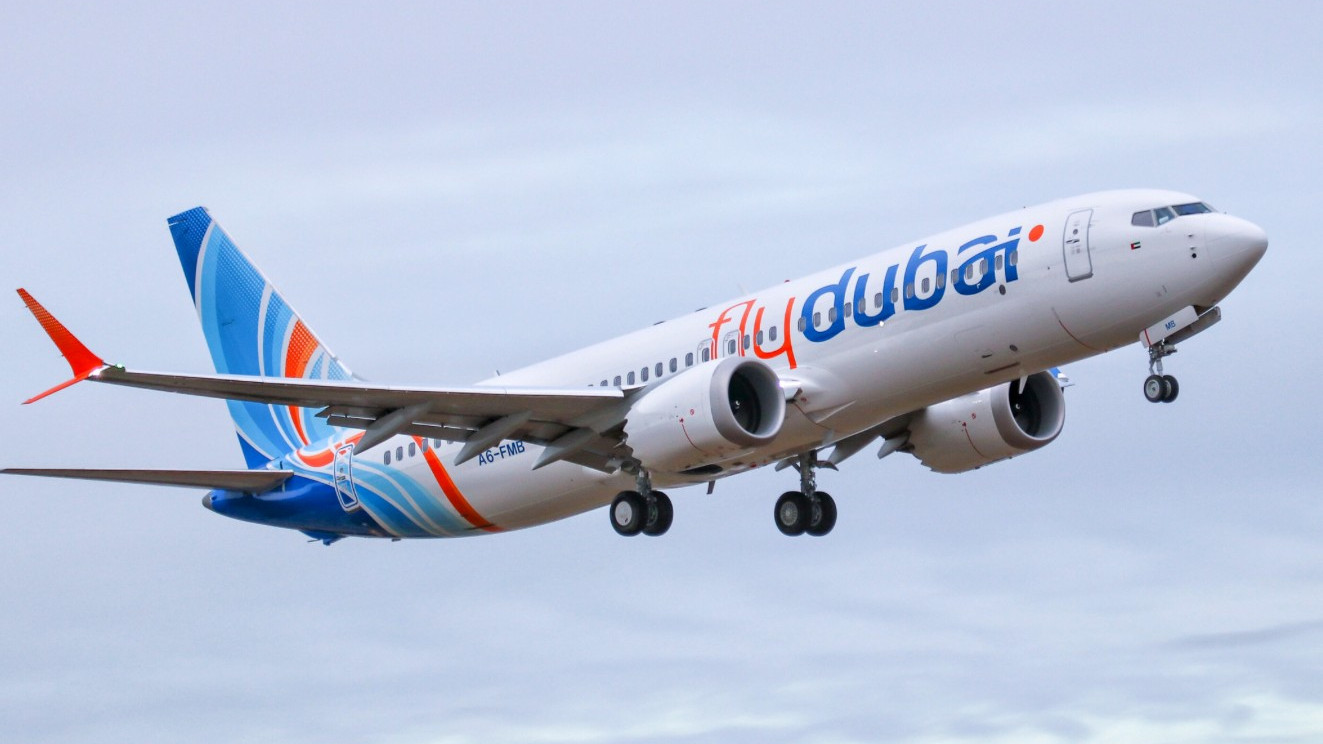
A flydubai 737 Max 8 performs a test flight at Paine Field. [Credit: AirlineGeeks/Katie Zera]
A struggle between the two pilots of a Flydubai 737 Max 8 passenger jet headed from Dubai to Tel Aviv caused the aircraft to plunge more than 14,000 feet in under 30 seconds and divert to Tabuk Airport (OETB) in Saudi Arabia, according to multiple media reports. While details are still emerging, Israel’s minister of defense on Wednesday called the incident an “attempted terrorist attack.”
The airplane had more than 100 passengers on board and squawked 7700 and 7500, signalling a general emergency and unlawful interference, respectively, after the sharp loss of altitude. NBC News reported the captain and first officer, both of whom may have been stabbed according to passengers, were transported to a local hospital on Wednesday.
The aircraft appeared to sustain damage to its rudder, photos taken after landing show.
The New York Timessaid it verified a widely shared video on social media that appears to show two men on the floor bleeding, with one wearing what appears to be a FlyDubai pilot uniform. One person in the video asks for help while others tend to the two apparently injured people.
The Times reported, citing passengers on the flight, that two other pilots on board the airplane managed to take control from the injured pilots and safely land at Tabuk. A FlyDubai spokesperson said Wednesday that the other pilots were crew members who were on duty.
“Flydubai can confirm that flight FZ 1073 operating from Dubai International (DXB) to Ben-Gurion Airport (TLV) on 30 September experienced an incident while en route,” the airline said in a statement. “The aircraft has landed safely in Tabuk (TUU), and all passengers are safe and accounted for. The safety and well-being of our passengers and crew remain our highest priority. Our teams are working closely with the relevant authorities. Further updates will be issued as additional confirmed details become available.”
Israeli Prime Minister Benjamin Netanyahu’s office said arrangements were being made to transport Israeli passengers to Tel Aviv after they refused to board Flydubai-arranged recovery flights.
The Jerusalem Post reported that the Israeli Air Force scrambled fighter jets after learning of the incident. Per the report, Israel’s defense and intelligence agencies believe the incident was a foiled terrorist attack.
Netayahu in a video statement said one of the two pilots “stabbed the other pilot and apparently tried to crash the plane” and that the “attacking pilot has been arrested and is currently being questioned by the Saudi authorities.”
Jack is a staff writer covering advanced air mobility, including everything from drones to unmanned aircraft systems to space travel—and a whole lot more. He spent close to two years reporting on drone delivery for FreightWaves, covering the biggest news and developments in the space and connecting with industry executives and experts. Jack is also a basketball aficionado, a frequent traveler and a lover of all things logistics.
Sign-up for newsletters & special offers!
Get the latest stories & special offers delivered directly to your inbox.