What Is a Hurricane Hunter?

Inside the daring missions of NOAA and U.S. Air Force crews who fly through hurricanes to gather lifesaving data and advance storm prediction science.

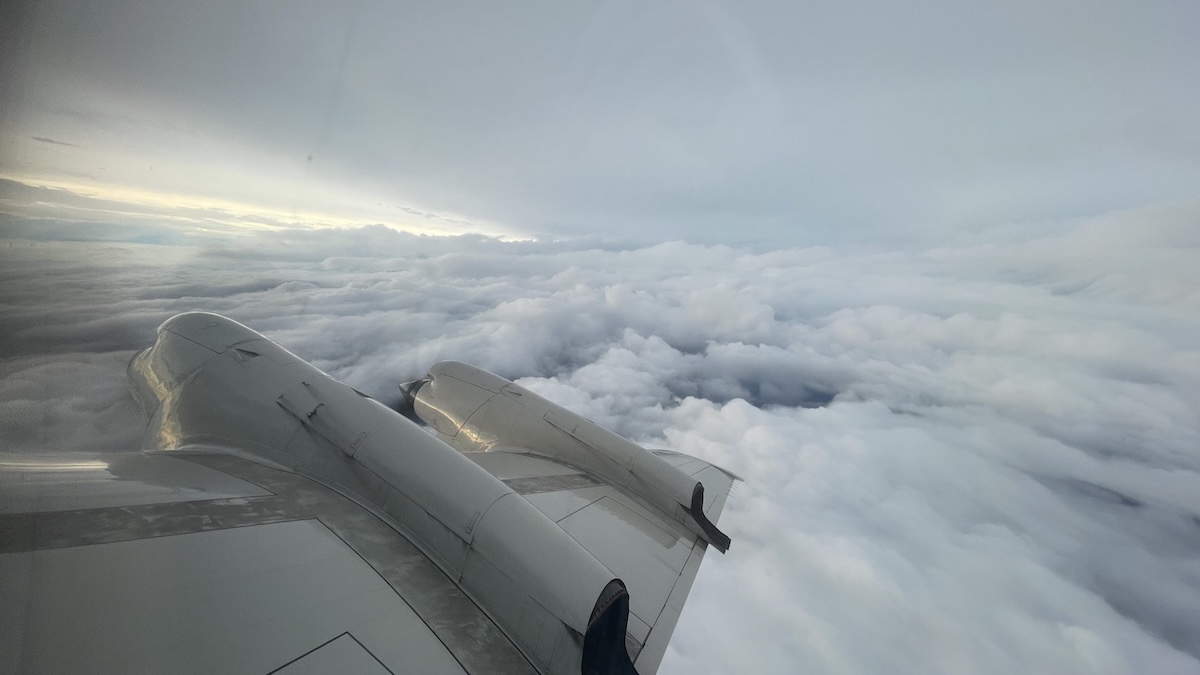
The view from a flight through Tropical Storm Idalia on an NOAA WP-3D Orion on August 28, 2023
The view from a flight through Tropical Storm Idalia on an NOAA WP-3D Orion on August 28, 2023 [Credit: Nick Underwood/NOAA]
Gemini Sparkle

Key Takeaways:

  • Hurricane hunters, comprising teams from NOAA and the U.S. Air Force Reserve's 53rd Weather Reconnaissance Squadron, are specialized aviators who intentionally fly into dangerous storms.
  • Their crucial mission involves collecting comprehensive weather data and conducting reconnaissance using instruments like dropsondes, bathythermographs, and advanced radar systems.
  • The data gathered by these brave aircrews is essential for improving hurricane forecasts, tracking, and enhancing the overall scientific understanding of severe weather phenomena.
See a mistake? Contact us.

Hurricanes—also known as cyclones or typhoons—are one of nature’s most frightening weather phenomena. With strong winds, heavy rain, and storm surges, they can make entire communities unrecognizable by destroying homes, businesses, and infrastructure.

There is a group of brave aviators who fly specialized aircraft into these dangerous storms.

Known as hurricane hunters, these aircrew embark on these missions to collect valuable weather data. While pilots typically avoid flying into bad weather, these professionals do the exact opposite, all in the name of improving our scientific knowledge.

What Do Hurricane Hunters Do?

Hurricane hunters embark on missions for two primary purposes—collecting data and conducting reconnaissance. The data collected by hurricane hunters helps weather forecasters improve their predictions and models for future storms.

There are a number of tools used during hurricane hunter missions.

Dropsondes are instruments that are deployed from an aircraft and transmit data about pressure, humidity, temperature, and wind. These instruments fall downward with a parachute and provide a picture of the vertical profile of the storm. Hurricane hunters also deploy probes called bathythermographs, which measure sea temperature.

Radar tools on board hurricane hunter aircraft scan the storm both horizontally and vertically to provide a close look at the hurricane. Aircraft flying at higher altitudes can also provide data on the upper atmosphere conditions surrounding a tropical storm.

During reconnaissance missions, hurricane hunters are tasked with locating storms and taking measurements like the central pressure and surface winds around the eye. These surveillance flights can also be flown during other serious weather events like winter storms. The information collected from these flights helps scientists and meteorologists better track, report, understand, and forecast these weather phenomena.

Who Are These Hurricane Hunters?

There are two main hurricane hunter units in the United States:

NOAA Hurricane Hunters

The National Oceanic & Atmospheric Administration (NOAA) has a team of hurricane hunters consisting of pilots, researchers, and other aircrew. It is based at the NOAA’s Aircraft Operations Center at Lakeland Linder International Airport (KLAL) in Florida.

These aircrews fly through some of the most intense storms on the planet to conduct both data-gathering and reconnaissance missions.

A typical flight crew on board a NOAA hurricane hunter flight consists of pilots, flight engineers, a navigator. Then there are the scientific crew members, which include a data system operator, a sensor operator who deploys the various measurement tools, and a flight director who is responsible for the science mission. NOAA hurricane hunter missions can last up to 10 hours.

53rd Weather Reconnaissance Squadron

The 53rd Weather Reconnaissance Squadron (53rd WRS) is a unit of the U.S. Air Force Reserve and the only operational military unit in the world that regularly flies weather reconnaissance missions.

It is part of the Air Force’s 403rd Wing, located at Keesler Air Force Base in Biloxi, Mississippi. The unit also has a small group of civilian personnel who are co-located with the NOAA’s National Hurricane Center in Miami.

Aircraft from the 53rd WRS have crews of five, consisting of two pilots, a navigator, a meteorologist, and a weather reconnaissance loadmaster. The pilots and navigator are responsible for the operation of the aircraft. The meteorologist observes and records data using a computer, while the loadmaster operates and records data from dropsondes.

53rd WRS crews primarily fly storm reconnaissance missions in cooperation with the NOAA’s hurricane hunters. Both units conduct surveillance for the National Hurricane Center. When storms are active, the two units will often fly their missions in a rotation to ensure that there is constant coverage.

A loadmaster for the 53rd Weather Reconnaissance Squadron at Keesler Air Force deploys an bathythermograph from a WC-130J
A loadmaster for the 53rd Weather Reconnaissance Squadron at Keesler Air Force deploys an bathythermograph from a WC-130J [Credit: U.S. Air Force/Staff Sergeant Kristen Pittman]

What Aircraft Do Hurricane Hunters Fly?

The NOAA hurricane hunters have two types of aircraft.

Firstly, they operate two Lockheed WP-3D Orion turboprops. These are modified versions of the P-3 Orion maritime surveillance and anti-submarine aircraft.

The WP-3D Orion can tolerate high levels of wind and turbulence, as it has to fly through violent conditions before reaching the eye of a storm. The NOAA’s two WP-3D Orions are nicknamed “Kermit” and “Miss Piggy” after the Muppets characters.

To conduct high-altitude surveillance missions, the NOAA uses a Gulfstream IV-SP jet. This aircraft has a range of 4,000 nm and a cruising altitude of 45,000 feet. The NOAA uses its jet to gather high-altitude data using radar and GPS dropsondes.

According to the NOAA, its Gulfstream jet has flown missions around almost every Atlantic hurricane that has threatened the United States since 1997.

The 53rd WRS has a fleet of 10 Lockheed WC-130J aircraft. These are modified versions of the popular C-130 Hercules transport aircraft, specifically designed for weather surveillance.

Like the NOAA’s WP-3D Orions, the WC-130Js are designed to fly through some of the most extreme weather conditions in the world. The NOAA plans on replacing its WP-3D Orions with two WC-130Js in 2030.

At least six hurricane hunter aircraft have been lost over the decades. Most recently, a Guam-based U.S. Air Force WC-130 lost radio contact on October 12, 1974, after embarking on a mission to fly into a typhoon. After search and rescue efforts were unsuccessful, all six crewmembers were presumed dead.

A NOAA ‘hurricane hunter’ Lockheed WP-3D Orion, nicknamed ‘Miss Piggy’
A NOAA ‘hurricane hunter’ Lockheed WP-3D Orion, nicknamed ‘Miss Piggy’ [Credit: NOAA]

How Do You Become a Hurricane Hunter?

NOAA hurricane hunter pilots are members of the NOAA Commissioned Officer Corps, one of the federal uniformed services of the United States.The NOAA’s aircraft, including its hurricane hunters, are flown by these pilots. There are three possible paths to become a NOAA pilot:

  • Active-duty pilots or navigators from other U.S. uniformed services can be hired through an inter-service transfer.
  • Pilots with a commercial multiengine licence with an instrument rating can apply to a direct-to-aviation pipeline.
  • All other prospective aviators would have to complete an initial sea-based assignment with the NOAA Corps before being considered for flight training.

Prospective NOAA Corps officers must meet an extensive set of requirements, including medical requirements, U.S. citizenship, and a bachelor’s degree with STEM coursework.

Two NOAA Corps pilots and a flight engineer at the controls of NOAA Lockheed WP-3D Orion during a flight into Hurricane Ian on September 27, 2022. The aircraft is nicknamed ‘Kermit’ and has a figurine of the Muppet character in the windshield.
Two NOAA Corps pilots and a flight engineer at the controls of NOAA Lockheed WP-3D Orion during a flight into Hurricane Ian on September 27, 2022. The aircraft is nicknamed ‘Kermit’ and has a figurine of the Muppet character in the windshield. [Credit: Nick Underwood/NOAA]

NOAA researchers, like scientists and meteorologists, are hired through the U.S. government’s civilian hiring process. The necessary qualifications and experience vary between job postings, but these roles typically require a related degree or a combination of relevant education and experience.

Members of the 53rd WRS are Air Force Reservists. These personnel can be former full-time active-duty Air Force members or direct hires from the civilian population. Prospective Air Force reservists must also meet a stringent set of requirements, including age requirements, U.S. citizenship, and job-specific criteria.

Andrew Chen

Andrew is a lifelong lover of aviation and travel. He has flown all over the world and is fascinated by the workings of the air travel industry. As a private pilot and glider pilot who has worked with airlines, airports and other industry stakeholders, he is always excited to share his passion for aviation with others. In addition to being a writer, he also hosts Flying Smarter, an educational travel podcast that explores the complex world of air travel to help listeners become better-informed and savvier travelers.

Pilot in aircraft
Sign-up for newsletters & special offers!

Get the latest stories & special offers delivered directly to your inbox.

SUBSCRIBE