Register

Top 5 A&P Mechanic Traps

Here are the things you really should not do when maintaining an airplane.

The mantra for a good tool control program is a place for every tool, every tool in its place.[Credit: Georgia Northwestern Technical College]

The trend of creating top-five lists is all the rage these days.

Being ever vigilant to stay current with the times, I did what any modern self-aware man does when he wants to know about popular culture. I asked my wife. Lisa and I were on one of our treks around Lake Peachtree in Georgia kicking around ideas for my article, and she said, “Why don’t you make a top-five list?”  

My Generation-X brain did not register top five, but David Letterman’s nightly Top Ten List from the home office in Sioux City, Iowa, thrust forward from my memory like a coiled-up cobra.

Maybe I could film a top 10 segment on TikTok and sling the card at the camera, piping in some glass-breaking sound effects. The top 10 most dangerous aircraft engine changes in a war zone sprang from my lips. My wife looked at me with an expression that can only be described as bewilderment. 

Top-Five Lists Abound

OK, top five it is. It turns out one can create a list of just about anything. I hit my new resource of choice, medium.com, and fired off a search for “best top five lists.” To my amazement, page after page loaded, teeming with content, beckoning me to dive in. 

One title read “The Top Five Most Useful Commands in Pandas that I use every day.” To my dismay, Pandas is a data science term, not the cute and cuddly bears from Asia. And did you know that the Corr Command deals with the correlation of data and not an intergalactic mandate from Emperor Corr? ‘Tis sad but true.  

After the Pandas letdown, I thought my journey into reviewing top five lists would be super dull. Still, I stumbled on and ran across My Top Five Amazing Post Apocalyptic Self Improvement Hacks You Need to Action Today. If all this goes down and the world as we know it is gone, do I need to hang around and barter for dried beans, bullets, and bottled water? I think not. 

Renée Kapuku finally gave me something valuable: How to Change Your Life in 21 Days: Top Five Tips for Increased Productivity. Renée touched on one key point that resonated with me. Please write down your goal, then break it down into manageable micro-goals you can achieve in 21 days. 

Tip: Never Stop Asking Questions

By now, you know this space is not about me. It is about sharing resources, swapping stories, and passing tribal knowledge to the next generation. We greybeards have a duty to shed light on the enchantment of aircraft maintenance and bring these conversations out of the corner of dark hangars. Being an A&P for 29 years taught me one thing: never to stop asking questions and don’t be afraid to say, “I don’t know, let’s look it up.”  

I took to the mean streets of LinkedIn and asked a straightforward question. The one thing I would never do as an aircraft mechanic is [fill in the blank]. The following is a collection of those responses with some color commentary by yours truly. Get in, sit down, and buckle up. It’s time for the “Top Five A&P Mechanic Traps”—otherwise known as things you really should not do when maintaining an airplane. 

 [Courtesy: Mia Scarbrough]
[Credit: Mia Scarbrough]

1. Assume 

How do you spell assume? There is a lot of truth in that somewhat inappropriate statement. The first trap that can get you in hot water is to assume anything. If you cannot help it, assume the part is faulty until you ops check it and deem it otherwise.  

Let me tell you a story about an aircraft mechanic who assumed the bolts he removed from a windshield were the approved part number, and therefore he re-installed the same ones he pulled and signed off the airplane. 

The shift maintenance manager justified this omission by saying that he was quite satisfied that the bolts that he had removed were the correct bolts and that it would take so much time to find the correct numbers in the illustrated parts catalog (IPC) that he did not feel justified in using the IPC in the circumstances of the job in question. 

Thankfully there were no fatalities on British Airways Flight 5390, in which that improperly installed windscreen panel separated from its frame, causing the captain to be sucked out of the aircraft. The captain has an incredible story to tell at the pub now, but I don’t think it was worth it. 

2. Execute a Task From Memory 

Nothing causes a mechanic to swell with pride like spouting off torque values from memory as they retrieve a torque wrench from the rollaway and strut up to the task in work. Should you be impressed? Nay says the International Civil Aviation Organization (ICAO). 

In 2003 the ICAO published the Human Factors Guidelines for Aircraft Maintenance manual. As a testament to the thoroughness of this study, this first edition remains the latest and greatest. Section 4 addresses “Internal Factors Influencing Performance,” specifically highlighting memory failure as a “psychological error mechanism” and contributing to the failure. 

Not only is boasting about memorizing aircraft data points, measurements, and values uncouth, it is also illegal. Remember, even if time doesn’t fade your memory—and it will—values vary between specific models, and sometimes manufacturers update technical data. Although rare, it does happen, and you do not want to be the one that risks your career, or another’s life so that you can show off. 

3. Fail To Report a Missing Tool 

I introduced you to the concept of tool control in aircraft maintenance. You can see firsthand why I chose this topic early in this series. Without tool control, things tend to GUE, you know—get ugly early.  

The mantra for a good tool control program is a place for every tool, every tool in its place.  

During our tool control discussion, we addressed shadowboxing. Larger aircraft maintenance facilities companies looking to mitigate risk from lost-tool foreign object debris (FOD) enact these programs, often eliminating the need for mechanics to acquire personal tools. Toolboxes containing pre-cut foam inserts show when a tool is out of place. Before a shift ends, a quick look at the toolbox drawers ensures everything is accounted for. If a blank exists where a tool is supposed to go, stop the presses.

Perhaps the maintainers of N158WA in 2017 could have benefited from a program like this. Under a proper tool control program, the mechanic would have noticed a blank space where the screwdriver should have been and possibly returned to the aircraft before it departed. No one was injured, but the airplane sustained damage after this wayward screwdriver hit the propeller of the Swearingen Metro II during the takeoff roll in Boise. 

4. Succumb To Owner or Manager Pressure 

I honestly cannot believe I even need to highlight this, but here we are. Although the instances were not typical, I have been there, and the offending party and I quickly parted company. That is the beauty of owning a shop. You talk crazy, and you join my no-fly list. Do not stand for that static. Most providers are safety first—cut ties with the haters and find a good one. On the flip side, don’t be that person holding up a job under the guise of safety because of a grudge. You make it harder for everyone else. 

5. Falsify Aircraft Maintenance Logs/Records  

OK, gang, we saved the worst for last. You guys know the drill by now. The feds’ official stance on the matter is FAR 43.12: “Maintenance records: Falsification, reproduction, or alteration.” Allow me to summarize it for you: DO NOT DO IT. 

Seriously folks, if I have to explain this, or provide examples of how bad this is, then we have no hope. Everyone has heard horror stories of pencil whipping, selective inspections, and drive-by annuals. If an owner/operator ever approaches for a quote to “freshen up” a component, drop what you are doing and run for the hills. 

During A&P school, I studied under Jack Moore, an absolute Jedi Master of aircraft maintenance. He was looking to procure a Beechcraft Baron and found one nearby for a reasonable price. As he reviewed the logbooks, Jack asked the seller how much total time the airframe had. The guy popped out an ink pen, clicked it open, grinned, and replied, “How much time do you want?” 

Do you recognize any of these scenarios? Perhaps you have additional commentary or feel like I am way off-base. Do you have an aircraft maintenance trap to add? Drop me a line and share your experience. I promise not to tell, especially if the statute of limitations has expired. 

Richard Scarbrough

Richard is a US Navy Veteran, A&P Mechanic, and Embry-Riddle Aeronautical University alumni. His experience ranges from general and corporate aviation to helicopters, business jets, and commercial airliners. Former owner of a 145 repair station, he currently has an aerospace product management role and is a member of the T-C-Alliance. Follow him on X (Twitter) at @RScarCo.

25 Years Later: How 9/11 Forever Reshaped General Aviation Airspace

From the creation of National Security Areas to permanent prohibited zones, legacy of tragedy continues to define skies pilots fly.


The events of 9/11 had an indelible effect on pilot training. [Credit: Adobe Stock]

I pointed to the magenta line on the VFR sectional. “What’s this?” I asked the aspiring private pilot.

“Some place we’re not supposed to go,” he replied confidently.

“What kind of airspace is it?” I asked.

There was a moment of indecision, then he reached for the key on the sectional, found the answer, then went back to the airspace. Located within a rectangular box on the sectional are the words in all caps: “FOR REASONS OF NATIONAL SECURITY PILOTS ARE REQUESTED TO AVOID FLIGHT AT AND BELOW 2900’ MSL IN THIS AREA.”

Behold the National Security Area (NSA). This special-use airspace was created after the terrorist attacks on the United States on September 11, 2001.

Friday marks the 25th anniversary of the day commonly referred to as 9/11. For those too young to remember or born after it,  that was the day 19 terrorists affiliated with al-Qaeda hijacked four Boeing commercial airliners in the U.S. and turned them into weapons. For many of us alive that day, the memory remains vivid.

Two airliners were intentionally flown into the Twin Towers of the World Trade Center complex in New York City. Another struck the Pentagon near Washington, D.C. The fourth aircraft was allegedly intended for D.C. but crashed in a field in Pennsylvania when the passengers fought back. The attacks killed 2,977 people.

Because commercial aviation was weaponized, the aftermath of the tragic event resulted in increased security and airspace changes. Prior to 9/11, passengers were permitted to carry pocket knives aboard airliners. The hijackers carried box cutters, which they weaponized. As a result, the Transportation Security Administration (TSA) was created and airport security—and the list of items prohibited aboard aircraft—increased dramatically.

That morning when news of the attacks broke, all aircraft were ordered to land. At nontowered airports unicom operators got on the radio and let pilots on the frequency know they needed to get down—now. Aircraft on flight plans were told to land at the nearest airport for fear of being shot down by scrambled military fighters.

I was working at another aviation magazine at the time. I heard about the attacks on the radio as I drove to work. I ran into the break room and turned on the television just in time to see the second aircraft hit the tower. 

Immediately I called my father, a former military man and aerospace engineer, who I guessed (correctly) was trying to call me to make sure I was safe on the ground. Using my full name, he told me to stay that way until the mess was sorted out.

Within hours multiple TFRs appeared all over the country.

In the Seattle area the largest TFR was a 30 nm ring that loomed over Seattle-Tacoma International Airport (KSEA) from the surface to 5,000 feet. Essentially, the entire Mode C veil was a no-fly zone. The TFR was a solid cylinder, and no airspace cutouts like normal Class B existed. Any aircraft beneath it was going to be on the ground for a while—and no one knew for how long.

Fortunately, after about two weeks many of the TFRs were reduced in size or removed altogether.

Pilots returned to the skies over Seattle with caution as a few of the 9/11 TFRs still existed over military facilities.

Over Naval Base Bangor-Kitsap, the submarine base north of Bremerton, Washington, a TFR extended from the ground up to 5,000 feet agl and laterally out 5 nm. Smaller TFRs appeared over Bremerton Naval Shipyard, Naval Station Everett, and Naval Magazine Indian Island east of Jefferson County International Airport (0S9) in Port Townsend.

As these are all military assets, it made sense they would have TFRs over them. The ones that confused some pilots were the TFRs created over large gatherings of people, such as the one that appeared over the Washington State Fair in Puyallup, east of Tacoma. The fairgrounds are north of Pierce County Airport/Thun Field (KPLU), and when taking off to the north, a pilot had to make a turn to the east or west less than a mile from the runway to avoid the TFR.

The FAA explanation at the time was that airplanes—all airplanes—were viewed as a threat and might create a panic, which is not something you want at a crowded outdoor event. Such TFRs still are used over many sporting events, such as football games, car races, fun runs, and regattas.

Two of the most famous “event flight restricted airspace” locations that still exist are over Disneyland in Southern California and Walt Disney World in Florida. Both have a 3 nm-wide and 3,000-feet-high virtual bubble over them. 

In the uncertain days following 9/11 there was conflicting information about what would happen to a pilot who blundered their way into one of these TFRs. The NOTAM indicated deadly force was a possibility. So was jail time.

I don’t think anyone was ever shot down, but I do remember hearing about pilots who lost their privileges for at least a few months after they violated a TFR because they did not get a weather briefing before the flight and therefore did not see the NOTAMs or they accidentally clipped it. There were stories of pilots being met by law enforcement and aircraft being seized and dismantled, looking for threats.

The threat of biological weapons spread by air became a concern.

Airshow performer Julie Clark was met by law enforcement in Folsom, California, after a Saturday practice because people became concerned when they saw smoke trailing from her Beechcraft T-34 Mentor. The colored smoke was part of Clark’s “Serenade in Red, White, and Blue,” which involved flying with patriotic music. Clark was surprised and stunned to learn of the panic it caused.

Changes in Flight Training

When it was learned the hijackers had trained at American flight schools, the FBI visited many around the country to review their student records. I was there when the agents arrived looking for surnames originating from the Middle East and Russia. I was asked what kind of name Godlewski was. I replied, “Very, very Polish and very, very Catholic.”

All the flight schools on my home field increased security just in case someone tried to pull a copycat stunt by stealing an airplane. Motor vehicle access to the ramp was limited with cement blocks. A police car and patrol officer was stationed in the front parking lot.

The flight school I was training at was not taking chances with their aircraft or customers. It made multiple signs warning pilots about the local TFRs, complete with photocopies of the sectional that showed their location and dimensions. The signs were displayed in the briefing room, CFI office, and even in restrooms. 

At the time I was preparing for my commercial pilot check ride, and out of an abundance of caution, drew the TFRs on my paper VFR sectional using hot pink ink. I drew them slightly larger than the published dimensions as I did not want to be “that pilot.”

Eventually, the TFRs subsided, but we had three new NSAs as denoted on the VFR sectional in magenta, almost purple, ink, and a box next to the area contained the message in all caps: “FOR REASONS OF NATIONAL SECURITY PILOTS ARE REQUESTED TO AVOID FLIGHT AT AND BELOW (INSERT ALTITUDE) MSL IN THIS AREA.”

The areas were created so that in times of heightened threat it would be easier for the FAA to establish TFRs over them. This hasn’t happened yet.

Permanently Prohibited

One TFR in the region did become permanent. The one over Bangor, the home of Ohio-class nuclear and Trident submarines is now a prohibited area—P-51, designated by a box outlined with blue hashmarks.

Aircraft are not permitted to enter this airspace. If a pilot does, the FAA can suspend or revoke their certificate, there may be civil penalties, and if a threat is perceived military aircraft may intercept them.

There are multiple prohibited areas around the country. P-49 sits over the Bush family ranch in Texas. P-40 covers Camp David in Maryland, and more recently there was the creation of P-75 over Trump Tower in New York City.

Remember 9/11

There are a variety of ways people remember 9/11. Most are somber, such as the reading of the names of those lost at Ground Zero in New York and lowering flags to half-staff.

For the aviation community, there are many of us who make a point to fly on 9/11, celebrating the freedom we have.

Meg Godlewski

Meg Godlewski has been an aviation journalist for more than 24 years and a CFI for more than 20 years. If she is not flying or teaching aviation, she is writing about it. Meg is a founding member of the Pilot Proficiency Center at EAA AirVenture and excels at the application of simulation technology to flatten the learning curve. Follow Meg on Twitter @2Lewski.

Aviation Groups Seek Uniform Safety Rules for Part 91, 125, 135 Operators

NBAA, AOPA, and others urge FAA to extend proposed Part 121 uniform rest and duty standards to more operators.

business jet taking off from airport
Groups contend that Part 91, 125, and 135 entities should have the same uniform federal rules that the FAA is proposing for Part 121 operators. [Credit: NBAA]

A coalition of aviation organizations has urged the FAA to eliminate state and local rest and duty requirements for flight crews operating under Parts 91, 125, and 135, arguing that a jumble of differing rules could jeopardize safety and efficiency.

The National Business Aviation Association (NBAA), Aircraft Owners and Pilots Association (AOPA), Experimental Aircraft Association (EAA), General Aviation Manufacturers Association (GAMA), National Air Transportation Association (NATA), and Vertical Aviation International (VAI) jointly commented on a July notice of proposed rulemaking (NPRM) in which the FAA clarified federal preemption of those state and local rules, specifically for Part 121 operations.

The groups contend that preemption should also apply to Part 91K fractional management companies and Part 125 and 135 operators. Given the organizations’ political sway, their combined support for extending the proposal beyond Part 121 operators could prompt the FAA to modify its NPRM.

Per the Department of Labor, there are 21 states that set meal period requirements for private sector employees—including flight crews and flight attendants—among which seven also have rest period requirements. In recent years, flight crews and flight attendants who have sued airlines over violations of these requirements have often prevailed, allowing them to claim damages.

In two 2021 court rulings cited in the NPRM, judges held that state meal and rest requirements for flight attendants are not preempted by the Airline Deregulation Act (ADA) of 1978 or other federal laws. The ADA prohibits any law that creates a “significant impact” on airline prices, routes, or services.

In another comment to the U.S. Transportation Department, the NBAA, NATA, VAI, and Association of Value Airlines (AVA) estimated that there are seven active Part 91K management specifications holders, 53 Part 125 certificate holders, and about 2,000 Part 135 certificate holders in the U.S.

The four groups said the FAA’s exclusion of these entities from the NPRM “appears to be an oversight” and that they arguably face greater impacts from different state and local rules.

“Creating a consolidated and uniform standard for federal preemption…is within the FAA’s regulatory authority and will provide clear and concise notice to state and local regulators who may otherwise attempt to regulate duty and rest periods,” the groups wrote in comments, which were due September 4.

What the NPRM Proposes

The NPRM aims to reinforce federal authority over aviation safety on a national level, including regulations governing flight and duty time, rest requirements, and meal breaks on flights within the U.S. Previous rulemaking has centered on crew breaks between shifts, but the July proposal tackles breaks during duty, including while flying.

The FAA asserts that those breaks are adequately covered by federal regulations. The NPRM explains that state meal and rest break mandates may require additional crewmembers, block passenger seats, increase labor costs, disrupt schedules, and change routes, therefore violating the ADA.

The proposal would require Part 121 certificate holders to ensure flight attendants remain available for safety duties—including responding to medical emergencies or dealing with unruly passengers—during their breaks. But it also proposes they ensure flight attendants have enough time to eat, drink, or use the restroom.

The NPRM could face pushback from unions representing flight crews.

“Instead of preemption, [the Association of Flight Attendants (AFA)] pushed the airlines to resolve the operational challenges of meal and rest law through a legislative fix that would codify our rights to bargain over these provisions,” AFA wrote in a 2022 news release.

The NBAA, though, contends that a lack of clarity on FAA preemption could create operational conflicts, interfere with emergency authority, increase costs and litigation exposure, or even undermine the safety of the National Airspace System (NAS).

“NBAA and partner associations are trying to prevent a patchwork of state aviation-related requirements,” said Brian Koester, NBAA’s senior director of government affairs, in a statement Wednesday. “The proposal focused on part 121 carriers but as we told the FAA, it’s just as important to establish the FAA’s singular authority over all types of flight operations.”

Extending Federal Authority

The six aviation organizations that sent comments to the FAA said they support the NPRM and “appreciate” the agency’s foresight to address the issue of federal preemption.

But they said that “clarity regarding FAA safety requirements and their preemptive effect is an issue of paramount importance” not only for Part 121 operators, but for aircraft and component manufacturers; design approval holders; aircraft owners and pilots; passenger, cargo, emergency response, and public service operators; fractional program managers; MRO organizations; and other businesses they represent.

The groups estimated that their members collectively represent approximately $339 billion in annual U.S. economic output and 1.33 million aerospace jobs.

“Allowing each jurisdiction to establish different safety requirements would create conflicting obligations, interfere with a pilot’s emergency authority, impede time-critical operations, undermine the consistent federal oversight upon which the NAS’ safety and efficiency depend, etc,” they wrote.

The organizations further argued that differing requirements increase product liability litigation exposure, insurance costs, certification uncertainty, and operating expenses that their members must bear.

They added that a “clear and singular” framework would support the introduction of uncrewed aircraft systems (UAS), advanced air mobility (AAM), and other new technologies in the NAS.

“Fragmentation in those fields would impede design and certification, investment, interstate operations and commerce, and the safe integration of new aircraft,” they wrote.

In comments to the DOT, the NBAA, NATA, VAI, and AVA contended that Part 91K, 125, and 135 entities are subject to the “same safety-critical crewmember functions, the same operational conflicts, and the same impact on prices, routes, and services” as Part 121 operators.

They could even face greater operational or safety impacts. For example, the groups wrote, “air ambulance missions routinely have specially qualified medical personnel on board the aircraft.”

“To allow these personnel to be subjected to state meal and rest break rules would present an untenable hurdle during flight and would conflict with the federally prescribed mandates,” they said.

A footnote in the comment encourages the FAA to also consider including commercial operations under Parts 133, 137, and “other similarly situated operators” in the NPRM.

“NBAA, on behalf of its members, will continue to encourage the FAA to apply this proposed rulemaking across a broader scope of operations in order to prevent a mix of state-based regulations and ordinances,” said Koester.

Jack Daleo

Jack is a staff writer covering advanced air mobility, including everything from drones to unmanned aircraft systems to space travel—and a whole lot more. He spent close to two years reporting on drone delivery for FreightWaves, covering the biggest news and developments in the space and connecting with industry executives and experts. Jack is also a basketball aficionado, a frequent traveler and a lover of all things logistics.

Operator of Crashed Prime Air 767 Faced Safety Concerns

Former employees have reported lax safety procedures and discouragement to report issues by ownership.

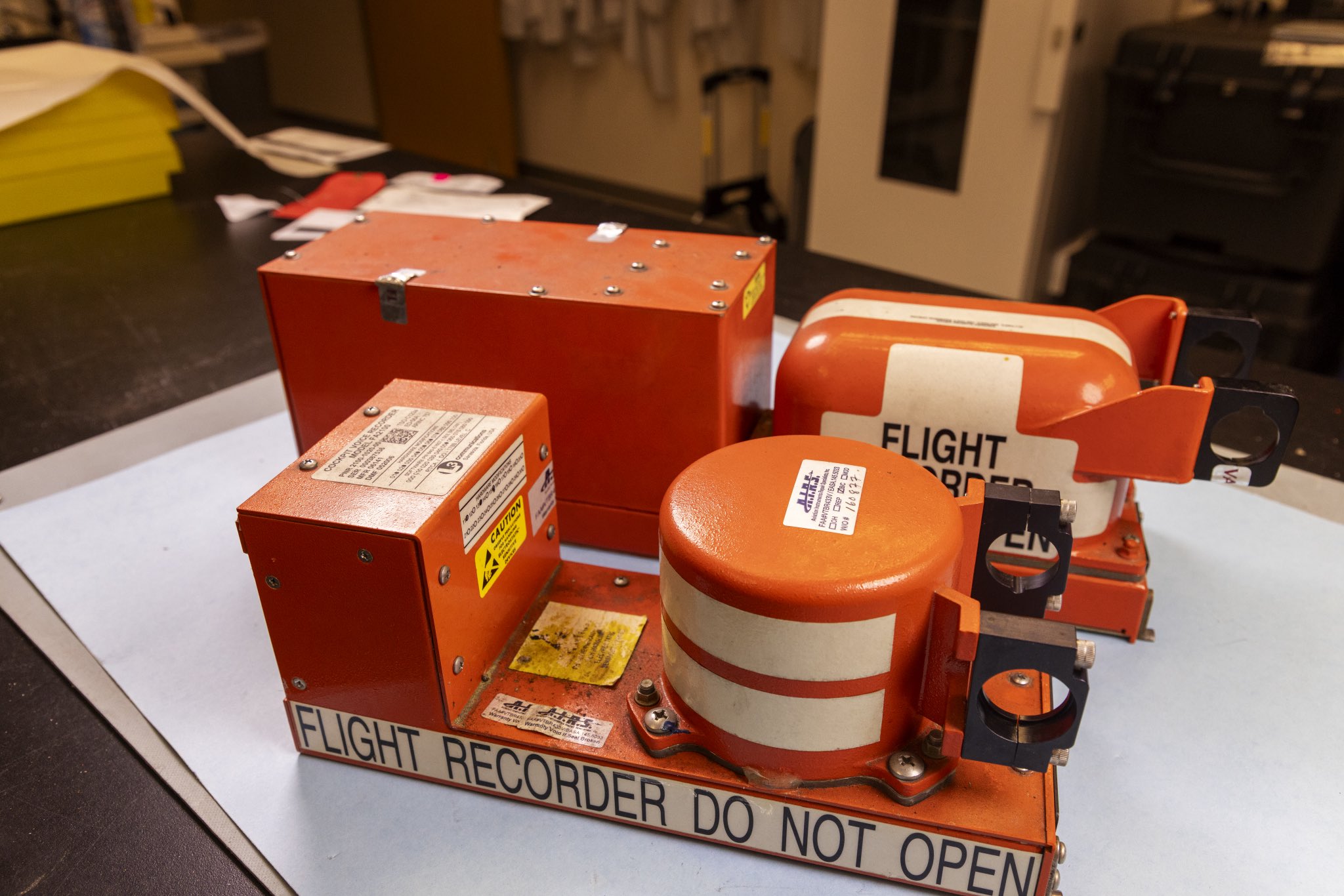
NTSB image of Boeing 767 cargo jet flight data recorder
The NTSB on Tuesday shared this image of the 767 cargo jet's flight data recorder. [Credit: NTSB]

National Transportation Safety Board Chair Jennifer Homendy said Tuesday that she did not “know anything” about “reports of safety concerns” she has seen involving 21 Air—the operator of a Boeing 767-33A that crashed Sunday at Miami International Airport (KMIA), killing five people.

Since Homendy’s news briefing Tuesday, the second and final on-scene conference the NTSB conducted regarding the accident and investigation, former 21 Air employees have raised concerns with the operator’s allegedly lax safety procedures.

Some former employees, speaking with CBS News on Tuesday, claimed that 21 Air—which is headquartered in North Carolina and controlled by Jim Crane, owner of Major League Baseball’s Houston Astros—either failed to heed safety concerns raised by employees or retaliated against them for doing so.

“I don’t know anything about those [allegations], but what I will say is…if you have anything you want to share, please send that in to witness@ntsb.gov,” Homendy said.

The NTSB chair said Tuesday was “really our first full day of this investigation” and focused on examining the accident aircraft’s cockpit voice recorder (CVR) and flight data recorder (FDR), as well as analysis of perishable evidence from the scene.

Chihoon Shin, the investigator in charge (IIC) for the case, provided an initial analysis of the FDR. Shin said that with about 15 seconds remaining on the recording, the aircraft’s brakes were released and its thrusters “increased to values consistent with go-around thrust.” He said that toward the end of the recording, there was “no indication in the recorded data that speed brakes or [thrust] reversers were deployed.”

Investigators seek to combine their analysis of the FDR with audio from the CVR, which has not yet been released. The NTSB plans to do so Wednesday after interviewing the aircraft’s pilot and assistant chief pilot in the morning.

According to Homendy, the jet’s pilot is 55 years old, received his 767 type rating in May, and had 7,145 flight hours per his latest medical dated March 31. The first officer is 37 years old, received his 767 type rating in April 2025, and had 2,655 flight hours according to a medical dated August 13. Homendy said interviews with the pilots Wednesday would provide updated crew flight hours, which will be compared to 21 Air’s records.

Miami-Dade County Sheriff Rosie Cordero-Stutz on Tuesday identified the 21 Air pilots as Joseph Carroll, 55, and Jaime Felipe Silva Molina, 37. Cordero-Stutz said both were released from the hospital and that all five fatalities in the accident were in a van operated by a cleaning company contracted by airlines.

The 767 struck two vehicles, first the cleaning van and then a Toyota SUV, after overrunning Miami International’s Runway 30 by about 1,300 feet.

The NTSB’s investigation remains in the early stages, and the agency has not determined whether 21 Air or the pilots were culpable in the accident. It is also examining safety procedures at Miami International, including Runway 30’s lack of an Engineering Materials Arrestor System (EMAS).

Safety Concerns With 767 Operator

Homendy said the NTSB’s operations team visited 21 Air’s operations control center Tuesday and interviewed the company’s flight follower, a certified dispatcher who conducts preflight planning, checks Notices to Airmen (NOTAMs), and monitors weather, among other tasks.

Another interview is planned with the operator’s chief pilot, though it has not yet been scheduled.

A message from 21 Air CEO Keith Winters on the company’s website expresses sympathy for the families of the accident’s victims and promises to cooperate fully with the NTSB’s investigation.

CBS News reported, citing records and interviews with former employees, that the operator has “faced a string of safety complaints from senior staff.” One retired 21 Air pilot told the outlet that Sunday’s incident was “something a lot of us ex-21 Air pilots have been anticipating for a while.”

Employees alleged that 21 Air’s ownership was dismissive of safety concerns and discouraged personnel from raising them. They claimed that the operator deferred maintenance on its aircraft, hired low-quality pilots, and pushed employees to fly without proper rest.

The former president of 21 Air’s union, Karl Seuring, told CBS that the union had to purchase sleeping bags for pilots to get adequate rest on long flights. Seuring also alleged that pilots were “coached” on write-ups following safety incidents.

Seuring has a pending hearing before a federal judge after the Occupational Safety and Health Administration (OSHA) rejected a legal complaint he made regarding the company’s lax attitude toward safety.

21 Air was operating the 767 that crashed on behalf of Amazon Prime Air. An Amazon spokesperson told CBS in a statement that the alleged safety violations “pre-date our relationship with the company.”

“We’ll fully cooperate with [the NTSB] and support any other investigating authorities, and we’ll also continue to coordinate with 21 Air, which operated the flight,” Amazon spokesperson Kelly Nantel said in a statement Tuesday.

Examining the Pilots’ Actions

The NTSB obtained the 767’s CVR and FDR on Monday and brought them back to its headquarters for analysis. On Tuesday, it shared early analysis that indicates the pilots may have attempted a late go-around.

Homendy said the CVR contains “more than two hours of good quality audio,” while the FDR contains about 55 hours of data.

Shin went into more detail. He said that 30 seconds before the end of the recording, the 767’s ground speed was 158 knots and its nose landing gear and right main landing gear touched down. At 23 seconds, brakes were applied. About eight seconds later, the brakes were released and thrusters were increased. At 11 seconds, the throttles were reduced to idle power and brakes were reapplied, remaining in those positions through the end of the recording. Ground speed was about 117 knots.

Shin said that at seven seconds, the aircraft’s “lateral, longitudinal, and vertical accelerations changed” and ground speed was 196 knots. Final ground speed at the end of the recording was 65 knots.

Asked why speed brakes and thrust reversers were not deployed as the 767 approached the runway’s end, Shin declined to speculate “about what should have been.”

“We have an aircraft performance study, and we’re going to do that,” Shin said. “Plus with the flight data recorder analysis, when we analyze the full list of parameters, we’ll have a better idea of the aircraft performance during this landing. Was it normal, was it not, and what was working and what was not.”

Homendy said Tuesday that an NTSB team was on-scene working through the aircraft performance study.

“The information I provided is only what’s on the flight data recorder,” Shin said. “What we need to do is talk to the crew…Crew interviews will help fill in some of the blanks for us that the crew remembers in terms of actions that they might have done, but not verbalized.”

The NTSB plans to release an “investigative update” Wednesday containing the full CVR readout after flight crew interviews.

Asked how far from impact the aircraft was when its brakes were released at 15 seconds, Homendy said that is “something we still have to determine” but will share when possible.

Other Updates and Next Steps

Homendy said NTSB’s 32-person investigation team will remain at Miami International for about a week, but the agency does not have a set time frame.

“It will take some time because we’re still…documenting the evidence, so we still have to have the aircraft there,” she said, adding that investigators are working through that process “expeditiously.”

Homendy said teams spent most of Tuesday documenting the scene and looking for perishable evidence that may not be obtainable once vehicles are removed and Runway 30 is cleared. The NTSB is using drones and collecting photos and video to document things such as measurements of the jet’s tiremarks on the runway.

Investigators on Tuesday examined the 767’s two engines and got in the cockpit, “but they’re going to want to get into other areas of the aircraft which they weren’t able to…and then of course take other measurements in the area,” Homendy said.

“There’s tire marks throughout the grass that they’re going to want to measure as well,” she added.

Homendy said the aircraft’s takeoff weight of 252,182 pounds comprised 32,222 pounds of cargo, primarily contact lenses. No hazardous materials were on board. Its planned landing weight was 231,236 pounds.

Investigators were also able to recover the black box from the Toyota SUV.

The NTSB is requesting information contained in manuals, procedures, and written documents. After completing their on-scene work, investigators will return to the agency’s headquarters to analyze the information and “pull together a preliminary report within a couple of weeks,” Homendy said.

The NTSB chair described the accident as “unthinkable” for families of the victims. The agency’s Family Assistance team, which coordinates with the Red Cross, is available for counseling and other resources.

“They are working with our partners to gather resources for the families, to provide them with all the latest information on our investigation in real time,” Homendy said. “But I’m sure it’s quite tragic for them.”

She also stressed that air traffic controllers (ATCs) may be similarly affected by the tragedy. Nick Daniels, president of the National Air Traffic Controllers Association (NATCA), took the NTSB chief to Miami International’s combined ATC tower and terminal radar approach control (TRACON) facility, where she spoke to controllers.

NATCA remains at the tower for support, and the union’s critical incident stress management (CISM) team offers peer-to-peer counseling.

“It can be quite traumatic, and they’re certainly going through a difficult time, not just from the tragedy, but also trying to get through a capacity constrained airport right now,” Homendy said.

Jack Daleo

Jack is a staff writer covering advanced air mobility, including everything from drones to unmanned aircraft systems to space travel—and a whole lot more. He spent close to two years reporting on drone delivery for FreightWaves, covering the biggest news and developments in the space and connecting with industry executives and experts. Jack is also a basketball aficionado, a frequent traveler and a lover of all things logistics.

‘Aviation Start’ Episode 2 Details How to Earn a Pilot Certificate for Free

EAA’s David Leiting walks through the many pathways for aspiring aviators.

[Credit: Aviation Start Podcast]
[Credit: Aviation Start Podcast]

The second episode of Aviation Start, FLYING’s new career-focused video podcast hosted by Jamail Larkins, takes on the biggest barrier between most aspiring aviators and the cockpit—the cost of flight training.

“You can go from zero flight time to actually getting your private pilot’s license if you do it right, completely free,” Larkins said in the episode.

His guest is David Leiting, Eagles program manager for the Experimental Aircraft Association. Leiting lays out the path step by step, starting with EAA’s youth-oriented effort. Founded in 1992 with the goal of flying 1 million young people by the centennial of flight, the program offers free introductory flights to youth ages 8 through 17 at roughly 650 airports around the U.S. through EAA’s chapter network.

“If you’ve got an airport within 30 miles of your house, there’s probably a Young Eagles program within 30 minutes of your house,” Leiting said.

That free flight is the first step in what EAA calls the Young Eagles Flight Plan. From there, students can enroll in a free EAA student membership, good until age 19, and gain access to EAA AeroEducate along with Sporty’s Learn To Fly Course at no cost. The course is a complete ground school that prepares students for the FAA knowledge exam, and EAA reimburses the exam fee for students who pass after completing it.

Students also earn a voucher toward their first flight lesson, and those who stay engaged with their local chapter may qualify for a week at EAA’s Air Academy summer camp in Oshkosh, Wisconsin.

After completing those stops, at the top of that funnel sits roughly $2.5 million in flight training scholarships that EAA awards every year, including $2.2 million administered at the chapter level through the Ray Aviation Scholarship Fund. Ray scholars who complete their first solo also receive a Lightspeed Zulu 3 headset thanks to Lightspeed Aviation’s support of the program.

The results stand out. The commonly cited dropout rate in flight training is around 80 percent, meaning eight out of 10 student pilots quit before earning a private pilot certificate. According to Leiting, EAA scholars invert that number, with more than 80 percent completing their certificate, and he credits the mentorship and accountability of the local chapter network.

Options After High School

The episode also covers paths for adults, including EAA’s Eagle Flights introductory program for those 18 and older, scholarships for older students, and flying clubs that can bring the hourly cost of flying down dramatically. Leiting and Larkins also discussed how internships can turn into full-time aviation careers, drawing on Leiting’s own path from EAA intern to staff member.

Episode 2 of AviationStart is available now on FLYING’s YouTube channel and all major podcast platforms. Aspiring aviation professionals can also get matched with eligible scholarships from a database of more than $20 million at aviationstart.org.

FLYING Staff

FLYING Magazine is a one-stop resource for everything aviation, including news, training, aircraft, gear, careers, photos, videos, and more.

What Is the Best Way to Navigate a Flight Training Finish-Up Program?

Here are some tips for private pilot candidates considering an accelerated path to the check ride.

Accelerated flight training finish-up programs can be beneficial or a waste of time and money, so do your homework before you commit. [Credit: Stephen Yeates]

Question: I have been trying to finish my private pilot certificate for the better part of three years. The delay is a combination of factors: work, family, and the fact I am a “bucket list” pilot and the flight school is geared toward people training for the airlines. I’ve tried different flight schools, but they’re pretty much the same, and I rarely get on the schedule more than once a week. Because of this I am considering a concentrated finish-up program. It means going out of state to a place with more VFR than we have here, which would be a good thing. However, I’ve heard and read so many mixed reviews about them I am now rethinking the choice. What is the best way to navigate a finish-up program?

Answer: Before you commit, go through your logbook with a CFI you trust to make sure the required experience is properly logged and double-check your math. You do not want to be the pilot who shows up with 2.8 hours of night experience when the requirement is 3.0. Double-check the distances of the cross-country flights to make sure they meet the minimums required as measured by a plotter on a paper sectional.

Make sure your knowledge test is still good—it’s valid for 24 calendar months. Make sure the endorsements are correctly worded (your CFI should use the most recent version of Advisory Circular 61-65 for that) and verify your solo endorsement is still good and won’t expire while you’re at the finish-up program.

Your knowledge should be such that you should arrive with the ability to pass the oral portion of the check ride.

Is your flying to check ride standard or close enough that three to five hours of dual instruction will get you there? Or more? Many programs simply have the applicant fly mock check rides until they meet the standards. The quality of instruction can vary from place to place, instructor to instructor as well.

Having the requirements met and the skill and knowledge doesn’t guarantee you will take your check ride. There’s always a chance the ride will be weathered out, or the aircraft could develop a maintenance issue that will result in cancellation of the check ride.

Remember once you get the endorsement you can take the check ride wherever you can find a DPE. I say this because one of my former clients went to an out-of-state program and didn’t get to take the check ride due to a maintenance issue, and he couldn’t wait around for it to be fixed. The recommending instructor told him he would have to return to the out-of-state flight school to take the check ride because the CFI’s endorsement was only good in that state because the instructor was new.

This was incorrect information. Because a pilot certificate is a federal certificate, the endorsement for the check ride is valid in all 50 states.

One last thing: Never pay a lump sum up front. Ever. Most of the negative reviews of these accelerated programs talk about paying up front and not getting the training or a refund. Good luck!


Ask us anything you’ve ever wanted to know about aviation. Our experts in general aviation, flight training, aircraft, avionics, and more may attempt to answer in a future article. Email your questions here.

Meg Godlewski

Meg Godlewski has been an aviation journalist for more than 24 years and a CFI for more than 20 years. If she is not flying or teaching aviation, she is writing about it. Meg is a founding member of the Pilot Proficiency Center at EAA AirVenture and excels at the application of simulation technology to flatten the learning curve. Follow Meg on Twitter @2Lewski.

This 1981 Mooney M20J 201 Is a Sleek ‘AircraftForSale’ Top Pick

Well-maintained speedster features glass panel avionics, resealed fuel tanks, and overhauled Hartzell Q-Tip propeller.

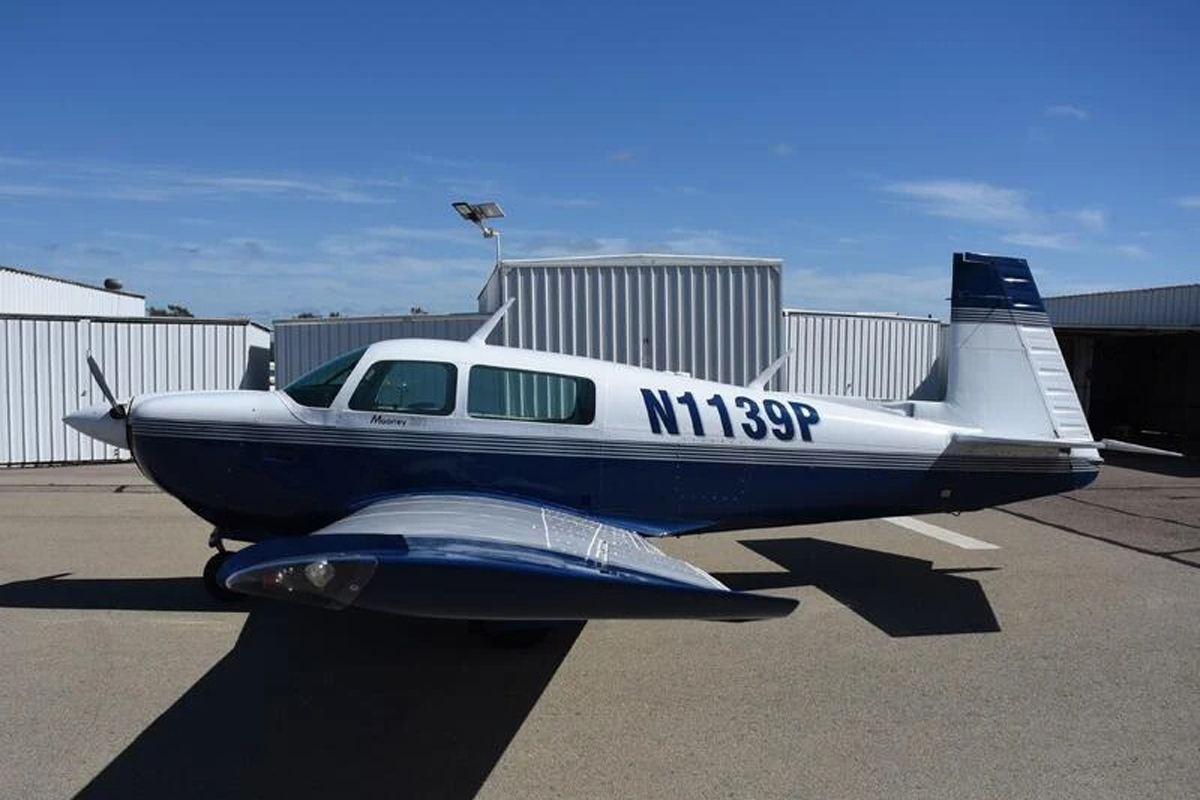
1981 Mooney M20J 201 [Credit: Robert Bieler]

Every day, the team at Aircraft For Sale chooses an airplane that catches our attention because it is unique, a good deal, or has other qualities we find interesting. You can read Aircraft For Sale: Today’s Top Pick at FLYINGMag.com daily.

Today’s Top Pick is a 1981 Mooney M20J 201.

Renowned for squeezing maximum speed out of every horsepower, the Mooney M20J—widely known as the 201—delivers an exceptional blend of aerodynamic efficiency and cross-country capability. It holds a special place among owner-operators who prioritize speed and fuel economy without sacrificing a sleek, recognizable design.

Sporting an eye-catching Anniversary Edition paint scheme, this 1981 airframe has been meticulously cared for by Mooney Service Centers and experienced maintenance shops. It has logged 3,590 total hours, boasts no damage history, comes with complete logs, and has been continuously hangared.

Opening the door reveals a welcoming cabin outfitted with a beautiful gray leather interior. The four-place aircraft offers a useful load of 946 pounds, making it a highly practical platform for regional travel with family or friends.

A dependable powerplant sits up front, showing 1,558 hours since major overhaul, leaving roughly 442 hours before its recommended TBO. It spins an overhauled Hartzell Q-Tip propeller with a non-AD hub, and the engine bay has benefited from a Sky-Tec starter, replacement engine mounts, and a new dual magneto installed during its April 2026 annual inspection.

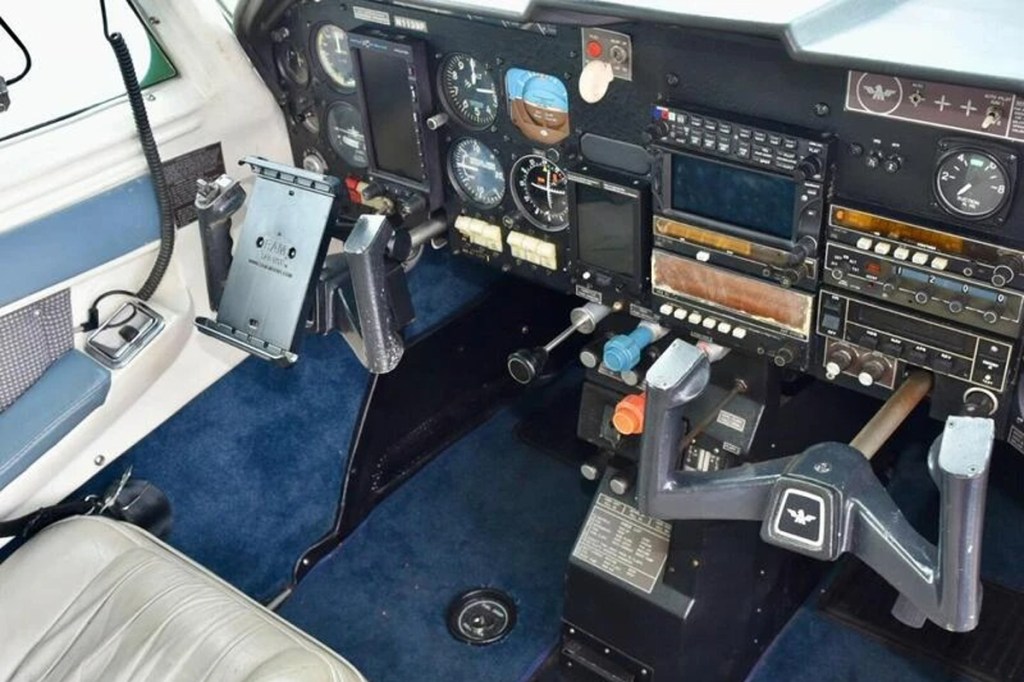
1981 Mooney M20J 201 [Credit: Robert Bieler]

Navigation and situational awareness are handled by a thoroughly modernized IFR panel built around an Aspen EFD1000 Pro primary flight display and a Garmin GTN 650 WAAS navigator. The avionics suite is further enhanced by a Garmin 347 audio panel, Garmin GDL-88 ADS-B In/Out, Flight Stream 210 for Bluetooth connectivity, JPI EDM 730 engine monitor, and Century 21 autopilot with GPSS and electric trim.

Priced at $149,000, this well-maintained Mooney M20J 201 is based in Carlsbad, California, and stands ready for its next caretaker. With its recent maintenance, including resealed fuel tanks, replaced gear pucks, and a new windshield, it offers an immediate solution for the speed-conscious pilot.

If you’re exploring ownership options, FLYING Finance can help get you airborne. Use our airplane loan calculator to estimate your monthly payments, or connect with an aviation finance expert at flyingfinance.com.

FLYING Staff

FLYING Magazine is a one-stop resource for everything aviation, including news, training, aircraft, gear, careers, photos, videos, and more.

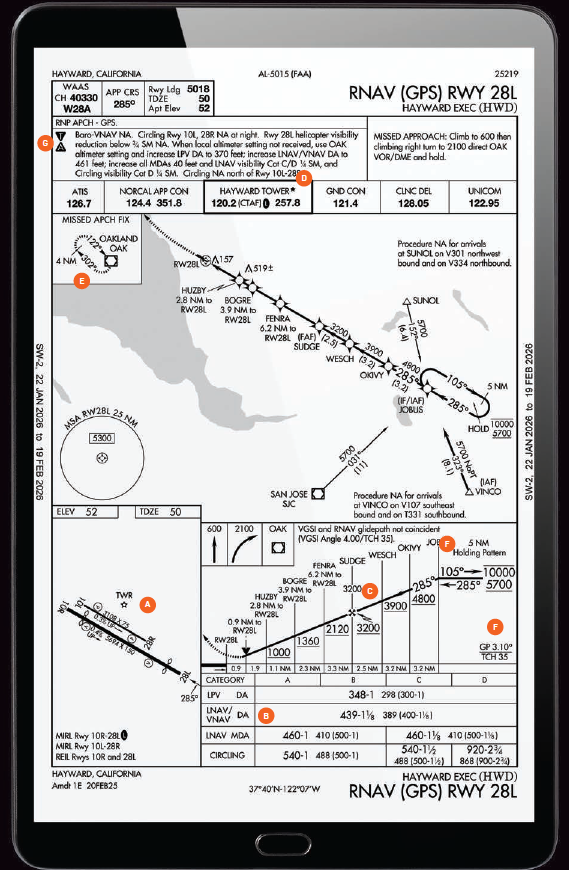
Chart Wise: Hayward, California (KHWD) RNAV GPS Rwy 28L

Master stepdowns, glide slope differences, and nonstandard notations on this Bay Area airport approach.

Aviation enthusiasts on the ramp at Hayward Executive Airport in California [Credit: US Aircraft Expo]

Centrally located in the San Francisco Bay Area, Hayward Executive Airport (KHWD) in California might just be a good place for a pilot to use to gain access to the many attractions in the area. The RNAV GPS RWY 28L approach is a way to get down to the airport when weather conditions are less than optimal VMC.

This Article First Appeared in FLYING Magazine

If you're not already a subscriber, what are you waiting for? Subscribe today to get the issue as soon as it is released in either Print or Digital formats.

Subscribe Now
Hayward, California, approach [Credit: Jeppesen]
Hayward Executive Airport approach in California [Credit: Jeppesen]

A. Two Runways

The title of the chart notes that the approach is to Runway 28L, indicating it is the approach for the “left” runway. This tells us there are two runways and that the approach is to be used to 28L only. You can see the two runways depicted on the airport diagram on the lower left of the approach plate. Make sure you’re set up for the correct runway as you break out in visual conditions to complete a landing from this approach, unless you happen to be circling.

B. WAAS or Non-WAAS Minimum Options

The minimums section on the bottom of the approach plate offers LPV, LNAV/VNAV DA, LNAV MDA, and circling minimums. For WAAS-equipped aircraft, the LPV minimums offer a glide slope and a “DA” (decision altitude), making this approach “precision-like” and taking a pilot down to 348 feet msl (298 feet agl). A non-WAAS-equipped aircraft would have to fly to a higher minimum.

C. If Non-WAAS, Stepdowns

A pilot flying this approach using the LNAV MDA altitude needs to sequence through a variety of stepdown fixes. When starting at the IAF at JOBUS at a minimum altitude of 5,700 feet msl, they could start the descent to 4,800 feet msl and maintain until passing OKIVY, then descend to 3,900 feet msl until WESCH, cross SUDGE to the final approach fix at 3,200 feet msl, and progress inbound and downward to 2,120 feet msl at FENRA, 1,360 feet msl at BOGRE, and 1,000 feet msl at HUZBY, and continuing to 460 feet msl as the MDA for the LNAV minimums. Each of these stepdowns should sequence through in an IFR GPS, notifying a pilot of their passage.

D. If Circle, Circle to the South

There’s no approach to the airport for Runway 10R, so if you need an approach to this airport when there’s an east wind, you’ll need to fly an approach to 28L and then circle to land. A note on the chart indicates “Circling NA north of Rwy 10L-28R.” This is an indication that a pilot wanting to circle from this approach to 10R needs to circle to the south of the airport, in right traffic, at an appropriate altitude for their approach speed category.

E. Missed to the VOR, HOD NM Distance

If a missed approach is needed, the pilot will initiate a climb to 600 feet msl, then make a right turn to the OAK VOR while climbing to 2,100 msl. The hold will be on an inbound heading of 122 degrees after the pilot has executed a hold entry. While many of us remember holding on VORs with standard one-minute legs, this hold is depicted as 4 nm legs. Let your GPS do the work for you here and make it easier than the old school method of timing the legs of the hold. 

F. Glide Slope Differences

The glide slope from the approach and the visual glide path indicator on the left of the runway, a VASI, are not “coincident” on this approach as is noted. A pilot should expect the visual glide slope to be a little steeper, 4.0 degrees, while the glide slope on the approach will be a slightly lower 3.1 degrees. The practical application is that you may find yourself looking like you’re below the visual glide slope indicator while you’re flying the approach glide slope.

G. Troublesome ‘T’ and Alternate ‘A’

In the upper left, you will find two notations—an upside-down triangle with a “T” in it and a right-side-up triangle with an “A” in it. These are specific notations that should drive the pilot to look at some more information found in the TPPP/approach binder. The T is an indication that “nonstandard takeoff minimums” apply for this airport. It can spell trouble if you don’t pay attention. In this particular case, specific climb gradients are required depending on the departure runway used, and a variety of obstacles are listed near the airport. These are “low, close-in obstacles” located within 1 nm of the departure end of the runway, but don’t penetrate the obstacle-clear surface area. Still good to know about. The “Alternate A” means that nonstandard IFR alternate minimums exist for the airport. Also referenced in the TPPP, in this example, you would find there are limitations for using this airport as an alternate when the tower is closed, local weather is not available, and for specific approach category aircraft.


This column first appeared in the July Issue 972 of the FLYING print edition.

Jason Blair

Jason Blair is a flight instructor and an FAA designated pilot examiner, and an active author in the general aviation and flight training communities.

‘They Must Build Here’: Bombardier Responds to Trump’s Latest Threat

President tells Canadian aircraft manufacturer it can’t sell aircraft in U.S. without relocating more of its production.

Bombardier Global 8000 business jet
The FAA certified Bombardier’s Global 8000, portions of which are produced in Texas and California, in late 2025. [Credit: Bombardier]

Bombardier on Monday responded to President Donald Trump’s threat to bar sales of the manufacturer’s private jets in the U.S., adding to long-standing tensions between the company and its largest market.

Trump on his social media platform Truth Social on Monday vowed to shut out Bombardier from the U.S. market, writing that “if they want our Market, they must build here, and stop treating America like a ‘piggybank.’” Bombardier responded by pointing out that it already has a large American manufacturing presence, with employees working at sites in nine U.S. states and Washington, D.C.

For example, it said wings and flight control components for the ultra-long-range Global 8000 are produced in Texas and California, respectively. This year, Bombardier plans to inaugurate a new facility at Fort Wayne International Airport (KFWA) in Indiana that will become its service center for the Midwestern U.S. The company is in the middle of what a spokesperson described to FLYING as a large-scale American expansion.

Bombardier in its statement Monday said its jets “create tens of thousands of U.S. jobs” and are “built with American-made components such as engines, avionics, and many more key systems provided by great American companies.” It added that its supply chain comprises approximately 2,800 American companies across 47 states.

“Bombardier values its great partnership with American companies and its U.S. employees,” the manufacturer wrote. “Our plan is to continue to invest in our people, our customers and the communities in which we operate across the country.”

Bombardier stopped producing commercial aircraft years ago, but its private jets remain highly popular in the U.S. Some American carriers still operate commercial models the company stopped building.

In addition, the U.S. military uses Bombardier business jets such as the E-11A Battlefield Airborne Communications Node (BACN), a modified Global Express. Since 2023, the manufacturer has been part of the Defense Department’s SkillBridge program that helps former military personnel transition into civilian careers.

According to Cirium data cited by The New York Times, the American market accounts for about half of Bombardier’s sales, and about 2,600 of its aircraft operate in the U.S. It is unclear how Trump would prevent the jets from ending up in the hands of American companies and individuals, as the FAA has already certified them.

Already, Christine Fréchette, premier of Quebec, and even some Republican lawmakers have come to Bombardier’s defense. The Canadian company has been a target of Trump’s since his previous administration and in the past has used stronger language to respond to the president’s threats.

Trump vs. Bombardier

Trump threatened to bar U.S. sales of Bombardier jets only hours after Canada implemented tariffs on about $20 billion worth of U.S. imports, a response to the president imposing 50 percent tariffs on about $20 billion in Canadian goods last month.

“NO MORE SELLING BOMBARDIER IN THE UNITED STATES! Their products aren’t good enough!” Trump wrote. “They live off American Buyers, American Companies, American Airports, and American Service — All while Canada blocks our GREAT American Banks, and Companies, throughout the U.S.A.”

Trump’s post also claimed Canada “blocked” Bombardier American competitor Gulfstream from doing business there—a reference to delays in the Canadian certification of Gulfstream jets earlier this year. In response, the president in January vowed to decertify Bombardier aircraft in the U.S. and threatened to impose tariffs. Ultimately, neither threat materialized, and Canada certified several Gulfstream models soon after.

“Gulfstream aircraft is and can be freely sold and operated in Canada,” Canadian Transport Minister Steven MacKinnon said in a statement to The Washington Post.

Bombardier’s response to Trump’s remarks earlier this year was more strongly worded than its statement this week. Unlike the more recent statement, the company in January explicitly called out Trump and his retaliation, expressing a desire to end the dispute. It said that it contacted the Canadian government regarding the aircraft decertification and tariffs.

The company’s statement Monday does not mention Trump or his social media post.

However, others have jumped to Bombardier’s defense. Fréchette said on X on Monday that she contacted Bombardier CEO Éric Martel to “offer him our full support.”

“Quebec will not allow anyone to dictate where our companies must produce in order to access a market,” Fréchette wrote. “We will defend our companies, our workers, and our expertise with resolve.”

At least two officials from Trump’s own party have offered more backing.

Senator Jerry Moran (R-Kan.) said the manufacturer’s Wichita, Kansas, presence supports more than 1,000 employees. Moran wrote on X that he “reached out” to the Trump administration to “make certain the President is aware of the significant contributions of Bombardier to Kansas.”

“I will continue working to see that Bombardier’s manufacturing operations not only remain in Kansas but continue to grow and create American jobs,” he wrote.

Another Republican, Representative Ron Estes (R-Kan.), wrote on X that the state will “work with the Trump Administration to ensure Kansas has a seat at the table for these important negotiations.”

Estes added that he has long opposed tariffs on the aviation industry.

“Bombardier supports an extensive American supply chain, boasts maintenance and repair capabilities across the U.S., and is trusted by our military for critical national security missions,” he wrote. “I will always advocate for policies that keep these manufacturing jobs in Kansas, expand opportunities for our workforce, and demonstrate why our state is the premier location to invest and grow in aerospace.”

The first Trump administration levied a nearly 300 percent tariff on new Bombardier passenger jets in response to a complaint from Boeing. Not long after, Bombardier sold its commercial C-Series line to Airbus, which it now builds in Alabama as the A220. It also ended its Canadair Regional Jet (CRJ) Series program, ceasing production in 2020 after selling it to Mitsubishi Heavy Industries.

A U.S. trade panel struck down the nearly 300 percent tariff in 2018.

Jack Daleo

Jack is a staff writer covering advanced air mobility, including everything from drones to unmanned aircraft systems to space travel—and a whole lot more. He spent close to two years reporting on drone delivery for FreightWaves, covering the biggest news and developments in the space and connecting with industry executives and experts. Jack is also a basketball aficionado, a frequent traveler and a lover of all things logistics.

How to Navigate Hazards and Distractions of Fall Flying

Managing crowded airspace over corn mazes, wildlife overflight regulations, and rapid-onset seasonal fog can be concerning.

Fall colors taken in from a GA plane [Credit: Jason McDowell]

If you live in a part of the world that has seasons when the trees change color, prepare yourself for more crowded skies. Starting in September there are significantly more aircraft over autumnal forests and the perennial seasonal favorite—the corn maze next to the pumpkin patch.

My favorite place to practice in the Seattle area is located over farmland east of the airport. Every year there are bright-orange pumpkins and mazes to find. In addition to training flights, there are many sightseeing flights. Between what’s on the ground and more airplanes in the air, there are a great many realistic distractions during lessons.

Frankly, it is busy no matter what time of year as there are several active flight schools in the area. An air-to-air frequency of 122.75 is used to self-announce position, altitude, and intentions. The idea is that this notification, combined with clearing turns and looking out the window for situational awareness with ADS-B in the cockpit, will keep pilots from having a midair collision. 

But as we all know it just takes one mistake by one person and one time for the holes in the Swiss cheese to line up for someone—actually a couple of someones—to have a really bad day. For that reason, when we find corn mazes, we announce when we are orbiting over them. 

Pro tip: When orbiting a corn maze, indicate the altitude and direction you are circling. Sometimes early in the season another pilot will click on and ask if you have figured out what the design is supposed to be.

The wildlife of Washington state is also an excellent attraction. Depending on the whims of Mother Nature, there can be robust salmon runs that attract seals and sea lions and the apex predator orca.

If you intend to overfly wildlife, check with your local fish and game department to determine an appropriate altitude. Often “no lower than 2,000 feet” is authorized, and harassment of the animals is not permitted.

Harassment is often determined by movement. If the seals on the beach suddenly sprint toward the water because they see salmon and you are flying over it, that might look suspicious to someone who witnesses it from the surface or beach. Be prepared to defend yourself with FlightAware or a similar app that tracks your flight with an indication of altitude.

Atmospheric Obscurations

With the days getting shorter, you may find yourself accidentally landing in the dark or close to it.

Fall is an excellent time to shake the rust off of your night-flying and instrument skills. You never know when a flight will go a little later than planned, or the clouds and fog will form sooner than anticipated.

If there is an instrument approach at your airport, have it loaded and ready to go if needed. If there isn’t, practice the approaches into the nearest suitable airport, and be prepared to call someone for a ride.

Remember, fog doesn’t just happen at night. The temperature and dew point can converge at any time. It can be surprising and deadly when the fog drops like a blanket.

For student pilots, it can be a shock to experience how fast fog forms in the morning.

One of my learners experienced this. It was an early morning flight. First light was beginning to manifest, and the skies were clear as he headed out to the ramp to begin the preflight inspection. 

Official sunrise happened as he returned to the FBO for the prebrief, which took all of 10 minutes then, as we stepped out of the hangar door onto the ramp, we walked into a curtain of fog. We could barely see the aircraft or the hangars in the distance.

“What happened?” the learner said. “We were going to fly today!”

“Mother Nature had other ideas,” I replied. “Did you check the TAF this morning?”

A sheepish “no” was the answer. As he had been driving to the airport, he saw the moon and stars and figured it would stay clear. This led to a discussion about what we would have done if we had been in the air when the field became socked in.

A METAR review showed that the visibility and ceiling were below what was required for the RNAV approach into the airport. This led to a review of the local TAFs and METARs, and the learner came away with a list of airports to use as alternatives.

Although we did not get into the sky that morning, I am reasonably certain learning did take place.

Meg Godlewski

Meg Godlewski has been an aviation journalist for more than 24 years and a CFI for more than 20 years. If she is not flying or teaching aviation, she is writing about it. Meg is a founding member of the Pilot Proficiency Center at EAA AirVenture and excels at the application of simulation technology to flatten the learning curve. Follow Meg on Twitter @2Lewski.
Pilot in aircraft
Sign-up for newsletters & special offers!

Get the latest stories & special offers delivered directly to your inbox.

SUBSCRIBE