Register

This 1956 De Havilland DHC-1 Chipmunk Is a Historic and Charismatic ‘AircraftForSale’ Top Pick

Former Canadian military trainer offers pilots great looks, graceful handling, and aerobatic capability.

1956 de Havilland DHC-1 Chipmunk [Credit: Rich D.]

Each day, the team at Aircraft For Sale picks an airplane that catches our attention because it is unique, represents a good deal, or has other interesting qualities. You can read Aircraft For Sale: Today’s Top Pick at FLYINGMag.com daily.

Today’s Top Pick is a 1956 de Havilland DHC-1 Chipmunk.

After World War II, de Havilland Aircraft’s Canadian unit wanted to develop a sturdy bush aircraft to serve its vast, remote territories. The parent company coveted a new military trainer to replace its Tiger Moth, a legendary biplane that trained pilots before and during the war.

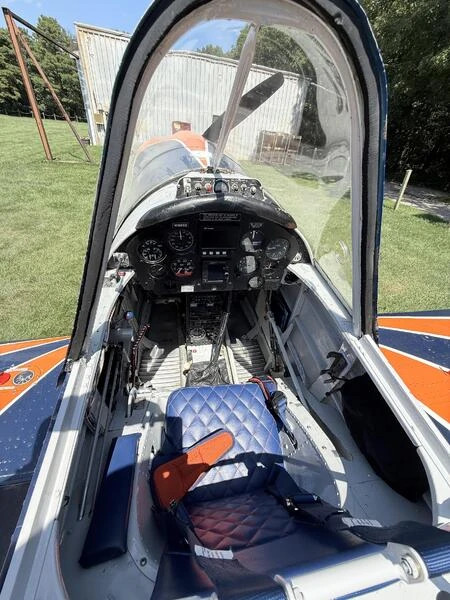
This Chipmunk has a basic VFR panel. [Credit: Rich D.]

The new design needed to serve military and civilian markets. The bushplane, which arrived later as the iconic Beaver, would have to wait.

The company put great effort into developing the Chipmunk, a sleek, graceful monoplane that would help redefine flight training, airshow performances, and aerobatic competition for decades to come. The Chipmunk made its first flight in 1946, and examples continue to appear in airshows today.

Airshow greats, including Harold Krier, Skip Volk and, perhaps most famously, Art Scholl, flew Chipmunks in international competition and airshows for many years. Krier put the airframe on the map in the mid-1960s after deciding monoplanes were the wave of the future. He modified the type into the Super Chipmunk and flew it at the 1966 world championships. Krier shared his work with Scholl and Volk, who often performed formation aerobatics in similar Super Chipmunks.

The aircraft for sale today offers pilots a connection to an exciting period in aerobatic flying and an opportunity to train for and practice a wider range of maneuvers. If flying upside down is not at the top of your wish list, the Chipmunk still shines as an economical cross-country traveler for one or two people, a sweet-handling sport flyer and a rare object of interest that collects invitations to vintage fly-ins and other events.

A 210 hp Continental provides impressive power. [Credit: Rich D.]

This 1956 Chipmunk has 2,581 hours on the airframe, 536 hours since overhaul on its 210 hp Continental IO-360-C engine and on its Hartzell two-blade propeller. The aircraft has a Royal Canadian Air Force serial number and an experimental exhibition category registration. The panel features basic IFR instrumentation.

Pilots looking for a responsive, maneuverable, and historic aircraft that will draw lots of attention wherever it lands should consider this 1956 de Havilland DHC-1 Chipmunk, which is available for $98,000 on AircraftForSale.

If you’re interested in financing, you can do so with FLYING Finance. Use our airplane loan calculator to calculate your estimated monthly payments. Or, to speak with an aviation finance specialist, visit flyingfinance.com.

Jonathan Welsh

Jonathan Welsh is Lead Editor of Aviation Consumer and a private pilot who worked as a reporter, editor and columnist with the Wall Street Journal for 21 years, mostly covering the auto industry. His passion for aviation began in childhood with balsa-wood gliders his aunt would buy for him at the corner store. Follow Jonathan on Twitter @JonathanWelsh4

Meet Boeing’s Longest-Serving Employee

Company commemorates Charlie Tapper’s 75th year with flight aboard P-8A Poseidon.

Boeing employee Charlie Tapper
Charlie Tapper, Boeing’s longest-serving employee, stands beside a P-8A Poseidon at the finishing center in Tukwila, Washington, in July 2026. [Credit: Marian Lockhart/Boeing]

Last month, 96-year-old Charlie Tapper became the longest-serving employee in Boeing’s history, and CEO Kelly Ortberg said he has “no plans of retiring anytime soon.”

Tapper marked 75 years with the company in June. He joined Boeing a week after receiving a bachelor’s degree in mechanical engineering from Oregon State University (then Oregon State College) in 1951. At the time, the company was still developing the B-52 Stratofortress and had yet to build the 707, which is widely credited with catapulting civil aviation into the Jet Age.

“Charlie’s impressive career as our longest-serving employee is a record that may never be broken,” Ortberg said in a news release. “We appreciate everything that he’s done and will continue to do to represent our company.”

The previous mark for longest-serving employee was held by Diana Rhea, who died at 96 in 2018. Rhea also spent 75 years with Boeing before retiring in 2017.

“Congratulations to Charlie Tapper on 75 years with Boeing and on becoming the company’s longest-serving employee,” Howard McKenzie, Boeing’s chief engineer, wrote on LinkedIn this week. “His remarkable career reflects a lifelong commitment to engineering, innovation, and the people who make up #TeamBoeing.”

According to Boeing, Tapper “contributed to a wide range of programs” at the company. He took part in development of the LGM-30 Minuteman missile system, support for the X-20 Dyna-Soar spaceplane program—which was canceled before the vehicle was complete—and testing of the first automatically deploying slides on a commercial airplane, escape slides on the 747.

He has worked in Boeing Defense, Space, and Security government property management for the past 15 years.

“It’s been a long journey, and I’ve enjoyed every bit of it,” Tapper said of Boeing’s recognition of his milestone. “I wish I had another 100 years to be at the forefront of technology.”

Tapper is also a former U.S. Naval aviator who served four years of active duty, leaving Boeing for a time, and 35 years in the Navy Reserve. He flew the Lockheed EC-121 Warning Star, Lockheed P-2 Neptune, and P-3 Orion during the Cold War, during which he also took part in the final American nuclear tests in the South Pacific.

Boeing commemorated Tapper’s lengthy career with a flight on the P-8A Poseidon with a U.S. Navy aircrew assigned to Patrol Squadron 4, a patrol and reconnaissance squadron based out of Naval Air Station Whidbey Island in Washington state. He rode in a jumpseat behind the pilot and, according to Boeing, was impressed with the P-8A’s sophistication.

“It was like living a dream, like living in the future,” Tapper said. “The pilot was cordial and friendly, showed me the plane’s features, and I was asking all kinds of questions. I felt like I was a member of the crew. I’d fly with them anywhere.”

Boeing also hosted a recognition dinner for Tapper at the Museum of Flight in Seattle, attended by Ortberg and chief financial officer Jay Malave.

Tapper is also an avid horseshoe pitcher who competed in the World Horseshoe Pitching Championships in Washington in 2024 as one of the competition’s oldest participants.

Boeing said Tapper gave the following advice to fellow employees: “Always ask questions, no matter how simple they seem. Learn as much as you can, celebrate successes with your teammates, and always be a good teammate.”

Jack Daleo

Jack is a staff writer covering advanced air mobility, including everything from drones to unmanned aircraft systems to space travel—and a whole lot more. He spent close to two years reporting on drone delivery for FreightWaves, covering the biggest news and developments in the space and connecting with industry executives and experts. Jack is also a basketball aficionado, a frequent traveler and a lover of all things logistics.

We Said Rates Would Pause, Then Chase Inflation. The Chase Has Started

Interest rates are tightening as the Fed wrangles a service-driven and AI-propelled inflation level.

Federal Reserve Bank of Atlanta [Credit: Tripp Thurston]

Second in a three-part series

I indicated back in the spring that rates were unlikely to change before the midterms, no matter how impartial the Fed is supposed to be, and then rise to chase inflation that was sure to come.

While some bankers were still calling for cuts back then, Chair Kevin Warsh came into the job with a message that the Fed is about to go quieter and about to go up on rates. That was never a forecast built on hope for cuts. It was a read on the mechanics of the calendar and the persistence of the inflation data underneath it.

What’s happening now isn’t a surprise or a reversal of consensus. It’s that call arriving on schedule.

The Fed funds target still sits at 3.50 percent to 3.75 percent, unchanged since the last cut in December 2025, but the forward curve implied by the CME FedWatch Tool has moved hard in the last month, from pricing a plausible hold at the September 16 meeting to pricing a 66 percent probability of a 25-basis-point hike, which would push the range to 3.75 percent to 4.00 percent.

If you’re financing anything longer than a few months out, an aircraft loan, a fleet lease, a working-capital line, the base case you’re underwriting to needs to reflect that the pause is over and the chase has begun.

The Chair Changed. The Math Didn’t Wait for Him

Warsh is the sitting chairman of the Federal Reserve, not a governor auditioning for the job.

President Trump nominated him on March 4, 2026, the Senate confirmed him in a 54-to-45 vote on May 13, the most divided confirmation in the Fed’s history, and Warsh took the oath of office on May 22, with the FOMC unanimously electing him its chairman the same day.

He succeeded Jerome Powell, whose term as chair ended May 15. Per the custom for outgoing chairs, Powell remains on the board of governors, where his term as a governor runs through 2028.

The part worth sitting with is what Trump expected to get out of this appointment versus what he’s gotten so far.

Trump spent much of Powell’s final year in office attacking him publicly, at one point accusing him of a “too late,” multi-hundred-billion-dollar mistake for not cutting sooner, and has made no secret that he expected Warsh, once installed, to lean toward lower rates.

Three months into the job, at the one speech every Fed chair uses to set the tone for their tenure, the Jackson Hole Economic Policy Symposium keynote, delivered August 28, Warsh did the opposite. He said inflation remains “concerning,” reaffirmed the Fed’s 2 percent PCE target as “a firm, fixed target” rather than an aspiration, and stated plainly that inflation is unlikely to return to target on its own, language that markets read, correctly, as an opening for rate increases rather than cuts if the data doesn’t cooperate.

Whatever the political expectations attached to his appointment, the chairman’s first major independent test of his own credibility appears to be resolving in the direction of tighter policy, not looser. We’re not going to referee the politics of who expected what from whom. We are going to underwrite to what the sitting chairman actually said, in public, at the podium that matters most.

That’s also the moment CME FedWatch’s probabilities pivoted. Odds of a September hike had actually fallen earlier in August after a weak July jobs report suggested the labor side of the mandate was softening enough to justify a hold. Warsh’s Jackson Hole remarks reversed that in the span of a single week, and by August 31 the market was pricing better than two-in-three odds of a hike.

That kind of swing, from “probably a hold” to “probably a hike” inside 10 days, on the words of one speech, is itself a data point: it tells you how thin the market’s confidence in a dovish path actually was, and how quickly it can reprice once the person in charge signals otherwise.

Why Inflation Won’t Just Cooperate

The “transitory, it’ll fade on its own” framing that dominated 2021 doesn’t fit what’s happening in 2026, and Warsh said so directly. The mechanics are worth walking through because they explain why this isn’t a garden-variety sticky-inflation quarter.

Headline CPI hit 4.2 percent year-over-year in the spring of 2026, a three-year high, and the single largest driver by far was energy, which spiked more than 60 percent of the monthly increase in the worst month and posted year-over-year gains in the 23 percent to 28 percent range, driven substantially by the Iran conflict and the resulting disruption to shipping through the Strait of Hormuz. That’s not a demand-side story about an overheating economy; it’s a geopolitical supply shock sitting on top of an already-firm underlying trend, and it’s the kind of inflation the Fed has the least ability to reason its way around, because raising rates does very little to un-disrupt a shipping lane.

Strip out energy and the picture doesn’t get comfortable, it just gets slower-moving. Core PCE, the Fed’s preferred gauge, has been running in the 3.3 percent to 3.7 percent range through the summer, more than a full point above the 2 percent target, and the composition of that stickiness has shifted in a way that matters for how long it persists. Shelter (housing), which was the dominant post-pandemic inflation villain from 2022 through 2024, has actually cooled meaningfully.

Shelter’s year-over-year contribution has drifted back down toward roughly 3.2 percent to 3.4 percent, closing in on its pre-pandemic historical baseline. Housing starts data backs that up from the supply side: single-family construction has been trending down rather than up, with homebuilders throttling back new starts in the face of elevated mortgage rates and softer buyer demand, and new-home inventory now sitting above balanced levels in a lot of markets. A housing sector that’s actively slowing rather than overheating is consistent with shelter’s cooling contribution to core PCE, and it’s a big part of why housing is no longer the main problem the way it was in 2022 and 2023.

The harder problem now is core services excluding housing, running close to 3.8 percent year-over-year, concentrated in healthcare, insurance, and financial services, categories that are fundamentally labor-cost-driven rather than commodity- or rate-sensitive, and that respond to monetary tightening only slowly and indirectly, because you can’t raise the fed funds rate and make a hospital’s staffing costs or an insurer’s claims costs fall next quarter.

This is the same issue the Fed has been battling since rates started rising in 2023: a non-rate-sensitive services economy that has largely brushed off every attempt to cool it, because its costs are driven by wages and labor availability rather than by the price of credit. Core goods, by contrast, have stayed genuinely tame at around 2.3 percent year-over-year, proof that this isn’t broad-based overheating so much as a concentrated problem in services and energy that happens to be large enough to keep the headline number stuck well above target.

That combination, a geopolitical energy shock the Fed can’t touch, layered on top of a labor-cost-driven services problem that moves slowly even when it does respond, is exactly the kind of inflation profile that argues for holding rates restrictive for longer than the market wants, rather than an ordinary soft patch that a rate cut would credibly fix.

The Labor Market That Isn’t Giving the Fed the Signal It Used To

Here’s where this cycle breaks from every playbook built on the last several decades of Fed practice, and it’s a more complicated story than “hiring has slowed.” Job openings are sitting near an eight-year low, which in a normal cycle would be a green light to cut. But the labor force itself is shrinking, and that changes what a soft hiring number actually means.

Labor force participation fell to 61.5 percent by June 2026, the lowest level since March 2021, and, stripping out the COVID-era distortion entirely, the lowest reading since 1976. Roughly 720,000 workers left the labor force in June alone; over the trailing 12 months, the total is closer to a million.

The causes are layered rather than singular. A meaningful share is demographic and mechanical: an aging population and the accelerating retirement wave of the baby boom generation, sometimes called the “demographic cliff,” compounded by a statistical population correction made in January that reclassified part of the decline.

But a real portion is behavioral. Immigration policy changes have constricted the supply of available workers, and part of the drop is concentrated among prime-age workers 25 to 54, including women who left jobs after employers mandated a return to office, citing childcare constraints. Longer-run projections from labor economists point to the labor force shrinking by roughly 3.7 percent, or 5.9 million workers, between 2025 and 2032, before any partial recovery.

That matters enormously for how the Fed should read “soft hiring.” A shrinking labor supply chasing still-real demand for services is not the same signal as weak demand for labor in an economy with a normal, growing workforce.

The former can support wage growth and services-sector cost pressure even while headline job-opening counts look soft, because employers are competing over a smaller pool rather than losing their appetite to hire. That’s a structurally different, and more inflationary, kind of labor-market softness than the Fed’s traditional models assume, and it’s a second reason, independent of the AI-capex story, that the Fed’s old playbook is giving a distorted reading right now.

Layering the AI Economy On Top: How Many Americas Are We Actually Looking At?

The AI-capex buildout is the other force decoupling this cycle from its predecessors, and it’s worth being precise about what it’s doing, because the popular shorthand, “the AI economy is propping up GDP,” is true but incomplete.

GDP growth has held in a 1.8 percent to 2.3 percent range even with job openings near multi-year lows and a shrinking labor force, which on the surface looks like a contradiction: growth holding up while the labor market gets softer and smaller at the same time. The explanation is concentrated capital expenditure: AI infrastructure, data centers, and the compute buildout, running at extraordinary rates and propping up headline growth almost independent of how many people are actually being hired or how many are still looking for work.

Financial commentary through 2026 has increasingly reached for the “K-shaped economy” framing to describe this: asset markets and AI-linked sectors rising while lower-income consumers, small businesses, and rate-sensitive industries fall behind, with high-income households continuing to drive consumer spending while everyone else pulls back.

That framing is directionally right but, we’d argue, understates the real split by collapsing two genuinely different things into one category. “Wall Street” and “the AI economy” are not quite the same thing, even though today they’re moving in lockstep. The AI-capex buildout is the engine, actual dollars spent on chips, data centers, and power infrastructure, which shows up in GDP whether or not the resulting products or services ever generate a comparable return. “Wall Street” is the pricing of that engine, equity markets, largely mega-cap tech-weighted indices, betting that the capex converts into durable earnings growth.

Those two things can and eventually will diverge: the capex spending can slow or pause on a shorter cycle than it takes equity markets to reprice the assumption that it won’t. Just look at how sensitive the stock market has become to a single earnings report from a name like Nvidia; that’s not the behavior of a market pricing a diversified economy, it’s the behavior of a market pricing one bet. Underneath both of them sits Main Street: households facing energy-driven headline inflation, a labor market that’s shrinking rather than just slowing, tight credit conditions, and, specific to what we finance, the piston aircraft buyer we described in the first piece of this series as the segment most exposed to exactly this environment and least insulated from it.

Three economies, then, not two, and not quite the tidy two-tier “K-shape” the commentary has settled on: the capex economy generating the growth, the market economy pricing it, and the household economy absorbing the inflation and financing costs those first two aren’t much bothered by. For anyone underwriting durable-goods purchases financed on credit, it’s the third one that matters, and it’s the one showing the least improvement.

Zoom Out Further: This Isn’t a Blip, It’s a Regime Change

Looking at this only year-over-year understates how unusual the moment actually is.

Pull the lens back to the last decade and the shape of the story changes. Through most of the 2010s, the Fed’s problem was the opposite of today’s: persistent “lowflation,” inflation running below the 2 percent target more often than not, rates held near zero for years at a stretch because the Fed couldn’t reliably get inflation up to target even trying. The Fed was using every tool available to fuel an economy still gun-shy from the Financial Crisis and Great Recession.

That regime ended abruptly in 2021, when a burst of post-pandemic demand, unprecedented fiscal stimulus, and snarled supply chains combined to produce the worst inflation in four decades, peaking near 9.1 percent on headline CPI in June 2022. The Fed’s initial read on that inflation, “transitory,” a temporary reopening quirk that would fade on its own, turned out to be wrong, and the Fed was late to their own dance. The correction, once it came, was the most aggressive hiking cycle since the early 1980s, taking rates from near zero to above 5 percent by the middle of 2023, held restrictive through 2024 while inflation gradually cooled, before the Fed began cutting again in September 2024, a cumulative 1.75 percentage points of cuts through December 2025, arriving at the current 3.50 percent to 3.75 percent range, where the Fed held through the remainder of Powell’s term.

Powell’s parting gift of lowering rates at the end of 2025, and Washington’s continuing intervention to maintain liquidity in a market that needs more discipline, is giving the new Fed chair a real test, on top of the energy shock, shrinking labor force, sticky core services, and declining non-AI construction and manufacturing activity. Warsh’s Jackson Hole remarks read, in substantial part, as a direct answer to that test: an explicit statement that he does not intend to be the chairman remembered for being late to the dance a second time, even if that means undoing some of his predecessor’s final easing before it’s clear whether it was warranted.

The 10-year view matters for financing decisions specifically because it’s a genuine regime change, not noise around a stable trend. A cost-of-capital assumption built on the 2010s, near-zero rates, inflation the Fed couldn’t get up to target no matter what it tried, is now a full cycle out of date. The 2020s have been defined by the opposite problem, and every signal coming out of the new Fed leadership as of September 2026 points toward that problem not being fully solved yet.

What This Means for Aircraft Financing Specifically

Put all of it together: a new chairman whose first major test is resolving hawkish rather than dovish, an inflation profile driven by an energy shock the Fed can’t touch plus a labor-cost-driven services problem that moves slowly even under tightening, a labor force that’s shrinking rather than simply cooling, an AI-capex economy propping up headline growth while pricing itself into equity markets that jump or drop on a single company’s earnings call, and a full decade’s worth of regime change underneath all of it.

The question that remains is whether the Fed can actually raise rates and wrangle monetary policy away from Washington’s continued intervention to address the economy where it is most needed: the inflationary services sectors that haven’t responded to tightening yet.

That’s the backdrop the piston aircraft buyer is financing into right now, precisely the buyer segment we showed in the first piece in this series is already the most macro-sensitive part of the GA market, and the one absorbing the affordability pressure other segments are more insulated from.

The third and final piece in this series takes that thread all the way through: what premiumization plus a rate environment that’s now actively chasing inflation higher is doing to who can actually afford to buy and finance an airplane in this market, where MOSAIC was supposed to help, and where the real bright spots still are.

If you want to see how a move in the fed funds rate actually flows through to a monthly payment, our aircraft finance calculator will show you in real terms.


Tripp Thurston

As Group President and CFO of Firecrown Media and COO of Flying Finance, Tripp Thurston brings two decades of commercial banking and specialized lending experience to the FLYING audience. Having served as both a regional credit approver and a Market President, Tripp has a unique "both sides of the desk" perspective and a candid, down-to-earth style of explaining complex transactions. Based north of Atlanta in the Chattanooga area, he spends his downtime exploring the skies in different aircraft or traveling with his wife, two sons, and their husky-lab.

4-Seat All-Electric Cosmic One Embodies New Era of Light Sport Aircraft

FAA’s MOSAIC rule opened up a world of possibilities for LSAs, and Cosmic Aerospace is exploring almost all of them.

Cosmic Aerospace Cosmic One four seat electric LSA aircraft
Cosmic Aerospace’s clean-sheet, all-electric four-seater, Cosmic One, is designed for a unique embedded wing propulsion system. [Credit: Cosmic Aerospace]

There has never been an aircraft quite like Cosmic One.

The model—a “premium four-seater [full] electric aircraft” according to Christopher Chahine, co-founder and CEO of Colorado-based manufacturer Cosmic Aerospace—is still in the preliminary design stage. But it is a candidate to be the first clean-sheet, four-seat, all-electric aircraft certified under the FAA’s refreshed Modernization of Special Airworthiness Certifications (MOSAIC) rule.

MOSAIC took full effect in July, shifting the paradigm of legacy weight-based rules to performance-based certification standards for light sport aircraft (LSA). The new framework allows heavier, faster aircraft to qualify and raises maximum seating capacity from two to four. It also permits nontraditional powerplants including electric engines.

Manufacturers have taken various approaches to introducing MOSAIC-compliant aircraft, but Cosmic One combines many of them. It takes advantage of the rule’s allowance of up to four seats like the Van’s RV-10, which previously exceeded LSA limitations due to its stall speed. It is fully electric, similar to the RV-10 that MagniX is retrofitting with its magniAIR electric engine. But it is a true clean-sheet design like Bye Aerospace’s eFlyer 2, a two-seater.

Those MOSAIC-compliant aircraft are further along in the development process than Cosmic One. But the clean-sheet, all-electric four-seater embodies the new limits of what LSA can be.

“If you start with an existing airframe, you’re trying to squeeze your [electric] technology into an existing, very constrained package,” Chahine told FLYING. “So that naturally creates design decisions and tradeoffs.”

Developing a MOSAIC-compliant aircraft from scratch also comes with tradeoffs, of course. Chahine said Cosmic is targeting the first flight of a full-scale Cosmic One prototype in the next 18 to 24 months, meaning it will likely hit the market after other revamped LSA models. But the manufacturer is playing the long game.

Building the Embedded Wing

Cosmic Aerospace got the ball rolling in 2022 following its first venture-backed funding round and according to Chahine spent its first few years developing a “new electric aircraft architecture.”

He described the configuration as an “embedded wing” that he said “allows us to more tightly integrate the propulsion system and the airframe design to unlock more performance”—specifically in efficiency and range. The company is targeting flight endurance of two-plus hours and range of 250 nm with VFR reserves at launch.

Chahine added that the wing is “scalable intrinsically,” compatible with both Cosmic One and a larger, future regional aircraft the manufacturer is developing.

Ultimately, Cosmic aims to electrify both general and commercial aviation, but the cost and complexity of commercial certification was a challenge early on. However, Chahine said MOSAIC “catalyzed” the development of Cosmic One. The rule prompted the company to examine new designs that might now be permitted and how they could address pain points for the GA market.

Chahine described the rule as an “incredible opportunity for aircraft manufacturers like us to bring our technology to market much, much faster, and through a much more secure certification approach.”

He said Cosmic’s embedded wing architecture could be described as a distributed electric propulsion system, though the system is not flap-mounted. The multi-engine configuration comprises six ducted fans integrated in the airframe and powered by high-performance electric motors. The manufacturer is targeting a 250-knot top speed, which would not have been permitted under previous LSA restrictions.

The company has flown the embedded wing system on two subscale demonstrators to validate its stability, control, and performance. It has also built subscale and full-scale engines that Chahine said have been tested “extensively” on the ground and on a test bench.

Chahine said Cosmic One will offer a “premium flight experience and a premium interior experience as well.”

The manufacturer has also conceived a 24-seat, all-electric regional model it calls Skylark. It has completed Skylark’s conceptual design phase and initial testing of the model’s full-scale engine system, which Chahine said is slightly larger than Cosmic One’s.

That program is “on hold” as Cosmic is “fully focused” on commercializing a MOSAIC-compliant model. Chahine said there are some differences between the two aircraft in terms of the integration of engines and systems into the structures. But the “overall conceptual system is effectively going to be the same,” he said.

“That’s really why Cosmic One and MOSAIC is so important to us,” Chahine said, “because we’re aiming to get this key technology out there and demonstrate that we can build high-performance electric aircraft under a very streamlined certification approach, serve a considerably sized market, and then scale the technology up from there.”

Cosmic has opened reservations for the first 100 “Founder Series” Cosmic One aircraft, allowing private owners and operators to place initial deposits.

Going Clean Sheet

Both Cosmic One and Skylark are clean-sheet aircraft, a design decision Chahine said was “fairly intuitive.” The manufacturer sought to optimize Cosmic One for the embedded wing propulsion system, which he said would not have been possible using a piston-powered model as the baseline.

“If you have batteries and electric motors, you really want to start from a clean sheet in order to fully leverage the benefits that you’re getting and to compensate for some of the challenges that you’re having with this new technology,” he said.

For example, Chahine said that with a retrofit, Cosmic One would “almost certainly” need to use a single-propeller configuration rather than the manufacturer’s multi-engine architecture. He also said flight range can be limited when retrofitting electric batteries on a piston airplane.

“Instead of following a retrofit approach, we’ve looked into how can we try to design an aircraft with today’s technologies that get around those issues and build a product that can fly longer ranges, that really addresses the mainstream aviation market rather than just the GA market,” Chahine said.

Another advantage is that Cosmic One does not position the motor or engine compartment in front of the passenger fuselage. That provides “dramatically better” visibility for pilots than what they would get using a conventional framework, as well as improved safety and enjoyment for passengers, he said.

Training For the Future

Cosmic has ambitions beyond producing MOSAIC aircraft. But the new rule’s relaxed parameters mean that noncommercial pilots may have opportunities to explore novel technology before their commercial counterparts.

Out of the gate, Chahine believes Cosmic One will be positioned to replace certain training aircraft. He said based on conversations with “some of the largest collegiate flight schools in the country” that the model’s targeted 250 nm range at delivery is enough to cover a “large part of the training curriculum for private and commercial pilots.”

Cosmic One is designed to charge in about 30 minutes, which Chahine said could help flight schools reduce downtime. He added that it will be more affordable than existing multi-engine trainers, with a price point comparable to single-engine models produced by Cirrus Aircraft—plus the added benefit of lower operating costs.

Cosmic has announced Colorado’s Centennial Flyers and Germany’s Evia Aero as its respective American and European launch partners for Cosmic One. Chahine said the company is also in discussions with leading flight training organizations around the U.S. regarding potential future partnerships.

Chris Palmer, Cosmic’s head of corporate strategy, said launch customers will include flight academies, flight clubs, and potentially university partners.

Before MOSAIC, manufacturers would need to contend with rigorous certification requirements to offer an all-electric four-seater they designed from scratch, outside of the experimental category. Now, there is a world of possibility.

Jack Daleo

Jack is a staff writer covering advanced air mobility, including everything from drones to unmanned aircraft systems to space travel—and a whole lot more. He spent close to two years reporting on drone delivery for FreightWaves, covering the biggest news and developments in the space and connecting with industry executives and experts. Jack is also a basketball aficionado, a frequent traveler and a lover of all things logistics.

For Airhart Avionics, It’s Flying Simplified

Airhart avionics cut workload, reduce risk, and widen access to flight.

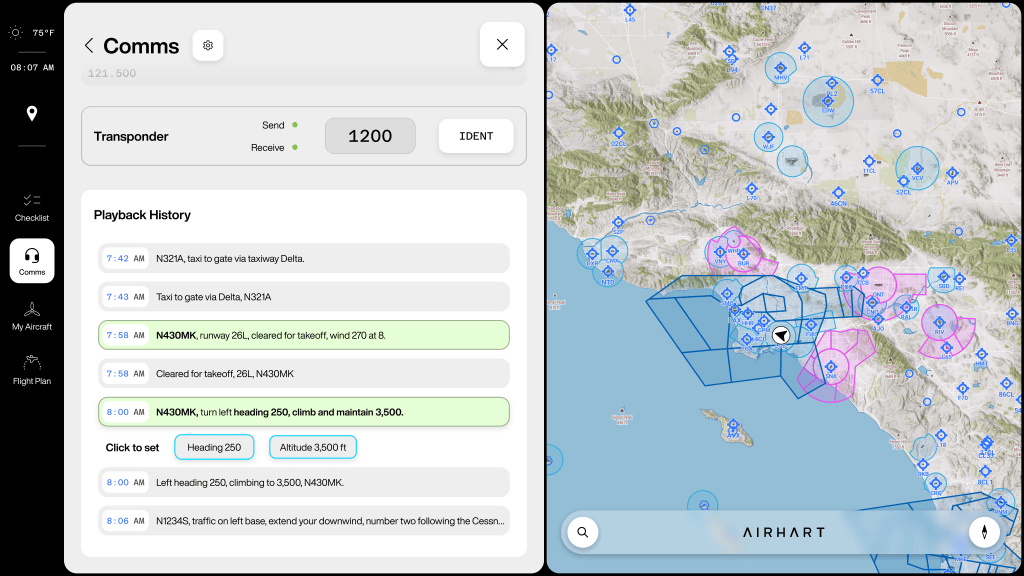
Example of Airhart Avionics panel [Credit: Airhart Aeronautics]

When you think about the future of flight, it’s easy to conjure images of flying cars and electric aircraft darkening the skies. Yet we rarely see massive quantum leaps in aviation. Instead, improvements are usually eked out in small incremental ways.  

But every few decades there’s a profound change that reshapes the general aviation landscape. Examples are the advent of GPS and whole airframe parachutes in the 1990s and glass cockpits in the early 2000s.

Now, in a small hangar in Long Beach, California, the next big leap forward may be taking shape at Airhart Aeronautics. 

This Article First Appeared in FLYING Magazine

If you're not already a subscriber, what are you waiting for? Subscribe today to get the issue as soon as it is released in either Print or Digital formats.

Subscribe Now

When I flew to Long Beach to visit the company, I thought I’d be writing about the design of a new small airplane with safety features to reduce accidents. What I found was that the firm pivoted in the past year.

While it still plans to eventually design and sell its own cutting-edge aircraft, in the near term it’s selling a revolutionary avionics system that can be installed in any experimental light sport aircraft (E-LSA) or MOSAIC-category aircraft. The idea is to make airplanes safer and easier to fly by improving the pilot-machine interface first, rather than waiting for an all-new airframe. 

The Vision

Airhart’s long-term goal remains the same: Design and sell its own clean-sheet, personal aircraft. But the company’s path to getting there now has three distinct phases. When I asked founder and CEO Nikita Ermoshkin what prompted him to start the company, he pointed to getting his private certificate in 2020. Ermoshkin worked at SpaceX at that time and flew out of Hawthorne Municipal Airport (KHHR) in California.

“That’s really when I started thinking about all this, because that whole experience of learning how to fly really was like a double-edged sword for me,” Ermoshkin said. “I loved what I could do with flying a plane. I love being able to go see my friends up in the Bay Area or take friends on a day trip to the Grand Canyon.

“But the amount of effort it took to fly, combined with the level of risk that we take on by flying, it just didn’t sit right with me. So, I was like, ‘All right, that’s the problem I want to fix.’ I want to make airplanes safer and more accessible, and I want more people to be able to fly, and I want everyone to be able to do it safer than driving a car.”

To achieve that vision, Airhart realized that it first needed the avionics that would go into its new airplane and that they could stand on their own as a product. 

I initially wondered whether the system was still more concept than reality. But company officials told me that the first customer installation is well underway, and the aircraft will be on display at the Airhart Aeronautics booth at Oshkosh.

Phase 1: Airhart Avionics

To view the new Phase 1 avionics, I climbed into Airhart’s flying test bed, a red Sling TSi, which is a four-seat, single-engine, low-wing homebuilt aircraft.

Company president Nate Thuli sat beside me and talked me through the system. Its core is two separate 14-inch displays mounted side by side behind a single pane of glass wrapped in an aluminum bezel. 

At launch, the standard product is VFR only, or IFR capable with an optional Garmin GPS 175. In the future, Airhart units will include IFR capability at no additional cost.

Airhart Aeronautics founder and CEO Nikita Ermoshkin has big goals. [Credit: Max Trescott]

The layout is a classic PFD on the left and MFD on the right. The MFD can be divided in half, so effectively the system has three separate panes plus two sidebars for navigating the system. The sidebar on the PFD includes tabs for comms and aircraft switches for lights and flaps. The MFD sidebar has tabs for whether to display maps, checklists, flight plan, or radio information on the MFD.  

Most of the intelligence for the entire system resides in two small identical black boxes mounted on the back of each display. Having separate displays and separate boxes provides full redundancy and eliminates single points of failure. Those black boxes contain all of the intelligence for the flight instruments, radios, GPS, transponder, and autopilot. 

The only other system boxes are a power distribution box, effectively electronic circuit breakers, a network switch that all modules plug into, a magnetometer mounted in the tail, and an engine interface box. Currently, only Rotax engines are supported, though the company is also developing FADEC for both turboprop and turbine engines to offer full control of those powerplants. 

The test bed’s front panel has more switches than final customer installations will have. When installed, in addition to the main display, the only other items in the front panel will be the engine push-to-start switch, a small backup display module, and an ELT switch. All other switches, including for flaps and lights, will be operated from the main display. 

The system also includes Starlink satellite internet for real-time, in-flight connectivity. It will also enable over-the-air system software updates, which means you’ll never have to plug an SD card into the system to update charts. It also offers the possibility that company support can dial into the aircraft should you ever have issues while in flight.

Thuli described the avionics as being “context aware.” He said the system goes beyond just presenting data, also taking into account phase of flight and pilot characteristics. By doing that, it can present data that’s more relevant and useful. 

The system also incorporates a true large language model (LLM) artificial intelligence (AI) for one feature I wish I had in every plane I fly. The system continually listens to the radio and transcribes the words in real time, so you can see what was just said. 

It then presents information such as headings, altitudes, and new frequencies, so that you can load them into the system with a single gesture. That lets pilots fly with confidence knowing they have the right information and decreases the need to ask ATC to repeat information. 

The Phase 1 product includes Airhart Aware, which uses magenta trend vectors to provide pilots with visual cues showing how far they’ve deviated from bank and pitch targets. In Phase 2, Airhart Assist will provide force on the sidestick to nudge a pilot back toward those targets.

The airspeed tape along the left side of the PFD is conventional, but it also
includes a bug for maneuvering speed and shows the current fuel flow rate. To the left of the airspeed indicator is another vertical tape that indicates current engine power and a bar showing the maximum power limit. 

On the right, there’s a conventional altitude tape and a vertical speed tape that is as long as the altitude tape. Behind the instruments is a synthetic vision view that shows the terrain below in graphic detail, including local streets and roads. 

Customers can order Airhart Avionics for $49,900, which includes installation of the system in their aircraft in Long Beach. 

Airhart Aeronautics also plans to partner with multiple aircraft manufacturers who will offer Airhart Avionics, including STOL manufacturer Draco Aircraft. 

Phase 2: Airhart Assist and Fly-by-Wire

In Phase 1, an aircraft’s standard flight controls are used. But in Phase 2, the stick or yoke, rudder pedals, and throttle are replaced with a single sidestick and a speed lever. The goal is not just to clean up the panel but to rethink how pilots command the airplane. 

Rather than constantly juggling pitch, power, trim, and rudder coordination, with Airhart Assist turned on, a pilot will command outcomes, such as speed, heading, and altitude, while the system handles the achievement of those outcomes. Airhart sees this as the next major step in reducing workload and preventing loss-of-control accidents, while keeping the pilot in charge of the mission and decisions.

I flew the Phase 2 simulator, and the first thing I noticed was that, much like flying a gyro-stabilized drone, if I kept my hands off everything, the aircraft would maintain straight-and-level flight. So oddly, if pilots start to lose control, they’ll want to take their hands off the controls. 

Example screenshot of Airhart Avionics with its comms tab in use. [Credit: Airhart Aeronautics]

Leaning the sidestick left and right sets the desired heading, and pushing and pulling the stick sets the desired vertical speed rate. Pushing and pulling the speed lever sets the desired speed. The system then automatically makes the required engine adjustments to achieve the target speed. 

When turning, the maximum bank angle is limited to 45 degrees. Also, when in a turn, the engine power comes up automatically to compensate for the loss of vertical lift, so pilots no longer need to pull back on a yoke or stick when turning. 

Landing is simple. Ermoshkin suggested setting a target descent rate of 500 fpm, an airspeed of 65 knots, and pointing the aircraft at the numbers. The system automatically compensates for any crosswind. If you’re high and need to slip, just push the sidestick forward, pull the speed stick back, and the aircraft will enter a slip. 

As the aircraft approaches the runway, it will automatically flare at an appropriate height. Power is automatically reduced, and the aircraft starts pitching up to a nose-high attitude. 

After touchdown, pulling the speed stick all the way back applies the brakes. To maintain the centerline while on the runway, just lean the sidestick left and right. 

Phase 3: Clean-Sheet Aircraft

The third phase is Airhart Aeronautics’ long-term “North Star”—a clean-sheet aircraft designed around modern avionics and simplified controls.

The plan is for a fast, fuel-efficient, four-seat, MOSAIC-compliant, personal aircraft that will be released under Part 22. Company executives were remarkably open and gave me full access to their facility with one caveat: Don’t take photos of the aircraft design they showed me.

Suffice it to say that it will be unique and make a contribution to the industry.

Pilot Training Ecosystem and United

Airhart’s vision goes beyond avionics and simplified controls. The company is also developing a digital logbook that tracks how well a pilot flies, including where Airhart Assist had to nudge or intervene. Airhart has already landed an investment from United Airlines Ventures centered on the training pipeline and capturing pilot performance in greater detail.

Airhart’s mission to build an airplane that is safer, simpler, and more intuitive to fly could reduce loss-of-control accidents, while broadening the pool of people who could fly safely. In some ways, it’s doing what the self-driving Waymo rideshare cars, now available in many U.S. cities, have done. They’ve identified the weak link—the human—and substituted technology to handle low-level control tasks, thus freeing drivers and pilots to focus on higher-level tasks.

Waymo now has an accident rate that’s 80 percent lower than cars with drivers. If Airhart Aeronautics succeeds, its new technology can’t come fast enough.


Long Beach and Aerospace Innovation 

Long Beach Airport (KLGB) sits at the center of one of Southern California’s deepest aerospace legacies, so it’s no accident that Airhart Aeronautics and other next-generation aviation companies have chosen to locate there.

Douglas Aircraft opened next to the field in 1941, and its plant became a huge World War II production center. After the war, Douglas and later McDonnell Douglas produced jetliners, including the DC-8, DC-9, and DC-10. Boeing acquired the company in 1997, and the plant was shuttered after the final C-17 left the facility in late 2015.

Today, lots of newer aerospace companies are based at KLGB to take advantage of the former Douglas/Boeing land, a trained aerospace workforce, and network suppliers.

For example, JetZero is trying to reinvent the airliner. Its core idea is a blended-wing-body (BWB) aircraft called the Z4. The design integrates the wings into the body, reducing drag and cutting fuel burn by up to 50 percent. United Airlines has announced a deal to purchase 100 of these aircraft that could hold up to 250 passengers. JetZero is also producing a version for the U.S. Air Force that might serve as an aerial tanker. 

Ampaire, which is focused on hybrid-electric propulsion, has relocated its headquarters to Long Beach Airport. Its Electric EEL, based on a Cessna 337 Skymaster with one piston engine and one electric engine, first flew in 2019. It has also developed a plug-in, hybrid-electric powertrain that’s now flying in its Eco Caravan, based on the Cessna 208B Grand Caravan.

Odys Aviation is designing long-range vertical takeoff and landing (VTOL) aircraft that it says “can take off and land anywhere.” These heavy-lift cargo drones have both defense and commercial applications. For example, Fiji Airlines is planning to use Odys’ Laila drones to shuttle cargo among Fiji’s 330 islands.  

Space-based companies are now so prevalent that the city of Long Beach markets itself as “Space Beach.” Some of these firms include Relativity Space, which builds reusable rockets; Vast, which wants to build the first commercial space station; SpinLaunch; and Orbital Operations. 

Airhart Avionics at a Glance

  • Dual 14-inch touchscreen displays in a single integrated bezel
  • Redundant avionics architecture for increased reliability
  • Dual nav/com radios
  • WAAS-enabled GPS for VFR navigation
  • Integrated 3D autopilot
  • Starlink for worldwide internet connectivity
  • Remote diagnostics and automated OTA software updates
  • Designed for experimental and light sport aircraft (E-LSA) applications
  • Current engine support includes Rotax, with additional integrations planned
  • Priced at $50,000, including installation at Airhart’s Long Beach Airport facility
  • Home simulator available at additional cost for at-home training and familiarization
  • IFR-capable at launch with optional Garmin GPS 175

This column first appeared in the July Issue 972 of the FLYING print edition.

Max Trescott

Max Trescott is the host of the Aviation News Talk podcast, which focuses on GA and safety. He’s the author of Max Trescott’s G1000 and Perspective Glass Cockpit Handbook and another book on the G3000. He was inducted into NAFI’s Flight Instructor Hall of Fame in 2026 and earned the 2008 National CFI of the Year.

Bye eFlyer 2 Gets FAA Special Airworthiness Certificate

Milestone sets the stage for flight testing.

Bye eFlyer 2 [Credit: Bye Aerospace]

The FAA has awarded Bye Aerospace, a developer of all-electric aircraft, a Special Airworthiness Certificate for the eFlyer 2, the company’s flagship two-place airplane.

The FAA issues Special Airworthiness Certificates for aircraft with unique operations needs, such as research and development.

According to the Colorado-based company, the certification followed an inspection of the aircraft at Centennial Airport (KAPA) near Denver, where Bye Aerospace is completing flight preparations.

Company officials said the FAA meticulously studied the eFlyer 2’s airframe, electric propulsion system, instruments, and other functional systems to confirm the aircraft’s safety for operation. The project has been several years in the making.

Bye Aerospace is recognized as a global leader in electric aircraft development. The company is focused on creating sustainable aviation solutions for training and general aviation markets. The eFlyer series has been designed for low operating costs and less carbon emissions than aircraft powered by internal combustion engines while enhancing the flight training experience and safety.

“Every major milestone in an aircraft program is earned, and this one is the result of intense effort and dedication from a talented team that is passionate about what we do,” Rod Zastrow, CEO of Bye Aerospace, said in a news release. “We’ve worked hand in hand with the FAA since 2016 to help advance the certification framework for electric aircraft. In just a year, we’ve built and tested this game-changing all-electric aircraft, and receiving the Special Airworthiness Certificate is an important validation of that work. We look forward to beginning flight testing and continuing our progress toward certification.”

The acquisition of the Special Airworthiness Certificate is a significant step toward first flight as it indicates the aircraft is airworthy and therefore authorized to begin flight testing.

The all-electric eFlyer 2 has been several months in development. Bye Aerospace completed the structural build of the aircraft in July, after several months of rigorous structural testing and propulsion system validation using a truck-mounted test rig called “The Beast.”

The information gathered during testing was used by engineers and technicians to fine tune final aircraft systems integration, improve electrical system validation, and streamline operational ground testing in preparation for the flight test program.

According to company officials, Bye Aerospace now focuses on final aircraft inspections, operational readiness activities, and preparing to launch a phased flight test program that will progressively expand the aircraft’s operating envelope.

“It’s been a multi-month process of studying the aircraft to understand the systems and its novelties, this included a lot of time in the simulator, working on both nominal and emergency procedures as well as working with the team,” said chief test Pilot Elliot Seguin. “Planning for a first flight is all about expectations. The more you can predetermine what you expect, the more you can notice when things are not going according to plan. The limitations and emergency procedures need to be sound and well-rehearsed but clear expectations let you know the problem is coming before it gets here.”

As of Thursday, the order book for Bye’s two-seat eFlyer 2 and four-seat eFlyer 4 stands at over 1,000 aircraft. The company notes the designs are popular with flight training operations including Skyborne Academy, Spartan College of Aeronautics & Technology, Flex Air Flight School, and KLM Academy.

Meg Godlewski

Meg Godlewski has been an aviation journalist for more than 24 years and a CFI for more than 20 years. If she is not flying or teaching aviation, she is writing about it. Meg is a founding member of the Pilot Proficiency Center at EAA AirVenture and excels at the application of simulation technology to flatten the learning curve. Follow Meg on Twitter @2Lewski.

The Market Doesn’t Want What It Used to Want 

There is more to the latest GAMA report than the top-line number shows.

Cessna Skyhawk [Credit: Tripp Thurston]

First in a three-part series

GAMA’s second-quarter 2026 shipment report landed September 3, and the headline number is fine: 1,458 airplanes shipped through the first half of the year, up modestly from 2025’s pace, with piston deliveries alone running at 786 units year-to-date.

But the unit count is the least interesting thing in this report. The more useful question is what buyers are actually choosing once they show up with a checkbook, and the data is plain on that point: the market is moving upmarket, and it’s moving faster than most people building financing products for it have adjusted to.

Beechcraft Just Told You Where This Is Going

In November 2025, Textron Aviation announced it would end production of the Beechcraft Bonanza G36 and Baron G58, two of the longest-running nameplates in general aviation, with more than 24,000 combined deliveries since launch. The official reason was a sustained sales decline and a decision to redirect resources toward the Beechcraft Denali, the single-engine turboprop that’s been in development since 2016 and is now sliding toward first deliveries this year following the GE Catalyst engine’s February 2025 certification.

The GAMA numbers make the case better than the press release did. Bonanza and Baron shipments combined for exactly two units in Q1 2026 and two more in Q2, four airplanes, worldwide, across a full six months, for a platform that once anchored Beechcraft’s piston lineup. That’s not a soft quarter. That’s a company that has already, functionally, stopped building these airplanes and is running out remaining orders while it waits for Denali certification to clear.

The trade being made is stark by price alone. A Bonanza or Baron new-build sold somewhere in the neighborhood of $1 million to $1.3 million depending on configuration. The Denali is expected to list around $6.4 million to $6.6 million, call it five times the price, for a buyer moving from piston to single-engine turboprop performance. Textron isn’t just retiring two old airframes; it’s reallocating its entire piston-adjacent product investment toward a buyer who can write a much bigger check. That’s premiumization in one company’s product roadmap, and it’s not unique to Beechcraft. It’s the same logic playing out across nearly every OEM’s shipment mix this quarter.

Where This Actually Started, And Why It Isn’t Reversing

It’s worth asking whether this is a genuinely new phenomenon or the continuation of something that’s been building for a while, because the answer changes how you should underwrite around it. Our read: premiumization is largely a COVID-era pivot that never unwound, and the clearest way to see that is to look at what happened in adjacent industries facing the identical supply-and-demand math at the identical moment.

Start with the mechanism. Through 2020 and into 2021, general aviation, like automotive and marine, saw a genuine surge in demand for personal, private transportation as buyers sought alternatives to shared and commercial travel, arriving right as global supply chains for engines, avionics, semiconductors, and raw materials seized up. That combination forced every manufacturer with capacity-constrained production into the same decision: when you can only build a fixed number of units regardless of demand, you build the ones that carry the best margin per constrained production slot. Selling a $6 million turboprop instead of a $1.2 million piston single, out of the same limited factory capacity, isn’t a discretionary choice at that point. It is a strategic business decision to maximize yield.

The automotive industry ran this exact playbook in the open, and it’s well documented. During the 2021 to 2022 chip shortage, automakers explicitly prioritized truck and SUV production over sedans, because those larger vehicles carry meaningfully better margins for only marginally higher production cost, loaded with technology and premium options that cost little extra to build but support real pricing power.

What started as a supply-constrained emergency measure has since hardened into permanent strategy: Ford currently sells zero traditional sedans in the U.S. market, GM has redirected production toward full-size internal combustion engine trucks and SUVs while pulling back from weaker-margin EV programs, and cars overall made up just 17 percent of the U.S. market in 2025. Detroit didn’t go back to sedans once the chip shortage cleared, because the margin math it discovered under duress didn’t stop being true once the duress ended.

Marine tells the same story from a different angle.

The recreational boating industry saw the identical COVID-era demand surge, and heading into 2026 it has settled into a genuinely two-tier market: premium yachts and sportfish boats, particularly in the 40-to-70-foot range, are behaving almost like a separate market entirely, with stable pricing, healthy late-model brokerage inventory, and buyers who are notably less rate-sensitive, more focused on fit, pedigree, and maintenance history than on financing terms. Entry-level and mass-market segments, by contrast, are the ones actually carrying overall unit volume in a mixed economic environment, with softer pricing and buyers who are exactly as rate-sensitive as you’d expect. That’s premiumization by another name, in an industry with no regulatory or certification barriers to explain it away, which makes it a cleaner read on buyer behavior than aviation’s own numbers, precisely because nothing about airworthiness certification is forcing the boat market to split the same way.

So the premise holds up, and holds up better than aviation’s numbers alone would suggest: this isn’t a story unique to airplanes, or to Beechcraft, or to this particular GAMA report. It’s the same COVID-triggered reallocation toward higher-margin, lower-volume production that automotive and marine manufacturers made under identical constraints, in the same window, for the same reasons, and in all three industries, the buyer segment that emerged on the other side of it has proven more insulated from supply-chain shocks and broader economic cycles than the volume buyer left behind.

Once a manufacturer discovers that a wealthier, less rate-sensitive customer base is both willing to pay up and less likely to disappear in the next downturn, there’s little competitive pressure to go back.

What the Macro-Comparison Tool Actually Shows, And Why It’s Three Segments, Not Two

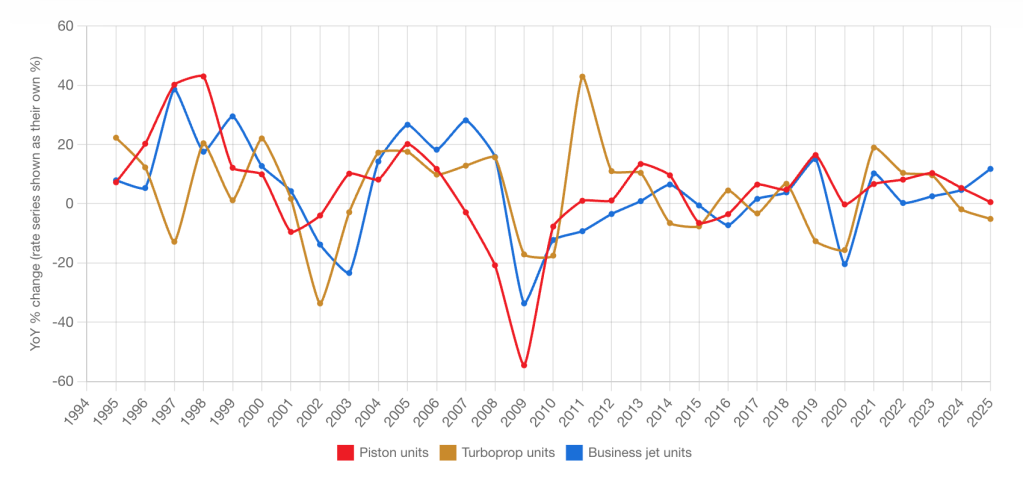
FLYING Finance built the “Aircraft Demand vs. the Macro Factors” tool on our Market Coverage Hub page, the 31-year panel that lets you toggle gas prices, housing starts, CPI, the five-year Treasury, and corporate profits against piston, turboprop, and jet unit shipments, because treating “the aircraft market” as a single, undifferentiated market obscures more than it reveals. It’s actually three markets, each tracking a different piece of the macro picture, and the analysis is incomplete if it only contrasts the two ends of that spectrum.
Run piston units against housing starts and gas prices and the correlation holds up reasonably well: a Skyhawk buyer feels a gas price spike and a soft housing market in something like the way a boat or RV buyer does, because the piston buyer is disproportionately a household financing a real share of the purchase, exposed to the same discretionary-spending pressures as any other big-ticket consumer good.

Run business jet units against the same two series and the correlation is weak to nonexistent. Jet buyers track corporate after-tax profits, S&P 500 returns, and household net worth concentrated at the top of the distribution, series that move on a completely different rhythm than what shows up at the pump or in a new-home permit, and that’s before accounting for how much of today’s jet demand is being driven by buyers financing for tax and liquidity-management reasons rather than because they can’t write the check outright.

Turboprop sits in the middle, and it deserves its own read rather than being folded into either extreme.

Turboprop buyers are disproportionately owner-operators and small businesses, agricultural operations, charter fleets, and regional utility and cargo operators, which makes the segment genuinely sensitive to corporate profits and fuel costs in a way piston buyers aren’t, but considerably less sensitive to household-level pressures like housing starts and gas-pump prices than piston buyers are, since the purchase is typically justified against a business’s operating economics rather than a household budget.

It’s also the segment most directly in play in the Beechcraft story above: the Denali is a turboprop, and Textron’s bet is that turboprop demand is durable enough, and turboprop buyers insulated enough from the piston buyer’s macro exposure, to justify walking away from the piston lineup entirely.

That three-way split is the whole premiumization story in miniature.

The piston segment remains genuinely rate- and macro-sensitive. The segment growing fastest in dollar terms, jet, and increasingly turboprop, is increasingly buyers who are considerably more insulated from the exact macro variables that used to move the whole GA market together. If you’re underwriting or forecasting off a single blended “aircraft market” indicator, you’re averaging three buyer populations that no longer move together, and the average tells you less every quarter.

The Used Market Is Splitting the Same Way

Layer the OEM order backlog data from this quarter’s business aviation module on top of the shipment numbers and the split gets sharper still.

Three of four major manufacturers are showing sustained multi-period backlog growth: Bombardier up 51 percent since year-end 2024, Gulfstream up 22 percent, Embraer up 5 percent, against preowned jet inventory that’s already historically tight across every segment (heavy jet listings running at 5.2 percent of fleet against a 7.0 percent 10-year average; light jet at 7.0 percent against 8.9 percent). Longer new-aircraft wait times are pushing buyers who don’t want to wait toward the preowned market, and preowned inventory doesn’t have much slack left to give. That’s a textbook seller’s market, and it’s compounding: the tighter new-build backlogs get, the more buyers get pushed into an already-thin used pool, the tighter that pool gets.

It’s worth naming directly what that backlog growth actually represents on the ground: manufacturers are visibly jockeying for position with the buyer who can pay up, and it shows in more than the shipment mix. We’ve seen a real increase this year in inbound interest from OEMs and dealers asking how to get creative, higher-visibility placement in front of our readership, a direct reflection of how competitive the fight for the affluent buyer’s attention has become as backlogs lengthen and everyone chases the same shrinking pool of buyers who aren’t waiting two years for delivery.

We see the identical dynamic playing out in Firecrown Media’s marine media properties, where builders serving that same 40-to-70-foot premium buyer are asking the same question about visibility and access. It’s a brief aside, not the point of this piece, but it’s a useful data point on where the affluent buyer’s attention is actually being contested right now, and it’s happening across more than one of the affluent-lifestyle categories we cover.

The piston side of the used market is telling a different, quieter story: not tightness from strong demand, but tightness from a supply pipeline that hasn’t caught up.

Q1 and Q2 2026 combined for 786 new piston shipments, a genuine surge relative to recent history, but that surge hasn’t worked its way into used inventory yet, because new airplanes take time to filter down to trade-ins and because the buyers stepping up to new piston aircraft right now skew toward the same higher-spec, more expensive end of the segment (SR22T and SF50 deliveries running well ahead of base SR20 volume at Cirrus this quarter, for instance). The result: preowned Cirrus and late-model Skylane prices remain elevated even as new shipments climb, because the piston buyers with financing constraints, the ones who’d normally be shopping the used market when new prices run up, are the ones getting squeezed out first.

Medium jet doesn’t fit that pattern, and we’d rather flag the contradiction than paper over it. Backlogs are tight there and preowned inventory is tight there too, the same setup that’s pushing prices higher everywhere else in this piece. Instead, asking prices in that segment are down roughly 25 percent year over year.

That’s exactly the kind of split signal that’s been making this market so hard to read from the outside lately: one corner insists prices are climbing, another insists they’re falling, and both are technically right depending on which segment you’re standing in. We don’t have a clean explanation for medium jet yet, and we’d rather say that directly than force it into the same story as everything else on this page. We’re watching it, and we’ll report back once the picture clears.

Why Appraised Values Keep Coming in Low, And Why That’s About to Change

There’s a quieter mechanical problem sitting underneath all of this that’s worth surfacing for anyone financing into this market: appraisal methodology has been lagging the actual price action.

Standard appraisal practice weights recent comparable transactions against a trailing window, often the preceding three, six, or 12 months of closed sales and listings. In a market where prices are climbing as fast as backlog scarcity and premiumization are pushing them right now, a trailing window systematically understates what a buyer is actually going to pay today, because the comps it’s built on are, by construction, several months stale in a market that hasn’t stood still. We’re seeing appraisers across the industry respond to exactly that problem by refining their models to weight the most recent transactions more heavily, precisely because the traditional trailing-data approach has been producing appraised values that come in too low relative to real transaction prices, a genuine, mechanical mismatch, not a sign that the higher prices themselves are somehow illegitimate.

That matters for how you should read the price run-up in this piece. It’s less a permanent repricing of the asset class than an outlook question, and the outlook points toward this easing only when demand against the currently limited supply base actually wanes, which, historically, happens for one of two reasons, and usually both together: OEMs and the used market catching up on supply, and financing conditions tightening enough to cool demand from the buyers whose purchases are actually optional.

On the second point, the piece that follows this one in the series lays out in detail why we expect rates to be heading up rather than down from here, which is exactly the kind of condition that has historically taken the edge off backlog-driven price spikes like this one. That would be a genuinely good outcome for the industry as a whole, appraised values catching up to reality, backlogs normalizing, medium jet’s odd pricing behavior aside, but it doesn’t land evenly.

A rate environment tight enough to cool demand at the top of the market lands hardest on exactly the buyer segment we’ve described throughout this piece as least insulated from it: the piston buyer, financing a real share of the purchase, for whom financing was never optional to begin with, and for whom higher rates are a direct affordability cost rather than a minor drag on an otherwise-discretionary decision.

What This Means If You’re Financing Into This Market

For a lender, the premiumization trend is a demand-mix problem more than a demand-level problem. Total unit volume across piston, turboprop, and jet isn’t moving dramatically. It’s the average price per unit inside every category that’s climbing, which means average loan size climbs even in a flat-unit environment, and underwriting that’s calibrated to last cycle’s price bands is going to keep getting surprised on the upside.

It also means the piston segment, historically the segment most correlated with broad macro conditions and the segment most buyers actually finance a meaningful share of, is the one place where genuine affordability pressure is building fastest, a thread we’ll pull on directly in the third piece in this series. If you want to see what that looks like against your own numbers before it shows up in a rate quote, our aircraft finance calculator is a good place to start.

The next installment looks at why the rate backdrop those piston buyers are financing into is more likely to get worse before it gets better, starting with what the Fed’s new chairman actually said at Jackson Hole, and what the swing in CME FedWatch pricing from “probably a hold” to “probably a hike” inside a single week tells you about where the next 90 days are headed.

Tripp Thurston

As Group President and CFO of Firecrown Media and COO of Flying Finance, Tripp Thurston brings two decades of commercial banking and specialized lending experience to the FLYING audience. Having served as both a regional credit approver and a Market President, Tripp has a unique "both sides of the desk" perspective and a candid, down-to-earth style of explaining complex transactions. Based north of Atlanta in the Chattanooga area, he spends his downtime exploring the skies in different aircraft or traveling with his wife, two sons, and their husky-lab.

Texas, Joby Begin FAA-Backed Air Taxi Airport Demonstrations

Weeklong campaign will include flights at Dallas-Fort Worth International and Perot Field Fort Worth Alliance.

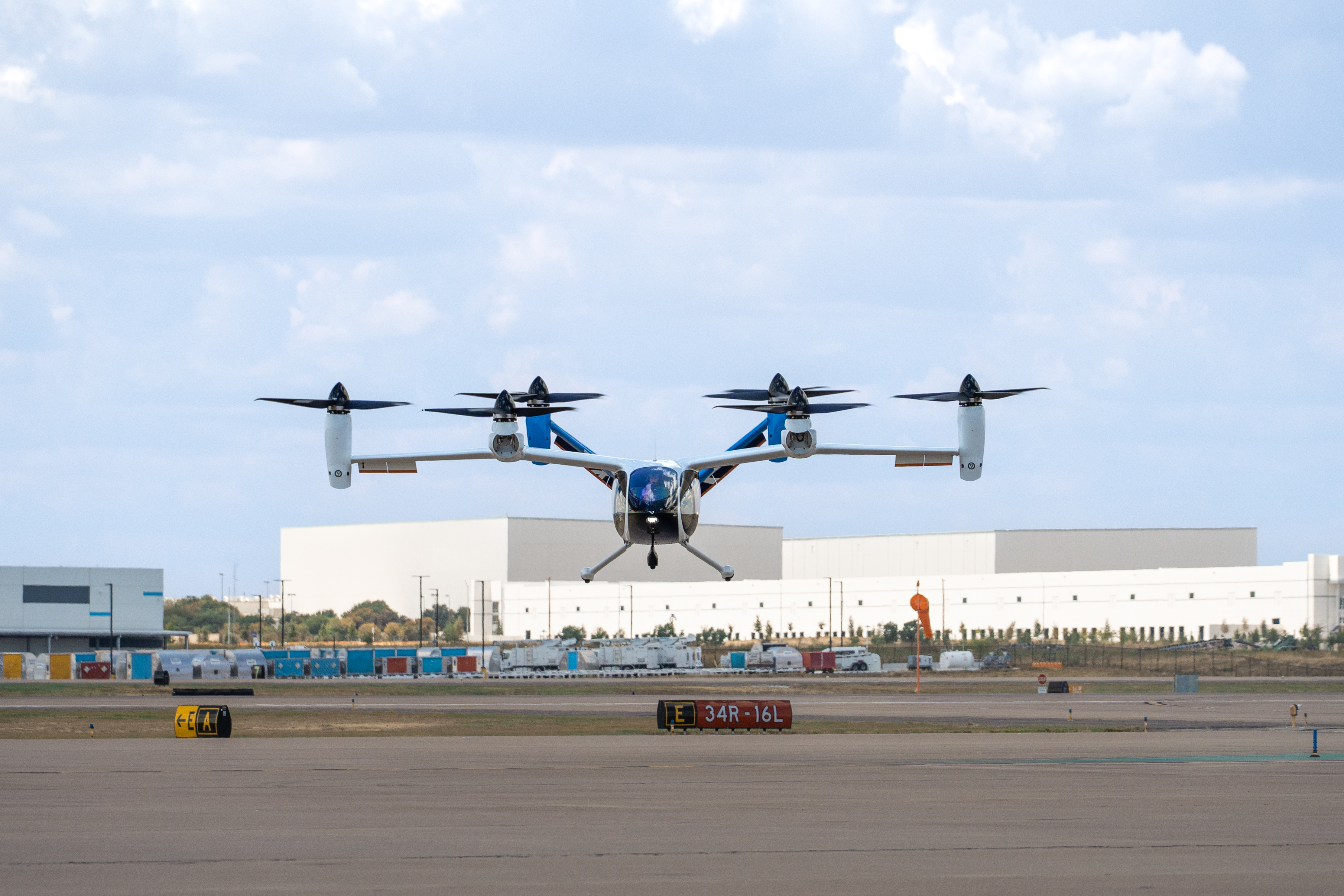
Joby Aviation prototype electric eVTOL air taxi at Perot Field in Texas begins FAA eIPP operations
A Joby preproduction prototype air taxi, N545JX, conducts a vertical takeoff at Perot Field’s runway 34R/16L. [Credit: Joby Aviation]

Precertified electric air taxis have begun a weeklong demonstration campaign in Texas that will see them fly directly into airports alongside regular air traffic, under a contract with the FAA.

Joby Aviation said Thursday that the activities involving its preproduction prototype eVTOL aircraft, which has not yet been type certified, will show off the air taxi’s “ability to integrate into busy airspace,” including the controlled airspace of Dallas-Fort Worth International Airport (KDFW).

The air taxi is not yet flying with passengers. But Joby aims to demonstrate real-world routes across North Texas, including connections to “major urban hubs,” as it pursues certification in the coming months.

The campaign kicked off Thursday with a flight at Perot Field Fort Worth Alliance Airport (KAFW), which Joby said featured a “joint flight demonstration” including its own aircraft and those from other unnamed manufacturers. The activities are expected to continue through Monday, with the schedule subject to change pending weather conditions and other factors.

Joby routinely flies its prototype aircraft in testing environments as well as real airports. Earlier this year, the air taxi flew over the San Francisco Bay and took off from John F. Kennedy International (KJFK), later landing across New York City’s heliport network.

But the new weeklong campaign, being conducted in partnership with the Texas Department of Transportation (TxDOT), is different.

Unlike Joby’s previous demonstrations, this week’s flights are part of the FAA’s eVTOL Integration Pilot Program (eIPP) and are being conducted under a signed other transaction agreement (OTA) with the agency. The eIPP, which will span three years and 26 states, is designed to help the FAA identify gaps in existing regulations for aircraft such as Joby’s, improve procedures, and ultimately support their safe integration into the National Airspace System (NAS).

“The FAA is leveraging data from test flights in Texas and across the country to ensure these new aircraft integrate safely into the airspace,” said FAA Administrator Bryan Bedford in a statement shared by Joby.

Joby Aviation electric eVTOL air taxi on the ground, side view
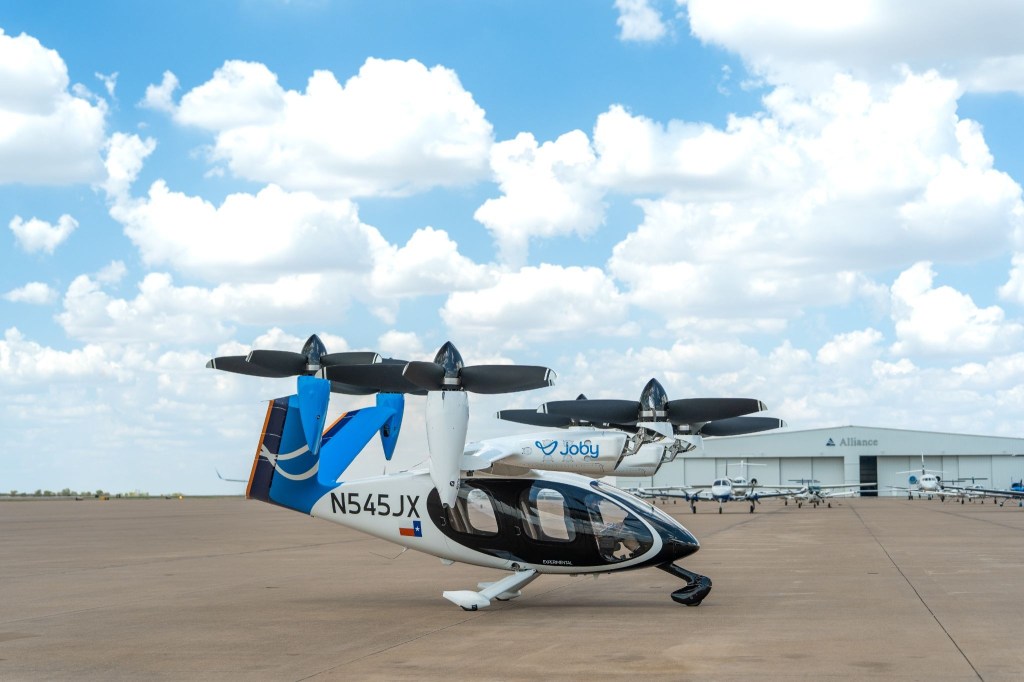
The Joby prototype eVTOL air taxi participating in the weeklong campaign sports Texas’ Lone Star Flag on its livery. [Credit: Joby Aviation]

The OTA establishes planned activities and requirements for data reporting to the FAA. Both the agency and operators selected for the eIPP have raised the possibility of the program eventually permitting passenger-carrying flights with precertified models for revenue.

“Over time, and with extensive involvement and oversight from the FAA, we expect flights under the eIPP program to progress from those with only a pilot on board to those carrying non-paying passengers and eventually paying passengers,” said JoeBen Bevirt, founder and CEO of Joby, on the company’s second-quarter earnings call in August.

Unlike internal test flights, the eIPP activities are highly coordinated between private manufacturers, operators, and service providers and federal, state, and local governments. TxDOT is one of the eight lead partners for the program.

What’s Next?

On Saturday, Joby plans to fly the air taxi from Perot Field to Dallas/Fort Worth International. There, it will fly regional routes connecting to the airport and land at Corporate Aviation’s FBO site. The company said the vehicle will take off from KDFW against active commercial airline traffic, representing one of the earliest examples of mixed traffic operations involving an eVTOL at a real airport.

Joby and NASA in 2023 conducted a simulation at the space agency’s Ames Research Center in California that looked at the feasibility of operating up to 50 electric air taxi operations per hour at the airport’s terminal area.

The next activities in the campaign will be round-trip flights from Perot Field to Arlington, Texas, overflying the Fort Worth Stockyards and other major infrastructure. Then will come a flight along a “planned operational route” connecting Perot Field and Toyota Motor North America’s corporate headquarters in Plano. Toyota is an investor and strategic manufacturing partner for Joby.

Joby in August leased 45,000 square feet at Perot Field that it said will serve as its base for future activities in Texas. The manufacturer on Thursday also brought an autonomous aircraft, which it refers to as J208, to the airport. J208 is a Cessna 208B Grand Caravan equipped with autonomous flight technology that will continue on to South Carolina, North Carolina, Washington, D.C., Kentucky, Kansas, Oklahoma, and Utah this month, before returning to the West Coast.

However, there is plenty more to come in Texas.

In addition to Joby, TxDOT has partnered with electric aircraft manufacturers Beta Technologies and Archer Aviation, as well as the latter’s Wisk Aero autonomous air taxi subsidiary, for the eIPP. The partners intend to conduct regional flights connecting Dallas, Austin, San Antonio, and eventually Houston, with air taxi networks expanding from each city to extend the air taxis’ regional reach.

Archer and Beta plan to install electric chargers at airports, FBOs, and “other points of interest” to support TxDOT’s eIPP project. Both are planning all-electric air taxi flights in the state “in the coming months,” per a news release shared by Archer Thursday.

The TxDOT program is called Project Nexus. Per the agency’s website, novel aircraft could “revolutionize how we move people and goods, offering faster, more efficient, and potentially more sustainable transportation options.” Vertiports could allow eVTOL models to operate away from airports and closer to where people live and work.

“Project Nexus creates a multi-state ‘System of Systems’ to safely integrate Advanced Air Mobility (AAM) into the NAS,” TxDOT said. “By uniting Texas, Oklahoma, Louisiana, and the Choctaw Nation, the project offers the FAA a diverse operational sandbox. This environment spans dense urban centers, a coastal energy corridor, and rural sovereign lands.”

In March, TxDOT said the project’s first phase involved testing without passengers and with traditional aircraft like helicopters and fixed-wing aircraft. A second phase will comprise testing for medical and cargo logistics, such as transporting critical medical supplies or organs between rural and urban medical centers in Austin and San Antonio. The final phase, it said, will include passenger flights across the Texas triangle.

Other eIPP operations kicked off earlier this year in states including Maryland, Virginia, Utah, New Jersey, and Louisiana.

Jack Daleo

Jack is a staff writer covering advanced air mobility, including everything from drones to unmanned aircraft systems to space travel—and a whole lot more. He spent close to two years reporting on drone delivery for FreightWaves, covering the biggest news and developments in the space and connecting with industry executives and experts. Jack is also a basketball aficionado, a frequent traveler and a lover of all things logistics.

NTSB Releases Preliminary CVR Transcript From Prime Air Crash

At least one pilot recognized the 767 was ‘too fast’ on approach, the agency says.

NTSB logo and image [Credit: Shutterstock]

The transcript of the cockpit voice recorder (CVR) aboard the Amazon Prime Air Boeing 767 that went off the runway at Miami International Airport (KMIA) reveals the pilots recognized the aircraft was too fast on the approach.

On Wednesday the National Transportation Safety Board (NTSB) released information gleaned from the last few minutes of the CVR and flight data recorder (FDR) of 21 Air Flight 7598. Video of the event shows the aircraft landing long and going off the departure end of the runway. The jet struck a van driving on an airport perimeter road, killing five of the seven people inside, collided with navigational equipment, and went through two fences and struck an SUV before coming to a stop in a parking lot and catching fire.

The CVR and FDR were retrieved from the aircraft and taken to the NTSB laboratory for analysis. 

The CVR contained more than two hours of good-quality audio across four channels. The FDR contained approximately 54 hours of recorded data. The NTSB released a summary of the last 6:02 minutes of the CVR and the last 30 seconds of the FDR.

The NTSB stressed that the information culled from the CVR and FDR is preliminary and subject to change.

According to the NTSB, the captain of the aircraft, age 55, had 7,145 flight hours and had received his 767 type rating in May of this year. The first officer, age 37, had 2,665 hours, and received his 767 type rating in 2025.

The NTSB has not said which pilot was flying at the time of the accident, and which one was pilot monitoring.

CVR Timeline

06:02: A pilot called for the flaps to be set to 1 degree.

04:18: The flight crew checked in with Miami tower and were cleared to land on runway 30.

02:53: A pilot called for flaps to be set to 5 degrees.

02:37: The flight crew lowered the landing gear.

02:14: A pilot called for the flaps to be set at 15 degrees.

01:42: A pilot called for flaps to be set to 20 degrees. The other pilot cautions that they were too fast. Per the NTSB, “The other pilot made additional comments regarding the aircraft’s excessive speed throughout the remainder of the recording. There was not a consistent verbal response to the comments about speed.”

01:23: Sounds consistent with autopilot disconnect.

01:12: Electronic “one thousand” callout.

01:04: Electronic “sink rate sink rate” callout.

00:58: Electronic “five hundred” callout.

00:57: Electronic “sink rate sink rate” callout.

00:54: Electronic “one hundred” callout.

00:50: Electronic “minimums” callout.

00:48: Electronic “two low terrain” callout four times.

00:41: A pilot called for flaps to be set to 30 degrees

00:40: Electronic “forty” callout.

00:39: Electronic “too low terrain” callout.

00:36: Electronic “ten” callout.

00:31: Sounds similar to the aircraft touching down.

00:15: A pilot calls for a go around.

00:10: Sounds similar to the aircraft departing the paved surface.

00:00: CVR recording ends.

The FDR

The last 30 seconds of the FDR is referenced relative to the end of the FDR recording. The CVR and FDR times have not been precisely synchronized. 

00:30: The nose and right main landing gear of the aircraft touch down at a ground speed of 158 knots.

00:23: The brakes were applied at a groundspeed of 146 knots.

00:19: The left main gear touches down at a ground speed of 134 knots.

00:15: The brakes were released at a groundspeed of 120 knots and the throttles were increased to a value consistent with go-around thrust.

00:11: The throttles were reduced to idle power and the brakes reapplied. The ground speed was 117 knots. The throttles remained at idle and the brakes remained applied until the end of the recording.

00:07: Recorded lateral, longitudinal, and vertical acceleration values changed markedly; the FDR data indicated a groundspeed of 96 knots.

00:00: The FDR recording ends. The final groundspeed was 65 knots. There was no indication in the recorded data that speed brakes or thrust reversers were deployed.

The NTSB investigation is still in the preliminary stages. A full transcript of the CVR will be created by the NTSB at a later date.

Meg Godlewski

Meg Godlewski has been an aviation journalist for more than 24 years and a CFI for more than 20 years. If she is not flying or teaching aviation, she is writing about it. Meg is a founding member of the Pilot Proficiency Center at EAA AirVenture and excels at the application of simulation technology to flatten the learning curve. Follow Meg on Twitter @2Lewski.

This 2005 Zenith CH 701 SP Is a STOL-Ready ‘AircraftForSale’ Top Pick

Genuine short-field performer features a 28 mph stall speed, ADS-B integration, and low total time.

2005 Zenith CH 701 SP [Credit: Hiller Aviation]

Every day, the team at Aircraft For Sale chooses an airplane that catches our attention because it is unique, a good deal, or has other qualities we find interesting. You can read Aircraft For Sale: Today’s Top Pick at FLYINGMag.com daily.

Today’s Top Pick is a 2005 Zenith CH 701 SP.

Celebrated now for more than 40 years for its legendary short-field prowess, the Zenith CH 701 SP delivers incredible low-speed handling and rugged versatility. It holds a distinct appeal for adventurous owner-operators who want to operate from confined airstrips, boasting a demonstrated stall speed of just 28 mph and a solid 540-pound useful load.

Fresh off an August 2026 condition inspection, this 2005 airframe has logged just 520 total hours since new and comes with complete, consecutive logs and no damage history. The utilitarian exterior is enhanced for visibility and safety, equipped with bubble doors, strobe and navigation lights, and reliable Matco brake discs, linings, and calipers.

Inside the two-seat cockpit, functional upgrades meet backcountry utility to maximize the off-airport flying experience. Occupants are secured by four-point Hooker custom harnesses and can enjoy dual USB outlets that bring welcome convenience to the cabin.

Generating the thrust for those ultra-short takeoffs is a dependable 100 hp Rotax 912 ULS engine showing an equal 520 hours since new. The powerplant features soft-start ignition modules, recently overhauled carburetors, and Woodcomp 683R propeller—with the added bonus of a second set of Woodcomp blades included in the sale.

2005 Zenith CH 701 SP [Credit: Hiller Aviation]

Situational awareness and navigation are handled by a practical, mixed glass-and-analog panel centered around a Dynon Electronic Flight Instrument. The avionics suite is well suited for modern airspace, incorporating a FreeFlight FDL-978 UAT for ADS-B Out, uAvionix portable ADS-B In receiver, Garmin GTX 327 transponder, and Garmin 496 GPS.

Offered at $49,900, this highly capable Zenith CH 701 SP is based in Hillsboro, Oregon, and  ready for off-airport excursions. With its recent maintenance and impressive performance specs, it represents a turnkey entry into the world of STOL flying.

If you’re exploring ownership options, FLYING Finance can help get you airborne. Use our airplane loan calculator to estimate your monthly payments, or connect with an aviation finance expert at flyingfinance.com.

FLYING Staff

FLYING Magazine is a one-stop resource for everything aviation, including news, training, aircraft, gear, careers, photos, videos, and more.
Pilot in aircraft
Sign-up for newsletters & special offers!

Get the latest stories & special offers delivered directly to your inbox.

SUBSCRIBE