Register

Epic Flight Academy Accepting Aviation Scholarship Applications

$145,000 available for high school students pursuing careers as pilots or technicians.

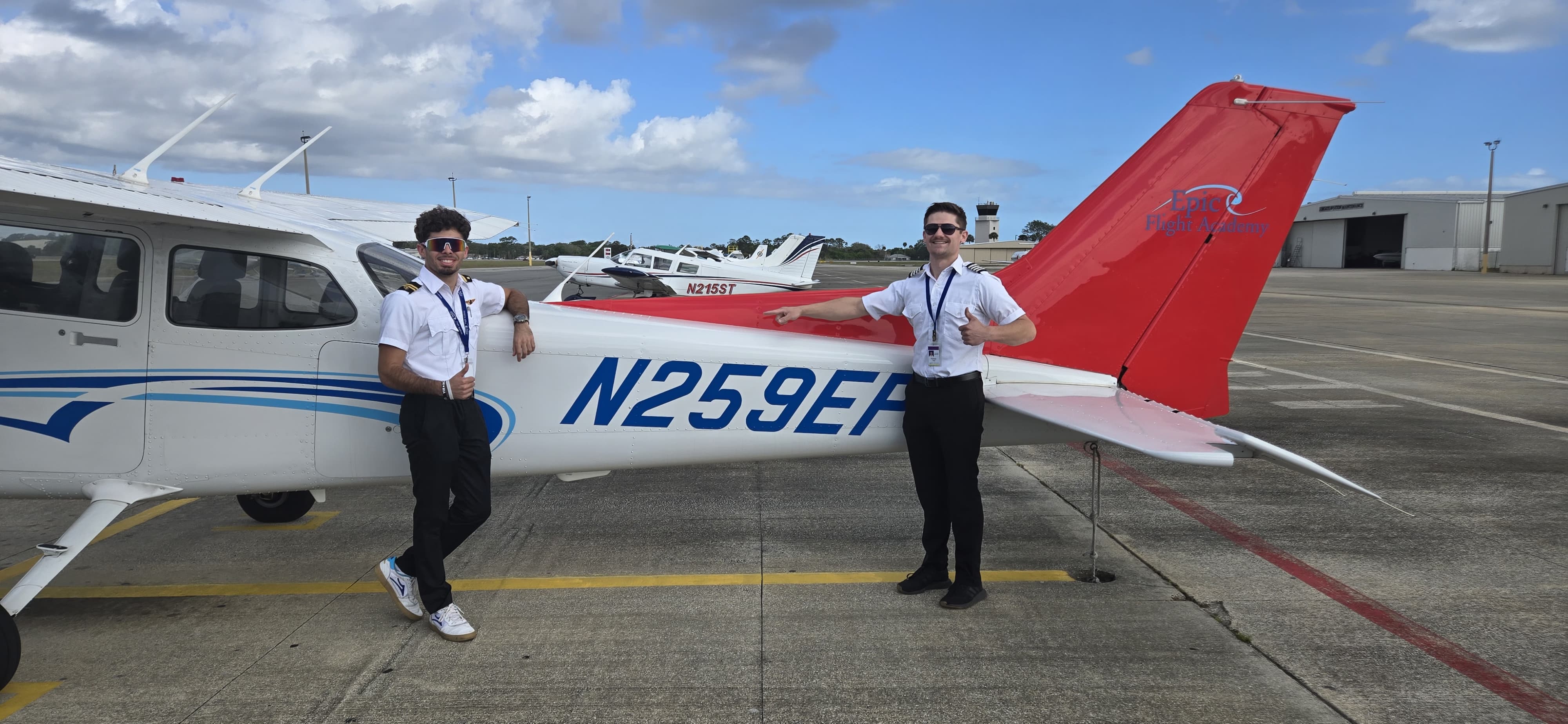
Shemuel Ortiz (left), who won a $20,000 pilot scholarship from Epic Flight Academy in 2023, poses with instructor Kyle Mooney after passing the CSEL in June 2026. [Credit: Epic Flight Academy]

Epic Flight Academy (EFA), the nation’s largest Part 141 flight school, has opened applications for its annual aviation scholarship program for U.S. high school juniors and seniors seeking careers as pilots or maintenance technicians.

This marks the 11th year EFA has provided scholarships, totaling more than $590,000 to 52 high school students during that time. According to officials, Epic plans to award $60,000 in aircraft mechanic scholarships and $85,000 in pilot training scholarships this year. 

To be eligible for the aircraft maintenance scholarships, the applicant must be a current high school senior. Pilot scholarships are open to either a junior or senior.

The deadline for applications is October 1. Details on the process can be found here.

“Each year we see strong applicants who are clearly passionate about aviation,” said Cindy Lovell, EFA’s director of education. “These come from all around the country. This is why we provide scholarships for both of our aircraft mechanic schools and all 10 of our flight schools. The application is a straightforward process, so I encourage interested students to get their application in.”

Epic Flight Academy was founded in 1999. The school boasts 11 training facilities in the U.S.—nine for pilots and two for maintenance technicians.

Meg Godlewski

Meg Godlewski has been an aviation journalist for more than 24 years and a CFI for more than 20 years. If she is not flying or teaching aviation, she is writing about it. Meg is a founding member of the Pilot Proficiency Center at EAA AirVenture and excels at the application of simulation technology to flatten the learning curve. Follow Meg on Twitter @2Lewski.

This 1976 Cessna 172M Skyhawk Is a Proven ‘AircraftForSale’ Top Pick

Horsepower upgrade, WAAS-equipped avionics, and continuous maintenance history highlight single-engine platform.

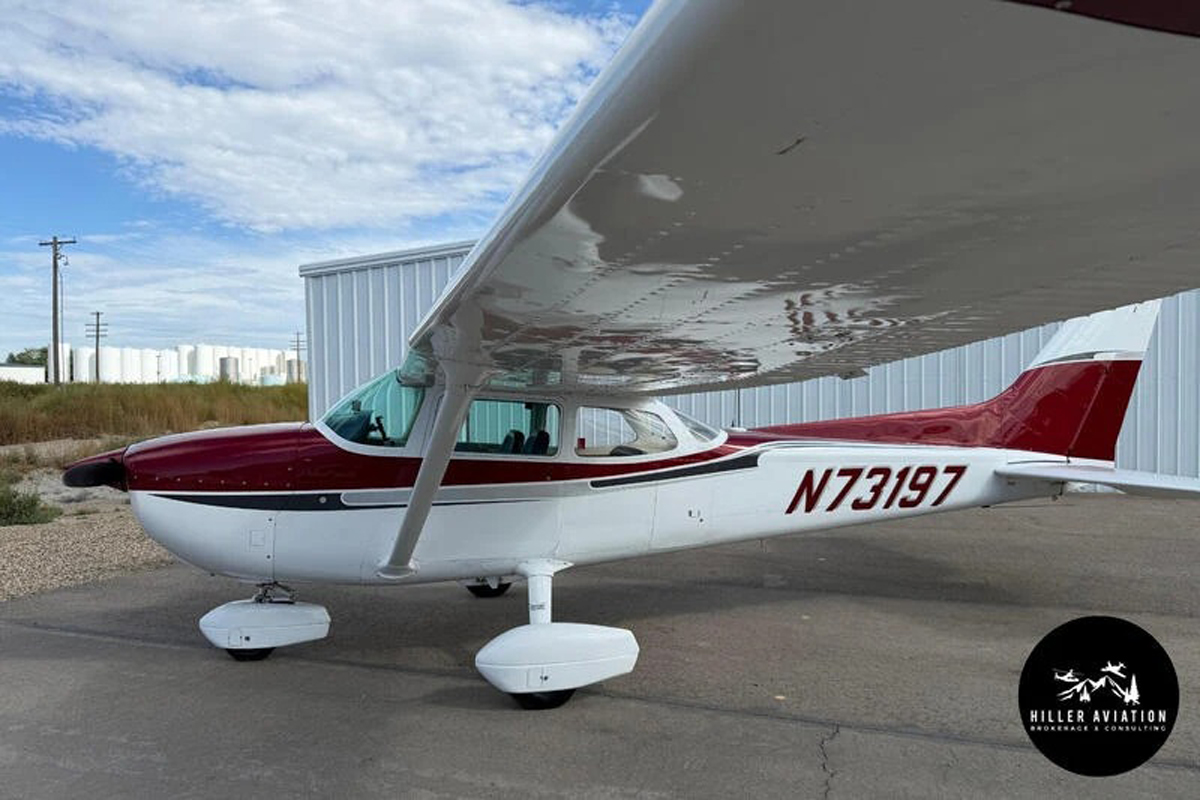
1976 Cessna 172M Skyhawk [Credit: Hiller Aviation]

Every day, the team at Aircraft For Sale chooses an airplane that catches our attention because it is unique, a good deal, or has other qualities we find interesting. You can read Aircraft For Sale: Today’s Top Pick at FLYINGMag.com daily.

Today’s Top Pick is a 1976 Cessna 172M Skyhawk.

Making a sharp impression on the ramp, this 1976 airframe has accumulated 4,045 total hours and boasts a meticulous, continuous maintenance history. The exterior was completely stripped and repainted in a white scheme with red-and-charcoal trim in 2008, while aerodynamic improvements like Knots 2U flap gap seals and RMD wing tips with integrated lighting enhance both safety and efficiency.

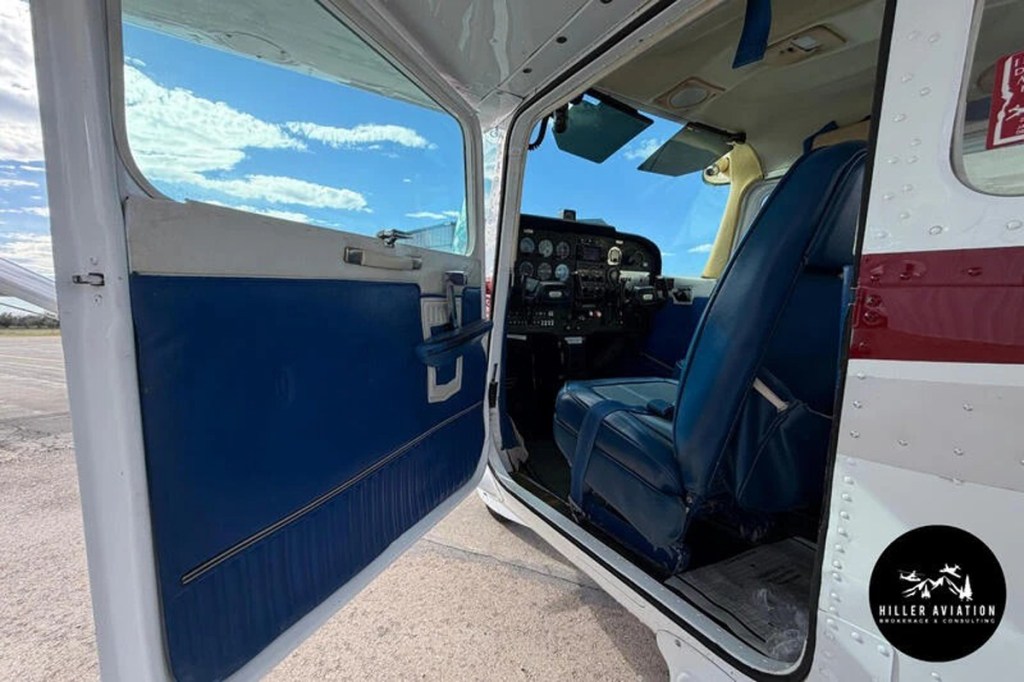
Stepping into the cabin, pilots and passengers will find a thoughtfully refreshed environment designed for long flights. The interior has been reupholstered, complete with updated carpeting and practical additions such as Rosen sun visors and an Aero-Trim aileron trim system to reduce pilot workload in the air.

Powering this classic is a reliable Lycoming O-320-E2D engine that benefits from a 160 hp STC conversion, generating noticeable performance gains over the factory standard. Showing 1,391 hours since a certified Millennium major overhaul, the powerplant breathes through a Power Flow tuned exhaust and turns a repitched 60-inch McCauley propeller.

Navigating the skies is simplified by an IFR-capable panel anchored by a WAAS-equipped Garmin GNS 430W navigator. The modernized avionics suite also incorporates a Garmin GTX 330 Mode S transponder, JPI engine analyzer with fuel flow, and S-Tec System 30 autopilot complete with altitude hold for cross-country ease.

Recognized globally as the ultimate flight training platform and a remarkably accessible personal aircraft, the Cessna 172 Skyhawk offers unmatched reliability. This particular M-model holds strong appeal for pilots seeking enhanced performance over a stock airframe, bridging the gap between an economical cross-country cruiser and steadfast time-builder.

Available for $139,900, this upgraded Cessna 172M is based in La Grande, Oregon, and benefits from a recent annual inspection and strong maintenance pedigree, it stands ready to serve its next owner.

If you’re exploring ownership options, FLYING Finance can help get you airborne. Use our airplane loan calculator to estimate your monthly payments, or connect with an aviation finance expert at flyingfinance.com.

FLYING Staff

FLYING Magazine is a one-stop resource for everything aviation, including news, training, aircraft, gear, careers, photos, videos, and more.

Electra Signs Airframe Agreement to Bring Hybrid EL9 From Design to Reality

Manufacturer says initial production will begin in September, with first deliveries estimated in 2027.

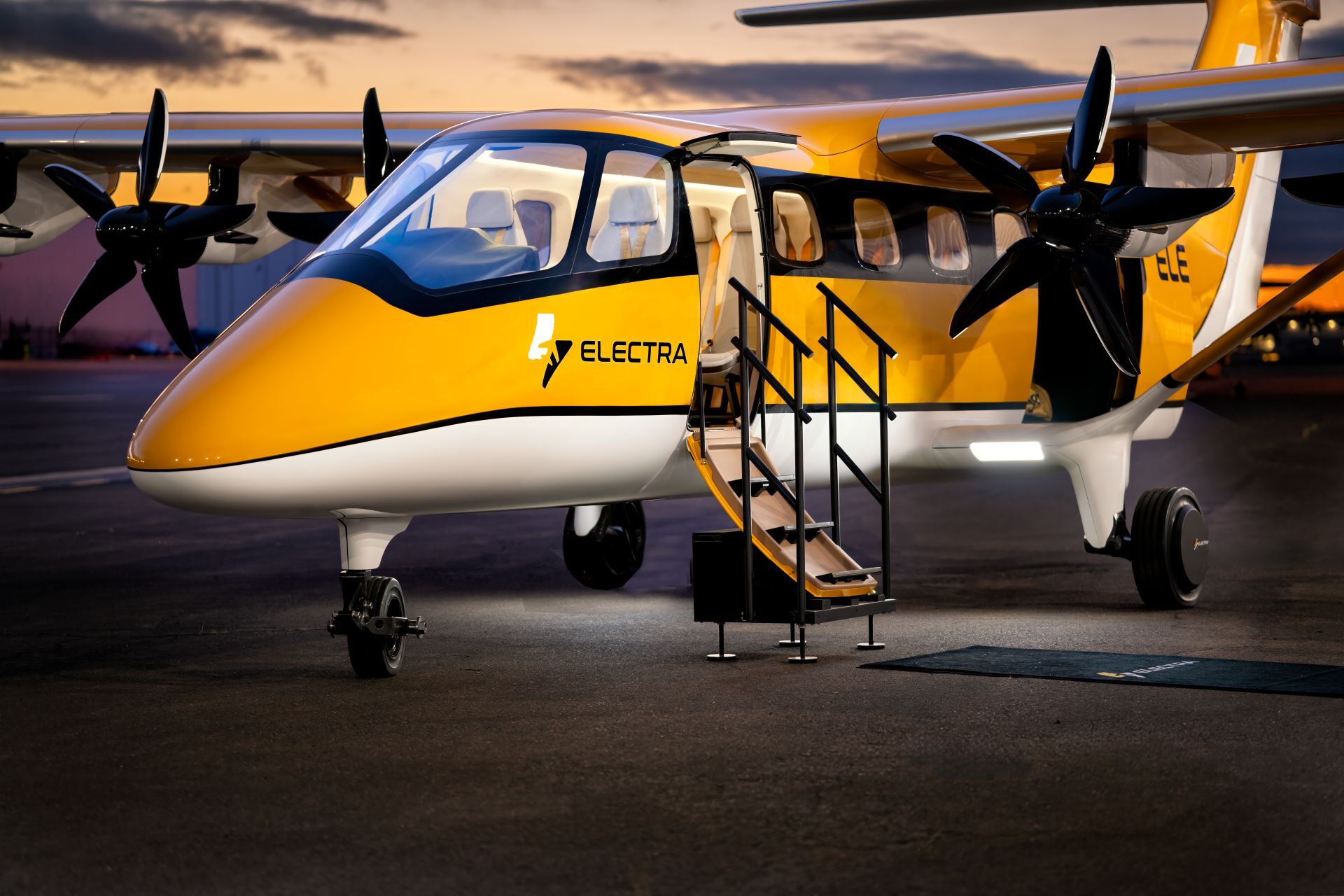
Electra EL9 ultra short hybrid electric regional aircraft
Electra said it will take delivery of the first EL9 airframes built by The Atlas Group in 2027, with production beginning in September. [Credit: Electra]

Virginia-based manufacturer Electra revealed plans to bring its flagship EL9 Ultra Short—a nine-passenger, hybrid-electric aircraft intended for operations using soccer field-sized spaces—from design to reality.

The manufacturer Tuesday announced that it signed an airframe agreement with Atlas that will see the latter manufacture and assemble EL9 airframes for Electra’s flight test and certification program. Electra said the work is scheduled to begin in September, with first deliveries expected in 2027.

That lines up with the company’s timeline for the EL9’s debut flight, which it has previously said will come in 2027 or ’28. It has validated the model’s ability to take off and land in as little as 150 feet using a two-seat demonstrator, the EL2 Goldfinch, that in August began real-world operational trials in Virginia, New Jersey, and Pennsylvania. Those include flights into Atlantic City Bader Field (KAIY) in New Jersey.

The activities are being conducted under contract with the FAA and are expected to span at least three years. Electra hopes to fly the EL9 under the same arrangement before it concludes.

The company aims to have the model ready for commercial service in 2030 and in July announced Springfield, Ohio, as home of the first EL9 production facility. It plans to invest $850 million into the site, which it said will produce up to 800 aircraft annually.

Safran Helicopter Engines will provide the Ultra Short’s turbogenerator, which is built around the company’s Arrano gas turboshaft engine and a pair of Safran Electrical & Power’s GENeUS electric generators. Evolito will supply the model’s eight hybrid-electric engines. Its digital fly-by-wire control system will be built around Honeywell flight control computers.

EL9: From Design to Reality

Electra has promised that the EL9 will enable “direct aviation,” which it defines as bringing safe and affordable air service to locations that are smaller and closer to where people live and work than traditional airports.

It would do so using compact “access points” that take advantage of the aircraft’s 150-foot ground roll and low noise output, which the company estimates at 75 dBA during takeoff and landing. EL9 access points could include general aviation airports as well as rooftops, parking lots, fields, barges, malls, casinos, or even ski resorts.

At the same time, the Ultra Short will be large enough for a pilot to fly up to nine passengers and about 50 pounds of luggage each.

Electra estimates that with access points, the EL9 could save travelers hours on more than 2,600 routes spanning 50 to 265 miles that are suboptimal for driving but lack routine commercial air service. It believes 12,000 to 16,000 aircraft will be required to meet demand within the first decade of operation.

Atlas performs advanced manufacturing operations—including for “complex aerostructures,” according to Electra—in Kansas, Utah, Arizona, Pennsylvania, and Mexico. The goal of the airframe agreement is to “mature the EL9 production architecture, reduce manufacturing risk, and build the industrial foundation needed to scale output after certification,” Electra said Tuesday.

Marc Allen, CEO of Electra, said the partnership will give it the “ability to build and deliver [the EL9] with the consistency and scale of an advanced production system.” Greg Harwell, CEO of Atlas, added that the company will realize the aircraft as a “producible, scalable platform” that is “positioned for successful growth and long-term market adoption.”

Initial EL9 production will be made possible through the FAA’s approval in July of a G-1 certification basis for the design. Electra said the G-1 defines the certification roadmap for the aircraft’s blown-lift aerodynamics and distributed electric propulsion system—which enable it to take off at low speeds and with minimal ground roll—as well as its digital fly-by-wire controls.

The approval established a formal certification basis for the EL9 under Part 23 regulations and a path for Electra to prove the aircraft meets the same safety standards required of existing commercial aircraft. With the G-1 in tow, the manufacturer can confidently begin building the aircraft it needs for flight testing and certification.

Still, the FAA has not yet defined how the EL9 must show compliance with the provisions outlined in the G-1. That will come with the agency’s approval of a G-2 issue paper. Once the G-2 is accepted, Electra could start using the EL9 airframes built by Atlas to prepare for certification testing.

The manufacturer said Tuesday that it has more than 2,200 provisional aircraft orders from more than 60 operators worldwide. They include Bristow Group, which in January signed a multimillion-dollar predelivery payment agreement for the first EL9 delivery slot. The agreement covers five aircraft plus options for 45 more.

Jack Daleo

Jack is a staff writer covering advanced air mobility, including everything from drones to unmanned aircraft systems to space travel—and a whole lot more. He spent close to two years reporting on drone delivery for FreightWaves, covering the biggest news and developments in the space and connecting with industry executives and experts. Jack is also a basketball aficionado, a frequent traveler and a lover of all things logistics.

Why Go-Arounds Save Lives: Lessons From Unstabilized Approaches

Prime Air runway overrun highlights critical importance of maintaining proper airspeeds and initiating timely balked landings.

Go-arounds, also called a ‘balked landing,’ are part of all pilot training. [Credit: FLYING Archive]

“Why didn’t the pilot go around?”

You hear this question a lot when there is a runway overrun—especially when it is a high-profile event such as Flight 7598, an Amazon Prime Air cargo airplane that crashed in Florida last week.

The jet ran off the end of Runway 30 at Miami International Airport (KMIA), through ground-based navigation aids, two fences, and struck a van and an SUV, resulting in multiple fatalities and serious injuries before the aircraft came to a stop in a parking lot and caught fire.

Any time there is an accident like this it sends a ripple through the aviation training community. Determining aircraft performance is part of a pilot’s training from the beginning, or should be. I predict this tragedy will become a classroom tool, from the private pilot ground school up through airline pilot training.

Accident Factors

The National Transportation Safety Board is still compiling information on the event. The NTSB has not released the required landing distance for the aircraft since this data will be part of the investigation as it addresses the crew’s management of the flight.

How much runway did the jet require for a safe landing? The runway measures 9,360 feet long. The published available landing distance is 7,913 feet. Video of the jet shows it floating over the runway, going too fast for landing.

One of the first things a fledgling aviator learns is that when you have too much airspeed during final approach to landing, the aircraft will float, and you’ll eat up runway. This is why your CFI has you crunch performance numbers before each flight.

How much runway will be required for takeoff? How much for landing? Keep in mind those numbers change depending on aircraft weight and weather conditions. Every pilot should be briefed on this information, so there are no unpleasant surprises.

Staying ahead of the airplane is critical, especially in the pattern. Airspeed and aircraft configuration are key. Your job as pilot is to maintain proper speeds in the pattern, so you can land on the numbers and be down and safely stopped, usually on the first third of the runway. 

If you’re going too fast to make this happen, and you’ll know when you’re on final, it’s time to go around. This is also known as a “balked landing.”

Learning how to do this, and more importantly when, is critical. Unless you’re on fire, outrunning severe weather, or it is a dead-stick landing, you should initiate a go-around if the approach is not stable, as in on-speed, configured, and going to touch down on the predetermined spot.

Per the NTSB, information from the flight data recorder (FDR) and cockpit voice recorder (CVR) indicates one of the Prime Air pilots commented a few times that the aircraft was too fast during the approach, but there was no specific mention of the need to perform a go-around.

Another factor agency investigators are looking at is the power dynamic between the pilots. The captain had logged more flight time than the first officer, however, the first officer had more experience in the 767. It is possible that the first officer didn’t feel comfortable calling a go-around.

In this case, by the time the aircraft touched down, the pilots were out of runway and options. The FDR indicates the throttles were brought back up, as if for a go around, but it was too late. There wasn’t enough runway left for takeoff, so the power was brought back again. The NTSB  also noted that the speed brakes were not deployed.

If we learn anything from this accident, it is that unstabilized approaches can happen to any pilot at any certification level.

Strive for Stable From Start of Training

Stabilized approaches are discussed in private pilot ground school and introduced during your  first flight lesson. They should be practiced on a regular basis.

Especially when working with airline-aspiring pilots, I am a big believer in calling out airspeeds on each leg of the pattern with the understanding that being behind the airplane results in a rushed approach that often leads to a rushed and poor landing.

It is easy to fall out of this habit. You may catch yourself getting sloppy on approaches, then vow to clean it up.

To my fellow CFIs: Experienced pilots can surprise you. I flew with a commercial pilot who told me his practice was to not use flaps when flying the Cessna 172 until he was on short final, then he would dump them in—all 30 degrees. He said it had been more than 10 years since he had flown.

I was pretty sure something got lost in translation, and said so. He was adamant, so I had him take us up to 4,000 feet, then demonstrate his pattern technique with the understanding the cardinal compass headings were the traffic pattern legs and the “runway” was at 3,000 feet. 

When he dumped the flaps in the C-172, (as expected) it pitched up rapidly and entered a power-off stall much to his surprise. It was a teachable moment.

We spent the next 30 minutes practicing faux pattern at altitude and focusing on aircraft configuration, meaning flaps added incrementally, and maintaining appropriate airspeeds as indicated in the aircraft POH and on the landing checklist.

Touch-and-Goes and Go-Arounds

The practice of the touch-and-go helps perfect the “cleanup” part of the go-around. Power up, carburetor heat off, flaps up (incrementally), positive rate of climb, gear up (if appropriate), heat up (close cowl flaps if appropriate), and fess up.

Don’t confuse the order. So many pilots talk first, fly second. Please don’t be the pilot who drops the airplane to fly the radio.

Tips for Stable Approach

Per the FAA’s Airplane Flying Handbook, to maintain the desired flight path on approach, the application of power and pitch must work in concert.

The agency’s Pilot’s Handbook of Aeronautical Knowledge and the prelanding checklist will indicate power settings and airspeeds to use. Review these numbers before flight, especially in a new-to-you airplane.

If you’re too fast to safely deploy flaps, reduce the power and hold pitch until you’ve slowed to flap-deployment speed. Always confirm the airspeed before deploying flaps.

In the training environment for a flap-equipped airplane, you may find it useful to verbalize the metrics for the approach with the understanding that if they get outside of the published numbers, a go-around is appropriate and always an option.

During training, many pilots, especially those on the CFI track, find it useful to verbalize the prelanding check: “Downwind abeam touchdown, power to (insert value) white arc confirmed, first notch of flaps, descending to (appropriate altitude for base turn) second notch of flaps, airspeed (insert metric) descending to (insert metric) altitude (turning base) final notch of flaps, on glide path for landing on the second stripe, airspeed (insert value), touchdown at (insert value).”

Caveat

To the pilots who aspire to multicrewed cockpits: Sooner or later you may encounter Captain Macho, the pilot who insists, “I can save it,” when the approach is too fast. Don’t be afraid to speak up and voice your concerns and call for a go-around.

If they yell at you, it’s a lot more likely that you will survive that than an aircraft going off the end of the runway.

Meg Godlewski

Meg Godlewski has been an aviation journalist for more than 24 years and a CFI for more than 20 years. If she is not flying or teaching aviation, she is writing about it. Meg is a founding member of the Pilot Proficiency Center at EAA AirVenture and excels at the application of simulation technology to flatten the learning curve. Follow Meg on Twitter @2Lewski.

Textron, Merlin Unveil Autonomous SkyCourier UX Concept Aircraft

Uncrewed design comes in response to ‘growing military interest’ in autonomous contested logistics.

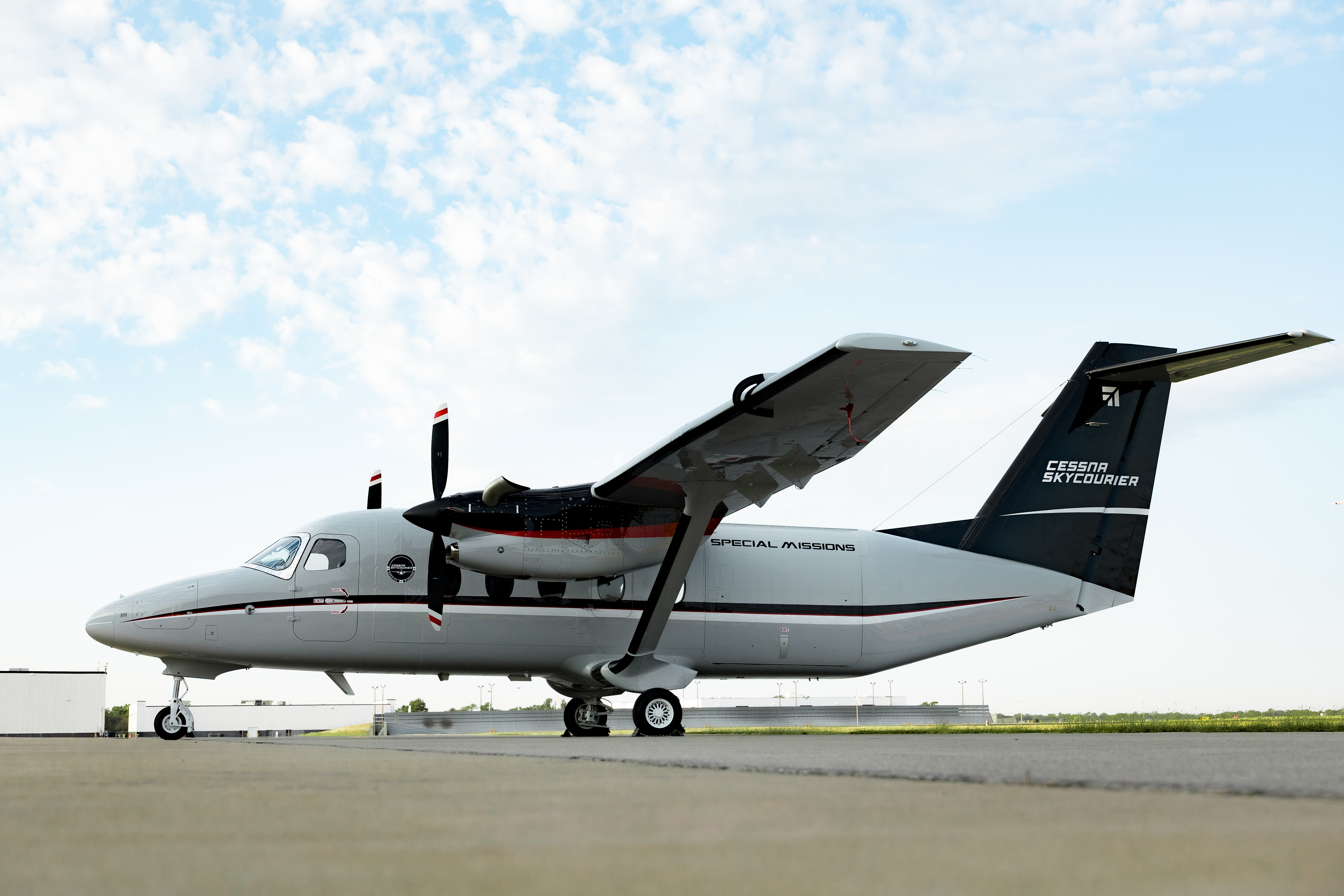
Textron Aviation Merlin Labs autonomous Cessna SkyCourier UX for military logistics
Textron Aviation and Merlin Labs are jointly exploring the Cessna SkyCourier UX concept aircraft for contested logistics missions. [Credit: Textron Aviation]

Just a few months after Textron Aviation announced its first military order for the Cessna 408 SkyCourier, the manufacturer on Monday unveiled a SkyCourier UX concept aircraft that would pair the twin turboprop with autonomous aviation software for a variety of military logistics missions.

According to Textron, the design, presented this week at the Air & Space Forces Association’s Air, Space & Cyber Conference in National Harbor, Maryland, would be for mission profiles that fit somewhere between those of small tactical cargo drones and large military transport aircraft. It is intended to improve cargo accessibility, maximize usable volume, and support operations from austere locations.

“Not every logistics mission requires a large airlifter, and many autonomous cargo systems lack the payload capability required for operational sustainment missions,” Textron said in a news release Monday.

The announcement comes amid rising interest among militaries for aircraft that could more safely and efficiently sustain forces and conduct logistics in regions such as the Indo-Pacific, where operations are spread across hundreds of miles of ocean. Textron said the SkyCourier UX was devised in response to that interest. It is being explored to address logistical challenges when normal supply routes are constrained or unavailable.

“Military planners are increasingly focused on how to sustain forces across distributed and contested operational environments,” said Bob Gibbs, vice president of Textron Aviation Defense and special mission sales. “The Cessna SkyCourier UX concept reflects our commitment to examining practical solutions to real-world mission challenges by leveraging real, certified products with innovative adaptation.”

More on the SkyCourier UX

Textron described the UX as a “light lift,” medium payload, fixed-wing aircraft with the ability to take off and land on unimproved runways, creating a “new, cost-efficient, and scalable approach” to aerial logistics.

The concept would be able to carry approximately 6,000 pounds of payload and accommodate up to three LD3 standard air cargo containers, which typically fly on widebody commercial jets. Textron said that “design concepts under evaluation” include a forward-loading cargo system that would provide direct access through a large nose opening, adding more volume than a traditional cockpit. It could also be integrated with cargo-loading systems and have the ability to “kneel down,” or lower its nose closer to the ground.

According to Textron, potential applications may include hub-and-spoke distribution, delivery of medical supplies or repair parts, and sustainment of military bases that are mobile, remote, or located on islands. It is intended as an “additional option” for final-leg transportation, complementing rather than replacing core fleets.

The SkyCourier platform would be paired with Merlin Pilot, the aircraft-agnostic, autonomous aviation software of Boston-based Merlin Labs. Pilot is designed for retrofits of both military and commercial cargo aircraft, using artificial intelligence and an array of sensors and cameras to handle takeoff, landing, in-flight navigation, systems management, and hazard awareness. It uses voice and natural language processing (NLP) algorithms to communicate with air traffic control.

The idea of Pilot is to minimize crew workload and allow personnel to focus on flying. Initially, Merlin is focused on enabling reduced-crew operations, but it believes that Pilot-equipped aircraft could eventually fly fully uncrewed.

According to Matt George, founder and CEO of Merlin, Pilot has already conducted hundreds of autonomous flights on Cessna Caravans, Beechcraft King Airs, and other aircraft. In George’s words, the SkyCourier UX is designed to “explore what an aircraft could look like when it’s designed around autonomy and cargo instead of a crew.”

Textron said the concept, built around the FAA-certified Cessna 408, will “provide a practical foundation for evaluating future autonomous and pilot-optional logistics capabilities.”

The SkyCourier UX is being publicly showcased for the first time at the Air, Space & Cyber Conference from Monday through Wednesday.

Market for Military Autonomy

Manufacturers such as Textron are seizing on an opportunity created by federal government incentives.

The Pentagon’s record $1.5 trillion budget request for fiscal year 2027 includes $53.6 billion for autonomy, drone platforms, and contested logistics. It also calls for a $54.6 billion allocation to the Defense Autonomous Warfare Group (DAWG), which was allocated just $225.9 million in the previous year’s budget. The DAWG is intended to handle much of the military’s drone and autonomous vehicle efforts.

In 2025, for example, the U.S. Air Force revealed plans to test a Cessna Caravan equipped with Merlin competitor Reliable Robotics’ autonomy system. It intends to deploy the autonomous Caravan on real-world overseas missions in the Indo-Pacific, Reliable told FLYING. The Air Force is exploring a range of concepts for contested logistics under its Agile Combat Employment (ACE) effort, which seeks low-cost, attritable aircraft for operations in the Indo-Pacific.

In April, Bell and Sikorsky won contracts to develop and prototype autonomous cargo helicopters for the Marine Corps’ Aerial Resupply Vehicle-Expeditionary Logistics (MARV-EL) program. MARV-EL seeks to fill the gap between small tactical drones and large airlifters with uncrewed aircraft, which could carry a logistics payload between 1,300 and 2,500 pounds over a radius of 100 nm.

MARV-EL is itself part of Naval Air Systems Command’s broader Unmanned Logistics Systems-Air (ULS-A) initiative, which is separately exploring the TRV-150 Tactical Resupply UAS (TRUAS) for shore-to-ship, ship-to-ship, and ship-to-shore capability. ULS-A also comprises Blue Water, a program to develop and demonstrate autonomous long-range UAS logistics capable of operating between Navy and Military Sealift Command ships.

Another commercial manufacturer, Elroy Air, this year received a $46 million Army contract to develop its Chaparral UAS for “modular multi-mission payload delivery…in contested, austere environments.”

Airbus is developing the MQ-72C Lakota Connector—an uncrewed, optionally piloted version of the UH-72 Lakota—for testing under the Marine Corps’ Aerial Logistics Connector program as a longer-range, higher-capacity option.

Jack Daleo

Jack is a staff writer covering advanced air mobility, including everything from drones to unmanned aircraft systems to space travel—and a whole lot more. He spent close to two years reporting on drone delivery for FreightWaves, covering the biggest news and developments in the space and connecting with industry executives and experts. Jack is also a basketball aficionado, a frequent traveler and a lover of all things logistics.

Pilot Flying Congressman Tom Tiffany Makes Emergency Water Landing

Single-engine Beechcraft Bonanza K35 loses power, and pilot ‘did every single thing right.’

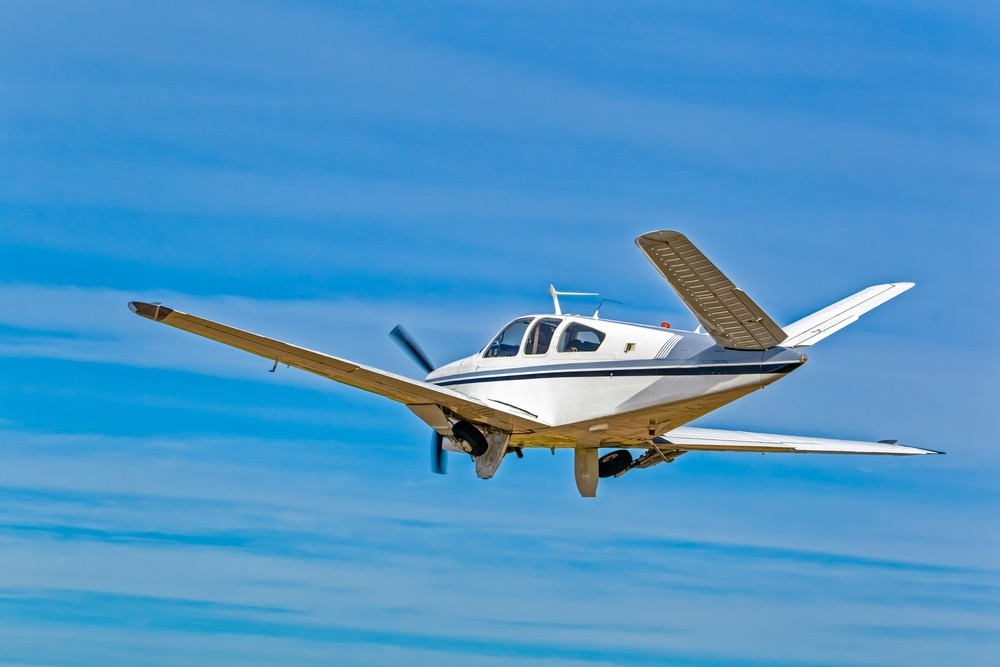
Beechcraft Bonanza single engine aircraft
U.S. congressman Tom Tiffany and pilot Leonard Boltz escaped with minor injuries after their Beechcraft Bonanza K35 landed in a lake and began to submerge. [Credit: Geoff Sperring/Shutterstock]

The pilot of a Beechcraft Bonanza K35 carrying U.S. Representative Tom Tiffany (R-Wis.) made an emergency water landing Saturday night after the aircraft lost power, according to remarks by Tiffany on Sunday.

In a post on X, Tiffany said he was returning from a dinner in Onalaska, Wisconsin, when the Bonanza “lost power,” without specifying whether it was a partial or full loss of power. He told reporters Sunday that the pilot, Leonard Boltz, attempted to restart the aircraft’s engine but was unsuccessful, according to Wisconsin Public Radio. The Bonanza K35 is a single-engine aircraft powered by a fuel-injected Continental IO-470-C engine.

Tiffany was the only passenger, and both he and the pilot escaped with only minor injuries after being rescued by a fire department airboat. He told reporters that the pair stood atop the aircraft for about 10 minutes as it submerged, then swam about 150 feet to a sandbar to await rescue.

“[Boltz] just said, ‘Hang on, Tom, and buckle up because we’re going to go down,’” Tiffany said.

The Wisconsin congressman estimated that the aircraft hit the water about 10 seconds after that warning.

After surveying the crash site Sunday, John Chmiel, Wausau Downtown Airport manager and owner of Wausau Flying Service—a full-service FBO that also provides flight training—told WPR that Boltz was “able to actually retract the landing gear” before hitting the water, which he described as a “very difficult maneuver to execute safely.” He added that Boltz “did every single thing right” after the issue occurred.

According to preliminary information shared by the Marathon County Sheriff’s Office Facebook page Sunday, Tiffany and Boltz landed on central Wisconsin’s Lake Wausau on Saturday evening after reporting a “mechanical issue” on approach to Wausau Downtown Airport (KAUW), where they were scheduled to land. The airport is adjacent to the lake.

The Marathon County Emergency 911 Communications Center received a report of a plane crash at 8:49 p.m. CDT, and units from several state and local agencies responded. Tiffany and Boltz were rescued at 9:05 p.m. and treated for their injuries at a local hospital.

Tiffany said on X on Sunday that he was released from the hospital and told reporters later that day that he received 12 stitches for an injury sustained when his head hit the aircraft’s instrument panel. He added that Boltz sustained minor injuries.

“I want to express my deepest gratitude to the pilot, the Wausau Fire Department, and all of the first responders who came to our aid so quickly,” Tiffany said on X. “An experience like this reminds you just how precious life is.”

Milwaukee’s WITI-TV reported that crews planned to remove the submerged aircraft from the lake Monday. The Marathon County Sheriff’s Office on Sunday said it remained in the water, marked by a buoy to help boaters avoid it.

The sheriff’s office said the FAA and National Transportation Safety Board will investigate the incident and that more updates will be shared on its Facebook page.

Jack Daleo

Jack is a staff writer covering advanced air mobility, including everything from drones to unmanned aircraft systems to space travel—and a whole lot more. He spent close to two years reporting on drone delivery for FreightWaves, covering the biggest news and developments in the space and connecting with industry executives and experts. Jack is also a basketball aficionado, a frequent traveler and a lover of all things logistics.

This 2020 Cirrus SF50 G2 Vision Jet Is a High-Altitude ‘AircraftForSale’ Top Pick

Single-engine personal plane boasts Safe Return Autoland, elite package upgrades, and low total time.

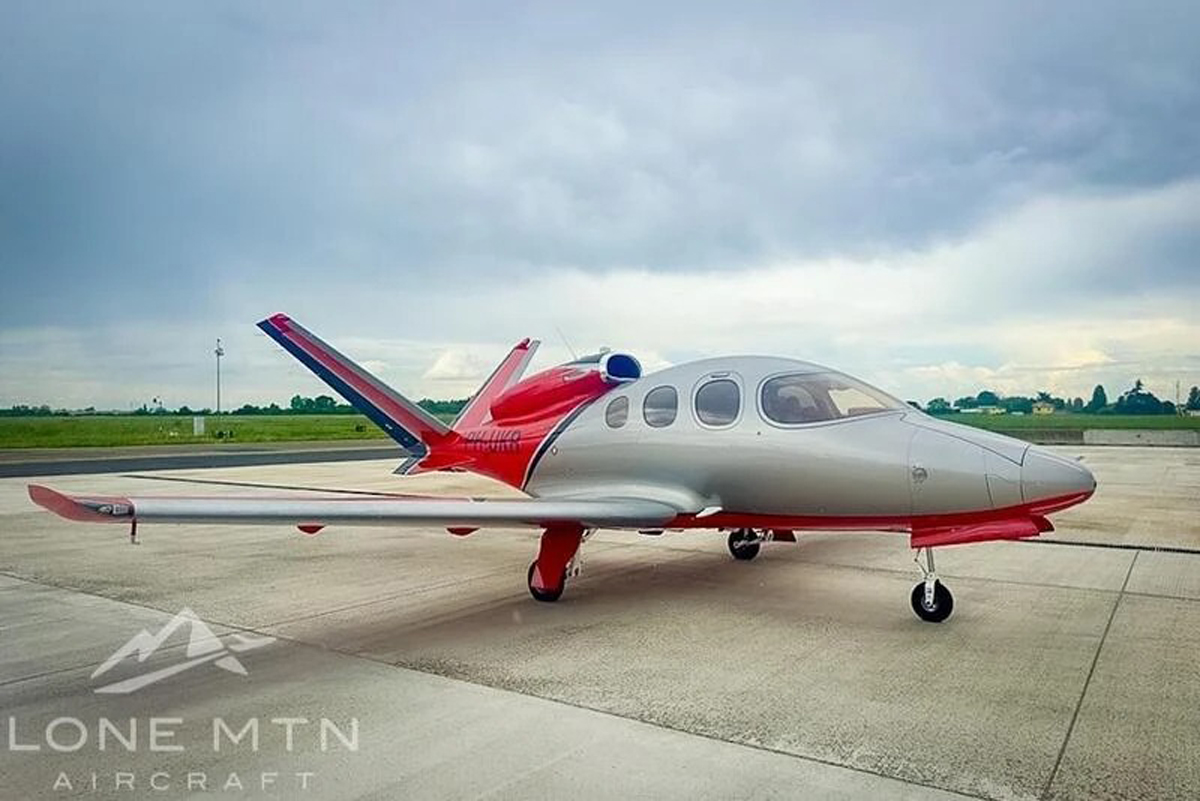
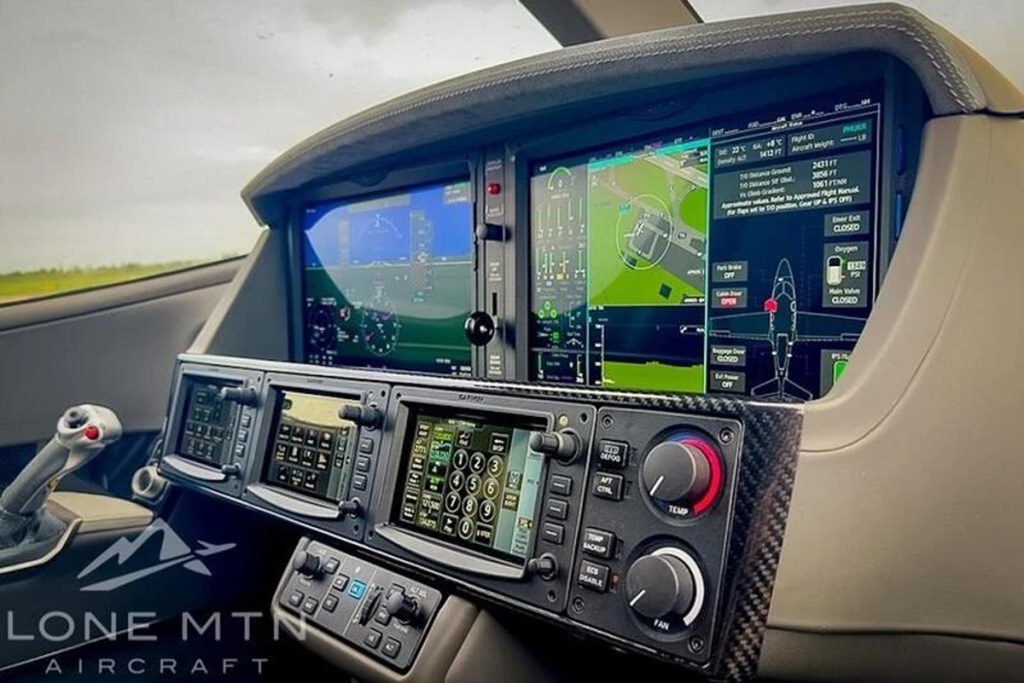
2020 Cirrus SF50 G2 Vision Jet [Credit: Lone Mountain Aircraft]

Every day, the team at Aircraft For Sale chooses an airplane that catches our attention because it is unique, a good deal, or has other qualities we find interesting. You can read Aircraft For Sale: Today’s Top Pick at FLYINGMag.com daily.

Today’s Top Pick is a 2020 Cirrus SF50 G2 Vision Jet.

Standing out in the personal jet category, the Cirrus SF50 G2 Vision Jet delivers single-engine efficiency with impressive high-altitude performance. It is a highly sought-after model for owner-operators who want jet-A fuel convenience alongside the unparalleled safety of the Cirrus Airframe Parachute System (CAPS).

Commanding attention on the tarmac, this 2020 airframe features a custom Xi design exterior and has been meticulously kept with just 260 total airframe hours, boasts no damage history, and has always been hangared.

Stepping inside the cabin introduces you to a similar custom Xi design interior outfitted in premium leather with Alcantara accents and red seat belts. The aircraft features an executive seating configuration with a center console, sixth and seventh cross-country seats, multizone climate controls, and 22-inch entertainment display for maximum passenger comfort.

Providing the thrust for this single-engine marvel is a Williams International FJ33 powerplant, which delivers an 1,846-pound-thrust rating and shows only 206 hours since new. The engine features dual-channel FADEC and is fully enrolled in the TAP Blue program through JetStream Concierge, which is paid through December 2026.

Managing the workload up front is a highly capable Cirrus Perspective Touch+ avionics suite by Garmin, running on 14-inch, high-resolution displays. The flight deck is comprehensively equipped with Safe Return Autoland, Auto-Throttle, Synthetic Vision Technology, digital real-time weather radar, and Flight Stream 510 connectivity package.

Available for $2,845,000, this fully loaded G2 Vision Jet stands ready to take its next pilot to Flight Level 310. It is RVSM certified and includes the Cargo X-Tend for additional baggage capacity, making it a highly practical solution for personal or business travel.

If you’re exploring ownership options, FLYING Finance can help get you airborne. Use our airplane loan calculator to estimate your monthly payments, or connect with an aviation finance expert at flyingfinance.com.

FLYING Staff

FLYING Magazine is a one-stop resource for everything aviation, including news, training, aircraft, gear, careers, photos, videos, and more.

AI Comes to the Cockpit

Three companies are bringing artificial intelligence to general aviation.

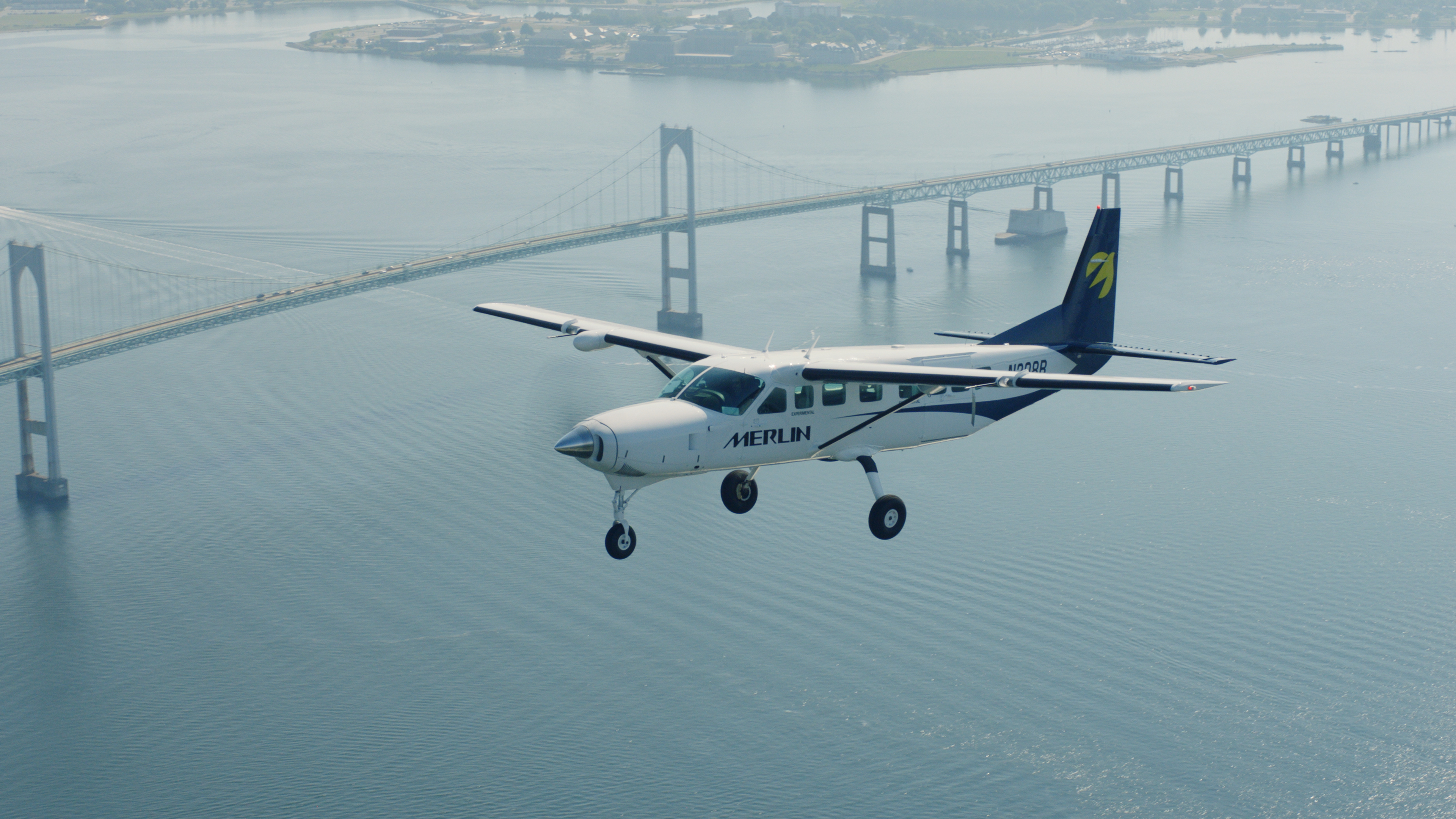
There are more than a dozen companies, such as Boston-based Merlin, identified as working on products that will use programming performed by AI or will collect information that the technology will process for use in a final software product destined for a cockpit. [Credit: Merlin]

In beginning research for this article, it was assumed that artificial intelligence technology was nowhere near ready for general aviation cockpits. Sure, free access to ChatGPT is available to anyone with an internet connection, but how close are companies to actually bringing solutions to the cockpit?

After a cursory look, there are more than a dozen companies identified as working on products that will use programming performed by AI or will collect information that the technology will process for use in a final software product destined for a cockpit. While some of the companies are developing solutions for transport category and military aircraft, there’s much development happening in GA, some of which is already in-market.

This Article First Appeared in FLYING Magazine

If you're not already a subscriber, what are you waiting for? Subscribe today to get the issue as soon as it is released in either Print or Digital formats.

Subscribe Now

FAA Administrator Bryan Bedford (the former chief executive of Republic Airways) has been optimistic about also embracing machine learning and AI technology to help the national air traffic control (ATC) system provide safe separation of aircraft, which at the end of the day, is the agency’s primary job. As Bedford told FLYING in an exclusive interview in the June/Issue 971, this isn’t a far-distant future state, as implementation is expected to be tested and deployed by the end of 2028.

Some small GA startups are already making big waves, like Airhart, whose new approach to avionics and flight control systems aims to make light airplanes simpler to fly and faster to learn. A simplified joystick controller, automated rudder controls, and a full fly-by-wire system are just part of what is in development. If certified, Airhart may be a company that will reshape how the GA cockpit looks and functions.

Let’s explore three additional companies that have launched or are in the FAA certification process as of mid-May. Two founders interviewed are active GA pilots and airplane owners, lending perspective on challenges for this segment of the aviation industry. 

PlaneDNA

PlaneDNA seeks to change how pilots access and learn about their aircraft through AI-assisted insights. 

Founder Josh Mac is a private pilot and airplane owner who designed PlaneDNA to help owners and prospective buyers make sense of their aircraft logbooks. Mac’s interest in this problem began when he attempted to piece together a coherent picture of his 1958 Beechcraft Bonanza’s maintenance history and learned firsthand how overwhelming the process can be. 

“A typical GA aircraft has decades of handwritten entries across airframe, engine, and prop logs, much of it in different handwriting, written on faded pages, and some have recurring ADs that need to be reconciled against the FAA’s database,” Mac said. “It took me weeks to feel confident that I understood the Bonanza’s history as I had to review logbooks going back to the Eisenhower administration.” 

The problem for airplane buyers is that a review of this material has to be done quickly to keep a sale moving forward. Most sellers are helpful but can’t be expected to wait a few weeks for a record review to be completed.

“Typically a buyer doesn’t have weeks to feel confident about the logbooks, which means making a large purchase without understanding the full history of the airplane,” Mac said. “I kept thinking this should be a solved problem, so I built the tool I wished I’d had.”

Once the full maintenance records are uploaded into PlaneDNA’s dashboard, the service uses machine learning and optical character recognition (OCR) to ingest scanned or photographed logbook pages, including handwritten entries—a notoriously difficult task for early AI tech—and then converts the information into structured, searchable data that can be queried in seconds. Here, PlaneDNA is applying AI to digitize, collate, and interpret an airplane’s full maintenance records, which has always been a historically manual, long, and tedious process.

Using PlaneDNA, the pilot can query the maintenance history of their own airplane, submitting questions  in plain English. It will automatically extract key details, like flight hours, inspections, and repairs, and can identify maintenance patterns or recurring issues. This feature, called Ask Your Copilot, allows an airplane owner to ask direct questions like, “when was the last magneto inspection?” or “has this aircraft ever had a prop strike?” They will receive a near-instant answer with the relevant logbook entry as a reference. 

In addition, PlaneDNA integrates with the FAA’s airworthiness directive (AD) databases, matching the owner’s airplane and powerplant with the maintenance records and logbooks they uploaded to determine what ADs have been completed and any outstanding. Also, the service will alert the owner if new ADs are issued.

By digitizing handwritten maintenance records, PlaneDNA helps reduce the risk of overlooked ADs caused by manual tracking, incomplete logs, or ownership and equipment changes. 

In the GA fleet, where 40-to-60-year-old airplanes are common, an owner may need to sort through an incomplete maintenance history. By transforming a mix of handwritten and digital records into a searchable decision-support system, an aircraft’s history becomes a dynamic digital record that’s instantly searchable.

“The logbook stops being a passive record and becomes a tool owners can use to properly maintain their aircraft,” Mac said.

Interested pilots can start a free trial or purchase a monthly or annual subscription from PlaneDNA’s website (planedna.com).  

Merlin Pilot

Now, as we move from the logbook to the cockpit, Boston-based Merlin Labs is working to bring the future of aviation into the present. 

Commercial-rated GA pilot Matthew George started the company eight years ago in Somerville, Massachusetts, and now Merlin is trading on the Nasdaq Stock Market as MRLN, focused on bringing autonomous technology into certified aircraft cockpits. 

George’s vision for Merlin is equal parts measured and ambitious, as he and his team intend to certify an airplane-agnostic, AI-powered software platform called Merlin Pilot into GA cockpits. Merlin Pilot will act as a safety pilot, monitoring all aircraft systems and flight parameters, ready to offer assistance verbally if it detects a situation where the pilot might be task saturated and missing critical aircraft inputs that could impact the overall safety of the flight. Eventually, in a fully autonomous capacity, the software could conduct the entire flight if a pilot felt conditions were above their personal minimums but still within the confines of the safe operating envelope of the airplane.

George, who regularly flies a Cirrus SR22, shared his enjoyment of shooting an approach down to minimums in a recent recurrency flight. However, he acknowledged that sometimes human pilots are simply not at their best, and that’s where Merlin Pilot could step in and offer instant assistance. 

For example, picture an instrument arrival into a busy terminal area in IMC. In the background, Merlin Pilot hears the human pilot miss a radio call from the approach controller and offers to take over radio communications with ATC using its learned natural language processing technology. Then, as the airplane turns onto a 3-mile final for landing, it detects the airplane’s gear has not been lowered and alerts the pilot, who has fallen behind the airplane in this critical phase of the flight. On short final, it reminds the pilot to increase the airplane’s airspeed as it has rapidly deteriorated without the pilot noticing, helping to avert a stall/spin accident at low altitude where recovery isn’t possible.

Merlin’s goal is to go beyond the helpful software-based, virtual safety pilot and have Merlin Pilot conduct a fully autonomous flight when called upon. In fact, test flights are already happening at Quonset State Airport (KOQU) in Rhode Island and Kerikeri, New Zealand, with Merlin Pilot flying its Cessna 208 Caravans with a safety pilot aboard monitoring the flight.

With the press of a button, the Merlin Caravan can complete a full test flight from takeoff to touchdown. According to George, AI in the cockpit, in the form of Merlin Pilot, will be a “safety feature that we’re in the process of certifying now to bring forward the future of general aviation.”

George said bringing Merlin Pilot to GA cockpits represents only the first step in the company’s mission. With a market capitalization of nearly $900 million and a $100 million prime contract with the U.S. military, Merlin is working toward certification of its AI-powered “autonomy stack” to deliver reduced aircrew operations for the U.S. Special Operations Command’s fleet of C-130J Super Hercules.

In a recent announcement, George shared plans to scale beyond military transport airplanes and into civil cargo aircraft. Called “Condor,” this new product line will use the same core technology from Merlin Pilot but be adapted to transport category airplanes already being flown by cargo operations with the goal of reducing multicrew operations.

With plans to expand the flight test and research operations to Hanscom Field (KBED) outside of Boston, George said he has the funding, a talented team, and some strong early results to continue bringing his vision into reality at Merlin Labs (merlinlabs.com).

“We’re now past the point of experimentation and are actively working on what the next generation of aircraft autonomy is going to be,” he said. “It is exciting. We’re helping to build what the next 100 years in aviation is going to look like.” 

George addressed the natural discomfort that some GA pilots might feel when considering an AI-powered Merlin Pilot backing them up in the cockpit.

“We as pilots owe it to ourselves, our families, and the general public to continue to make general aviation safer,” he said, pointing to decades of civil aviation accident data that “shows how having a second set of eyes [human or AI] dramatically improves overall safety.”   

Daedalean PilotEye

Daedalean is working on building a second set of virtual eyes in general aviation airplanes using cameras and AI technology to recognize aircraft-shaped objects that could pose a collision hazard during flight. Purchased by Destinus (destinus.com) in 2025, Switzerland-based Daedalean’s PilotEye is undergoing cerification testing with the FAA. 

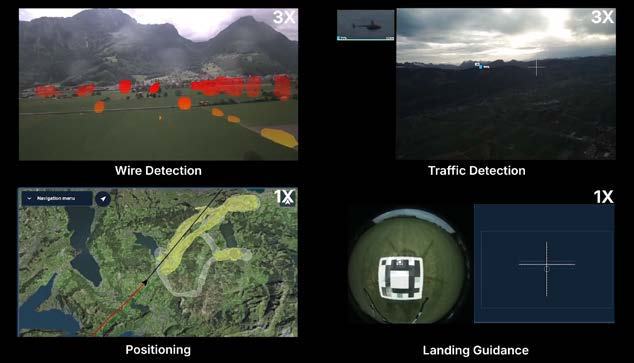
According to the company, PilotEye is being trained, or “machine-learned,” (which refers to learning done in a controlled lab setting rather than live) to see into cloud layers, detect power lines, towers, and more dynamic moving targets like birds, drones, and airplanes. It is designed to augment the pilot’s vision by detecting such potential collision targets, which are identified and displayed in the cockpit, and warning  of these safety hazards. PilotEye will be installed on the airplane and operate separately from the ADS-B/TIS-B traffic identification system, searching the sky in front and around the airplane for targets. 

ilotEye is building a camera system that can detect traffic and wires, even if the object appears at only a few pixels in size. That would be almost invisible to pilots on a typically sized, in-cockpit display. [Credit: Daedalean PilotEye]
PilotEye is building a camera system that can detect traffic and wires, even if the object appears at only a few pixels in size. That would be almost invisible to pilots on a typically sized, in-cockpit display. [Credit: Daedalean PilotEye]

PilotEye’s computer vision will interpret the external environment around the airplane and is a critical ingredient for any future fully autonomous system, which must first be able to reliably see and make sense of its surroundings. Officials said this technology represents a different, more incremental approach to AI in aviation. Using camera inputs and neural networks to detect airborne hazards, it will go beyond ADS-B to spot other flying targets, focusing on airborne objects that are not typically visible to traditional systems. As an “extra set of eyes,” it continuously scans the environment and alerts pilots to potential conflicts, effectively augmenting the human already working to “see and avoid” during flight.

What makes the software especially significant, according to Daedalean, is that the tech is being developed with general aviation as a primary use case. Beyond simple detection, the system is evolving toward full detect-and-avoid capability, which is a key requirement for autonomous and beyond visual line of sight (BVLOS) operations. The company maintains this means improved midair collision detection at altitudes and in airspace that are common for GA flights and better awareness in low-visibility or congested urban/suburban environments, where collision hazards can be more difficult to spot at low altitudes when objects are operating against a crowded visual backdrop of buildings and structures. 

Trained by machine-learned AI inputs, once certified, Daedalean said PilotEye will be available to aircraft OEMs who want a drop-in system that will aid a human pilot’s “see-and-avoid” efforts.

Safer Future

The work being done at PlaneDNA, Merlin Labs, and Daedalean, AI technology is being used to train and develop software-based solutions that each play a part in improving an aspect of GA safety. All three companies envision AI technology stacks will integrate into new aircraft at a conservative pace, as Merlin and Daedalean  still must sell their software to aircraft OEMs once FAA certification is complete.

Just like the first Garmin G1000s, adoption across the fleet likely will take time, and pilots will probably have a lot of choice in how much automation they use in their cockpit.

AI is coming to assist smoother buyer/seller transactions too. In May, Aerista, a leading pre-owned Cirrus brokerage firm, announced it had formed a strategic partnership with Aviox to improve valuation and deal timing to the aircraft sale transaction process. 

As the GA fleet ages, it will be useful for pilots to have tools for staying on top of maintenance, mechanical conditions, and complying with ADs. 

Perhaps future private pilot training courses will include cockpit resource management with software-based AI systems like those mentioned. Hopefully this technology will help reduce the total number of GA accidents and fatalities, which is a worthy goal that all pilots will benefit from if these companies deliver on their collective vision. 


This feature first appeared in the July Issue 972 of the FLYING print edition.

Sean Siff

Sean Siff is a private pilot who has worked in marketing in the aviation industry. He’s an active flight sim user as he works to stay current in the airplane.

MOSAIC Was Supposed to Fix This

While FAA has adapted to increase sport pilot privileges under new rule, the industry is going in a different direction.

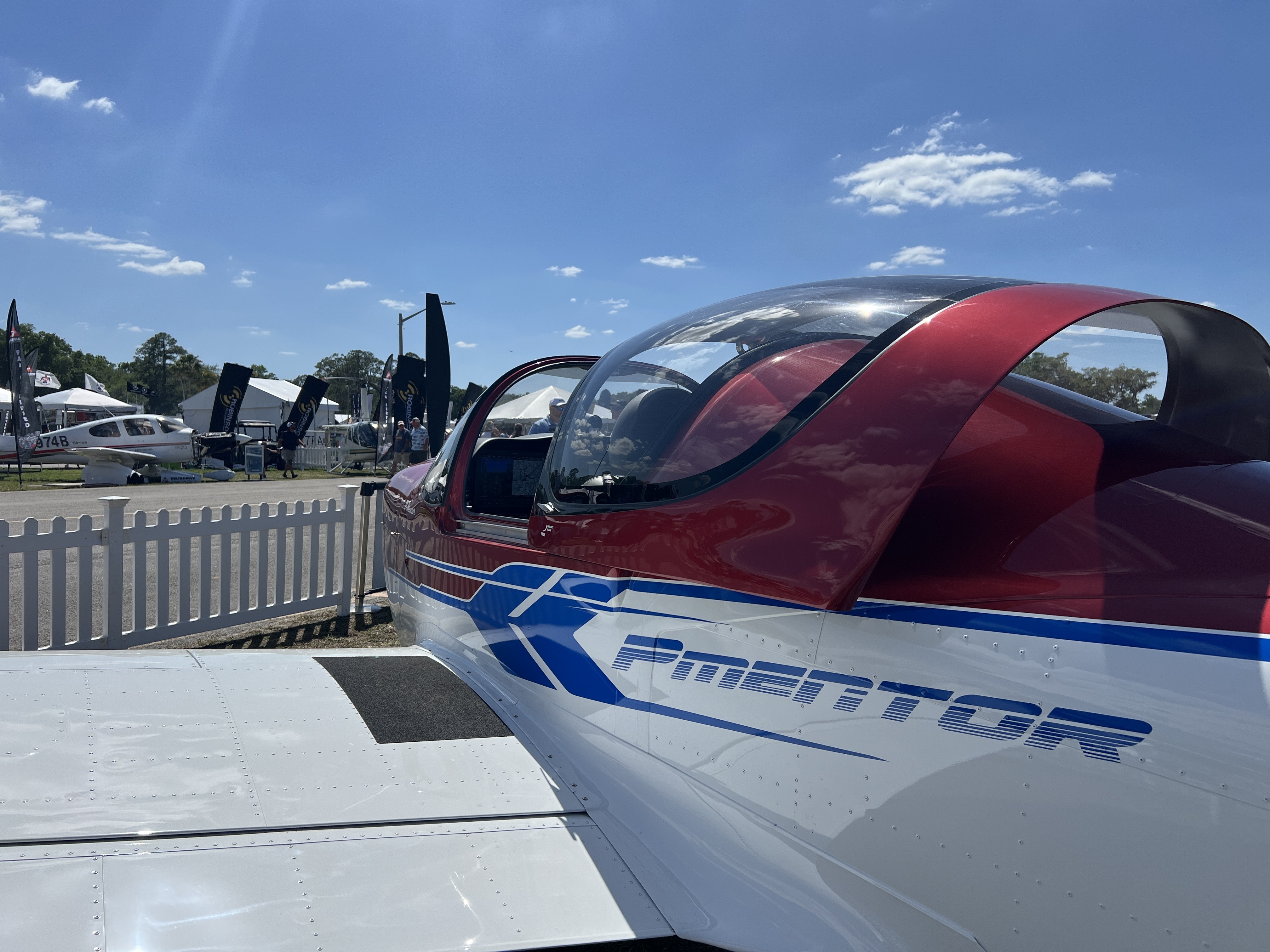
Tecnam P-Mentor [Credit: Tripp Thurston]

Last in a three-part series

Put the first two pieces in this series together and the picture is stark. The industry is shipping more premium metal to a buyer population that’s increasingly insulated from the rate environment, while the rate environment itself is more likely to get worse than better for everyone else.

That “everyone else” is the piston buyer: the segment GAMA’s Q2 data shows is still growing in unit terms (786 aircraft shipped through the first half of 2026) but in a way that’s leaving the median buyer further behind, not closer to ownership.

The question worth asking directly: Is general aviation, in its current form, pricing out the exact buyer it needs to keep the funnel alive?

MOSAIC Was the Industry’s Answer. It Hasn’t Delivered Yet

The FAA’s Modernization of Special Airworthiness Certification rule (MOSAIC) was explicitly framed as an affordability and accessibility fix. Phase I took effect October 22, 2025, expanding what sport pilot certificate holders can fly.

Phase II, the bigger structural change, takes effect July 24: a new manufacturer-certification pathway under 14 CFR Part 22 meant to let builders bring higher-performance light aircraft to market faster and, in theory, cheaper than the traditional Part 23 certification path allows.

The logic was sound. Lower the regulatory cost of bringing a new light aircraft to market, and manufacturers should respond with more affordable products aimed at the entry-level and sport pilot-eligible buyer.

Nine months into Phase I and with Phase II barely underway, that response hasn’t shown up in the shipment data yet. What has shown up, in the same window, is Textron walking away from its two most affordable piston nameplates entirely.

MOSAIC lowered a regulatory ceiling. It did nothing to stop a manufacturer from deciding the volume economics of a $1 million-plus airplane looked worse than the economics of a $6.5 million turboprop. Regulation can make a cheaper airplane easier to certify. It can’t make a manufacturer want to build one when the margin math points somewhere else.

That tension shows up in how even the manufacturers most closely associated with MOSAIC are behaving.

Tecnam built its reputation partly on the sport pilot and lighter end of the market, but a new, fully equipped P2010-TDI Gran Lusso, its top-trim four-seat diesel single, prices out at $808,000 once options, avionics, and import and prep fees are included on the invoice. That’s a real transaction price, not a base spec sheet number, and it’s well above what anyone would call an entry-level MOSAIC airplane.

Tecnam also used Oshkosh 2026 to unveil an entirely new model above that price point, the Rivale, a clean-sheet single powered by a 300 hp Continental diesel V-6 and pitched as the next step up in personal flying.

Pricing hasn’t been announced, but it’s a clear signal of where Tecnam is putting its next dollar of product development. None of that is a knock on Tecnam specifically. It’s a fair, real-world data point that even a manufacturer built around the accessible end of general aviation is following the same premiumization logic as the rest of the certified fleet.

Bristell, Sling, and Van’s are the more useful counter-examples: Bristell’s MOSAIC-ready B23 has been listed in the $170,000 to $295,000 range, and Sling and Van’s have both kept building toward the budget-conscious sport pilot and BasicMed buyer rather than trading up. Those three remain the real exceptions holding the line on price for the buyer MOSAIC was built to reach.

The Gap in Real Numbers

Here’s what the affordability gap actually looks like priced out.

A new Cirrus SR22 runs roughly $1.25 million to $1.3 million today. A well-specced, few-years-old used SR22 trades in the $218,900 to $564,900 range, averaging somewhere around $260,000 depending on year and equipment.

A new Cessna 172, the most basic trainer or personal aircraft still in production, runs $450,000 to $500,000. A genuinely capable used aircraft, a couple of years old, can be had for $200,000 to $260,000, and the new equivalent is somewhere between double and five times that price, depending on the model.

The used market isn’t a discount version of the new market anymore. It’s functionally the only entry point left for anyone who isn’t already wealthy.

The same gap exists further up the segment ladder, it just compounds differently.

A new Beechcraft King Air 260, the modern entry point to turboprop ownership, lists close to $9 million. A well-maintained King Air 200 a decade or more old can be found for $1.5 million to $2.5 million depending on avionics and engine time remaining, a discount of 70 percent or more off new.

Move up to light jets and the pattern holds.

A new Cirrus Vision Jet lists around $3.4 million, while a comparable used example a few years old trades in the $2.2 million to $2.8 million range. The percentage discount actually narrows as you move up from turboprop to jet, because used turboprops and jets hold value better than used piston singles do, which is part of why the first article in this series flagged medium jet as the one segment where the premiumization logic doesn’t cleanly hold.

We have actually seen Pilatus PC-24 aircraft appreciate in value, rising approximately $1.5-2.0 million from where they were originally purchased two years ago. But the piston buyer is the one who actually finances the purchase and feels every basis point of it, which is exactly why the affordability conversation belongs at the bottom of the market, not the top.

Layer financing on top of that piston-level gap and it gets worse before it gets better.

The buyer stepping up to that $200,000 used airplane is, per the first FLYING Finance article in this series, exactly the buyer segment most exposed to the rate environment described in the second, the segment financing a real share of the purchase, watching monthly payments move with every basis point, with none of the AI-capex-fueled income cushion showing up elsewhere in the economy.

Higher-for-longer rates don’t just make the new $1.3 million airplane more expensive to finance. They make the $200,000 used entry point meaningfully harder to reach too.

Why This Is Happening, and Whether Aviation Is Hurting Itself

The honest answer is that this isn’t a conspiracy or a failure of intent. It’s a rational response to where the volume and the margin actually are.

OEMs are chasing the buyer segment that’s growing, paying full freight, and largely insulated from financing costs, because that’s where returns on R&D and production capacity are best right now. The Beechcraft and Tecnam decisions, the broader premiumization trend across every manufacturer’s Q2 mix, and the still-nascent MOSAIC response all point the same direction: nobody in this industry is being irrational.

But the aggregate effect of every individual rational decision is an industry narrowing its own future customer base, even as regulation seeks to expand it.

This isn’t unique to aviation, and it didn’t start here either. The first FLYING Finance article in this series traced the same premiumization pattern through the COVID-era shift in automotive and marine buying, where manufacturers who could raise trim levels did, buyers who could afford to trade up did, and the reset in what counted as an average truck, SUV, or boat turned out to be permanent rather than temporary.

Aviation is running that identical playbook a few years behind the rest of the economy, which is exactly why premiumization here doesn’t look like an aviation problem in isolation. It’s the same buyer behavior repeating in a market where the entry price was already higher before COVID ever hit.

The FAA’s own long-running concern about pilot population decline exists for a reason.

Consulting firm Oliver Wyman puts the U.S. shortfall at roughly 24,000 pilots in 2026, and flight training now runs roughly $124,000 to complete, a number that’s climbing in the same environment as everything else. That’s the zero-to-commercial-plus-CFI cost, not zero-to-ATP: It gets a student to the certificates needed to get hired and start earning as an instructor or first officer, at which point most of the remaining hours toward the 1,500-hour ATP minimum get built on someone else’s payroll rather than the student’s own dime.

That’s a real distinction, since it’s the up-front number, not the fully loaded one, that actually gatekeeps who can start down that path at all. The 24,000 figure itself isn’t uncontested.

Trade coverage from both AirlineGeeks and AVweb has published plenty of pieces where the pilots’ union Air Line Pilots Association argues there’s no real shortage at all, just a wage and pipeline problem stemming from low regional airline pay, high training costs, and the 1,500-hour rule.

Whether you call it a shortage or a pipeline problem, the number of new pilots reaching the market and the cost of getting there both matter to us directly, because every one of those students is a future aircraft buyer, and a $124,000 up-front cost before someone can even finance their first airplane is a real barrier regardless of which label you put on the underlying dynamic.

An industry that keeps raising the price of both the airplane and the path to flying it is, over a long enough horizon, shrinking its own addressable market. That’s the sense in which aviation is hurting itself, not through any single bad decision, but through a set of individually sound decisions that compound into an industry that fewer new buyers can actually enter.

Where the Bright Spots Actually Are

It’s not uniformly bleak, and it’s worth being specific about where the real openings sit for an average, or even a well-above-average, American buyer today.

The used piston market, despite elevated pricing relative to a few years ago, remains the most realistic entry point that exists, and financing structured around a used purchase rather than new is the single highest-leverage move available to a buyer priced out of new. That’s also, plainly, where we spend most of our own time: it’s the segment where the financing conversation actually changes what a buyer can afford to do, not just how they pay for what they’d already decided on.

MOSAIC Phase II, even if it hasn’t shown up in shipment data yet, is a real structural change that lowers certification cost for the next generation of light aircraft. The effect is a lagging one, not a failed one, and it’s worth watching Q4 2026 and 2027 shipment data specifically for the first Part 22-certified products to hit the market.

Fractional ownership and structured partnership arrangements continue to expand as a rational response to exactly this affordability gap, spreading fixed ownership costs across multiple buyers who couldn’t individually justify full ownership on their own. We’d set club-based access models aside from that list on purpose.

They solve a similar access problem, but they run into the same lending obstacle a church or a country club runs into: the aircraft is owned by an association of members, and none of those members individually wants to guarantee a loan for an asset the group owns collectively. There’s no single, identifiable borrower a lender can underwrite against, just a shifting membership roll. Fractional and partnership structures don’t have that problem, because each owner holds a real, titled interest in the aircraft that a lender can actually lend against, which is why they carry far more weight as a genuine affordability answer than a club ever will.

There’s a demographic angle worth raising here too, even though we don’t have one clean statistic that proves it outright.

The generational data on fatherhood is real and well documented: fathers’ time spent on childcare has nearly tripled since 1965, from roughly two and a half hours a week to close to eight, and family travel data reads the same pattern from a different angle, with the large majority of American families now naming shared family experiences as their top vacation priority.

Whether or not it shows up cleanly in a single time-use survey, the shift feels real to anyone who has spent time around GA airports: Fewer buyers are looking for a Saturday alone in the pattern, and more are looking for a way to get the whole family somewhere. That reframes what “affordability” actually needs to solve for. 

The buyer who used to be able to justify a solo $200,000 airplane against his own weekend hobby time now has to justify it against family time, which means the airplane increasingly has to actually take the family somewhere, not just exist for him to fly alone on a Saturday morning.

A father who wants to fly his kids to Orlando and walk through the gates at Universal with them, rather than just overfly the park because that’s what the budget allowed, is a genuinely different financing conversation than the one this industry has mostly been having with itself. It’s also a different airplane.

The mission changes the aircraft as much as it changes the financing: a family that needs four real seats, real baggage space, and real range is looking at something like an RV-10, a Cirrus SR22 or SR22T, or even a Bearhawk 5 for the backcountry, not the solo Cessna 150 that used to be the industry’s default answer to “what does an entry-level buyer fly?”

Fractional and partnership structures are arguably a better fit for that buyer than full ownership ever was, because they deliver real, usable access to a family-capable airplane without the buyer carrying the full fixed cost of one that mostly sits on the ramp between weekend trips.

The flight-training cost problem, while real, is the one piece of the affordability equation where financing innovation, structured training loans, employer-sponsored and airline-partnership pathway programs, has made the most tangible progress of any part of this chain in the last two years.

The Outlook

None of the three forces covered across this three-part series is reversing on its own in the near term.

Premiumization is a rational OEM response to where the margin is, not a temporary blip. The rate backdrop is more likely to stay restrictive than ease meaningfully before 2027.

MOSAIC’s affordability dividend, if it materializes, is still a year or more from showing up in real shipment volume. Put together, that means the gap this piece has been describing is more likely to widen than close before it starts closing.

What This Means for a Lender or a Buyer

Everything in this piece points to the same practical conclusion: The used market isn’t a fallback anymore, it’s the primary market, at least for the piston segment that makes up the bulk of general aviation’s growth.

For a lender, that argues for treating the used and entry-level piston segment as the center of gravity for underwriting, not an afterthought to new-aircraft financing, because that’s where the actual volume of buyers sits and where financing terms, not sticker price alone, will determine who gets into an airplane over the next two to three years.

For FLYING Finance, we have views into what happens in the marketplaces at Aircraft for Sale and at AvBuyer, so we understand the used market. For a buyer, all this means the decision isn’t simply new versus used anymore.

It’s whether a fractional or partnership structure gets a family into a genuinely capable airplane sooner than saving toward full ownership ever would, and whether the mission itself, a solo Saturday in the pattern versus an actual family trip to Orlando, 30A, or the Smokies, changes which aircraft and which ownership structure actually make sense.

If you’re weighing a used piston purchase against a step up to a turbine aircraft, or a fractional share against saving for full ownership, that’s the calculation we’d want to run with you before you shop, not after.


Tripp Thurston

As Group President and CFO of Firecrown Media and COO of Flying Finance, Tripp Thurston brings two decades of commercial banking and specialized lending experience to the FLYING audience. Having served as both a regional credit approver and a Market President, Tripp has a unique "both sides of the desk" perspective and a candid, down-to-earth style of explaining complex transactions. Based north of Atlanta in the Chattanooga area, he spends his downtime exploring the skies in different aircraft or traveling with his wife, two sons, and their husky-lab.

Epic Flight Academy Adds Test Prep for A&P Certification

Courses will be offered at the school's campuses in New Smyrna Beach, Florida, and Erlanger, Kentucky.

Work takes place on an aircraft engine. [Credit: Epic Flight Academy]

It takes a lot of hands-on learning and academics to earn an airframe and powerplant certificate, and now Epic Flight Academy is helping applicants make the grade with the launch of a two-week test prep course for FAA Part 147 A&P certification.

According to EPA officials, the courses are offered at both the New Smyrna Beach Municipal Airport (KEVB) campus in Florida and the Erlanger, Kentucky, campus at Cincinnati/Northern Kentucky International Airport (KCVG).

Epic Flight Academy established its maintenance training program in 2020.

“Ever since we opened our first Part 147 campus, we’ve had requests for a test prep course like this,” Josh Rawlins, Epic chief operating officer and aircraft mechanic program director, said in a news release. “So we worked with staff to plan a robust refresher course that takes two weeks and includes testing over that period. We’re excited to help skilled mechanics earn their FAA certifications.”

The course will initially be offered each month. The tuition is $2,100 with a $100 registration fee.

School officials said mechanics with qualifying civilian or military experience under 14 CFR Part 65 who hold FAA Form 8610-2 are eligible to register for the course.

Meg Godlewski

Meg Godlewski has been an aviation journalist for more than 24 years and a CFI for more than 20 years. If she is not flying or teaching aviation, she is writing about it. Meg is a founding member of the Pilot Proficiency Center at EAA AirVenture and excels at the application of simulation technology to flatten the learning curve. Follow Meg on Twitter @2Lewski.
Pilot in aircraft
Sign-up for newsletters & special offers!

Get the latest stories & special offers delivered directly to your inbox.

SUBSCRIBE