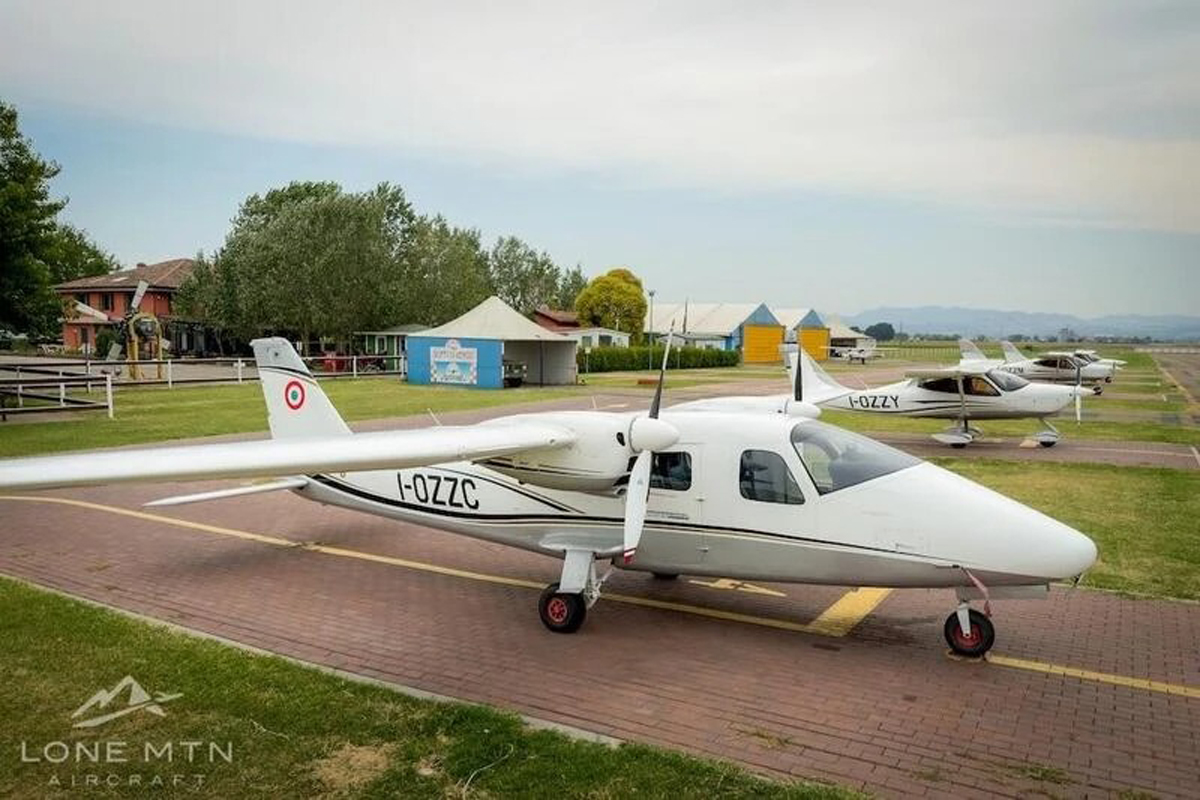
Long considered a modern disruptor in general aviation, Tecnam’s P2006T directly solves one of the main issues of twin-engine ownership—large fuel bills and maintenance overhead. By pairing light aluminum construction with retractable gear and CS-23 certification, this versatile airframe delivers cross-country touring comfort alongside bulletproof flight school utility.
Logged at 3,232 hours total time, this 2017 model wears its factory Tecnam livery with poise. Its sleek profile, high-wing configuration, and retractable tricycle landing gear minimize parasite drag to yield an impressive 1,100 nm range and cruise speeds up to 145 ktas—all while maintaining predictable, forgiving low-speed handling.
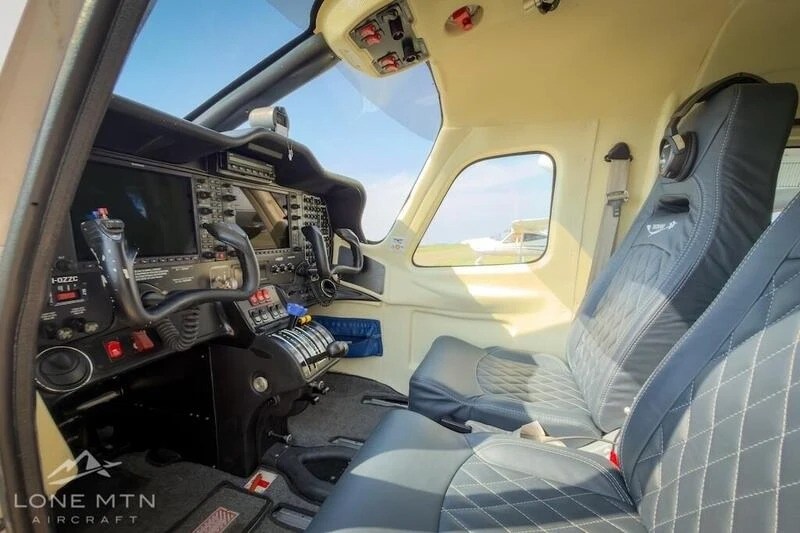
Climbing inside reveals a thoughtfully crafted four-seat cabin designed to balance pilot ergonomics with passenger freedom. Floor-to-ceiling side windows supply expansive panoramic views, while four-point safety harnesses, modern interior trim, and dedicated rear baggage locker make extended legs comfortable for everyone on board.
What truly sets this Italian twin apart sits under the cowlings—a pair of 100 hp Rotax 912 S3 engines with dual electronic ignition, showing 1,343 hours since new. Turning two-blade MT constant-speed, fully feathering propellers, these miserly powerplants burn a combined average of just 34 liters (roughly 9 gallons) per hour, delivering true twin-engine redundancy at single-engine fuel burn.
Up front, crew workload is dramatically streamlined by a state-of-the-art Garmin G1000 NXi integrated glass flight deck. Dual high-resolution displays consolidate engine monitoring, WAAS GPS navigation, Mode S transponder, Garmin audio management, and integrated digital autopilot, giving pilots complete situational awareness in demanding IFR environments.
Listed as a “Call for Price” inquiry, this European-based twin comes equipped with a 406 MHz ELT and complete digital operational readiness. Whether deployed to build multi-engine time or carry family across continents, it stands ready for its next mission.
If you’re exploring ownership options, FLYING Finance can help get you airborne. Use our airplane loan calculator to estimate your monthly payments, or connect with an aviation finance expert at flyingfinance.com.
From search and rescue to aerial photography, the possibilities for helicopter pilots are endless. [Credit: Shutterstock]
Becoming a helicopter pilot can lead to a thrilling career filled with adventure. Helicopters can perform specialized tasks that fixed-wing aircraft cannot, leading to a world of opportunities for aspiring aviators.
From search and rescue to aerial photography, the possibilities for helicopter pilots are endless. Here is how to land a job as a helicopter pilot.
How Do You Become One?
The licensing process is similar to that of fixed-wing pilots. Aspiring helicopter pilots need to be a minimum of 17 years old and be able to obtain an FAA medical certificate.
A private pilot certificate is the first step in the journey to a career as a helicopter pilot. The training for this license teaches you the basics of flying a rotary-wing aircraft and prepares you to fly helicopters recreationally.
To make money while flying, you will need a commercial pilot certificate. You can work as a helicopter pilot with this license, opening the door to jobs in industries such as flight tours, medical transport, and law enforcement.
The airline transport certificate is the top-level license and requires significant training. Although it is not required for many helicopter pilot jobs, having it can make you more competitive during your job search.
Where Do You Train?
While they are less prevalent than fixed-wing flight schools, there are many schools offering helicopter flight training across the country.
After you have researched local training options, your chosen flight school will be able to help you learn more about the process and requirements for obtaining your certificates. Once you have completed the necessary training for each, you will need to pass written and oral tests to earn your license.
Is It Expensive?
The cost of becoming a helicopter pilot varies greatly depending on your situation, but a private pilot certificate typically costs between $10,000 and $20,000. Earning your commercial license can cost upward of $100,000.
What Types of Companies Can Employ You?
Once you have your commercial pilot license, you can begin applying for helicopter pilot jobs. There are many types of companies and organizations in need.
Medical airlift and evacuation companies commonly use helicopters to transport patients, and therefore have a significant demand for pilots. Similarly, search and rescue operators also require pilots to operate their helicopters.
Helicopters are often used for observing the world beneath them or capturing imagery of the ground. There are companies that employ helicopter pilots for aerial photography and videography, and news organizations hire them as well. If you want to fly passengers, corporate transport and tour companies hire helicopter pilots.
Government bodies also have a need for commercial helicopter pilots. For example, the military employs pilots to work as instructors, and the U.S. Forest Service for their firefighting operations. Law enforcement agencies hire civilian pilots to fly their aircraft.
Do You Make Good Money?
The salary for helicopter pilots can vary depending on their experience and employer, but you can expect salaries to start at around $70,000 per year. With more experience, one can easily earn upward of $100,000 to $200,000 annually.
Is There a Demand?
There is a significant need for helicopter pilots across the United States. Many employers are actively seeking new pilots, and the demand is forecasted to grow over the coming years.
Helicopters perform specialized tasks that are vital to society. Despite the cost and effort required to gain the necessary licenses and experience, helicopter pilots are rewarded with exciting career prospects and competitive salaries.
Andrew is a lifelong lover of aviation and travel. He has flown all over the world and is fascinated by the workings of the air travel industry. As a private pilot and glider pilot who has worked with airlines, airports and other industry stakeholders, he is always excited to share his passion for aviation with others. In addition to being a writer, he also hosts Flying Smarter, an educational travel podcast that explores the complex world of air travel to help listeners become better-informed and savvier travelers.
National Transportation Safety Board investigators arrive at LaGuardia Airport’s Runway 4 following the fatal collision between a passenger jet and fire truck in March. [Credit: NTSB]
A bipartisan airport runway safety bill that aims to reduce runway incursions and other surface safety incidents has cleared the Senate Commerce Committee and will head to that chamber’s floor, according to one of the legislators who introduced it.
Senator Jerry Moran (R-Kan.) said Wednesday in a post on X that the Runway Surface Awareness and Focused, Effective Training and Technology (Runway SAFE-T) Act moved one step closer to becoming law. The bill’s introduction in August came a few months after an Air Canada Bombardier CRJ-900 collided with a fire truck while landing at LaGuardia Airport (KLGA), killing two pilots and injuring dozens of others.
“After recent runway incidents, I introduced this legislation with [Senator John Hickenlooper (D-Colo.)] to strengthen airport surface safety, improve training and technology for ground vehicle operators, and prevent future incidents,” Moran wrote. “I look forward to supporting this bill on the floor of the full Senate.”
Among the bill’s supporters are Airports Council International-North America (ACI-NA) and the General Aviation Manufacturers Association (GAMA), Professional Aviation Safety Specialists (PASS) union, Air Medical Operators Association (AMOA), and Air Traffic Control Association (ATCA).
The American Association of Airport Executives (AAAE) on Wednesday posted on social media its support of the legislation.
“We applaud the Senate Commerce Committee for advancing the bipartisan Runway SAFE-T Act, a commonsense measure that will advance aviation safety by strengthening training for personnel operating on runways and taxiways,” the AAAE wrote on X.
What Runway SAFE-T Would Do
According to the bill’s sponsors, the Runway SAFE-T Act aims to reduce runway incursions by improving airport vehicle training and expanding the use of surface safety technology.
Per a March publication from the Congressional Research Service (CRS), about 40 U.S. airports are equipped with Airport Surface Detection Equipment, Model X (ASDE-X) or Airport Surface Surveillance Capability (ASSC) systems. LaGuardia, for example, has an ASDE-X system.
However, about 200 airports lack any surface monitoring capability. Equipping these locations with new surface awareness initiative (SAI) and surface movement radar (SMR) technologies is one pillar of the FAA’s three-year Brand New Air Traffic Control System (BNATCS) modernization project. SAI and SMR are designed to help controllers better track aircraft and vehicles on runways and taxiways, in all weather and visibility conditions.
Runway SAFE-T would complement the ongoing BNATCS projects by creating an FAA-led task force charged with reviewing airport driver training programs and recommending best practices for ground vehicle operations. The panel would comprise representatives from airports, the FAA, the National Transportation Safety Board, emergency response organizations, airport vehicle operators, and other stakeholders.
The legislation would also allow airports to draw from existing FAA Airport Safety and Resilient Infrastructure Discretionary Program (ASRID) funding. The funds would be used to establish technologies and training intended to reduce vehicle-related runway incursions and improve situational awareness for ground personnel.
Why Now?
The Runway SAFE-T Act comes in response to several recent incidents and close calls.
Investigators analyzing the LaGuardia runway incursion are examining the lack of transponders on emergency vehicles at the airport, including the fire truck that inadvertently entered the runway as the Air Canada jet was landing. The device could have allowed LaGuardia’s ASDE-X system to automatically alert controllers of the impending collision.
There have also been several close calls due to runway incursions in recent years.
In June, an American Airlines Airbus A319 rejected its takeoff from Miami International (KMIA) when an Embraer Phenom 300 entered the same runway without clearance. In January, a Southwest Airlines Boeing 737 similarly had to abort takeoff after a Pilatus PC-12 made a wrong turn onto the runway at San Antonio International (KSAT).
“Close calls are warning signs and serve as a reminder that our aviation system is fragile,” Moran said in a statement in August. “It should not take a tragedy for Congress and industry to act, and the Runway SAFE-T Act takes critical steps to identify and address issues before incidents occur.”
According to the March CRS publication, the total number of runway incursions in the U.S. has remained stable at around 1,700 annually since 2022, while other estimates put the figure a bit lower. Still, severe runway incursions jumped 44 percent in 2025, the FAA Safety Team said in August.
The agency’s Airports Runway Incursion Mitigation (RIM) Program tracks airport locations with the highest number of runway incursions. Earlier this year, the FAA shared a list of more than 150 airports with “hot spots” where there is increased risk during surface operations.
Jack is a staff writer covering advanced air mobility, including everything from drones to unmanned aircraft systems to space travel—and a whole lot more. He spent close to two years reporting on drone delivery for FreightWaves, covering the biggest news and developments in the space and connecting with industry executives and experts. Jack is also a basketball aficionado, a frequent traveler and a lover of all things logistics.
FAA Administrator Bryan Bedford said Tuesday that he wanted to "correct the record" on the GAO's report. [Credit: Shutterstock]
FAA Administrator Bryan Bedford said Tuesday that he wanted to “correct the record” on a recent Government Accountability Office (GAO) report that alleged the agency’s air traffic control modernization effort may face cost overruns, schedule delays, and unmet goals.
The GAO report, published Monday, claimed that the FAA lacks a lifecycle cost estimate or master schedule for its Brand New ATC System (BNATCS) program. Over two phases, BNATCS seeks to replace outdated, decades-old infrastructure and introduce new automated capabilities to improve safety and efficiency in the National Airspace System (NAS).
Though the FAA has attempted to modernize the ATC system since the 1980s—the latest effort being the NextGen initiative—the GAO in 2024 deemed over 75 percent of the agency’s 138 ATC systems to be partially or fully “unsustainable.”
Without a lifecycle cost estimate or master schedule for BNATCS, the GAO predicted the new push could go the way of NextGen, which it found delivered only 16 percent of its promised benefits after 20 years and $36 billion spent. The agency said this “could end up causing air traffic disruptions or prolonging reliance on severely outdated systems.”
“If these risks are realized, FAA would need to continue to rely on severely outdated systems that are prone to failure leading to more flight delays and safety incidents,” according to a summary of the report.
However, Bedford told the House Appropriations Committee’s subcommittee on Transportation, Housing, and Urban Development on Tuesday that the FAA after reviewing the report has a “couple of issues we don’t necessarily concur with.”
“We do have lifecycle cost estimates for the entirety of the project, and we do have a highly integrated master work schedule,” he said. “So perhaps we need to get them back in and go through this one more time.”
Still, Bedford said the FAA expects to “overspend” the $12.5 billion that Congress in 2025 allocated for BNATCS’ first phase, which the agency aims to complete by the end of 2028. He added that “some of the slipping that we’re seeing…looks like it may put pressure on delivering that schedule.”
Dissecting BNATCS
Launched in May 2025, Phase 1 of BNATCS seeks to replace or upgrade thousands of radios, radars, voice switches, facilities, and other infrastructure.
Phase 2 will focus on adding new capabilities, such as an AI-powered Strategic Monitoring of Airspace Routes and Trajectories (SMART) system that is designed to use data, including ADS-B, to ease NAS disruptions through predictive power. Reuters last week reported that the FAA plans to begin rolling out SMART in September.
The GAO found that the agency “has made progress implementing this initiative, but it could be prioritizing speed over costs and air traffic disruptions.” Bedford on Tuesday said the FAA is “delivering in record time” and touted some of the effort’s progress, including upgrading 64 percent of telecommunications connections from copper wiring to fiber, satellite, or wireless.
However, the GAO said BNATCS’ 11,389 individual project schedules are not integrated. Its report found that some of these projects are scheduled for installation at the same sites, “generally without optimizing the schedules to reduce impacts to controller operations.”
The agency said the FAA has not yet provided a timeframe for when that issue could be resolved. Bedford said the agency’s master schedule is being “run through” lead contractor Peraton’s “agentic AI systems” to assess how resequencing the projects might affect timelines.
In addition, the GAO report said the FAA in June provided “high-level [cost] estimates per program for Phase 1” of BNATCS, but it did not share analysis to support these figures. It added that the estimates do not include government costs, as well as “most of the operations costs for Phase 1, or any of the costs for Phase 2.”
There is no estimated start or completion date for Phase 2, which the FAA said will require at least another $10 billion, per GAO.
The agency recommended the FAA develop a lifecycle cost estimate and master schedule for Phase 1 in accordance with its best practices.
Addressing program costs, Bedford said the FAA “just didn’t get the funding that we requested” from Congress in 2025. He said the agency is drawing from its facilities and equipment account to cover cost overruns on Congress’ $12.5 billion allocation, which came up short of the $15-16 billion it had requested.
“I actually think the original cost estimates that we brought Congress were pretty darn accurate,” he said. “Guess what? It’s costing $16 billion to do Phase 1, and we’re funding that gap.”
Bedford also called the report a “wonderful document” and encouraged the House committee members to read it so they could better understand the challenge the FAA is facing.
“We asked [GAO] to come in and start this process, so we want transparency,” Bedford said. “We want accountability. So I am grateful that they came in early on this process and started this effort.”
The administrator warned that Congress’ failure to fund remaining portions of BNATCS could “see the [National Airspace] System slip into higher delays, higher cancelations, and a less resilient airspace.”
Jack is a staff writer covering advanced air mobility, including everything from drones to unmanned aircraft systems to space travel—and a whole lot more. He spent close to two years reporting on drone delivery for FreightWaves, covering the biggest news and developments in the space and connecting with industry executives and experts. Jack is also a basketball aficionado, a frequent traveler and a lover of all things logistics.
Bridging the gap between basic personal transports and complex cross-country cruisers, the Piper Arrow II has long been a go-to choice for pilots taking their training and travel to the next level. It offers standard-setting efficiency, straightforward flying characteristics, and a broad owner-support community that makes retractable-gear ownership approachable.
Beyond its proven design, this 6,126-hour total time airframe carries aerodynamic and safety enhancements that elevate its everyday flight profile. While showing some cosmetic wear and tear, the exterior is bolstered by Knots 2U wing-root fairings and high-visibility Whelen LED anti-collision lighting.
Opening the cabin door reveals a well-kept, four-seat interior packed with practical creature comforts designed to make longer legs far more enjoyable. Passengers and crew benefit from an inflatable door seal, a Door Steward kit, dual USB charging ports, and Rosen sun visors, while a robust 1,001-pound useful load means you won’t have to sacrifice baggage for range.
Dependable power comes courtesy of a fuel-injected, 200 hp Lycoming IO-360-C1C engine paired with a Hartzell constant-speed propeller, both showing approximately 950 hours since overhaul. The powerplant boasts excellent recent compression numbers and comes equipped with an Airwolf oil separator, EZ Engine Preheater, and Battery Minder charger to simplify cold starts and engine care.
Where this airframe truly outshines its peers is inside the instrument panel, which has undergone a modern Garmin transformation. The cockpit features a full battery of four Garmin GI 275 electronic flight instruments serving as ADI, HSI, CDI, and EIS displays, paired with a WAAS-capable Garmin GNX 375 GPS/transponder and a seamless Garmin GFC 500 digital autopilot.
Listed at $179,900, this avionics-heavy Piper Arrow II is stationed in Timberlake, North Carolina, and comes with complete digital logbooks. With its annual inspection fresh through September 2026 and IFR certification good through June 2028, it stands ready for its next mission.
If you’re exploring ownership options, FLYING Finance can help get you airborne. Use our airplane loan calculator to estimate your monthly payments, or connect with an aviation finance expert at flyingfinance.com.
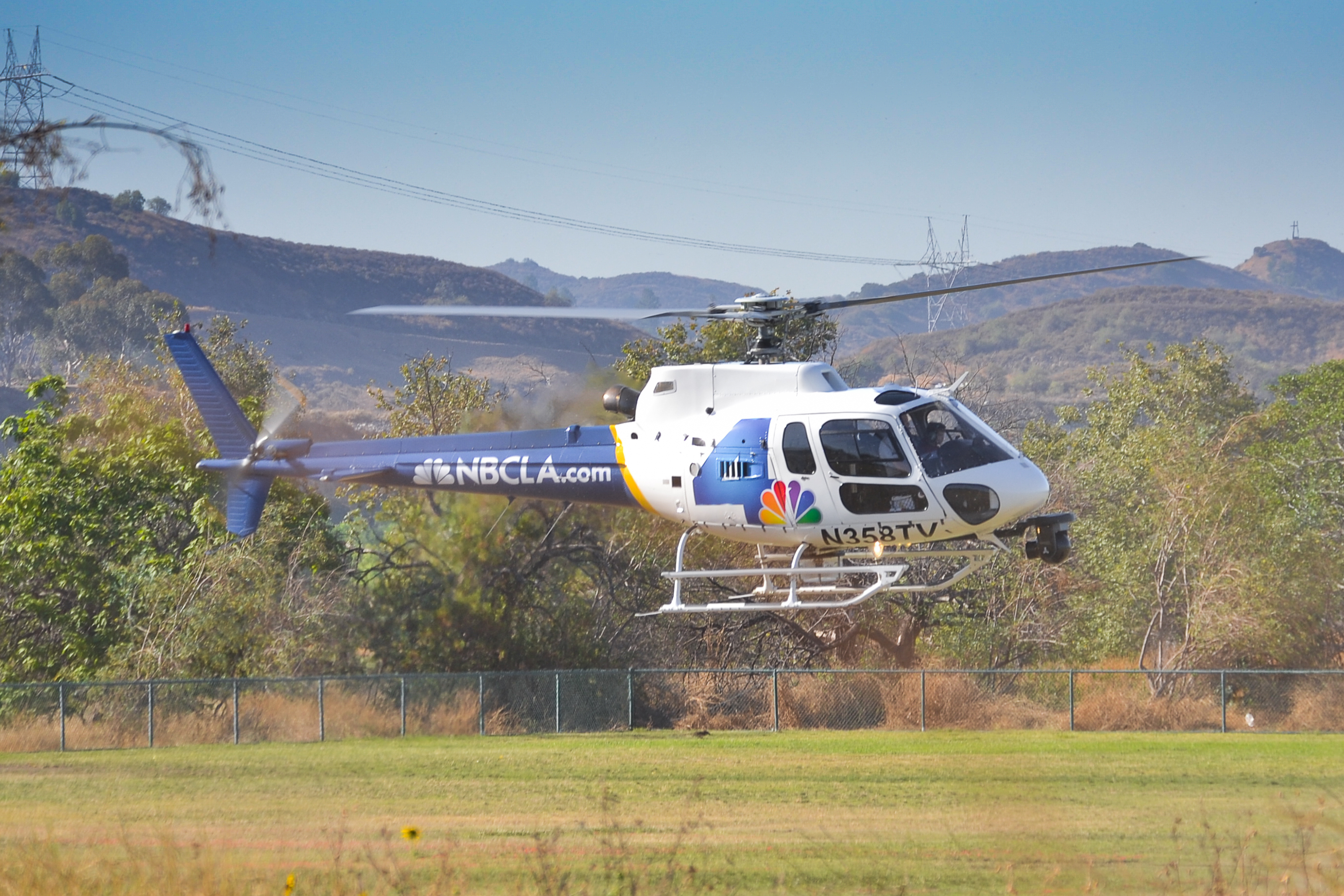
A helicopter used by KNBC-TV [Credit: Shutterstock]
Three people were killed and two others injured Tuesday when a news helicopter crashed in Los Angeles while covering a fatal motor vehicle collision.
The helicopter went down in the Chatsworth neighborhood in the San Fernando Valley. According to the Los Angeles Fire Department, two of the deceased were occupants in the helicopter, and the third person was killed on the ground.
KNBC-TV, known locally as NBC4, confirmed Tuesday that the aircraft was used by the station and Telemundo 52 for aerial news coverage.
“We are deeply saddened to share that a helicopter providing aerial news coverage for NBC4 and Telemundo 52 was involved in a fatal accident in Los Angeles on Tuesday evening,” the two channels said in a statement. “We extend our heartfelt condolences to the families, friends, and colleagues of those who lost their lives.”
KNBC identified the dead on board as Eliana Moreno, an aerial photojournalist, and pilot George Marciniw. Both were employees of Angel City Air, which operated the helicopter.
The person who was killed on the ground has not been identified.
The two injured individuals were hospitalized, and their conditions were not immediately clear Wednesday morning.
The helicopter crashed near two commercial buildings and exploded, setting several nearby cars and storage containers on fire. Firefighters responded to the scene and put out the blaze.
According to the Associated Press, the chopper was covering a collision involving an SUV and a city bus that killed at least two people and injured six.
The FAA and National Transportation Safety Board are now investigating the incident.
Zach Vasile is a writer and editor covering news in all aspects of aviation. He has reported for and contributed to the Manchester Journal Inquirer, the Hartford Business Journal, the Charlotte Observer, and the Washington Examiner, with his area of focus being the intersection of business and government policy.
Student pilot uses a checklist during preflight process. [Credit: Meg Godlewski]
Question: I am working on my multiengine commercial pilot certificate at a Part 61 school. The checklist for the airplane, a 1959 Beech Travel Air, was getting kind of ragged, so I created a new one copying the information out of the aircraft owner’s manual and the serial number specific Airplane Flight Manual [AFM]. The one I made has larger print and is laminated, organized just like the pages of the AFM, and has a section for basic maneuvers in addition to the rest of the required pages. My MEI [Multi-Engine Instructor] says I can’t use it because it isn’t an FAA-approved checklist, and if I try to use it on the check ride, the DPE will fail me. Is this accurate?
Answer: According to the FAA, Part 121 and 135 operators must submit cockpit checklists to the agency, and it must approve them as part of their operating manual.
However, a spokesperson from the agency says the “FAA does not approve general aviation pilot checklists. Rather, pilots must operate the aircraft in accordance with the operating limitations specified in the approved Airplane Flight Manual (AFM), Rotorcraft Flight Manual (RFM), markings, and placards.”
As far as the check ride goes, the FAA provides some guidance.
“In FAA practical tests for pilots, the Airman Certification Standards (ACS) or Practical Test Standards (PTS) require applicants to use an appropriate checklist. Applicants operating under Part 91 can use manufacturer-supplied or commercial off-the-shelf checklists, or personally developed checklists provided they accurately reflect the operating limitations and procedures in the aircraft’s AFM or RFM.”
Ask us anything you’ve ever wanted to know about aviation. Our experts in general aviation, flight training, aircraft, avionics, and more may attempt to answer in a future article. Email your questionshere.
Meg Godlewski has been an aviation journalist for more than 24 years and a CFI for more than 20 years. If she is not flying or teaching aviation, she is writing about it. Meg is a founding member of the Pilot Proficiency Center at EAA AirVenture and excels at the application of simulation technology to flatten the learning curve. Follow Meg on Twitter @2Lewski.
Cover of coffee table book 'Jet Dreams' [Credit: Jessica Ambats]
Here is a collection of editor-recommended aviation products and services that are worth a closer look. From practical tools to thoughtful solutions, this is what caught our eye in the July Issue 972 of the FLYING print edition.
If you're not already a subscriber, what are you waiting for? Subscribe today to get the issue as soon as it is released in either Print or Digital formats.
For more than 80 years, ASA has helped pilots earn their certifications. Products range from knowledge test prep and ground school materials to check ride preparation.
No matter where a pilot is in their journey, Sporty’s offers gift ideas for every aviation enthusiast—from headsets, watches, and kneeboards to fun T-shirts, toys, and more.
Sporty’s Pilot Shop catalog image [Credit: Sporty’s Pilot Shop]
For flexible travelers, empty leg flights offer the luxury of private jet travel at a reduced cost. Enjoy benefits of private aviation for less than a traditional charter.
Trilogy Aviation Group log [Credit: Trilogy Aviation Group]
Pilots looking to elevate their professional style can check out Amberjack. Designed for all-day comfort, these shoes easily transition from the cockpit to the boardroom.
This 216-page coffee table book by FLYING editor-in-chief Jessica Ambats showcases owner-flown jets through dramatic air-to-air photography and inspiring owner-pilot quotes.
Publisher’s note:FLYING may earn revenue from the products available on this page and participate in affiliate programs.
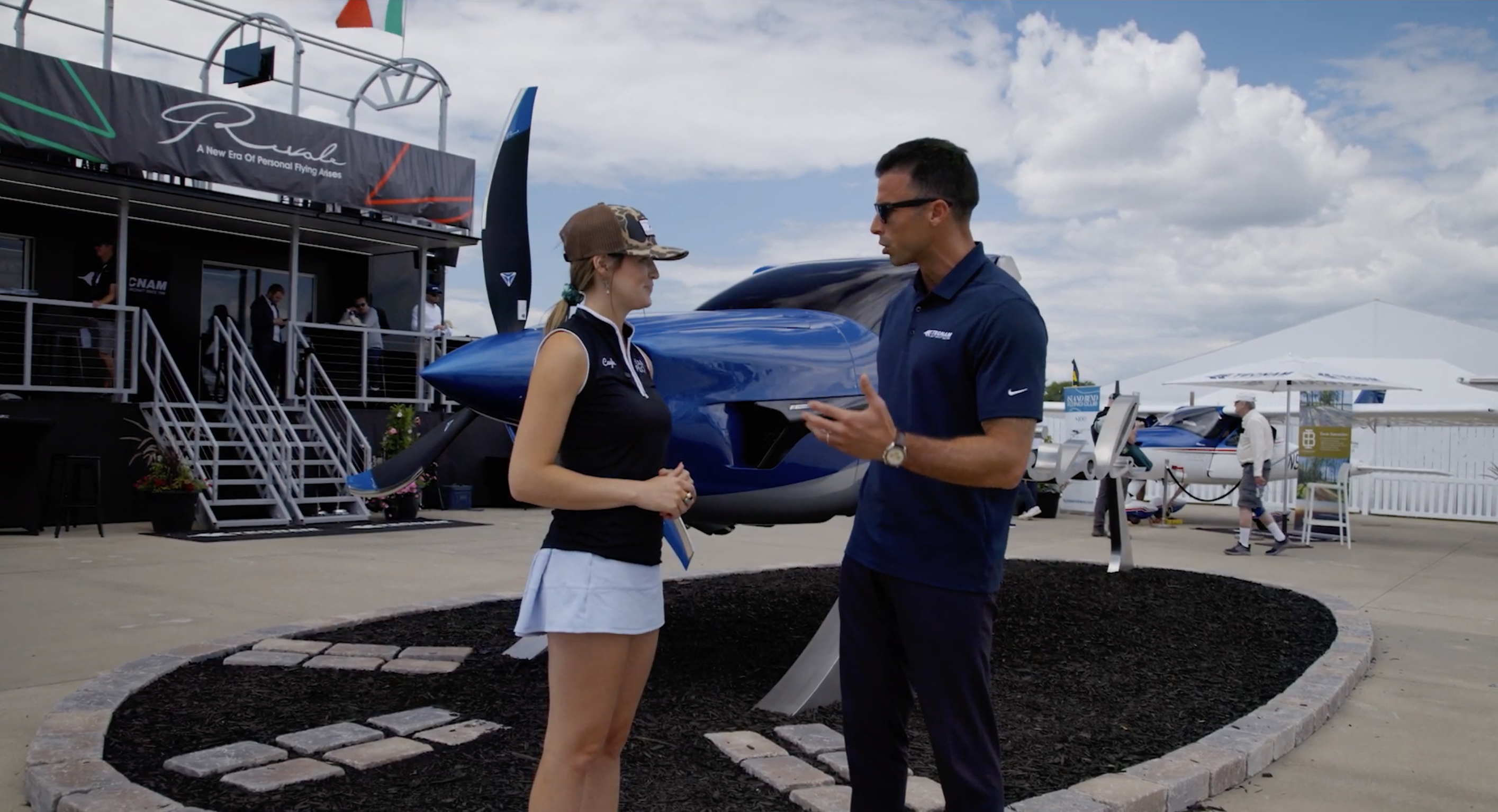
Plane + Pilot magazine’s Cayla McLeod (left) talks with Tecnam’s managing director, Giovanni Pascale in July. [Credit: FLYING]
Rain moved through Wittman Regional Airport (KOSH) on the opening night of EAA AirVenture Oshkosh 2026 back in July, but it didn’t keep anyone away from the Tecnam booth. The Italian manufacturer spent months building toward the debut of a new personal-flying concept.
Plane + Pilot editor-in-chief Cayla McLeod met with Tecnam managing director Giovanni Pascale to walk the display and talk through what, exactly, Tecnam had just shown the world.
“We had a lot of people coming in to discover our new reveal, our new concept, and what Tecnam sees is going to be the future of personal flying,” said Giovanni Pascale.
Tecnam has since confirmed the name behind that concept: Rivale, a nod to the company’s stated philosophy that its only real competitor has ever been itself. The full aircraft isn’t expected to fly until a planned debut at AERO Friedrichshafen, Germany, in April 2027. What Oshkosh crowds got was a preview built to represent the design language of Tecnam’s next phase.
According to Giovanni Pascale, the display was designed to reflect Tecnam’s obsessive attention to detail. The company is pursuing more than new lines and styling for aircraft of this size but a different way of approaching the market altogether.
“Our benchmark is completely different from what you can actually see on the market,” said Giovanni Pascale. “Our intention is to become the benchmark when it comes to personal flying.”
Even in mock-up form, the installation carried real hardware.
“Looking at the aircraft today, we’re showing off a beautiful MT-Propeller custom-made for the Tecnam Rivale,” Giovanni Pascale said.
The mock-up is powered by a custom-built version of the CD-300 under the hood, paired with avionics still hidden from view: Garmin’s latest G2000 Prime suite.
The CD-300 is a 300 hp twin-turbocharged V-6 diesel from Continental running on jet-A, and the G2000 Prime is itself brand new. It’s Garmin’s first flight deck to bring dual 14-inch touchscreens, Autoland, Smart Glide, and other turbine-level safety features into a high-performance piston airplane. Rivale, Giovanni Pascale said, will be the first aircraft certified with it.
The sculpture renders the front section of a fuselage in stainless steel, planted at the center of the booth like a monument. It is, by weight, nearly as much a statement of intent as the aircraft it previews.
“We’re looking at about 1,500 kilograms worth of materials here,” Giovanni Pascale said. “We call it ‘the sculpture’ because it took us time and effort to realize. With the logo itself, we wanted to demonstrate the level of craftsmanship that can be provided and how a simple logo can become monumental.”
It’s a fitting emphasis for a company built on family craftsmanship.
Tecnam was founded in 1986 by brothers Luigi and Giovanni Pascale, after the pair’s earlier firm, Partenavia, was nationalized by the Italian government. Four decades later, Tecnam has delivered more than 8,100 aircraft to over 65 countries from its Capua, Italy, headquarters.
Aside from the Rivale installation, Tecnam also displayed three production aircraft nearby, starting with the P2012 VIP.
Tecnam’s iconic twin engine was mainly made for regional commercial operations and regional public transportation, according to Giovanni Pascale. With the VIP version, he said, Tecnam wanted to develop a unique version made not only for charter companies and private owners.
Compared to the standard version, the P2012 VIP is a 6+2 configuration. Giovanni Pascale described a cabin built around flexibility: A seventh seat can replace the entry galley’s fridge and espresso machine, a rear restroom is available as an option, the windows dim to adjust natural light, and the seats themselves recline, slide, and rotate on six points of movement.
“We’re trying to provide the maximum level of comfort within a twin-piston engine,” Giovanni Pascale said. “And I do believe that a configuration of this kind is unique within the general aviation market, especially for aircraft of this type.”
Up front, the VIP cabin gives way to a more familiar Tecnam workhorse setup. The showcased example was equipped with Lycoming TEO-540 FADEC engines.
“As you can see in the front, there’s no mixture control,” Giovanni Pascale said. “We have the EECS system that monitors engine activity. It’s a very big step forward. What Lycoming did with the TEO-540 version is outrageous, and it’s an incredible result. The engines are very reliable and very well protected.”
From there, the tour moved to the P2010 Gran Lusso, Tecnam’s single-engine luxury model.
“We decided to go for this configuration to meet the many private customer needs,” Giovanni Pascale said. “At the very beginning, the Gran Lusso was developed with the Continental CD-170 only—the full-FADEC engine from Continental, jet fuel or diesel powered, single-lever FADEC system. Right now, the P2010 Gran Lusso IO-390 can also be equipped with a Tecnam air conditioning system, fully integrated with the aircraft. That is going to provide you with a great environment, especially for very hot weather.”
Cruise speed lands around 135 knots, with the panel built around Garmin’s G1000 NXi, a GFC 700 autopilot, and a center-mounted FMS. The Gran Lusso on display also carried one of Tecnam’s newer avionics updates.
“This was one of the latest modifications we applied,” Giovanni Pascale said. “We moved from the Mid-Continent MD302 to the GI 275.”
Behind the front seats, he added, the space is very generous. For flight mode, the seats can be configured to give ample room for pilots and passengers.
The walkthrough closed at the P2006T, Tecnam’s twin-engine trainer, sitting alongside a preview of the aircraft’s Next Generation update.
“This one is super roomy,” Giovanni Pascale said. “The big advantage of the Next Generation version is the comfort of the extra door on the right side. The feel and look of the Next Generation is completely different.”
According to Giovanni Pascale, the P2006T NG’s real selling point is that it doesn’t fly like people expect a twin to fly.
“When you’re talking about twin engines, most people think about how challenging they are to fly,” he said. “I personally invite a lot of people to try and fly the P2006 because it’s like flying one of our LSAs. It’s extremely easy. The management of the Rotax engines is super easy and super safe. The pilot workload is not the same as when you’re flying an old legacy twin engine. That’s a very good fit for many private pilots, but especially a very good fit for many flight training organizations.”
The P2006T NG runs on twin Rotax 912 iSc3 engines and has been marketed by Tecnam as a complex-training platform (complete with retractable gear, constant-speed props, and multi-engine time) built around the operating economics of a single.
“There’s going to be another milestone next year, so we’re looking to present the full aircraft,” Giovanni Pascale said of the Rivale. “Stay tuned, because many details are going to arrive, and the aircraft is just behind the door.”
Matt Herr develops sponsored content for clients at Firecrown Media. He is a gearhead and motoring enthusiast with experience in tech, freight and manufacturing. He spends his free time hiking with his wife, son and German shepherds, or reading and writing hobby pieces.
FAA Administrator Bryan Bedford testifies during a House hearing on Tuesday. [Credit: C-SPAN]
FAA Administrator Bryan Bedford on Tuesday defended schedule slips in the agency’s air traffic control (ATC) modernization effort. Bedford also asked Congress for “at least $10 billion” more to fund the effort but would not commit to giving ATCs a 3.8 percent raise provided for by legislation passed earlier this year.
Bedford’s remarks before the House Appropriations Committee’s subcommittee on Transportation, Housing, and Urban Development illuminated the challenges the FAA faces in delivering what he called “one of the most ambitious and critical infrastructure projects of our time.”
The administrator warned that Congress’ failure to fund remaining portions of the effort, also known as the Brand New ATC System (BNATCS), could “see the [National Airspace] System slip into higher delays, higher cancelations, and a less resilient airspace.”
Congress in 2025 awarded the FAA $12.5 billion for initial BNATCS work, and the House committee in June approved a $4 billion allocation to the agency’s facilities and equipment (F&E) account. But Bedford repeatedly called the $12.5 billion a “down payment” and said the F&E funding won’t be sufficient, urging Congress to approve further funding.
ATC Modernization Faces Schedule Slips
Bedford provided the latest numbers on BNATCS’ progress, which so far are a mixed bag.
The administrator said 64 percent of legacy telecommunications wiring has been upgraded from copper to fiber, satellite, or wireless connections. He added that over 402 radio sites have been converted to modern equipment, 22 towers have transitioned from paper to electronic flight strips, surface movement radars have been deployed to five major airports, and 100 surface awareness systems are installed nationwide.
Bedford said the telecommunications transition is actually ahead of schedule. The original plan was to complete the work by December 2027, but he said the FAA now expects that to happen in September.
However, the administrator said there was “bad news” on the radar replacement front. $3.5 billion of the $12.5 billion that Congress allocated to BNATCS covers facilities construction, including radar replacement. Bedford said supply chain issues, including those stemming from the White House’s tariff regime, have “slowed us down.”
He said it would be safe to assume that the radar replacement schedule will slip from June to September 2028.
“I hope we can recover that and bring it back in, but we are encountering some challenges there,” Bedford told committee members.
The FAA aims to complete Phase 1 of BNATCS, which largely comprises physical infrastructure upgrades, by 2028. But Bedford said that “some of the slipping that we’re seeing on radars looks like it may put pressure on delivering that schedule.”
The agency plans “even greater deployments in fiscal [year] 2027,” the administrator said. But completing them on schedule will require more money.
Funding the Effort
Bedford said the FAA expects to “overspend” the congressionally allocated $12.5 billion to complete Phase 1 of BNATCS. He said the funding is “allowing us to build a solid foundation” but that the agency’s fiscal year 2027 (FY27) budget request will provide “necessary follow-on funding to finish phase 1.”
The House Appropriations Committee’s Transportation, Housing and Urban Development, and Related Agencies Appropriations Act, which the Senate must still approve, calls for $22.7 billion for the FAA in FY27. About $4 billion is intended for the agency’s F&E account, which Bedford said is supplementing Congress’ $12.5 billion.
Of that $4 billion, he said $1.5 billion is earmarked for ATC modernization. The rest is being used to sustain legacy ATC systems.
“We’re spending the majority of our budget keeping the lights turned on,” Bedford said.
Specifically, the $1.5 billion is supporting telecommunications modernization, a new FAA Enterprise Network Services (FENS) system, and initial work on a common automation platform (CAP) to unify the FAA’s STARS and ERAM systems. But it won’t cover Phase 2 of BNATCS, for which the FAA does not have estimated start or completion dates.
Among the Phase 2 upgrades are a modern traffic flow management system, the CAP, and “strategic planning tools” such as Strategic Management of Airspace Routes and Trajectories (SMART)—an AI-based system designed to ease disruptions through predictive power. Bedford said those activities will require at least a further $10 billion.
“[Phase 2 is] the most difficult element of modernization to actually wrap your brain around,” he said. “We have to rethink entirely the tools that we have.”
However, Bedford would not commit to a pay raise for the controllers who will ultimately use those tools.
Staffing the System
During the hearing, committee members raised concerns about the FAA’s chronic ATC shortage, which stands at about 3,000 certified professional controllers (CPCs). The agency’s FY27 budget request includes about $95 million to hire 2,300 controller trainees, though they will need to graduate from the FAA Academy in Oklahoma and complete facility-specific training before overseeing airspace.
To help combat the shortage, the House in April approved a previously passed Senate bill that provides for a 3.8 percent pay raise for controllers and their supervisors and managers.
But Bedford would not commit to awarding it. He repeatedly cited the bill’s provision that the raises should be implemented “only to the extent the Administrator determines…that improvements in workforce scheduling, staffing utilization, or other operational efficiencies are achieved that contribute to addressing workforce shortfalls.”
Bedford said he has the “utmost respect” for controllers but that “Congress asked me to look for ways to improve staffing efficiency,” contending that raises are not the only way to do so.
“If we could get it, then we would do the [3.8] percent [raises] as part of that,” he said.
Representative Mike Quigley (D-Ill.) responded that “if they heard what you just said, they wouldn’t think that you’re showing them the full respect.”
Representative Jim Clyburn (D-Calif.) added that he believed Bedford is “taking some discretion not intended in the law.”
The administrator opined that making ATC schedules more efficient could address shortages. He estimated, citing internal data, that the time controllers spend separating traffic has fallen from five hours to four—out of an eight-hour shift—for the past 15 years. He said that “we don’t know for sure what they’re doing [the rest of the time and that there are] controllers in facilities with nothing to do.”
“I think that you need to look down and talk to those people that you are in charge of,” said Representative Bonnie Watson-Coleman (D-N.J.). “You need to have a better understanding of what their concerns are and how you could improve the morale there, as well as the safety and security in our airspace.”
Jack is a staff writer covering advanced air mobility, including everything from drones to unmanned aircraft systems to space travel—and a whole lot more. He spent close to two years reporting on drone delivery for FreightWaves, covering the biggest news and developments in the space and connecting with industry executives and experts. Jack is also a basketball aficionado, a frequent traveler and a lover of all things logistics.
Sign-up for newsletters & special offers!
Get the latest stories & special offers delivered directly to your inbox.