












![[Credit: Airhart Aeronautics]](https://www.flyingmag.com/wp-content/uploads/2026/06/L1020089.jpg)



Every July, more than 650,000 pilots and aviation enthusiasts descend on Wittman Regional Airport (KOSH) in Oshkosh, Wisconsin, for EAA AirVenture, the largest aviation gathering on Earth. Among the exhibitors at this year’s event, July 20-26, is a Long Beach, California-based startup that believes the general aviation cockpit is long overdue for a fundamental rethink.
Airhart Aeronautics is bringing a production-equipped customer aircraft, a hands-on flight simulator, live podcast recordings, and dedicated programming for aspiring aviators to Booth No. 439. Airhart wants you to fly what’s next—today.
“This is the type of system you need to see in order to appreciate its capabilities,” said Nate Thuli, president of Airhart. “When you experience the intuitive user interface, it comes to life.”
Airhart’s Oshkosh appearance is a public invitation to experience a product that could reshape how people learn to fly, how they interact with their aircraft, and ultimately, who gets to be a pilot at all.
The Problem Airhart Is Solving
The numbers tell a familiar story. Roughly 90 percent of Americans over 16 hold a driver’s license. The percentage who hold a pilot’s license barely registers as a rounding error. Of those who do start flight training, nearly 60 percent never finish. The reasons are well documented and include cost, complexity, and a cockpit experience that, in many GA aircraft, hasn’t fundamentally evolved in generations.
When Airhart co-founder and chief technology officer Nikita Ermoshkin learned to fly, he quickly realized that much of his time was spent managing avionics systems and learning how to interpret all of the information they presented. The standard interface was inaccessible, and its shortcomings were dangerous.
“Nikita knew from his experience with SpaceX that there had to be a better use of engineering to address the user experience,” Thuli said. “We looked at what other industries have been doing to update design language and experience. A lot of cutting-edge concepts can be translated into aviation, but the only way to make meaningful improvements is through clean-sheet, vertically integrated, ground-up engineering.”
What Visitors Will Experience at Booth No. 439
The centerpiece of Airhart’s AirVenture presence is a real customer aircraft with the company’s avionics suite installed and flying. That aircraft is owned by Linda Sollars, a former JetBlue Airbus captain with more than 30,000 flight hours who previously flew her Sling High Wing from South Africa to Oshkosh, becoming the first person to complete that journey in the aircraft type. Having Sollars’ airplane on display is proof that this is not a prototype behind glass. It’s a production system installed in a real-world aircraft owned by a professional pilot.
Attendees can also sign up for allocated simulator time slots to fly the Airhart system themselves. The simulator puts visitors in the left seat with the full avionics interface, demonstrating the context-aware features that define Airhart’s approach.
Airhart’s booth will also host live recordings of the What Follows podcast along with at least one additional podcast recording with featured guests. There will be programming specifically oriented toward younger audiences, kids, and people considering getting into aviation for the first time. Getting new blood into aviation is what EAA is all about, which is why it offers free admission to attendees 18 and under.
A System Designed to Fly With You, Not Against You
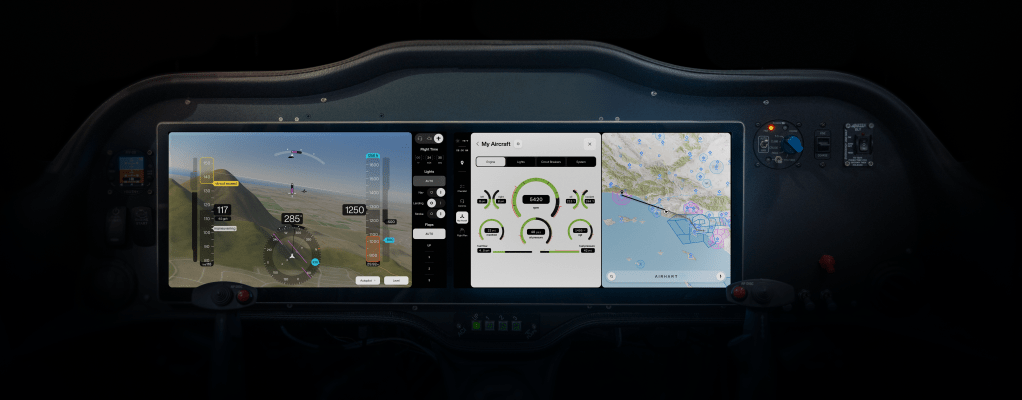
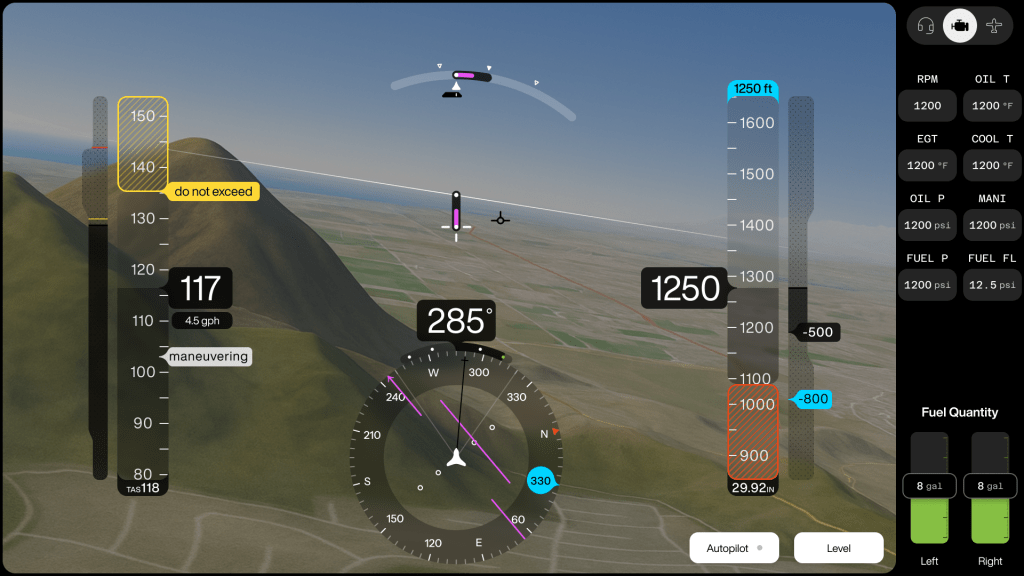
Airhart’s core product, which is now shipping and being installed, is a context-aware avionics suite built around dual 14-inch touchscreen displays. The software layer is based around a computational engine that monitors phase of flight, pilot inputs, intercom and radio communications, and aircraft state to deliver real-time guidance.
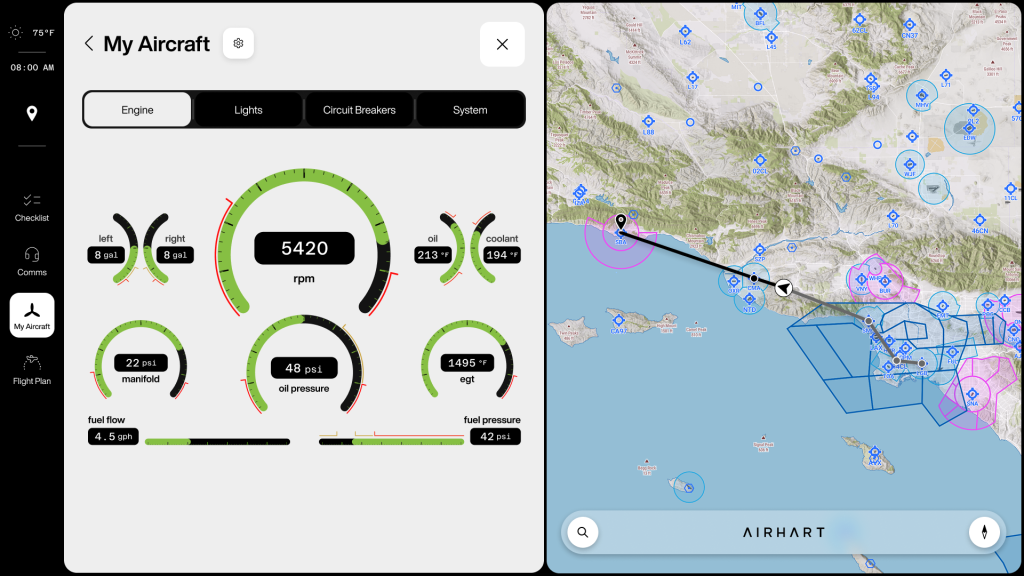
Thuli compared the experience to flying with a seasoned instructor in the right seat.
“Think about what a good instructor would be doing—paying attention, noticing the things you do well, noticing mistakes you make, and letting you know when you’re making one,” Thuli said. “Our system behaves the same way.”
One example: On approach to land, some pilots misjudge when to begin the flare due to visual illusions caused by a runway that’s wider or narrower than what they’re accustomed to. The system recognizes the approach profile and sends a nudge. “Our system is not confused by the same visual illusions,” Thuli said.
Context-aware checklists are another feature visitors will see in action at the booth. Rather than requiring pilots to hunt for the appropriate checklist, the system identifies the phase of flight and presents it automatically. If the pilot opts in, the system runs through checklists on their behalf.
A post-launch software update will introduce AI-equipped radios that continuously transcribe radio traffic, identify transmissions directed at the pilot, and surface relevant instructions visually. Using the Airhart flight controller, the pilot can acknowledge and execute an ATC instruction without removing a hand from the stick.
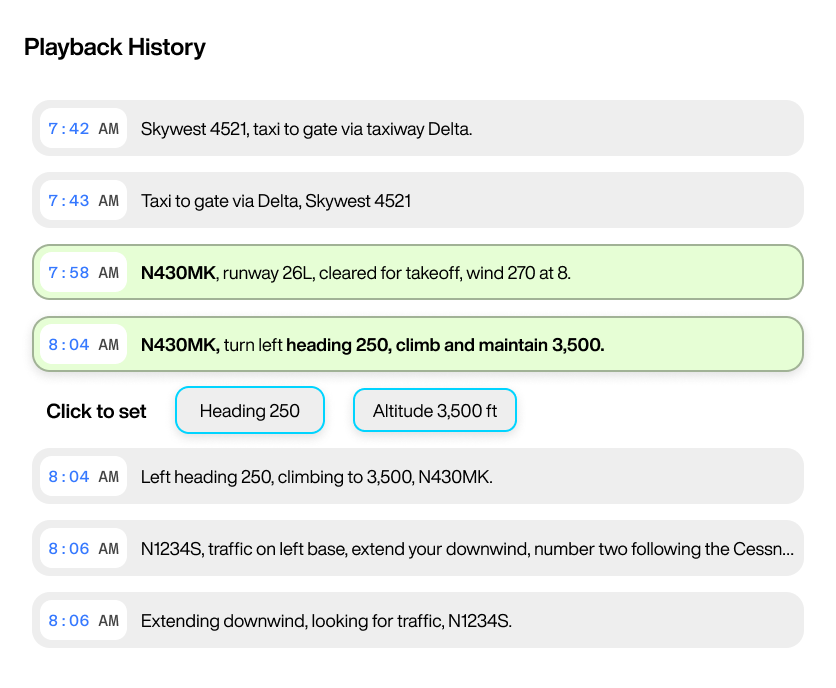
“No more scribbling down frequencies or instructions and reading them back,” Thuli said. “The system will even perform the readback to ATC on the pilot’s behalf, if desired.”
Where the Roadmap Goes From Here
Airhart is executing a three-phase plan. Phase 1 is the context-aware avionics now available to pre-order. Phase 2 couples the avionics with proprietary fly-by-wire flight controls that replace mechanical linkages with in-house-developed servos and simplified flight-control logic. Phase 3 is a clean-sheet aircraft designed from the ground up around the system, targeted to enter development in 2027.
“There are only so many improvements you can make with avionics and controls alone,” Thuli said. “To fully realize the vision, you have to address airframe limitations.”
The Airhart system can score pilot readiness across all phases of flight, dynamically updating as variables like weather, traffic, and pilot performance change in real time. Data from Airhart’s April 2026 test flights at Long Beach validated the thesis that the volume and richness of in-flight data the system generates is sufficient to make real-time decisions about the state of the flight.
That philosophy extends to training. Thuli argues that even Phase 1 materially shortens the learning curve for student pilots by reducing workload and letting them focus on decision making rather than system management. Asked about the concern that automation erodes stick-and-rudder skills, Thuli drew a parallel to the automotive industry.
“What does it mean to drive a car in 2026 compared to 1986? There are skills that have gone away. Parallel parking without sensors or cameras, driving a manual transmission on a hill, threshold braking before ABS,” he said. “The real question is, what skills must be preserved, and what is acceptable to automate simply because automation makes it safer?”
See It for Yourself
Airhart’s answer to that question is exactly what the company wants the aviation community to engage with at Oshkosh. The booth is designed to be interactive, immersive, and experiential, built around the conviction that the future of aviation is something you need to feel firsthand.
Attendees can visit Airhart at Booth No. 439 at EAA AirVenture Oshkosh on July 20-26, 2026. Simulator time slots are available by reservation. More information, including preorder details for the Phase 1 avionics suite is available at airhartaero.com.

