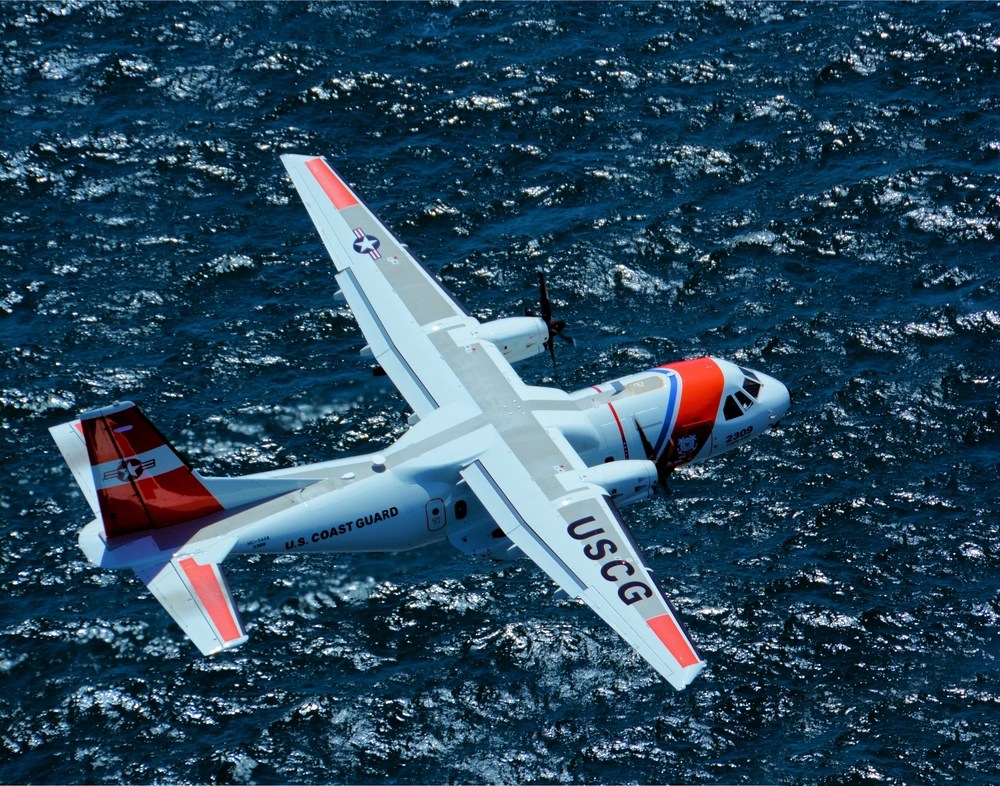
A Coast Guard HC-144 Ocean Sentry was deployed in the search. [Credit: U.S. Coast Guard]
Four bodies were recovered Tuesday amid the search for a Piper Seneca that disappeared while flying from the Bahamas to Florida on Labor Day.
Officials with the Royal Bahamas Defense Force and family members of the airplane’s four American occupants confirmed to national and local media outlets that there were no survivors of the apparent crash and that the remains of the occupants are now in police custody.
On board the Piper were Mario Lamar, 80, the pilot, his wife Lily Lamar, 79, and their grandchildren, Christian Sosa, 22, and Sophie Sosa, 28. The family has a vacation home in the Bahamas and often flew the route between the islands and Miami.
“It is with profound sadness that we confirm all four of our family members have been found deceased,” relatives said in a statement. “The search and recovery mission was conducted alongside family members and civilians who answered our call for help. Our relatives ultimately located our loved ones and had to bring them aboard their own vessels. We are now in communication and working with the U.S. Coast Guard to bring our loved ones home safely and with dignity.”
According to authorities, N212ML, a twin-engine aircraft, took off from Great Harbour Cay Airport (MYBG) in the Berry Islands on Monday at approximately 11:12 a.m. local time bound for Miami Executive Airport (KTMB).
According to FlightAware, the filed IFR flight plan indicates an airspeed of 173 mph and an altitude of 8,000 feet. The route put the distance at 262 miles as the pilot filed to FOWEE.FOWEE2, a Standard Terminal Arrival Route used to get into airports in the Miami region.
Air traffic control reported losing contact with the airplane when it was about 13 miles west of Andros Island.
Graphical data obtained from FlightAware shows thunderstorms in the vicinity and the aircraft’s speed fluctuating as it climbed to 10,000 feet then entering a steep descent. Radar contact was lost at 3,700 feet. A review of the aircraft’s track on FlightAware shows a circle then an abrupt termination of the flight.
The U.S. Coast Guard, using an HC-144 Ocean Sentry aircraft, was assisting the Royal Bahamas Defence Force with the search.
Meg Godlewski has been an aviation journalist for more than 24 years and a CFI for more than 20 years. If she is not flying or teaching aviation, she is writing about it. Meg is a founding member of the Pilot Proficiency Center at EAA AirVenture and excels at the application of simulation technology to flatten the learning curve. Follow Meg on Twitter @2Lewski.
NTSB investigators examine the wreckage field Monday after a Boeing 767 cargo aircraft operating as 21 Air Flight 7598 overran the end of Runway 30 while landing Sunday at Miami International Airport. [Credit: NTSB]
NTSB Chairwoman Jennifer Homendy led the briefing and described the accident scene as “utter devastation,” with debris from the aircraft and two vehicles it struck spread “everywhere.” Homendy said that investigative teams had yet to access the aircraft, a Boeing 767-33A operated by Miami-based 21 Air, due to ongoing victim recovery operations.
Homendy said the site was “not a completely safe scene” for investigators and that it is “going to take time” before the jet is thoroughly examined and removed.
She added that teams recovered the jet’s flight data recorder (FDR) and cockpit voice recorder (CVR) and sent them to NTSB headquarters for analysis Monday evening. The NTSB chair laid out the investigation’s next steps over the coming days, explaining that investigators will break into teams to examine various aspects of the accident.
Homendy emphasized that the agency would not be determining the accident’s probable cause while personnel remain on scene for about a week. That, along with safety recommendations and other findings, will come in a final report once the investigation concludes.
“We are deeply committed to our duty, our responsibilities as an investigative agency, to determine how this accident occurred, why it happened, with one goal in mind: safety,” Homendy said. “And that’s to prevent it from happening again.”
She said Monday that the NTSB plans to hold a second news briefing Tuesday.
Initial Findings
Homendy said that the Boeing jet overran Miami International’s Runway 30 by about 1,300 feet on Sunday around 1:53 p.m. EDT. Local officials confirmed that five people died in the crash and another five people were injured, with three of them in critical condition.
Per Homendy, the 767-33A struck navigational aids and equipment before impacting a van with seven occupants. The van was operated by a cleaning company contracted by airlines. The jet then broke through a perimeter fence and struck a Toyota SUV before continuing into the grass and impacting another fence.
Homendy said all victims were in the cleaning company van, which was within airport boundaries, and SUV, which was outside the airport. She declined to comment on the status of the Amazon cargo jet’s pilot and copilot.
“Our deepest sympathies remain with the families, loved ones, and all those affected by this devastating tragedy,” Amazon spokesperson Kelly Nantel said in a statement Tuesday. “We’ll fully cooperate with [the NTSB] and support any other investigating authorities, and we’ll also continue to coordinate with 21 Air, which operated the flight.”
The NTSB sent a “go team” to Miami International, and a team of 32 personnel began arriving around 6 p.m. EDT Sunday. More arrived overnight and Monday. Homendy said she first visited the scene Monday morning, walking the length of the runway and past the impacted vehicles to the aircraft’s resting place.
She said the local FBI office was among first responders to the scene. The NTSB has a memorandum of agreement with the FBI, which she called a “force multiplier” that has been “extremely supportive over the years in helping us collect evidence in investigations.”
Homendy said there was “fuel everywhere” and that crews were continuing to remove it from the accident aircraft and recover victims. She described tire marks extending from the paved runway surface into the grass, leaving “debris everywhere.” The cleaning company van, she said, was “torn apart.”
“You can see components from vehicles, both passenger vehicles and the aircraft itself,” Homendy said, including “components of the navigational aids.”
The NTSB as of Monday had not yet accessed the Amazon jet and said that would only happen after victims are recovered.
“We have begun collecting investigative information,” Homendy said. “We do have data and information, but we are a very thorough, fact-based agency, and we don’t release that information until we have verified it…which we hope to do with much of the information [Tuesday].”
Aircraft structures investigators will “go in and begin documenting the scene and look at the airframe wreckage” once recovery operations are complete, she added.
The jet was arriving from San Juan, Puerto Rico, on its third leg of the day. According to FAA records, it was manufactured in 1994. Investigators plan to examine the aircraft’s age and many other factors in the coming days.
Next Steps
Homendy said the NTSB’s 32-person investigative team will divide and conquer, splitting into groups that will focus on certain aspects of the accident.
Airport Lacked EMAS
One team will examine airport survival factors, including Notices to Airmen (NOTAMs) issued around the time of the event, runway design, fire and rescue procedures, and Runway 30’s “lack thereof” of an Engineering Materials Arrestor System (EMAS).
The EMAS, as Homendy described it, is a crushable, lightweight material designed to safely stop an aircraft at the end of the runway. It is intended for runways that have a runway safety area less than 1,000 feet long.
The NTSB chair estimated that the system is installed at about 70 U.S. airports. A “key part of our investigation,” she said, will concern whether EMAS could have prevented Sunday’s accident and whether it should be installed universally.
Miami International Airport in a statement to the Miami Herald said its Runway 12/30 has the “full 1,000-foot Runway Safety Area mandated by the FAA.” The airport said EMAS is “generally used at airports where space constraints prevent a full safety area from being provided.”
“No U.S. airport has EMAS at a runway end that also maintains the full, unobstructed 1,000-foot safety area,” the statement read. “EMAS is intended as an alternative, not as an additional layer on top of one.”
Examining the Aircraft and Flight Crew
Homendy said another team will look at the history of the accident aircraft and the experience and training of its flight crew, as well as 21 Air’s policies, procedures, and “contractual relationship with Amazon.” That will include determining “who does what” and “what safety provisions might be in any sort of contracts,” she said.
The NTSB chair said the agency is hopeful that it can share more about the flight crew’s experience Tuesday. She said Monday that it had not yet interviewed them or “crewmembers of flights that may have landed prior to this flight,” which could help determine why the pilots decided not to go around.
Homendy said determining whether the flight crew lacked certain information, such as weather data, will also be “something that we look at.” Specialists will analyze the Amazon jet’s performance as well as forecast and actual weather conditions on landing.
Asked about the aircraft’s speed at landing, Homendy said the NTSB has data from “various sources” that it wants to confirm with the recovered flight data recorder before sharing publicly, hopefully on Tuesday.
Other NTSB teams will examine the FAA’s oversight of the operators involved in the incident, the jet’s engines, and its “hydraulic, electrical, navigational, pneumatic, and associated systems,” including instruments and flight controls. They will also analyze air traffic services, radar data, and air traffic controller-pilot communications.
Homendy on Monday estimated that the NTSB has conducted more than 3,000 runway excursion investigations since 2008. It is “too early,” she said, to say whether past recommendations may have been applicable to Sunday’s accident, emphasizing that the investigation remains in the “fact-finding phase.”
“We have a list of what those past recommendations are and the status of those recommendations, but it’s too early to say whether they were a factor here,” Homendy said, though she added that “our recommendations must be implemented or we’re going to be here again.”
The NTSB has asked members of the public with photos, video, or other information that could be relevant to the investigation to contact witness@ntsb.gov. Homendy cautioned that people sharing fake imagery has hindered previous investigations but said the public has been “very helpful” in the past.
Jack is a staff writer covering advanced air mobility, including everything from drones to unmanned aircraft systems to space travel—and a whole lot more. He spent close to two years reporting on drone delivery for FreightWaves, covering the biggest news and developments in the space and connecting with industry executives and experts. Jack is also a basketball aficionado, a frequent traveler and a lover of all things logistics.
Here is a collection of editor-recommended aviation products and services that are worth a closer look. From practical tools to thoughtful solutions, this is what caught our eye in the June Ultimate Issue 971 of the FLYING print edition.
If you're not already a subscriber, what are you waiting for? Subscribe today to get the issue as soon as it is released in either Print or Digital formats.
Searching for a high-quality model of an aircraft? AirModels offers military, helicopters, spacecraft, and modern airlines in their individual livery. They also have accessories and display mats to showcase your model.
Whether you use a tablet or paper for your flight planning, you’re going to need a kneeboard. Flight Outfitters provides designs that can protect your electronic device both in and out of the cockpit.
John and Martha King have been teaching the world to fly for more than 50 years. If becoming a flight instructor is on your radar, you likely won’t find more accomplished pilots or skilled educators than the Kings.
Sometimes you don’t even need to leave your house to find a flight experience. GTR Simulator offers a variety of flight simulation products, some FAA certified, with others designed specifically for fun and games.
For those times you would rather someone else do the flying, Magellan Jets is an option with charter aircraft and experienced crews to get you from here to there in style and comfort.
Magellan Jets logo [Credit: Magellan Jets]
Publisher’s note: FLYING may earn revenue from the products available on this page and participate in affiliate programs.
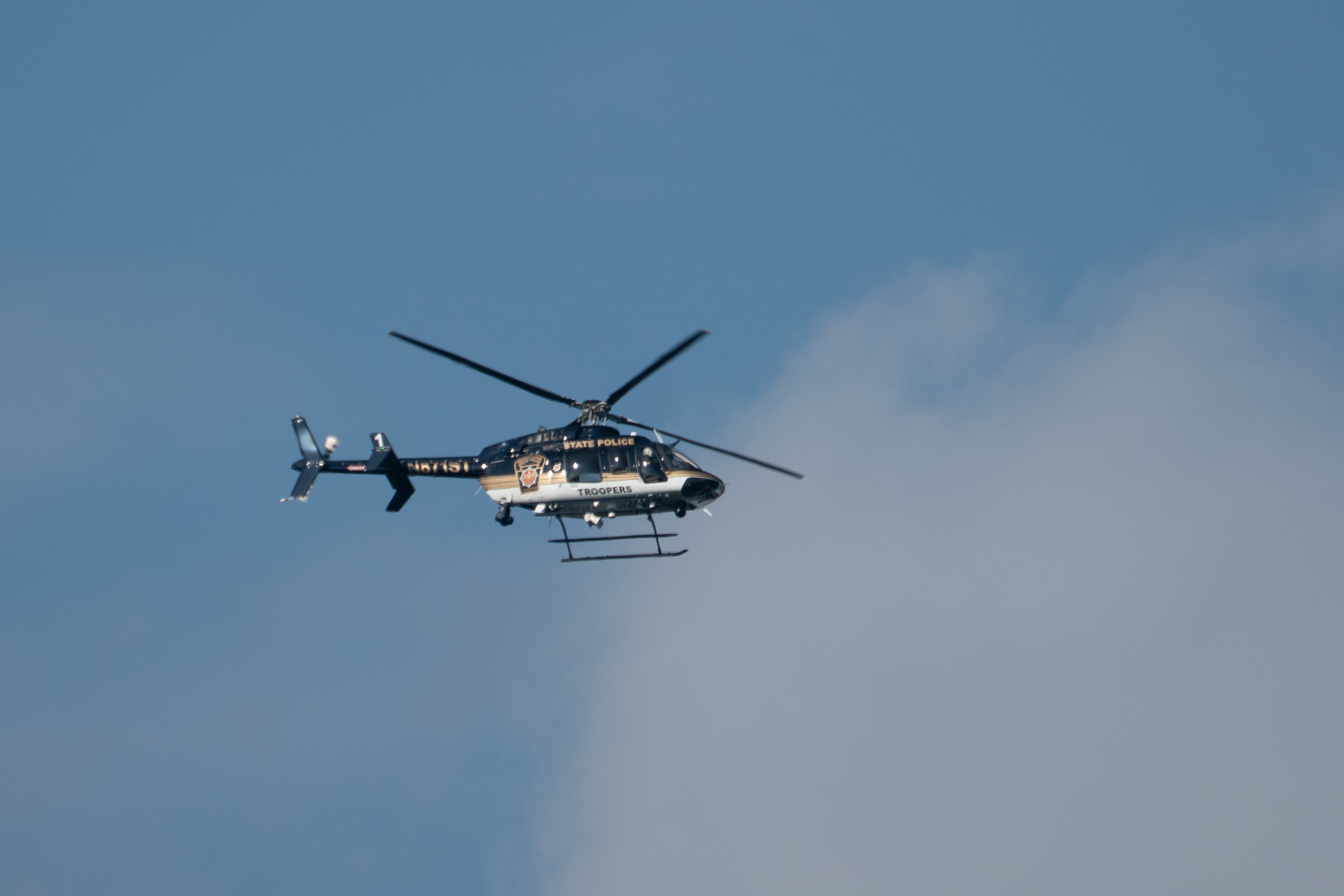
A Pennsylvania State Police Bell 407 was struck by Cessna 150 flying in the pattern at a nontowered airport west of Harrisburg. [Credit: Shutterstock]
The pilots of the Cessna 150 and the state patrol Bell 407 helicopter that collided in flight near Carlisle, Pennsylvania, were in radio contact prior to the accident, according to the preliminary report released by the National Transportation Safety Board. The accident occurred August 19 over Carlisle Airport (N94) west of Harrisburg.
According to the NTSB report released Thursday, a witness stated he heard the airport Common Traffic Advisory Frequency (CTAF) communications between the helicopter flight crew and the airplane pilot. FlightAware shows the Cessna had come from Harrisburg and was flying laps in the pattern for Runway 28.
One of the helicopter pilots told the airplane pilot to extend his downwind. The airplane pilot acknowledged the communication. Extending the downwind created more space between the two aircraft.
The helicopter landed ahead of the airplane then entered a hover taxi about 1,800 feet down the 4,008-foot-long runway before exiting the paved surface to right and entering a hover taxi over a grass-covered field. The helicopter had its nose pointed to the west as it hovered off the right side of Runway 28.
The accident happened just before 7 p.m. EDT. Sunset that day was at 7:50 p.m.
Video of the collision was captured by multiple security cameras. It shows the Cessna on low approach to Runway 28, then the wings rock, and the aircraft pitches up as it rolls to the right and directly into the tail rotor and then the main rotor of the helicopter. The helicopter hit the ground on its side but was primarily intact. Both occupants were injured but survived.
The pilot was the only occupant of the Cessna. He was killed instantly as the airplane was chopped into four major sections—the engine compartment, wings, empennage, and lower fuselage. The airplane wreckage was spread over a distance of about 250 feet along a magnetic heading of about 330 degrees.
NTSB investigators noted additional parts of the airplane were “significantly fragmented and spread throughout the area in a fanlike pattern.”
The agency’s preliminary investigation did not reveal evidence of any preimpact mechanical malfunctions or failures that would have precluded normal operation. It was noted that the flap actuators were in the retracted position, and it was determined that the airplane never touched the runway.
The wreckage of both aircraft, along with avionics capable of recording digital data, were recovered and retained for further examination.
The NTSB’s final report is likely 12-24 months out.
Meg Godlewski has been an aviation journalist for more than 24 years and a CFI for more than 20 years. If she is not flying or teaching aviation, she is writing about it. Meg is a founding member of the Pilot Proficiency Center at EAA AirVenture and excels at the application of simulation technology to flatten the learning curve. Follow Meg on Twitter @2Lewski.
Setting a high standard in the multiengine piston market, the Diamond DA62 blends carbon-fiber aerodynamics with exceptional efficiency. It appeals to owner-operators who demand modern safety features, twin-engine redundancy, and the convenience of burning widely available jet-A fuel instead of traditional avgas.
Maintained by a Diamond Service Center, this meticulously kept 2021 airframe has logged a total of 640 hours since new and comes with no damage history. The ramp presence is undeniably striking, featuring a metallic paint upgrade that pairs red over anthracite with a matching red nose.
Those stepping aboard will discover a luxurious cabin appointed with a premium leather interior in black, accentuated by custom red inserts and diamond stitching. Comfort and utility are maximized through factory air conditioning, built-in oxygen system, USB power outlets, and a rare third-row seating option that comfortably accommodates up to seven occupants.
Powering this efficient twin are two 180 hp Austro AE300 turbocharged, common-rail injected 2.0-liter engines, both showing 640 hours since new. Controlled effortlessly via an EECU single-lever system, the powerplants spin three-blade, constant-speed MT-Propellers and feature Tanis engine pre-heaters for reliable cold-weather starts. The mandatory piston AD and MSB were completed in October 2025.
Guiding the aircraft is an ultra-modern Garmin G1000 NXi avionics suite, complete with Synthetic Vision Technology and Garmin GFC-700 digital autopilot with yaw damper. The cutting-edge flight deck is fully equipped for serious IFR travel, boasting FIKI certification, GWX-70 weather radar, Active Traffic System (TAS), and wireless connectivity through a Flight Stream 510.
Listed at $1,299,900, this highly capable Diamond DA62 is located in Ontario, Canada, and represents an excellent solution for the pilot looking to upgrade to the multiengine world. With its annual inspection valid through December 2025, it is ready to transport a family or business team in absolute comfort.
If you’re exploring ownership options, FLYING Finance can help get you airborne. Use our airplane loan calculator to estimate your monthly payments, or connect with an aviation finance expert at flyingfinance.com.
Lower fuel reserve rules let the Velis maximize limited battery endurance. [Credit: Frank Galella/Elemental]
Around 2007, when I was heavily into flying radio-controlled aerobatic model airplanes, I outfitted a roughly 20-percent-scale Zlin Z-526 Akrobat model with an electric motor and six-cell lithium-polymer battery pack.
I figured the newer batteries, unlike the nickel-cadmium cells I had experimented with for years, would provide enough power and endurance to complete the demanding aerobatic sequences typically featured at contests. I was also looking for a level of performance that would impress my casual Sunday sport-flyer friends, who were not yet convinced of electric power’s potential. Switching to electric motors from the single-cylinder two-stroke and four-stroke internal combustion engines we had used for decades was a big step among modelers. We used electric power for the occasional self-launching glider but little else.
If you're not already a subscriber, what are you waiting for? Subscribe today to get the issue as soon as it is released in either Print or Digital formats.
The well-tested, glow plug-fired engines ran on mixtures of methanol, oil, and nitromethane. Manufacturers had developed them over decades to produce amazing power, especially in competition. Historically, electric motors powerful enough to compete needed huge battery packs that were too heavy to be practical. Widening use and rapid development of lithium batteries changed the equation enough to revitalize interest in electric power for model airplanes.
Electric Pioneer
Around the same time, as it turned out, something similar was happening, quietly, in general aviation. Pipistrel, a Slovenian aircraft maker, had been experimenting with electric power in the motor gliders for which the company was known. Encouraged by the results, Pipistrel expanded testing to a proof-of-concept trainer called the WATTsUP, based on its piston-engine Alpha Trainer.
The WATTsUP was a two-seat light sport aircraft (LSA) with a high-mounted cantilever wing, pod-and-boom fuselage, and a T-tail. The pilot and passenger sit side by side with modern glass-panel avionics and traditional dual control sticks. A Siemens electric motor generating 85 kilowatts, or 114 hp, appears to give the aircraft a power advantage over the many similar light sport models equipped with 100 hp Rotax 912 engines.
The initial goal was to achieve endurance sufficient to fly for an hour with a 30-minute reserve—ideal for pattern work during flight training. Pipistrel intended to exploit the lower acquisition and operating costs of electric power to attract flight schools and other customers in the market for economical airplanes. The company generated excitement when it unveiled the aircraft in 2014 during the Mondial del’ULM, a French trade show serving the range of European ultralight aviation categories.
Pipistrel spent the next few years developing its testbed aircraft into the Velis Electro, which is more refined and optimized for training thanks to a thoughtfully laid out panel, quieter propeller, and a switch to Pipistrel’s own lightweight electric motor developing about 87 hp. The company also builds an experimental electric version of its Alpha Trainer, called the Alpha Electro.
First Big Break
The first real breakthrough for the Velis Electro came with European Union Aviation Safety Agency (EASA) certification in 2020, marking the first such achievement for an electric aircraft.
“The type certification of the Pipistrel Velis Electro is the first step toward the commercial use of electric aircraft, which is needed to make emission-free aviation feasible,” Pipistrel founder and CEO Ivo Boscarol said at the time. “It is considerably quieter than other aeroplanes and produces no combustion gases at all.”
Testing at the time found the aircraft to be responsive, with enough power to deliver impressive climb rates around 1,000 fpm. Just as with many electric cars, the Velis “gets off the line” quickly according to pilot reports. The electric motor’s nearly instant, torquey power delivery translates to lively short-takeoff and climb performance, but also the P-factor, gyroscopic, and torque effects that come with high power settings.
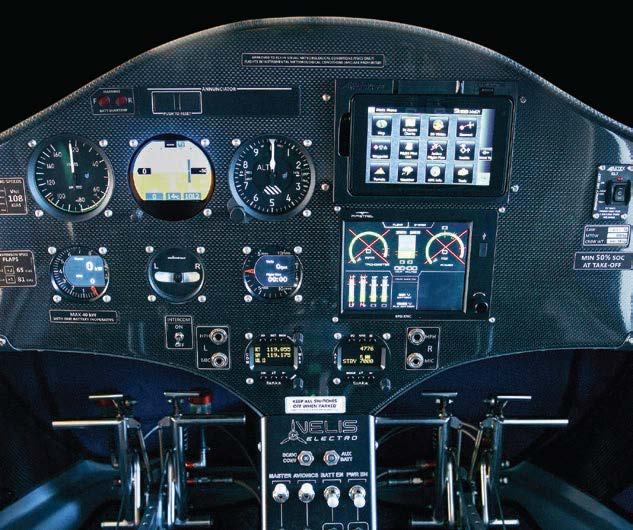
Speaking of power settings, you can forget about manifold pressure when flying the Velis Electro. Think instead about kilowatts, which appear prominently on the panel. Pilots have said setting power at 24 kW is a good start for finding the sweet spot for cruising, though wind, air temperature, and other atmospheric conditions will affect the rate of energy use. Backing off to 20 kW significantly boosts cruise endurance. Pilots accustomed to scanning multiple gauges are likely to find themselves obsessing over the readout of remaining battery power.
As anyone who has driven an electric car knows, the visual stimulation of watching your remaining power decrease numerically and steadily at highway speeds can be disconcerting. The same goes for cruise power in the Velis Electro, which has a small fraction of the flight endurance that its gasoline-powered siblings enjoy. Careful use of power can make a significant difference in how long the flight can last, but the typical time aloft is about 50 minutes with FAA reserves. Charging takes about 90 minutes.
Second Big Break
In March 2024, the FAA issued an exemption to 14 CFR Part 21.190, the special airworthiness certificate for aircraft in the light sport category, that allows the Velis Electro to be used for flight training in the U.S.
Current FAA rules require LSA to have reciprocating engines. The exemption allows the use of electric motors and also allows students and instructors to log time in the airplane. The Velis Electro has been successful in Europe for years as a low-cost trainer, and Textron Aviation, which acquired Pipistrel in 2022, has been pursuing that segment of the GA market.
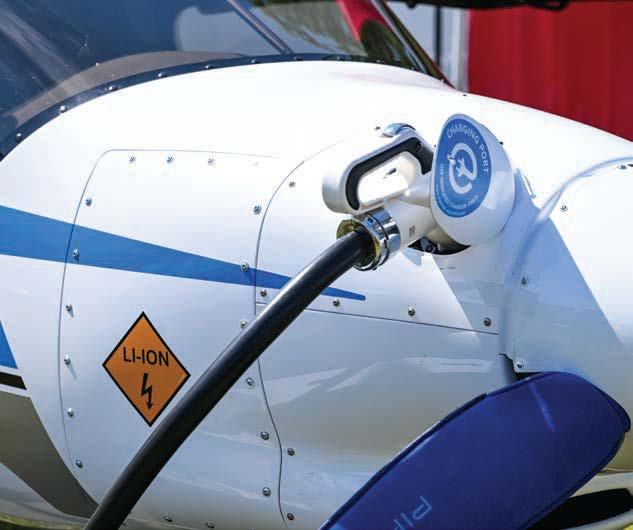
Velis Electro’s charging equipment would be familiar to electric car drivers. [Credit: Frank Galella/Elemental]
Over time the exemption could result in changes to the way flight training is conducted, especially at large flight schools, which have the resources to deploy significant numbers of electric aircraft in their fleets.
“This is a great day for flight training organizations and aspiring pilots,” Kriya Shortt, CEO of Textron eAviation, said in a statement at the time of the Pipistrel acquisition. “With this exemption, the cost barrier to pursuing primary flight training can be substantially reduced. We are thankful to the FAA for its support in bringing more opportunities for electric aviation to the United States.”
Behind the Scenes
A lot happened to raise the Velis Electro’s profile between the EASA certification and FAA exemption.
In 2021, the UK Civil Aviation Authority certified the Velis Electro, and NEBOair, an electric transport company, announced plans to use the aircraft for training and sightseeing flights. The U.K.-based operator said it also planned to use the aircraft for what it called its micro airline that transports one passenger at a time between London and the British Midlands.
NEBOAir’s plans reflect the widely held belief that electric aircraft, like electric cars, will become more competitive, economical, and practical over the course of a decade or so. The gradual mainstreaming of electric cars that began with Tesla’s Model S luxury sedan roughly around 2013 has led to a market with dozens of affordable, competitive electric models. Continued evolution of battery and motor technology could drive similar advances in electric aviation.
Drivers might also recall that Tesla for years was largely alone in building its electric car business while would-be competitors watched from the sidelines, expecting the company to fail as other automotive upstarts had. When electric automobiles began to gain traction with consumers, Tesla was far ahead in development and had the market almost completely to itself.
Velis panel includes instruments monitoring the battery’s charge. [Credit: Kagen Nelson/Elemental]
The Florida Institute of Technology did not wait for the FAA’s approval before purchasing a Velis Electro for its flight-test engineering program in 2021. With the acquisition, the college became the first in the U.S. to own and operate an electric airplane. Among the school’s motivations was the opportunity to give students an edge in the job market by training them on promising future technology.
“While we can teach students flight test techniques using older aircraft, having them test an airplane with the latest technology prepares them for contemporary designs,” Brian Kish, Florida Tech’s flight test engineering program chairman and aerospace associate professor, said at the time.
Because the FAA had not yet approved the Velis Electro, Florida Tech operated it as an experimental aircraft. The school’s commitment points to the expectation of wider acceptance for electric airplanes over time.
Quieter Machine
While skeptics focus on the disadvantages of electric aviation, including limited range and endurance, long charging times, and incomplete infrastructure, the aircraft also have a lot going for them, such as quiet operation and a lack of polluting emissions. These qualities are likely to increase in value as environmental pressure builds and the aviation industry ramps up efforts to reduce its carbon footprint.
In September, 2024, shortly after the FAA issued its exemption, Eco-Aviation Foundation International, a nonprofit based in Santa Monica, California, took delivery of a Velis Electro. Eco-Aviation promotes green aviation and sought to give student pilots a more sustainable, less-expensive option for flight training.
The program’s location in Santa Monica is also significant because city officials and residents in the densely populated city have battled with the local airport for decades over noise and pollution issues.
“The foundation has leased the Velis Electro to Proteus Air Services, a flight school in Santa Monica, where it will be used primarily for pilot training,” Eco-Aviation president Scott Burgess said in a statement at the time. “Additional discovery flights in the Velis Electro will provide hands-on, educational experiences for students and others in the community. These flights are designed to inspire and educate community members about the possibilities within the aviation sector, particularly those who may not have previously considered it as a viable career path.”
User-Friendly Trainer
Eco-Aviation noted the Velis Electro’s sound output of 60 decibels gives it a major advantage in community relations compared with, say, a Cessna 172, which typically emits about 85 decibels. The light, responsive, and user-friendly Velis could also help to attract a wider range of aspiring pilots.
Pilots who learned to fly in traditional piston-engine trainers are aware of the challenges one can face long before getting airborne. Just starting the engine can seem like a high hurdle. It is a cold morning, so how many strokes of the primer does the engine need? Should I also pump the throttle? Two times, three, or four? Perhaps we should use the preheater.
Managing the engine often turns out to be the biggest challenge for many student pilots, especially those accustomed to modern cars, electric lawnmowers, and other vehicles and equipment with engines that start easily.
Given the prospect of getting the propeller turning by simply flipping a switch and easing the throttle forward, many students might forgive the inconveniences of short-duration flights and lengthy charging cycles.
Some student pilots go well out of their way to embrace electric power for its potential as an increasingly vital technology. In 2022, as reported in FLYING, Shane Fisher flew a Pipistrel Velis Electro for his check ride at Right Rudder Aviation flight school at Inverness Airport (KINF) in Florida. By doing so, Fisher became the first in the U.S. to earn a private pilot certificate in an electric airplane.
“This is a fantastic accomplishment for both Shane and the aviation industry as a whole, as this major milestone demonstrates the exciting possibilities and reality of electric aircraft in the training market here in the U.S.,” Right Rudder said in a statement following Fisher’s check ride.
Making his plan work involved some aircraft hopping. Fisher used a Pipistrel Virus SW, a popular piston-engine trainer closely related to the Velis, to complete cross-country requirements for earning his certificate. Pipistrel and its flight school customers have since had success turning Fisher’s unusual approach to flight training into standard practice.
Aimed at Flight Schools
Large fleets, lots of flight hours, and high fuel prices help make the Velis Electro attractive to flight schools. Using the electric aircraft for the many hours students spend circulating in the pattern, practicing takeoffs and landings, can reduce fuel and maintenance costs significantly. The opportunity to alternate between airplanes with different power systems also can help broaden a student’s experience while exposing them to modern technology that is likely to be more common in the future.
At Embry-Riddle Aeronautical University, which added a Velis Electro to its fleet in 2024, pilots transitioning to the Velis compared its characteristics to those of the Cessna 172 that has long been the go-to airframe for individual and institutional flight training.
There is always a learning curve when moving from one airframe to another. According to Embry-Riddle, pilots flying the Velis Electro for the first time said its handling differed noticeably from that of the 172, particularly its snappy throttle response, which comes from the instant-on nature of electric motors when compared with internal combustion engines. Overall, pilots felt the Velis performed the way a trainer should, just differently than the 172. They also described the cockpit as more comfortable than traditional trainers.
What About Private Pilots?
While the Velis Electro’s flight profile might seem too limited for private pilots, that really depends on individual needs. The Velis might not work for pilots seeking a traveling machine or long-distance commuter. It could, however, be ideal for dedicated local flyers, time builders, and instructors determined to avoid fuel bills.
For any pilot accustomed to traditional piston power, though, flying an electric aircraft provides a chance to learn new procedures. During preflight checks, the battery gets special attention as pilots have to consider the effects of weather on charging and energy storage. While in the cockpit, instead of scanning tachometer readings, fuel pressure, and flow rates, Velis Electro pilots keep track of energy consumption and battery condition.
Devoting time away from the airport to monitor the latest in battery development could also pay dividends. As batteries continue to improve, it is possible that newer, more powerful cells with improved endurance could replace those the Velis Electro used when new.
In time, the aircraft could experience significant gains in performance and begin covering greater distances well beyond flying the pattern or circling the airport at a radius of a few miles. Eventually, electric aircraft could take over large segments of general aviation.
At least that is how it went in the model airplane hobby, where electric power dominates today.
[Credit: Scheme Designers]
This column first appeared in the July Issue 972 of the FLYING print edition.
Jonathan Welsh is Lead Editor of Aviation Consumer and a private pilot who worked as a reporter, editor and columnist with the Wall Street Journal for 21 years, mostly covering the auto industry. His passion for aviation began in childhood with balsa-wood gliders his aunt would buy for him at the corner store. Follow Jonathan on Twitter @JonathanWelsh4
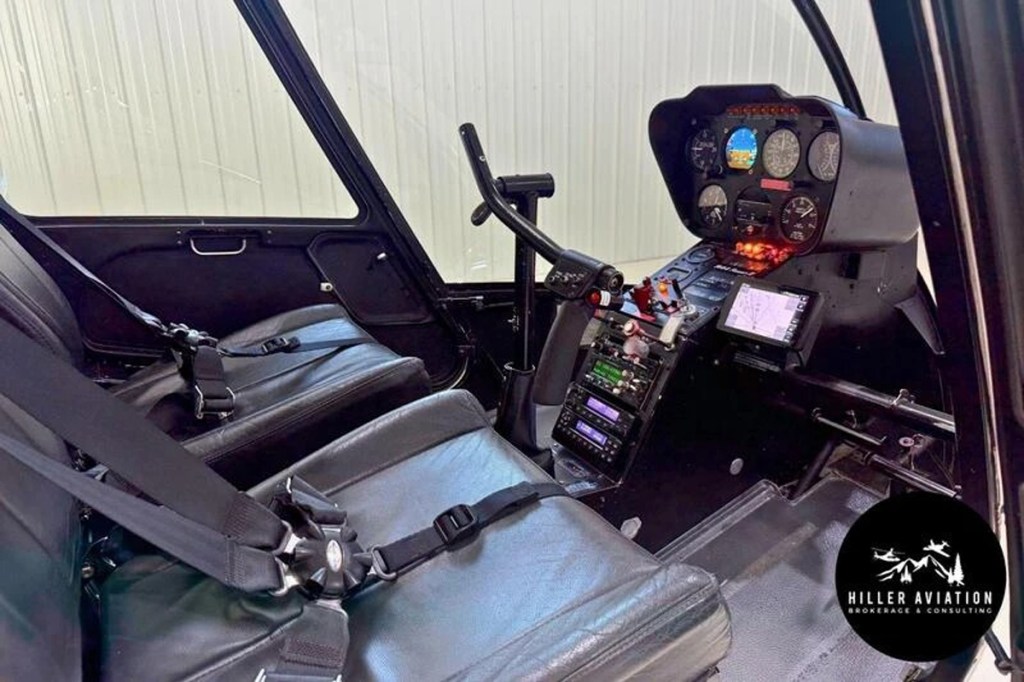
Widely recognized as one of the most adaptable civilian rotorcraft available, the Robinson R44 Raven II delivers an excellent combination of comfort, utility, and capability. Whether it is deployed for personal transportation or integrated into demanding commercial operations, this specific helicopter is thoroughly equipped to handle a wide range of missions.
Showcasing a solid operational history, the 2006 airframe has logged 4,041 hours of total time and features a basic empty weight of 1,591 pounds. It remains highly functional with an annual inspection completed in May 2026, alongside current ADs and SBs. Enhancing its rugged versatility, the exterior is outfitted with Bearpaws, a Robinson flight step, a Xenon HID landing light, and both left-hand and right-hand Dart Aerospace window kits.
Generating the reliable vertical lift for this machine is a Lycoming IO-540-AE1A5 engine. The powerplant shows 1,857 hours since its last overhaul, leaving 342 hours remaining for its next operator. Additionally, it is outfitted with an Onboard Systems cargo hook and cargo hook provisions, making it an excellent platform for external load and utility work.
Settling into the cabin, pilots and passengers will appreciate a comfortable environment highlighted by a Robinson diamond-stitched quilted interior, black leather seats, and the highly desirable addition of air conditioning.
2006 Robinson R44 Raven II [Credit: Hiller Aviation]
The panel has been updated for modern airspace, anchoring its avionics suite with a Garmin GNC 255A Nav/Comm, Garmin GTX 335 ADS-B Out transponder, and Garmin GI 275 electronic attitude indicator. Rounding out the equipment is a FreeFlight radar altimeter, NAT audio control panel, NAT VHF FM transceiver, and digital chronometer.
Listed at $339,000, this well-equipped Raven II is located in Oregon and ready for its next owner. With 819.2 hours remaining on the main rotor blades and 1,585.3 hours on the tail rotor blades, it offers a highly capable rotary-wing package for a variety of aviation needs.
If you’re exploring ownership options, FLYING Finance can help get you airborne. Use our airplane loan calculator to estimate your monthly payments, or connect with an aviation finance expert at flyingfinance.com.
Multiple people were killed Sunday afternoon when an Amazon-branded cargo aircraft overran the runway at Miami International Airport (KMIA) and struck several vehicles beyond the airport’s limits.
Local officials confirmed that five people died in the crash. Another five people were injured, and three of them are in critical condition, according to Miami-Dade Fire Chief Ray Jadallah.
Authorities have not said if those killed were on board the Boeing 767-300, in vehicles on the ground, or some combination of both. It was also not clear how many people were on the airplane.
The aircraft, operated by North Carolina-based 21 Air, overran Miami’s diagonal runway around 2 p.m. after a flight from San Juan, Puerto Rico, according to the FAA. Video filmed at the scene showed the badly damaged jet on fire, with thick, dark smoke billowing from what appeared to be the engines. The flames were put out by fire crews.
Miami-Dade Fire Rescue said more than 60 of its units responded to the crash.
“We’re heartbroken to learn that five people lost their lives in today’s incident at Miami International Airport,” Amazon spokesperson Kelly Nantel said in a statement. “Our deepest sympathies go out to the families, loved ones, and all those affected by this devastating loss.”
Amazon is working closely with the authorities and “will cooperate fully with any investigation,” Nantel added.
Initially, all four runways at Miami were shut down, but as Sunday evening two were back operating.
The FAA and National Transportation Safety Board (NTSB) are now investigating the incident.
Zach Vasile is a writer and editor covering news in all aspects of aviation. He has reported for and contributed to the Manchester Journal Inquirer, the Hartford Business Journal, the Charlotte Observer, and the Washington Examiner, with his area of focus being the intersection of business and government policy.
The last remaining U.S. Air Force EC-130H Compass Call aircraft this week makes its final flight alongside the EA-37B that will replace it. [Credit: Devlin Bishop/U.S. Air Force]
The last remaining U.S. Air Force EC-130H Compass Call made its final flight this week alongside an EA-37B, the modified Gulfstream 550 that will replace it.
Per a photo release Wednesday from the 355th Wing based at Davis-Monthan Air Force Base in Arizona, the EC-130H and EA-73B flew in formation together for the first time. According to the 355th, EC-130H crews have flown over 76,000 combat hours over the past 20 years. Soon, it will join the Air Force’s already retired EC-130Hs in the boneyard at Davis-Monthan once the branch transitions its “compass call” mission systems to the Gulfstream business jets.
“The aircraft symbolize the continuation of a critical combat capability that enables U.S. and coalition forces to disrupt, deny, and degrade adversary command and control networks,” reads the caption under a photo of the formation flight shared by the 355th.
Air & Space Forces Magazineconfirmed that the EC-130H that made its swan song flight this week was the last of its kind in the Air Force’s active inventory. The magazine reported that a formal retirement ceremony for the Compass Call will be September 18 at Davis-Monthan, home to the 55th Electronic Combat Group that was its sole military operator.
The EC-130H made its first flight in 1981, was delivered to the Air Force in ’82, and reached initial operating capability in ’83, according to an Air Force fact sheet. It would go on to make combat deployments in places including Afghanistan over the following decades.
The type is based on a heavily modified C-130H Hercules airframe. It is designed to disrupt enemy communications, radar, or navigation signals. The fact sheet describes it as an airborne tactical weapon system whose primary functions are electronic warfare, enemy air defense suppression, and offensive counter information.
The aircraft is powered by four Allison T56-A-15 turboprops. It can fly up to 300 mph and as high as 25,000 feet, with a range of 2,295 miles.
The Air Force EC-130Hs have been equipped for aerial refueling and received many upgrades over the years that have allowed them to counter new and emergent communications systems. Per a U.S. Central Command fact sheet published in April, at least one was deployed to Iran for Operation Epic Fury this year.
The first of the EC-130Hs to be retired made its final flight in 2020. In 2017, L3Harris (then L3 Technologies) won a contract to “re-host” the aircraft’s mission systems on the newer Gulfstream jets, and it has been steadily phased out.
The EA-37Bs will fulfill the same mission carrying up to nine personnel, lower than its predecessor’s capacity of 13. However, the modified business jets will fly faster (up to 600 mph), farther (6,300 miles), and higher (51,000 feet) than the EC-130H. They are powered by a pair of Rolls-Royce BR710C4-11 turbofans.
Air Combat Command took delivery of the first EA-37B at Davis-Monthan in August 2024, and the aircraft made its first training sortie in May 2025. Online aviation news outlet AeroTime reported in April that the newer Compass Call made its first combat deployment in Iran earlier this year despite the type not yet being declared operational.
Air & Space Forces reported that the Air Force has received only half of the 10 EA-37Bs it has ordered. The branch in its fiscal year 2027 budget request revealed plans to procure up to 22 of them through 2031.
Jack is a staff writer covering advanced air mobility, including everything from drones to unmanned aircraft systems to space travel—and a whole lot more. He spent close to two years reporting on drone delivery for FreightWaves, covering the biggest news and developments in the space and connecting with industry executives and experts. Jack is also a basketball aficionado, a frequent traveler and a lover of all things logistics.
Cirrus Aircraft shipped 405 units through the first six months of 2026, including 196 turbocharged SR22s, per GAMA’s latest report. [Credit: Cirrus Aircraft]
Shipments and billings for general aviation airplanes and helicopters were up in the first six months of 2026 compared to the same period last year, according to the General Aviation Manufacturers Association’s (GAMA) latest report. Shipments and billings also rose from the first quarter of 2026 to the second quarter.
According to GAMA, manufacturers shipped 1,458 airplanes from January through the end of June, compared to 1,433 for that stretch in 2025. That included 786 piston aircraft, 289 turboprops, and 383 business jets. GAMA estimated that airplane billings through the first six months of the year totalled about $14.3 billion, 15.5 percent higher than 2025’s $12.4 billion.
For GA helicopters, the organization recorded 419 shipments through June, comprising 110 piston models and 309 turbine rotorcraft, versus 403 in the first six months of 2025. Helicopter billings rose 7.2 percent year over year from about $2 billion through June 2025 to about $2.2 billion this year.
Among the aircraft types listed by GAMA, business jets saw the largest percentage increase in shipments from the first six months of 2025 to the same period in ’26 at 8.2 percent. The next highest categories were turboprops (7.8 percent increase) and piston helicopters (5.8 percent).
Piston airplanes were the only segment GAMA recorded that saw an annual decline, with shipments down 3.1 percent.
Per GAMA’s full report, Cirrus led the way for GA airplane shipments with 405 units through June, including 196 turbocharged SR22s. The next closest were Textron Aviation with 333 shipments, including 107 Skyhawk SPs, and Piper, of which the majority of its 115 shipments were PA-28-181s.
Airbus Helicopters was most active in the GA rotorcraft segment, shipping 142 units, of which 52 were the H145 or its military variant. Robinson Helicopter was not far behind with 127 shipments, though Airbus Helicopters’ total billings of $948.4 million dwarfed Robinson’s $85.5 million.
Year to Year, Quarter to Quarter
GAMA’s report showed growth in GA shipments compared to last year as well as throughout 2026.
Airplane and helicopter shipments both rose in the second quarter compared to the first three months of the year. Manufacturers shipped 791 airplanes in Q2 versus 667 in Q1 and 251 helicopters in Q2 compared to 168 in Q1, GAMA estimated.
Among airplanes, the turbine segment saw the greatest quarterly percentage increase in shipments at 35 percent. For helicopters, turbine models led the way with a quarterly increase in shipments of 55.4 percent.
The value of GA billings also rose quarter to quarter. GAMA recorded about $8.25 billion in airplane billings from April through June versus about $6 billion during the first three months of 2026. It estimated helicopter billings in Q2 rose to $1.73 billion compared to about $804 million in Q1.
The report also breaks down shipments based on where airplanes were manufactured. It lists a grand total of 1,096 airplanes shipped by U.S. manufacturers in the first six months of 2026 compared to 286 from European manufacturers. Adding the sums of piston, turboprop, and turbine airplanes for each segment, however, yields totals of 1,308 and 359, respectively.
Jack is a staff writer covering advanced air mobility, including everything from drones to unmanned aircraft systems to space travel—and a whole lot more. He spent close to two years reporting on drone delivery for FreightWaves, covering the biggest news and developments in the space and connecting with industry executives and experts. Jack is also a basketball aficionado, a frequent traveler and a lover of all things logistics.
Sign-up for newsletters & special offers!
Get the latest stories & special offers delivered directly to your inbox.