Register

This 1976 Beechcraft Bonanza V35B Is a Ready-to-Travel ‘AircraftForSale’ Top Pick

Low-time engine, auxiliary fuel, updated panel, and nice paint make the stylish V-tail a strong candidate.

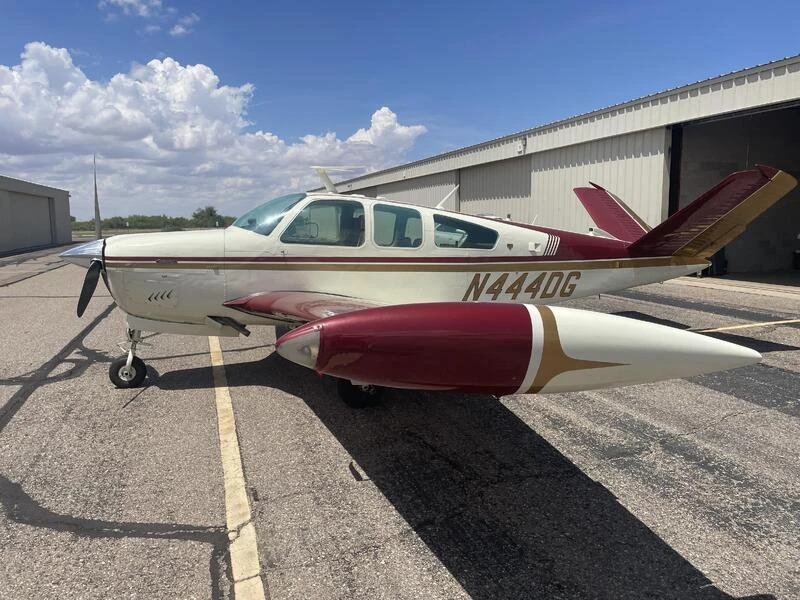
1976 Beechcraft Bonanza V35B [Credit: Doug Swanson]

Each day, the team at Aircraft For Sale picks an airplane that catches our attention because it is unique, represents a good deal, or has other interesting qualities. You can read Aircraft For Sale: Today’s Top Pick at FLYINGMag.com daily.

Today’s Top Pick is a 1976 Beechcraft V35B Bonanza.

The V-tail Beechcraft Bonanza has been an object of pilots’ desire ever since its introduction in 1947. The aircraft’s sleek styling and speedy, efficient performance stood out when the model was new and continued to impress owners and onlookers for decades to come.

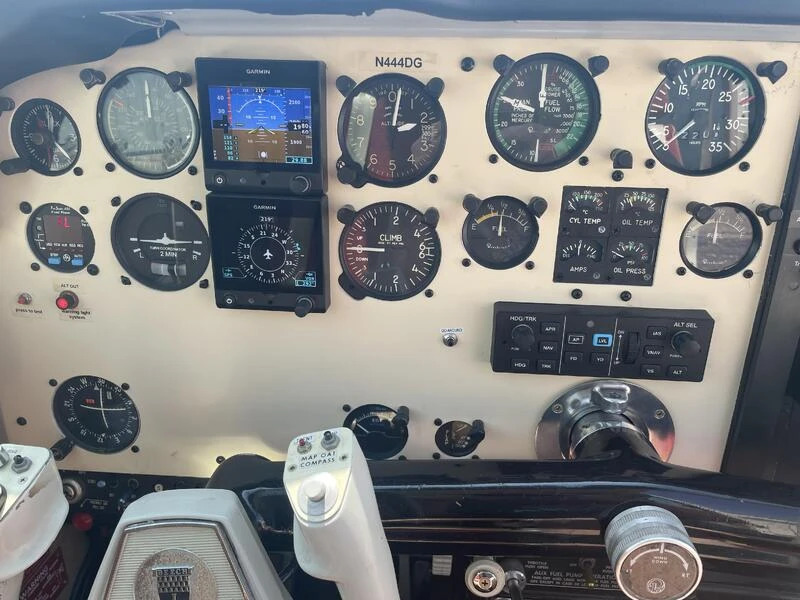
This 1976 Bonanza features an updated panel. [Credit: Doug Swanson]

Even as straight-tail Bonanzas like the F33A gained popularity, the V-tail’s unique look arguably never went completely out of style.

Today, with the rise of nostalgia for all manner of popular culture from the 1950s through the ’70s, the V-tail’s brand of chic is very much in fashion. There are also practical considerations for prospective buyers.

Because V-tails are the oldest series in the Bonanza family, prices for these attractive airframes tend to be lower than for other Bonanzas. Age generally does not diminish the aircraft’s performance, though, so the V-tails continue to offer outstanding cross-country performance and smooth, responsive handling that pilots have loved for decades.

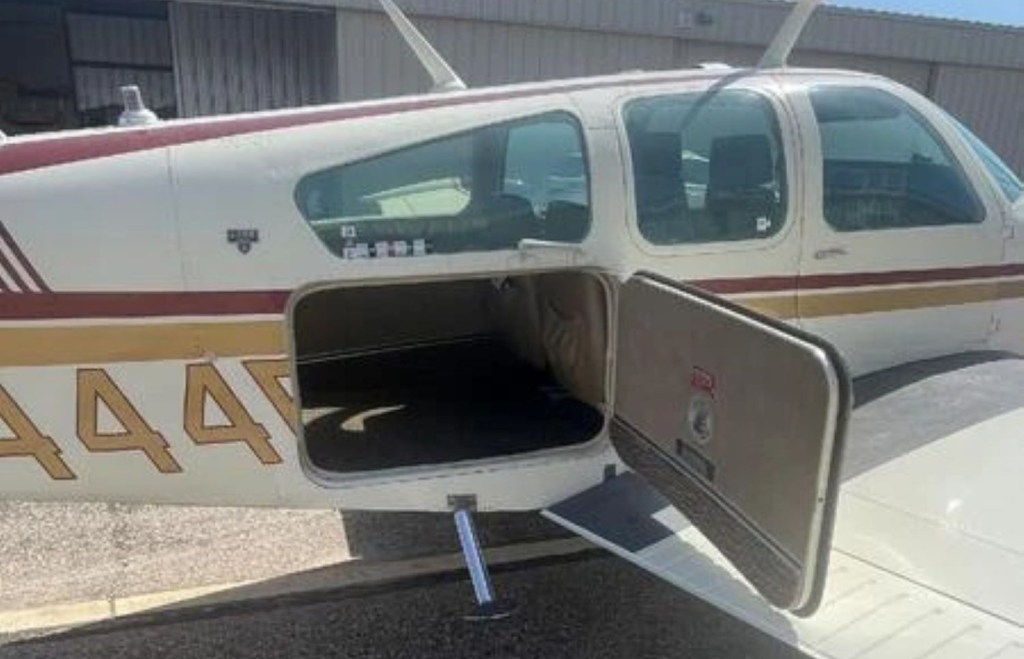
The large baggage door is a desirable option on V-tail Bonanzas. [Credit: Doug Swanson]

This 1976 Beechcraft Bonanza V35B has 3,939 hours on the airframe and 327 hours on its 285 hp Continental IO-520-BA and Harttzell propeller. The aircraft is equipped with GAMI fuel injectors, D’Shannon tip tanks, portable oxygen system, and coveted large baggage-door option.

The panel features a Garmin GNS 530W WAS GPS/Nav/Com, SL 30 Nav/Com, GTX 330 transponder, JPI Fuel Scan FS 460 fuel flow instrument, and Garmin GFC 500 autopilot.

Pilots looking for a fast, stylish, traveling airplane for four should consider this 1976 Beechcraft Bonanza V35B, which is available for $215,000 on AircraftForSale.

If you’re interested in financing, you can do so with FLYING Finance. Use our airplane loan calculator to calculate your estimated monthly payments. Or, to speak with an aviation finance specialist, visit flyingfinance.com.

Jonathan Welsh

Jonathan Welsh is Lead Editor of Aviation Consumer and a private pilot who worked as a reporter, editor and columnist with the Wall Street Journal for 21 years, mostly covering the auto industry. His passion for aviation began in childhood with balsa-wood gliders his aunt would buy for him at the corner store. Follow Jonathan on Twitter @JonathanWelsh4

Boeing Quietly Paid $3.1M Fine Related to 2024 Door Plug Incident

Manufacturer faced penalty for safety violations from September 2023 through February 2024.

Boeing 737 Max
A Boeing 737 Max on the production line [Credit: Boeing]

Boeing paid the FAA about $3.1 million in civil penalties for safety violations, including issues related to the door plug blowout of a 737-9 Max aircraft operated by Alaska Airlines, Reuters was first to report this week.

The FAA in September 2025 proposed fines against Boeing totaling $3,139,319 for violations that it said occurred from September 2023 through February 2024, including the January 2024 door plug incident, which resulted in no deaths or serious injuries. The fines also covered “interference with safety officials’ independence,” the agency said.

Boeing’s payment of the fine had not been disclosed before this week.

The National Transportation Safety Board (NTSB) released its final report on the Max 9 incident in July 2025, concluding the door plug blowout’s probable cause to be “Boeing’s failure to provide adequate training, guidance, and oversight necessary to ensure that manufacturing personnel could consistently and correctly comply with its parts removal process.”

The agency cited an alleged lack of adequate employee training and oversight by both Boeing and the FAA, as well as a lack of child restraint systems for children under 2.

Among the NTSB’s recommendations for Boeing were to equip a redesigned door plug on newly manufactured aircraft. It recommended the FAA issue an airworthiness directive (AD) requiring all in-service aircraft equipped with the Mid-Exit Door (MED) plug that blew out to be retrofitted with the new design.

When it announced the $3.1 million fine, the FAA in September 2025 said it also found “hundreds” of quality system violations at Boeing’s 737 factory in Renton, Washington, as well as at the 737 factory in Wichita, Kansas, operated by subcontractor Spirit AeroSystems. Boeing reacquired Spirit AeroSystems in late 2025.

The FAA also alleged that the manufacturer presented a pair of unairworthy aircraft to the agency for airworthiness certificates. It further said that a Boeing employee not part of the company’s organization designation authorization (ODA) pressured an ODA employee, who found that a 737 Max did not comply with certain standards, to approve the aircraft for delivery in order to meet the company’s schedule.

The FAA said it used its “maximum statutory civil penalty authority” when issuing the fines.

Boeing Oversight Continues

The FAA took immediate action against Boeing in the wake of the January 2024 door plug blowout, grounding all 171 737-9s operated by U.S. airlines or in American territory at the time.

The following month, the agency required Boeing to develop a roadmap intended to “reset” the company’s safety culture and increased the number of on-site safety inspectors at the 737 factories in Washington and Kansas. The FAA also conducted an audit of the manufacturer’s production line that it said raised “non-compliance issues” with its manufacturing process control, parts handling and storage, and product control.

The agency in an AD required four design changes that it said were intended to address “unsafe conditions that led to the grounding of the Boeing 737 Max.”

Though the FAA has increased its oversight of Boeing, in October 2025 it lifted production limits that allowed the manufacturer to produce 42 Max jets per month, up from 38. Earlier this year, Boeing’s CEO confirmed reports that it was studying a ramp-up to 70-75 per month but said it had no firm plans to do so.

In September 2025, the FAA allowed Boeing to resume issuing airworthiness certificates for some 737 Max aircraft, with the two issuing certificates on alternating weeks. The agency in July restored full responsibility to Boeing, permitting it to issue airworthiness certificates at the end of the 737 Max production process.

The regulator said it would “continue inspections, audits, and monitoring of Boeing’s production system including critical assembly activities, production quality trends, and compliance with approved type design and engineering requirements.” It said the oversight will include “closely observing and assessing Boeing’s Safety Management System (SMS) and safety culture.”

Jack Daleo

Jack is a staff writer covering advanced air mobility, including everything from drones to unmanned aircraft systems to space travel—and a whole lot more. He spent close to two years reporting on drone delivery for FreightWaves, covering the biggest news and developments in the space and connecting with industry executives and experts. Jack is also a basketball aficionado, a frequent traveler and a lover of all things logistics.

Epic Flight Academy Adds Tecnam P2006Ts to Fleet

Nation’s largest Part 141 flight school expands its multiengine training capacity with efficient twin-engine trainers.

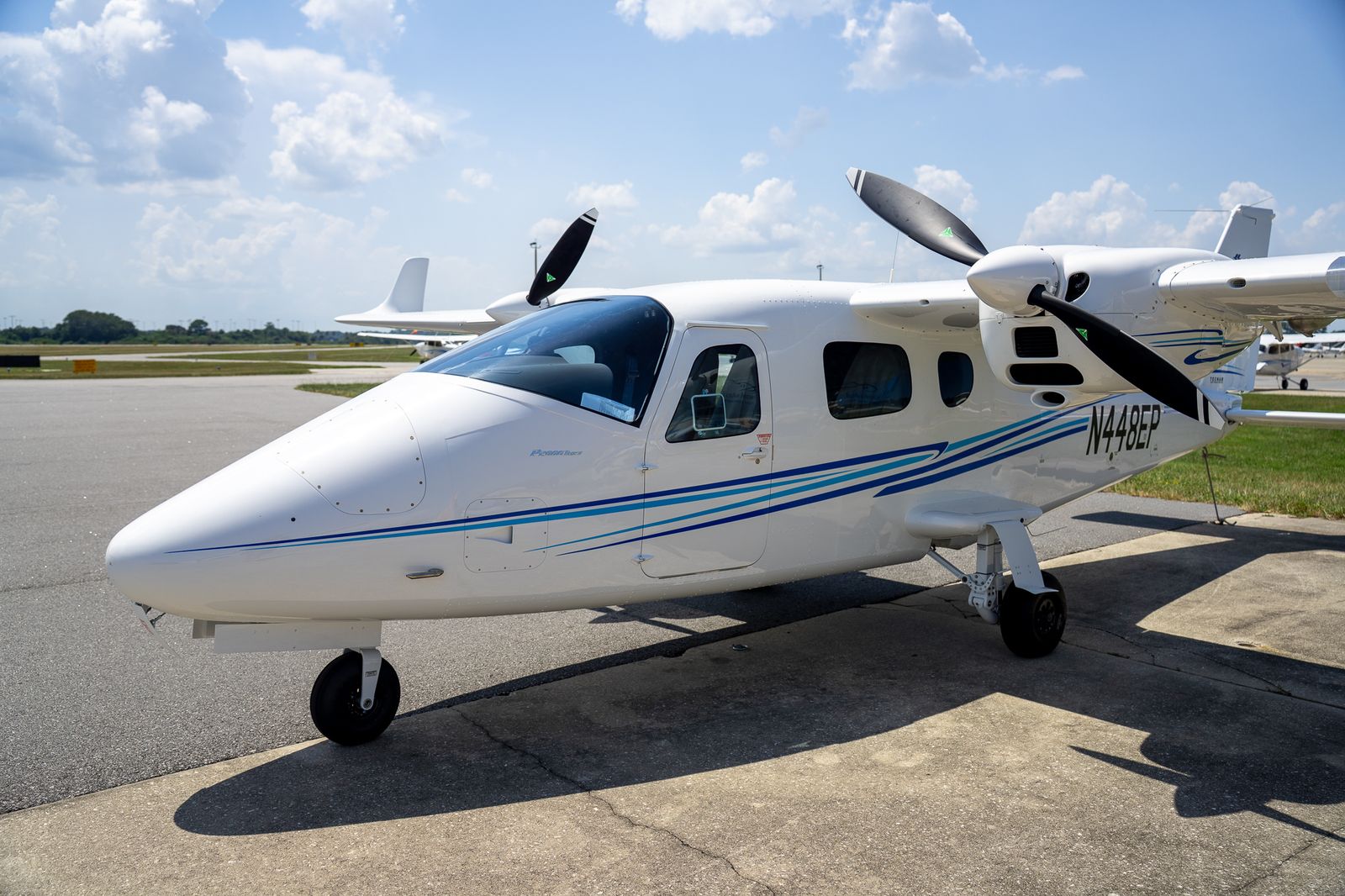
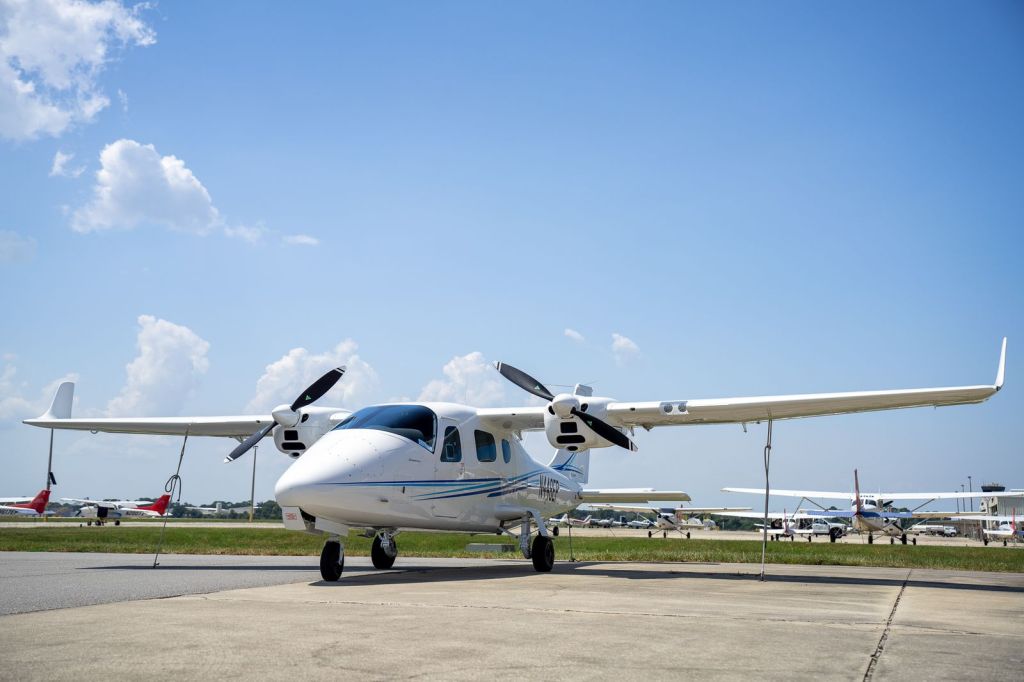
Epic Flight Academy, the largest Part 141 flight school in the U.S., has added two Tecnam P2006Ts. [Credit: Epic Flight Academy]

Epic Flight Academy (EPA), the largest Part 141 flight school in the United States, has acquired two Tecnam P2006T twin-engine aircraft to facilitate its multiengine training program.

Founded in 1999 in Florida, EPA has flight schools in nine locations stretching from Florida to Colorado and a total of approximately 100 flight instructors to serve 600 students.

According to school officials, the two new Tecnam twins will increase the academy’s multiengine training capacity.

The Tecnam P2006T is known as a highly efficient multi-engine trainer. Equipped with a state-of-the-art glass cockpit, the aircraft provides an ultra-modern training environment.

EFA officials note the P2006T is an airframe that is highly appealing to the academy’s diverse demographic of international students, who aspire to commercial airline operations. In addition, the P2006T boasts exceptional fuel efficiency and lower operating costs  compared to other light training twins on the market.

A Tecnam P2006Ts on the Epic Flight Academy ramp [Credit: Epic Flight Academy]

“We are continually looking for ways to make flight training more affordable while maintaining the modern, technologically advanced fleet our students have come to expect from us,”  Josh Rawlins, chief operations officer of Epic Flight Academy, said in a news release.

Walter Da Costa, EPA’s chief sales officer, said these cost-saving benefits directly support the school’s commitment to delivering high-quality education without placing an undue financial burden on aspiring pilots.

“It is an absolute honor to see the P2006T join the fleet of Epic Flight Academy…,” Da Costa said. “Their commitment to providing affordable, state-of-the-art training perfectly aligns with Tecnam’s design philosophy. We are incredibly proud to support their growing operations and to play a role in developing the next generation of global commercial pilots.”

Meg Godlewski

Meg Godlewski has been an aviation journalist for more than 24 years and a CFI for more than 20 years. If she is not flying or teaching aviation, she is writing about it. Meg is a founding member of the Pilot Proficiency Center at EAA AirVenture and excels at the application of simulation technology to flatten the learning curve. Follow Meg on Twitter @2Lewski.

FAA Issues Lycoming Engine AD Over Defective Piston Pins

Airworthiness directive affects O-235, O-540, and IO-540 powerplants.


Lycoming 540 series engine [Credit: Lycoming Engines]

The FAA has issued an airworthiness directive for certain Lycoming O-235, O-540, and IO-540 aircraft engines due to defective piston pins that could cause engine failure.

According to the agency, AD 2026-17-10 was prompted by multiple reports of piston pin failure resulting in metal particulate contamination of the engine oil and, in some cases, engine failure.

The FAA received reports from Lycoming of metal particulates found in the engine oil during oil changes and two nondetectable engine failures of aircraft equipped with Lycoming model O-235, O-540, and IO-540 powerplants.

Lycoming conducted an investigation and discovered that certain thin-wall piston pins were manufactured with microcracks and inclusions in the base metal due to honing and tooling process changes from the piston pin supplier, making the pins more susceptible to failure.

Piston pin failure can result in metal debris circulating throughout the engine, which can damage bearings and other cylinders and even block oil passages and lead to oil starvation.

To address this, Lycoming Engines published updated service material with a list of affected engines and instructions for replacement of the affected piston pins and inspection of the oil for metal particulates. As part of an oil change the oil filter is cut open to look for metal particulates, and an oil analysis is performed.

The FAA has issued the AD to prevent failure of the piston pins, noting “this condition, if not addressed, could result in engine failure, loss of thrust control, in-flight shutdown, damage to the airplane, and loss of control of the airplane.”

The AD applies to approximately 957 U.S.-registered engines. The engine models affected are: IO-540-A1A5, IO-540-AA1A5, IO-540-AA1B5, IO-540-AB1A5, IO-540-AC1A5, IO-540-AE1A5, IO-540-AF1A5, and IO-540-AG1A5.

“The AD requires replacement of the affected piston pin with a part eligible for installation and, for certain engines, oil change and visual inspection of the engine oil filter, oil pressure screen, and oil suction screen for metal particulates,” the FAA said. “This AD also prohibits the installation of an affected piston pin on any engine.”

The FAA estimates the cost of compliance with the AD, which takes effect September 14, to be approximately $2,200 to $2,268.

Meg Godlewski

Meg Godlewski has been an aviation journalist for more than 24 years and a CFI for more than 20 years. If she is not flying or teaching aviation, she is writing about it. Meg is a founding member of the Pilot Proficiency Center at EAA AirVenture and excels at the application of simulation technology to flatten the learning curve. Follow Meg on Twitter @2Lewski.

Pilots Could Glimpse Archer’s eVTOL Air Taxi at California Airports

Manufacturer plans to begin ‘No Roads’ flight tour in Northern California before expanding to other regions and states.

Archer Aviation Midnight prototype eVTOL electric air taxi
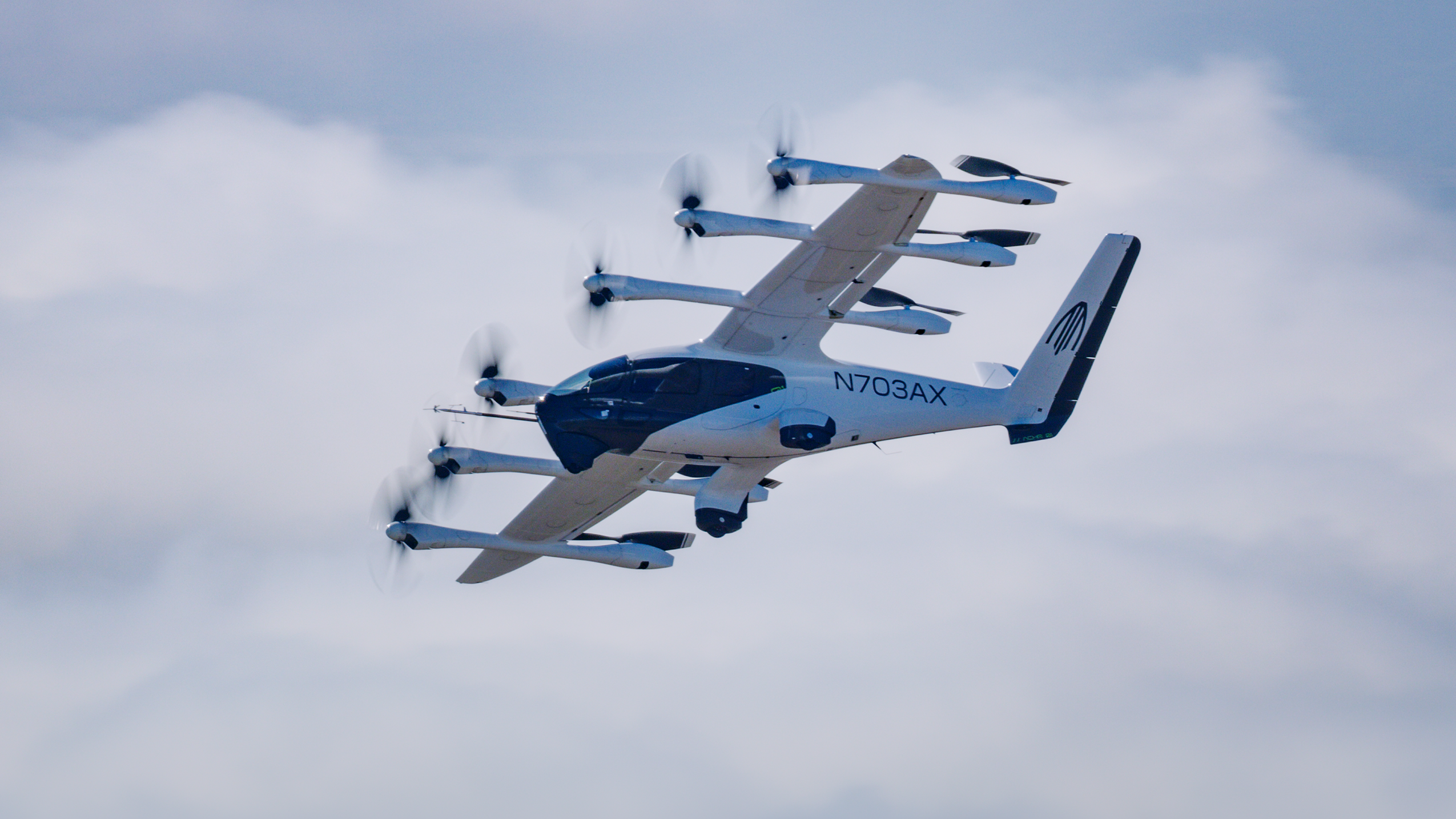
Pilots and planespotters could soon catch a glimpse of Archer’s Midnight eVTOL prototype (N703AX) at Northern California airports. [Credit: Archer Aviation]

Electric vertical takeoff and landing air taxi manufacturer Archer Aviation said Thursday it will take its Midnight prototype out for a series of city-to-city demonstration flights beginning in Northern California.

Archer said Midnight completed about 70 test flights in August. But the manufacturer’s upcoming “No Roads” tour will take those activities out of the sandbox and into the public eye. 

Earlier air taxi tours by competitors Joby Aviation and Beta Technologies saw those companies’ electric aircraft operate alongside pilots of conventional aircraft at major airports such as New York’s John F. Kennedy International (KJFK) and Florida’s Orlando International (KMCO).

Archer framed its tour as a step toward “operational readiness” for its planned service at the 2028 Los Angeles Olympic Games as well as the FAA’s eVTOL Integration Pilot Program (eIPP), which will see precertified aircraft—including Midnight—fly into airports nationwide. Manufacturers and operators that have launched eIPP operations are sharing data with the FAA in order to guide the regulator’s development of future operational rules for the novel aircraft.

First, though, Archer plans to fly Midnight between Northern California cities. The company said it will focus on routes that take one hour or more to drive but could be flown in just 10-20 minutes. The tour’s stated goal is to “showcase the advantages electric air taxis will bring: low noise, zero operating emissions, and the ability to skip over traffic.”

Archer founder and CEO Adam Goldstein called it the “Waymo moment for air taxis,” a chance to introduce the technology to more communities—and pilots.

“This is the beginning of that story and our biggest step yet toward making air taxis an everyday reality in cities across America,” Goldstein said in a statement.

Midnight, for which Archer is targeting certification before the 2028 Olympic Games, is designed to maintain the runway independence of rotorcraft while cruising at up to 150 mph on fixed wings and producing less noise and emissions. Its tilting rotors support both vertical and forward flight. The model is designed for a pilot to fly up to four passengers and charge in about 10 minutes.

Where Pilots Could Spot Midnight

Air taxi companies and their partners are developing off-airport vertiports, which are similar to heliports but with electric chargers and other infrastructure to accommodate eVTOLs.

However, the U.S. does not yet have an operational vertiport, meaning Midnight will almost certainly fly into airports during the upcoming tour.

If recent demonstrations are any indication, it will use runways for takeoff and landing. Archer has not publicly shown Midnight’s transition from vertical to forward flight with a pilot on board. But the company in August completed a piloted, round-trip California journey between Salinas Municipal Airport (KSNS) and Monterey Regional Airport (KMRY). Those flights took off conventionally, with each leg taking about nine minutes.

Archer did not specify in its announcement whether No Roads will include VTOL operations. A spokesperson told FLYING that details about specific flights will be shared over the course of the campaign.

The company said the tour’s first stop will be Hollister, California, where Wisk Aero—its autonomous air taxi subsidiary recently acquired from Boeing—broke ground on a vertiport at Hollister Municipal (KCVH). Wisk intends for the site to be a “dedicated testbed” for both piloted and unpiloted eVTOL operations, and Archer could tap into it in the future.

“Shortly after” that, Archer said, it will fly Midnight to Monterey, San Jose, Oakland, and San Francisco, all locations that are preparing for eVTOLs. Monterey Regional has hosted flights by multiple air taxi manufacturers. Archer plans for San Francisco to be the heart of its Bay Area network and is working with a real estate firm to build infrastructure in San Jose and Oakland.

Since that infrastructure is not yet online, look for Midnight to visit San Francisco International (KSFO), San Jose International (KSJC), and Oakland San Francisco Bay (KOAK) airports.

San Martin, another planned stop on the tour, is not part of Archer’s San Francisco or Los Angeles networks. But the town has a nontowered public airport (E16) that could serve as a stopover for the tour and a future operational base.

Archer said these initial flights will “pave the way” for Midnight to be introduced in the Los Angeles area, as well as in Texas and Florida. The company did not specify which airports it will use in those locations, but it has big plans for all three.

Where Archer Could Fly Next

Goldstein in August said Archer’s Salianas-Monterey demonstration would serve as a “template” for its eIPP activities in Florida, Texas, and New York, which it expects to begin this year. That implies they too will operate using airport runways. However, Archer said in March that its latest test aircraft at the time was “on track” for piloted VTOL operations during the eIPP.

Throughout the tour, the company plans to install electric chargers from Beta Technologies, its partner in a recently established consortium that aims to equip up to 250 sites for electric air taxi operations by 2028. It said the chargers will support the eIPP as well as its future plans.

Los Angeles is shaping up to be Archer’s most critical network, and it will likely be a focus for the company as it prepares for Olympic service.

The company is the Games’ official air taxi provider and plans to ferry spectators and athletes on-demand between venues using local airport infrastructure. Midnight would also use off-airport vertiports positioned near entertainment hubs, such as downtown’s L.A. Live district or Inglewood’s SoFi Stadium.

Other planned sites in Archer’s network—which could host Midnight flights before or during the Olympics—include Los Angeles International Airport (KLAX), Orange County (KSNA), Santa Monica (KSMO), Hollywood Burbank (KBUR), Long Beach (KLGB), and Van Nuys (KVNY). Last year, the manufacturer acquired Hawthorne Airport to serve as the LA network’s operational hub and a testing ground for its technologies.

Expect the company to target activities at these sites in the near future as it seeks to prepare for an on-demand Olympic service.

“We’re especially focused on winning Los Angeles, because if we can prove electric air taxis work in one of the world’s most congested, complex, and highly regulated cities, I believe we can subsequently scale the product across the U.S. and the world,” Goldstein said on Archer’s second-quarter 2026 earnings call in August.


Jack Daleo

Jack is a staff writer covering advanced air mobility, including everything from drones to unmanned aircraft systems to space travel—and a whole lot more. He spent close to two years reporting on drone delivery for FreightWaves, covering the biggest news and developments in the space and connecting with industry executives and experts. Jack is also a basketball aficionado, a frequent traveler and a lover of all things logistics.

The Night the Moon Disappears for a Pilot

Aviator experiences a time when instrument skill and autopilot discipline become critical.

Spatial disorientation is devastatingly real. [Image: Joel Kimmel]

I am a 2,000-hour private pilot with an instrument rating and a tailwheel endorsement, but the night I nearly flew into a mountain, none of that experience mattered as much as a single blue button on my panel.

Aviation has been in my blood since childhood. My father’s first job out of engineering school in 1966 was as a wind tunnel engineer working directly for Igor Sikorsky, designing
helicopters in Connecticut. 

This Article First Appeared in FLYING Magazine

If you're not already a subscriber, what are you waiting for? Subscribe today to get the issue as soon as it is released in either Print or Digital formats.

Subscribe Now

As a kid I built and crashed more model airplanes than I could count. But I came to actual flying later in life, at age 40, in the right seat of an Embraer Phenom 100 that my company used for business trips around the United States. 

Our corporate pilot served as my CFI, and together we logged more than 500 hours of instrument instruction under Part 91. That gave me decent ATC skills and solid buttonology, but I knew I lacked real stick-and-rudder ability. So I adapted an Air Force training curriculum to civilian use and spent 200 hours in a Short Brothers Tucano—a former Royal Air Force trainer—with a wonderful former F/A-18 Marine instructor pilot. The Tucano taught me upset recovery, energy management, and the humility that comes from being upside down with the wrong inputs.

Even so, I still didn’t have my private pilot certificate. I eventually earned it in a Carbon Cub, which I fly today alongside my Beechcraft Bonanza F33A.

Back in summer 2023, a clear evening with calm winds and a brilliant full moon seemed like the perfect invitation to take out the Bonanza. My night currency had lapsed, and I needed three takeoffs and landings to gain legal night status.

I live at Alpine Airpark (46U) in Wyoming, a terrific little field with a 5,000-foot paved runway sitting at 5,700 feet of elevation. Departing Runway 13 takes you straight out over a 10-mile-long reservoir, with 10,000-foot peaks on one side and 11,000-foot peaks on the other. On a dark night the surrounding national forest offers zero lights and visual references, but under a full moon the mountains are majestic and easy to see.

At least, that is what I was counting on.

Around 10 o’clock I back-taxied in my Bonanza on Runway 13 to the run-up area. Rolling down the pavement, I could see the moon rising low in the gap of the Snake River Canyon—gorgeous but oddly yellow, almost surreal. I shrugged it off, completed my checklist and engine run-up, made my unicom call, clicked the runway lights on, and lined up.

The takeoff roll was normal—rotation speed, liftoff, gear up. Then I looked outside and saw nothing. Absolute pitch black. The mountains, the water, the moonlit landscape I had admired five minutes earlier—all gone.

I climbed by hand-flying to 800 feet, scanning desperately for any visual reference. Then my Garmin G3X started barking: “Terrain, terrain—pull up, pull up.” My heart rate spiked, but I was sure I was climbing wings level. I pressed the autopilot—the glorious blue button—and the airplane immediately banked 20 degrees to the right. It felt completely wrong, so I disconnected and corrected back to what I thought was level.

A glance at the moving map told a different story. My track was nearly 90 degrees off the runway centerline, aimed straight at the mountains west of the reservoir. Spatial disorientation had grabbed me without warning.

I made the only decision that mattered—trust the instruments, not my gut. I reengaged the autopilot, accepted its unsettling correction, switched to heading mode, and dialed in a course down the center of the lake. I set a vertical speed of 800 fpm and climbed to my minimum safe altitude for the area—11,500 feet.

Up there I finally had room to maneuver. I turned back toward the field, and at last I could see the runway lights and the faint glow of town behind me. That strange moon, now a little higher in the sky, was partially blocked out. Then it hit me. During the five minutes I had spent on my run-up and checklist, a full lunar eclipse had begun. The light I had taken for granted simply vanished while I was head down in the cockpit.

I landed safely, skipped the remaining touch-and-goes, and went home for a quiet cup of tea with trembling hands.

The lessons from that night have stayed with me.

First, spatial disorientation is devastatingly real. I have aerobatic training and hundreds of hours on instruments, yet I had never experienced anything like it.

Second, the autopilot is not a crutch or a cop-out. It is one of the most powerful safety tools in the cockpit. Drop your pride and press the blue button.

Third, instrument proficiency is essential for every pilot, not just those who fly in clouds. That night I resolved to stop procrastinating and finish my instrument rating, which I promptly did. And finally, when a cascade of unexpected events unfolds, the training takes over only if you let it.

Stay calm. Trust the process. Fly the airplane.

You are unlikely to plan for a lunar eclipse, but you can plan to be ready when the world goes dark.


This column first appeared in the July Issue 972 of the FLYING print edition.

David Segel

David Segel is a 2,000-hour private pilot with instrument and tailwheel endorsements who flies a Bonanza F33A and a Carbon Cub FX3 from Alpine Airpark (46U) in Wyoming. He is the founder and president of London-based Mako Group, a feature and documentary filmmaker, and an adventurer.

DHS Secretary Lauds Pilots of Coast Guard C-37A After Emergency Landing

Military aircraft carrying Secretary Markwayne Mullin entered service in 2002 and is close to 25 years old.

U.S. Air Force Gulfstream C-37A
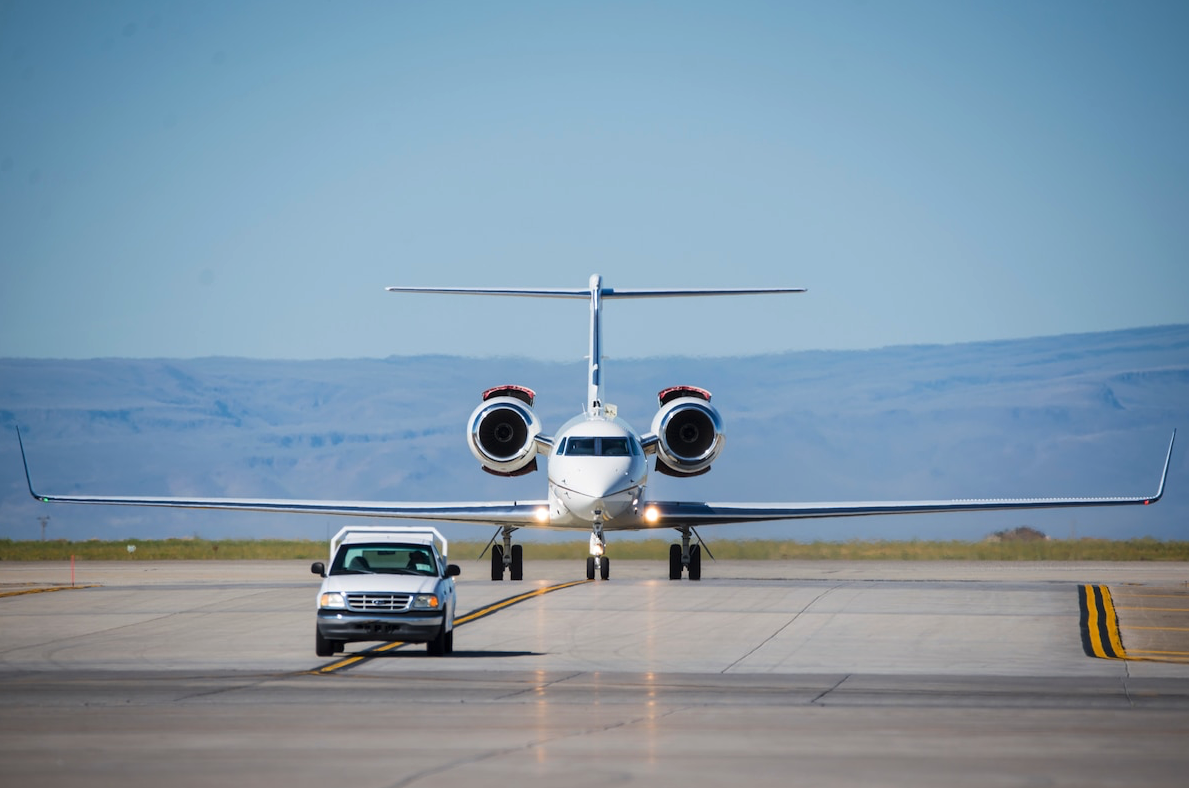
A U.S. Air Force C-37A taxis at Mountain Home Air Force Base in Idaho in 2020. [Credit: U.S. Air Force/Andrew Kobialka]

Department of Homeland Security (DHS) Secretary Markwayne Mullin praised the pilots of a nearly 25-year-old U.S. Coast Guard aircraft after they safely landed Mullin and about a dozen others at Reagan National Airport (KDCA) in Washington, D.C., following an engine loss on Wednesday.

The Metropolitan Washington Airport Authority (MWAA) said in a statement shared with FLYING that the aircraft—a Gulfstream V operating for the Coast Guard as C-37A with the call sign “Coast Guard 101”—landed safely at Reagan National after pilots reported a “possible mechanical issue” around 1:35 p.m. EDT. No injuries were reported, and the MWAA said there was no disruption to other flights.

It added that the aircraft was checked by fire and rescue personnel before moving off the runway.

The Coast Guard operates a pair of Gulfstream V long-range command and control jets that often carry top branch and DHS officials. The older C-37A entered Coast Guard service in May 2002, according to the branch’s website, making it close to 25 years old. The newer Gulfstream, operating as C-37B with call sign “Coast Guard 102,” was delivered in 2022 and has an expected service life of 30 years.

“The United States Coast Guard pilots made the single engine landing feel routine,” Mullin wrote on X Wednesday. “No panic, just straight professionalism. After we landed, the pilots told me that was a first for them! We could not have been in better hands.”

The C-37A pilot, who radioed air traffic controllers (ATCs) at the Potomac Approach around 1:30 p.m. EDT Wednesday, said the jet had 14 people on board and about 2.5 hours of fuel remaining.

“We just lost our right engine,” the pilot told ATC. “We’d like to declare an emergency and just an immediate landing at DCA.”

After landing, the pilot said the aircraft would be able to taxi after crew members “run through a few checklists.”

Coast Guard’s Aging Aircraft

Former DHS Secretary Kristi Noem, who departed the role in March, raised the issue of the C-37A’s age in a post on X Thursday.

“So thankful everyone is safe,” Noem wrote. “Guess the Coast Guard did need new planes.”

The Washington Post in May 2025 reported that DHS under Noem planned to acquire a new Gulfstream V. Admiral Kevin Lunday, sworn in as commandant of the Coast Guard in January, said in a congressional hearing that month that the G-V used by Noem was “approaching obsolescence.” Representative Lauren Underwood (D-Ill.) estimated that acquiring a new aircraft would require $50 million to be drawn from the Coast Guard’s budget.

Tricia McLaughlin, Noem’s spokesperson who departed DHS in February, said in a statement defending the purchase that the Gulfstream was “well beyond operational usage hours for a corporate aircraft.” McLaughlin also said the C-37A was “outside of Gulfstream’s service life,” calling its proposed replacement a “matter of safety.”

DHS in the news release containing McLaughlin’s statement noted that the C-37A “faces significant avionics and communications obsolescence issues” that have affected its availability for “critical missions.”

Congressional Democrats in 2025 also flagged the age of the Coast Guard’s aircraft but questioned the use of the branch’s funds to replace the C-37A.

In a May 2025 letter to Noem, ranking members of the House Homeland Security Committee and Transportation and Maritime Security Subcommittee said funding a new Gulfstream would come at a cost to other aging Coast Guard assets. They cited a 2024 Government Accountability Office report that said many aircraft in its fleet entered service in the 1980s and ’90s, meaning some are decades older than the G-V.

Despite objections, DHS in October 2025 was reported to have purchased two new Gulfstream jets for $172 million. Neither has entered service.

Modernizing the National Airspace System (NAS) and federal aviation assets has been a core issue facing President Donald Trump’s administration.

Trump is phasing out a pair of aging VC-25A presidential transport aircraft with a heavily modified Boeing 747-8 gifted by the Qatari royal family. Officials refer to the jet as the VC-25B “Bridge,” and it made its first flight as Air Force One when Trump traveled from Maryland to North Dakota in July.

The administration is also phasing out helicopters that have long served as Marine One when transporting the president for Sikorsky VH-92A Patriots. Crews have begun building a new helipad on the White House South Lawn to accommodate the VH-92As due to their penchant for torching the grass.

At the same time, the Transportation Department is leading a multibillion-dollar modernization of the nation’s ATC system.

Jack Daleo

Jack is a staff writer covering advanced air mobility, including everything from drones to unmanned aircraft systems to space travel—and a whole lot more. He spent close to two years reporting on drone delivery for FreightWaves, covering the biggest news and developments in the space and connecting with industry executives and experts. Jack is also a basketball aficionado, a frequent traveler and a lover of all things logistics.

After 2,000 E-Jet Deliveries, What’s Next for Embraer’s Popular Family?

Manufacturer continues to secure orders for the second-generation E2 while contending with development delays.

Embraer E-Jet E195-E2 narrowbody in special livery
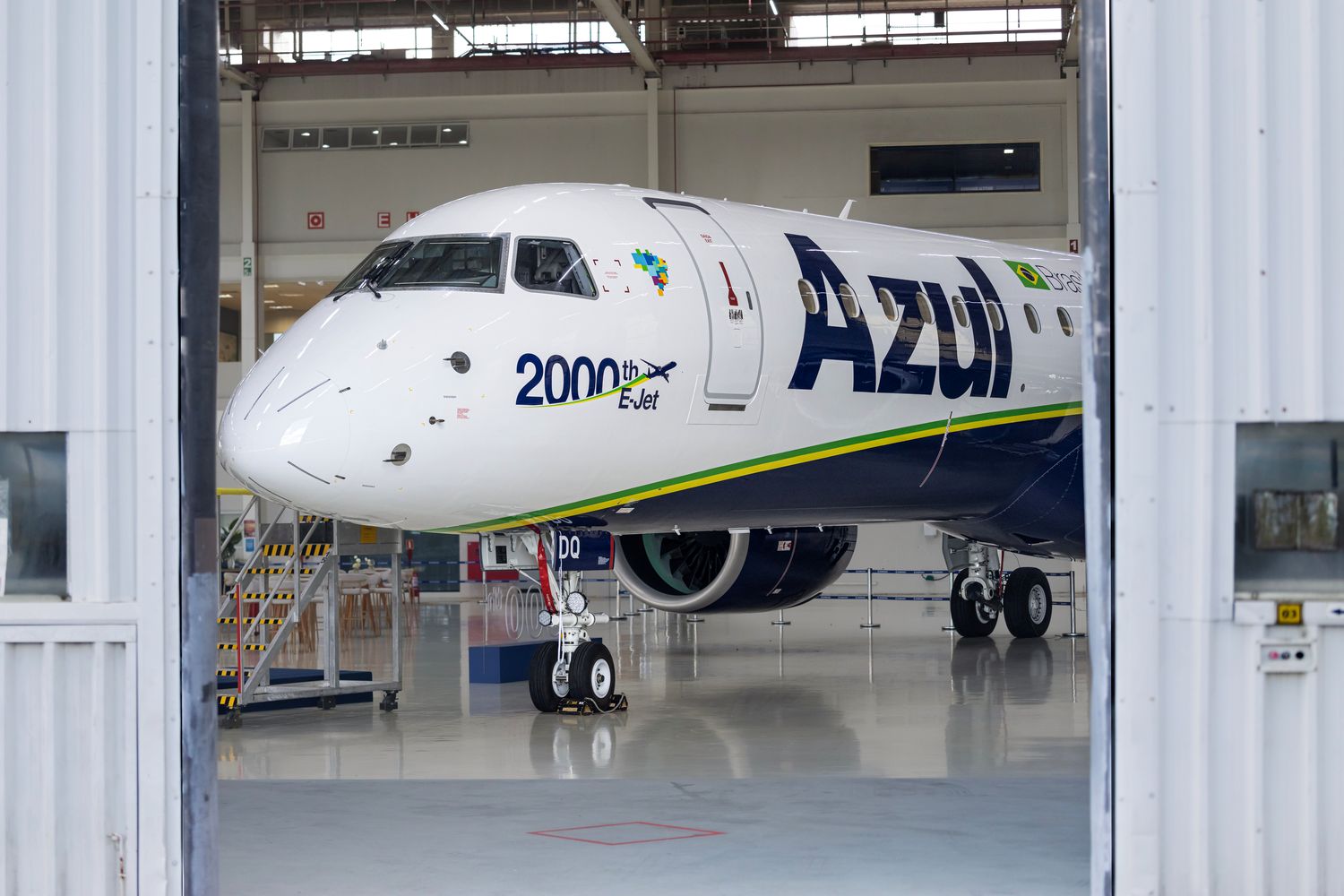
Embraer’s 2,000th E-Jet delivery, an E195-E2, features a special livery commemorating the milestone. [Credit: Embraer]

Embraer on Wednesday said it delivered its 2,000th E-Jet to Brazil’s Azul Linhas Aéreas, marking a key milestone for the family of twin-engine narrowbodies as the manufacturer looks to expand its global reach.

Azul, which Embraer described as a “key operator” of the family, took delivery of an E195-E2, the largest member of the second-generation E2 family. The aircraft features a special livery with the words “2,000th E-Jet” painted on the left side of the nose.

Embraer said Azul has operated more than 140 E-Jets. It received the Brazilian manufacturer’s first E195-E2 in 2019 as the type’s launch customer.

The E-Jet family includes the first-generation E170, E175, E190, and E195. The latter two types have been in the news this week due to a controversial low flyover in South Africa, but they are considered to have an excellent safety record.

The E2 family aircraft, the E190-E2 and E195-E2, were introduced in the 2010s and offer improved fuel efficiency. Embraer said Azul has been a “strategic partner” in the second-generation family’s success.

E-Jets are known for their relatively low cost per trip due to high fuel efficiency, as well as the ability to offer the comfort of larger aircraft on regional routes. Embraer credited the family as the enabler for it to “expand beyond its traditional regional aviation market and establish a strong position in the global small narrowbody segment.”

Republic Airways is the largest E-Jet operator with more than 300 E170s and E175s in its regional fleet.

Then and Now

The E-Jet family entered service in 2004 with LOT Polish Airlines. According to Embraer, it has racked up 48 million flight hours and transported more than 2.85 billion passengers. The manufacturer described it as “one of the world’s three largest commercial jet families” and said in July that the E2 is the “only small narrowbody aircraft family in operation across six continents.”

Compare those figures to the company’s May 2024 update marking its 1,800th E-Jet delivery. At the time, Embraer said the family had flown 2 billion passengers, meaning it has transported about 850 million since. At the same time, the 2024 update said the family has served 90 airlines across over 60 countries, numbers that remained unchanged in Wednesday’s announcement.

That does not mean E-Jets are failing to attract new customers. At the Farnborough International Airshow in July, Embraer announced a total of up to 58 E-Jet sales. The manufacturer in June surpassed 500 E2 orders following a deal with aircraft lessor Azorra.

India’s civil aviation regulator in July awarded type certification for E-Jets, extending their worldwide coverage. The family is particularly popular among U.S. regional airlines. However, scope clause restrictions on maximum takeoff weight for aircraft with up to 76 seats have complicated the E2 series’ introduction in the American market.

Embraer said in early 2025 that it would delay development of the second-generation E175-E2 by four years, in part due to scope clause restrictions. Avelo Airlines, which in 2025 placed a firm order for 50 E195-E2s, is expected to be the first U.S. E2 operator, though deliveries are not expected until next year.

Jack Daleo

Jack is a staff writer covering advanced air mobility, including everything from drones to unmanned aircraft systems to space travel—and a whole lot more. He spent close to two years reporting on drone delivery for FreightWaves, covering the biggest news and developments in the space and connecting with industry executives and experts. Jack is also a basketball aficionado, a frequent traveler and a lover of all things logistics.

This 1962 Cessna 182E Skylane Is an Honest ‘AircraftForSale’ Top Pick

IFR-equipped classic features modern Garmin avionics, low-time scimitar propeller, and extended-range fuel tanks.

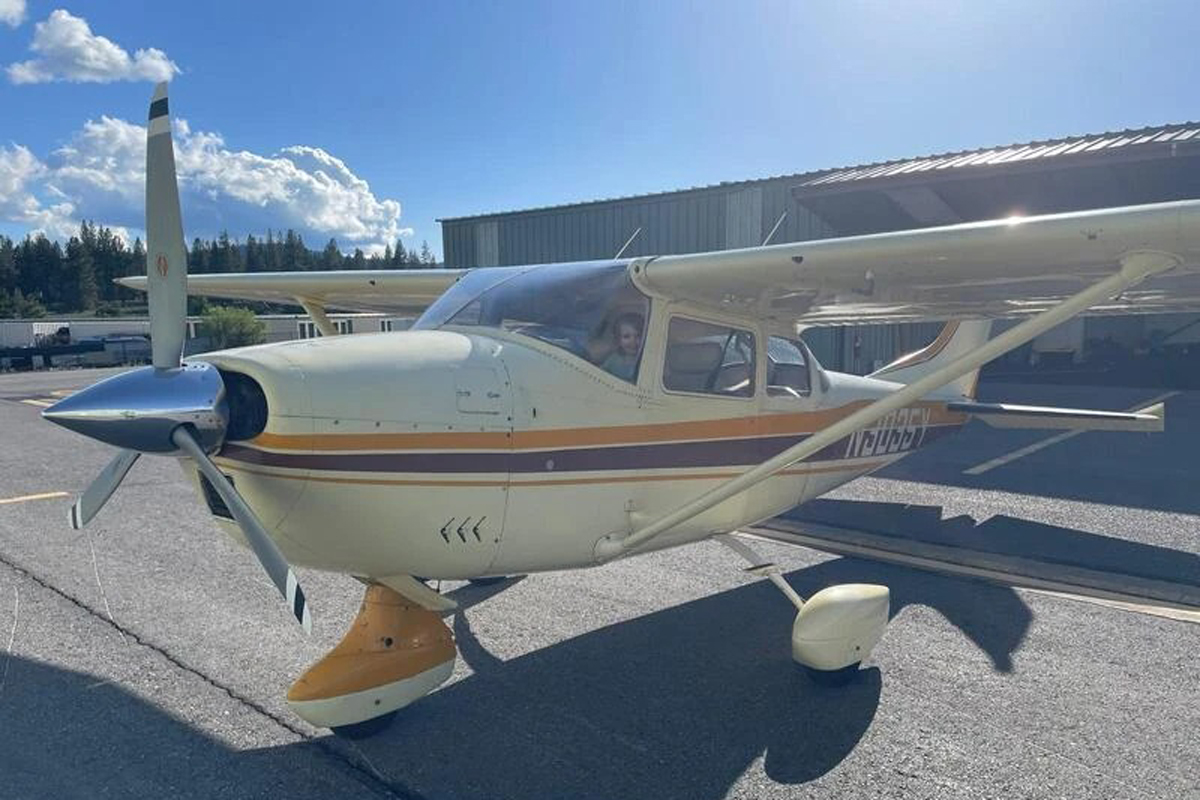
1962 Cessna 182E Skylane [Credit: David Wardlaw]

Every day, the team at Aircraft For Sale chooses an airplane that catches our attention because it is unique, a good deal, or has other qualities we find interesting. You can read Aircraft For Sale: Today’s Top Pick at FLYINGMag.com daily.

Today’s Top Pick is a 1962 Cessna 182E Skylane.

Standing as one of general aviation’s most legendary workhorses, the Cessna 182 Skylane is revered for its stellar dispatch reliability and rugged capabilities. It strikes a rare balance in the owner-flown market, delivering ample payload and cross-country performance while remaining incredibly docile and forgiving to fly.

Averaging just over 60 hours of flight time a year, this continuously hangared 1962 airframe shows 4,000 hours total time and boasts no damage history. The exterior wears an original 1970s-era cream paint scheme with brown-and-gold striping, offering a presentable, classic aesthetic that functions perfectly for a dedicated operator.

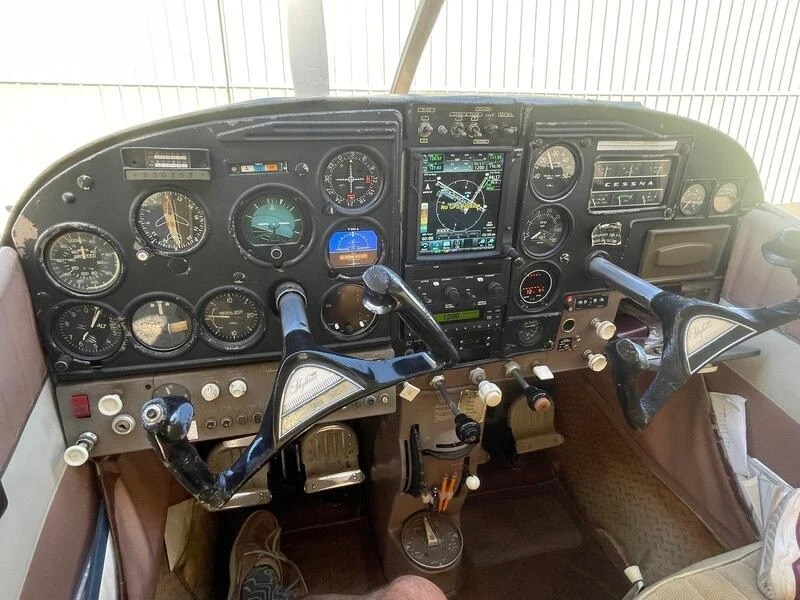
Pilots stepping into the cabin will be greeted by a surprisingly sophisticated IFR platform, anchored by a touchscreen Garmin GTN 750 WAAS navigator and an RC Allen digital backup attitude indicator. The panel is further modernized with a Garmin GTX 327 transponder, GDL 88 dual-link ADS-B transceiver, and Flight Stream 210 for seamless wireless iPad integration. 

Passengers relax on clean, tan corduroy seats, though the door jambs and lower plastics present an opportunity for cosmetic refurbishment.

1962 Cessna 182E Skylane [Credit: David Wardlaw]

Providing the muscle for this cross-country machine is a 230 hp Continental O-470-R engine with 1,200 hours since major overhaul. Attached to the nose is a recently installed Hartzell three-blade scimitar Top Prop with a mere 205 hours since new, yielding superior climb performance and smoother ride. Additionally, a Reiff SL6 engine preheat system and STC’d 82-gallon, extended-range tanks make it highly capable for cold-weather mountain operations and long endurance legs.

Offered at $129,500, this well-equipped Cessna 182E Skylane is based in Truckee, California, and comes with complete logbooks back to new. With an annual inspection current through November 2026, it represents a stellar IFR aircraft with room for a new owner’s personal touches.

If you’re exploring ownership options, FLYING Finance can help get you airborne. Use our airplane loan calculator to estimate your monthly payments, or connect with an aviation finance expert at flyingfinance.com.

FLYING Staff

FLYING Magazine is a one-stop resource for everything aviation, including news, training, aircraft, gear, careers, photos, videos, and more.

Top Aircraft Maintenance Jobs

There’s a wide range of career opportunities available for aircraft mechanics.

Working in aircraft maintenance can be a challenging but rewarding career path. [Credit: Shutterstock]

Aircraft maintenance plays a key role in keeping our skies safe. Skilled professionals work each and every day to ensure that aircraft are safe to fly.

For those interested in aviation, working in aircraft maintenance can be a challenging but rewarding career path.

Jobs in aircraft maintenance typically require an aircraft mechanic certificate from the FAA with accompanying airframe and powerplant ratings. After obtaining these certifications, aircraft mechanics—also sometimes known as airframe and powerplant technicians (A&Ps) or aircraft maintenance technicians (AMTs)—can pursue a variety of career opportunities.

Commercial Airlines

For many aspiring aviation maintenance professionals, working for an airline is the ultimate career goal. There are many advantages, including flight benefits, competitive salaries, and opportunities for career advancement or movement.

Although airlines are the most well-known employers of aircraft maintenance professionals, there are many other types of companies that hire aircraft mechanics.

Corporate and Private Jet Companies

There are many companies that offer private jet services. Some nonaviation companies also have their own fleets of corporate aircraft.

Although these operators sometimes outsource their aircraft maintenance, some have their own maintenance teams that employ aircraft mechanics.

Working at one of these companies gives aircraft mechanics the opportunity to work on private aircraft and corporate jets. Depending on the employer, there may also be opportunities for travel and other company benefits.

Flight Schools and Small Aircraft Operators

Many flight schools in North America also have their own maintenance operations that require aircraft mechanics. The same can be said about many companies in fields like aerial photography, surveying, or banner towing.

These employers are often based at smaller airports and have a higher level of interaction between pilots and mechanics. This type of work environment can be very rewarding for aircraft mechanics.

Aircraft Maintenance Providers

In some cases, airlines and other aircraft operators will outsource their maintenance to third-party aircraft maintenance providers. These companies specialize in offering maintenance services for different types of aircraft.

Given the nature of their business, these providers hire large numbers of aircraft mechanics. Working at one of these companies can expose mechanics to a variety of different aircraft and career opportunities.

Aircraft Manufacturers

In the course of designing and building aircraft, manufacturers also have a need for aircraft maintenance technicians. For example, mechanics at an aircraft manufacturer could work on aircraft assembly or perform maintenance on finished aircraft undergoing the testing process.

Some aircraft manufacturers also offer ongoing maintenance or overhaul services to their customers. This work is also supported by aircraft mechanics.

Military Aviation

The various branches of the United States Armed Forces operate a whole host of aircraft.

These aviation operations are supported by teams of aircraft mechanics employed by the military and by third-party contractors. Joining the military can be very rewarding but also comes with challenges such as relocation and deployments.

Those interested in pursuing an aircraft maintenance career in the military do not have to pay for their own training as they are certified through the military. After leaving the military, mechanics can easily transition to the civilian world by taking a special course. This allows them to bypass the typical civilian FAA certification process for aircraft mechanics.

Aviation Safety Inspectors

The FAA hires inspectors to administer and enforce safety regulations and standards. There are a few specializations for FAA inspectors, including avionics, maintenance, and manufacturing. Many of these positions require a valid aircraft mechanic certificate.

Being an FAA inspector is a unique opportunity within the aircraft maintenance world. While it does not involve directly working on aircraft, working as an FAA inspector allows mechanics to play a key role in ensuring aviation safety.

Jobs with the federal government also typically come with competitive salaries and benefits.

FAQ

Is there high demand for aircraft maintenance technicians?

Yes, there is high demand for aircraft mechanics. The U.S. Bureau of Labor Statistics anticipates 5 percent growth for aircraft and avionics mechanics through 2033. Meanwhile, aviation training company CAE projects a need for 138,000 AMTs by 2033. Many companies are actively hiring.

What is the salary for aircraft mechanics?

According to the Bureau of Labor Statistics, the median salary for aircraft mechanics in 2025 was $80,180 .

What is the highest paying aircraft maintenance job?

Although salaries depend on the employer, job location, employee qualifications and experience, the top-paying maintenance jobs tend to be found at major passenger and cargo airlines. Experienced mechanics at these companies can make over $100,000 per year.

Where is the best place to be an aircraft mechanic?

It depends on an individual’s personal situation and career goals. When looking for jobs, aircraft mechanics should consider factors such as their family situation and work preferences, as well as location and lifestyle desires.

Andrew Chen

Andrew is a lifelong lover of aviation and travel. He has flown all over the world and is fascinated by the workings of the air travel industry. As a private pilot and glider pilot who has worked with airlines, airports and other industry stakeholders, he is always excited to share his passion for aviation with others. In addition to being a writer, he also hosts Flying Smarter, an educational travel podcast that explores the complex world of air travel to help listeners become better-informed and savvier travelers.
Pilot in aircraft
Sign-up for newsletters & special offers!

Get the latest stories & special offers delivered directly to your inbox.

SUBSCRIBE