Register

Jeppesen ForeFlight Brings AI Agents to Airflow

Company says platform reasons using certified data and allows users to audit the decision-making process while remaining in control.

Jeppesen ForeFlight app
Jeppesen ForeFlight unveiled the first of hundreds of planned AI agents for the Airflow platform. [Credit: Shutterstock]

Jeppesen ForeFlight is the latest aviation company to introduce an artificial intelligence-powered platform as the industry seeks to incorporate more AI into various aspects of flight and operations management.

Jeppesen ForeFlight on Monday unveiled three AI agents within its Airflow “aviation operating intelligence” solution, the first of hundreds it plans to introduce on the platform, which was unveiled in July. The company contrasted generic AI systems—which it said sound confident but are often wrong—with what it bills as a more trustworthy “aviation intelligence” that uses a working model of the ecosystem the agent is analyzing.

The rollout advances one of Jeppesen ForeFlight’s first new ventures since Boeing sold it to private equity firm Thoma Bravo in April 2025. In July, it partnered with uAvionix to introduce SkyPlay, a new integration that embeds ForeFlight directly within panel-mounted avionics.

A “trip trading” agent is designed to help crew members who trade trips get “faster” and “fairer” outcomes, Jeppesen ForeFlight said. It said the capability will help airlines limit unplanned absences and premium pay when trades are too difficult to make.

The company’s “target mastery” agent is intended to eliminate trial and error in pairing and roster planning. It can translate planners’ targeted outcomes, cost, fatigue, robustness, and other parameters into a workable flight plan.

The third agent, “augmented ops control,” would help operators manage disruptions by evaluating and ranking all recovery options, providing reasoning for each. For example, the tool could recommend a route that provides the greatest fuel savings.

“Every recovery option, weighed and recommended in seconds, with the reasoning attached for trusted decision making,” said Brad Surak, CEO of Jeppesen ForeFlight, in a news release. “That is what operators have told us they need most.”

The company said it plans to expand the agents to business and military aviation customers “soon.” It is seeking commercial aviation partners for a “co-development phase” before a broader rollout planned for 2027.

How It Works

Jeppesen ForeFlight said the agents reason using a foundation of certified aviation data, allow users to audit their decisions, and embed within existing workflows while keeping humans at the “center of decision making.”

Customers can use prebuilt Airflow agents, build their own agents on the platform, deploy third-party tools such as Slack, or use some combination of the three. They can set the level of automation from fully autonomous decision-making to total human control, or somewhere in between, with the human approving, monitoring, or overriding actions proposed by the agent.

“We are leveraging decades of experience delivering data and software solutions globally, which compounds virtually every second on the 60 million flights we serve annually,” Surak said in July. “But most importantly, our AI earns trust one decision at a time.”

Per Jeppesen ForeFlight’s website, Airflow is built on 90 years’ worth of performance models, procedures, optimizers, aeronautical data, and other certified data from more than 200 countries and ANSPs. Agents will use the company’s aviation context graph as foundation for reasoning. They will leverage commercially available data—including nav data, charts, procedures, weather, notices to airmen (NOTAMs), traffic, and flight history—and proprietary customer data and operator rules, while being tailored to specific roles such as dispatcher or scheduler.

Rather than simply spotting patterns and basing decisions on what tended to happen in past situations, the agents are designed to reason through cause and effect. They will allow users to view their inputs, sources, logic and reasoning, expected outcomes, and constraints and alternatives considered before they choose whether to accept its decisions. Agents will also have simulation ability to anticipate disruptions before they impact operations.

Jeppesen ForeFlight said the agents are governed by a patent-pending AI-Safety Management System (SMS) based on the industry SMS framework.

AI In the Cockpit

The October 2026 edition of FLYING magazine highlights some concerns that experts hold regarding AI integration in aviation. Still, many companies are forging ahead developing automated and fully autonomous tools for the cockpit and elsewhere.

For example, PlaneDNA recently introduced a tool designed to change how pilots access and learn about their aircraft through AI-assisted logbook insights. Another company, Daedalean, is developing a machine learning-based computer vision system called PilotEye that is intended to augment a human pilot’s see-and-avoid efforts.

Other companies, such as Merlin Labs, are taking things a step further. Merlin’s AI-based Pilot platform is designed to autonomously assist or conduct takeoffs, landings, and other in-flight functions. Initially, it will serve as an AI copilot, but Merlin believes it could eventually enable fully autonomous flights.

Other AI-powered systems, such as Sabre’s Mosaic or Lufthansa Systems’ NetLine/Ops ++ aiOCC, are designed to help airlines better serve their customers and optimize their operations using real-time or historical data.

Even the federal government is looking to incorporate AI in aviation. The FAA last month rolled out SMART (Strategic Management of Airspace, Routes and Trajectories) as an AI-powered tool designed to assist air traffic controllers. SMART synthesizes information from hundreds of data streams and uses it to make recommendations to controllers, which they can accept or decline.

Jack Daleo

Jack is a staff writer covering advanced air mobility, including everything from drones to unmanned aircraft systems to space travel—and a whole lot more. He spent close to two years reporting on drone delivery for FreightWaves, covering the biggest news and developments in the space and connecting with industry executives and experts. Jack is also a basketball aficionado, a frequent traveler and a lover of all things logistics.

This 2003 Dassault Falcon 2000 Is a Transatlantic ‘AircraftForSale’ Top Pick

Freshly retrofitted Collins Pro Line 21 panel and low total airframe hours headline widebody heavy jet.

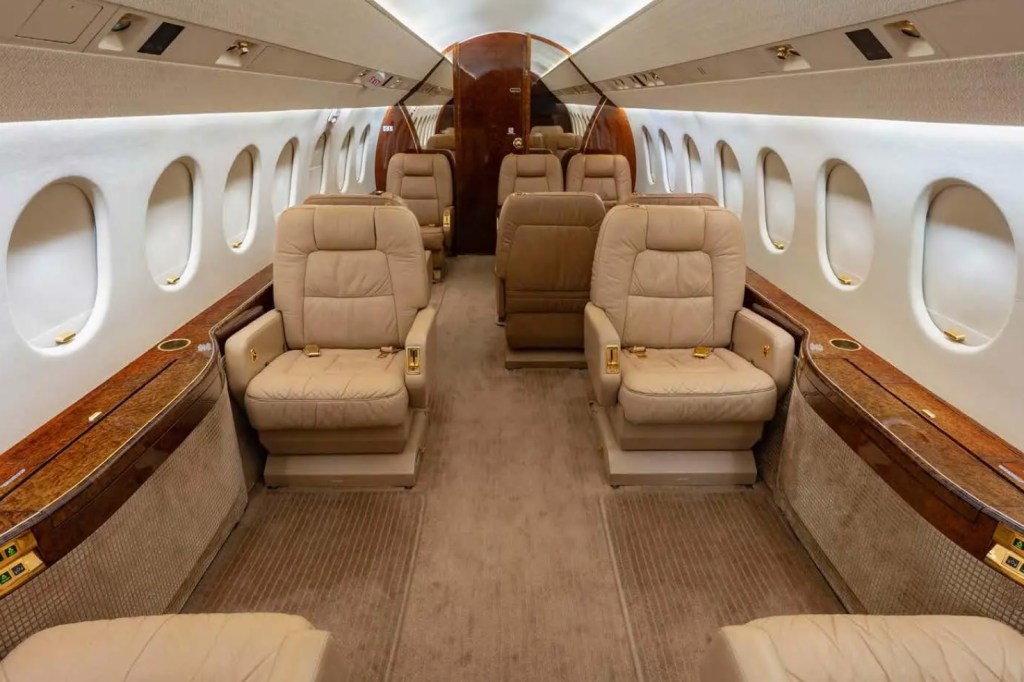
2003 Dassault Falcon 2000 [Credit: AvPro]

Every day, the team at Aircraft For Sale chooses an airplane that catches our attention because it is unique, a good deal, or has other qualities we find interesting. You can read Aircraft For Sale: Today’s Top Pick at FLYINGMag.com daily.

Today’s Top Pick is a 2003 Dassault Falcon 2000.

Engineered with Dassault’s signature fighter-jet heritage, the Falcon 2000 strikes a sweet spot between intercontinental legs and short-field agility. The twinjet pairs a spacious widebody cabin with rapid climb performance, allowing operators to bypass congested hub airports and utilize shorter regional runways while maintaining true nonstop, cross-country capability.

Tracking a clean two-owner U.S. history since leaving the factory, this 2003 airframe logs just 5,424 total flight hours across 2,509 landings. Its exterior sports a sleek 2021 paint scheme, featuring a crisp white upper fuselage over a gray lower section, accented by gray striping.

Stepping inside the cabin introduces passengers to a quiet, 10-passenger executive layout that has been partially refurbished. The interior is divided into a forward four-place club and an aft four-place conference group opposite a two-place club, all dressed in tan leather with dark high-gloss wood veneer cabinetry, gold-plated hardware, Aircell Axxess II phone system, and dual LCD bulkhead displays for long-range comfort.

Delivering reliable high-altitude cruise capability is a pair of Honeywell CFE738-1-1B turbofans, fully enrolled on the CSP Gold maintenance program to lock in predictable operating costs. For ground power and cabin climate control without running the main engines, the aircraft features a Honeywell GTCP36-150 auxiliary power unit covered under MSP Gold.

2003 Dassault Falcon 2000 [Credit: AvPro]

Up front in the flight deck, pilots command a modern Collins Pro Line 21 glass suite retrofitted by WestStar in June 2022. The upgraded panel includes Synthetic Vision, dual GPS-4000S units with WAAS-LPV capability, SiriusXM weather, Runway Awareness & Advisory System (RAAS), TCAS 7.1, and 88-parameter digital flight data recorder.

Offered on a “call for price” basis, this U.S.-based widebody represents an immediate, turnkey path into heavy-jet performance without waiting for a new delivery slot.

If you’re exploring ownership options, FLYING Finance can help get you airborne. Use our airplane loan calculator to estimate your monthly payments, or connect with an aviation finance expert at flyingfinance.com.

FLYING Staff

FLYING Magazine is a one-stop resource for everything aviation, including news, training, aircraft, gear, careers, photos, videos, and more.

How Do I Keep My Ground School Students Focused?

There are some proven techniques to engage young aviation learners and drive deeper understanding.

In ground school, student pilots learn important skills such as how to access and interpret weather, calculate aircraft performance, and use a checklist. [Credit: Adobe Stock]

Question: I’ve just started teaching a Part 141 private pilot ground school at a community college. It’s the first time I’ve taught ground school. Most of the students are fresh out of high school. The most frequently asked question is “Will this be on the test?” On the first day I told them, if it’s on the syllabus, it will be on the test, but they keep asking. Any tips on getting the class to focus?

Answer: I have been teaching private pilot ground school for 25 years, and when asked that same question, I reply, “on the test and in the airplane.” To drive this point home, write the four levels of learning vertically on the whiteboard—rote, understanding, application, and correlation. Instruct the class to write it down.

Let them know that learning begins at the rote level, and using the building block approach they will understand what is taught and by the end of the class they will achieve application and correlation. The latter two will most likely happen in the airplane on a regular basis.

Pro tip: Having them write it down promotes better learning. If one (or more) of them pulls out their smartphone to take a photo of it, you’ve just identified the students who have trouble following directions and may need extra help in class.

Use scenarios to get the students to process the information. For example, after they have learned about the carburetor, carburetor icing, and the use of carburetor heat, tell them about a pilot who was flying in the pattern on a damp winter afternoon when they experienced an uncommanded loss of engine power.

What do they think happened? What steps should the pilot take to fix the situation?

If you did your job right and the class is engaged, they can get rather excited discussing the procedures to correct the situation. And here’s the kicker: If one of them experiences one of the scenarios used in class in the real world, and takes prompt and correct action resulting in a nonevent, they will likely share the story with the class, proving learning has taken place.


Ask us anything you’ve ever wanted to know about aviation. Our experts in general aviation, flight training, aircraft, avionics, and more may attempt to answer in a future article. Email your questions here.

Meg Godlewski

Meg Godlewski has been an aviation journalist for more than 24 years and a CFI for more than 20 years. If she is not flying or teaching aviation, she is writing about it. Meg is a founding member of the Pilot Proficiency Center at EAA AirVenture and excels at the application of simulation technology to flatten the learning curve. Follow Meg on Twitter @2Lewski.

Pilots Must Embrace the ‘What-If’ Philosophy

Master instructor instilled importance of preparation and trusting your training.

Looking back, I realize that my first flight instructor wasn’t merely teaching procedures. He was teaching a way of thinking. [Image: Joel Kimmel]

The phone rang unexpectedly one day. The voice on the other end was 97 years old. “Verlyn, how are you doing?” It was Lyle Hamel.

More than 35 years had passed since he had instructed me, yet he still remembered me. That was the kind of person he was. He cared about people long after they left his airplane. Most flight instructors teach students how to pass a check ride. Hamel taught students how to survive.

This Article First Appeared in FLYING Magazine

If you're not already a subscriber, what are you waiting for? Subscribe today to get the issue as soon as it is released in either Print or Digital formats.

Subscribe Now

By the summer of 1972, I had accumulated about 175 hours of flight time. Nearly 60 of those hours had been spent with Lyle sitting beside me in a little 1957 straight-tail Cessna 150 that he had sold to our family.

Lyle earned his living as a music teacher. Woodwinds were his specialty. Flying was his passion. He was patient, calm, and meticulous. In all the years I knew him, I never once heard him raise his voice in anger. But he missed nothing.

“Open your flight bag,” he would say before a flight. I would comply. “Show me your flashlight.” Even on bright summer mornings he wanted proof that the batteries worked. “You never know when you’ll need it.”

Then came the checklist. If I said I had memorized it, he would smile. “That’s wonderful. Now where is it?” He insisted that memorizing a checklist was not the same as using one. Every flight. No exceptions. There was always another lesson.

One day he took me through rain showers so I would know what to expect if I ever encountered them unexpectedly. Another day he taught me soft-field landings. Then came hand-propping an airplane safely in case a battery failed. He covered the instruments and asked me to tell him their readings from memory. He made me fly under the hood until I could trust instruments more than my senses.

Sometimes I wondered if there was any end to the things he wanted me to learn. Oddly enough, I never grew tired of it. I enjoyed every lesson because each one revealed something I had never considered before.

Looking back, I realize that Lyle wasn’t merely teaching procedures. He was teaching a way of thinking. Every lesson seemed to begin with the same question: What if? What if the battery dies? What if the engine quits? What if visibility suddenly disappears? What if the instruments are all you have left?

One day he summarized his philosophy in a sentence I never forgot: “If you think of every landing as a dead-stick landing, you won’t be surprised when the real emergency occurs.” Lyle believed that real-world emergencies should never be the first time a pilot thinks about an emergency.

Years later, I would discover why.

Lyle had sold our family a well-worn 1957 straight-tail Cessna 150. It wasn’t fast, and it certainly wasn’t fancy, but it became the airplane in which I learned the fundamentals of flying. Looking back, I suspect Lyle missed that little airplane almost as much as he enjoyed teaching in it.

While attending college, I became acquainted with a physician whose daughter was one of my classmates. He had recently purchased a four-seat Cessna 172 and generously allowed me to use it whenever I wished. One day he called and asked if I would fly him and two other doctors to a medical seminar.

I explained that coastal fog was common that time of year and that neither the airplane nor I were instrument rated. If the weather blocked our route, we would have to land and continue by car. He agreed—at least initially. 

As we approached Northern California’s coastal mountains, a solid bank of fog blocked our path. I announced that we needed to land. The doctors disagreed.

Just then another pilot reported over the radio that he had followed a river beneath the fog into Eureka. The doctors immediately seized on the idea. “Just follow the river,” they said.

I knew it wasn’t a good idea. I knew it wasn’t something I had been trained to do. Yet I was young, inexperienced, and sitting beside highly respected physicians. One of them was internationally known in his field. I allowed myself to be persuaded.

It was one of the worst decisions of my flying career.

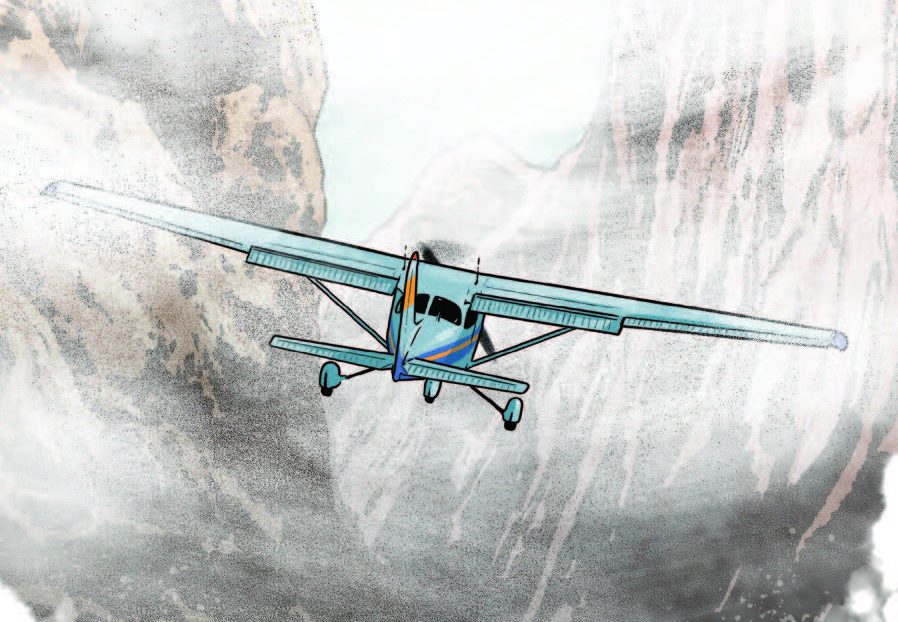
We found ourselves scud running down a twisting canyon at dangerously low altitude with mountains rising on both sides. There was no safe place to turn around and no margin for error. Eventually we reached our destination, but all day long I worried about the return trip.

Late that afternoon the weather remained poor. This time I was determined not to go. The owner of the airplane had other ideas. “I’ll fly it myself,” he said. The problem was that he was still a student pilot.

Realizing that the situation was becoming even more dangerous, I reluctantly climbed back into the left seat. As we departed, a temporary hole appeared in the fog. The doctor insisted on making the takeoff.

Seconds later, the opening closed. The airplane entered dense fog.

Instantly I watched the attitude indicator show the nose rising and the airplane beginning a banking turn to the left. Without outside references, spatial disorientation was already taking hold.

Then I heard Lyle Hamel’s voice in my memory. I remembered the countless hours under the hood. The unusual-attitude recoveries. The insistence on trusting instruments instead of sensations.

“Let go. I have the airplane.” The doctor released the controls. As I leveled the wings according to the instruments, the three doctors cried out in alarm, convinced that I had lost control of the airplane.

But my eyes stayed on the instruments. Everything in my body wanted to believe what my senses were telling me, but Lyle had taught me that instruments tell the truth while sensations often lie. Within moments I had the airplane under control and descending safely back below the dense fog layer.

That was only one of several close calls before the day finally ended. The instrument lights failed. We became lost at night, narrowly avoided terrain, and I eventually landed at the wrong airport in dense ground fog and found myself explaining the entire ordeal to an FAA controller who I thought was going to pull my license. Instead, he taught me another lesson: When pilots need help, they should ask for it.

Yet when I look back on that long day, one lesson stands above all others. The reason we survived was not luck. It was preparation. It was training.

Lyle Hamel understood something that many new pilots have yet to learn: Emergencies rarely require skills you have never seen before. More often, they require ordinary skills practiced so thoroughly that they can be performed under extraordinary stress. Each time we faced another close call, Lyle’s “What-if?” philosophy helped me recall my training and remain calm enough to deal with the emergency at hand.

I also learned another lesson that day. No matter how accomplished your passengers may be, they are not the pilot in command. Doctors save lives. Lawyers know the law. Business leaders run companies. But none of those accomplishments transfer automatically to aviation.

The pilot bears the responsibility. The pilot makes the decision. And the pilot must sometimes say “no,” even when everyone else says “yes.”

I wish I had learned that second lesson earlier in the day, because several of the day’s dangers began when I surrendered my own judgment. But I never forgot it afterward. Neither did I ever forget Lyle.

Years have passed since those events, yet I still consider that flight instructor one of the most important people in my aviation life. His patience, thoroughness, and insistence on mastering the fundamentals were quietly preparing me for a day neither of us could foresee.

Today, when I think of Lyle, I remember far more than unusual-attitude recoveries and hours under the hood. I remember a teacher whose influence reached further than either of us could have imagined. Before moving to Northern California, he taught my future wife to fly in Southern California. A year later, he taught me in that same airplane (N552E) after it became part of our family. We didn’t discover the connection until after we were married. 

Looking back, it seems fitting. Lyle helped shape both of our aviation journeys long before either of us realized how far his influence would reach. He had taught me how to think ahead, how to prepare for the unexpected, and how to trust training when circumstances turned against me.

One day, those lessons helped bring four people safely home.


FLYING’s I Learned About Flying From That (ILAFFT) features reader-submitted stories about lessons learned from memorable moments in the cockpit. The views and factual assertions expressed in this article are those of the author. Unless expressly stated otherwise, Firecrown Media Inc. has not independently verified the events or factual claims described. To share your story for possible publication, submit ~1,000 words at submissions.firecrown.com and select ILAFFT.


This column first appeared in the August Issue 973 of the FLYING print edition.

Veryln Benson

Verlyn Benson is a retired university administrator who spent 12 years leading collegiate aviation programs at Andrews University in Berrien Springs, Michigan. A private pilot and longtime AOPA member, he and his wife, Anita, live in Crescent City, California.

AOPA to Keep X Account Active in Response to Member Feedback

Organization on Tuesday told FLYING it reversed its plans to leave the social media platform.

X social media platform logo
AOPA on Tuesday said it reversed its decision to stop posting on social media platform X. [Credit: Bangla Press/Shutterstock]

The Aircraft Owners and Pilots Association on Monday abruptly announced that it “made the decision to stop using” social media platform X, formerly known as Twitter. The move was met with backlash from users of the platform, which is owned by SpaceX CEO Elon Musk.

However, the organization told FLYING on Tuesday that it now plans to keep its X account active in response to member feedback over the past 24 hours. AOPA said it would ramp up content on the platform with a focus on policy and advocacy work.

AOPA has about 85,600 followers on X, more than it has on LinkedIn or TikTok. The organization has about 254,000 followers on Instagram, 213,000 on Facebook, and 131,000 subscribers on YouTube. Its last X post prior to Monday’s announcement was made on July 26.

The organization said the decision to leave X was numbers-based, explaining that engagement with its posts fell 80 percent over the past three years and that some posts received little to no engagement. It added that during the same span, audiences on Facebook, Instagram, LinkedIn, and TikTok grew by tens of thousands of followers each.

AOPA said it made efforts to improve engagement and decided to pivot to other platforms when those failed. But the response from X users and members was apparently strong enough to reverse those plans.

Palmer Luckey, the co-founder of Anduril, called the decision “pathetic.” Bush pilot, STOL air racer, and YouTuber Cory Robin, who described himself as a “long-standing supporter” of AOPA, said the move was “not a member driven decision” and that it “might be time for a new organization.” NASA Administrator Jared Isaacman simply posted a thumbs-down emoji.

A few users replying to AOPA’s post shared what appear to be screenshots depicting opt-outs from automatic renewal of their annual membership. Others threatened to cancel or not renew their memberships, though it is unclear how many of the posts come from actual AOPA members versus automated bots, which are prevalent across social media platforms.

Many who replied characterized the decision as a partisan statement and shift toward left-wing politics.

Responding to Controversy

AOPA’s decision to leave X and the subsequent reversal came about eight months after the group announced that former president and CEO Darren Pleasance, who assumed the role at the start of 2025, would step back from day-to-day responsibilities and assume an advisory role. A pair of acting co-presidents have taken up Pleasance’s responsibilities as the board of trustees searches for a new permanent leader.

AOPA provided the rationale that the CEO role “should be based full-time” at its headquarters in Frederick, Maryland. Pleasance lived in Oregon and traveled to Frederick for certain job functions.

However, the move drew accusations that Pleasance was forced out by the board. Members who viewed him as a strong leader created a petition calling for his reinstatement, according to an Aero-News Network (ANN) report.

In February, Jim Hauslein, the chair of AOPA’s board of trustees at the time, said the organization “received many calls and emails” following the move.

“We understand that leadership transitions can prompt strong reactions, particularly in an organization with such a loyal and engaged membership,” he wrote in a letter.

In an exclusive letter to Plane + Pilot, Pleasance said he had no plans to return to AOPA and endorsed Luke Wippler, who succeeded Hauslein as board chair.

Jack Daleo

Jack is a staff writer covering advanced air mobility, including everything from drones to unmanned aircraft systems to space travel—and a whole lot more. He spent close to two years reporting on drone delivery for FreightWaves, covering the biggest news and developments in the space and connecting with industry executives and experts. Jack is also a basketball aficionado, a frequent traveler and a lover of all things logistics.

Jury Finds Air Taxi Firm Joby Breached NDA, Misused Trade Secrets

Company’s counterclaims also rejected, including that Aerosonic sold it defective air data probes.

Joby Aviation electric eVTOL air taxi in flight
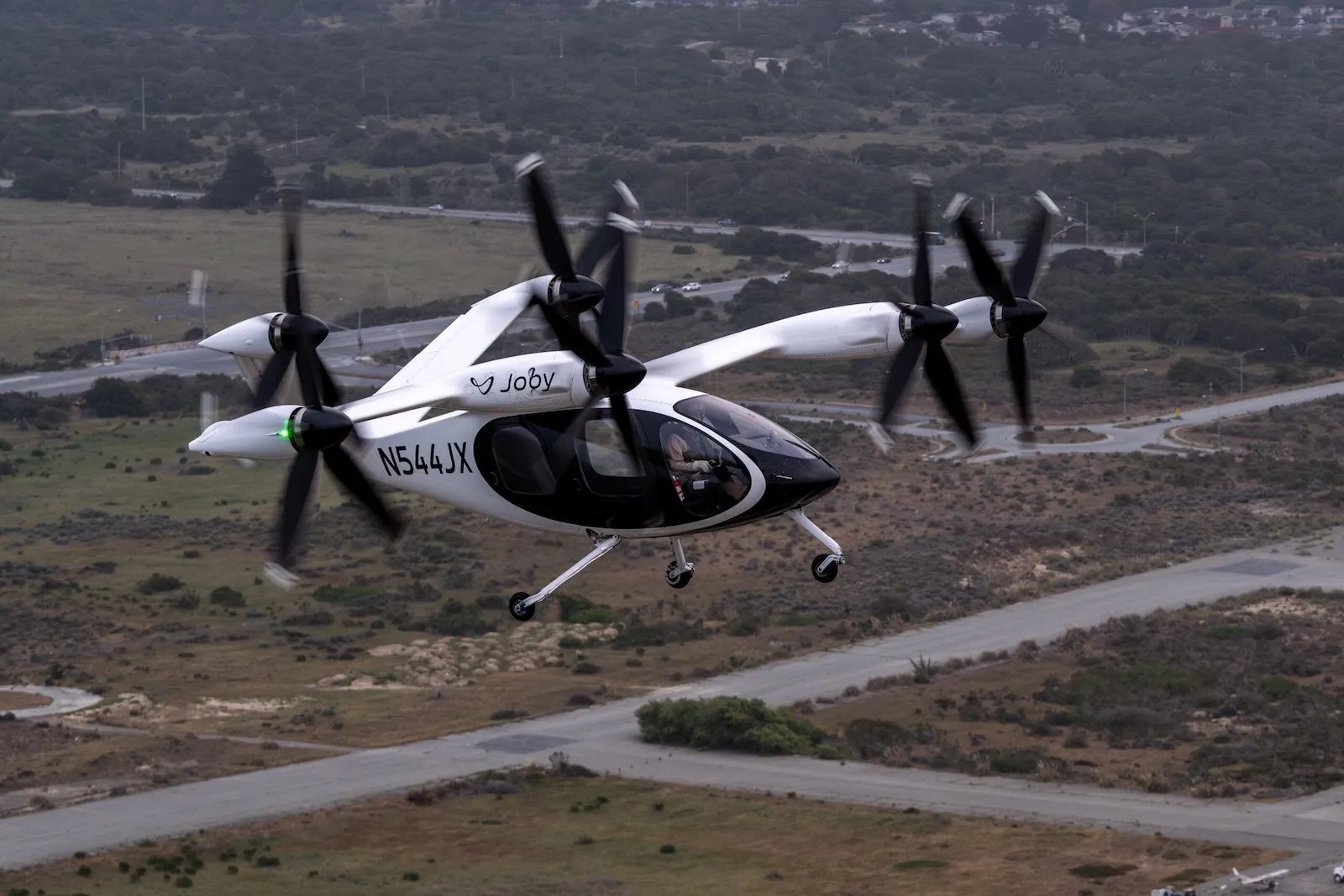
Joby test pilot James Denham completes a transition flight of Joby’s electric vertical takeoff and landing (eVTOL) air taxi at the firm’s flight test facility in California. [Credit: Joby Aviation]

A federal jury last week found that Joby Aviation breached a mutual nondisclosure agreement (NDA) and willfully misappropriated trade secrets, marking the latest legal development in the world of electric vertical takeoff and landing (eVTOL) aircraft manufacturing. The sector has seen several high-profile legal complaints in the past few years, with some still active.

According to a verdict filed in the U.S. District Court for the Middle District of Florida, the jury awarded Aerosonic—which sold air data probes to Joby in 2022 after both companies signed the NDA in 2021—about $116.9 million. Aerosonic alleged that Joby used its trade secrets and proprietary information to design and build its own probes following the sale.

“Joby independently developed its air data system through years of its own engineering and manufacturing work, and we stand firmly behind the integrity of that work and our conduct,“ Joby said in a statement shared with FLYING. “We take the protection of intellectual property, both our own and that of others, extremely seriously.“

The company added that the jury’s verdict is not a final judgment. It said it asked the court to overturn the verdict and intends to ”vigorously pursue all available post-trial and appellate remedies.”

Joby is developing eVTOL air taxis designed to whisk passengers over urban areas in minutes and is pursuing FAA type certification for its flagship S4. Per an August 2025 court order, Joby sought Aerosonic’s probes to measure “pitot pressure, static pressure, angle of attack, and angle of sideslip” for its “flight-test aircraft and eventual mass-production aircraft.”

According to Aerosonic, Joby had not attempted to design its own air data probes prior to purchasing its products, but it began doing so after, using designs and data that were considered proprietary under the firms’ NDA. Those allegedly included engineering drawings, test procedures and reports, 3D models, and wind tunnel data, as well as documents marked confidential that Aerosonic shared with Joby prior to the agreement.

The NDA applied to both future and past disclosures, Aerosonic alleged, and required Joby “not to copy or reverse engineer” any proprietary information.

Per the company’s complaint, Joby asked to purchase its intellectual property days after purchasing the probes, but it declined. Aerosonic said Joby then “continued to engage…about a potential business relationship and to solicit confidential, proprietary, and trade secret information about air data probes” before ceasing communication in 2023.

As evidence that Joby used its trade secrets, Aerosonic cited as evidence the manufacturer’s “remarkably short development time…despite no prior experience” while retaining access to confidential information. It also alleged Joby’s probes shared the “same distinctive geometric design” as its BB3 probe.

The similarity came to Aerosonic’s attention after Joby uploaded a YouTube video showing the geometric design, which it said was included in confidential disclosures but was not “readily observable when mounted on an aircraft.” It alleged Joby deleted portions of that video after it was brought to the company’s attention.

Aerosonic also claimed that Joby, in violation of the NDA, refused to return proprietary information after its repeated requests and continued using the company’s reports and data.

The firm alleged that Joby caused more than $100 million in damages because it “avoided years of research and development time and tens of millions of dollars of investment expenses.” Joby moved to dismiss the claims, but the court found Aerosonic’s allegations to be plausible and sufficiently pled.

Jurors awarded Aerosonic $68.6 million for Joby’s breach of the NDA, $29.9 million for its misappropriation of trade secrets, and $18.3 million in exemplary damages after finding the misappropriation to be willful and malicious. It also rejected all of Joby’s counterclaims, including that the probes it purchased from Aerosonic were defective.

Joby can still seek to have the verdict set aside or modified before pursuing an appeal, which it said it intends to do. The company said the verdict was “unsupported by the evidence and inconsistent with the law.”

At the same time, Joby is pursuing a trade secret case against Archer Aviation, its main eVTOL rival.

Joby, Archer, and the eVTOL Legal Landscape

Archer successfully motioned to intervene in the Joby-Aerosonic case, which Joby opposed, in order to protect its own trade secrets.

Aerosonic also sold probes to Archer, and the court had permitted Joby to seek discovery regarding that sale. Archer feared doing so would give its competitor confidential information, and the court granted its motion.

Joby and Archer have butted heads for years. Both are developing tilt-rotor eVTOL air taxis designed to fly up to four passengers on short, urban, zero-emission trips. The companies’ service plans overlap in markets such as New York, Los Angeles, and the Middle East. They are considered to be among the leaders in commercial eVTOL development, and each has operational and manufacturing agreements with marquee partners.

Joby’s trade secret case against Archer alleges that a former Joby employee downloaded sensitive files before joining Archer, then used them to help its rival undercut a deal with a real estate developer it had been courting. In September, a U.S. District Court judge threw out some of Joby’s complaints but allowed two to proceed. One involves Archer’s November 2025 lease of Hawthorne Airport shortly after hiring the former Joby employee, whom Joby alleges took files naming the airport.

The same judge rejected Archer’s countersuit alleging that Joby undertook a “years-long calculated scheme” to obscure ties to China—including mislabeling Chinese imports to circumvent tariffs—which it claimed netted Joby millions of dollars in government contracts. However, Archer’s patent infringement case against Joby at the U.S. International Trade Commission remains active and is pending investigation by an administrative law judge.

Also active is Archer’s patent infringement case against U.K. air taxi leader Vertical Aerospace, which accuses the latter of “copying” the design of Archer’s Midnight air taxi for its flagship Valo. Its complaint contends that patents for the “overall visual impression” of Midnight’s fuselage, wing, and V-tail design are “substantially the same” as Valo’s architecture. Vertical dismissed the complaint as “merely an attempt to distract from the challenges Archer is facing competing in the marketplace.”

Archer’s legal disputes within the eVTOL industry date to 2021, when Wisk Aero sued it for  “brazen theft” of trade secrets. Archer responded with a countersuit for $1 billion in damages, but the companies in 2023 settled on undisclosed terms and agreed to make Wisk the sole provider of autonomy technology for future Midnight variants.

Archer acquired Wisk, SkyGrid, and Insitu from Boeing in August in a deal that gave Boeing a significant stake in Archer.

Jack Daleo

Jack is a staff writer covering advanced air mobility, including everything from drones to unmanned aircraft systems to space travel—and a whole lot more. He spent close to two years reporting on drone delivery for FreightWaves, covering the biggest news and developments in the space and connecting with industry executives and experts. Jack is also a basketball aficionado, a frequent traveler and a lover of all things logistics.

Tillamook Air Museum Seeks Volunteers, Matching Funds Ahead of Reopening

Work party set for October 9 as $50,000 matching challenge aims to help restore historic Hangar B.

Tillamook Air Museum [Credit: Tillamook Air Museum]

The Tillamook Air Museum in Oregon is looking for volunteers to join a work party on Friday, October 9, to help prepare the facility located in Hangar B for reopening.

The museum has been closed since December after a powerful windstorm tore a 200-foot-by-30-foot hole in the roof of the 83-year-old Hangar B at Tillamook Municipal Airport (KTMK) approximately 75 miles southwest of Portland. The hangar is 1,072 feet long, 192 feet tall, and 296 feet wide.

The part of the building beneath the damaged roof was primarily used for storage at the time of the storm, but that didn’t mean the museum exhibits were safe from the elements. Immediately following the storm volunteers relocated some items and protected others with tarps while Port of Tillamook Bay and museum officials looked into if and how the hangar, built during World War II to house Navy airships, could be repaired.

In August the Port of Tillamook Bay Board of Commissioners approved the sale of the museum to the nonprofit Vintage Aviation Museum. The VAM has since been working with contractors and the port to prepare the wooden structure for repairs, which will begin by removing the damaged roof flap.

Museum officials noted the damage is at the far end of the hangar “well away from where our volunteer activities will take place.” They are asking volunteers to show up on Friday, October 9 from 5 p.m. to 8 p.m. PDT to help clean up aircraft, exhibit boards, and glass doors, and remove and fold up tarps that have been protecting the exhibits during the closure.

Some of the smaller aircraft need to be put back into position, and the gift shop merchandise will also be inventoried. Museum officials will provide workers with needed supplies and materials along with refreshments.

“We know how much this museum means to our community, and ever since we closed, people have been asking how they can help us,” said Christian Gurling, executive director and curator of the Tillamook Air Museum. “This is their opportunity to roll up their sleeves and be part of getting the museum ready to welcome people back.”

Matching Fundraising

The estimated cost of the roof repairs ranges between $2.5 million and $5 million. Port officials have been looking for grants to help cover the cost.

To help raise the money the Friends of Tillamook Air Museum (FOTAM) has stepped forward with a $50,000 matching donation challenge.

According to museum officials, if the museum raises $50,000, FOTAM will match it with another $50,000, so $25 becomes $50, $100 becomes $200, and so forth.

Donations can be made here.

Meg Godlewski

Meg Godlewski has been an aviation journalist for more than 24 years and a CFI for more than 20 years. If she is not flying or teaching aviation, she is writing about it. Meg is a founding member of the Pilot Proficiency Center at EAA AirVenture and excels at the application of simulation technology to flatten the learning curve. Follow Meg on Twitter @2Lewski.

GA Airport Users Now Eligible for Free Global Entry Alternative

Mobile Passport Control app lacks some of the same features but is ideal for travelers on a budget.

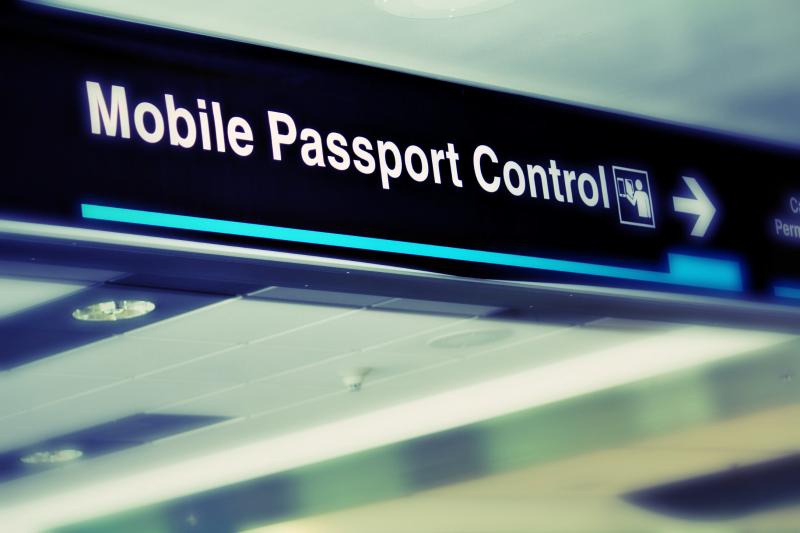
Mobile Passport Control signage at airport
U.S. Customs and Border Protection has expanded Mobile Passport Control eligibility to general aviation facilities at nearly 40 U.S. airports. [Credit: U.S. Customs and Border Protection]

International travelers returning to the U.S. can now use a free alternative to Global Entry at general aviation facilities at select airports.

U.S. Customs and Border Protection (CBP) last week expanded the list of airports eligible for its Mobile Passport Control (MPC) application by adding almost 40 GA facilities. Though it shortens customs wait times, MPC does not guarantee a faster screening process than Global Entry (GE).

However, the app is free to download and use, offering a great alternative for travelers awaiting GE approval or who do not travel enough to justify spending $120 on a five-year GE membership.

“It is not yet clear how much real time will be saved upon entry and clearance, since this is a new process for CBP at GA airports,” said Laura Everington, director of international operations and regulations for the National Business Aviation Association (NBAA). “However, I believe this is a very positive move for CBP and the industry.”

Previously, MPC was available at 37 U.S. international airports—including most major hubs—15 preclearance locations, three departure locations, and a handful of land border ports and seaports of entry. Now, the list includes GA facilities at locations such as Austin-Bergstrom (KAUS), Dulles International (KIAD), Harry Reid International (KLAS), Los Angeles International (KLAX), and Miami International (KMIA).

The full list includes:

  • Austin-Bergstrom International Airport (KAUS)
  • Bangor International Airport (KBGR)
  • Bellingham International Airport (KBLI)
  • Boca Raton Airport (KBCT)
  • Brown Field (KSDM)
  • Brownsville International Airport (KBRO)
  • Buffalo Niagara International Airport (KBUF)
  • Burlington International Airport (KBTV)
  • Calexico International Airport (KCXL)
  • Dallas Love Field (KDAL)
  • Dulles International Airport (KIAD)
  • El Paso International Airport (KELP)
  • Fernando Luis Ribas Dominicci Airport (TJIG)
  • Fort Lauderdale Executive Airport (KFXE)
  • Fort Lauderdale International Airport (KFLL)
  • Harry Reid International Airport (KLAS)
  • King County International Airport (KBFI)
  • L.G. Hanscom Field-Bedford (KBED)
  • Laredo International Airport (KLRD)
  • Los Angeles International Airport (KLAX)
  • McAllen Miller International (KMFE)
  • Miami International Airport (KMIA)
  • Naples Municipal Airport (KAPF)
  • Nogales International Airport (KOLS)
  • Opa-Locka Airport (KOPF)
  • Orlando International Airport (KMCO)
  • President Donald J. Trump International Airport (KDJT)
  • San Antonio International Airport (KSAT)
  • San Diego International Airport (KSAN)
  • San Juan Luis Munoz Marin International Airport (TJSJ)
  • Scottsdale Airport (KSDL)
  • St. Lucie County Airport (KFPR)
  • Tamiami Executive Airport (KTMB)
  • Teterboro Airport (KTEB)
  • Tucson International Airport (KTUS)
  • Van Nuys Airport (KVNY)
  • Westchester County Airport (KHPN)
  • Wilmington International Airport (KILM)
  • Witham Airport (KSUA)

What is MPC, And Is It Worth It?

MPC is available to U.S. citizens and lawful permanent residents, Canadian B1/B2 citizen visitors, and travelers returning from about 40 Visa Waiver Program countries with approved Electronic System for Travel Authorization (ETSA). CBP in 2024 said more than 1.8 million travelers used the app in fiscal year 2023.

The MPC app is free to download on Apple and Android devices, easy to use, and securely encrypts passport information and photos. It enables groups up to 12 to check in with a CBP officer at the same time rather than do so individually.

To use the app, travelers can scan their passport information, which is saved for future uses, before their return flight to the U.S.

Then, they select their arrival airport, take a selfie, and answer questions about their arrival and declarations, declaring items in the app rather than filling out a paper form. The submission is valid for four hours, so travelers should do this up to four hours before landing.

After completing the brief in-app questionnaire, users will receive a QR code. Upon landing, they can find the dedicated MPC line, marked by signage, and show the code to a customs officer.

Worth noting is that travelers will not be able to use MPC if diverted to a noneligible airport. Also, users must still present a physical passport or other required travel documents to a CBP officer, though the interaction will be quicker than normal.

Unlike Global Entry, MPC requires no enrollment application, background check, or fingerprinting to use. However, GE users are not always required to speak to a CBP officer or take a confirmation photo, and TSA PreCheck is included with membership.

Though GE can reduce screening time to seconds, Yahoo contributor and MPC user Brittany Anas wrote that she sometimes clears customs more quickly than her husband who uses Global Entry, adding that they usually exit around the same time.

However, Travel + Leisure noted that occasionally, airports that are eligible for and promote MPC will decline it or close their MPC queue line, making it a less reliable option than GE.

Jack Daleo

Jack is a staff writer covering advanced air mobility, including everything from drones to unmanned aircraft systems to space travel—and a whole lot more. He spent close to two years reporting on drone delivery for FreightWaves, covering the biggest news and developments in the space and connecting with industry executives and experts. Jack is also a basketball aficionado, a frequent traveler and a lover of all things logistics.

This 1967 Piper PA-28 Cherokee Is a STOL-Capable ‘AircraftForSale’ Top Pick

Power Flow exhaust and dual uAvionix AV-30-C displays give the timeless trainer a modern edge.

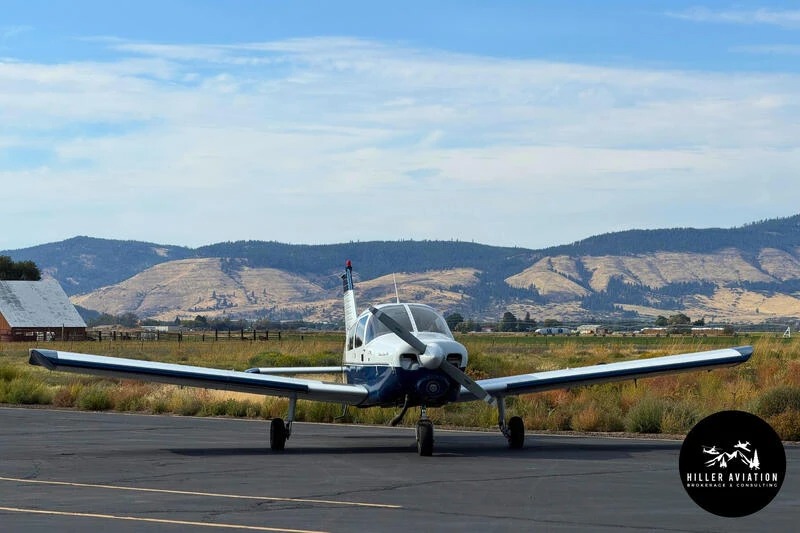
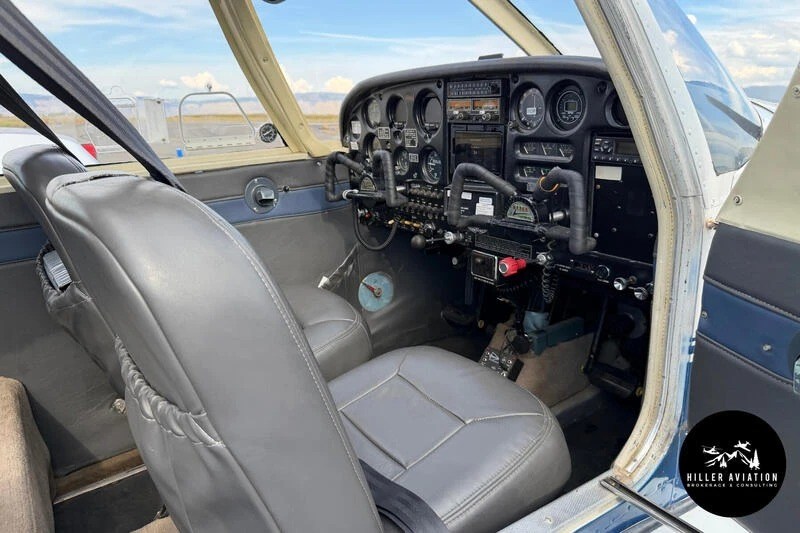
1967 Piper PA-28 Cherokee [Credit: Hiller Aviation]

Every day, the team at Aircraft For Sale chooses an airplane that catches our attention because it is unique, a good deal, or has other qualities we find interesting. You can read Aircraft For Sale: Today’s Top Pick at FLYINGMag.com daily.

Today’s Top Pick is a 1967 Piper PA-28 Cherokee.

Long celebrated for its stable flight characteristics and straightforward maintenance, the Piper PA-28-140 Cherokee remains an outstanding choice for student pilots and weekend adventurers alike. Built to be a forgiving and economical platform, this specific aircraft has been thoughtfully upgraded to bring enhanced short-field capabilities and modern safety features to a beloved airframe.

Having recorded approximately 5,485 total hours on the airframe, this 1967 model stands out thanks to the installation of a comprehensive Horton STOL-Craft kit, which adds leading-edge cuffs, droop tips, fin, and vortex generators. To maximize its hauling potential, the rear seats have been removed, resulting in a generous 892-pound useful load, while an Ashby glareshield and newly reworked battery box ensure the aircraft remains ready for demanding operations.

Opening the single cabin door reveals an interior that was completely refreshed in 2024 to prioritize both comfort and utility. The front seating area has been beautifully reupholstered with vinyl on new aluminum side panels, and occupants are secured by modern BAS inertia-reel shoulder harnesses.

Generating reliable thrust up front is a 150 hp Lycoming O-320-E2A engine showing 1,143 hours since a major overhaul. This powerplant breathes easily through a Power Flow tuned exhaust and Tempest Aeroguard induction filter, while a dynamically balanced Sensenich fixed-pitch propeller and Petersen autofuel STCs enhance its operating efficiency.

1967 Piper PA-28 Cherokee [Credit: Hiller Aviation]

Taking a seat behind the controls highlights a fully vacuum-free, modernized panel that underwent a major refresh in 2024. Pilots can navigate with confidence using dual uAvionix AV-30-C displays for attitude and directional gyro, paired with a Garmin aera 660 in an AirGizmos mount, Garmin GTX 327 transponder, and uAvionix skyBeacon for ADS-B Out compliance.

Listed at $79,900, this Oregon-based Cherokee features complete logs and steady 100-hour maintenance, offering an excellent entry point into modernized aircraft ownership.

If you’re exploring ownership options, FLYING Finance can help get you airborne. Use our airplane loan calculator to estimate your monthly payments, or connect with an aviation finance expert at flyingfinance.com.

FLYING Staff

FLYING Magazine is a one-stop resource for everything aviation, including news, training, aircraft, gear, careers, photos, videos, and more.

How to Conquer the FAA Private Pilot Knowledge Test

Here’s what student aviators need to know about preparing for, finding, and passing the computer-based exam.

When you take your knowledge exam, you should know how to use a mechanical E6-B because some testing centers will not allow an electronic one. [Credit: Shutterstock]

The student pilot knew he would have to take a written exam as part of his journey to becoming a private pilot but was caught off guard when his instructor referred to the FAA Private Pilot Knowledge Test. He said he had been studying for the private pilot written exam using his father’s book from the 1990s.

Was there another test?

Not quite. It’s called the knowledge test because it’s done on the computer now and has been for many years. The only writing you do is signing in and out of the testing center.

The book the student was using to prepare was very outdated. It still had questions about ADF (Automatic Direction Finder) and NDB (Non-Directional Beacon), which were removed from the  test in 2015.

While the laws of physics that govern flying will not change, the rules and regulations do.

The book had questions presented in multiple-choice format. Someone, presumably his father, had highlighted all the correct answers. According to the applicant, his father said that’s how he studied, memorizing the questions and the correct answers. 

Rote memorization is not the best way to study these days, as with the onset of the digital age it is much easier for the FAA to change the questions—and it does, on a regular basis, I am told. Rote memorization is the lowest level of learning and, when it comes to aviation, that lack of depth of knowledge could kill you. 

On our second meeting, the applicant reported he had been having trouble finding a place that offered the knowledge test. This did not surprise me.

When his dad was in training, pilot applicants had a choice of Laser Grade, Computer Assisted Testing Services (CATS), and PSI Services. All three had FAA contracts to administer the tests. The FBOs were contractors that administered the tests. The 60-question private pilot test cost the airman applicant $70 to $80.

The FBOs downloaded the tests from the services, receiving $65 for each test they administered. The FBO staff that administered the tests had to be at least 21 years of age and specially trained.

Tests Become More Expensive, Harder to Find

In 2021 the price of the FAA knowledge exam increased to $175. In 2022 the FAA awarded PSI Services an exclusive Airman Certificate Testing Service contract.

As of January 1, 2023, the payment to the FBOs dropped to $22 per test. As a result, many FBOs discontinued testing because $22 didn’t cover their costs to administer the exams. 

To find a testing center visit the FAA’s website and do a search using your ZIP code. You may have to travel to take the test and must register for it on the PSI website. You will need your Federal Tracking Number (FTN), which you would have received when you filled out the IACRA form (Integrated Airman Certification and Rating Application) to get your student pilot certificate.

Make sure to make and verify your appointment with the testing center. Often FBOs have just one or two people trained to administer the tests, and you may be working around their schedule.

On the day the test is scheduled, it is uploaded from PSI and should be waiting for you at the test site. The testing facility is usually a dedicated room equipped with a few computers and a closed-circuit video system to monitor the test takers. 

You will need to bring identification that includes your photograph, signature, and home address to the testing center. For most this is a state ID card or driver’s license.

You also need to demonstrate you are prepared to take the knowledge test by presenting one of the following:

  • A certificate of graduation from a pilot training course conducted by an FAA-approved pilot school, or a statement of accomplishment from the school certifying the satisfactory completion of the ground-school portion of such a course. If you have taken and passed a Part 141 course, you will be issued a completion certificate.
    This starts the clock running. You have 60 days to take the FAA exam. Don’t delay. If the test is not completed during that window, you have to retake the course and get a new certificate, or find a CFI or ground instructor who is willing to work with you until you demonstrate the required knowledge for them to endorse you for the test using the language found in Advisory Circular 61-65: Aeronautical Knowledge Test: FAR 61.35(a)(1), 61.103(d), and 61.105. 
  • A certificate of graduation or statement of accomplishment from a ground school course conducted by an agency such as a high school, college, adult education program, the Civil Air Patrol, or an ROTC Flight Training Program. Again, the 60-day window applies.
  • A certificate of graduation from a home-study course developed by the aeronautical enterprise providing the study material, such as King Schools, Gold Seal, or Sporty’s.

Practice Makes for Passing

There are practice tests available online that can be accessed from a variety of providers.

You don’t have to create a full 60-question test. Do them in 10-question increments at first, keeping track of challenging areas. Go over these challenges with a ground instructor or CFI to make sure learning takes place.

The minimum passing score on the test is 70. I have a policy of not endorsing the applicants for the knowledge test unless they bring me three practice tests all done in the same week with a score of 90 percent or higher.

The reason I do this is because 20-plus years as an instructor has taught me that most people lose at least 10 points off their practice test scores when they walk into the testing center. This is particularly true when the applicant has test anxiety. Go in overprepared.

Tips for Success

Bring your own plotter and E6-B to the testing center, either the mechanical one or a dedicated electronic one. I have heard stories from applicants who were denied the use of an E6-B app on their smartphone because they were not permitted to bring a phone into the testing center.

If you are using a computer E6-B, make sure it has fresh batteries. If you’re handed a mechanical E6-B and you’re unfamiliar, do not panic. The instructions for solving the problems, such as ground speed or time en route, are printed on the instrument. If you can follow the directions on a bag of ramen noodles, you can use a mechanical E6-B.

Note the scale on the sectional excerpts in the test supplement (also issued at the testing center) doesn’t match the measurement scale on the plotter or mechanical E6-B. Use the issued piece of paper to make a ruler with the proper scale.

Read each question silently to yourself at least twice. You may find it helpful to move your lips as you read because this makes your brain slow down so you can determine what’s truly being asked. This is particularly helpful on the performance questions.

Even if you tried to memorize the questions, read them twice—Read. Them. Twice.

At the completion of the test you will be given an airman computer test report that shows your score. Make a photocopy of this piece of paper and put the original in a safe place. You will need to present this document to the DPE the day of your check ride. 

If you missed any questions, the subject matter test codes will be indicated at the bottom of the paper. These codes can be found in the Airman Certification Standards, so it behooves you to have a copy of the ACS to look them up in. You may have missed just one question there, or it could be more—the codes indicate areas in which the applicant was found to be deficient. 

Before the check ride your CFI should go over those areas with you and make an endorsement in your logbook indicating you have received additional instruction in these areas. 

If you don’t pass the test, use those test codes to review your weak areas, and with the help of a good instructor, shore them up. You will get another endorsement and can take the test again. 

Make sure you bring that endorsement when you go for the retest.

A satisfactorily completed knowledge test is good for 24 calendar months. If the practical test for that certificate or rating is not satisfactorily completed during that period, you will have to take the knowledge test again.

Try not to be that pilot.

Meg Godlewski

Meg Godlewski has been an aviation journalist for more than 24 years and a CFI for more than 20 years. If she is not flying or teaching aviation, she is writing about it. Meg is a founding member of the Pilot Proficiency Center at EAA AirVenture and excels at the application of simulation technology to flatten the learning curve. Follow Meg on Twitter @2Lewski.
Pilot in aircraft
Sign-up for newsletters & special offers!

Get the latest stories & special offers delivered directly to your inbox.

SUBSCRIBE