High school students work on an airplane wing.[Credit: GAMA]
Are you a teen between the ages of 13-18 who benefited from out-of-school STEM experiences? Would you like to encourage more of your peers to participate in STEM?
If so, the STEM Next Flight Crew may have a place for you.
The STEM Next Flight Crew is a national youth leadership program designed for teens who have participated in out-of-school STEM experiences—such as after-school programs, summer camps, robotics teams, clubs, makerspaces, and community-based efforts—and would like to share their story and spread awareness about the opportunities the educational approach can generate.
Teens selected to represent their states as part of the STEM Next Flight Crew will have the opportunity to develop leadership and communication skills, as they relay their STEM experiences on regional, state, and national stages. The ambassadors’ mission is to lend their voices in an effort to push for more after-school and summer STEM opportunities.
The teens will receive mentorship from STEM Flight Crew alumni and meet professionals working across the various fields. They will help others discover the value of STEM through speaking engagements, media opportunities, and digital storytelling.
And the youths will have an opportunity to take part in exclusive virtual and in-person experiences, while exploring STEM careers.
There is a $500 stipend upon successfully completing the program. The STEM Flight Crew will be on the job from January through June 2027.
The application window for STEM ambassadors 2027 Flight Crew closes October 29. Selection will be made by December.
Those interested can apply here. Below is flyer about the program:
Meg Godlewski has been an aviation journalist for more than 24 years and a CFI for more than 20 years. If she is not flying or teaching aviation, she is writing about it. Meg is a founding member of the Pilot Proficiency Center at EAA AirVenture and excels at the application of simulation technology to flatten the learning curve. Follow Meg on Twitter @2Lewski.
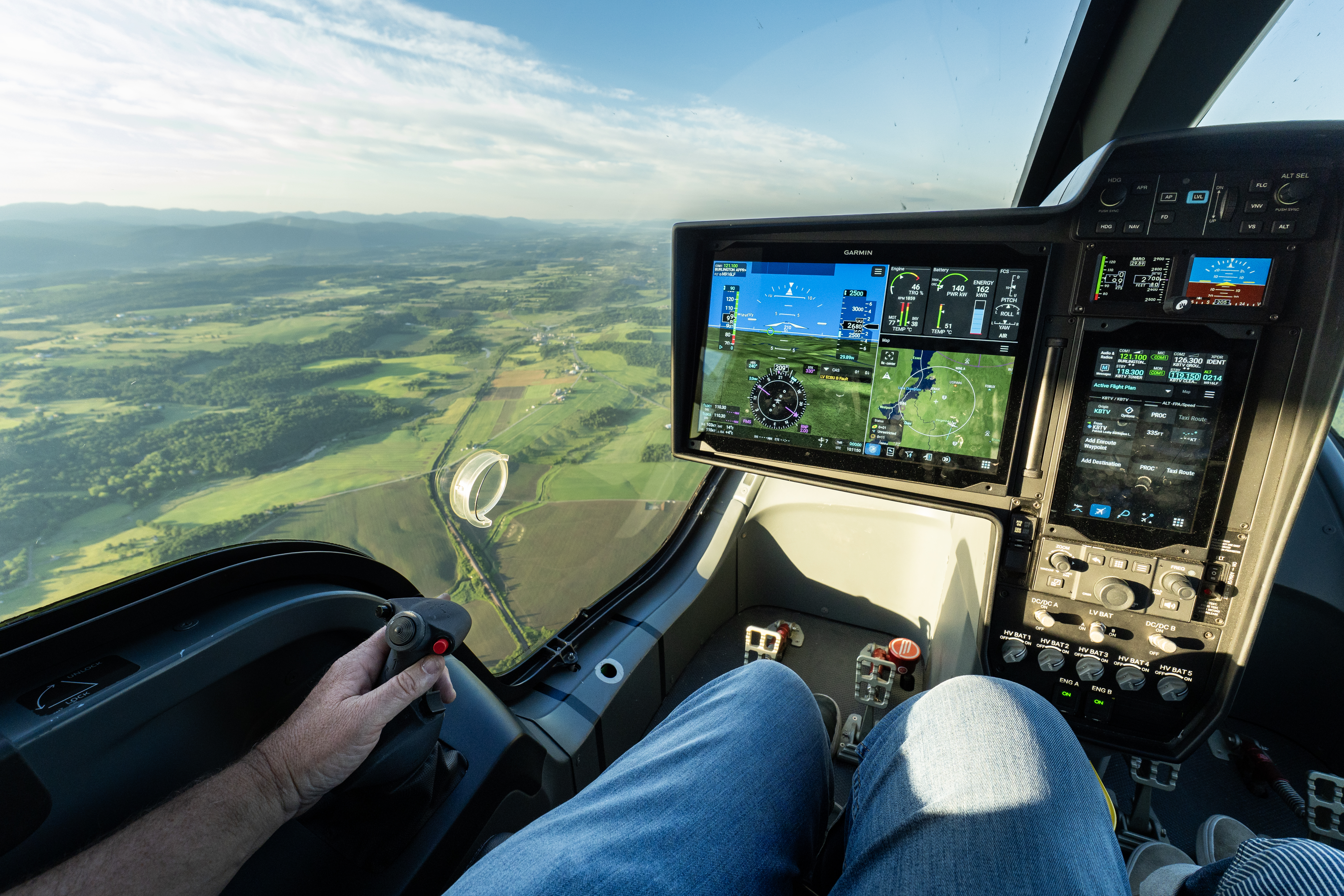
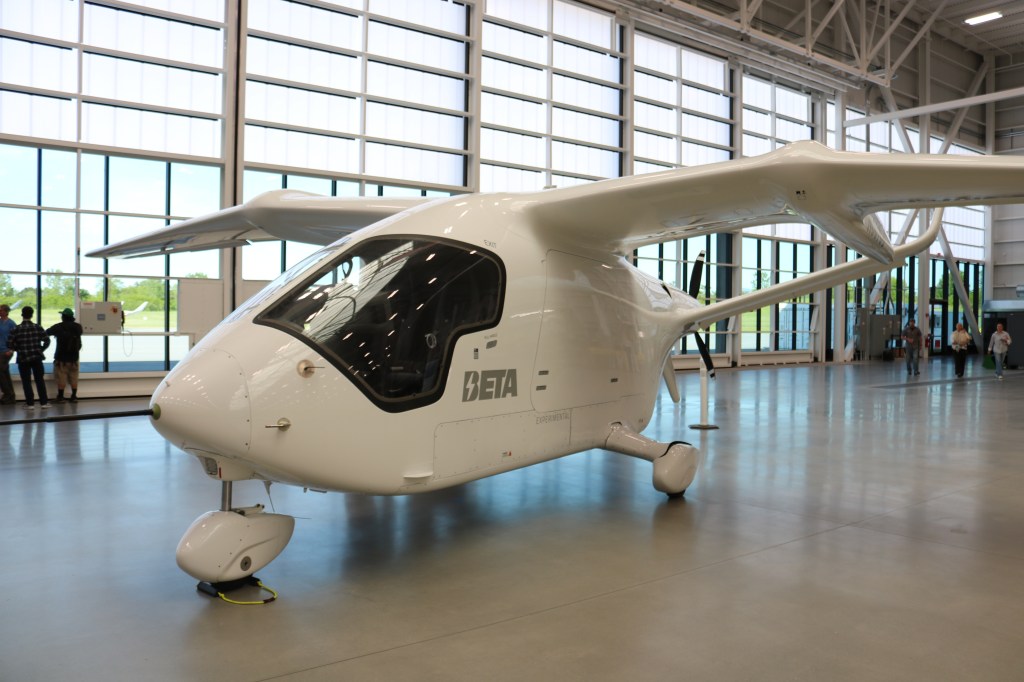
Beta’s all-electric Alia CX300 features a streamlined cockpit with touchscreen displays and intuitive joystick controls. [Credit: Beta Technologies]
My heart leapt out of my chest when Chris Caputo—the pilot who flew me on Beta Technologies’ all-electric Alia CX300 in June—said two simple words.
“Your controls.”
I visited Beta’s Burlington, Vermont, facilities to cover the manufacturer’s inaugural media day. Fortunately, a quick look around the cockpit was enough to replace my initial apprehension with curiosity—the controls were far more user-friendly than I expected.
The CX300 has a console with a thumb dial to adjust speed and climb rate, digital touchscreen displays, and four-axis joystick for each of the two front seats. Caputo handled maneuvers like takeoff and landing. But the joystick was simple enough—left and right inputs for roll, up and down for pitch—that I felt comfortable taking over for a bit.
If you're not already a subscriber, what are you waiting for? Subscribe today to get the issue as soon as it is released in either Print or Digital formats.
Not too long ago, the average cockpit was a menagerie of buttons and switches that posed intimidation. Today, the most streamlined cockpits are closer to the complexity of a car than to the planes of decades past, allowing even someone with zero flight hours to decipher them.
I am not the only person to enter Beta’s facilities without flying experience and leave with time in the sky. The company offers flight training—on its dime—to every employee, from engineers to social media managers. About 700 were learning the ropes as of June, according to Noah Ranallo, who leads Beta’s standards and evaluation for Alia training.
About 35 full- and part-time CFIs—including Ranallo—train employees.Some trainees have graduated to Beta’s CX300 demonstration team. A few have even gone on to fly professionally.
“Pretty much anywhere you sit at our various different facilities, there’s probably a flight instructor sitting within earshot,” Ranallo said.
Brian Jenkins is one of several CX300 pilots who joined Beta with no flight experience. When he entered the free flight training program, the company’s fleet comprised two or three Cessna 172 Skyhawks with analog gauges and an Enstrom helicopter. It now includes Pipistrel’s Alpha and all-electric Velis Electro, Diamond’s DA-40, and other modern trainers.
“On a nice day, it’s a constant stream of airplanes…sometimes 20, 30, 40 lessons a day,” Jenkins said.
Jenkins, for whom photography comprises about 80 percent of his work at Beta, earned his private pilot certification, instrument rating, commercial certifications for fixed-wing and rotorcraft, and seaplane rating—all within four years. He flies the CX300 about once a week and is also pursuing a CFI rating.
“[The program] would be happening whether or not we were using new airplanes or traditional 172s with round dials,” said Ranallo. “But I think that the modernization of some of the aircraft definitely makes it easier.”
“Top-tier schools are now adopting a 1-to-4 ratio: for every four internal combustion trainers, they operate one Velis Electro,” its analysis found.
How We Got Here
Flight training has come a long way since the era of analog gauges. Ground school videotape courses brought training to the comfort of the student’s home. Headsets became a safety wearable rather than a pilot preference. GPS revolutionized navigation.
Per Jens Hennig, vice president of operations, safety, and security for the General Aviation Manufacturers Association (GAMA), glass cockpits were the most recent technological innovation. Developers introduced glass panel systems for GA aircraft in the early 2000s.
The debate between the FAA and training industry on how to safely introduce glass cockpits spurred a new era of regulatory collaboration.
Pilots and other non-FAA stakeholders—including Hennig—got a seat at the table and helped create the Airman Certification Standards (ACS), which unified about 80 fragmented practical test standards (PTS).
“It became this wonderful, comprehensive document that really can guide pilot training and introduce risk early on,” Hennig said.
Work on the ACS continued under the aviation rulemaking advisory committee (ARAC). Its members were terminated in 2025, but not before the FAA incorporated ACS documents into Part 61 regulations. The agency has put out a call for new ARAC members, and Hennig said the industry is keen to reestablish it.
The FAA also continues to foster new flight training tools such as virtual reality, which a handful of entities have been qualified to use for training. More changes are on the horizon.
Looking Ahead
With the ACS, instructors can prepare students for a wide range of certifications covering all kinds of aircraft and operations.
All of Beta’s pilots are trained in-house at their own pace under Part 61 instruction. The training fleet in Burlington comprises five Velis Electros, four Alphas, the Skyhawk and DA-40, and a Cessna 182. It also has several tailwheel aircraft, including the Piper Clipper and Cub and an Aviat Husky A-1A that is equipped with amphibious floats in the summer.
Jenkins said he flies whenever he can, such as between Beta’s facilities in Burlington and Plattsburgh. In addition to CX300 demonstrations in the U.S. and Scotland, he said he has flown “pretty much everything that we own.” In particular, he enjoys helicopters and the Husky floatplane.
“You get to really experience all different types of aircraft,” Jenkins said. “It really makes you a better pilot being exposed to all these different aircraft.”
The shift from round dials to glass cockpits has made it easier for Beta to put hundreds of employees through training. New manufacturing standards under the FAA’s Modernization of Special Airworthiness Certification (MOSAIC) rule, which took effect in July, could mark the next foundational shift.
Beta’s all-electric Alia CX300 [Credit: Beta Technologies]
“[MOSAIC] will kind of open doors to folks that may not have been able to take the traditional route,” said Ranallo.
The rule’s elimination of the 1,320-pound light sport aircraft (LSA) weight limit will open the category to larger, more capable trainers, such as the Tecnam P-Mentor.
Manufacturers could build models with better useful loads, retractable gear, variable pitch propellers, and other capabilities without the rigors of Part 23 certification. That means flight schools no longer need to pay a premium for aircraft that provide a realistic, full-fuel load for primary training.
Many next-generation trainers use modern Rotax engines that can perform primary training missions with about half the fuel cost of legacy heavyweights like the Skyhawk.
MOSAIC also permits electric powerplants, which could lower costs even more. The Velis Electro, the world’s only type-certified electric trainer, has an estimated hourly operating cost of $7.
But there are others in development. Hennig said electric motors and batteries are “reaching a level of maturity where they can support the types of missions that flight training lends itself to.”
FLYING Finance estimates that a school operating a fleet of five efficient, next-generation trainers versus five legacy models saves about $300,000 in fuel costs over a 2,000-hour time between overhauls (TBO) cycle.
Instructors can use these more efficient assets for pattern work while reserving their older workhorses for advanced IFR training.
“That’s going to make it really cost effective for schools to train people,” Jenkins said.
However, MOSAIC also raises some questions. Hennig said GAMA is seeking more clarity on how simplified flight controls (SFC)—which incorporate higher levels of automation and are also permitted by MOSAIC—could be adopted for training.
“Since nobody has gone through the wickets of clearing a simplified control system, what does it look like in the end?” he asked. “Is [the objective] obtaining a pilot certification in less time? Is it to get the same pilot certification if the workload on the crew is different? Or is it something else?”
The dialogue between the FAA and industry on how to address glass cockpits spanned years. Hennig said there must be similar collaboration around simplified controls.
The agency determined that if a pilot earns their certification on an aircraft with a glass cockpit, they can fly the same model with analog controls without limitation. However, Hennig said that someone transitioning from SFC to analog controls would “certainly need to go through some training.”
The joystick systems on Beta and other manufacturers’ novel air taxis, for example, are a far cry from the controls of decades past.
“What that looks like, I can’t tell you without the specifics,” Henning said. “I don’t even know if there’s a singular answer to the pathway forward.”
Added Ranallo: “Until those [SFC] aircraft enter the flight training market, it’s going to be hard to tell how they’re going to affect folks’ training.”
This feature first appeared in the August Issue 973 of the FLYING print edition.
Jack is a staff writer covering advanced air mobility, including everything from drones to unmanned aircraft systems to space travel—and a whole lot more. He spent close to two years reporting on drone delivery for FreightWaves, covering the biggest news and developments in the space and connecting with industry executives and experts. Jack is also a basketball aficionado, a frequent traveler and a lover of all things logistics.
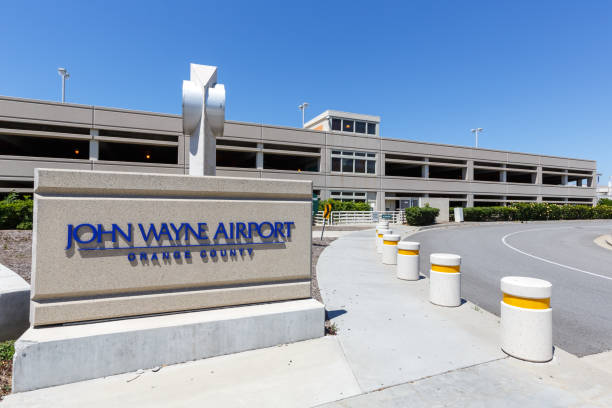
An unusual situation unfolded Tuesday evening at the airport in Orange County, California. [Credit: iStock]
An unusual and potentially dangerous situation unfolded Tuesday evening at John Wayne Airport (KSNA) in California.
Airport police services arrested a Delta Air Lines passenger who breached a gate, stole an Alaska Airlines tug, crashed it, and then attempted to commandeer an American Airlines lavatory service truck. The passenger was later identified by the Orange County Sheriff’s Department as 26-year-old Jay Barr.
“Delta has zero tolerance for unlawful behavior, and we take all incidents seriously,” Delta said in a statement shared with CNN. “Nothing is more important than the safety and security of our customers and people, and we are cooperating fully with law enforcement.”
Audio on the ATC.com app captured a pilot and air traffic controller discussing the incident.
“Hey, ground…do you know what’s going on with the vehicles behind us with all the law enforcement?” a SkyWest pilot asked around 5:50 p.m. PDT.
“Yeah, looks like someone stole a tug,” a controller replied. “There was a security breach at the airport and someone stole a tug, so they pretty much shut down and put a ground stop in effect.”
KTLA 5 News reported that the incident did not disrupt airport operations, and CNN reported that aircraft resumed moving around the airfield after crews inspected the taxiway between gates 7 and 12 for debris and hazards.
Another SkyWest pilot told air traffic control that they were instructed to “taxi slow,” and a controller responded that the “security incident” prompted ATC to reduce traffic to the gate area.
An airport spokesperson told KTLA 5 that Barr breached an access door at gate 12 around 5:30 p.m. and stole the tug before crashing into another vehicle near Gate 7. He was then transported to a local hospital for evaluation following his arrest.
Jack is a staff writer covering advanced air mobility, including everything from drones to unmanned aircraft systems to space travel—and a whole lot more. He spent close to two years reporting on drone delivery for FreightWaves, covering the biggest news and developments in the space and connecting with industry executives and experts. Jack is also a basketball aficionado, a frequent traveler and a lover of all things logistics.
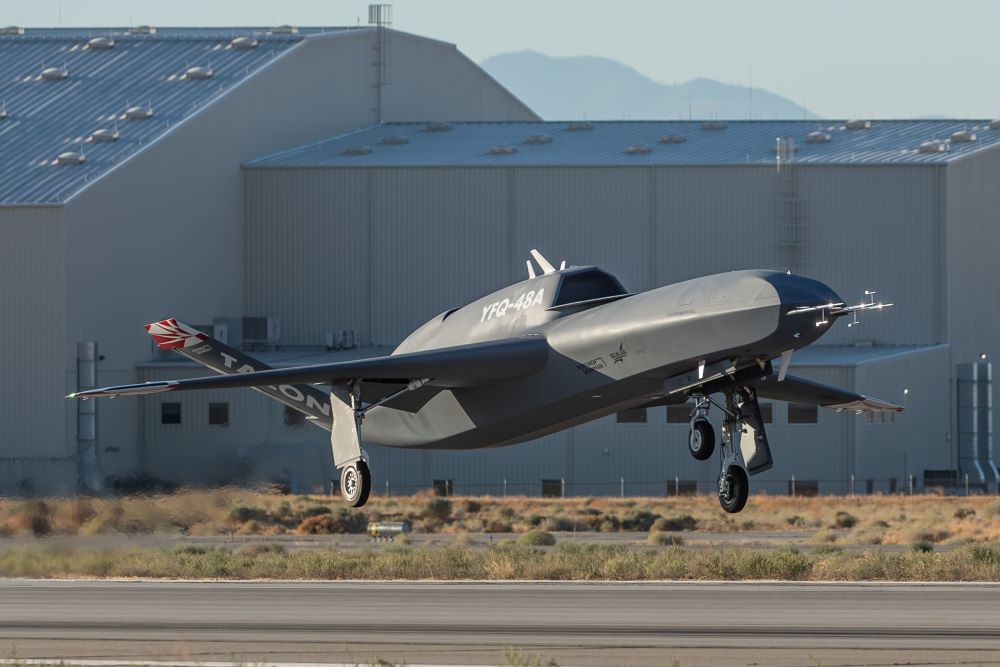
Talon Blue, designated YFQ-48A by the U.S. Air Force, is a Collaborative Combat Aircraft (CCA) being designed to complement crewed fighter jets. [Credit: Northrop Grumman]
Northrop Grumman’s YFQ-48A Talon Blue, a candidate for a production contract under the U.S. Army’s Collaborative Combat Aircraft (CCA) program, completed its first fully autonomous flight, the manufacturer announced Saturday.
The flight, which took place in Mojave, California, included autonomous taxi, takeoff, in-flight maneuvers, and landing. The design is internally funded and aims to reduce part count and overall weight, lowering manufacturing costs and supporting faster production to meet growing military demand for autonomous systems. It includes a high air intake, wide wheelbase, and integrated weapons bay designed for U.S. military and allied partner mission needs.
“Our customers made it clear they need autonomous systems that can be fielded faster and more affordably without sacrificing mission effectiveness,” said Craig Woolston, vice president and general manager for research and advanced design at Northrop Grumman, in a company news release. “Talon Blue’s first flight is one step toward a new generation of autonomous capabilities.”
The Pentagon’s record $1.5 trillion budget request for fiscal year 2027 includes $53.6 billion for autonomy, drone platforms, and contested logistics. The U.S. Air Force, Navy, and Marine Corps are each exploring CCA to serve as loyal wingmen and augment crewed next-generation fighter jets, such as the F-47 and F/A-XX under development by Boeing.
The Air Force effort is the most advanced. The branch in June awarded engineering and manufacturing development and production contracts to General Atomics and Anduril for their respective CCA designs, which are both in testing. Though Northrop Grumman was not awarded a production contract, the company was listed as one of six candidates to receive a mission autonomy production contract that would see it develop autonomy software for CCA.
The Air Force in December designated the firm’s Talon Blue as the YFQ-48A, describing it as a “semi-autonomous prototype aircraft.” Northrop Grumman is also developing a CCA for the Marine Corps designed around its autonomy software and Kratos’ Valkyrie uncrewed aerial system. The Marine Corps said in April that it aims to conduct its first CCA flight this year.
Talon Blue is part of Northrop Grumman’s Project Talon portfolio that also includes Talon IQ, which it describes as a “cutting-edge autonomous testbed” operating on the Scaled Composites Model 437.
“Together, Talon Blue and Talon IQ allow Northrop Grumman and its partners to rapidly develop, test and field autonomous capabilities tailored to meet emerging threats and operational requirements,” the company said in its news release.
Jack is a staff writer covering advanced air mobility, including everything from drones to unmanned aircraft systems to space travel—and a whole lot more. He spent close to two years reporting on drone delivery for FreightWaves, covering the biggest news and developments in the space and connecting with industry executives and experts. Jack is also a basketball aficionado, a frequent traveler and a lover of all things logistics.
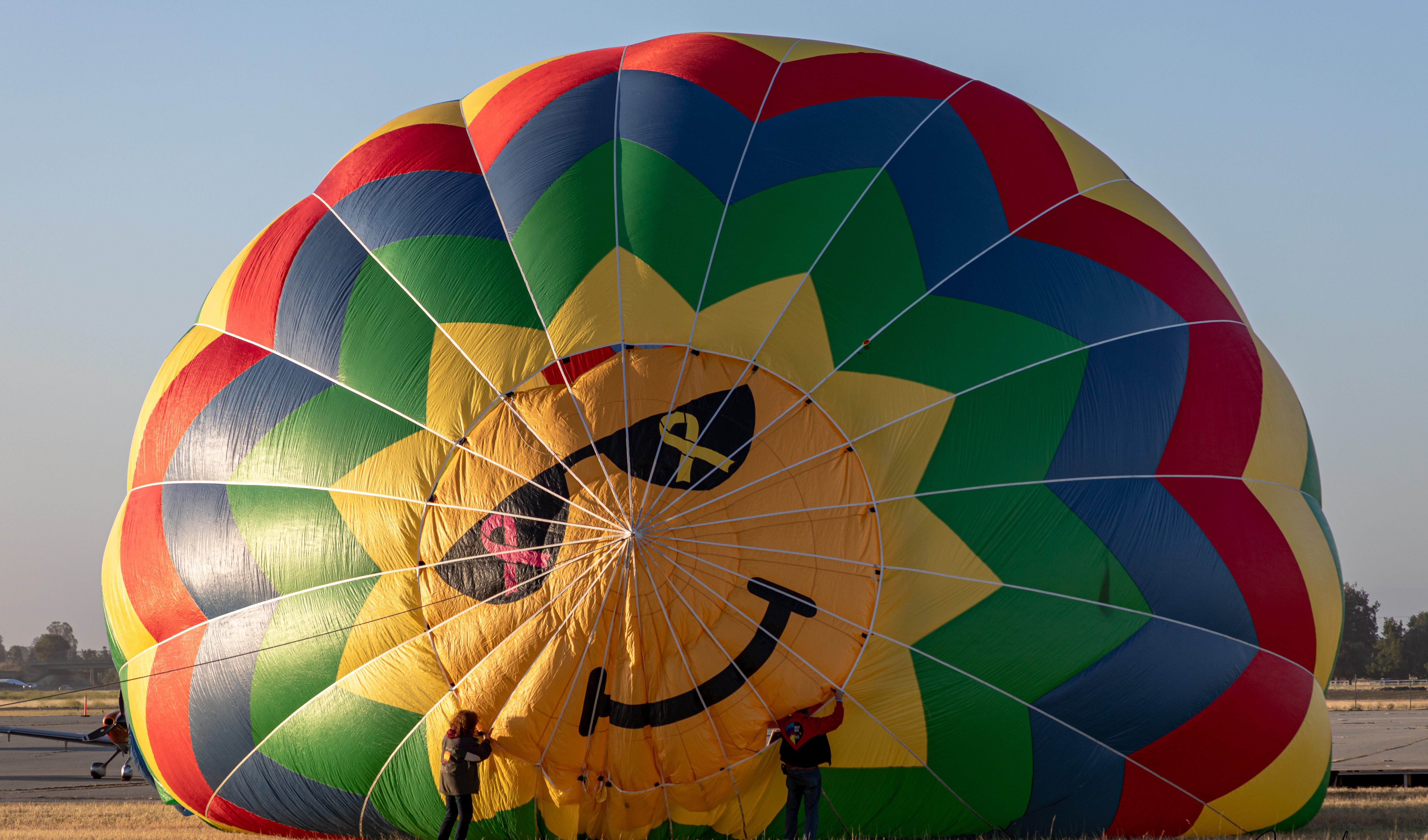
Hot-air balloon at the San Martin Airport Food Truck Fly-In [Credit: Joshua Lapum Photography]
If your travels take you south of San Jose, California, on October 17, you may want to pay a visit to San Martin Airport (E16) for the Food Truck Fly-In.
The annual event is organized by the South County Airport Pilots Association (SCAPA), a chapter of the California Pilots Association. Admission and parking are free.
San Martin Airport is located 23 miles southeast of San Jose Mineta International Airport (KSJA) and 13 nm northeast of Watsonville Municipal Airport (KWVI).
According to fly-in spokesperson Niki Britton, they are expecting 15 food trucks this year.
The SCAA’s mission is improving community relations, participation in any planned growth, enhancing flying safety, and promoting fellowship among pilots and aviation enthusiasts.
Britton said the Food Truck Fly-In facilitates all these goals as it brings pilots, aviation enthusiasts, and the general population to the airport to enjoy live music, aircraft demonstrations, static aircraft displays, skydiving, vintage cars, and a radio-controlled (RC) airshow.
RC airshow at the San Martin Airport Food Truck Fly-In [Credit:Joshua Lapum Photography]
Expect to see pilots in attendance ready to answer questions about their aircraft and aviation in general.
For pilots who have been out of the cockpit for some time and want to return, the Aircraft Owners and Pilots Association (AOPA) will be presenting a Rusty Pilots seminar. There is a separate charge of $89 to attend the seminar.
There will be lots of kid-friendly activities, including STEM, a jump house, flight simulator, and scavenger hunt. There are also plans to have a tethered hot-air balloon.
Visit the Museum
The San Martin Airport serves as the home of the Wings of History Air Museum. During the fly-in admission to the museum is free.
The museum sports an eclectic collection of aircraft, including a replica of the 1903 Wright Flyer, a Pietenpol Air Camper from the 1920s, and one of the rarest exhibits in any aviation museum—a ground trainer known as a “Penguin.”
The 1917 Breese Penguin was designed with stubby wings and a 28 hp engine. The combination of stubby wings and low horsepower was intentional as it was supposed to be a single-place ground trainer, primarily used by the U.S. Army during World War I to teach air cadets how to taxi an aircraft. However, as some cadets figured out, if they got it up to full speed and hit a bump, they would get a few seconds of air time.
The show gates open at 10 a.m. PDT and close at 4 p.m.
Meg Godlewski has been an aviation journalist for more than 24 years and a CFI for more than 20 years. If she is not flying or teaching aviation, she is writing about it. Meg is a founding member of the Pilot Proficiency Center at EAA AirVenture and excels at the application of simulation technology to flatten the learning curve. Follow Meg on Twitter @2Lewski.
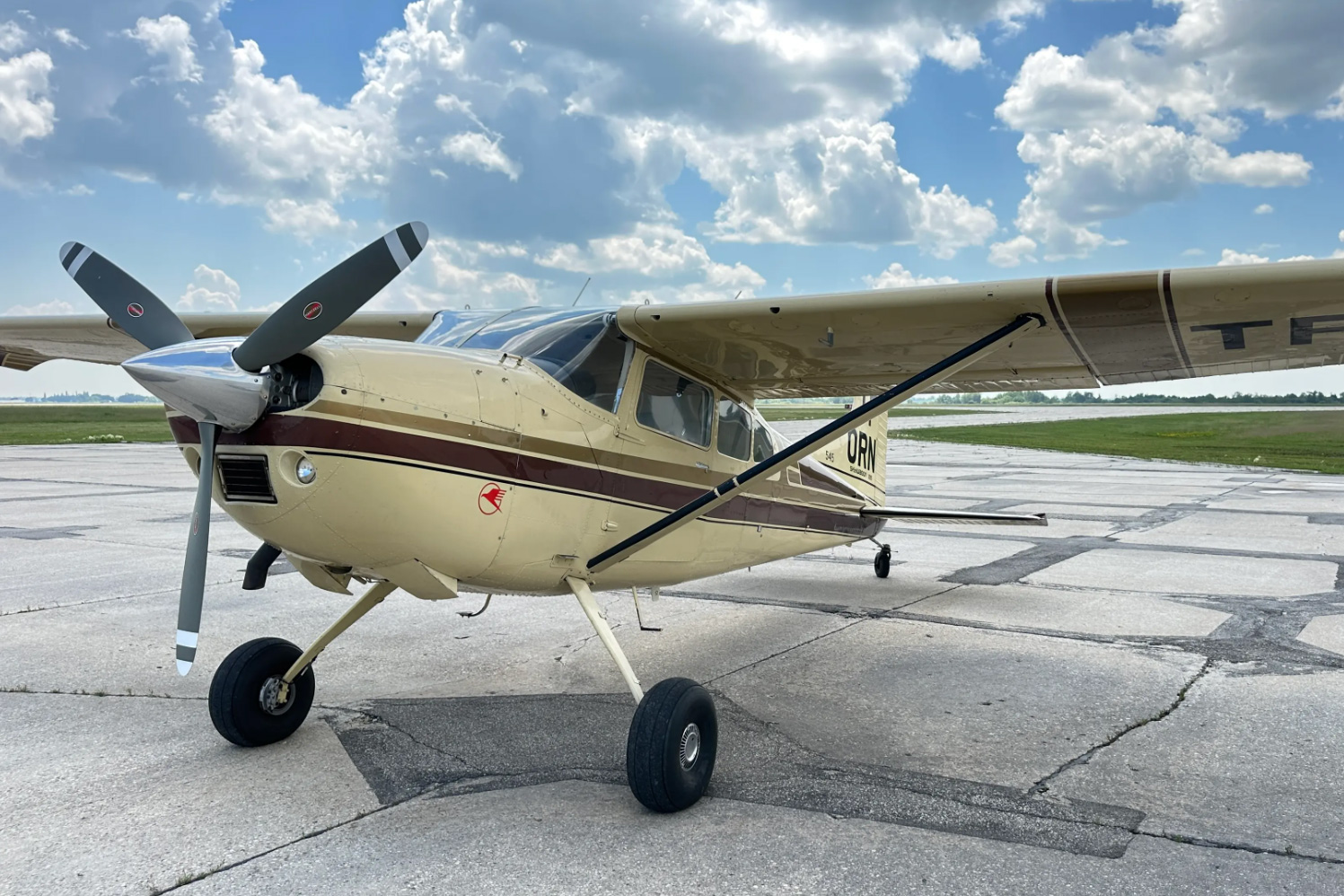
Few airframes command as much respect in remote corners of the world as the Cessna 185 Skywagon. Built to bridge the gap between heavy utility capability and short-field agility, this heavy-duty taildragger has set the standard among wilderness pilots, lodge operators, and backcountry adventurers who demand uncompromising payload capacity for unimproved strips.
Garnering attention on any ramp or gravel bar, this airframe has logged 4,503 total hours and comes prepped for unpaved terrain. The aggressive stance is defined by an Alaskan Bushwheel and fork STC, giving it the oversized footprint needed to touch down on riverbeds and rough fields, while heavy-duty Cleveland main wheels and brakes provide reliable stopping power, and an installed tail pull handle eases tight ground maneuvering.
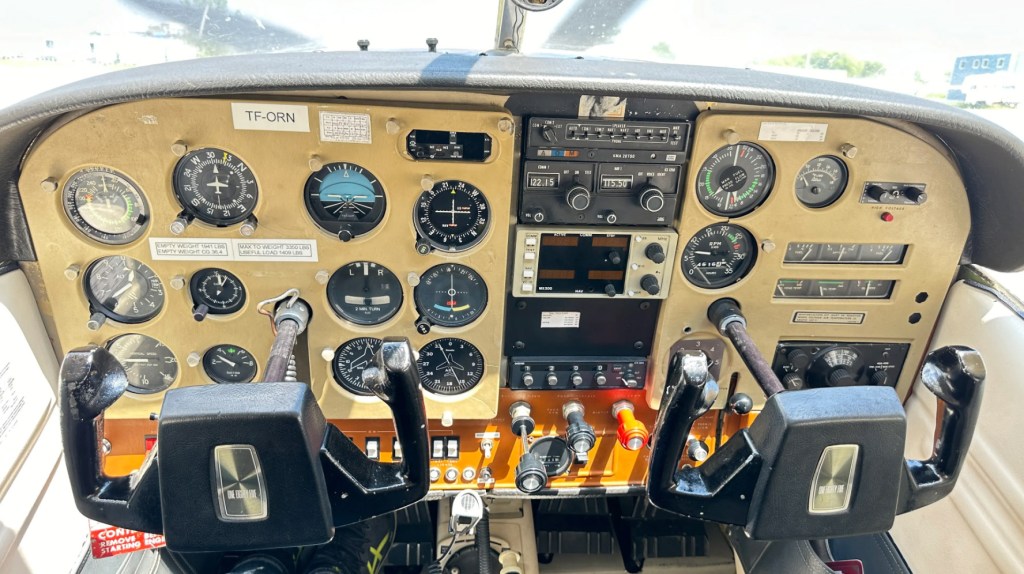
Swinging open the wide doors reveals a cabin engineered purely for endurance, utility, and practical cargo haulage. Outfitted with durable fiberglass interior trim panels, the cabin swaps delicate factory trim for rugged, easy-to-clean surfaces built to endure packed camping gear, hunting supplies, or heavy freight without showing wear.
Feeding muscle to the nose is a proven engine showing 1,031 hours since major overhaul. Engine output is maximized through an STC-backed Hartzell propeller, governor, and spinner combination, complemented by high-efficiency air filters and quick-drain fuel reservoir to safeguard fuel purity when operating out of remote fuel caches.
Inspecting the underlying systems highlights a host of smart maintenance upgrades aimed at long-term electrical reliability. A key modification includes STC-certified, heavy-gauge copper electrical wiring, replacing aging factory lines to ensure low electrical resistance and dependable starter performance during cold bush starts.
1974 Cessna A185F Skywagon [Credit: Sijo Zach]
Listed at $275,000, this Manitoba-based utility aircraft stands as a gateway to off-airport exploration, complete with the most desirable bush modifications already installed.
If you’re exploring ownership options, FLYING Finance can help get you airborne. Use our airplane loan calculator to estimate your monthly payments, or connect with an aviation finance expert at flyingfinance.com.
Air cargo specialists are responsible for organizing, planning, loading, and unloading cargo from aircraft. [Credit: CanvaPro]
Air transportation is a key part of the global supply chain. Each day, aircraft all around the world move vast amounts of cargo for commercial, military, and humanitarian purposes.
Air cargo specialists play a critical role in this global network by ensuring the proper and safe transportation of goods through the skies.
Here is what you need to know about becoming an air cargo specialist.
What Is an Air Cargo Specialist?
The term air cargo specialist refers to individuals who are responsible for organizing, planning, loading, and unloading cargo from aircraft. The exact job titles and responsibilities can vary depending on the employer.
Common tasks for an air cargo specialist include loading and unloading cargo from aircraft and vehicles, transporting cargo around an airport, and ensuring that the movement of cargo is properly documented. Some roles also involve administrative work such as preparing weight and balance records.
Military Air Cargo Specialists
One way of becoming an air cargo specialist is by joining the military. Many branches of the U.S Armed Forces have cargo specialist positions.
The U.S. Army, for example, has an occupation called cargo specialist. These enlisted service members handle supplies, weapons, mail, and equipment that are being transported by air, land, or sea. Army cargo specialists load and unload cargo, operate heavy equipment, and document the movement of cargo.
A similar role in the U.S. Air Force is the air transportation specialist. This job focuses exclusively on air transportation but also includes working with passenger transportation rather than just cargo. Air transportation specialists not only load and unload cargo but also have other tasks such as planning the types and quantities of cargo to be loaded and performing passenger-related tasks such as checking travel documents.
In the U.S. Navy, logistics specialists are responsible for mail and cargo. The U.S. Marine Corps has logistics/embarkation specialists who help prepare and load cargo for all modes of transportation.
The military also hires civilian cargo specialists to support its operations.
Becoming a cargo specialist in the military involves going through the standard enlistment process. This consists of meeting basic eligibility requirements, completing physical and written testing, and passing a medical examination.
New service members will then need to attend basic training for their respective branch before getting specialized training for their specialty and receiving their first posting.
Civilian Air Cargo Specialists
Airlines also hire cargo specialists for their cargo operations.
At cargo airlines such as FedEx and UPS, one of the primary tasks of their ramp agents is to load and unload their aircraft. These airlines also have administrative personnel who assist with planning and weight and balance.
Many passenger airlines also have a cargo division, which provides services using either dedicated planes or extra space on passenger aircraft. These airlines have employees who handle and organize their cargo operations. Cargo-loading functions are typically performed by ramp workers, who are also responsible for loading passenger bags.
These employees are usually hired internally or through public job postings. Cargo-loading jobs typically require a high school diploma or equivalent, a valid driver’s license, and the ability to perform physical tasks such as lifting and operating specialized equipment. Administrative jobs involving air cargo may require higher levels of education and proficiency with computers.
Andrew is a lifelong lover of aviation and travel. He has flown all over the world and is fascinated by the workings of the air travel industry. As a private pilot and glider pilot who has worked with airlines, airports and other industry stakeholders, he is always excited to share his passion for aviation with others. In addition to being a writer, he also hosts Flying Smarter, an educational travel podcast that explores the complex world of air travel to help listeners become better-informed and savvier travelers.
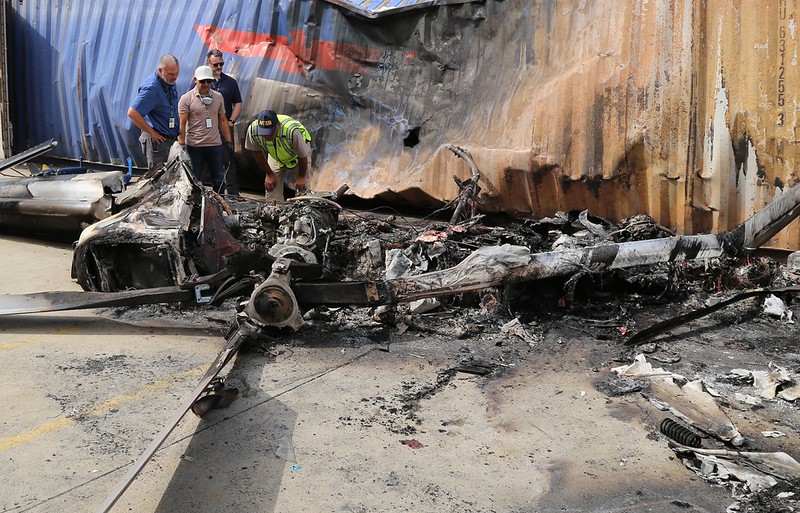
Investigators examine the wreckage of the KNBC-TV news helicopter, whose fuselage the NTSB said was ‘mostly reduced to ash and thermally damaged metal.’ [Credit: NTSB]
The Airbus AS-350 B2 helicopter that fatally crashed in a neighborhood of Los Angeles in September was descending rapidly before striking a metal storage container, according to the National Transportation Safety Board’s investigation preliminary report.
The accident occurred September 15 around 6:55 p.m. PDT in Chatsworth, California, as the helicopter—registered N358TV and operated by Angel City Air on behalf of KNBC-TV, known locally as NBC4—was conducting an electronic news gathering flight under Part 91. The crash killed the pilot, an onboard news reporter, and one person on the ground, causing minor injury to a second person on the ground.
The pilot and onboard reporter had flown from Whiteman Airport (KWHP) to Chatsworth to gather video footage of a recent fatal traffic accident. The helicopter maneuvered around the scene for about 1 hour and 24 minutes. About one minute before crashing, its ground speed was 6 knots and altitude was about 800 feet agl.
Investigators examined the recording taken aboard the helicopter to gather evidence of what may have occurred. It “captured ambient helicopter noise that included sounds from both the main rotor and engine” and which “remained consistent with normal operations” for most of the recording, the NTSB said.
During the final 29 seconds, the recording picked up “intermittent and continuous horns” that the agency said were consistent with helicopter’s main rotor high rpm, low rotor rpm, and other aural advisories.
Around 6:55 p.m., ADS-B data indicated the helicopter was descending rapidly and turning right, reaching 38 knots groundspeed when it was above the accident site. Video cameras from nearby buildings captured the moment it impacted the storage container and a subsequent fire.
Conditions at the accident site were VMC, with clear skies and no cloud ceilings. Visibility was 10 sm, and temperature was 73 degrees.
The NTSB’s field examination found that debris extended about 30 feet around the main wreckage. The fuselage was “mostly reduced to ash and thermally damaged metal,” it said. The tailboom separated from the fuselage, but all major components either remained attached or were found close by.
The NTSB is continuing to investigate the accident and has not yet determined a probable cause.
About one week after the news helicopter crash, two crewmembers were killed in a firefighting helicopter crash while battling a blaze in California’s Yosemite National Park. Earlier this month, a medevac helicopter carrying five people crashed off the coast of California, killing three and injuring two.
Jack is a staff writer covering advanced air mobility, including everything from drones to unmanned aircraft systems to space travel—and a whole lot more. He spent close to two years reporting on drone delivery for FreightWaves, covering the biggest news and developments in the space and connecting with industry executives and experts. Jack is also a basketball aficionado, a frequent traveler and a lover of all things logistics.
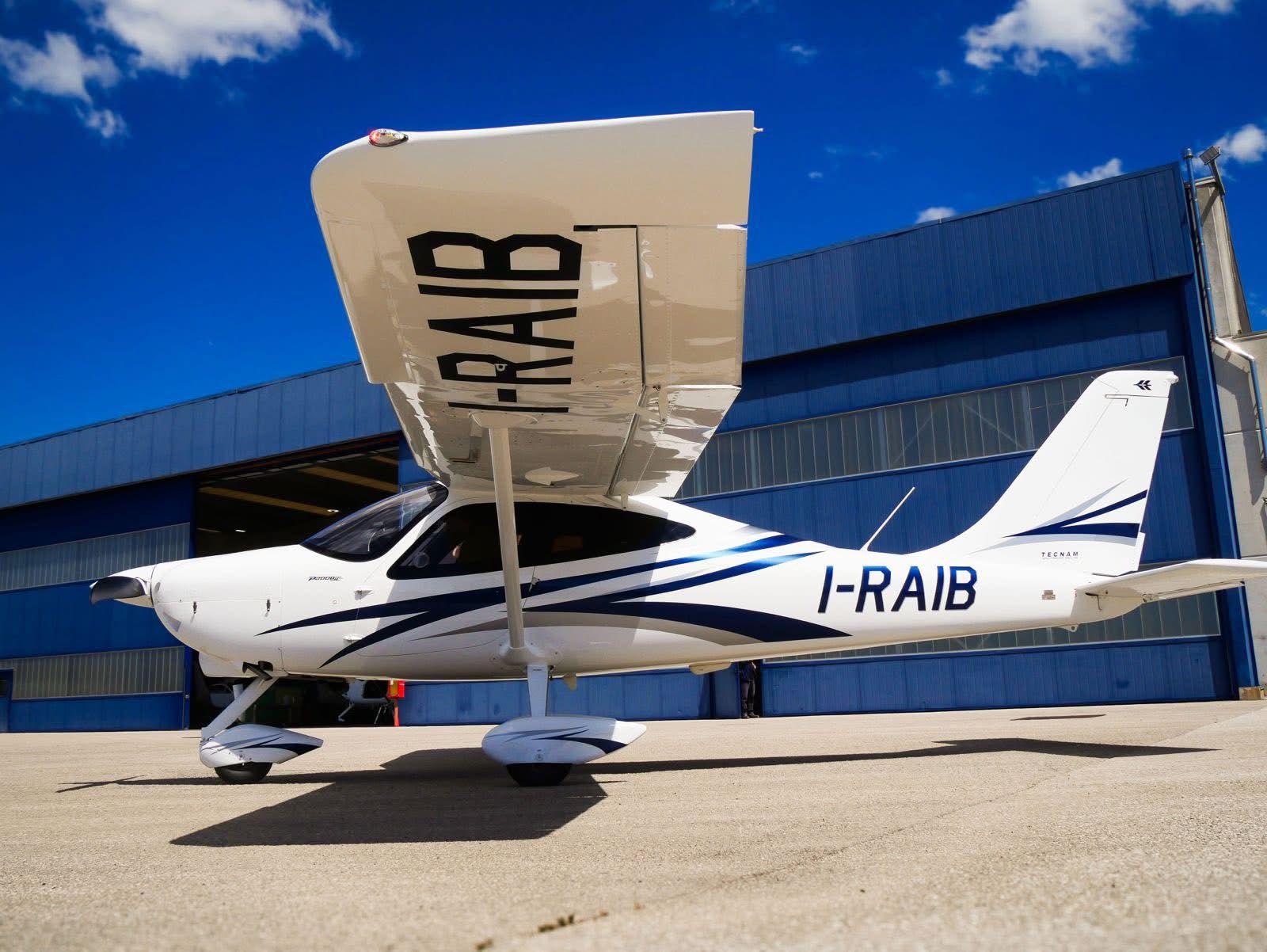
Tecnam, one of the leading manufacturers in the light sport category, has officially launched a FAR 23-certified aircraft aimed at U.S. flight schools.
The Tecnam P2008JC NG is a Rotax-powered, high-wing design with the capability of taking pilots from private certification up through commercial in one airframe.
“By actively pursuing this validation, the P2008JC NG breaks away from the light sport aircraft (LSA) category to provide U.S. academies with a fully certified, modern alternative to aging legacy fleets, perfectly suited for both Part 61 and Part 141 operations,” Tecnam said in a news release.
The NG in the aircraft designation stands for “next generation,” and Tecnam describes the aircraft as the evolution of its highly successful high-wing trainer.
The P2008JC NG boasts a carbon-fiber fuselage with metal wings and stabilator. It is powered by the highly efficient, fuel-injected Rotax 912 iS engine. The cockpit sports ultramodern avionics, providing the learners a transition into glass-cockpit operations.
The aircraft is also approved for both VFR day and night operations.
“The American flight training market is growing rapidly, and schools are urgently seeking modern, reliable, and highly cost-efficient platforms to train the next generation of pilots,” said Walter Da Costa, chief sales officer at Tecnam. “The P2008JC NG is our direct answer to that demand. By committing our resources to the FAR 23 validation process, we are ensuring that U.S. flight academies will soon have access to a state-of-the-art, fully certified ab-initio trainer. Combined with the efficiency of the Rotax 912 iS and VFR day and night capabilities, this aircraft lowers overhead costs, maximizes safety, and delivers an exceptional training experience.”
Tecnam aircraft have been part of the American flight school fleet for the better part of a decade, offering both single-engine and multi-engine designs known for their durability and cost-efficient operation.
According to Tecnam, itsr fleet produces significantly less carbon dioxide emissions than a fleet using 100LL fuel.
Tecnam aircraft are known for being less expensive to operate than legacy trainers, such as a Piper Seminole, which costs approximately $250-$300 per hour as opposed to a Tecnam twin, which costs approximately $150-$200 per hour.
Meg Godlewski has been an aviation journalist for more than 24 years and a CFI for more than 20 years. If she is not flying or teaching aviation, she is writing about it. Meg is a founding member of the Pilot Proficiency Center at EAA AirVenture and excels at the application of simulation technology to flatten the learning curve. Follow Meg on Twitter @2Lewski.
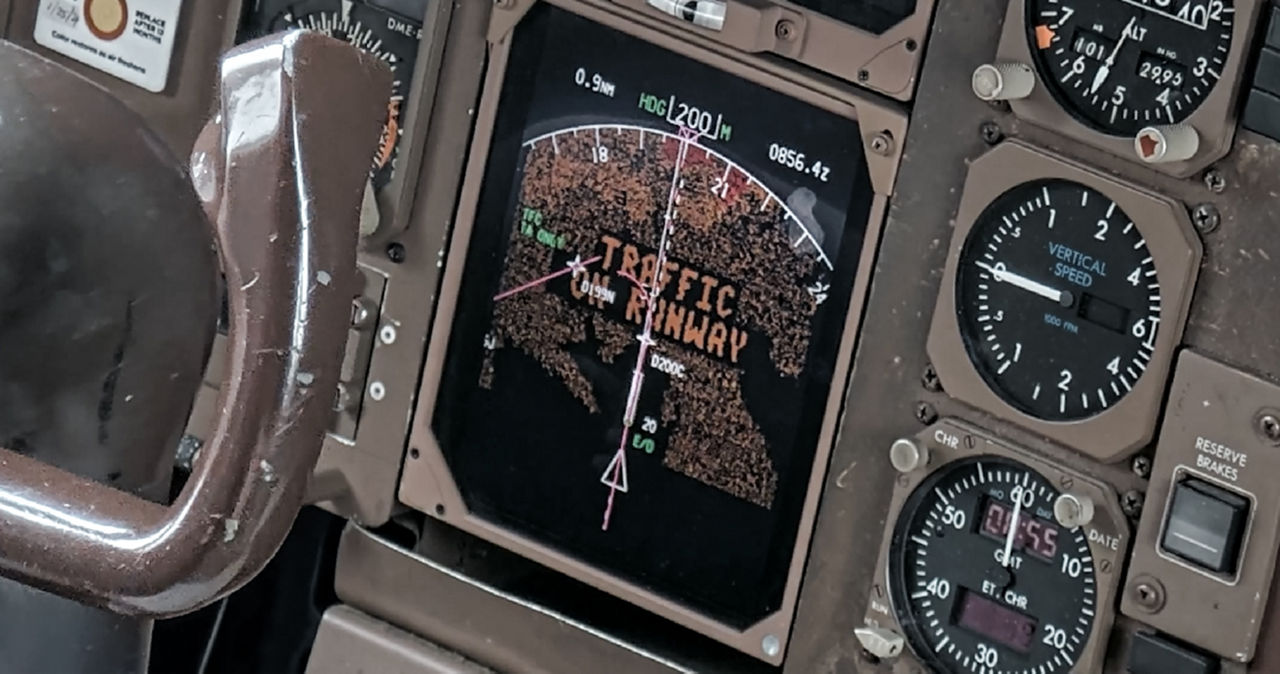
Honeywell Aerospace’s Surface Alerts (SURF-A) technology gives pilots on a collision course an aural alert in their headsets and a “Traffic on runway” alert on cockpit displays. [Credit: Honeywell Aerospace]
The City of Phoenix Aviation Department plans to study the introduction of runway safety technology for ground vehicles that could help prevent accidents such as the fatal runway collision between an Air Canada CRJ-900 and airport fire truck at LaGuardia Airport (KLGA) in March.
That accident, which killed two pilots and injured more than 40 others, occurred after the occupants of the airport fire truck did not realize that an air traffic controller’s orders to stop crossing LaGuardia’s Runway 4 were directed at them, according to the NTSB.
In hopes of avoiding a similar tragedy, the Phoenix Aviation Department will evaluate Honeywell Aerospace’s Surface Alert (SURF-A) system, which gives pilots direct aural and visual alerts when they are on a collision course. Other runway safety systems are purely visual or flag potential hazards only to ATCs.
Originally developed for aircraft, SURF-A will soon be installed on ground vehicles at Phoenix Sky Harbor International (KPHX), Phoenix Goodyear (KGYR), and Phoenix Deer Valley (KDVT) airports. Honeywell Aerospace said the study, planned to begin this month and continue the rest of the year, could “unlock new applications” for the technology.
“Pilots need direct alerts of potential runway collisions, but so do firetruck, ambulance, and other drivers that can be at risk of a high-speed collision on a runway,” said Bob Buddecke, president and CEO of electronic solutions at Honeywell Aerospace, in a news release. “Airport vehicle operators have been asking for this technology because an early alert can mean the difference between a safe pass and a major collision.”
Honeywell said the study marks the “first time any airport in the world will use this type of collision avoidance technology aboard ground vehicles.” It will combine SURF-A avionics with a digital airport map to improve real-time situational awareness of potential collisions for ground vehicles using runways and taxiways.
Following the evaluation, the partners will determine “next steps along with exploring other opportunities for further collaboration,” Honeywell said.
The FAA has identified hundreds of hot spots at airports where the risk of runway safety-related hazards during surface operations is heightened. The agency’s runway safety data actually show a downward trend in runway incursions, with 1,365 recorded in fiscal year 2026 (FY26) versus 1,636 in FY25 and 1,758 in 2024.
However, the International Civil Aviation Organization (ICAO) estimated that runway safety-related accidents accounted for 61 percent of accidents that caused substantial aircraft damage from 2019 to ‘23. Honeywell believes technologies like SURF-A will become less negotiable as airport traffic grows.
How SURF-A Could Improve Runway Safety
SURF-A is not yet FAA-certified. But Honeywell said last week that certification of the system for Boeing aircraft is expected later this year. Additional new and retrofit aircraft certification would follow in 2027. Aeromexico, which in July announced plans to equip its entire Boeing 737 NG and 737 Max fleet of more than 100 aircraft with SURF-A, is the system’s intended launch customer.
“With the appropriate safety margins in place, we set our Boeing 757 on a collision course with another Honeywell Aerospace test aircraft during taxi, takeoff, and landing,” said Kirk Vining, the company’s senior test pilot, in an August news release.
SURF-A uses GPS, ADS-B equipment, airport maps, and other data to identify the exact location of potential hazards up to 30 seconds before impact. It continuously tracks ADS-B Out-equipped traffic on or near runways or taxiways, giving operators an extra set of eyes. In the wake of the LaGuardia collision, the FAA in May announced it would equip all airport vehicles with transponders.
Pilots on a collision course will hear an alert in their headsets and see a “Traffic on runway” alert on cockpit displays. Drivers of airport ground vehicles will soon get the same alerts during testing.
Once certified, SURF-A will be available as an upgrade for any aircraft with a Honeywell Aerospace SmartX Enhanced Ground Proximity Warning System (EGPWS) or traffic alert and collision avoidance system (TCAS). A version called SURF-IA (indications and alerts) is being developed to add a cockpit display of traffic and potential conflicts.
The technology is the latest addition to Honeywell’s broader SmartX portfolio, which also includes the company’s Runway Awareness and Advisory System (RAAS) and SmartRunway and SmartLanding offerings. It estimates those technologies are installed on about 6,000 commercial aircraft, or about one-fifth of the world’s fleet.
Jack is a staff writer covering advanced air mobility, including everything from drones to unmanned aircraft systems to space travel—and a whole lot more. He spent close to two years reporting on drone delivery for FreightWaves, covering the biggest news and developments in the space and connecting with industry executives and experts. Jack is also a basketball aficionado, a frequent traveler and a lover of all things logistics.
Sign-up for newsletters & special offers!
Get the latest stories & special offers delivered directly to your inbox.