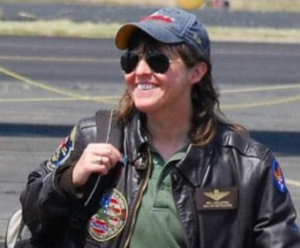
There are many considerations for student pilots before making a solo flight, especially as it pertains to weather. [Credit: Adobe Stock]
The learner said he was supposed to do his first solo flight that day. He had the airplane reserved from 9 a.m. to 11 a.m. He was supposed to be at the flight school by 8:30 a.m. but was a little late because it was a foggy morning.
The local weather broadcasters and traffic reporters were warning about low visibility on the roads, and they were right—driving to work made me want to file IFR before I left my home.
The learner’s instructor wasn’t at the airport yet, and the dispatcher, who although not a pilot had enough experience at the flight school to know student pilots aren’t allowed to fly in fog, wouldn’t dispatch the aircraft. The school policy was that the student’s flight instructor had to OK the dispatch.
According to the chief instructor, this rule was established when a post-solo student pilot tried to fly solo on an IFR day. He was just about to start the engine when a CFI stopped him.
The challenge at this airport was that it has no automated weather reporting system. There was no “tin lady” or “tin man” to state the current conditions indicating the field was IFR or VFR, and the rotating beacon at the airport was notoriously unreliable.
Because of this, the student pilots were supposed to be taught to use the weather reported by surrounding airports that had Automated Terminal Information System (ATIS), or Automated Weather Observation System (AWOS) in addition to the Terminal Area Forecast (TAF) and then interpolate the weather for the time of departure. This helped the learners develop the habit of using multiple sources of information gathered at different times to determine their go or no-go decision.
The task of teaching the students interpolation skills falls on the instructor. It’s more than pulling up a weather briefing—for example, one from 1800WXBRIEF.com and looking at the color-coded METAR (Meteorological Aerodrome Report) and applying that information to the TAF. The learner needs to understand the reach of both and how they work together to paint a picture of the weather the learner is likely to encounter.
METARs and TAFs
The METAR, usually issued at the top of the hour unless there is a significant change in the weather, depicts conditions within 5 sm of the reporting station. METARs shown in magenta indicate low IFR (LIFR) ceiling less than 500 feet and visibility of less than 1 sm, and red is for IFR, ceiling 500 to 1,000 feet and visibility of 1 to 3 sm.
If you are a student pilot and your field is showing magenta or red, expect to be on the ground.
How long the conditions will last is depicted in the TAF, which is a prediction, not a promise, of weather to follow. For this reason, best practice is to be skeptical of the information it provides.
For example, if the TAF indicated the weather will improve to MVFR (Marginal Visual Flight Rules) after a certain time, with a ceiling of at least 1,000 to 3,000 feet and visibility of 3 to 5 miles, it will get your hopes up, but it’s not a guarantee. A properly endorsed student pilot could fly in these conditions as long as they do not conflict with limitations placed on the learner’s solo endorsement, such as “flight outside the pattern requires a ceiling of 4,000 feet.”
Is it legal for a student pilot to fly a cross-country flight in MVFR conditions? Yes, as long as they have a solo endorsement, and the endorsing CFI didn’t put a limitation on it that calls for higher ceilings and greater visibility—for example, “for solo cross-country required visibility must be at least 5 sm and the ceiling at least 5,000 feet per XYZ flight school policy.”
The question of is it good decision making falls into a gray area. It comes down to what the TAF indicates and what the student pilot’s options will be if the weather turns sour en route. Plan your flights so that you have at least two avenues of escape should the weather close in.
If there are PIREPs (pilot reports), pay attention to what kind of airplane the pilot was flying. Moderate turbulence for a Boeing 737 will feel a bit more severe in your mighty Cessna 172.
When to Learn Weather
By your fourth flight lesson your instructor should teach you how to access and interpret a weather briefing.
It is important that the student pilot learns to recognize weather patterns and is able to identify which direction the weather is coming from, as in north, south, east or west, because geography often dictates the type of weather pattern you can expect.
METARs Along the Route
Monitoring the weather en route can be done using an app like ForeFlight, but understand the images depicted are not in real time. That information could be several minutes old. Again, be skeptical.
Another method of monitoring weather en route is listening to the METARs and ATIS of airports you are approaching. Note the trends. Is that ceiling getting lower? Are the winds getting stronger? Is the temperature and dew point converging? What are your options if you need to divert or terminate?
Learn to know when to say when, because there will always be a better weather day ahead.
Meg Godlewski has been an aviation journalist for more than 24 years and a CFI for more than 20 years. If she is not flying or teaching aviation, she is writing about it. Meg is a founding member of the Pilot Proficiency Center at EAA AirVenture and excels at the application of simulation technology to flatten the learning curve. Follow Meg on Twitter @2Lewski.
FlyJets describes JetGPT as an“automated flight-finding agent” on its web and mobile applications. [Credit: FlyJets]
You’ve heard of ChatGPT. But charter aviation marketplace and flight-sharing exchange FlyJets last week unveiled a new kind of AI agent—JetGPT.
FlyJets described JetGPT as an “automated flight-finding agent” on its web and mobile applications. The AI agent enables sharing capabilities and went live alongside multiple fall and winter flight-sharing opportunities, including routes between New York and Miami and Palm Beach.
For example, users can ask the automated assistant which empty legs are available for those routes during a given time period, allowing them to find and compare options.
“We built and improved JetGPT in keeping with FlyJets’ core goals of delivering transparency, accuracy, and efficiency—while helping our community…save time and money,” said Jessica Fisher, founder and CEO of FlyJets. “We are looking to make the process of charter flight-finding and sharing as simple as possible, for the maximum number of people.”
FlyJets provides a platform where users can post, search for, and book one-way and round-trip flights, bid or buy flights on the spot, and share itineraries. They can also search for flight-sharing opportunities, buy and sell charter spaces or seats, and re-sell empty legs.
JetGPT is an LLM-based addition that can be instructed via typing or dictation. The company said it offers real-time access to charter availability, pricing, and “related, direct-from-operator datasets,” including lists of empty legs, flight-sharing opportunities, and airport availability.
FlyJets launched a Beta version of JetGPT in February, and the full release includes improvements derived from customer feedback.
JetGPT users can use the agent to filter flights by operator safety rating, price, or space. The virtual assistant could execute bookings and sales based on given parameters, find available spaces, and set automatic route alert notifications for when specific routes become available. Users can also quickly input or search for data on the FlyJets platform.
Sample prompts might include, “Compile a list of all empty legs going in and out of Van Nuys Airport over the next week and include three photos of each aircraft,” or “Book a flight on a super-midsize jet from Teterboro to Opa-Locka Airport that comes to less than $22,000 all-in, if available; thereafter, sell three spaces on the flight via the Exchange for $3,500.00 each.”
A 24/7 human advisory desk remains available for further assistance.
“As our fall and winter options grow and we are able to add dates to accommodate client supply and demand, we are hoping that this flexible interface provides effective guidance throughout the process of flight-sharing, and also buying and selling spaces via the app,” said Fisher.
In the future, FlyJets said an upgraded JetGPT V2 could provide booking and pricing suggestions for sellers. It could even dictate to and procure information from user dashboards, fleet operating models, and the company’s FLYGreen Initiative, which rewards users who opt to fly with sustainable aviation fuel (SAF) or use carbon offsets.
Jack is a staff writer covering advanced air mobility, including everything from drones to unmanned aircraft systems to space travel—and a whole lot more. He spent close to two years reporting on drone delivery for FreightWaves, covering the biggest news and developments in the space and connecting with industry executives and experts. Jack is also a basketball aficionado, a frequent traveler and a lover of all things logistics.
An exterior rendering of NetJets’ planned private terminal at Dallas Love Field (KDAL). [Credit: NetJets]
NetJets, which operates more than 50 private terminals, service hubs, and other locations worldwide, is adding three new U.S. locations and expanding a fourth.
The company, which offers fractional aircraft ownership and private jet card programs, said Monday that it will build private terminals at Dallas Love Field (KDAL), Washington Dulles International Airport (KIAD), and Rifle Garfield County Airport (KRIL) in Colorado.
The firm also plans to upgrade its exclusive-use terminal at President Donald J. Trump International Airport (KDJT, formerly Palm Beach International) in West Palm Beach to a new, larger space.
Patrick Gallagher, president of NetJets Aviation, said in a news release that as customer demand “continues to grow…NetJets is investing in the infrastructure to deliver an unmatched experience while supporting the service and reliability our owners expect where they fly most.”
NetJets’ New Digs
NetJets said Dallas Love Field is one of its busiest hubs and has seen flight activity rise more than 25 percent since 2022, indicating growing demand.
The new location will be an exclusive-user terminal opening in late 2028, it said. An August public filing with Texas’ Department of Licensing and Regulation identified a $35 million “Dallas NetJets Campus” project comprising an 80,000-square-foot aircraft hangar and 18,000 square feet of shops and office space, but NetJets said Monday that the site will total nearly 114,000 square feet. Per that filing, construction could begin in November.
NetJets said its exclusive-use sites grant access to NetJets-only facilities that offer “greater privacy, premium amenities, and thoughtful assistance” from on-site service representatives, who orchestrate and personalize arrivals and departures. Each location also includes lounges and conference rooms.
The company said its KDAL private terminal will be developed in partnership with FBO Signature Aviation and add to a maintenance hangar it opened there in 2021 with a second service hub hangar. Other features will include a dedicated airside gate, added parking, and a stone, “southwest-inspired design.”
NetJets said Washington Dulles is consistently one of its top five customer destinations. Starting in early 2027, it plans to convert two floors of a Signature-owned facility to more than 14,000 feet of dedicated space for customers. The company said the site is “intended to create an open and unified experience,” featuring a grand staircase, lounge, family room, and private VIP suites.
As Aspen/Pitkin County Airport (KASE) prepares to widen its runway 80 and shift it slightly West, NetJets said Rifle Garfield County Airport will become a “gateway” to the region’s mountain-oriented activities. It said the site will be operational by early next year, before Aspen/Pitkin closes runway 80 for construction, in order to accommodate skiers and other travelers.
The location will include a 6,000-square-foot private terminal built in partnership with Vantage Aviation, new aircraft hangar, and customer lounge with spectacular mountain views.
At KDJT, NetJets will again work with Signature to transition to a larger exclusive-use terminal with more parking and dedicated ramp space, expanding the complex by about 5,000 square feet. It said the airport is its fourth-busiest.
More to Come
NetJets as of Monday still has not confirmed construction of a new private terminal at Austin-Bergstrom International (KAUS), plans for which were revealed by another Texas public filing in September. Per that filing, the terminal would span 8,000 square feet and be accompanied by 106,000 square feet of airside ramp space, as well as a parking lot. Its cost is estimated at about $19.5 million.
At the same time, NetJets is expanding its fleet with additions such as the Bombardier Global 8000, with plans to acquire up to 24 of the ultra-long-range jets. It took first delivery of the 8000 in March and is the type’s fleet launch customer.
NetJets is also equipping its global fleet of about 600 aircraft with Starlink internet connectivity, with plans to complete the upgrades by year’s end.
Jack is a staff writer covering advanced air mobility, including everything from drones to unmanned aircraft systems to space travel—and a whole lot more. He spent close to two years reporting on drone delivery for FreightWaves, covering the biggest news and developments in the space and connecting with industry executives and experts. Jack is also a basketball aficionado, a frequent traveler and a lover of all things logistics.
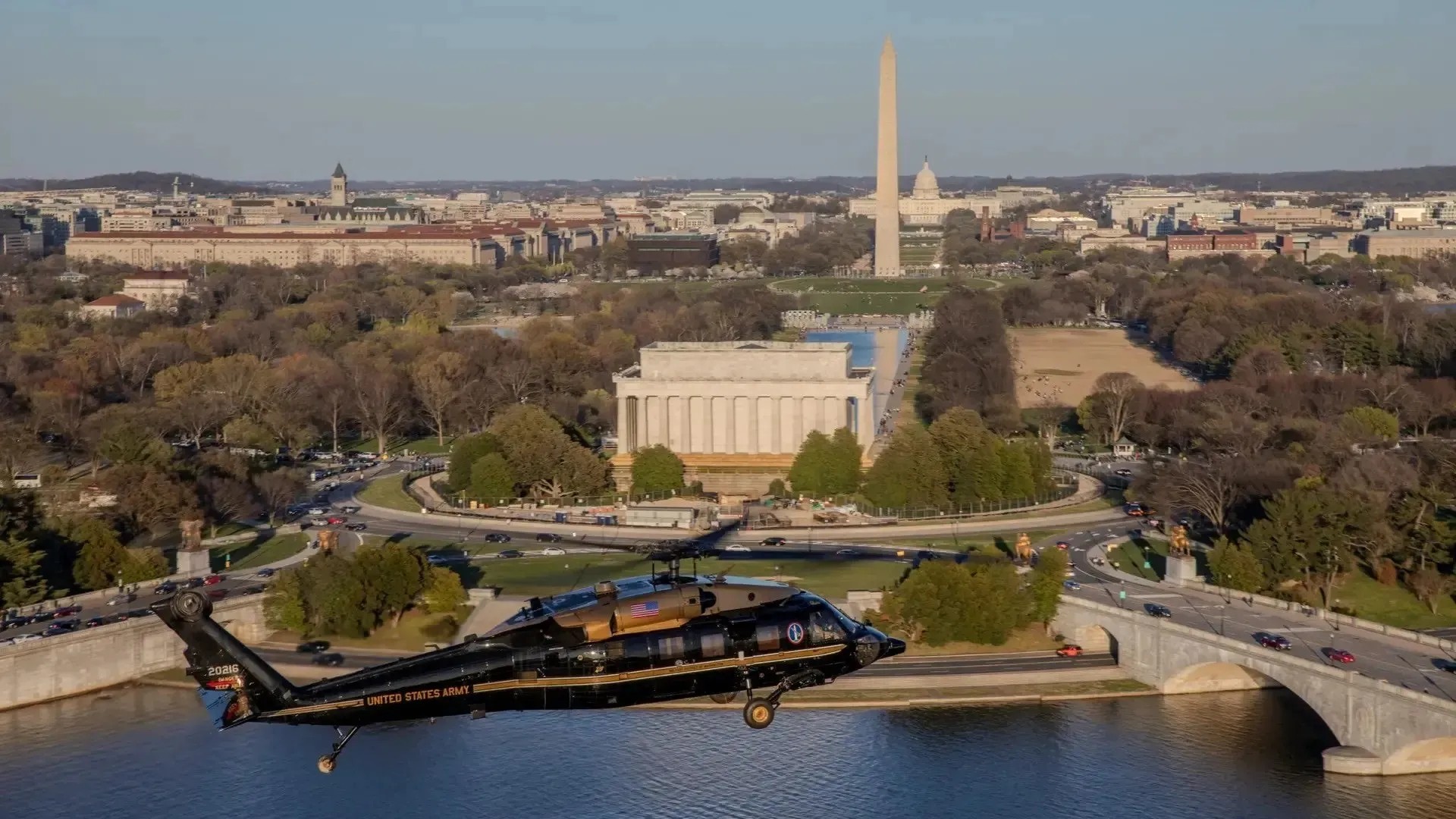
In January 2025, a U.S. Army Black Hawk helicopter collided with a passenger jet near Ronald Reagan Washington National Airport (KDCA), killing 67 people. [Credit: Nicholas Priest/U.S. Air Force]
The U.S. Army’s investigative report on the January 2025 fatal midair collision between an Army Black Hawk helicopter and commercial passenger jet identified “breakdowns across all layers of conflict management” that contributed to the accident.
The report, which was conducted separately from the National Transportation Safety Board’s broader investigation, was completed in May. The families of some of the 67 people killed in the disaser—the deadliest in the U.S. National Airspace System (NAS) in decades—have been urging its public release.
The Army said systemic failures within “layers of structural, procedural, and technical risk mitigation,” contributed to the tragedy. The report also assigns some blame to the FAA and air traffic control. It did not identify Army decision makers responsible for safety issues or indicate any disciplinary action for leaders, however.
The NTSB last week sent a letter to the Army indicating it was pleased with the branch’s progress implementing seven of the eight recommendations it has received from the agency. The Army’s investigating officer Lieutenant General Michael C. McCurry, who made more than 30 suggestions in the report, endorsed all eight NTSB recommendations.
“The U.S. Army will not waver in our dedication to aviation safety, and we will continue to share our progress transparently as we continue to verify implementation of the investigation’s recommendations,” it said in a news release Thursday.
The branch said that some recommendations have been addressed while others remain in progress. At the same time, the FAA and Congress are working to resolve safety issues identified following the collision, with mixed results. Victims’ families have criticized what they perceive as a lethargic response to the tragedy and urged stakeholders to take immediate action to prevent a future disaster.
Key Takeaways From the Army’s Report
The Army’s partially redacted 50-page investigation was first reported on last week by The Washington Post, after which the branch published it.
Per the report, two broken or “stepped-on” radio transmissions prevented the Black Hawk crew from receiving critical information from ATC regarding the position of American Airlines Flight 5342, a Bombardier CRJ-700 that was approaching to land on Ronald Reagan Washington National Airport’s (KDCA) secondary runway. These were cited by the Army as the “most salient contributing factor” to the accident.
The helicopter’s route intersected the approach path for commercial aircraft landing on KDCA’s runway 33, and the NTSB has criticized the FAA’s authorization and oversight of that route. The Army report also blames the FAA for placing the route too close to the KDCA approach path.
The helicopter route, a portion of which has since been permanently closed, provided for only 75 feet of vertical separation between helicopters traveling along the bank of the Potomac River and aircraft approaching for landing on runway 33, giving crews slim margin for error. On the night of the accident, the Army said the Black Hawk’s altimeter was set incorrectly, and as a result the crew thought the aircraft was flying 100 feet lower than it actually was.
Per the report, the Army did not resolve known accuracy issues affecting altimeters on older Black Hawks. It also did not ensure pilots were adequately informed of the potential for erroneous altimeter readings. The Army subsequently sent out a safety message regarding this issue, but per the Post, a “larger update” will not appear in Black Hawk operator manuals until 2027.
The report further said the Army “lacks a formal near-miss definition and reporting system.” It suggested that the branch study traffic and near-miss data in other cities where it operates helicopters in order to create “heat maps.” An unnamed Army official told ABC News that such a review is ongoing and includes locations such as Los Angeles and the Seattle-Tacoma area.
The FAA earlier in 2026 conducted its own study identifying hundreds of airport “hot spots” on the ground where the potential for runway incursions is heightened.
However, the Army’s investigation noted that coordination between it and the FAA is “lacking,” particularly when it comes to recommending changes to D.C.-area helicopter routes. The regulator has made changes to the airspace around KDCA, including eliminating mixed helicopter and fixed-wing traffic. But the Army suggested tightening its relationship with the agency through more frequent meetings, joint working groups, and data-sharing agreements.
Additional factors cited by the Army included ATC’s use of “non-standard terminology” and provision of “incomplete” advisories, turbulent winds on the night of the accident, and inadequate crew training on D.C. airspace. It also said the combination of bright city lights and the helicopter crew’s use of night vision goggles limited pilots’ field of vision and made it more difficult to spot the CRJ’s external lights.
Steps Taken So Far
The NTSB made eight recommendations to the Army, some of which have been implemented while others remain in progress.
Recommendations included revising training for Army helicopter crews flying near KDCA, addressing the margin of error for Black Hawk altimeter readings, and developing a safety management system that could identify potential midair collisions between Army and civil aircraft. The NTSB also suggested the Army implement new procedures to verify the accuracy of flight data, a NAS-wide helicopter flight data monitoring program, and an ADS-B transponder inspection procedure.
Per a fact sheet shared by the Army, measures taken so far include establishing initial and recurrent training for KDCA aircrews—including instruction on airline approach and departure paths—and routine ADS-B inspections every 90 days. Immediate reforms also addressed “airworthiness, altitude awareness…cockpit traffic-awareness training, command oversight, emergency preparedness, safety reporting, and civil-military coordination,” the Army said Thursday.
The branch said it continues to work toward adding altitude-error information into Black Hawk operator manuals no later than December, as well as developing recurring checks of recorded flight data and pursuing a data-sharing agreement with the FAA.
The FAA too has taken some important steps, including the restrictions on mixed traffic, limiting the use of visual separation procedures, and reviewing mixed traffic at other airports. But the NTSB said in September that the agency’s responses to about one-third of its 33 recommendations have been unacceptable.
The ADS-B Debate
Another recurring theme in the Army’s report was the use of ADS-B transponders and receivers, a topic that the FAA and Congress have been working to address for months.
The accident helicopter was equipped with ADS-B Out capability, but it was inactive on the night of the collision due to improper maintenance. Per the Army’s report, this did not contribute to the crash. But the branch said that “operational risk…[has] created an environment where crews left ADS-B Out off when aviation safety could have been enhanced with the equipment transmitting.”
Per the Army fact sheet, the branch inspected more than 3,500 helicopters affected by ADS-B Out functionality issues about six months after the crash, and it reconfigured them to ensure that those systems are working. McCurry recommended more extensive equipage and mandatory use of ADS-B Out near KDCA.
The Senate-approved ROTOR Act seeks to scale back ADS-B Out exemptions, which per the Army report have been “overapplied.” Families of Flight 5342, which represents loved ones of some of the crash’s victims, has urged lawmakers to “sharply limit” Army ADS-B exemptions.
The report also suggested that the Army require flights in “heavy urban environments” to be equipped with commercial off-the-shelf ADS-B In receivers, which allow aircraft to receive ADS-B Out transmissions, as well as transponders with both ADS-B In and Out capabilities.
The ROTOR Act would immediately mandate ADS-B In for aircraft that already transmit ADS-B Out, which would include military helicopters such as the Black Hawk. Another bill, the House-backed ALERT Act, proposes a slower implementation of ADS-B In and evaluates alternative systems. Families of Flight 5342 has called for an immediate, broad ADS-B In mandate and for the two bills to be reconciled into a single piece of legislation before the 119th Congress ends in early January.
The Pentagon previously lent support to the ROTOR Act but earlier this year reversed that support. Both bills have stalled as lawmakers in both chambers struggle to come to a compromise.
Victims’ loved ones have further called for an independent Army Inspector General inquiry to obtain more clarity on how safety risks were allowed to persist within the Army, as well as on who made what decisions regarding safety.
Jack is a staff writer covering advanced air mobility, including everything from drones to unmanned aircraft systems to space travel—and a whole lot more. He spent close to two years reporting on drone delivery for FreightWaves, covering the biggest news and developments in the space and connecting with industry executives and experts. Jack is also a basketball aficionado, a frequent traveler and a lover of all things logistics.
The Ohio State University Center for Aviation Studies. [Credit: OSU]
When the state of California introduced the lottery in the 1980s the slogan was, “You can’t win if you don’t play.” That applies to so many things in life, including aviation scholarships. If the number of letters of recommendation I am asked to write this time of year is any indication, aviation scholarship season is upon us.
The reason many people do not look for or apply for scholarships is because they think they won’t qualify, as most aviation scholarships are aimed at people in their late teens or early twenties who are enrolled in high school or college aviation programs, or because they are working full time and don’t think they have the financial need.
To these people I say, “You won’t know unless you look for scholarships, and you won’t win unless you apply.”
Full disclosure: my multiengine ratings were made possible by two scholarships from The Ninety-Nines, the international order of women pilots. I applied for the Earhart Scholarship from the international group and for another scholarship offered by the Seattle chapter of the organization. At the time I was working full time for a national aviation magazine, part time for Aviation for Women, and part time at two flight schools. So much employment almost worked against me for the local scholarship, as financial need is a significant factor for selection. Lucky for me a friend who was part of the Seattle chapter pointed out no one would work that much unless they were working toward something, like a multiengine rating.
How to Search for Scholarships
It is ridiculously easy to search for aviation scholarships these days thanks to Google. Drop the phrase “aviation scholarship” into a search bar and see what comes up
Read the qualifications for the scholarships carefully. You don’t want to get halfway through filling out an application only to realize that the scholarship is limited to people who live in a particular geographic area, has an age limitation, or a prerequisite, such as completion of the knowledge exam for the pilot applying.
Navigating the Process
Most scholarships require the applicant to write an essay. The essay should address the applicant’s desire for scholarship, what they will use the funds for, outline their financial need, their career goals, if appropriate, and how winning the scholarship will impact their lives.
About the essay: although AI is all the rage, the purpose of the scholarship is for the scholarship committee to get to know the applicant. This is one time you want to go old school. If you’re not a writer, pretend you are talking to a friend, explaining to them why you want to pursue aviation. Be sure to check your spelling and punctuation before you submit the final draft.
If you are applying for a flying scholarship, you can expect to be asked to submit photocopies or scans of the last few pages of your aviation logbook. Make sure the pages are filled out legibly and correctly. Even if it has been a while since you flew—I mean months or years, apply anyway. Remember, if you don’t ask for something the answer is automatically no.
You may also have to submit copies of your pilot certificate. Make sure it is legible as well.
Letters of Recommendation
Most scholarships require at least one letter of recommendation, often from a person who has flown with you and is not a family member. Be very selective about who you ask to write the letter. You may love your flight instructor but if he/she is very busy they may not have the time nor the capability to write a letter for you. Ask them well in advance and give them a deadline of at least a month before the scholarship application is due.
Make sure the letter writer understands the mission. I asked a colleague to write one for me, and most of what she wrote was about her aviation career. I was glad I had another person lined up to write a letter.
If you want a new-to-you instructor to write a letter for you, expect to fly with them more than once because one flight, then letter, screams “check-the-boxism” when the scholarship committee is looking at the photocopies of the last page of your logbook.
It is helpful to supply the person with a copy of the essay you plan to submit along with a resume if appropriate. If the letter needs to be part of a scholarship packet be sure to let the writer know so they send it to you and not the selection committee, as this can disqualify you.
Common Misconceptions
Number One: You must be of traditional school age to qualify for a scholarship.
While there are some scholarships that require the applicant to be a certain age because they are intended for the pursuit of specific certificates (for example at least 17 years of age when pursuing a private pilot certificate) there are also many scholarships that are available to people who are pursuing aviation later in life.
Women in Aviation, the Ninety-Nines, the Association of Women Aviation Mechanics, the Experimental Aircraft Association, and AOPA have scholarships aimed at adults who are seeking professional enrichment.
It is not just the international and national alphabet groups that offer scholarships. State aviation associations often have scholarships designed to support established aviation business professionals as well as those who are entering the industry and need specific training, for example a type rating, management, or dispatcher’s certificate.
Scholarships Close to Home
State aviation associations often have scholarship opportunities that were created to help aviation business professionals advance their careers. These scholarships are often aimed at people who have or are seeking non-flying careers such as aviation management, or at college students who are majoring in aviation or aerospace.
You will also find scholarships for aviation add-ons, such as a tailwheel endorsement or a seaplane rating.
Please note that a great many scholarships have the caveat they will be paid directly to the flight school, and often they are intended for Part 141 schools only. Have a school picked out before you apply, and find out about their refund policy on monies not spent.
Don’t be discouraged if the scholarship is just for a few hundred dollars. While a scholarship may not pay for a complete rating, it will be money you didn’t have a few days before.
If you don’t qualify for a scholarship in this round, don’t give up. It doesn’t mean that you’re a bad person or “they hate you,” it just means someone else was a better fit. There is always next year.
Meg Godlewski has been an aviation journalist for more than 24 years and a CFI for more than 20 years. If she is not flying or teaching aviation, she is writing about it. Meg is a founding member of the Pilot Proficiency Center at EAA AirVenture and excels at the application of simulation technology to flatten the learning curve. Follow Meg on Twitter @2Lewski.
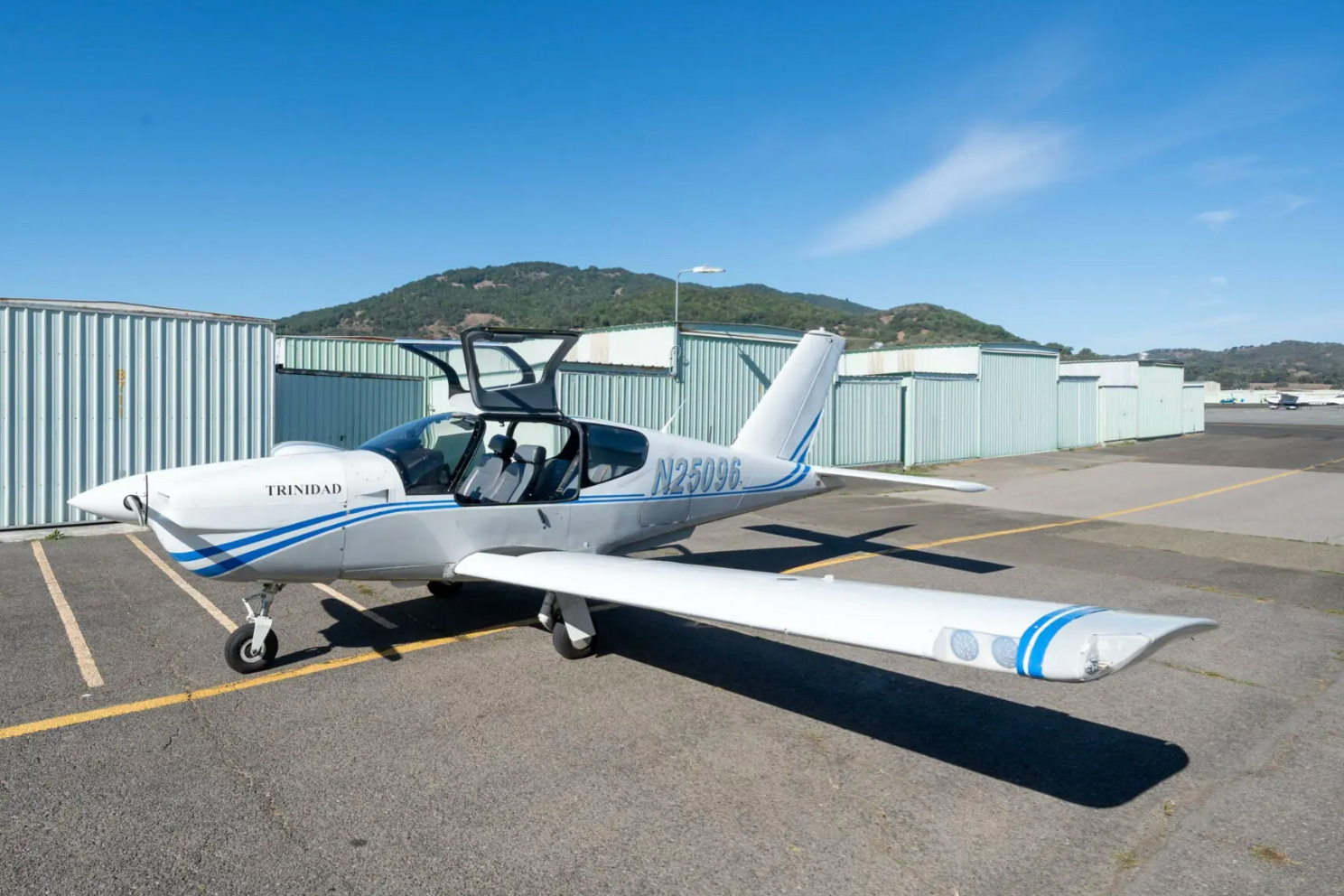
Combining French design flair with heavy-haul cross-country performance, the SOCATA TB-20 Trinidad has long stood out from the sea of traditional four-place singles. Engineered with automobile-inspired wide-cabin ergonomics and slippery aerodynamics, this European cruiser effortlessly bridges the gap between high-speed traveling efficiency and sleek ramp appeal, cruising comfortably at 155-165 ktas.
A look at the logbooks confirms a clean history with zero damage or hail events recorded across its 3,500 total airframe hours. Always stored safely in a hangar, the exterior retains a sharp factory-style livery finished in clean snow white with subtle gray-and-blue accent striping.
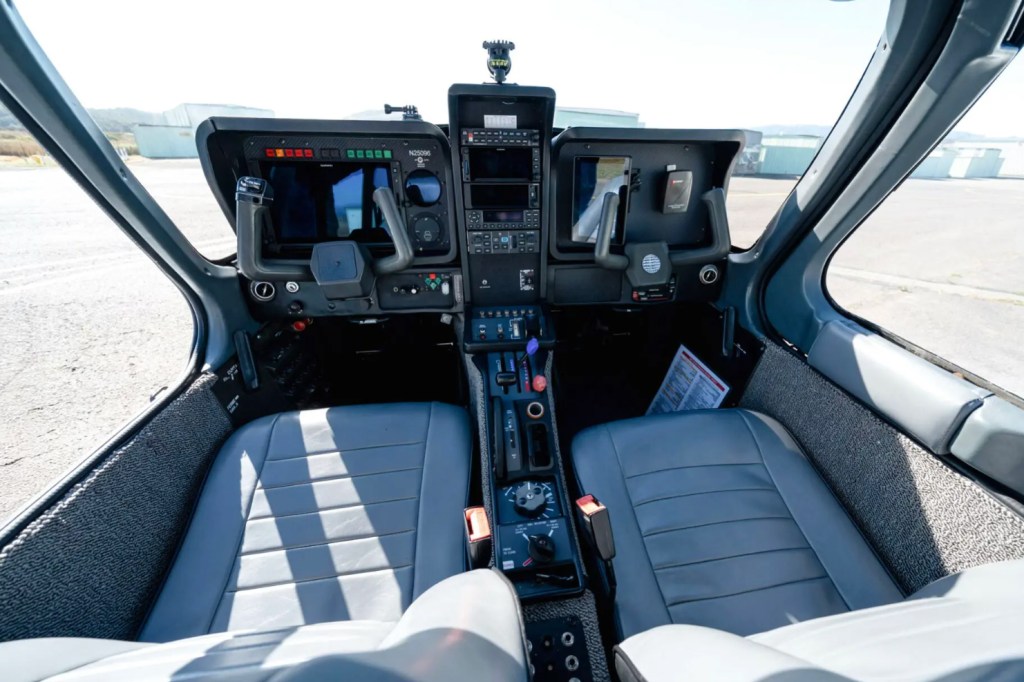
Swinging open the wide cabin doors reveals an inviting four-place interior with premium gray leather seating. Passengers enjoy broad visibility, comfortable cross-country seating, Rosen sun visors, dual push-to-talk switches, and dedicated side-door baggage compartment that handles bulky luggage with ease.
Supplying thrust up front is a 250 hp Lycoming IO-540-C4D5D engine with 1,800 hours since major overhaul. Matched with a two-blade constant-speed Hartzell propeller showing 620 hours since overhaul, the Trinidad delivers a generous 1,200-pound useful load, a service ceiling near 20,000 feet, and a nonstop range of roughly 1,000 nm.
1990 SOCATA TB-20 Trinidad [Credit: Aerista]
Settling into the pilot’s seat showcases a glass-panel refresh that brings cutting-edge situational awareness to the flight deck. Highlighted by a primary Garmin G500 TXi display with Synthetic Vision, the panel integrates a GTN 650Xi, GNX 355, GI 275 backup instrument, and GFC 500 autopilot featuring Smart Glide, electric pitch trim, and panel-mounted TOGA button.
Listed at $204,900, this aircraft comes complete with continuous logbooks and a fresh March 2026 annual inspection, presenting a ready-to-fly package for owner-pilots seeking fast, capable IFR travel.
If you’re exploring ownership options, FLYING Finance can help get you airborne. Use our airplane loan calculator to estimate your monthly payments, or connect with an aviation finance expert at flyingfinance.com.
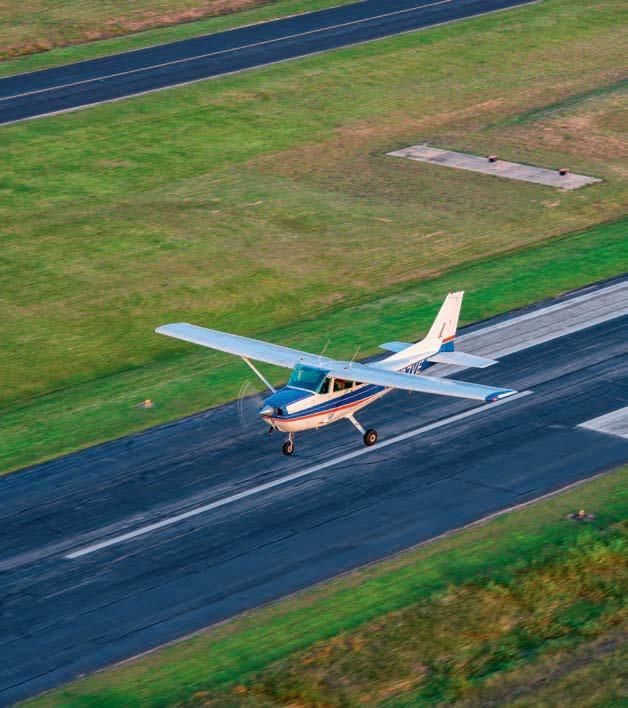
The sight of a Skyhawk on the ramp has marked the start of many pilots' careers. [Credit: Glenn Watson]
Certain products have shapes so distinctive that everyday consumers can recognize their silhouettes.
The Coca-Cola bottle’s hourglass shape might be the most famous example, but others, from the Vespa scooter to the KitchenAid stand mixer, also claim the distinction.
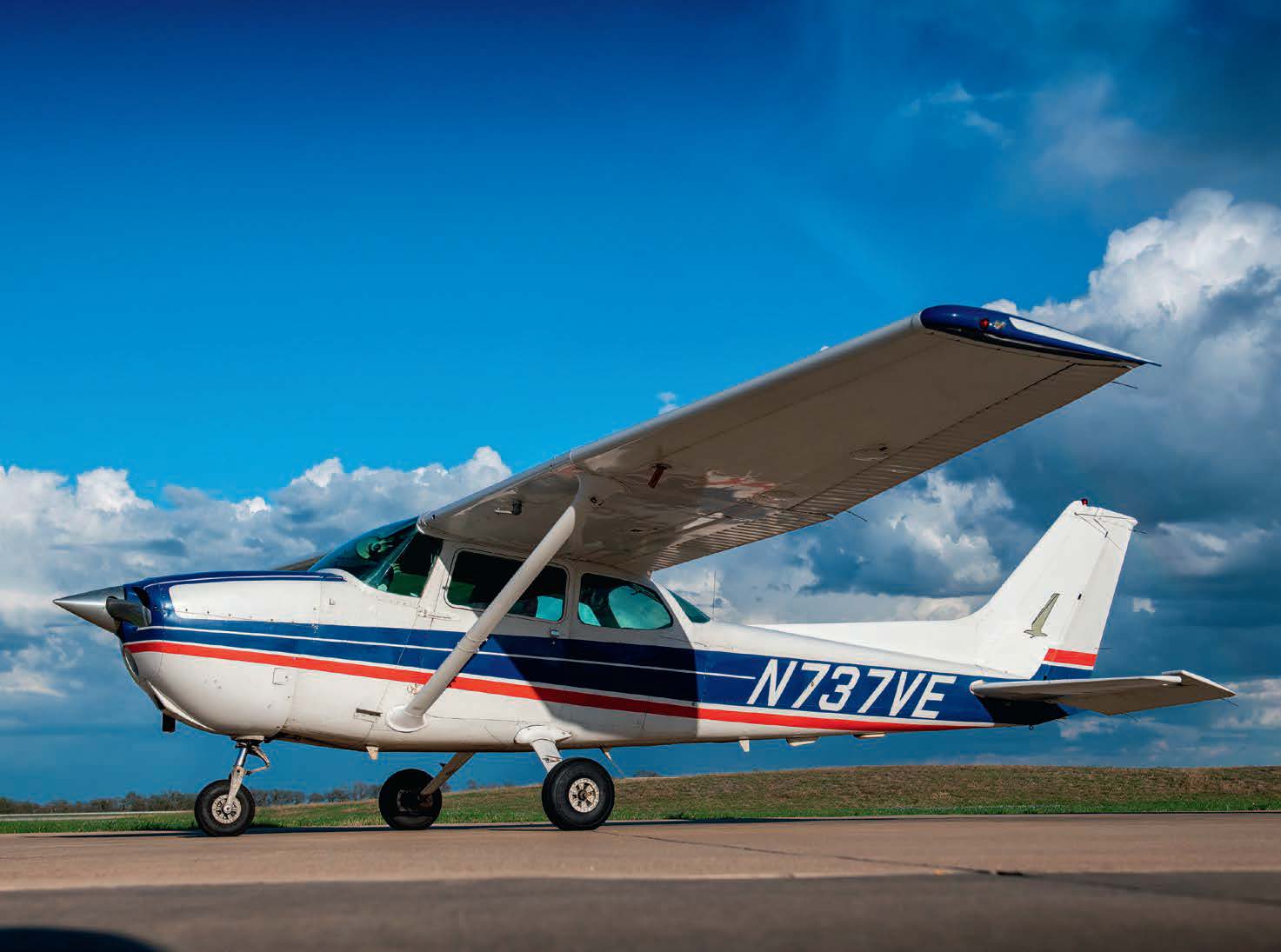
Some say the Cessna 172 Skyhawk belongs to this group because its high, strut-braced wing, swept vertical stabilizer, and fixed tricycle landing gear have come to represent the standard small airplane in popular culture. Others suggest the most memorable products usually are among the most beautiful, which, they say, the Cessna 172 is not.
When judged on the celebrated principles of form following function, however, the long-running light aircraft that many of us see every day makes a strong case for commercial immortality. In a way, the design’s stunning success is almost completely attributable to the way it looks.
If you're not already a subscriber, what are you waiting for? Subscribe today to get the issue as soon as it is released in either Print or Digital formats.
First flown in 1955, the Cessna 172 marked a turning point in general aviation due largely to its design, but also as a result of marketing. While it signaled the coming shift from then-conventional tailwheel landing gear to tricycle gear, the design was not the first—other tricycle-gear models like the Piper Tri-Pacer preceded it—nor was it revolutionary.
What the Cessna 172 had going for it was its modern, all-metal construction, good performance, pleasing looks, and an advertising tagline claiming it was so easy to land that pilots could simply “drive” it onto the runway. Today the model remains in production and is the most-produced light aircraft ever with more than 44,000 delivered. What seems now like a well-coordinated maneuver to dominate the light aircraft market, though, was really a fluke that almost never happened.
During 1954, Cessna was working on the next version of its popular 170B, the latest line of high-wing, four-place 170 singles. The 170, which had been on the market since 1948, was an attractive design with sweeping round tail surfaces and a taildragger configuration. All the elements that made it handsome also marked the old bird as obsolete.
By the mid-1950s, rival Piper was selling a lot of Tri-Pacers, which were essentially standard Pacer taildraggers modified with nosewheels. While pilots poked fun at the rather awkward-looking Pipers, they also bought lots of them—enough to get the attention of Cessna engineers, who began experimenting with nosewheel conversions for the 170B.
In Cessna: Wings for the World, longtime Cessna engineering test pilot William Thompson describes how he and colleagues developed and tested nosewheel versions of the 170B as early as 1954 but were told by some of their bosses to cease and desist. Tricycle gear still drew skepticism at the time, though in hindsight, the proverbial writing on the wall was clear. Nosewheels would become the new standard, but it would still take a little while.
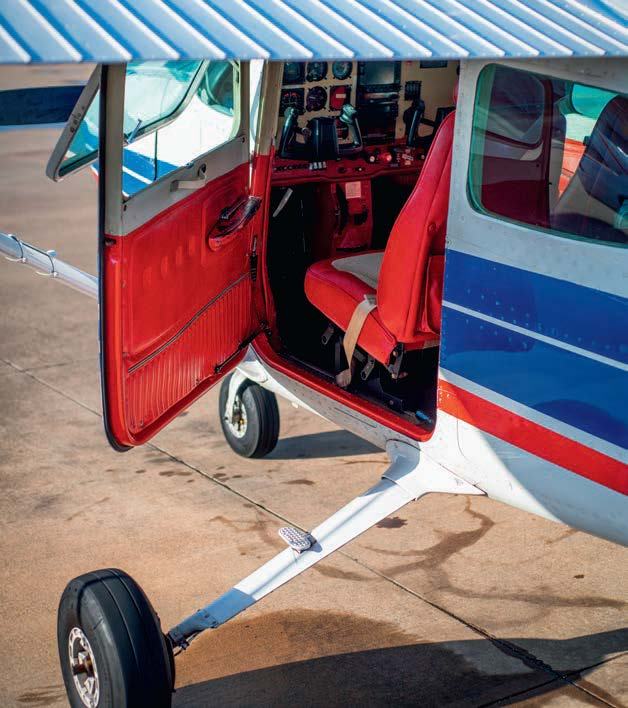
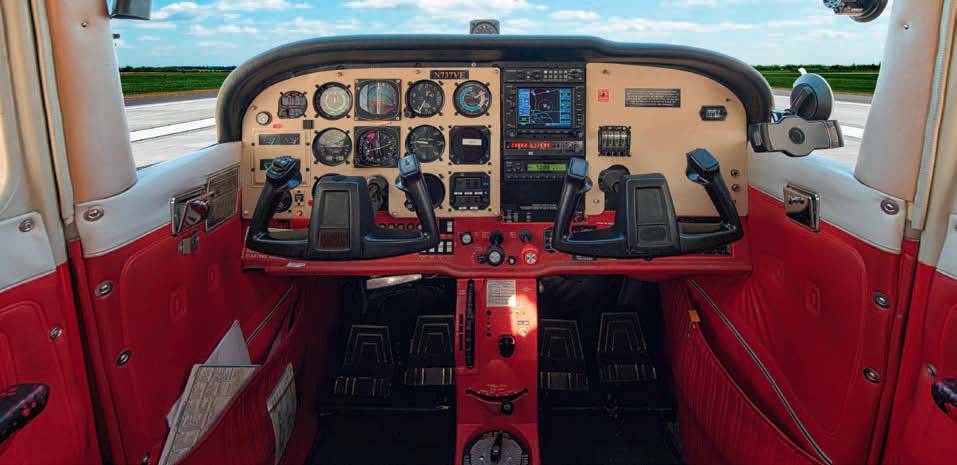
The C172’s simple cabin is welcoming to students and longtime pilots. [Credit: Glenn Watson]
Cessna wanted to build a successor to the 170B, to be called the 170C. The airplane would have straight, squared-off tail surfaces and fit into the product line as a sort of little brother to its popular 180 taildragger. Thompson’s book, which is a great read to matter which Cessna models interest you, includes a photo of the 170C prototype. Its tailwheel design looks graceful and arguably prettier than the 172 but never could have matched the latter’s sales volume.
After lengthy discussions and debate, Cessna canceled the 170C and moved ahead with the 172. The result, as we now know, was a hit like no other and remains a solid, capable personal airplane.
Popular With Pilots
Pilots who train in Cessna 172s have a tendency to fall in love with them, whether they readily admit to it or not. We all remember our first smooth landing, well-coordinated steep turn, or the first crosswind takeoff we made, locked onto runway heading with just the right combination of compensating aileron and rudder. These moments of triumph will always stir fond memories, and while this could be true for any training aircraft, the 172 stands out for a few reasons.
Sheer market saturation gives the Cessna 172 an advantage in the overall quantity of affection it receives. The aviation community generally recognizes as having trained the most pilots worldwide, so it benefits from a lot of voices singing its praises. But it arguably is the quality of the 172 pilot’s experience that earns it more love than rival trainer models.
How pilots regard their trainers reflects one of many complex relationships in aviation. For starters, we know there are “Cessna people” and “Piper people.” Those who learned in Piper PA-28s tend to stick with models in the Piper line as they build hours and advance in their ratings and endorsements. They often feel that a low-wing airplane is the way to go because they are accustomed to the layout.
Skyhawks perform well from short runways, offering varied destinations. [Credit: Glenn Watson]
Student pilots who trained in Cessna 172s tend to prefer the full view of surrounding terrain that a high-wing design provides, obscured only slightly by wing struts. It is understandable why students, constantly searching for landmarks on the ground, would feel more comfortable flying the Cessna. Having flown 172s and PA-28s, I was put off by the way the Piper’s low wing blocked my view. Of course, my concern was partly psychological, as we typically spot landmarks before reaching them. Still, the thought that your destination runway is hiding beneath the wing is a common distraction. The Cessna, in contrast, almost seems to lift its arms, as if to say, “There’s your airport.”
At critical points in training for my private pilot certificate, such as cross-country solo flights, I was grateful for the Cessna’s generous downward view. At that stage of becoming a pilot, perhaps foolishly, I did not worry as much about seeing whatever might be above me. I just wanted to know if I had reached the road junction that was so easy to spot on the sectional chart.
Joy to Fly
The Cessna 172’s combination of easy handling, forgiving flight characteristics, including a reluctance to stall, and overall solid feel can help nervous learners build confidence to the point where they are eager to embark on solo flights. The aircraft’s visibility imparts an added sense of security, clearing the pilot’s mind to prepare for the next leg of the trip.
I recall my second solo cross-country flight from Sussex, New Jersey (KFWN), to Hazleton, Pennsylvania (KHZL) in my flying club’s 1975 172M. At 4,500 feet msl I crossed the Delaware River and made continuous mileage estimates while squinting to find my next waypoint—a building marked “school” on the sectional (my instructor was a pure-pilotage sort). Located in a remote area with no other structures nearby, the school had a distinctive shape and was easy to spot.
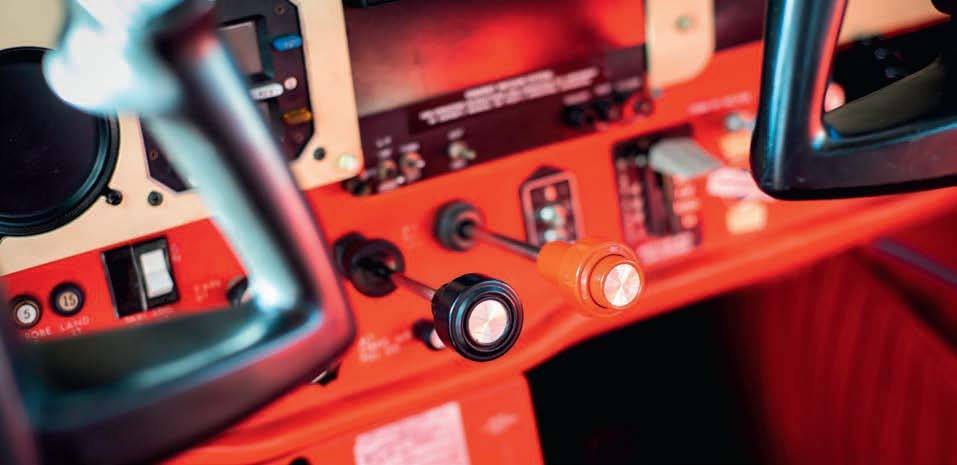
The typical Skyhawk has received upgrades, but some remain largely original. [Credit: Glenn Watson]
Next came Pocono Raceway, a 2.5-mile course where I have watched many NASCAR and American Motorcyclist Association races over the years. The track’s unique scalene triangular shape, often called the “tricky triangle,” stood out from its woodsy surroundings. So did the intersection of Interstate 80 and the Pennsylvania Turnpike. From there I could see the plume of steam rising from a power plant a few miles beyond the airport. Heading toward it would lead me to a downwind entry to Runway 10.
Flying by the sectional, which felt daunting early on, turned out to be fairly intuitive, and the solo flights I completed as a student seem quaint to me now. But we all know how challenging those missions can be when you have logged a mere 20-odd hours in the cockpit with the security of an instructor watching your every move. At the time I thought the Cessna 172 was about as sweet as an aircraft could be. The mellow, reliable thrum of its engine combined with ease of operation gave me a sense of warmth—like it was made for me. Even before earning my certificate, I began screen-shopping 172s.
Wide Range of Prices
For decades, Cessna 172s were among the most economical aircraft to own. When I began flight training in the club’s 1975 Skyhawk, the instructor said my aircraft renter’s insurance needed to cover its hull value of $30,000. The amount seemed reasonable and would allow for rising prices.
Like many things, though, the cost of a used Skyhawk has risen significantly during the past decade. I had to bump up my hull coverage to $40,000, 50,000, and eventually $80,000 to stay current. After buying my own airplane a few years ago and dropping the renter’s insurance, I continued tracking the Cessna 172 as an indicator of the wider market for used aircraft, and it continued to surprise.
The typical Skyhawk has received upgrades, but some remain largely original. [Credit: Glenn Watson]
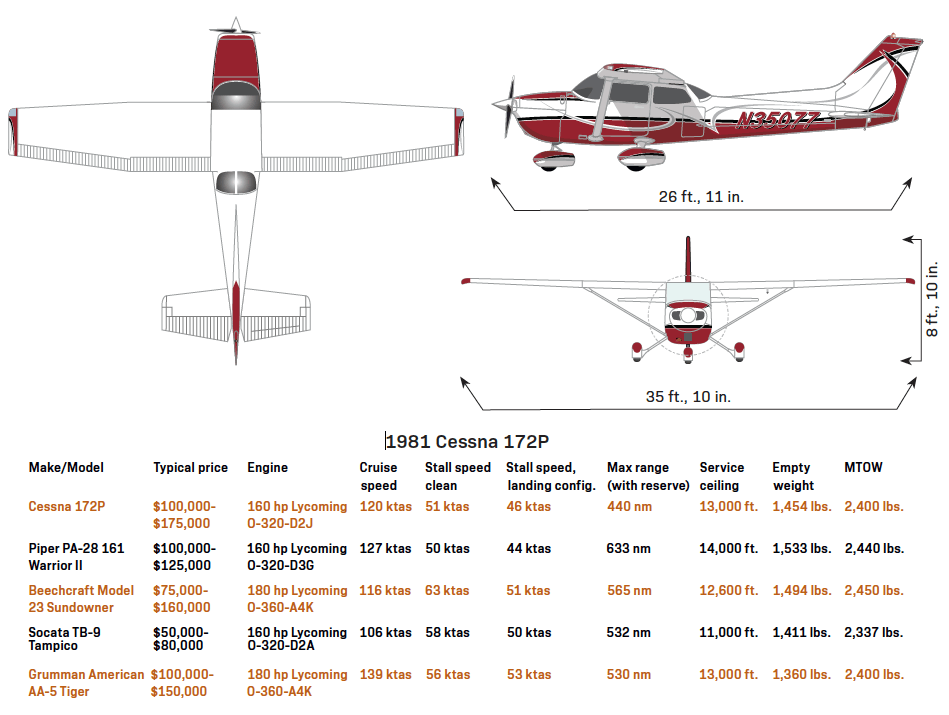
Prices across aviation have soared since the COVID-19 pandemic, but for certain models including Cessna’s all-arounder, the rise has been near meteoric. Aspiring owners have watched as asking prices for 172s from the 1970s reached milestones like $50,000, $75,000, and even $100,000. I recently saw one listed for $175,000.
It makes me feel old when I hear myself saying things like, “I remember when that kind of money would buy a squadron of Cessna 172s.”
The highest prices usually indicate that the airplane has special features like a new, modern glass panel, new paint and interior, or even a conversion to a 180 hp Lycoming O-360 from the standard 150 or 160 hp O-320. Airframe and engine time affect values as well, but the bottom line for many shoppers is that a Cessna 172 you can fly home confidently after paying the seller, and expect many hours of routine operation without major repairs or replacements, is likely to cost more than you initially budgeted.
Further complicating the market is the fact that Cessna continues to build 172s, so the model years available range from 1956 to the present. There is a gap between 1986, when Cessna and other manufacturers ceased production of light aircraft, to ’96, when the company resumed building them. Newer 172R and 172S models from the “near side” of the production gap can jump in price to more than $200,000, though airframe and engine times can vary widely, as many have spent long careers with flight schools and, while relatively new in years, have lived hard lives. New models with 180 hp fuel-injected engines, retail for more than $500,000.
Cool-Headed Assessment
As with any airplane, due diligence is a must. Shoppers should devote as much effort as possible to homework before buying. The task might seem daunting, or even frightening, but buyers should remember that they have certain advantages when taking the plunge into the used aircraft market.
One of the best things about the Cessna 172, besides its practicality and friendly flight characteristics, is the abundance of information about the type available to prospective owners. There are many articles worth reading and videos worth watching that delve into the true cost of owning a 172, from big-ticket items like engine overhauls, annual inspections, insurance, and hanger rent to oil changes, fuel, and occasional tire and inner tube replacements (all surprisingly pricey to first-time owners). Shoppers can learn a lot from basic research.
Sometimes the most difficult part of aircraft shopping has to do with accepting that while in-depth research makes buyers more knowledgeable and better equipped to judge an airplane’s merits, it will not make you an expert. Even though the Cessna 172 might be simpler and more familiar than most aircraft, it remains a complex machine that requires a seasoned mechanic to properly assess its condition. In short, don’t skip the pre-buy inspection.
It can be hard to describe the excitement of acquiring a personal aircraft. People describe the experience as fitting in somewhere between buying a house or your first car. But unlike those purchases, an airplane is less of a necessity and, frankly, more of an indulgence—a fact that can further complicate the process with conflicting emotions.
Regardless of the possible bouts of trepidation and anxiety, most pilots will tell you that their airplane is among the best purchases they ever made. While no airplane is cheap, the Cessna 172 certainly is reasonable as airplanes go. It may not be very fast, but I think its short-field prowess largely makes up for any lack of speed.
Besides, the airplane is still fast enough to transform the vacation trips you used to take in the family car.
Faster Than a Car
My wife, Alex, and I still reminisce about wonderful outings years ago in the club’s Skyhawk. Standouts include a weekend trip from New Jersey to Fishers Island, New York (0B8), and breakfast hops with our two sons to scenic spots like Goodspeed Airport (42B) in East Haddam, Connecticut. Years of traveling in the Cessna 172 were instrumental in proving to Alex, who did not grow up around small aircraft, that these “flying beer cans” are the keys to joyous, unforgettable experiences.
Whenever prospective buyers express doubts about the 172’s performance, I share an anecdote from a road trip to Maine many summers ago. As we drove on Interstate 95, we spotted an early straight-tail 172 ahead, towing a large banner. Rolling along at 70 mph, we gradually caught up to the airplane, which was following the highway.
Excitement grew as we began to overtake the Cessna but quickly dissipated when traffic began to slow, as it almost always does, upon approaching the toll plaza near the Maine-New Hampshire border. The airplane regained its advantage and, despite the immense drag of the banner, moved steadily ahead and soon disappeared into the hazy distance. Traffic flow on the highway never quite recovered that day, and for the remainder of the trip I could not stop thinking about flying to Maine in three hours aboard a Cessna 172 instead of driving for 10.
[Credit: Scheme Designers]
This column first appeared in the August Issue 973 of the FLYING print edition.
Jonathan Welsh is Lead Editor of Aviation Consumer and a private pilot who worked as a reporter, editor and columnist with the Wall Street Journal for 21 years, mostly covering the auto industry. His passion for aviation began in childhood with balsa-wood gliders his aunt would buy for him at the corner store. Follow Jonathan on Twitter @JonathanWelsh4
Altitude University drone course laptop screenshot [Credit: Altitude University]
Here is a collection of editor-recommended aviation products and services that are worth a closer look. From practical tools to thoughtful solutions, this is what caught our eye in the August Issue 973 of the FLYING print edition.
If you're not already a subscriber, what are you waiting for? Subscribe today to get the issue as soon as it is released in either Print or Digital formats.
If becoming a drone pilot is on your radar, Altitude University’s Online Test Prep Course prepares you for the FAA Part 107 exam with lessons on airspace, regulations, and weather.
Pilots know the importance of protecting their vision. Smith Optics offers eyewear that helps protect your eyes from harsh sun and glare, keeping you comfortable inside the cockpit and active outside of it.
The virtual aviation and esports world is a little more accessible thanks to Razer. It makes PC consoles, mobile devices, chairs, and headsets that can help you up your game.
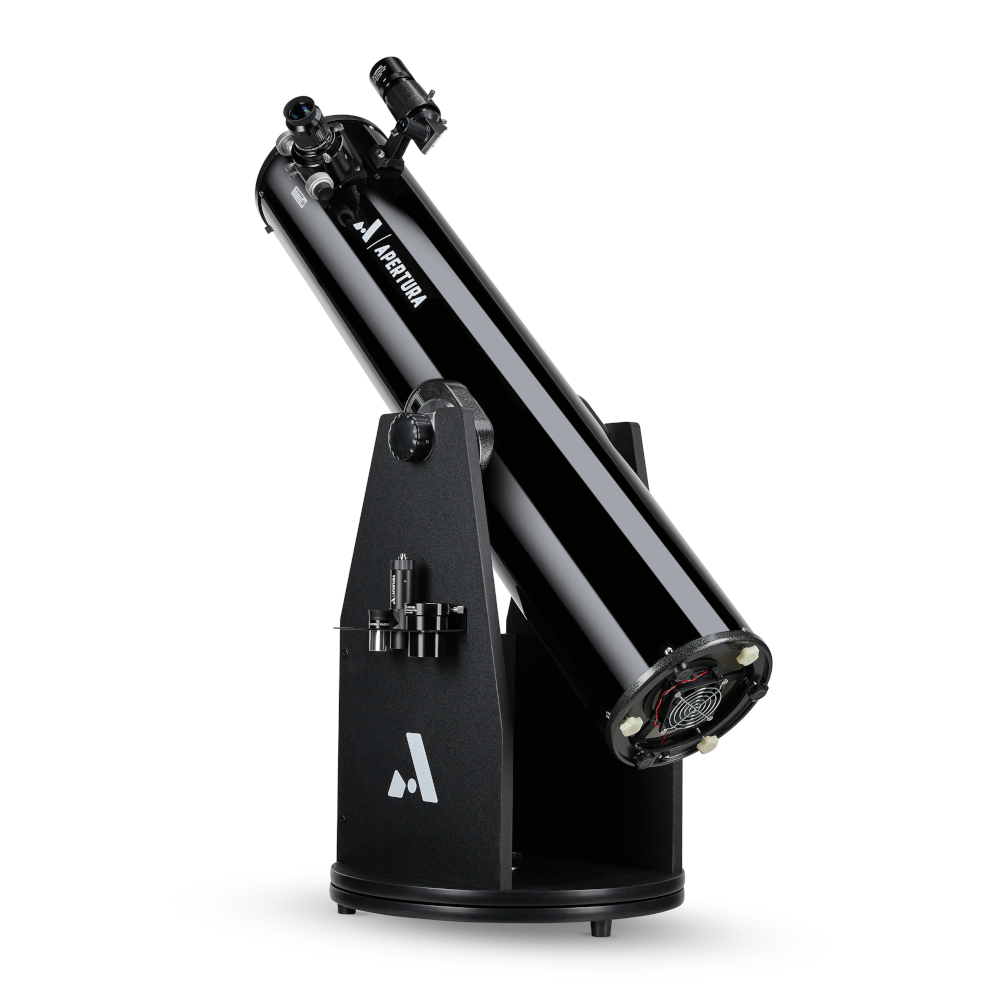
Reach for the stars with astronomy equipment from High Point Scientific. You can find telescopes for everyone, from beginner skywatchers to experienced stargazers.
High Point Scientific telescope [Credit: High Point Scientific]
Publisher’s note:FLYING may earn revenue from the products available on this page and participate in affiliate programs.
We often start the discussion on Aircraft For Sale by saying something like, “You do not see one of these every day,” but this is an extreme example.
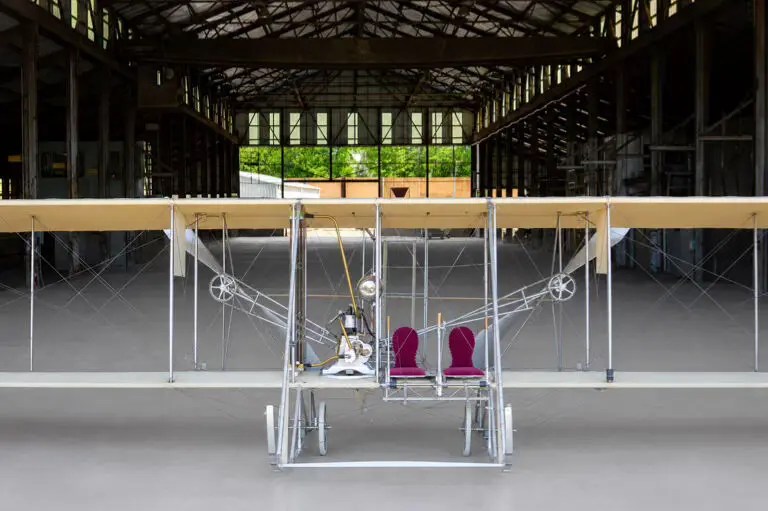
The Wright Model B is a rare gem from more than 100 years ago, when aviation was in its infancy and pioneering aviators were busy—very busy—sorting out the intricacies of lift, drag, and other aerodynamic principals, many of which they had yet to discover.
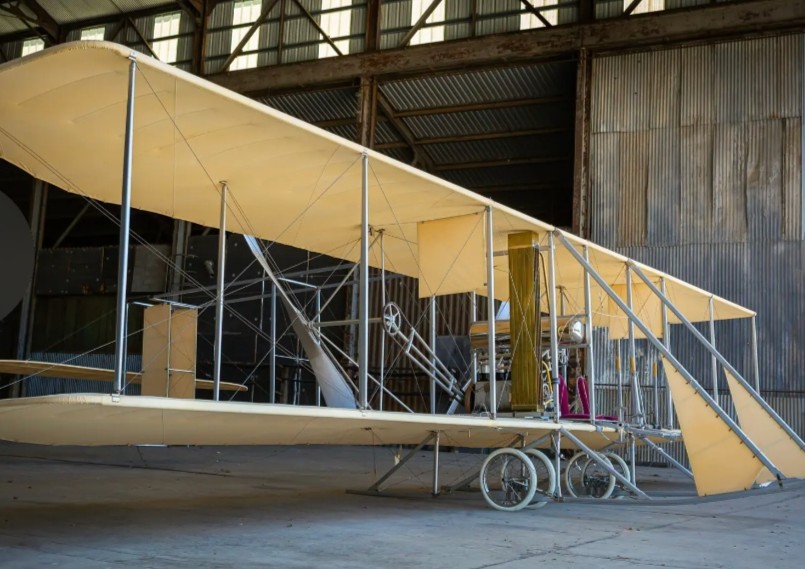
With the Model B, the Wrights moved the elevator from the nose to the tail. [Credit: Aerista]
After years of experimenting with gradual changes to the 1903 aircraft with which they made the first powered flights, the Wright brothers also needed to promote their aircraft business in order to maintain their technological lead over competitors—and to keep the lights on.
The Model B was the answer. It was the brothers’ first mass-produced airplane, and it was a hit with U.S. military services, which used it to train the first military pilots.
The aircraft for sale today was built to capture the look, feel, sound, and overall character of powered flight in general during its first decade, and of the Wright Model B in particular.
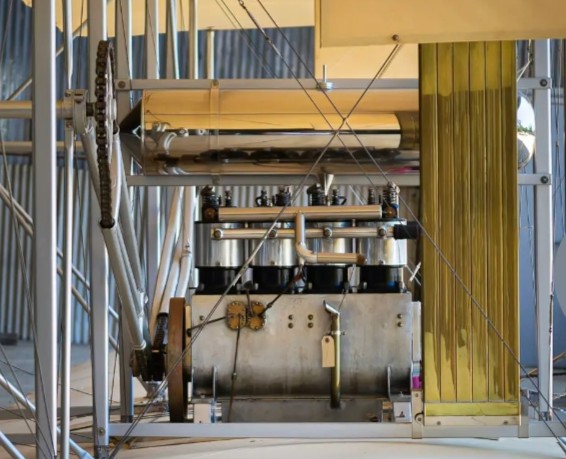
This 1911 Wright Model B replica has zero hours on its original, period-correct Wright engine that drives a pair of two-blade propellers through a system of chains and sprockets that will be familiar to anyone who has studied the famous 1903 Wright Flyer, which made that short, watershed flight near the beach at Kill Devil Hill on North Carolina’s Outer Banks. Supporting documentation related to the engine can be made available.
The Model B replica airframe is powered by an original Wright-designed engine. [Credit: Aerista]
Pilots looking for a powerful tribute to the Wright brothers’ pioneering work in the advancement of powered flight, which would be a highlight in the collection of an aviation museum or enthusiast, should consider this 1911 Wright Model B.
Similar Model B replicas are on display at Dayton-Wright Brothers Airport (KMGY), and an original version built by the Wrights is part of the National Museum of the United States Air Force collection in Dayton, Ohio.
For those wishing to recreate and experience what life was like for pilots 115 years ago, this aircraft, which has flown during the past decade, can be returned to airworthy condition and operated again. The Model B is available on AircraftForSale.
If you’re interested in financing, you can do so with FLYING Finance. Use our airplane loan calculator to calculate your estimated monthly payments. Or, to speak with an aviation finance specialist, visit flyingfinance.com.
Jonathan Welsh is Lead Editor of Aviation Consumer and a private pilot who worked as a reporter, editor and columnist with the Wall Street Journal for 21 years, mostly covering the auto industry. His passion for aviation began in childhood with balsa-wood gliders his aunt would buy for him at the corner store. Follow Jonathan on Twitter @JonathanWelsh4
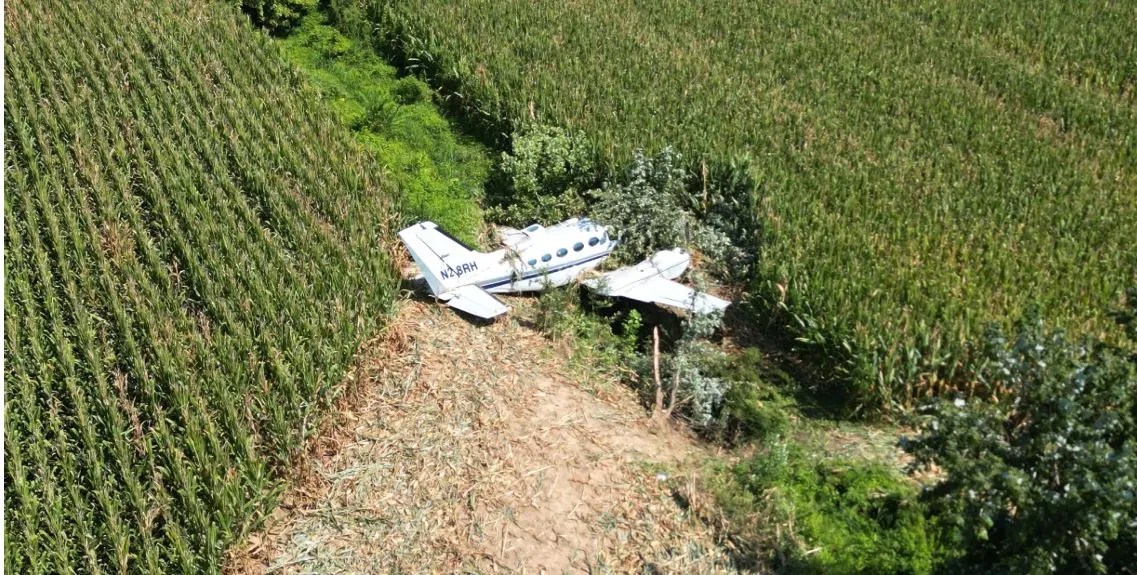
NTSB attributes the crash of a C-421 airplane in Kentucky in August to misfueling. [Credit: NTSB]
The only good that comes out of aviation accidents is that learning can take place.
The National Transportation Safety Board (NTSB) investigation into the August crash of a Cessna 421 near Fulton, Kentucky, has concluded in its final report that the aircraft lost power in flight due to the aircraft being misfueled.
The aircraft went down in a corn field shortly after takeoff. There were serious injuries to the pilot and one passenger, and the other occupant sustained minor injuries.
Accidents are usually caused by a series of improper decisions, the so-called links in a chain. When pilots are in a hurry or preoccupied with “get-home-itis,” accidents are more prone to happen.
This accident is a prime example.
What Happened
The 73-year-old pilot reported that just after takeoff from Arkansas International Airport (KBHY) in Blytheville, he noticed the No. 1 cylinder on the right engine was running hot. He leveled the airplane at 5,000 msl and attempted to troubleshoot the issue, but the engine temperature continued to climb, so he decided to shut it down and make a precautionary landing at a nearby airport. The engine was shut down and the propeller feathered.
As he attempted to reach an airport he noticed the other engine was losing power, and he could no longer maintain altitude. The pilot attempted to increase power on the remaining engine in an effort to keep the aircraft in the air, but it could not produce sufficient power, and the pilot made a forced landing in a cornfield.
The airplane sustained substantial damage to the right engine mount, fuselage, and empennage.
The Investigation
According to the NTSB, a first responder on the scene sampled fuel from one of the airplane’s tanks with a paper towel and reported that the fuel did not have any color to it and smelled like diesel.
The agency conducted a postaccident interview with the fueler at the departure airport who confirmed that he had topped off the airplane with “pre-mixed jet-A.” The airport manager at the departure airport confirmed this, and produced a fuel receipt that showed the airplane had been fueled with 145 gallons of jet-A. The pilot signed the receipt.
In an interview with the pilot, he reported that he did not specifically tell the fueler that he wanted 100LL in the airplane. He also stated that he read the fuel receipt after fueling and that he did not inspect the fuel or sump fuel from the airplane tanks after the fuel was added because they “wanted to get home,” so they “got in the airplane and left.”
Preventing Mishaps
The Cessna 421 is a piston-powered airplane that operates on 100LL. Part of the knowledge required of pilots is knowing what fuel the aircraft takes, as engines are designed to run on specific fuels.
In private pilot ground school students learn what the different fuels look and smell like. 100LL is dyed blue and smells like model airplane glue. Jet-A is clear or straw colored and has a smell more like kerosene or diesel fuel.
Putting the wrong fuel in an aircraft results in poor performance and engine damage.
Pilots are taught to sump the fuel tanks during the preflight inspection to check for contaminants, such as water, and sump after an aircraft is refueled to remove any contaminants that may have been introduced to the tank during the process. This is also the opportunity to verify the correct fuel has been added.
Many flight instructors teach their clients to wait until after refueling has been completed then gently nudge the wings to stir up any contaminants. The motions encourage the contaminants to move to the lowest part of the tank, which is the fuel drains, also called the sump points. The pilot then waits a few minutes before sumping.
It can be an eye-opener to find water or other contaminants. Best practice is to sump until two clean samples are drawn before the engine is started.
The complete NTSB final report can be found below.
Meg Godlewski has been an aviation journalist for more than 24 years and a CFI for more than 20 years. If she is not flying or teaching aviation, she is writing about it. Meg is a founding member of the Pilot Proficiency Center at EAA AirVenture and excels at the application of simulation technology to flatten the learning curve. Follow Meg on Twitter @2Lewski.
Sign-up for newsletters & special offers!
Get the latest stories & special offers delivered directly to your inbox.