Register

FAA Grounds Elixir Trainers

Agency issues airworthiness directive prohibiting further operation of two-seat airplanes pending approved modification and inspection procedures.

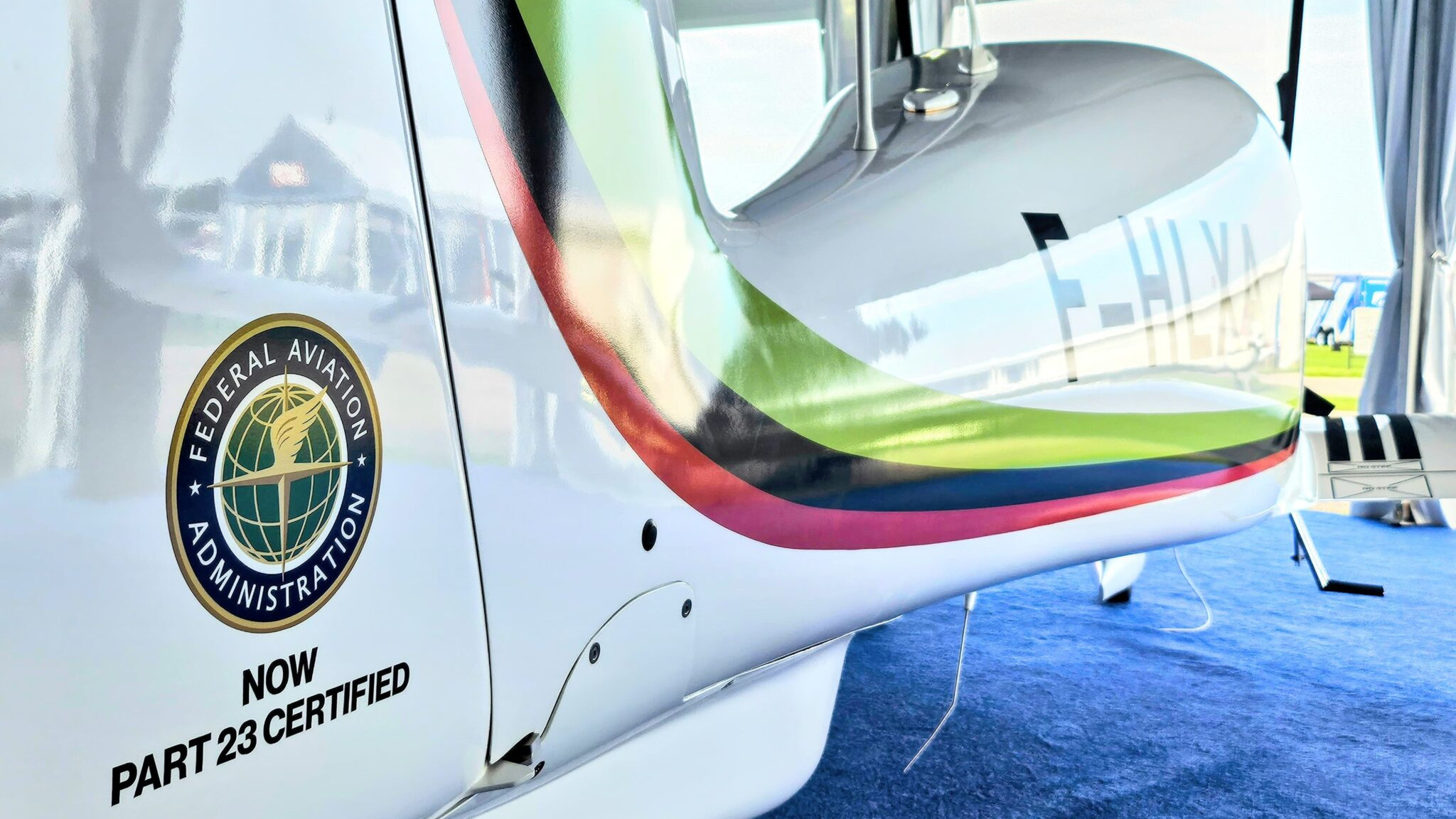
Elixir Aircraft model Elixir training airplane with FAA logo
The FAA certified Elixir airplanes under Part 23 in July 2025. [Credit: Elixir Aircraft]

An FAA airworthiness directive grounding two-seat, single-engine Elixir trainers took effect Wednesday.

The agency issued the AD on Tuesday following a fatal accident during a production test flight involving the Elixir earlier this month. The airplane, marketed primarily for training, is manufactured in France by Elixir Aircraft.

To address an unsafe condition, which the FAA said could result in loss of continued safe flight and landing if unaddressed, the agency required immediate adoption of the AD without the traditional public comment period. Instead, members of the public can submit comments through November 27, after which the FAA may amend the final rule.

“The FAA has found that the risk to the flying public justifies forgoing notice and comment prior to adoption of this rule,” it said, “because the severity of the consequences of not knowing what caused the fatal accident necessitate prohibiting further flight until approved inspection or modification procedures are identified, the airplane is inspected, and any applicable corrective actions are performed.”

The directive halts operation of the Elixir until the aircraft have undergone FAA-approved inspection or modification procedures, which have not yet been established. The agency described the AD as an interim action and said it may consider further rulemaking.

The provision applies to all model Elixir airplanes, regardless of certification category, and prohibits special flight permits unless specifically approved under the directive’s alternative compliance procedures. The FAA estimated that the grounding will affect only three U.S.-registered aircraft.

The French manufacturer obtained FAA Part 23 certification in July 2025 and began U.S. deliveries this year, with initial customers including Cirrus Aviation. Cirrus’ website states that the next-generation Elixir aircraft it ordered are “currently being integrated into operations and will be available soon for student training and advanced instruction.”

The fatal Elixir accident, which killed two test pilots, occurred October 1 at Rochefort Airport (LFDN) in France. It involved model F-WGAZ, which according to media reports lost one of its flaps during a low-level circuit before the accident.

France’s Bureau of Enquiry and Analysis for Civil Aviation Safety and the European Union Aviation Safety Agency (EASA) are still investigating the cause of the accident. But the FAA said the unsafe condition is “likely to exist or develop on other products of the same type design.”

Elixir issued an Alert Service Bulletin to operators on October 2. EASA the same day issued an emergency AD temporarily suspending operations of the entire Elixir fleet as a precautionary measure.

Jack Daleo

Jack is a staff writer covering advanced air mobility, including everything from drones to unmanned aircraft systems to space travel—and a whole lot more. He spent close to two years reporting on drone delivery for FreightWaves, covering the biggest news and developments in the space and connecting with industry executives and experts. Jack is also a basketball aficionado, a frequent traveler and a lover of all things logistics.

FAA Must Pause Use of AI-Based SMART ATC System, Lawmakers Say

Democratic legislators said they are ‘deeply concerned’ about the new air traffic control tool’s rollout in the Washington, D.C., area.

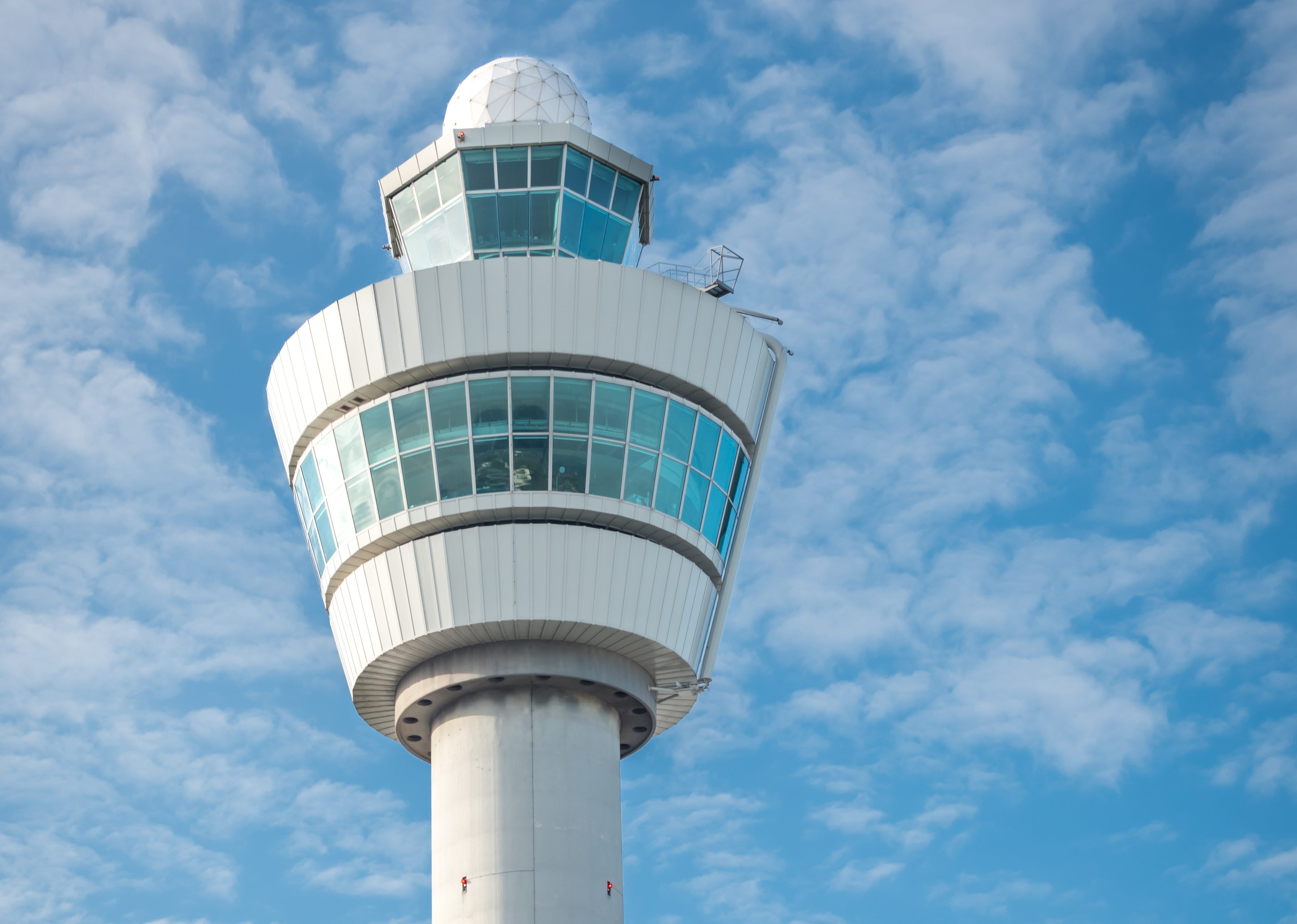
Silhouette of air traffic control (ATC) tower during sunset with airplane flying overhead
The AI-powered SMART system is undergoing an initial evaluation in the Washington, D.C. region ahead of a planned broader deployment. [Credit: Shutterstock]

A group of 25 lawmakers has urged the FAA and U.S. Department of Transportation to pause its use of the AI-based Strategic Management of Airspace, Routes and Trajectories (SMART) system until officials provide more details on how it works and how it will be integrated into air traffic control.

Democratic lawmakers from both houses of Congress wrote to FAA Administrator Bryan Bedford and DOT Secretary Sean Duffy that they are “deeply concerned about the integration of any AI-enabled system into air traffic control systems, where decisions are literally a matter of life or death,” in a letter dated October 9.

They gave Bedford and Duffy until October 19 to answer a set of questions about SMART’s predeployment evaluation and ongoing oversight, as well as how stakeholders have been consulted and trained to use the system. The lawmakers said there has been an “egregious lack of transparency” regarding how SMART’s AI systems have been tested, how it is being integrated, and the potential impact of its automated recommendations.

The DOT announced in September that it began using SMART in a “limited mode…in the airspace around Washington, D.C.,” with “plans to gradually expand it to other parts of the country” in stages over the next few months. It is being used by controllers to manage air traffic near Ronald Reagan Washington National (KDCA), Baltimore/Washington International (KBWI), and Washington Dulles International (KIAD) airports in the National Capital Region (NCR).

The Democratic lawmakers’ understanding is that SMART’s NCR deployment is part of a 90-day evaluation period, which has also been reported by Politico.

The New York Times reported that SMART will initially manage only same-day delays rather than identify conflicts days, weeks, or even months into the future, as it is being developed to do. Duffy in August said the FAA would fully deploy the system by spring 2027 and that it would “slow-roll different aspects” rather than introduce them all at once.

Air Space Intelligence (ASI) is developing SMART under a 12-year, $875 million contract awarded in June. According to the DOT, which has touted the system as a game-changer for ATC, it synthesizes information from hundreds of data streams and uses it to make recommendations to controllers, which they can accept or decline.

The data will centralize weather patterns, flight paths, traffic flow, controller staffing levels, and other information to “provide a comprehensive visualization of where planes are going, how much traffic the system can handle, and where congestion or weather could cause challenges,” the DOT said. Recommendations are reviewed by FAA staff before being delivered to controllers.

Questions With SMART

The letter to Bedford and Duffy was led by Congresswoman April McClain Delaney (D-Md.) and co-led by Representatives Alexandria Ocasio-Cortez (D-N.Y.), Don Beyer (D-Va.), Kweisi Mfume (D-Md.), Suhas Subramanyam (D-Va.), and Sarah Elfreth (D-Md.).

In it, lawmakers questioned DOT’s decision to roll out SMART in the NCR and said they have not been told why that region was selected. They cited the fatal January 2025 midair collision between a U.S. Army helicopter and passenger jet, one of the most severe in decades, as cause for concerns deploying the technology there.

The lawmakers also said they have “not seen any safety evaluation and testing reports, nor have we been made aware of any efforts to train aviation safety personnel on how best to use the tool.” FLYING reported in September that the National Air Traffic Controllers Association (NATCA) said it was not “involved in the design, testing, or implementation of SMART.”

Lawmakers said “several sources” told them that frontline aviation safety workers had either zero or very limited notice of SMART’s rollout. As a result, they have had little time to understand how it functions, which they warned could have “deleterious consequences.”

Airlines, by contrast, have said they were involved in SMART’s development and rollout. But some reportedly held concerns with the initial deployment until a few weeks before it began. A few expressed to Politico that the system is not yet mature enough to achieve the DOT’s vision of fundamentally transforming air traffic management.

The lawmakers cited research that shows people tend to rely too heavily on automated recommendations when they are overworked. Due to a longstanding ATC shortage, many of the nation’s ATC facilities are understaffed, forcing controllers to work demanding hours or take on multiple roles. The FAA and NATCA have clashed on how to address the shortage, with the agency earlier this year lowering its targeted headcount without the union’s input.

The FAA has tools to ease ATC workload such as by limiting traffic. But the agency has indicated its desire to reduce traffic disruptions as much as possible. The DOT’s announcement of SMART’s rollout positions the tool as an enabler of fewer disruptions, more predictable operations, and optimized routing.

Among the lawmakers’ questions for Duffy and Bedford are which officials approved the rollout, whether they skipped any safety measures to deploy it by September, and how officials will assess expanding the deployment. They also asked how stakeholders such as NATCA were consulted and trained on SMART and how the system performs in off-nominal conditions, such as severe weather.

Another key inquiry concerns who would be held responsible—controllers, the FAA, or someone else—should SMART be found to contribute to an unsafe situation, such as loss of separation. The lawmakers questioned how and where the system’s recommendations—whether accepted, denied, or overridden—will be tracked and overseen.

The group acknowledged the need for further investment in the ATC system but said that decisions “must be made with safety as the first priority.” In September, the House and Senate each introduced versions of the Modern Skies Act, which seeks an additional $30 billion to modernize ATC and airports. That includes $600 million to complete the rollout of SMART.

Jack Daleo

Jack is a staff writer covering advanced air mobility, including everything from drones to unmanned aircraft systems to space travel—and a whole lot more. He spent close to two years reporting on drone delivery for FreightWaves, covering the biggest news and developments in the space and connecting with industry executives and experts. Jack is also a basketball aficionado, a frequent traveler and a lover of all things logistics.

This 2023 Cessna 182T Skylane Is a Travel-Ready ‘AircraftForSale’ Top Pick

Advanced Garmin avionics and low total time make the well-equipped, high-wing traveler stand out.

2023 Cessna 182T Skylane [Credit: Lone Mountain Aircraft]

Every day, the team at Aircraft For Sale chooses an airplane that catches our attention because it is unique, a good deal, or has other qualities we find interesting. You can read Aircraft For Sale: Today’s Top Pick at FLYINGMag.com daily.

Today’s Top Pick is a 2023 Cessna 182T Skylane.

Melding turbocharged high-altitude capabilities with trusted high-wing reliability, the Cessna T182T Skylane remains an unparalleled platform for cross-country flying. Built to seamlessly transition between local hops and long-distance IFR travel, this proven airframe offers modern convenience, exceptional payload flexibility, and the robust performance required to comfortably navigate diverse weather and terrain.

Checking the maintenance records of this Midwest-based, single-owner airframe reveals just 220 hours of total flight time since it left the factory. Although it experienced an airframe-only bird strike in 2025, the aircraft presents beautifully with an overall white exterior, handsomely detailed with silver and blue accents, and bright LED lighting.

Crossing the threshold into the four-seat cabin unveils an inviting tan interior trimmed with premium suede inserts and built for all-season passenger comfort. Occupants are treated to Kelly Aerospace air conditioning during hot summer ramp operations, while factory four-place oxygen, AmSafe airbag seat belts, and convenient 12-volt and USB power outlets ensure safety and productivity on extended flights.

Those high-altitude cruise legs are bolstered by a turbocharged 235 hp Lycoming TIO-540-AK1A engine, showing an ultra-low 220 hours since new. Matched with a three-blade, electrically heated McCauley metal propeller, this advanced powerplant package utilizes a heated pitot tube and cowl flaps for optimal temperature management during sustained climbs into the flight levels.

Commanding the flight from the left seat is an absolute joy thanks to a fully integrated Garmin G1000 NXi avionics suite that minimizes pilot workload. The state-of-the-art dual displays feature Synthetic Vision Technology and are backed by a GFC 700 digital autopilot with a go-around switch, Garmin Active Traffic, Flight Stream 510 wireless connectivity, and GI-275 electronic standby instrument for ultimate situational awareness.

Listed at $744,500, this Skylane is positioned for a seamless year-end closing, complete with fresh September 2026 annual and IFR inspections.

If you’re exploring ownership options, FLYING Finance can help get you airborne. Use our airplane loan calculator to estimate your monthly payments, or connect with an aviation finance expert at flyingfinance.com.

FLYING Staff

FLYING Magazine is a one-stop resource for everything aviation, including news, training, aircraft, gear, careers, photos, videos, and more.

Air Traffic Controllers Must Embrace Duty to Speak Up

ATC offers perspective on flight safety and communications.

After witnessing a rough landing, the author—an air traffic controller—alerted the FBO out of concern. The incident underscores a simple but important lesson: when something doesn't seem right, speaking up may help prevent a tragedy. [Credit: Adobe Stock]

As the previous arrival clears the runway, I transmit, “November 11 Alpha, cleared for the option” per his request. I’m moderately busy at the local control (Tower) position with several VFR aircraft doing pattern work interspersed with occasional itinerant arrivals and departures. 

I work the VFR traffic around the IFR arrivals and into the flow. It’s a sunny spring afternoon, a good day for flying. I focus on the arrival, making sure all looks well with the aircraft, and double-check the runway and departure path as he approaches for what I expect to be a touch-and-go or stop-and-go.

This Article First Appeared in FLYING Magazine

If you're not already a subscriber, what are you waiting for? Subscribe today to get the issue as soon as it is released in either Print or Digital formats.

Subscribe Now

At 40 feet agl or so the pilot begins to raise the nose. He makes a slow and smooth roundout to level at 20 feet agl and allows the airspeed to bleed off. It’s a nice approach for a
Boeing 737, but this is a PA-28 Cherokee with what sounds like a fairly inexperienced pilot on the radio. Still at 15 feet or so agl, the nose is up, the airplane stalls, and literally drops and plops to the runway, pancaking to the asphalt.

My heart is in my throat, and I start toward the crash phone, as there’s no way this will turn out well. 

Airspeed is very low since the aircraft’s trajectory is mostly downward. He hits the runway in a mostly level attitude and bounces at 3-4 feet back into the air. After smacking down for a second time, he loses directional control, skitters off the runway, and bobbles across the grass. He soon comes to a stop on the intersecting taxiway nearby, somehow missing the runway and taxiway lights along the way.

The whole sequence uses no more than 200 feet. I fully expect to see wheel struts protruding through the top of the wings and a bent prop, but no—they sure build those Cherokees tough. For a few seconds I’m mostly speechless but manage a “Cherokee 11A, say intentions?”

He requests taxi clearance to the FBO ramp as the airplane is part of its rental/instruction fleet. Taxiing isn’t one of the options I had considered with my last clearance, but with a quick approval from the semi-stupefied ground controller, I send him on his way, monitoring ground. All in the tower cab agree that his first stop once back at the FBO will be the restroom. We request an airport ops inspection of the area, which amazingly yields no stray parts or broken bits, so airport ops move along normally.

Throughout my shift the image of the incident is a bit hard to shake. As a pilot and airplane co-owner, I’m concerned about the safety of the next pilots and passengers. I can’t help but wonder: Did the pilot say anything to the FBO when he returned the keys? Are we the only others aware of what happened?

My shift ends soon, and I’ve been stewing about what, if anything, to do. I have to be careful. I’m an FAA guy here but won’t act in any official capacity. The agency’s preference would likely be that I avoid any involvement. 

If I seek guidance from my (non-pilot) supervisors and they say no, what will I do? What if something happens later and I hadn’t said anything? Better to ask forgiveness.

So, I call the FBO. “Can I please speak with one of your instructors? This is one of the tower controllers—not an official call from the FAA— just from a concerned pilot. Did the last pilot of Cherokee 11A mention anything about his last landing?” 

No one at the FBO is aware, so I provide a brief explanation, express my concerns, and suggest the airplane be inspected before it flies again. I feel better after making the call.

Just before I leave the tower, I look to the FBO ramp with the binoculars and can see the airplane in the distance. Someone is obviously looking around and under it, but after a cursory inspection, walks away after what is at best a brief preflight effort. No wheel pants are installed, but still… I’m not sure what I expected, but that wasn’t it. Maybe they will check more later. I did what I could, and the operator is now aware. I hope I didn’t overreact and put the incident behind me.

Several days later, I’m again at the local position on another nice VFR afternoon, and Cherokee 11A (with a different pilot) is calling ready for takeoff. I had heard from my co-workers that it had been flying during my days off. I clear 11A for takeoff and to proceed on course. 

Minutes later, while my attention is more focused on the approach path, I hear, “Mayday! Mayday! Cherokee 11A has an emergency.” I spin around and see the Cherokee about 2 miles out, returning toward the airport, and hear: “There’s a loud banging noise under the airplane.” 

The pilot is understandably shaken but is communicating well and maintaining his composure. Something doesn’t look right. I grab the binoculars and almost can’t believe what I see. The right landing gear has separated, and the wheel, tire, and brake assembly dangled at the end of a 3-foot length of hydraulic brake cable. I immediately knew why. The wheel assembly, driven by the air stream, was swinging wildly back and forth, slamming up against the bottom of the wing and flap.

How scary and unnerving that must be.

I’m no metallurgist, but I know that cable won’t last long, and that wheel assembly will soon become a lethal projectile. After describing the situation, I ask the pilot to consider, and he agrees to some 360s over a smallish field east of the airport, the only open space in the area, instead of an immediate landing, while we sort things out. 

I call “Supervisor to the tower” over the intercom, and “stop departures” to ground control. There’s lots to sort out in a hurry—move all inbound traffic to another runway, brief another tower controller, and switch traffic to him so I can focus my attention on the situation. Everyone is in go mode, advising adjacent facilities, coordinating fire/rescue, airport operations, and preparing for the inevitable runway closure. 

The pilot is wondering aloud about how to best proceed. Being a pilot, I must walk a fine line between being helpful and “staying out of the cockpit” while helping him maintain confidence. I’ll do whatever it takes if the chips are down, but this is not yet a critical situation. 

Many concerns come to mind—control issues, fuel leaks, asymmetrical flap deployment. Then suddenly the brake cable fails in a dramatic display of gravitational acceleration from 1,000 feet agl, and we are transfixed by the sight of the wheel assembly plummeting to the ground. Thankfully, it smashes onto the field and not through someone’s roof. 

Things calm down considerably. We get the pilot and an FBO instructor on a frequency to discuss options, and they advise us of their plan to land the two-wheeled Cherokee. After several minutes, with air and ground traffic clear of the area, and fire/rescue and ambulance on station, the Cherokee flies a normal pattern for a landing on the runway.

The pilot keeps his cool, does a fantastic job, and turns the emergency landing into a nonevent. At touchdown, full opposite aileron, a slight turn toward the missing wheel, then the wing and remains of the strut settle nicely to the asphalt, the wingtip just above. The airplane slides 200 feet or so on the strut, makes a quarter turn to the right, and comes to a gentle stop while still on the runway surface.

No fire, no drama. Pilot and passenger exit the airplane unharmed.

Later, we marvel at how well this event turned out given the ugly possibilities. Wheel separation at an inopportune time, such as takeoff roll just before rotation, may have caused a catastrophic outcome. The plummeting wheel assembly could have easily caused serious damage, injury, or worse.

While I’m thrilled with the positive outcome, I’m also irked. Irked at the pilot who didn’t tell the FBO. Irked at the FBO since the gear inspection was clearly inadequate. Perhaps it was an undetectable defect, or did they just not take me seriously? 

The answer is unknown. But when situations like this arise, and I’m unsure about a course of action, I try to consider it from the PIC perspective. If I were in that seat, would I want to be aware of the condition or situation? And if I’m not sure, I try not to assume. 

That mindset makes it easier to speak up confidently when something doesn’t seem quite right. My responsibility is simply to share what I observed and provide the information I have. Those with the appropriate knowledge and authority can then determine its significance. 

An adverse outcome is less likely if too much, rather than not enough, is communicated. 


This column first appeared in the August Issue 973 of the FLYING print edition.

Michael Ferguson

Michael Ferguson is a commercial-, instrument- and multi-engine-rated pilot who began flying at 16. He worked at two FBOs, flew as a part-time ferry pilot, spent six years as an ATC specialist in the Dallas-Fort Worth and Syracuse, New York, areas, then moved into telecommunications. In retirement, he enjoys flying a Cherokee 235.

AOPA, Lawmakers Fight Tenant Evictions at Andover-Aeroflex Airport

Association representatives meet with senior advisers to New Jersey Governor Mikie Sherill to express renters’ concerns.

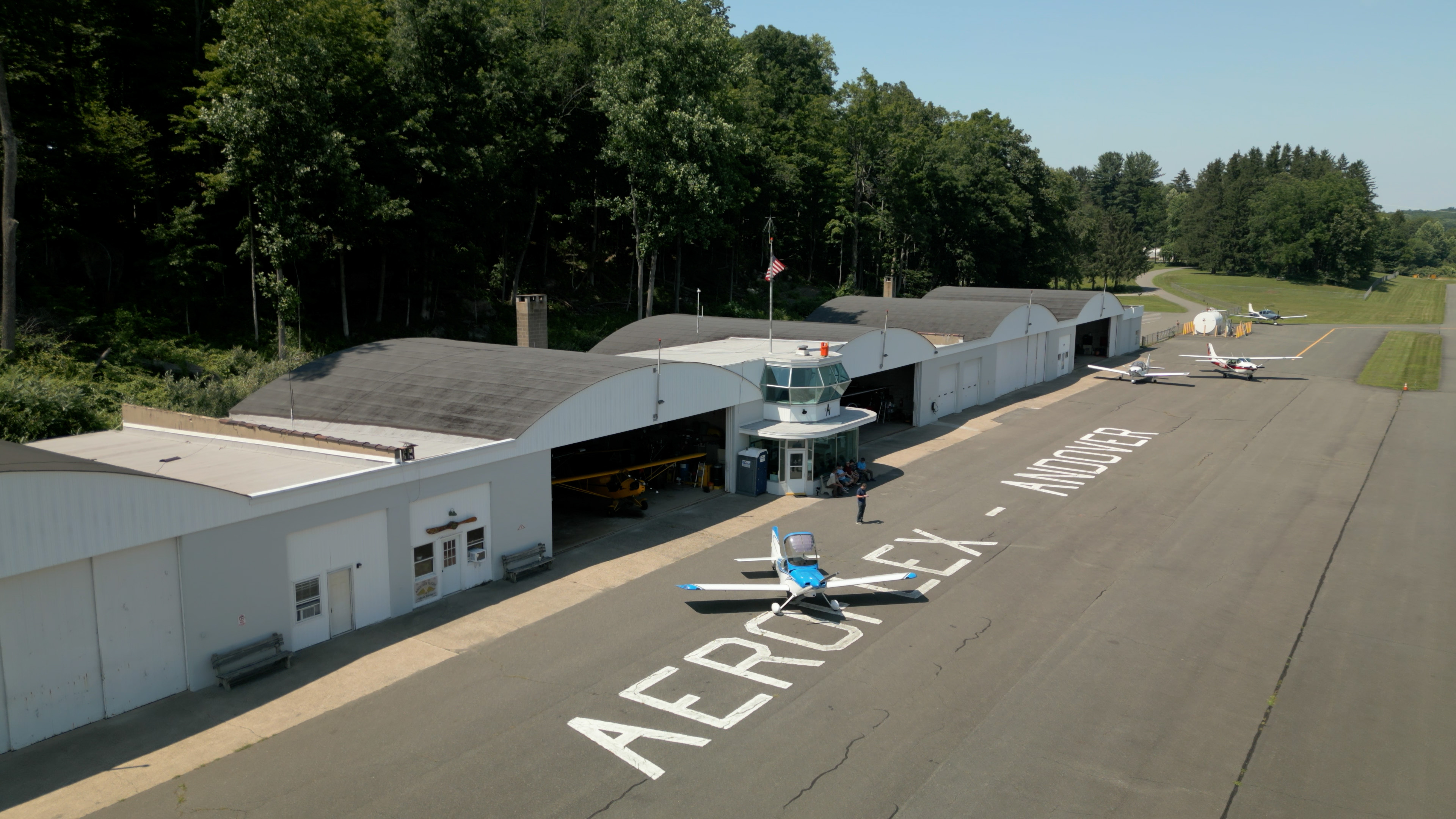
aircraft on tarmac at Aeroflex-Andover Airport in New Jersey
The Aircraft Owners and Pilots Association and New Jersey lawmakers support repairing hangars at Aeroflex-Andover rather than tearing them down. [Credit: Aircraft Owners and Pilots Association]

The Aircraft Owners and Pilots Association is fighting the sudden eviction of tenants from Aeroflex-Andover Airport (12N) in New Jersey, one of only two general aviation facilities in Sussex County.

AOPA said Monday that its representatives last week met with senior advisers to New Jersey Governor Mikie Sherill to communicate airport tenants’ concerns about the situation. The state Department of Environmental Protection’s (NJDEP) Forest Fire Service notified tenants in June that they would be evicted and that many of the hangars would be demolished due to “critical repair and condition issues.” Only the Forest Fire Service would be able to use the remaining hangar space.

The NJDEP, which owns the airport, sent formal eviction notices to tenants in September, giving them until December 31 to vacate. It has not mentioned plans to close the airport entirely, but AOPA believes the move could shutter a local flight school and maintenance shop.

“We appreciate Governor Sherrill’s staff taking the time to meet with us,” said Sean Collins, AOPA’s Eastern regional manager. “The governor’s team asked engaging and relevant questions about the airport, its operations, and what its future could look like.”

According to the Forest Fire Service, more than 50 private aircraft are based at Andover Aeroflex, which has a full-service FBO that offers tie-down and hangar storage, 100LL fuel, maintenance, and instruction. Per AOPA, many of the aircraft cannot be stored outside because they are vintage and covered in fabric.

The Fire Service operates nine Grumman Ag-Cats, two Bell 206 Jet Rangers, two Bell 205 Hueys, a Bell 47, and two fixed-wing observation aircraft based across three New Jersey airports. According to NJ.com, it has 18 permits for private aircraft storage in the hangar space at Aeroflex.

A spokesperson for the NJDEP said in a statement to NJ.com that the department “received information from the community and is open to further assessing how those needs can be safely accommodated, particularly for the two businesses.”

“We heard no indication that the governor wants to shutter local businesses…and her team appears to be seeking alternatives to the NJDEP plan,” said Collins. “We also urged her staff to hold an in-person meeting with local stakeholders to discuss Aeroflex-Andover and broader concerns about the New Jersey airport system.”

Three state legislators have asked NJDEP to allow an outside entity to manage the airport. The 70-year-old site has two runways and is located on 12 acres.

Bipartisan Support

AOPA’s stance is that the hangars should be repaired rather than torn down.

Leon Jackler, the group’s vice president of airports and state advocacy, said Representative Josh Gottheimer (D-N.J.), Andover Township Mayor Thomas Walsh, New Jersey State Senator Parker Space, and two state assembly members also support preserving the hangars.

Jackler said earlier in October following a visit to Aeroflex that the hangars “may need some minor repairs and updates” but are in “overall excellent shape.”

“I expected to walk into dilapidated hangars that were falling apart, but that’s not remotely what I found,” he said.

During a news conference at the airport earlier this month, Gottheimer said repairing the hangars would cost roughly $4.7 million, citing an engineering assessment conducted by the state. He said it would cost $8 million to tear them down and more than $11 million to build a new Fire Service facility.

Per NJ.com, the cost to tear down and rebuild the airport’s hangars and control tower was estimated in 2024 at $10.9 million. But that has ballooned to about $12 million in 2026.

Gottheimer sent a letter to Sherill and NJDEP Commissioner Ed Potosnak urging them to rescind the eviction notices. They were sent to aircraft owners, the airport’s maintenance shop, and the woman-owned Andover Flight Academy. The flight school is the only site within 100 miles that teaches military pilots how to land on short runways and in open fields, and it once trained actor Harrison Ford for a film role.

Gottheimer said he asked the NJDEP to work with Sherill’s office, tenants, and his office to preserve the facilities, contending that New Jersey is already short on hangar space. He said a licensed engineer found the buildings to be in fair condition, with no outstanding code violations, and assessed that targeted repairs would cost only about $267,000.

“I’m frustrated, and so are the people standing next to me,” said Gottheimer, who was joined by tenants. “I’m not going to let you guys get thrown out. It’s not happening. We’re going to fight this thing.”

Gottheimer also asked the NJDEP to tour the facility and elucidate its rationale behind the decision to evict tenants. He said that his office has received little information despite requests for further clarity and a timeline of the project.

The department claimed portions of Aeroflex lacked running water. But Gottheimer said his tour of the facility revealed otherwise. He found the flight school office to be in acceptable condition despite NJDEP’s claims to the contrary. He took videos to support his contentions.

Gottheimer also said that according to NJDEP, the Fire Service is “sharing space and had their items placed in a corner of the hangar,” but he found there to be plenty of space in the service’s dedicated hangar area. A department spokesperson told NJ.com that Gottheimer visited during a stretch of wet weather and that assets housed there did “not represent the space needed during periods of peak fire activity or at other periods of time involving more intense operational needs.”

However, the NJDEP has indicated its openness to reexamining the evictions, and AOPA has vowed to support tenants.

“Amid a nationwide hangar shortage, the impending closure of a private airport in the state, and the economic benefits that GA provides for local communities, we will continue to work to reverse this short-sighted decision,” Jackler said in a statement earlier this month.

Jack Daleo

Jack is a staff writer covering advanced air mobility, including everything from drones to unmanned aircraft systems to space travel—and a whole lot more. He spent close to two years reporting on drone delivery for FreightWaves, covering the biggest news and developments in the space and connecting with industry executives and experts. Jack is also a basketball aficionado, a frequent traveler and a lover of all things logistics.

Garmin Reaches Milestone With 1,000th G1000 King Air Retrofit

Landmark avionics package was delivered for a U.S. Army C-12 Huron flight deck upgrade.

The 1,000th Garin G1000 retrofit was delivered to the U.S. Army during an October 6, 2026, celebration at Stevens Aerospace and Defense Systems. [Credit: Garmin]

Almost 20 years to the day of Garmin introducing the G1000 flight deck to the aviation world, the manufacturer has announced the 1,000th delivery of a G1000 integrated flight deck.

The milestone G1000 was recently delivered as a retrofit for a C-12 Huron, the military version of the King Air.

The G1000 is modern glass cockpit technology that uses computers to power instruments rather than a traditional mechanical vacuum system. Instead of an arrangement of round-dial gauges spread across an instrument panel, the G1000 features two computer screens, a primary flight display (PFD), and a multi-function display (MFD) that provide the pilot with information that’s much more intuitive than so-called “steam gauges.”

The G1000 features color-coded information (red: emergency, yellow: warning, green: normal, white: informational) that enhances pilot situational awareness.

According to Garmin, replacing aging avionics with a modern, fully integrated flight deck such as the G1000 upgrades the capabilities of the King Air and helps operators extend its useful service while gaining advanced capabilities and improved reliability along with a much more modern experience.

“Reaching 1,000 King Air retrofits is a testament to the enduring value of this program and the trust customers place in Garmin and our authorized dealer network,” said Carl Wolf, Garmin vice president of aviation sales, marketing, programs and support, in a news release. “From the original G1000 installation to today’s G1000 NXi platform with advanced capabilities such as Garmin Autothrottle and Autoland, we have continued to expand the program to serve King Air operators and missions around the world.”

Garmin Autoland for King Air and Garmin Autothrottle [Credit: Garmin]

The upgrade installation on the milestone aircraft, a U.S. Army C-12 Huron, was performed by Stevens Aerospace and Defense Systems with G1000 NXi and Garmin Autothrottle.

So far, the Army has upgraded more than 40 C-12 Hurons with G1000 NXi. The 1,000th retrofit was delivered to the branch during an October 6 celebration at Stevens.

“To maintain mission readiness of the U.S. Army’s C-12 fleet through 2050, the Army initiated a comprehensive avionics modernization effort,” said Jim Williams, senior vice president at Stevens Aerospace and Defense Systems. “Feedback from Army aircrews has been overwhelmingly positive. War fighters report that the Garmin retrofit, enhanced by the Autothrottle system, reduces cockpit workload, improves ease of operation, and delivers outstanding flight performance, helping ensure the C-12 remains a capable and mission-ready platform for decades to come.”

Garmin introduced the G1000 on October 9, 2006. The manufacturer received the first supplemental type certificate (STC) for a King Air G1000 retrofit in November 2007 and evolved with the January 2017 certification of G1000 NXi.

According to Garmin, since then the program has expanded to multiple King Air variants, including the C90A/B, 200, B200, 300 and 350 series and C-12 variants.

Meg Godlewski

Meg Godlewski has been an aviation journalist for more than 24 years and a CFI for more than 20 years. If she is not flying or teaching aviation, she is writing about it. Meg is a founding member of the Pilot Proficiency Center at EAA AirVenture and excels at the application of simulation technology to flatten the learning curve. Follow Meg on Twitter @2Lewski.

Nikumaroro Expedition Launches to Investigate Potential Amelia Earhart Wreckage

Archaeological team set to explore the ‘Taraia Object’ site in search of famous pilot’s lost Lockheed Electra.

Amelia Earhart walking in front of her Lockheed Electra 10-E [Credit: FLYING Archive]

The latest expedition to put an end to the disappearance of Amelia Earhart is underway on Nikumaroro, an atoll in the South Pacific.

The expedition, led by the Archaeological Legacy Institute (ALI), is specifically investigating an object spotted in satellite imagery that could possibly be the wreckage of Earhart’s Lockheed Electra 10-E. The image, known as the so-called “Taraia Object,” is in the water just off the Taraia Peninsula. 

The uninhabited atoll is part of the Phoenix Islands in the Republic of Kiribati. The expedition’s 17-person expedition team headed ashore Tuesday, October 13, to begin setting up camp and preparing for a concentrated search.

The expedition is the result of years of research on the Taraia Object hypothesis by Rick Pettigrew, the leader of the expedition and executive director of ALI. Pettigrew and ALI determined where to begin the search based on the castaway hypothesis established and documented by The International Group for Historic Aircraft Recovery (TIGHAR) over the past  40 years.

According to Pettigrew, it has been seven years since the last authorized expedition set foot on Nikumaroro and more than 15 since anyone has been on the Taraia Peninsula.

Amelia Earhart expedition at sea [Credit: Purdue University]

The team will be looking for parts of wreckage and obvious signs of human habitation as well as conducting biological and environmental surveys of the area in coordination with Kiribati representatives on the expedition.
How the Expedition Began

In February 2025 Pettigrew approached Purdue University and the Purdue Research Foundation due to the college’s historic connection to Earhart. The foundation funded Earhart’s Lockheed Electra “flying laboratory” in the 1930s and later created the Amelia Earhart Fund for Aeronautical Research. Earhart was a lecturer at the university, which continues to support a strong aviation curriculum.

The expedition began by clearing vegetation and transporting equipment to create a staging area at the beach and on the south side of the lagoon. Part of the team will be taking a smaller boat through the Tatiman Passage, a natural opening on the island’s western side with access to the lagoon, in order to place buoys to guide a return trip to the main vessel, the Marin Mainiku, at the conclusion of work.

The second team is tasked with marking and cutting a trail through the jungle from the landing site at the beach to a designated spot on the south side of the island’s lagoon to rendezvous with the boat team. Once the staging areas are created, the teams will shift their focus to the Taraia Peninsula.

The sand spit will be surveyed to identify the presence of any surface artifacts before beginning the maritime archaeology work. The maritime specialists will first deploy a surface boat to lay out a series of parallel transect lines—basically creating a systematic grid for conducting the search for artifacts, then measuring and recording them. The team will then use a magnetometer to detect the presence of ferrous metals. Although the Electra was largely made of aluminum, steel cabling and other metal components of the aircraft could give a ferrous metal reading.

The next phase of the search involves using sonar technologies to detect objects under sediment along the lagoon floor. The archaeology team will use a hydroprobe to contact the object directly to determine its depth, orientation, and surface composition.

When objects are located, a water induction dredge will be used to remove sediment to enable visual inspection.

According to the researchers, based on estimates from aerial photos, the Taraia Object is believed to be located only 10 feet from the lagoon’s shore, and depending on the tide, beneath as little as 5 feet of water, plus a layer of sediment of unknown depth.

The team will stay aboard the Marin Mainiku in part to avoid getting trapped on the island should the weather, which is always a consideration, make access to the atoll too dangerous, and also because the island is inhabited by coconut crabs, which can grow up to 3 feet in size and are nocturnal and omnivorous.

The team is expecting to spend five days on the island to complete its fieldwork.

The Disappearance

The disappearance of Earhart and her navigator, Fred Noonan, has captivated the world since the morning of July 2, 1937.

They were supposed to land to refuel at a specially constructed runway at Howland (also known as Gardner) Island, which is also in the Phoenix chain but approximately 400 miles from Nikumaroro. The Coast Guard cutter USS Itasca was waiting on sight to assist with the refueling.


At 7:42 a.m. local time, Earhart radioed, “We must be on you, but we cannot see you. Fuel is running low. Been unable to reach you by radio. We are flying at 1,000 feet.”

The Itasca began pouring smoke to help the flyers spot them, but the weather conditions caused the smoke to settle to the surface.

The radio operator of the Itasca picked up a transmission from Earhart at 8:43 a.m.  that stated, “We are on the line of 157 337,” indicating they were flying along a north-south line of position. Despite a 16-day search that covered air and sea, no trace of the aviators was found.

In the decades since the disappearance, there have been numerous theories about what happened, including navigational miscalculations, poor fuel planning, and a lack of adequate radio equipment and crew training. There has been conjecture beyond crashing in the Pacific, which include capture by the Japanese military which subsequently executed them for spying, abduction by space aliens, and an elaborate ruse to simply disappear from the public eye.

Meg Godlewski

Meg Godlewski has been an aviation journalist for more than 24 years and a CFI for more than 20 years. If she is not flying or teaching aviation, she is writing about it. Meg is a founding member of the Pilot Proficiency Center at EAA AirVenture and excels at the application of simulation technology to flatten the learning curve. Follow Meg on Twitter @2Lewski.

Czech Flying Bulls Become Red Bull Aerobatic Team

Under its new name, the group in 2027 plans to fly at events in Czechia, Germany, Belgium, Serbia, Poland, and Lithuania.

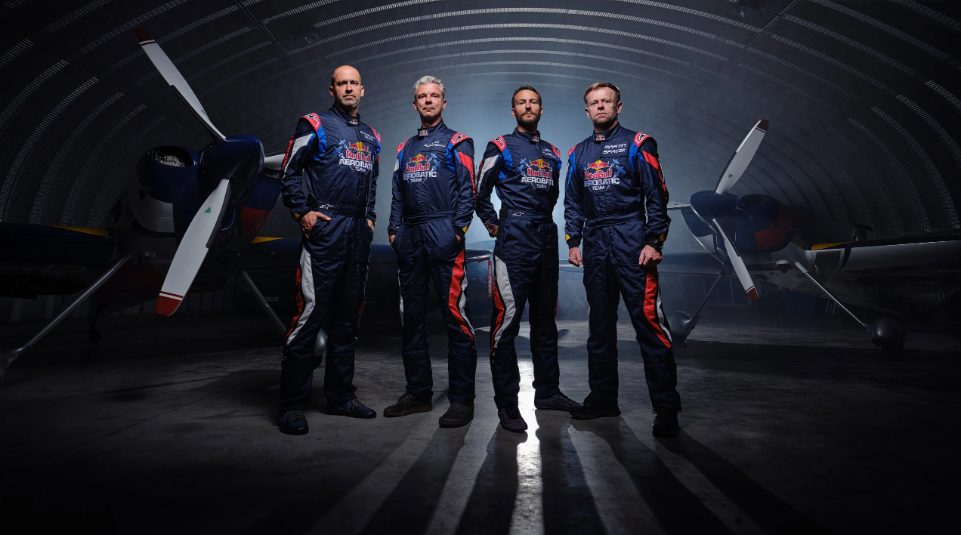
Red Bull Aerobatic Team pilots posing in front of XA42 XtremeAir aircraft
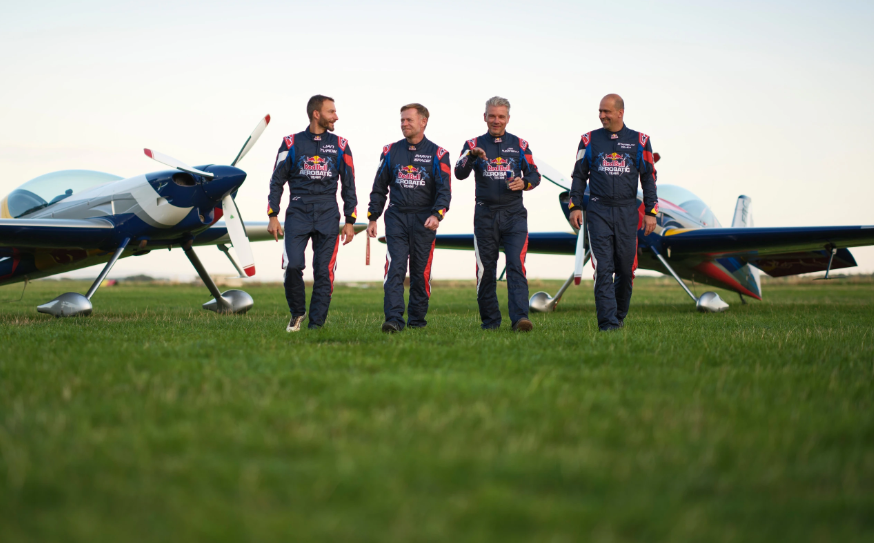
Red Bull Aerobatic Team pilots (from left) Stanislav Čejka, Jan Tvrdík, Jan Rudzinskyj, and Martin Špaček fly four specially modified XA42 XtremeAir aircraft. [Credit: Red Bull]

The Czech Flying Bulls Aerobatic Team, one of the world’s oldest civilian aerobatic groups, is entering a new chapter.

The group, which flew as the Flying Bulls for 26 years, this month rebranded and will now perform under the name Red Bull Aerobatic Team. The team of four will continue to perform highly precise and coordinated group aerobatics in tight formation, often flying within a few feet of one another, at airshows, sporting events, and other events across Czechia and abroad.

According to Red Bull, the team’s maneuvers “rank among the most demanding in group aerobatics,” requiring extreme mutual trust and capable of being performed by only a handful of pilots. They fly in box, mirror, and double-mirror formations and are also known for the apache roll, which sees one of the aircraft fly a barrel roll around the formation and leave a spiral trail of smoke.

“The new name allows us to show more clearly who we are today,” said team leader Stanislav Čejka in a news release. “We are a Czech aerobatic team with a long history, our own distinct style, and the ambition to keep pushing the boundaries of formation flying. Red Bull Aerobatic Team is the name for our next chapter.”

To commemorate the name change, the Red Bull Aerobatic Team performed a new maneuver called a rolling turn. The move combines a turn with rotation around the longitudinal axis, causing the aircraft to change not only its attitude but its direction of flight while rolling. It is particularly challenging when performed in formation.

“The aircraft rotates through knife-edge flight, with the cockpit facing downwards, before coming back upright,“ said Čejka. “The turn itself is standard, but the challenge lies in combining multiple rolls and turns in three-dimensional space…I’m not aware of any other team that can perform a fully controlled roll throughout the entire manoeuvre.”

Despite the name change, the quartet remains unchanged, comprising Čejka, right winger Jan Tvrdík, left winger Jan Rudzinskyj, and slot Martin Špaček. They fly four specially modified, tandem-seat XA42 XtremeAir aircraft, which replaced their Zlín Z-50LXs in 2014.

Red Bull Aerobatic Team walking in a field next to XA42 XtremeAir aircraft
Čejka, Tvrdík, Rudzinskyj, and Špaček will continue to perform daring aerobatic maneuvers at events worldwide. [Credit: Red Bull]

The XA42s are powered by Lycoming AE10-580 engines and three-blade, constant-speed propellers, featuring carbon-fiber composite wings, fuselage, and tail. Each outputs 315 horsepower and is capable of flying up to about 260 mph while protecting pilots from forces up to plus-7G and minus-5G during maneuvers. During a typical show, the team will perform about 38 aerobatic figures and cover up to 43 miles.

Čejka, Tvrdík, and Špaček also fly the JAS 39 Gripen for the Czech Air Force, while Rudzinskyj is a light aircraft test pilot.

More Than 60 Years of History

The Red Bull Aerobatic Team’s formation dates to the late 1950s in the Czech town of Chrudim, when the foundations of the country’s group aerobatics tradition were taking shape. The pilots started out flying Zlin Z-26 Trenér training aircraft and would later switch to aerobatic variants of the Z-26.

A shortage of aircraft in 1982 briefly grounded the group, but it returned to the skies in the 1990s, performing under the name Sky Box and flying the Z-50LX. It was among the most successful aerobatic formations of the era, taking home five gold medals in the FAI Aerobatics World Grand Prix series.

In 2000, the team adopted the Flying Bulls moniker and began performing at airshows, Formula 1 races, music festivals, and other events in 25 countries across Europe, as well as in the Middle East and East Asia.

According to Red Bull, the team was the first to fly through China’s Tianmen Cave, the highest natural arch in the world, also known as the Gateway to Heaven. Red Bull said it was also the first to fly an inverted loop or push-up somersault in formation around Montenegro’s Mala Rijeka railway bridge. Czech President Petr Pavel has even joined the group for aerobatic sorties.

Under its new name, the group in 2027 plans to fly at events in Czechia, Germany, Belgium, Serbia, Poland, and Lithuania.

Jack Daleo

Jack is a staff writer covering advanced air mobility, including everything from drones to unmanned aircraft systems to space travel—and a whole lot more. He spent close to two years reporting on drone delivery for FreightWaves, covering the biggest news and developments in the space and connecting with industry executives and experts. Jack is also a basketball aficionado, a frequent traveler and a lover of all things logistics.

This 2017 Diamond DA62 Is a Fully Equipped ‘AircraftForSale’ Top Pick

Composite twin features FADEC-controlled Austro diesel engines and a seven-seat configuration.

2017 Diamond DA62 [Credit: Aerista]

Every day, the team at Aircraft For Sale chooses an airplane that catches our attention because it is unique, a good deal, or has other qualities we find interesting. You can read Aircraft For Sale: Today’s Top Pick at FLYINGMag.com daily.

Today’s Top Pick is a 2017 Diamond DA62.

Blending the security of a multiengine platform with the striking aesthetics of modern composites, the Diamond DA62 stands in a class of its own. Engineered to merge high-efficiency traveling with true utility, this versatile twin allows pilots to confidently fly into a wider range of conditions while providing the extended range made possible by its 86-gallon fuel tanks and built-in FIKI TKS anti-icing system.

Standing elegantly on the tarmac with a high-gloss, two-tone metallic gold over silver paint scheme, this 2017 model has logged a conservative 1,090 total airframe hours. Its sleek exterior is further enhanced by titanium weeping wing leading edges, HID-Xenon landing and taxi lights, and nose baggage compartments accessible from both sides for exceptional convenience.

Gaining access through the striking gull-wing doors unveils a premium beige leather interior designed for maximum passenger comfort across a seven-seat configuration. Occupants can relax during long legs with the help of an air conditioning/RACC II system, built-in oxygen for all seven seats, Jet Shades removable window shades, and dedicated A-pillar tablet mounts for iPads in the third row.

Propelling this sleek twin are dual FADEC-controlled Austro AE330 diesel engines, each producing 180 horsepower and showing 1,090 hours since new. This advanced powerplant management simplifies engine operation to single levers, burning readily available jet fuel while offering a 1,800-hour TBO and pairing perfectly with the heated pitot system and additional alternator for robust redundancy.

Scanning the flight deck reveals an incredibly sophisticated Garmin G1000 NXi integrated suite tailored for serious all-weather operations. The dual 10-inch displays are supported by a Garmin GFC 700 Automatic Flight Control System with yaw damper, Synthetic Vision, GTX 345R ADS-B In/Out Transponder, and advanced hazard avoidance tools like the GWX 70 Digital Weather Radar and Avidyne TAS605 Traffic Advisory System.

Listed at $1,124,900, this Leesburg, Virginia-based twin represents a compelling opportunity to step into a highly capable modern aircraft. It will be delivered with a fresh annual inspection, making it a ready-to-fly package for families or business owners.

If you’re exploring ownership options, FLYING Finance can help get you airborne. Use our airplane loan calculator to estimate your monthly payments, or connect with an aviation finance expert at flyingfinance.com.

FLYING Staff

FLYING Magazine is a one-stop resource for everything aviation, including news, training, aircraft, gear, careers, photos, videos, and more.

Deciphering Weather for Solo Flight

Student pilots should use METARs, TAFs, and interpolation skills to make smart go/no-go decisions.

There are many considerations for student pilots before making a solo flight, especially as it pertains to weather. [Credit: Adobe Stock]

The learner said he was supposed to do his first solo flight that day. He had the airplane reserved from 9 a.m. to 11 a.m. He was supposed to be at the flight school by 8:30 a.m. but was a little late because it was a foggy morning.

The local weather broadcasters and traffic reporters were warning about low visibility on the roads, and they were right—driving to work made me want to file IFR before I left my home.

The learner’s instructor wasn’t at the airport yet, and the dispatcher, who although not a pilot had enough experience at the flight school to know student pilots aren’t allowed to fly in fog, wouldn’t dispatch the aircraft. The school policy was that the student’s flight instructor had to OK the dispatch. 

According to the chief instructor, this rule was established when a post-solo student pilot tried to fly solo on an IFR day. He was just about to start the engine when a CFI stopped him. 

The challenge at this airport was that it has no automated weather reporting system. There was no “tin lady” or “tin man” to state the current conditions indicating the field was IFR or VFR, and the rotating beacon at the airport was notoriously unreliable.

Because of this, the student pilots were supposed to be taught to use the weather reported by surrounding airports that had Automated Terminal Information System (ATIS), or Automated Weather Observation System (AWOS) in addition to the Terminal Area Forecast (TAF) and then interpolate the weather for the time of departure. This helped the learners develop the habit of using multiple sources of information gathered at different times to determine their go or no-go decision.

The task of teaching the students interpolation skills falls on the instructor. It’s more than pulling up a weather briefing—for example, one from 1800WXBRIEF.com and looking at the color-coded METAR (Meteorological Aerodrome Report) and applying that information to the TAF. The learner needs to understand the reach of both and how they work together to paint a picture of the weather the learner is likely to encounter.

METARs and TAFs

The METAR, usually issued at the top of the hour unless there is a significant change in the weather, depicts conditions within 5 sm of the reporting station. METARs shown in magenta indicate low IFR (LIFR) ceiling less than 500 feet and visibility of less than 1 sm, and red is for IFR, ceiling 500 to 1,000 feet and visibility of 1 to 3 sm.

If you are a student pilot and your field is showing magenta or red, expect to be on the ground. 

How long the conditions will last is depicted in the TAF, which is a prediction, not a promise, of weather to follow. For this reason, best practice is to be skeptical of the information it provides. 

For example, if the TAF indicated the weather will improve to MVFR (Marginal Visual Flight Rules) after a certain time, with a ceiling of  at least 1,000 to 3,000 feet and visibility of 3 to 5 miles, it will get your hopes up, but it’s not a guarantee. A properly endorsed student pilot could fly in these conditions as long as they do not conflict with limitations placed on the learner’s solo endorsement, such as “flight outside the pattern requires a ceiling of 4,000 feet.”

Is it legal for a student pilot to fly a cross-country flight in MVFR conditions? Yes, as long as they have a solo endorsement, and the endorsing CFI didn’t put a limitation on it that calls for higher ceilings and greater visibility—for example, “for solo cross-country required visibility must be at least 5 sm and the ceiling at least 5,000 feet per XYZ flight school policy.”

The question of is it good decision making falls into a gray area. It comes down to what the TAF indicates and what the student pilot’s options will be if the weather turns sour en route. Plan your flights so that you have at least two avenues of escape should the weather close in.

If there are PIREPs (pilot reports), pay attention to what kind of airplane the pilot was flying. Moderate turbulence for a Boeing 737 will feel a bit more severe in your mighty Cessna 172.

When to Learn Weather

By your fourth flight lesson your instructor should teach you how to access and interpret a weather briefing.

It is important that the student pilot learns to recognize weather patterns and is able to identify which direction the weather is coming from, as in north, south, east or west, because geography often dictates the type of weather pattern you can expect.

METARs Along the Route

Monitoring the weather en route can be done using an app like ForeFlight, but understand the images depicted are not in real time. That information could be several minutes old. Again, be skeptical.

Another method of monitoring weather en route is listening to the METARs and ATIS of airports you are approaching. Note the trends. Is that ceiling getting lower? Are the winds getting stronger? Is the temperature and dew point converging? What are your options if you need to divert or terminate?

Learn to know when to say when, because there will always be a better weather day ahead.

Meg Godlewski

Meg Godlewski has been an aviation journalist for more than 24 years and a CFI for more than 20 years. If she is not flying or teaching aviation, she is writing about it. Meg is a founding member of the Pilot Proficiency Center at EAA AirVenture and excels at the application of simulation technology to flatten the learning curve. Follow Meg on Twitter @2Lewski.
Pilot in aircraft
Sign-up for newsletters & special offers!

Get the latest stories & special offers delivered directly to your inbox.

SUBSCRIBE