














NTSB: Airport Truck Missed Warnings Before Fatal LaGuardia Collision

Early findings highlight moment of confusion before fatal accident.

NTSB investigators LaGuardia Airport CRJ 900 fire truck collision
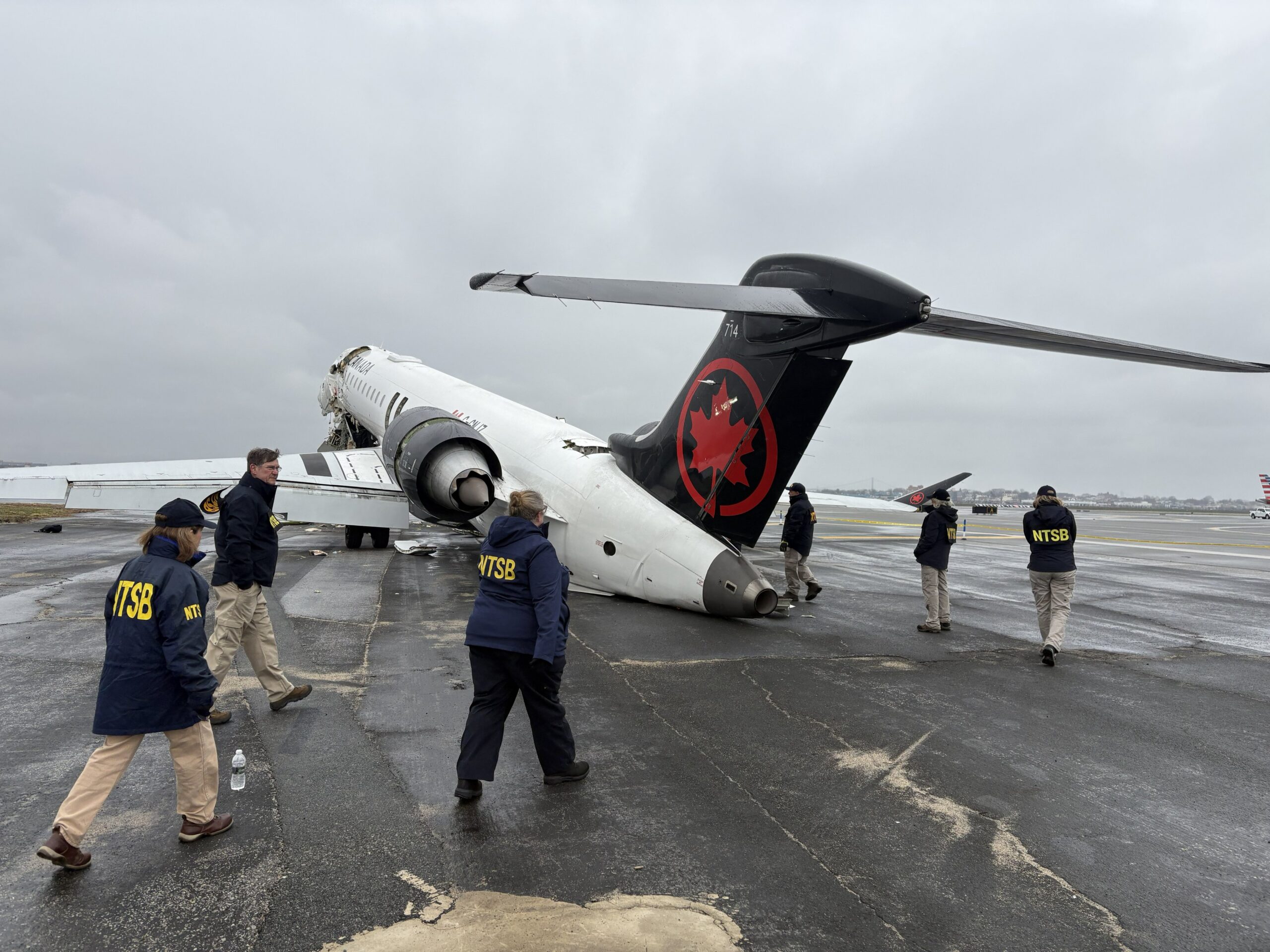
National Transportation Safety Board investigators arrive at LaGuardia Airport’s Runway 4 following the fatal collision between a passenger jet and fire truck. [Credit: NTSB]
Gemini Sparkle

Key Takeaways:

  • The NTSB preliminary report on the LaGuardia ground collision found that the fire truck crew did not immediately realize that the air traffic controller's frantic "stop" orders were directed at them.
  • A significant contributing factor to the collision was that the airport's runway entrance lights (RELs), designed to prevent runway incursions, were turned off at the time of the incident.
  • The collision occurred after a ground controller initially instructed the fire truck to cross a runway where a CRJ-900 airplane was simultaneously cleared to land, ultimately resulting in the deaths of the airplane's pilots.
See a mistake? Contact us.

The National Transportation Safety Board’s preliminary report on the deadly ground collision between an airport fire truck and a CRJ-900 airplane at LaGuardia Airport (KLGA) in March reveals the occupants of the truck did not realize that an air traffic controller’s frantic orders to stop were directed at them.

In addition, the airport’s runway entrance lights (REL) were turned off.
RELs are red lights embedded in the taxiway that are supposed to keep traffic on taxiways from crossing the runway.

The accident took place on March 22 shortly before midnight local time. According to the NTSB, the fire truck, identified as Truck 1 in the report, was at Taxiway D approximately 460 feet from the runway threshold and requested permission to cross Runway 4. The ground controller instructed them to cross the runway.

Meanwhile, the CRJ had been given permission to land on Runway 4. 

At 2337:04, the airplane was at an altitude of about 130 ft above ground and about a quarter of a mile from the runway, which according to the report put them approximately 4,400 feet away from Taxiway D.

At 2337:11, the jet crossed the threshold for Runway 4 as Truck 1 was traveling at a speed of approximately 11 mph and was approximately 410 feet from the edge of Runway 4.

Both vehicles after the collision [Credit: NTSB]

At 2337:12, the ground controller gave a taxiing instruction to another airplane, then immediately instructed Truck 1 to stop. The truck continued and its speed increased to 24 mph.

Meanwhile, the jet was 2,550 feet from Taxiway D at an altitude of 30 feet with a ground speed of 133 kts. Its main landing gear touched down at 2337:17 approximately 1,450 ft from Taxiway D. The aircraft was traveling at 128 knots, and there was a transfer of control from the first officer to the captain and the crew applied the brakes and deployed the thrust reversers.

The report notes: Truck 1 was just over 100 feet from entering Runway 4 and traveling at about 29 mph. At 2337:21, the RELs extinguished. At 2337:22, roughly two seconds before the collision, the airplane’s nose landing gear touched down while the airplane was about 400 feet from Taxiway D and at a groundspeed of 106 knots.”

Truck 1 was traveling about 30 mph as it entered Runway 4. The truck turned left just before impact and the airplane’s rudder was deflected approximately six degrees to the left at the time of the collision, per the flight data recorder.

According to the report, the turret operator in Truck 1 recalled hearing the words “stop, stop, stop” on the tower frequency, but he did not know who that transmission was intended for.

There was another truck (identified at Truck 7) active at the time of the accident. The turret operator in Truck 1 said he subsequently heard “Truck 1, stop, stop, stop” and realized it was for them and that they had entered the runway. He told investigators that as they turned left, he saw the airplane’s lights on the runway.

The pilots of the aircraft were killed in the collision. Of the two flight attendants, 72 passengers, and two crew of the ARFF vehicle, 39 were transported to local hospitals, with six reporting serious injuries.

The NTSB investigation is continuing. The full preliminary report can be found below.

Meg Godlewski

Meg Godlewski has been an aviation journalist for more than 24 years and a CFI for more than 20 years. If she is not flying or teaching aviation, she is writing about it. Meg is a founding member of the Pilot Proficiency Center at EAA AirVenture and excels at the application of simulation technology to flatten the learning curve. Follow Meg on Twitter @2Lewski.

Ready to Sell Your Aircraft?

List your airplane on AircraftForSale.com and reach qualified buyers.

List Your Aircraft
AircraftForSale Logo | FLYING Logo
Pilot in aircraft
Sign-up for newsletters & special offers!

Get the latest stories & special offers delivered directly to your inbox.

SUBSCRIBE

