Features

Window Of Opportunity

Engine-out training teaches us to maneuver the airplane to a position from which a more-or-less normal landing can be made on an open surface. Among the elements to this training are that theres a finite amount of time and energy, in the form of altitude, available to get the airplane to the landing area. Maneuver the airplane to a key position abeam the runway at a certain altitude and airspeed, and it will have enough energy to glide to the runway as the pilot manages airspeed and turns.

Read More »

Smooth Transitions

At some point in your flying career, you likely graduated from your trainer to flying different aircraft. Maybe you gained access to a fleet of aircraft through a club or flight school, an FBO or a Part 135 charter company. Or you moved to light sport aircraft, a plane you built or a plane you bought. Perhaps you stepped up quickly to higher-performance aircraft, those with more horsepower that can swing gear or have two engines.

Read More »

Maintenance Safety

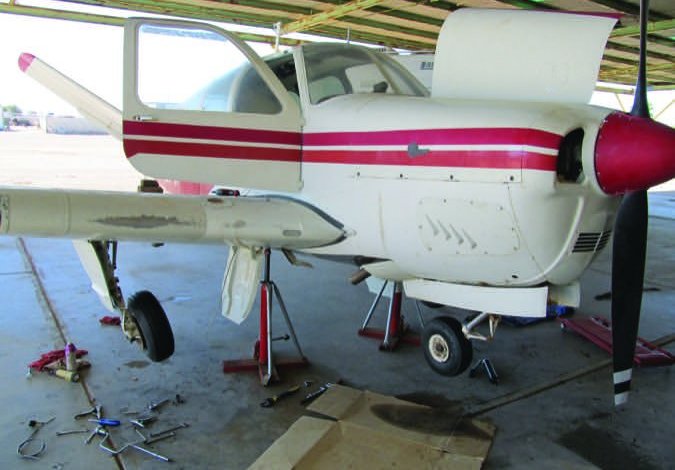
Many of us recognize one of the ingredients to making our flying less risky and safer is good maintenance. At the same time, sometimes we give little thought to ways to make aircraft maintenance itself less risky and safer. The fact is the typical private-pilot-or-better performing preventive maintenance under FAR 43, Annex A doesnt pay enough attention to safety while working on aircraft. Some professionals dont either.

Read More »

More On Pireps

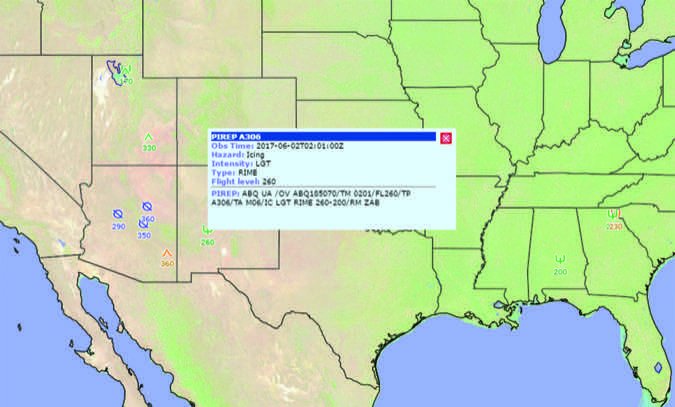
Last month in this space, we reported on a Special Investigative Report (SIR-17/02) from the NTSB, Improving Pilot Weather Report Submission and Dissemination to Benefit Safety in the National Airspace System. Its a 68-page collection of everything thats wrong with the Pireps system. We also highlighted as most interesting one of the NTSBs recommendations: for the FAA to provide a reliable means of electronically accepting pilot weather reports directly from all users.

Read More »

Regulatory Traps

Pilots have been complaining about FAA regulations (and those of its predecessor agencies) since the first aviation rules were issued in the 1920s. A lot of that complaining stems from the aviation media constantly bombarding us with horror stories of over-regulation and how its killing general aviation. The reality is very different, at least for pilot certification under FAR Part 61 and flight operations under Part 91.

Read More »

Constant Contact

Theres really no question that maintaining radio and radar contact with ATC significantly adds to flight safety, whether youre IFR or VFR, and whether youre going somewhere or just boring holes. But its vitally important to remember that when your communications are lost, airplanes fly on physics discovered by Bernouli, not on communications pioneered by Marconi.

Read More »

Soaring School

The first years and hours I spent aloft werent really loggable toward an FAA pilot certificate. Thats because I was doing it from a hang glider, jumping off the side of a mountain, wearing a helmet and strapped to a wing. I was the landing gear. It was more of a sport than a form of transportation, but that early exposure to flight taught some lessons that were easily transferred to powered airplanes. I went on to earn my private and an instrument rating, and have flown some interesting airplanes along the way.

Read More »

Addicted To Gadgets?

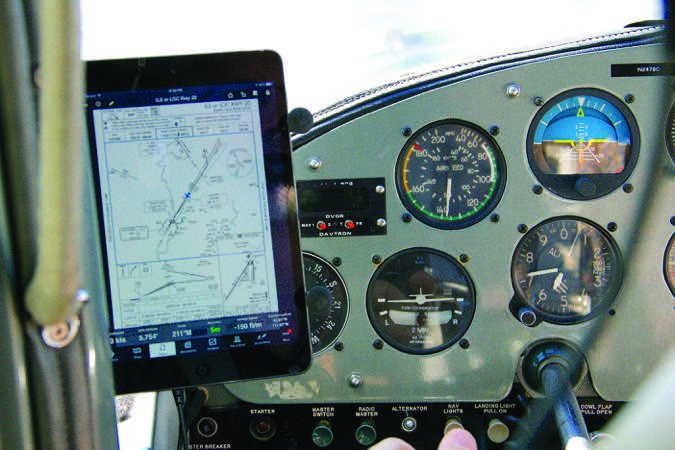
When the curriculum gets around to risk-management topics, one of the hazardous attitudes we learn about in ground school is invulnerability. The thing is this trait isnt necessarily about feeling as if we ourselves are bulletproof, but rather the notion that bad things happen to people other than ourselves. I have been a victim of this more than once. Dont worry-no sheet metal was bent.

Read More »

Humans And Checklists

When I got my private at age 18, I was flying a Cessna 152 off a pasture. It didnt take much to memorize the steps necessary to get the old girl started: I followed the old adage, Kick the tires and light the fires. When the checklist said, Gas on fullest tank, it was pretty easy, since the 152s fuel selector is an on/off affair and always draws from both tanks. In my 18-year-old brain, the checklist seemed like an unnecessary list of the obvious. It either directed me to change the airplanes configuration to what it already was in or change it to one that was patently obvious given the stage of flight. In short, my early experiences did not help me build the best of habits.

Read More »

Situational Awareness?

Over the last couple of decades, theres been a growing realization within aviations training and safety arenas about situational awareness. The conversation generally involves ways to enhance situational awareness in the cockpit and often concentrates on technological solutions, like moving maps, or displaying real-time traffic and weather. The presumption is that greater situational awareness is better and that all of us have at least some measure of this characteristic.

Read More »
Pilot in aircraft
Sign-up for newsletters & special offers!

Get the latest stories & special offers delivered directly to your inbox.

SUBSCRIBE