Features

Top Five IFR Mistakes

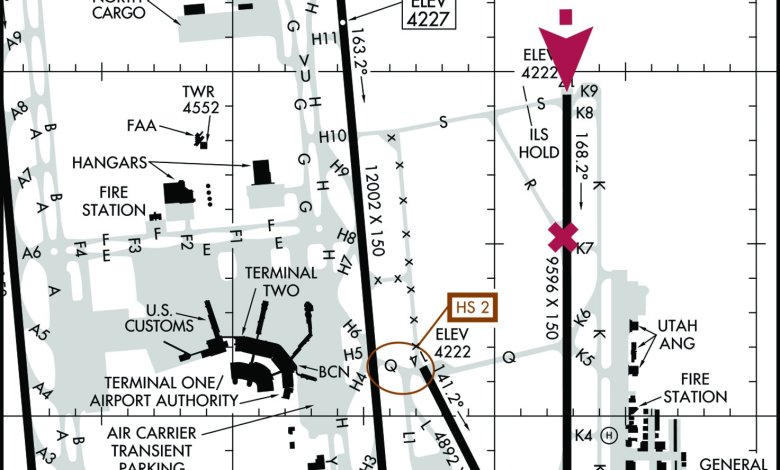
Whether we want to admit it or not, human flight by reference to instruments alone is an unnatural act. To determine up from down or left from right without a natural horizon, we need hours of training, and even more hours of regular practice. We also need a decently equipped airplane, stuffed with radios, colorful moving maps, some gyroscopes or their electronic equivalent, and more than a few charts, telling us where to go and how to get there.

Read More »

Distractions Rabbit Hole

Shortly after buying my Cessna 180, I decided an upgrade to slightly larger tires would help the plane better handle Idahos backcountry strips. That turned out to be a great decision, but not for the obvious benefit of landing with larger tires on rough runways. When the mechanic popped the hubcaps to expose the retaining nut holding the wheel to the axle, he discovered it was about ready to fall off. The nut did not…

Read More »

Humble Pie

Everything that can be invented has been invented is a popular quote attributed to Charles H. Duell, commissioner of the U.S. Patent and Trademark Office from 1898 to 1901. Today, the quote often is used to ridicule those who refuse to embrace the latest technology or believe nothing new will be forthcoming. The thing is, Duell never said that. He said quite the opposite instead: In my opinion, all previous advances in the various lines of invention will appear totally insignificant when compared with those which the present century will witness. Yet, hes not remembered for that statement, only the former, erroneous one.

Read More »

Electrical Systems

Unless youre flying a hot-air balloon, a sailplane or something with an engine that must be hand-propped, your aircraft has an electrical system. It may power only the basic equipment, like lights and the engines starter motor, or it can power everything, including the landing gear, flaps and flight instruments. Modern systems-and even those aboard so-called legacy aircraft-usually are relatively simple and robust, with well-understood components and maintenance requirements.

Read More »

Just Trying To Help

We all know the hazardous attitudes the FAA wants us to understand. Concepts like anti-authority, impulsivity and invincibility have no real place in the cockpit. Now, Im going to add one more: the desire to be helpful, or the motivation to please others. One of my big motivations in life is to be helpful to others. I enjoy writing for this magazine, for example, because it is helpful to other pilots. I also get great pleasure in being a solution to other peoples problems.

Read More »

Entry-Level Travel

The problem with an airplane like that is you cant really use it for travel, said a pilot looking out the FBO window at a Cherokee 140 sitting on the ramp. That pilot was saying that an entry-level airplane-think two or four seats, fixed gear and no more than 160 hp-cant go places. Show me where it says that. Its hard to imagine Charles Lindbergh shrugging off the Ryan NYP because it barely made 110…

Read More »

Graphical Area Forecast

Beginning in our December 2015 issue, we shared with readers and explored ongoing efforts at the FAA and the National Weather Service (NWS) to replace the old, familiar text-based area forecast (FA) with a graphics-based product. A follow-up article in our April 2016 issue discussed some of the proposed changes and presented screenshots of the graphical replacement. Now, beginning about the time this issue is in your mailbox, a three-month transition period will begin, ending in October, at which time the text-based FA covering the Continental U.S. (Conus) will be no more.

Read More »

Dark Night Conditions

Ive always enjoyed flying at night. Theres usually a lot less traffic, the ATC frequency is quieter and its rare to be delayed for an approach, landing or takeoff. Sunsets can be quite amazing from a personal airplane, and Ive been fortunate enough to witness a few sunrises, too. Owing to day-job schedules and airplane availability, most of my instrument training happened at night and, even with all that going on, Im by no means an expert on flying in the dark.

Read More »

LOC Recoveries

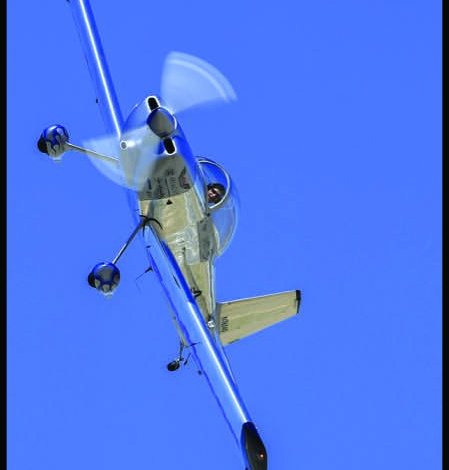
Unusual attitude recovery is a standard part of the FAA checkride for nearly every rating, plus flight reviews and instrument proficiency checks. Pilots dutifully don a hood, put their heads down as an instructor or examiner puts the airplane through a few gyrations and then says, Youve got it. The pilot looks up to see that the airplane is either in a nose-low or nose-high bank and usually makes a power change to help control speed, levels the wings and returns the nose to the horizon before something breaks. A check is placed in the unusual attitudes box and the pilot and instructor move on to other tasks.

Read More »

How We Forget

Everyone occasionally forgets to perform some everyday task such as returning a phone call or depositing a check. But if the task is a flight-critical function, such as putting down the landing gear, surely no competent, conscientious pilot would forget, right? Well, no, even if it is a matter of life and death, pilots sometimes forget. For example, several airline catastrophes have occurred when a cockpit crew attempted to take off, forgetting to set flaps. Airline accidents have also occurred when cockpit crews forgot to lower the landing gear, turn on pitot heat, set hydraulic boost pumps to high, etc. The frequency of such oversights in the airline industry is much higher than the accident rate suggests because in most cases, the oversight is caught by a warning system in time for the crew to correct the situation.

Read More »
Pilot in aircraft
Sign-up for newsletters & special offers!

Get the latest stories & special offers delivered directly to your inbox.

SUBSCRIBE