Features

Ground Handling 101

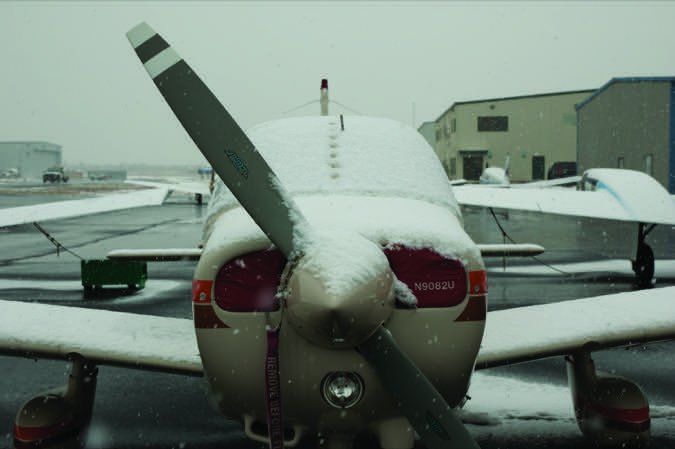
it’s ideal to have at least two sets of eyes monitoring the activity. A wing-walker or other observer can help the tug’s diver with depth perception and likely see potential obstacles invisible from the driver’s seat.üThis Cessna 177 Cardinal appears to be well-secured. The cabin cover fits well and its straps are snug. The tiedown ropes are knotted close to the rings and it appears a control lock is installed.”

Read More »

Licking Gravity

There is more to weight and balance than the obvious fact that airplanes behave differently when the center of gravity (CG) is forward versus aft. The acceptable CG range tends to be broader when the plane is carrying a minimal load and narrower as you approach gross weight. Performance always matters, but CG is the most critical performance factor when the plane is at gross weight.Calculating weight and balance is not complex. Its pretty basic math that we all learn to do early on in ground school. And just like balancing a checkbook before paying bills, the numbers should always add up. It is just a little more effort with a bigger plane offering more loading permutations-more options for where people and objects can be stationed inside.

Read More »

Touch-And-Goes

The approach and landing phase should be conducted in accordance with whatever specific procedure is being practiced: normal, engine-out, short/soft-field, high density altitude. Simply because youre not planning to slow down and exit the runway doesnt mean you should do anything different on the approach and landing. After all, the reason youre doing touch-and-goes is to practice, and you cant engage in valuable practice if you dont simulate realistic conditions and procedures.

Read More »

Entry-Level Machines

We own and fly a Diamondstar DA40 from our home in Michigan to destinations all over the country. Generally my wife and I plan a two-week trip each fall and spring, often to the coasts. However, the word plan is figurative as we expect weather deviations and our routing may change at any time. We literally wake up in the morning, look at the current weather and decide our destination for the day. Typically, we will fly no more than 500 miles and land at a suitable GA airport. While I button down the airplane, my wife books a hotel, rents a car and finds out what to see and do in town from the always-friendly and helpful FBO staff.

Read More »

Turnback Failure

A lot of ink and pixels have been spilled over the years about turning back to the departure runway if a singles engine quits right after takeoff. The maneuver is usually referred to as a turnback, and was the topic of our January 2006 article, Turnbacks Reconsidered.

Read More »

Certification Changes

Beginning about the time this magazine lands in your mailbox, the FAAs long-awaited revision to FAR Part 23-the regulations setting forth small aircraft certification rules-will go into effect. Manufacturers and user groups are enthusiastic about the coming changes, which they say promise to reform and modernize the agencys approval process for airframes, engines and equipment like avionics. The new rules go into effect August 30, 2017. In preparation, the FAAs Aircraft Certification Service (ACS) in…

Read More »

Maintaining Performance

Airplane performance and good maintenance are closely related. The figures published by the manufacturer are frequently viewed as optimistic once an airplane is put into service-and suffers prop nicks, bugs on the leading edge and a couple of bad landings-but book numbers can be achieved even years later. When actual performance differs from the published numbers, its often because the airplanes condition has diminished over the years and hours of use. The level of maintenance an airplane has received over the years will have a significant impact on its overall performance.

Read More »

Single-Pilot Challenges

Most of us start our piloting careers in some sort of basic trainer. Some pilots flying purely for sport or recreation may stay with simple fixed-gear airplanes and stick to VFR conditions. Others learned to fly to travel somewhere for some purpose and on their own schedule. Nothing beats a personal airplane for that purpose, but trying to do it single-pilot in all-weather conditions can tax even the most capable general aviation pilots. As Dave Higdon explored in last months article, Entry-Level Travel, its possible to use simple fixed-gear airplanes for personal transportation, but a more-capable airplane makes it easier.

Read More »

Stabilizing Your Approaches

Stabilized approaches have gotten a lot attention lately, not only with those who fly airplanes, but also with the general public. The proliferation of video cameras has done quite a good job of educating people on how an otherwise airworthy aircraft can be flown into the ground. As the images play out on the screen, a disembodied voice inevitably will at some point attribute the carnage to an approach that was not stabilized.While the voice might not mention just what that thing that was lacking in said accident really is, people will at least remember the phrase the same way they remember words such as shark, fire, disco or myocardial infarction. The true meaning is vague, but they do know it is usually associated with something bad. With that in mind, lets add some clarity by reviewing what a stabilized approach is. Perhaps if we understand what it is, we can then fly it.


Read More »
Pilot in aircraft
Sign-up for newsletters & special offers!

Get the latest stories & special offers delivered directly to your inbox.

SUBSCRIBE