













Register

Touch-And-Goes

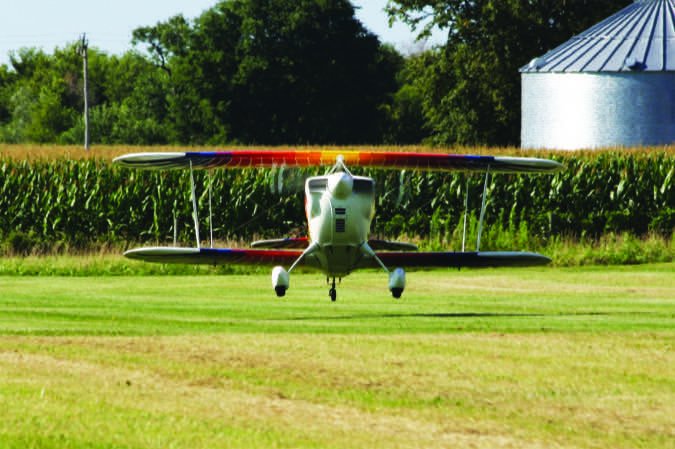
The approach and landing phase should be conducted in accordance with whatever specific procedure is being practiced: normal, engine-out, short/soft-field, high density altitude. Simply because youre not planning to slow down and exit the runway doesnt mean you should do anything different on the approach and landing. After all, the reason youre doing touch-and-goes is to practice, and you cant engage in valuable practice if you dont simulate realistic conditions and procedures.

Gemini Sparkle

Key Takeaways:

  • Touch-and-go operations are a fundamental pilot practice maneuver, but they are more complex than their simple definition suggests, particularly the dynamic "runway roll" phase requiring simultaneous aircraft reconfiguration, directional control, and power management.
  • Pilots performing touch-and-goes must adhere to strict safety protocols, including assessing runway suitability, performing checklists, communicating with ATC, and establishing abort points to ensure safe execution.
  • While valuable, touch-and-goes are not always the best practice method; pilots should consider alternatives like full-stop landings in situations involving unsuitable runways, complex aircraft, high density altitudes, or specific short/soft-field training.
See a mistake? Contact us.

One of the rungs on the ladder student pilots must climb is the touch-and-go. It naturally follows learning about stalls, flying a traffic pattern, and takeoffs and landings individually, and has become a time-honored way for pilots of all skill levels to practice using a runway. Interestingly, the FAA’s flight training literature offers little guidance on touch-and-goes beyond a definition in the Pilot/Controller Glossary (PCG) and that section of the Aeronautical Information Manual (AIM). Both define a touch-and-go as an “operation by an aircraft that lands and departs on a runway without stopping or exiting the runway.”

Sounds simple, doesn’t it? This definition and the scarcity of formal guidance from the FAA on performing touch-and-goes also implies that the maneuver isn’t something to worry about. After all, it’s just the hard parts of a landing, followed immediately by what is supposed to be easy: a takeoff. What could go wrong?


Ready to Sell Your Aircraft?

List your airplane on AircraftForSale.com and reach qualified buyers.

List Your Aircraft
AircraftForSale Logo | FLYING Logo
Pilot in aircraft
Sign-up for newsletters & special offers!

Get the latest stories & special offers delivered directly to your inbox.

SUBSCRIBE