Features

Backcountry Culture

I appreciate David Jack Kennys take on the value of keeping up with performance and ground-reference maneuvers after the checkride (Maneuvers, September 2018). Ive found that they definitely help me to build confidence when Ive been out of the left seat for a while, and can quickly restore the feel of the airplane. The same is true when confronting an unfamiliar type or when assessing skills of a new pilot-acquaintance.

Read More »

Separation Anxiety

If there were some way I could make a series of trips back in time to change things, one of the stops on my itinerary would be to somehow infiltrate the small cadre of early pilots and airplane designers to convince them to use a word other than stall to describe what happens when a wing exceeds its critical angle of attack. The word obviously has numerous other applications, and using it for this purpose has confounded student pilots and television news anchors ever since. That said, Im not sure what should replace it, and remain open to suggestions.

Read More »

Diversionary Tactics

True, it wont tell you how far youll have to go to find good barbecue, or even whether theres a courtesy car. It will, however, give you the hours at which someone should be there, the kinds of fuel available and whether theres 24-hour self-service, phone numbers for the airport manager or to request after-hours services (if available), the dimensions and pattern orientations of all runways…plus latitude and longitude, bearings and distances to the nearest navaids, frequencies for approach control, weather, and the CTAF or tower and descriptions of possible conflicts such as banner tows or skydiving. It even details what repair services are available, though you might have to look up the codes. (S4 means major airframe and powerplant.) Thats a lot of information for seven bucks-and the batteries never run down.

Read More »

IMC Emergencies

We were in IMC at 4000 feet, on a vector for the VOR-A approach at the Wichita, Kan., Colonel James Jabara Airport. The airplane was an A36 Bonanza and I was in the instructors seat on the last approach of a day-long training session. This was in the era before GPS, long before iPads and moving-map handhelds, and the owner of this then-well-equipped 36 had ignored the short-lived Loran phase. So we were eastbound on a long downwind, and crabbing into a northerly wind before intercepting the westbound final approach course before circling to Jabaras north/south runway.

Read More »

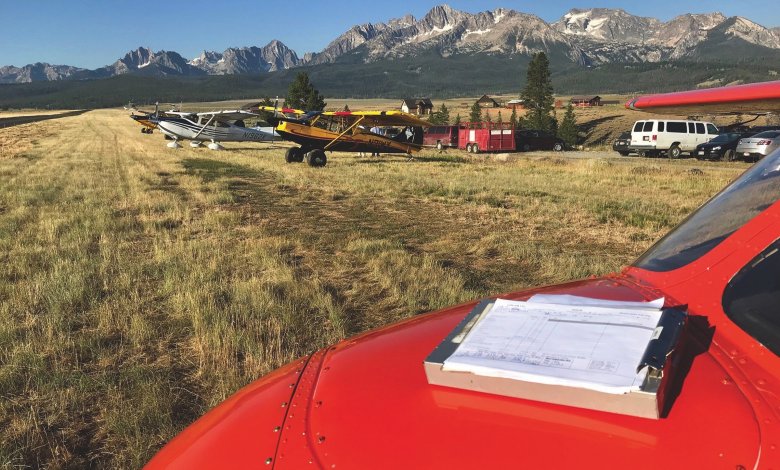
Backcountry Safety Culture

Many of todays workplaces seek to create a formalized safety culture, an environment where employees practice behaviors that minimize accidents, look out for their co-workers and where reporting unsafe conditions is encouraged, not subject to retaliation, and frequently rewarded. It can be a great goal, but it often creates an exaggerated sense of safety where people need safety training to use a power strip and posters about how to get out of a car without tripping. The goal of creating a safety culture often ends up a corporate farce, since the best safety cultures are not created by artifice, but happen naturally because people really care.

Read More »

Maneuvers

But if you struggled to get the knack of flight maneuver exercises that often seemed far removed from the realities of coaxing an aircraft between Points A and B, you have our sympathy. Training for the private and commercial certificates in particular requires learning to master maneuvers whose relation to practical aviation is, to put it charitably, not obvious. (If you can envision a situation in which your life depends on being able to fly lazy eights to airman certification standards, by all means write in to describe it, as we cant.) This raises the question: Having once done them well enough to persuade an examiner to issue a certificate, is there any reason to go on spending flight time and the money it represents maintaining those elusive skills?

Read More »

Beyond Flaps

Boeings 727 has always been one of my all-time favorite airplanes. Ive never flown in one as anything other than self-loading freight, but Im old enough to remember when the 727 (and the DC-9) brought jet comfort and performance to smaller, outlying airports where the eras long-haul mainstays-707s and DC-8s-couldnt operate. These days, of course, economics-fuel burn, plus the need to pay three pilots-and noise regulations have relegated the venerable three-holer to tramp-freighter status or the scrapyard.

Read More »

Its Your Job To Check

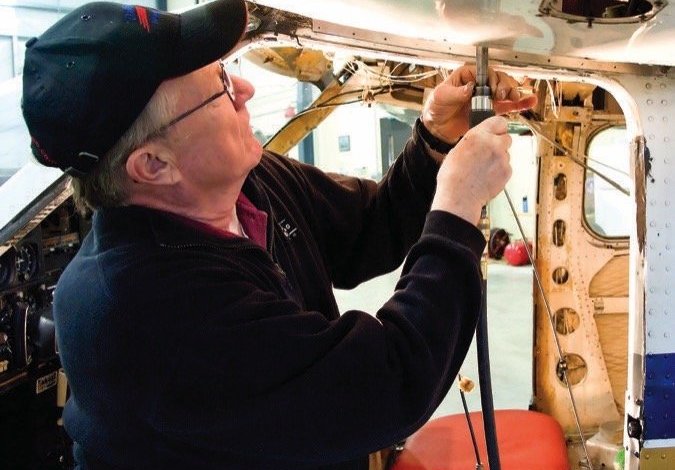
Theres an opinion among some pilots and mechanics that inspections and scheduled maintenance can do more harm than good. By constantly disassembling and reassembling an aircraft to inspect it, they argue, were prematurely wearing out the aircraft and actually making it less safe. Those same pilots and mechanics note that this is largely true, in their opinion, for aircraft that arent flown very much. For more active aircraft, however, they acknowledge that regular inspections and maintenance are less intrusive and, in fact, beneficial.

Read More »

FAA Urges Best Practices For Turbocharger Exhaust

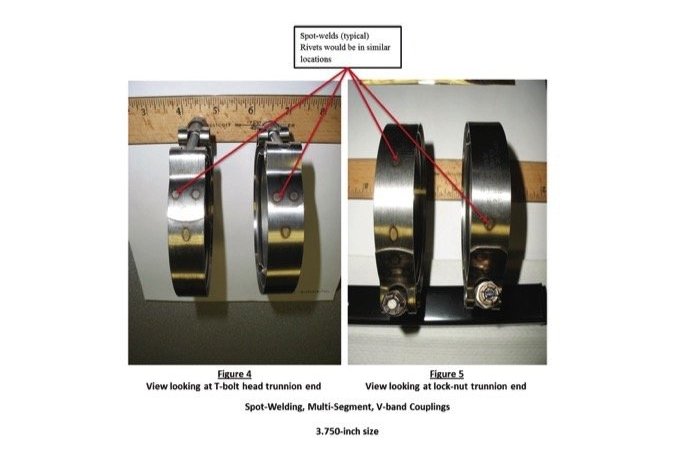
As part of its charter to help minimize GA accidents, the General Aviation Joint Steering Committee (GAJSC; see the article beginning on page 4 for background) earlier this year published a Best Practices Guide designed to ensure airplanes equipped with turbocharged reciprocating engines fitted with turbocharger to tailpipe V-band coupling/clamps, remain in their original type design configuration. It will also help to effectively manage the risk associated with the use of V-band coupling/clamps in this application.

Read More »

Making GA Safety Policy

Recent, similar efforts involving the FAA and the GA community are picking up in tempo. Youve already seen some of the institutional changes: relaxed certification standards for installing advisory angle-of-attack indicators and the new rash of all-electronic attitude indicators, among others, which are designed to help minimize the classic loss-of-control inflight accident. These and other outcomes may be producing tangible results, but its too early to be sure. Regardless, by using a data-driven approach and producing specific safety enhancements, these efforts are creating some useful outcomes for GA pilots. The way this came to be is an example of why you never want to see sausage made.

Read More »
Pilot in aircraft
Sign-up for newsletters & special offers!

Get the latest stories & special offers delivered directly to your inbox.

SUBSCRIBE