











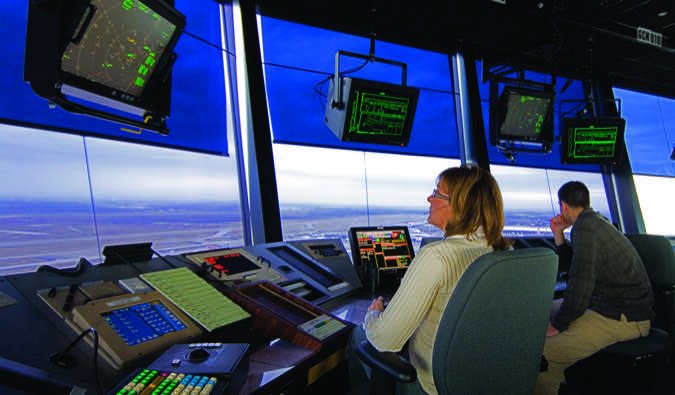


There’s really no question that maintaining radio and radar contact with ATC significantly adds to flight safety, whether you’re IFR or VFR, and whether you’re going somewhere or just boring holes. But it’s vitally important to remember that when your communications are lost, airplanes fly on physics discovered by Bernouli, not on communications pioneered by Marconi. Losing communications or radar contact will not cause your plane to spiral down and leave a smoking hole in the ground. In my home state of Idaho, mountain ranges often block line-of-sight radio signals and radar returns, so I’ve grown familiar with how to cope safely.
There are lots of reasons we can lose contact with ATC, and human error seems to be the most common. Sometimes ATC gives the wrong frequency. Other times, pilots simply mishear, or transpose numbers. That’s why we do readbacks. Whether thanks to turbulence or fat fingers, we can incorrectly enter new frequencies. No matter what your flying habits are, you should be prepared and know how to respond when communications are sketchy or even nonexistent. Lost comms and/or radar can be a precursor to something worse, but it doesn’t have to be that way. When it happens to you, which it will, your best defense is knowing your options while flying the airplane.

