











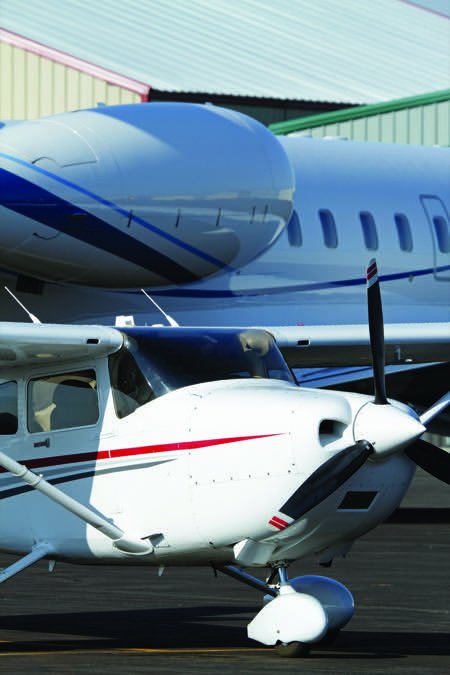


At some point in your flying career, you likely graduated from your trainer to flying different aircraft. Maybe you gained access to a fleet of aircraft through a club or flight school, an FBO or a Part 135 charter company. Or you moved to light sport aircraft, a plane you built or a plane you bought. Perhaps you stepped up quickly to higher-performance aircraft, those with more horsepower that can swing gear or have two engines.
My flying has followed a similar trajectory, from trainer, to rentals, to owning a single-engine aircraft. Recently, I made a career shift into the world of Part 135 passengers, cargo and backcountry flying working for a small company in Idaho that also rents airplanes. Like most flight schools, the company has a garden-variety 172 and 172RG. And like most backcountry charter companies, it also has a turbocharged Cessna 206. But at the heart of it all are two Britten-Norman BN-2 Islanders for backcountry, two Navajo Chieftains for passenger and cargo operations, a Piper Seneca II that mostly does light, rural cargo, and my latest ride, a Cessna Caravan. Altogether, there’s a sharp uptick in the number of planes I will be flying. Between the company’s training and sign-off for each plane in accordance with our training manual, I have already learned a lot, mostly about the challenges, risks and rewards of transitioning from plane to plane.

