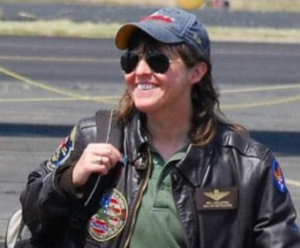
The right CFI for you will take into account your capabilities and goals. [Credit: FLYING Archive]
Question: I am a Part 141 trained flight instructor, and I just landed my first job at a Part 61 flight school. I have three learners. All of them had other instructors who left for the airlines. I’ve been on the job for three weeks, and I keep getting pushback from the learners who keep telling me I’m too strict because I want them to use a syllabus and have more emphasis on the checklist. It’s just not how the previous CFIs did things. I don’t want to bad-mouth another CFI, but I’m getting tired of being the bad guy when I am trying to instill good habits. How do I fix this?
Answer: Ah, yes, the “ghost of CFI past.” Most instructors have encountered this. It’s like going on a date with someone who is on the rebound. You will hear about your predecessor. Comparisons will be made.
The fact of the matter is that most learners become attached to their CFIs and to some extent may resent anyone who replaces them. Focus on the task of teaching rather than competing with a ghost. You have to be patient.
As far as the use of the checklist goes, the best way to handle this situation is to bring out the Airman Certification Standards to show the client that they will be evaluated on their ability to use the checklist, then show them the value of its use. There’s so much to do procedurally in an airplane that it’s tough to remember all of it, so the use of the checklist is in their best interest.
The same can be said for the use of the syllabus. It’s a means of streamlining their education and making sure all the necessary material is learned in a logical fashion.
The challenge of learning through the “folklore” method is that a student pilot can go for their checkride only to discover that some of the required experience is missing—for example, the 3.0 hours of flight by reference to instruments required for the private pilot certificate.
After a few hours of positive results, the learners will likely forget about the previous instructor and become more focused on finishing their certificates.
Ask us anything you’ve ever wanted to know about aviation. Our experts in general aviation, flight training, aircraft, avionics, and more may attempt to answer in a future article. Email your questionshere.
Meg Godlewski has been an aviation journalist for more than 24 years and a CFI for more than 20 years. If she is not flying or teaching aviation, she is writing about it. Meg is a founding member of the Pilot Proficiency Center at EAA AirVenture and excels at the application of simulation technology to flatten the learning curve. Follow Meg on Twitter @2Lewski.
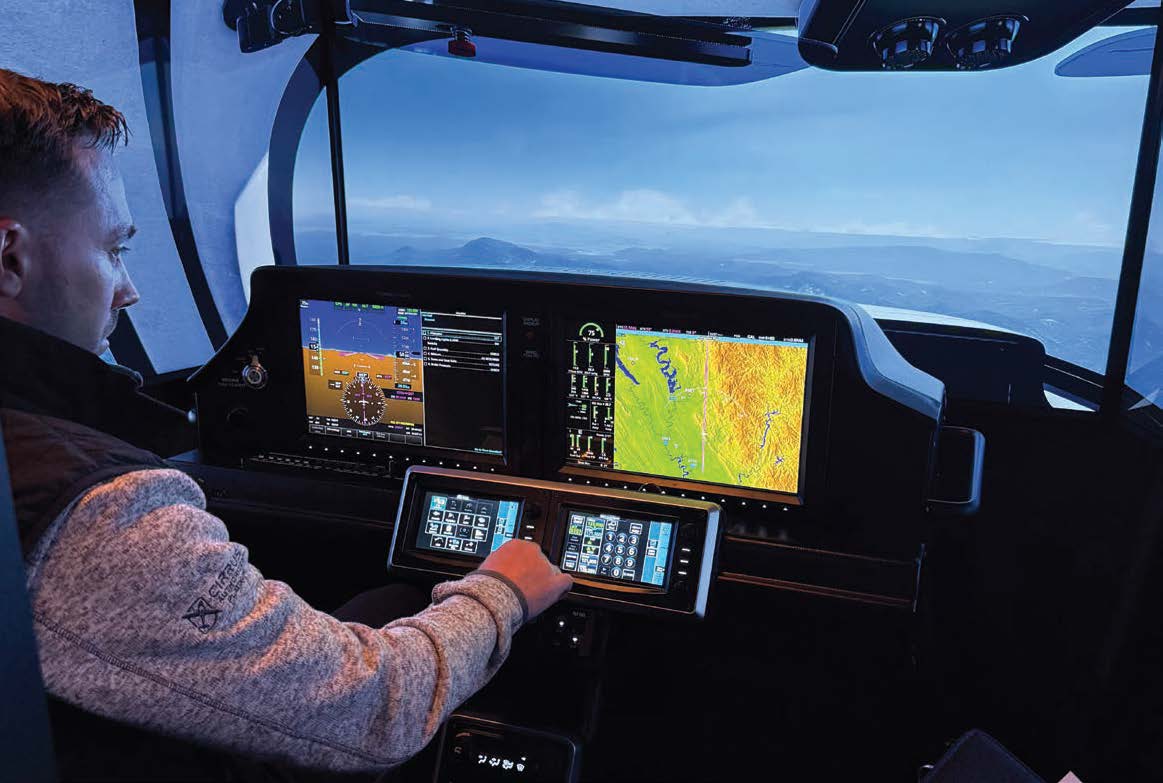
Cirrus has developed 24 simulator scenarios that put pilots’ real-world aeronautical decision-making skills
to the test. [Credit: Sean Siff]
For the last two decades, Cirrus Aircraft has been at the forefront of bringing new technology to the cockpit. One of its latest offerings is Mission Ready—a training and safety program specifically for SR owners to experience in a flight simulator environment.
The program, launched in March, lives within the manufacturer’s official pilot training curriculum, Cirrus Approach. This library of real-world flight training sessions paired with video learning takes a Cirrus pilot from their first flight all the way through their pilot’s certificate and instrument rating.
If you're not already a subscriber, what are you waiting for? Subscribe today to get the issue as soon as it is released in either Print or Digital formats.
Cirrus recognized that using advanced aviation training device (AATD) simulators can deliver experiences that can be flown deeper into a maneuver or scenario, past what is typically flown in the real airplane.
Although simulator training at flight schools around the country is expanding beyond recurrent instrument training, Mission Ready is a series of 24 individual cross-country flights with both VFR and IFR learning goals, so the scenario can be tailored to the pilot’s level of experience.
Cirrus Standardized Instructor Pilots (CSIPs) build the missions and include realistic ATC communication prompts for the instructor, integrated decision points, and instructor guidance to create a purposeful training scenario. The program transfers the weight of scenario creation away from the instructor, freeing them to better brief and deliver training to the student pilot.
Firsthand Look
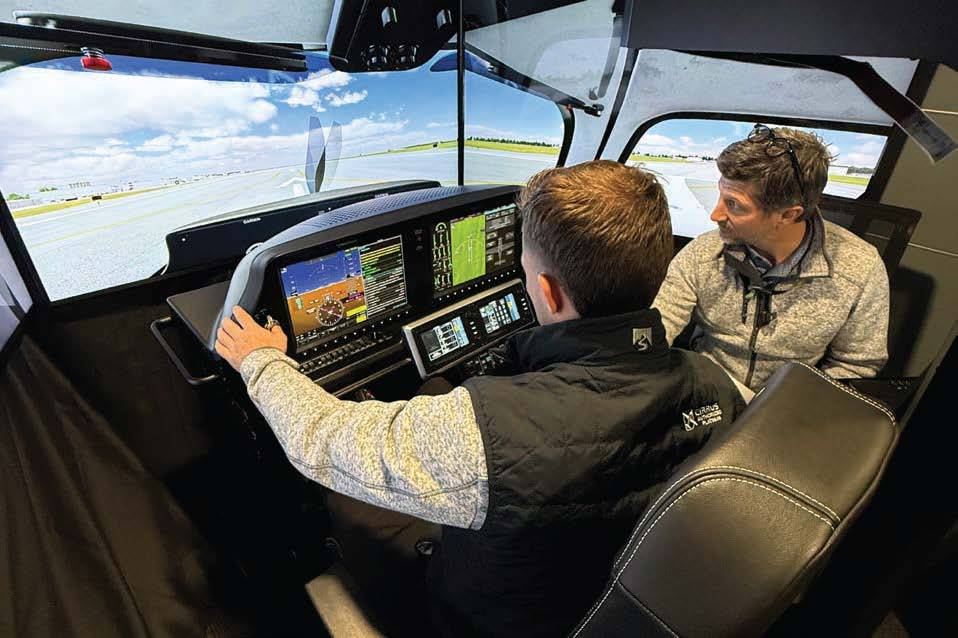
On an appropriately windy and rainy spring IFR day, I visited Mike Goulian Aviation’s Cirrus Training Center at Hansom Field (KBED) outside of Boston, as it had recently equipped the school with a new RealSimGear SR7x Pro. The SR7x Pro is a switch-for-switch replica of the SR22 G7, complete with the Garmin Perspective Touch avionics system.
Training on the SR7x, the pilot can reinforce the same flows and procedures used in the real airplane, making the flight time loggable.
Though the program is still new, Marc DeRose, Mike Goulian Aviation’s director of flight operations, has already seen the benefits of this training with both his students and instructors alike.
“It’s really about being more prepared before you ever get in the aircraft,” said DeRose, an experienced CFII and CSIP. “And our sim lets you practice real-world scenarios multiple times to help build improved decision making.”
Allowing me to observe a Mission Ready scenario, DeRose selected a student pilot from Mike Goulian Aviation to act as the pilot flying the sim. The student, a private pilot with hundreds of hours of flight time, was working on his Cirrus transition training.
DeRose and the student briefed on the scenario in the classroom before hopping into the sim. DeRose then selected the “Over the Hills” scenario, with the flight departing from McGhee Tyson Airport (KTYS) in Knoxville, Tennessee—home of the Cirrus Vision Center—to Asheville, North Carolina (KAVL).
Aptly titled, the scenario would cross some of the highest mountains in the Appalachian range with a planned cruising altitude of 9,000 feet. The RealSimGear SR7x uses a commercial license of X-Plane 12, so the weather simulated in the scenario and in the scenery below the airplane were very high quality, allowing the pilot to look out the windows to spot real-world landmarks.
Three 55-inch 4K TVs on the SR7x provide 180 degrees of peripheral vision, helping the pilot get into the zone and tune out distractions. Before the scenario, I flew a short test flight in the SR7x and was given an unexpected engine-out after takeoff. The triple screen setup enabled me to turn my head to the right and effectively look through the turn to sight the runway. I did not take my sight off my landing spot and was able to stay in the scenario without adjusting the sim camera, preserving my concentration.
Back in the simulator, with flight planning finished, the student received clearance to climb up to 9,000 feet from the approach controller (DeRose). Headed out over the Appalachians, the clearance between the mountains and the clouds seemed less than the forecasted conditions, but this was a flight under IFR, and both DeRose and the student settled into a comfortable conversation, reminiscent of the kind one might hear on any normal cross-country flight.
The light chatter was designed to set the student at ease and keep him lightly tasked while DeRose activated the first electrical issue with Alternator 2. Getting his attention, the student assessed the situation and began using the on-screen checklist. Keeping the autopilot on while running the checklist, he soon had to deal with the loss of the multi-function display (MFD). Next, yellow CAS messages appeared on the PFD, prompting him to go deeper into the SR22’s Abnormal Procedures checklist.
DeRose sat patiently watching the student from his instructor’s station. His many years of coaching college rowers at the highest levels helped him know what to say, but more importantly, how and when to say it. It served as a reminder that too much assistance in the moment would detract from the learning opportunity that the Mission Ready scenario was creating. DeRose let the student work out the next moves for himself.
Still on the way to Asheville, the electrical issue had not risen to an immediate emergency, but no sooner was the appropriate checklist completed than DeRose discreetly activated a slow but cascading engine power loss. Layered on top of the partial power loss were a few ATC instructions, consisting of small course corrections, adding to the student’s task load.
A few minutes into the partial power loss, it became apparent that a complete power loss was in the offing. The student decelerated to best glide speed and was now fully concentrating on looking for a potential landing location. But, as the scenario was designed, he was over mountainous terrain with very few options.
Starting a gentle series of turns and holding onto his decaying airspeed, he searched quickly for a landing spot. Terrain was rising on both sides of the SR22 as it was losing altitude, now just above the mountain ridges. With the MFD function restored, he used the navigation display to locate a potential airport ahead of his position about 8 miles away. But to make it to the airfield, he would have to coax the airplane over the final ridge. It was a difficult decision that had to be made quickly.
The SR22’s propeller was windmilling, as the engine was still technically running, but the airspeed was getting closer to stall speed. Until this point in the flight, saving the airplane seemed like a realistic option, but it was going to be close.
As the airplane neared the ridge, the student did his best to manage the situation. Other than acting as ATC, DeRose stayed mostly quiet, letting the student do the hard work on his own, simulating the challenge of being pilot in command.
In the time that it took to balance the challenges of the critical situation, including the running of an emergency checklist by memory, the SR22 had fallen below the 600 feet agl minimum for pulling the CAPS handle and activating the parachute. Adding to the difficulty was the changing height as the airplane flew over the dynamic terrain of the mountain range.
As the SR22’s stall warning sounded, the student reached above his right shoulder for the red CAPS handle, which requires the realistic 45 pounds of force, just like the real airplane.
Unfortunately, the airplane had descended to just a few hundred feet over the tree-lined ridge, giving the SR22 time to bob back and forth under the parachute before hitting the trees. There just was not enough altitude to effectively slow the airplane to a controlled landing under the partially deployed chute, reinforcing the importance of the 600-foot minimum agl for CAPS deployment.
The flight debrief was one of the most effective components of the Mission Ready scenario. DeRose discussed the challenges and takeaways with the student. From my observer’s perspective, I didn’t question the pilot’s decision to try to clear the ridge. Sympathetic to his plight and the challenges he had to deal with, I believe I would have also attempted to clear the ridge, too, had I been flying.
Clearly designed to test a pilot’s decision making, the Mission Ready scenario proved to be an effective reminder of how a worsening series of aircraft failures over the mountains can further reduce the options from which a pilot has to choose.
Prebuilt scenarios free instructors to focus on teaching instead of creating simulations. [Credit: Sean Siff]
“The combination of staying in front of the airplane, managing the airplane and terrain was really tough,” the student said. “It was task saturation for me. What I was called upon to do felt very realistic, even down to the graphics.”
DeRose said the feeling of being overwhelmed is a common outcome of the program’s design, intended to mirror the high-stress environment of an actual in-flight emergency.
“Instructors and students typically practice emergencies in a laboratory, with things happening quickly, but in order,” he said. “In a scenario like this, no one realistically has time to squawk 7700. The pilot has to focus on controlling the airplane. Pilots typically fall to their level of training in an emergency, and these scenarios allow Cirrus Flight Instructors the chance to evaluate where gaps exist in a pilot’s responses.”
Mission Ready accomplished the goal of pushing a pilot through their comfort zone, but productively, allowing time for the postflight debrief of the scenario to extract maximum value.
Another important theme of the Mission Ready program is continuous proficiency rather than periodic recurrency. Cirrus’ goal is to keep growing its overall training program.
“These scenarios allow the pilot to become the diagnostician, as they are pushed to assess the clues in real time,” DeRose said.
Raising the Bar
As a top-awarded Cirrus Training Center, Mike Goulian Aviation has shown a commitment to sim training, which was evident by the updates to the simulation rooms at both of its Massachusetts locations. Instead of shoehorning the sim equipment into an empty corner space, it installed blackout window blinds, dimmable ceiling lights, and dark wall paint to create a distraction-free classroom environment where immersion can be created when the pilot is behind the controls of the SR7x.
In addition, Mike Goulian Aviation instructors have been pooling their SR platform knowledge to provide feedback to RealSimGear to aid in the development of the platform.
Encouragingly, the Mission Ready program brings professional pilot-level simulator training to Cirrus pilots who reside near participating Cirrus Training Centers. When delivered in the ideal simulator classroom environment and with excellent instruction, the program can train in both VFR and IFR scenarios that pilots can add to their logbooks, providing an important incentive to justify the instructor and simulator rental costs.
Although I only observed one Mission Ready lesson, Cirrus noted that in many scenarios “pilots are given choices in how the mission is completed. This introduces an element of strategy and autonomy, encouraging experimentation, reflection, and engagement rather than rote execution.”
If you are interested in this training, contact your local Cirrus Training Center to see if it has an AATD flight simulator that is booking Mission Ready scenarios. Non-Cirrus pilots can schedule a Mission Ready sim lesson, too. All you need is a complimentary Cirrus Approach account to get started.
As a flight sim enthusiast, it is encouraging to see a forward-looking OEM like Cirrus embrace simulator training for private and instrument-rated general aviation pilots. Regardless of the challenges faced in a given Mission Ready scenario, there is an ideal starting point in the curriculum for pilots of all experience levels.
Read more about Cirrus’ Mission Ready scenarios here.
New Cirrus App
Earlier this summer, Cirrus announced a new experience called Let’s Go Fly that debuts on the Apple Vision Pro as an app for the mixed/extended reality headset.
Free to download, the app’s main feature is a seven-minute demonstration flight in the SR22T, designed to introduce the viewer to personal aviation by way of a sightseeing adventure over the American Southwest. Filmed in ultra-high-resolution, 180-degree, 3D video with spatial audio, the viewer will be brought into the flight in a novel and immersive way.
The experience serves as an entry point for curious potential pilots who are tech savvy and own an Apple Vision Pro.
In addition to the demo flight, Let’s Go Fly includes a full-size, built-to-scale, digital rendering of the SR Series and Vision Jet airplanes intended for the viewer to virtually explore from within the headset. Cirrus intends for this tool to assist its global sales team in introducing the manufacturer’s airplanes digitally when a real-world aircraft can’t be made available.
This column first appeared in the August Issue 973 of the FLYING print edition.
Sean Siff is a private pilot who has worked in marketing in the aviation industry. He’s an active flight sim user as he works to stay current in the airplane.
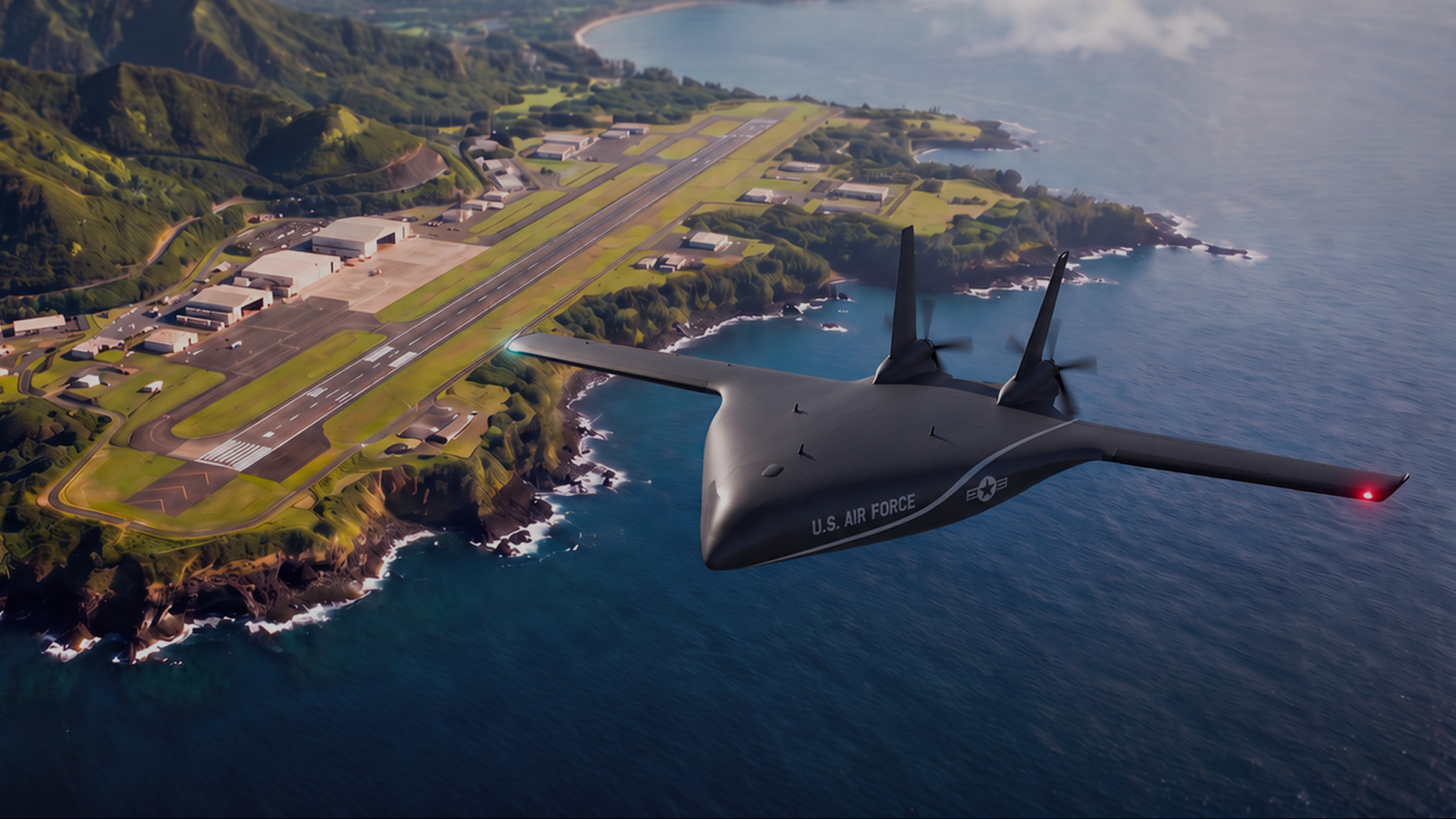
Natilus envisions its blended-wing body Kona serving providing regional airlift, with potential for other military applications. [Credit: Natilus]
The U.S. Air Force is ramping up its interest and investment in novel, blended-wing body (BWB) aircraft to address capability gaps in the Indo-Pacific.
The BWB is an offshoot of the tailless, all-wing aircraft concept, or flying wing, which dates back to the early days of aviation. The architecture merges the wing and fuselage, lying somewhere between the flying wing and conventional tube-and-wing. The configuration’s core advantages are fuel reduction, achieved through a high lift-to-drag ratio, and increased payload capacity.
Boeing and NASA were the first to study the concept in earnest during the 1990s and early 2000s. But few BWB designs have advanced beyond the prototype and demonstration phase.
BWB developer Natilus believes that could soon change.
The Air Force on Wednesday awarded the firm $3.5 million through the Assistant Secretary of the Air Force for Energy, Installations, and Environment (SAF/IE) and its Operational Energy-Innovation (OE-I) directorate. Nolan Giblin, Natilus’ chief operating officer, told FLYING the goal is to demonstrate a full-scale prototype aircraft by the end of the roughly 12-month contract.
Competitor JetZero is likewise developing a full-scale BWB prototype under a $235 million Air Force contract award, also aiming to fly it in 2027. JetZero’s larger Z4 promises a 50 percent reduction in fuel burn and is intended for the commercial passenger market, with investors including the venture arms of United Airlines and Alaska Airlines. The company also envisions a potential military airlift or tanker role for the Z4, with RTX Ventures, Northrop Grumman, and 3M also backing it.
But Natilus’ Kona—designed to reduce fuel burn by 30 percent and operational costs by 50 percent while more than doubling payload capacity versus comparable conventional aircraft—is intended specifically for regional cargo. The firm’s $3.5 million contract will mature the aircraft for operational defense demonstrations, covering research, development, test, and evaluation. It will earn the money over time by meeting agreed-upon milestones.
Giblin framed the agreement as “just the start” of Natilus’ formal engagement with the Air Force. He said the firm is exploring opportunities to “broaden the scope and increase the funding coming our way” under the existing contract as well as future agreements, possibly including a procurement deal.
Giblin said the company is “working hand in hand” with the Air Force toward that goal.
“It’s all well and good if you could build full-scale prototypes and fly and collect data and show the operational viability,” he said. “It means more if you can demonstrate a transition plan toward a procurement contract.”
Why BWB Could Be Attractive to the Air Force
Natilus has already begun developing a full-scale Kona prototype using venture and strategic capital. The regional BWB freighter is designed to serve both military and commercial use cases, with FedEx, UPS, and DHL feeder cargo airline Ameriflight among its potential customers.
Giblin said the military envisions Kona filling a gap between Joint Force Cessna 208 Caravan light utility aircraft and larger C-130 tactical aircraft. He said Kona will create a new class of “sub-tactical lift” aircraft sized for regional distribution and contested logistics.
“You have small tactical aircraft like the 208 that can move stuff over the last tactical mile, whereas a C-130 is really good at getting things into theater,” Giblin said. “But just given the payload capacity of the 208, sitting around 4,000 pounds, and the C-130, sitting around 40,000 pounds, there’s a huge gap there.”
Giblin said Natilus successfully pushed for language in the House Appropriations Committee’s report on the fiscal year 2027 NDAA, which explicitly suggests the Pentagon examine BWB designs to address that gap. The House passed its version of the legislation, but it has stalled in the Senate.
The Natilus COO said Kona’s 30 percent fuel burn reduction has been validated by subscale models through low-speed wind tunnel testing, and he is “pretty confident in the projection” for the scaled-up version. Combined with a 3.8-ton payload capacity and 800 nm range, with short-field capability, that efficiency could be a game-changer in the Indo-Pacific, where distances are long and fuel is constrained.
Giblin said there are “other theaters in which this platform would perform really well.” Regional airlift is the primary application, but Natilus believes Kona has a path to supporting communications relay, payload delivery, and intelligence, surveillance, and reconnaissance.
“In a fuel-constrained environment like the Pacific, efficiency translates directly into operational flexibility,” said Jim Hartle, associate deputy assistant secretary of the Air Force for operational energy, safety and occupational health, in a news release. “Kona provides an opportunity to evaluate how a commercially developed aircraft can contribute to distributed logistics while generating the data needed to inform future requirements.”
Autonomy could be another key advantage.
Commercial Kona models are initially intended for single-pilot operations. But the Air Force is interested in optionally piloted capability. Giblin said Natilus already has its own autonomy stack—informe by staff who previously worked for firms like Kratos, Northrop Grumman, and General Atomics—as well as “provisions on the hardware side of the house,” including actuation systems, to fulfill that vision. He said the company has examined autonomy for years, but the military’s involvement has “accelerated” its development.
Giblin added that Natilus has the “ability to partner with various industry folks that have already retrofitted 208s or C-130s with autonomy, so that we can lean more into the autonomy stack for the defense use of it.” He did not specify a partner. But firms such as Reliable Robotics and Merlin Labs have tested C-208s retrofitted with autonomy and been asked to study automating the larger C-130.
Ripple Effect
Many novel aviation technologies see their first action in the military before being commercialized. Kona and Natilus’ larger, passenger-carrying Horizon could follow that route.
The company is advancing Kona toward FAA Part 23 certification and full-scale flight testing, targeting Part 25 certification for Horizon. The FAA awarded Kona a Part 23 certification project number and is working to develop a formal G-1 certification basis, which Giblin said should arrive in the next few months.
“Over the last couple months, we’ve been meeting with [the FAA] frequently to walk through various systems on the platform, starting with propulsion and avionics and flight controls,” he said. “Hopefully soon we’ll have some news there.”
Bolstering the effort, the prototype Natilus is developing for the Air Force will be “aerodynamically conforming for FAA certification,” and it could later be used to validate the commercial use case. Ameriflight has a conditional agreement for 20 Kona aircraft that could replace airframes such as the Embraer EMB-120, Saab 340, and Beechcraft 1900C and Model 99 on feeder cargo routes.
“It’s the exact same airframe that has found a home in both markets,” Giblin said.
Under military evaluation, Natilus hopes to validate Kona’s integration with existing ground support equipment and operation in austere environments where infrastructure may be limited. He compared the military’s challenges in the Indo-Pacific to those of offshore oil and gas customers on the commercial side.
“They’re going to experience something very similar that the Air Force would in the Pacific,” Giblin said. “We don’t want to ask either market to reinvent how they interface with an aircraft on ground or through maintenance.”
In addition, though the commercial Kona freighter will be piloted at first, Natilus in the future plans to give it the same optionally piloted capability as the military variant. The firm’s planned demonstrations could help it understand how autonomy will translate from the Air Force to customers like Ameriflight.
Giblin believes the Air Force contract will help increase Natilus’ production rate and reduce acquisition costs over time, which “benefits both sides of the house.” That includes the firm’s development of Horizon.
Designed for up to 200 passengers, the design is larger than Kona, with a maximum takeoff weight “closer to that of the current narrowbody class of airplane,” while Kona’s 19,000-pound MTOW is akin to the Cessna 408 SkyCourier. Horizon is also faster (about 520 knots compared to 250 knots for Kona) and will fly at higher altitudes up to 35,000 feet.
But Giblin said that “everything we’re learning in the way of technology development, working with the FAA on a relationship-based process, scaling the production line, manufacturing site selection, all those things we’re doing for Kona today,” will help Natilus scale up to Horizon.
Jack is a staff writer covering advanced air mobility, including everything from drones to unmanned aircraft systems to space travel—and a whole lot more. He spent close to two years reporting on drone delivery for FreightWaves, covering the biggest news and developments in the space and connecting with industry executives and experts. Jack is also a basketball aficionado, a frequent traveler and a lover of all things logistics.
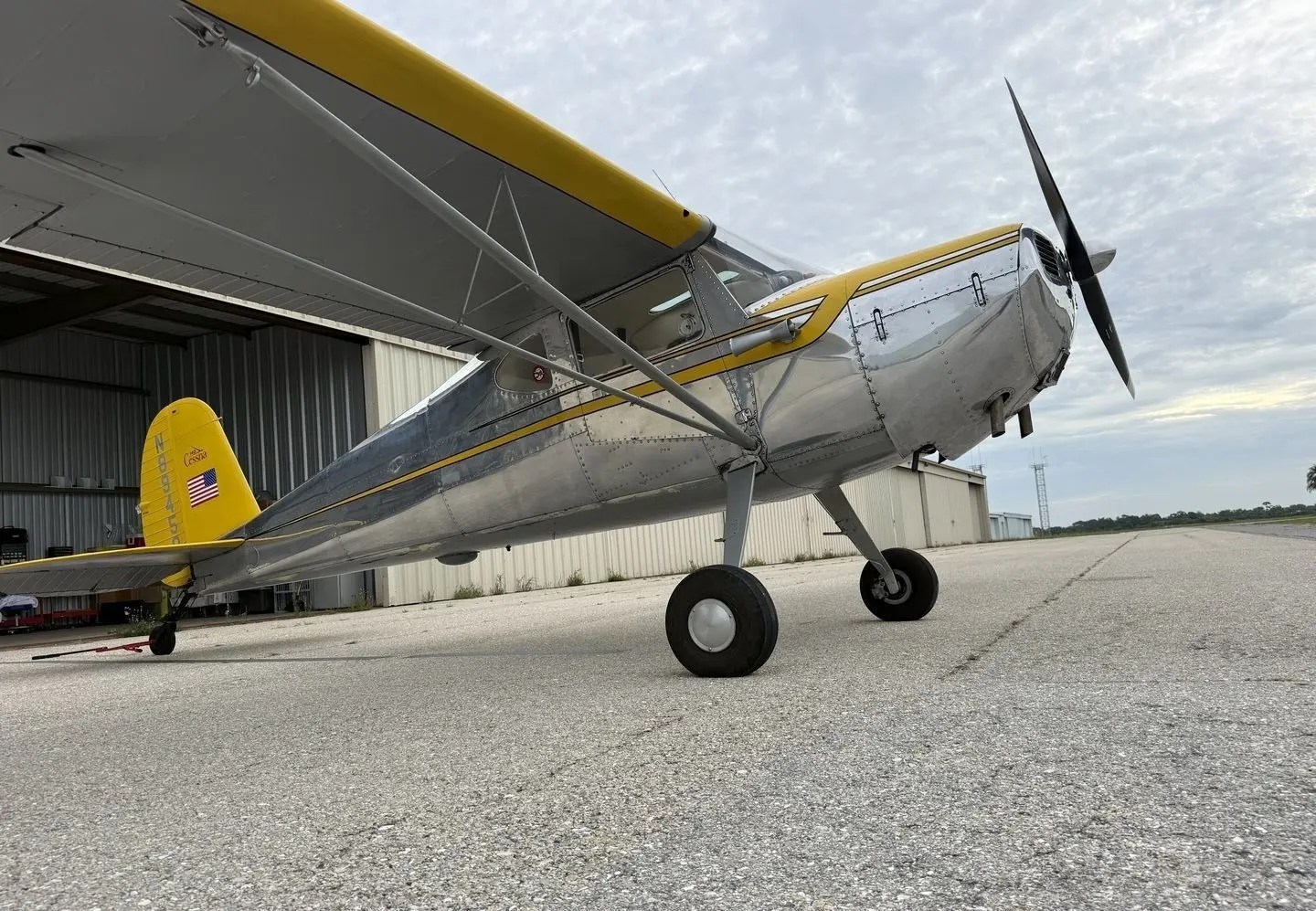
Cessna’s postwar lineup included the top-of-the-line 195, a large, powerful taildragger with a big radial engine, cantilever wing, and seating for five. It was a flagship—the flying equivalent of the period’s luxury cars from makers like Cadillac, Lincoln, and Packard.
This vintage taildragger sports a neat, inviting, side-by-side cabin. [Credit: Scott MacDonald Aircraft Sales]
But to drive realistic sales volume, the company needed something more like a Crosley or a Nash Metropolitan with wings.
Enter the 140 and its lower-priced sibling the 120. These two-place runabouts were designed to help satisfy a predicted boom in demand for GA aircraft that was sure to develop as military pilots returned to civilian life.
We could talk for days about the reasons why the postwar market never soared as expected. It did eventually take off, however. As more people gradually became interested in learning to fly, the 140 gained a following.
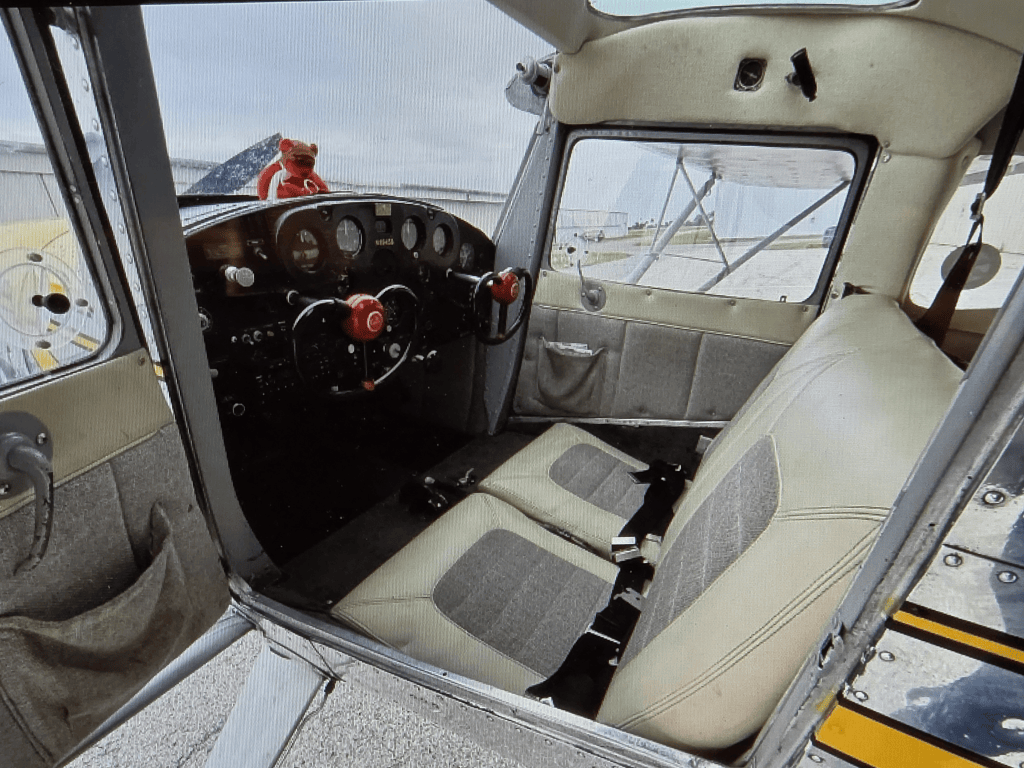
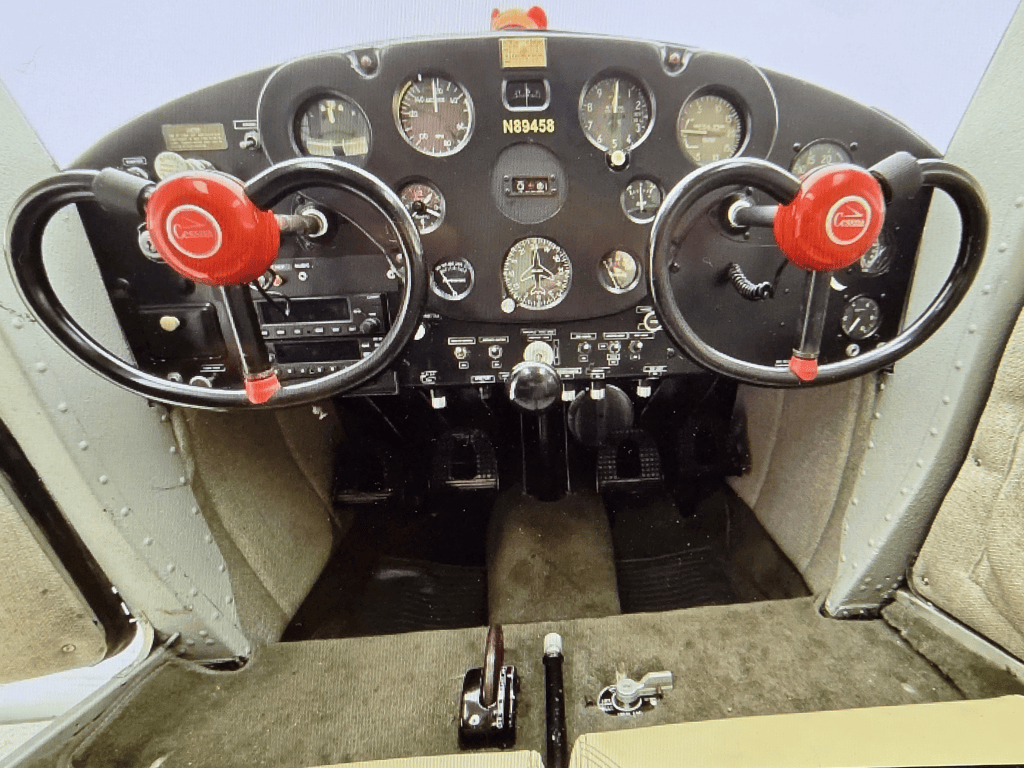
Old-school panel includes key communications updates. [Credit: Scott MacDonald Aircraft Sales]
Its standard equipment included flaps, electrical system, and extra cabin windows that the 120 lacked. The 140, which initially paired a metal fuselage with a fabric-covered wing and later adopted all-metal construction, seemed modern when compared with a Piper J-3 Cub or other competing taildraggers carried over from the late 1930s.
The aircraft for sale today shows off its polished aluminum skin and period-perfect yellow trim. Its interior is neat and comfortable, with the side-by-side layout that most passengers prefer to the tandem style of Cubs, Aeronca Champs, and similar competitors.
This 1946 Cessna 140 has 4,577 hours on the airframe and 210 hours since overhaul on its 85 hp Continental C85-12F engine. While its basic round-gauge panel appears largely original, it is fitted with updated equipment, including a Garmin GTR 225 com radio, GTX 327 transponder, dual push-to-talk switches, and uAvionix transmitter for ADS-B Out.
Pilots looking for a handsome antique taildragger that is among the classic designs that drove postwar general aviation forward should consider this thoughtfully updated 1946 Cessna 140, which is available for $38,900 on AircraftForSale.
If you’re interested in financing, you can do so with FLYING Finance. Use our airplane loan calculator to calculate your estimated monthly payments. Or, to speak with an aviation finance specialist, visit flyingfinance.com.
Jonathan Welsh is Lead Editor of Aviation Consumer and a private pilot who worked as a reporter, editor and columnist with the Wall Street Journal for 21 years, mostly covering the auto industry. His passion for aviation began in childhood with balsa-wood gliders his aunt would buy for him at the corner store. Follow Jonathan on Twitter @JonathanWelsh4
Be thorough and careful with aircraft maintenance because a pilot’s life really does depend on it. [Credit: FLYING Archive]
Any time there is a general aviation incident, such as an unscheduled off-airport landing or an accident that could truly be called a crash, you’re going to hear someone go off about how unsafe small airplanes are due to poor maintenance. Usually this comes from casual observers who “have a buddy” who is a pilot or from the aviation impaired who aren’t aware of the strict maintenance required for aircraft.
Seriously, if properly maintained, aircraft can last for generations.
Sometimes the accidents can be surprising. Recently, the aviation world is talking about the crash of the 1982 Cessna 210N Centurion that experienced an engine separation shortly after takeoff. Not an engine failure. A separation, as in the 285 hp Continental IO-520 fell off the airplane. It happened on October 13 near Louisiana Regional Airport (KREG) in Gonzales, Louisiana.
According to preliminary reports, the pilot, 74, was alone in the aircraft and survived with minor injuries. The engine and propeller were found on a road approximately 300 feet from where the airplane came to rest upside down in a field. The ADS-B data from the flight shows the airplane taking off to the north and entering a climbing right turn at an airspeed of approximately 95 knots before it disappeared from ADS-B coverage.
I find this one puzzling. I have seen accidents where the engine separated from the wing of a jet—UPS Flight 2976 in November 2025, for example—but never one where a piston engine departed an aircraft in flight. The only thing I can think of—and this is pure speculation on my part—is that the bolts used to install the engine either failed, were incorrectly installed, were the incorrect part, or were missing altogether. All four possibilities are deeply concerning.
I have many friends who are A&P/IAs. They have shared stories about finding incorrect parts on aircraft, such as screws and bolts not approved for aviation use on a flight school or privately owned Part 23-certified airplanes. The most chilling was one about wood screws found on a Cessna 310 that was part of a flight school fleet.
I can tell you with absolute certainty that any A&P/IA who knowingly installs non-FAA-approved parts in a certified aircraft likely won’t have a certificate, much less a job, if and when they are caught by the aircraft owner, flight school, or agency. The latter usually happens after someone, often an aircraft renter, notices the issue and, when in-house corrective procedures fail to fix the issue, takes their concerns to the FAA.
It can go the other way too. A CFI may refuse to fly in a privately owned aircraft because of questionable maintenance. Most airports have “that guy” who performs unsupervised maintenance on his Part 23 aircraft beyond what is specified as preventative maintenance per 14 CFR Part 43 Appendix A, Approved Preventative Maintenance Tasks. Word gets around among the CFIs fairly quickly to avoid this person.
Checking Out Flight Schools
Fortunately, most flight schools take pride in their maintenance department. The maintenance reputation of a flight school is more important, in my opinion, than that of the school’s flight instructors.
When selecting a flight school, be sure you ask about the maintenance department. Does it have one, or does it contract out? Ask how many A&P/IAs it has, what their experience level is, and what is the maintenance rotation of the fleet—for example, three outside customer aircraft to every fleet aircraft.
Before you fly one of that flight school’s aircraft, make it a point to review its maintenance logs. By the time you are a private pilot you should be familiar with these and know how to read them. If you’re not, find a savvy instructor or an A&P who can walk you through them.
Checking the maintenance logs is done to verify the required inspections have been done, because that is what determines the aircraft’s airworthiness. It also lets you know if there have been any major repairs or long periods of unairworthiness. For example, you may learn a particular airplane sat on a ramp for three years, not moving at all and well out of annual. This is bad for an airplane—like horses, they need exercise (flight) to stay healthy.
Inspections to Look For
There are specific inspections aircraft need to stay airworthy. Each inspection has a procedure and list of tasks that must be accomplished by a person with the proper training and certifications. The acronym to recall them is AVIATES.
“A” is for annual inspection: Every 12 calendar months this must be performed by an A&P/IA. This is the most in-depth of the required inspections and usually takes several weeks, if not months, depending on the condition of the aircraft, issues, or “squawks” that have to be repaired, and how well it has been maintained. Deferred maintenance has a habit of catching up with an aircraft.
“V” is for VOR check: It is performed every 30 days for IFR operations. This can be accomplished by a pilot rather than a mechanic.
“I” is actually a No. 1: It is short for the 100-hour inspection. Every 100 hours of flight an aircraft used for compensation or hire—for example, for flight training—must undergo this inspection. An annual inspection can take the place of the 100 hour, but the 100 hour cannot replace the annual, as the 100 hour is less thorough.
“A” is for Airworthiness Directives (ADs): These are mandatory safety compliance issues determined by the FAA that may be one-time-only compliance or reoccurring. Sometimes the ADs are complied with during the 100-hour or annual inspection, so read the narratives for both carefully when you are going through the maintenance logbooks.
“T” is for transponder inspection: It must be completed every 24 calendar months if the aircraft is flown in airspace where a transponder is required, so A, B, and C airspace and within the Mode C veil.
“E” is for Emergency Locator Transmitter (ELT): It must be inspected every 12 calendar months, and the battery must be periodically checked and replaced.
“S” is for static system and altimeter check: This must be done every 24 calendar months if the aircraft is used for IFR operations.
As PIC, you are responsible for determining the airworthiness of the aircraft before every flight. If you see an issue caused by questionable maintenance, do yourself a favor and walk away. As much as you want those hours, it’s not worth the risk.
Meg Godlewski has been an aviation journalist for more than 24 years and a CFI for more than 20 years. If she is not flying or teaching aviation, she is writing about it. Meg is a founding member of the Pilot Proficiency Center at EAA AirVenture and excels at the application of simulation technology to flatten the learning curve. Follow Meg on Twitter @2Lewski.
Six more people will be added to the list of enshrinees at the National Aviation Hall of Fame next September. [Credit: Dayton Convention & Visitors Bureau]
The National Aviation Hall of Fame on Monday announced its Class of 2027 inductees at the National Business Aviation Association Business Aviation Convention Exhibition (NBAA-BACE) in Las Vegas, with this year’s group of six honorees including aerospace engineers, an inventor, an air racer, and an astronaut.
Since 1962, the NAHF has been recognizing aerospace trailblazers by enshrining them in its Hall of Fame. According to the organization, those chosen “underscore the NAHF’s enduring mission to honor America’s aerospace legends and inspire future leaders.”
The official induction ceremony will be September 24, 2027, in Dayton, Ohio.
NAHF Class of 2027 inductee J. ‘Bob’ Balaram [Credit: NAHF]
J. “Bob” Balaram
A visionary aerospace engineer and NASA innovator, Balaram made history with Ingenuity, the first aircraft to achieve powered, controlled flight on another planet. He also was the originator and chief engineer of the Mars helicopter project at NASA’s Jet Propulsion Laboratory (JPL) and helped open a new era of planetary exploration.
Balaram’s career spans nearly 40 years, with much of that spent on projects to enhance the exploration of Mars. He advanced Mars rover technology, robotic systems, and entry, descent, and landing simulations used on multiple NASA missions. His groundbreaking contributions continue to shape the future of aerospace innovation and extraterrestrial flight.
NAHF Class of 2027 inductee Vernon Estes [Credit: NAHF]
Vernon Estes
Vernon Estes is an innovator, inventor, and entrepreneur in the world of model rocketry. Estes founded Estes Industries in 1958 and invented “Mabel,” an automated machine that enabled the mass-production of safe, affordable model rocket engines.
This made model rocketry widely accessible, and soon millions of junior scientists were sending models into the sky, many went on to pursue technical careers in science, engineering, aviation, and space exploration. His innovations established model rocketry as a lasting educational tool and launched a hobby that continues to influence future aerospace leaders.
NAHF Class of 2027 inductee Charles Precourt [Credit: NAHF]
Charles Precourt
Precourt is a decorated Air Force veteran, former NASA chief astronaut, test pilot, and aerospace leader whose career has driven human spaceflight, and fostered international cooperation and aviation safety.
Precourt boasts more than 13,000 flight hours in over 100 aircraft types, including four space shuttle missions. He was the pilot of the shuttle Atlantis during the first e docking with Russia’s Mir space station.
He later served as chief of the NASA Astronaut Corps, overseeing the selection, training, and mission readiness of shuttle and International Space Station crews.
A U.S. Air Force test pilot and retired colonel, he led major aerospace propulsion programs at Northrop Grumman supporting NASA and national defense. Precourt serves on the board of the Experimental Aircraft Association (EAA) and NBAA. He is also the chairman of the Citation Jet Pilots Safety and Education Foundation, a post he uses to continue to promote safety throughout business and general aviation.
Steven Udvar-Hazy
Udvar-Hazy is an aviation entrepreneur and philanthropist who transformed the economics of commercial flight and reshaped the global airline industry. His vision has profoundly influenced how the world finances, designs, operates, and experiences commercial aviation.
Udvar-Hazy is credited with pioneering modern aircraft leasing. In 1973, he co-founded International Lease Finance Corp., creating new opportunities for airlines around the world to acquire and operate modern aircraft that influenced generations of airliner designs and fleet development. He later founded Air Lease Corp., which also helped advance commercial aviation.
Udvar-Hazy is an accomplished pilot with more than 11,000 flight hours. He is also known for his commitment and efforts to preserve and share aerospace history, which include transformational support for the Smithsonian’s National Air and Space Museum’s Steven F. Udvar-Hazy Center.
Two of the inductees are being honored posthumously:
Neal Vernon Loving
Loving (1916-1998) is being honored as a groundbreaking aeronautical engineer and aircraft designer as well as being the first African American and double amputee to compete as an air racer.
Loving was born on February 4, 1916, and grew up in Detroit then settled in Yellow Springs, Ohio. In 1944 a glider accident resulted in the loss of both legs, but that didn’t stop him from pursuing aviation.
He returned as an aircraft designer, creating the midget racer Loving’s Love, and became the first African American certified to race airplanes. He also helped establish an all-Black Civil Air Patrol squadron, and in 1946 he co-founded the Wayne School of Aeronautics at Wayne County Airport, now known as Detroit Metropolitan Wayne County Airport (KTDW).
The school was designed to help Black aviators, many of whom were using the GI Bill, to receive an education and follow their dreams. Loving earned a college degree and pursued a long career in aerospace research.
Loving is remembered as a person who through ingenuity, determination, and a lifelong devotion to flight challenged barriers of both race and disability while demonstrating what was possible in aircraft design, engineering, and aviation.
NAHF Class of 2027 inductee Judith Resnick [Credit: NAHF]
Judith Resnik
Resnik was one of the first six women selected in NASA’s 1978 astronaut class. Born April 5, 1949, she was an engineer with multiple degrees and a pilot when selected for the NASA Astronaut Corps at the age of 28.
Resnik became the second American woman to fly in space when she served as a mission specialist aboard the maiden flight of space shuttle Discovery in 1984.
An accomplished electrical engineer with a doctorate from the University of Maryland, she contributed to spacecraft systems, software, and operation of the shuttle’s robotic arm. She logged 145 hours in orbit.
Resnik was killed in the explosion of the shuttle Challenger on January 28, 1986, but her brilliance, courage, and pioneering achievements remain an enduring part of America’s spaceflight legacy.
“We are grateful to the NAHF Board of Nominations for putting forward such a distinguished group of nominees,” said Aimee Maruyama, president and CEO of the National Aviation Hall of Fame, in a news release. “Each year, we recognize inductees whose achievements have shaped history and continue to inspire future generations from the entrepreneurial vision that advanced model rocketry and commercial air travel to the engineering breakthroughs that carried us to new frontiers in aviation and space exploration, this class is extraordinary in every way.”
Meg Godlewski has been an aviation journalist for more than 24 years and a CFI for more than 20 years. If she is not flying or teaching aviation, she is writing about it. Meg is a founding member of the Pilot Proficiency Center at EAA AirVenture and excels at the application of simulation technology to flatten the learning curve. Follow Meg on Twitter @2Lewski.
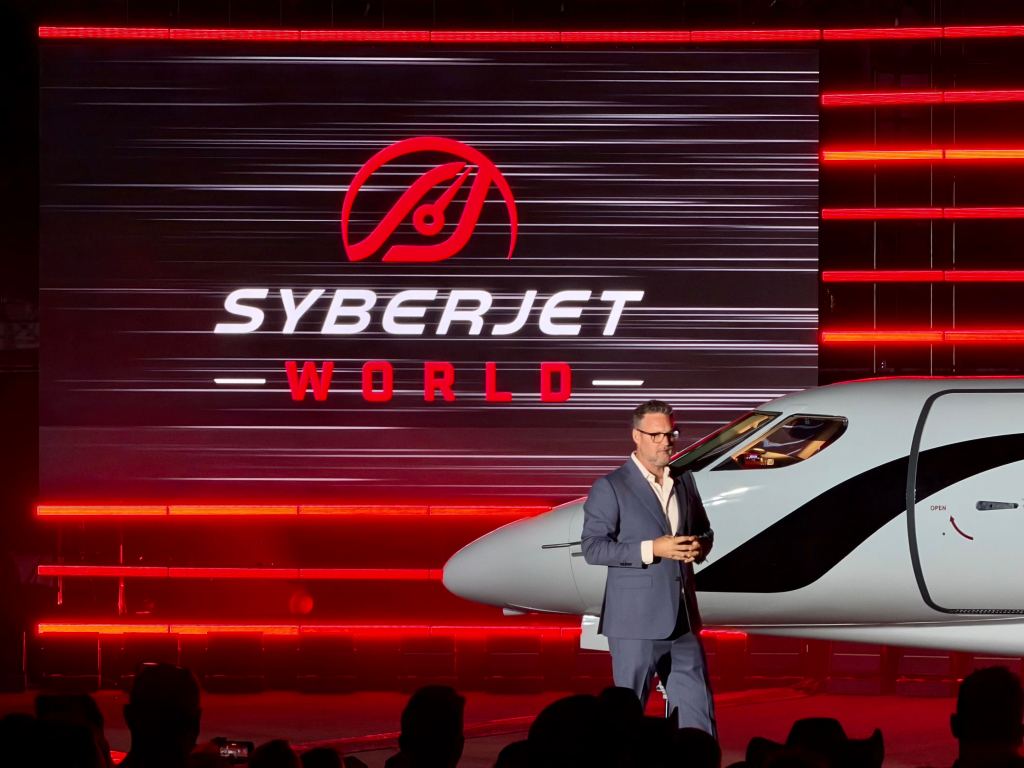
Arizona-based SyberJet Aircraft made its mark on the National Business Aviation Association Business Aviation Convention & Exhibition in Las Vegas on Monday, opening reservations for its next-generation SJ34 and SJ36 business jets.
At its exclusive, invite-only SyberJet World event, held in conjunction with NBAA-BACE at Henderson Executive Airport (KHND), the manufacturer announced its production timeline for the SJ34 and unveiled its first full-scale SJ36 mock-up, providing expected delivery timelines of 2029 and 2032, respectively.
“Aviation has not seen a real disruption in a long time,” said Trevor Milton, CEO of SyberJet, in a news release. “We came in with big dreams, and many people doubted our ability to deliver, but I think we did a good job.”
SyberJet’s presentation in Las Vegas [Credit: Ryan Ewing]
New Details on the SJ34
SyberJet’s SJ34 is designed to replace its FAA-certified SJ30-2, for which production ceased in 2009.
The manufacturer in August made an unofficial claim for the East-to-West transcontinental speed record in the C-1.f aircraft class after the SJ30-2 flew nonstop from Jacksonville International Airport (KJAX) in Florida to Brown Field Municipal Airport (KSDM) in San Diego. It logged an average speed of 505.3 mph and completed the journey in about 4 hours and 7 minutes, the company said.
SyberJet said the single-pilot SJ34 is projected to cruise at up to Mach 0.83 or about 637 mph, putting it on par with Embraer’s Praetor 500/600. Larger Williams International engines will provide between 5,000 and 6,400 pounds of total thrust and perform better in high-and-hot conditions, improving takeoff performance.
Range is estimated at 2,500 nm. SyberJet said the SJ34 will climb up to 49,000 feet and maintain a “true sea-level cabin pressure” up to 41,000 feet. The all-new interior, designed to match the larger SJ36, will accommodate a pilot and up to six passengers.
Unveiling the SJ36
SyberJet said the nine-seat SJ36 is expected to bridge a gap in the light and midsize jet markets “for the first time in aviation history.” Like the SJ34, it is intended for one pilot to climb up to 49,000 feet and maintain sea-level cabin pressure up to 41,000 feet.
The SJ36’s projected nonstop range is slightly farther at 3,000 nm. It is expected to reach speeds up to Mach 0.88 or about 675 mph, matching Gulfstream’s G550 and approaching the Dassault Falcon 7X’s Mach 0.90 top operating speed. The Falcon 7X in 2014 set the transatlantic speed record between Teterboro Airport (KTEB) in New Jersey and London City Airport (EGLC) by completing the journey in under six hours.
The interior of SyberJet’s SJ36 [Credit: SyberJet]
SyberJet said it plans to provide updates on SJ36 flight test milestones, program updates, and certification progress through its newsletter and social channels. Milton said the mockup on display at NBAA-BACE “represents what the production aircraft is expected to look like.”
Both the SJ34 and SJ36 will feature the manufacturer’s proprietary SyberVision avionics system, which it also displayed at NBAA-BACE. It comprises six 4K touchscreen displays, charts, and an AI-assisted flight tool called SyberPilot, providing over-the-air updates and what the company described as “smarter taxi.”
SyberVision will connect pilots directly to the aircraft, SyberJet said, allowing them to remotely upload flight plans and control cabin temperature. The system will also allow the manufacturer to perform remote maintenance, diagnose issues, and prepare fixes as soon as the customer lands.
“The avionics are world class and may be better than any system on the market,” Milton said.
Introducing Passage One
SyberJet at NBAA-BACE also launched a program called Passage One, which it bills as an “exclusive club” limited to the first 250 customers.
The program will offer members an SJ34 launch price of $10 million, versus $12 million for other customers, and SJ36 launch price of $14 million, compared to $16 million for non-members. It includes two pilot type-rating training slots.
In addition, Passage One will offer 1,000 hours or five years of exterior, avionics, and interior coverage for the aircraft, excluding consumables, as well as 1,000 hours or five years of Williams’ TAP Blue engine maintenance program. Also included is access to the new Syber Fuel program, providing 1,000 hours or five years of fuel, limited to 100,000 gallons.
Full terms and conditions for Passage One can be found on the company’s website.
“With the SyberJet Passage One program, you could save millions of dollars over the competition and never worry about anything but factory support,” Milton said.
Milton is the founder and former CEO of electric vehicle company Nikola Corporation. In 2022, he was found guilty of securities and wire fraud for allegedly misleading investors about the development of technology and products at the company. Milton was sentenced to four years in federal prison and ordered to pay millions in restitution, but in 2025 he received a full pardon from President Donald Trump.
Jack is a staff writer covering advanced air mobility, including everything from drones to unmanned aircraft systems to space travel—and a whole lot more. He spent close to two years reporting on drone delivery for FreightWaves, covering the biggest news and developments in the space and connecting with industry executives and experts. Jack is also a basketball aficionado, a frequent traveler and a lover of all things logistics.
NBAA members will be able to access quarterly data and insights starting in early 2027. [Credit: Adobe Stock]
The National Business Aviation Association on Monday said it plans to launch a new business aviation intelligence service exclusive to its members in early 2027.
NBAA said the quarterly insights for aircraft owners, operators and the businesses that serve them will be “exclusive, unique, and actionable” to help users make decisions with greater context. That includes peer sentiment, market conditions, policy developments, transaction dynamics, and industry pressures.
The group said the platform is “intended to provide a recurring pulse on business aviation, rather than a static snapshot of the market.”
The association will jointly develop the platform with Rolland Vincent Associates (RVA) through a strategic partnership. Rolland Vincent, RVA’s founder, co-owner and president, said in a news release that the insights will be “uniquely curated to [NBAA] members’ specific interests and perspectives.”
“Our goal is to help leaders identify meaningful market and industry developments before others do and understand how those insights can be incorporated into strategy and decision-making to generate successful outcomes,” Vincent said.
RVA produces syndicated research and long-term forecasts powered by proprietary surveys as well as in-depth interviews with business aircraft owners, operators, and industry stakeholders. The strategic advisory firm will combine its proprietary proprietary member survey data and insights—including market intelligence, analytics, forecasting, and expertise—with NBAA’s perspective on the industry and policy environment, member relationships, and convening power.
Jack is a staff writer covering advanced air mobility, including everything from drones to unmanned aircraft systems to space travel—and a whole lot more. He spent close to two years reporting on drone delivery for FreightWaves, covering the biggest news and developments in the space and connecting with industry executives and experts. Jack is also a basketball aficionado, a frequent traveler and a lover of all things logistics.
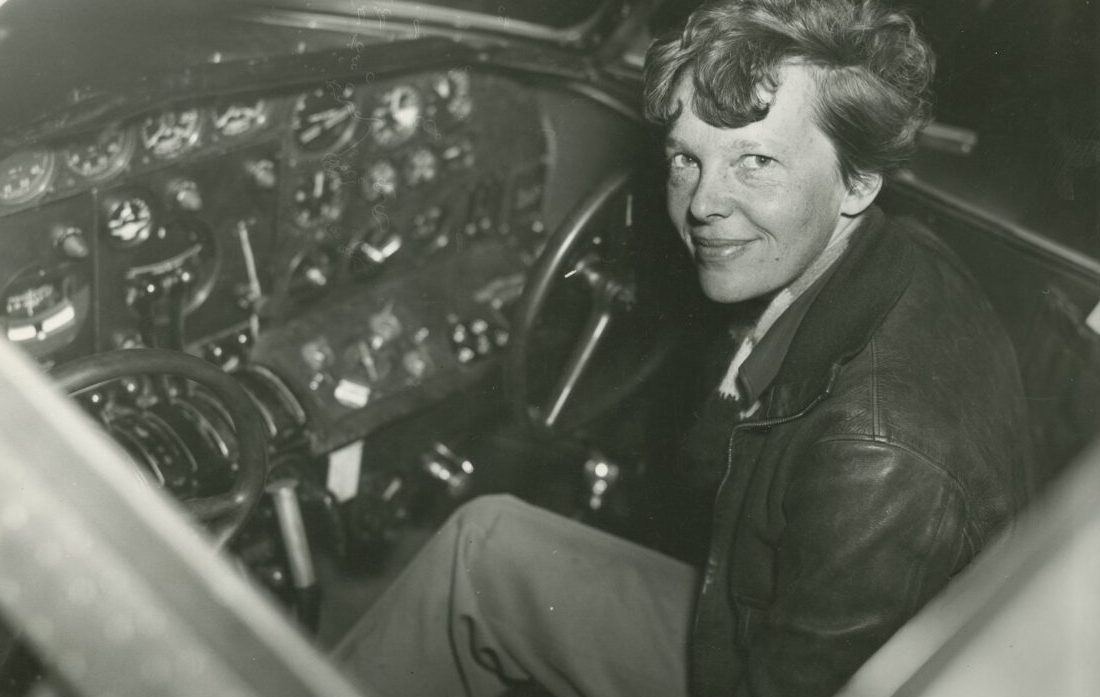
Amelia Earhart in the cockpit of her Lockheed Electra 10-E. [Credit: Purdue University Libraries]
A recent expedition to the remote Pacific atoll of Nikumaroro found no evidence of legendary aviator Amelia Earhart’s lost aircraft, determining that a satellite anomaly known as the “Taraia Object” is likely a collection of tree roots covered in coral sand, Purdue University announced.
The expedition is a joint effort of the Archaeological Legacy Institute (ALI), Purdue Research Foundation, and Purdue University. Earhart was a lecturer at Purdue in the 1930s before launching on her epic around-the-world flight attempt, and her legacy remains tied to the institution.
Earhart’s Lockheed Electra 10-E, known as her “Flying Laboratory,” was purchased with funds from the Purdue Research Foundation. She planned to return the plane to Purdue upon completion of her flight before she and her copilot, Fred Noonan, disappeared on July 2, 1937.
According to a news release from Purdue on Monday, the expedition “found no conclusive evidence to confirm a hypothesis that wreckage from Amelia Earhart’s Lockheed Electra 10-E was in a lagoon on a remote atoll in the South Pacific.”
The university also shared more detailed findings from the expedition.
“Evidence gathered at the Taraia Peninsula on Nikumaroro confirmed that the visual anomaly first seen in satellite imagery in 2020 was likely a collection of large trees deposited along the peninsula’s sandspit,” Purdue said in the news release. “By the time the team arrived at the site, a good portion of the debris had fragmented and washed away, leaving only a single Y-shaped segment—a fraction of the anomaly’s original size observed in imagery when the Taraia Object hypothesis was developed.”
The fragment’s reflective surface gave the impression the object was metallic, leading to speculation that it could be fragments of Earhart’s airplane. The reflection was actually a carbonate veneer.
“Amelia Earhart’s spirit of courage and curiosity drove every step of the search,” said Rick Pettigrew, ALI’s executive director. “We accomplished our goal to determine what the Taraia Object was, and we’re deeply grateful to the private donors who shared our vision and made this journey possible. Our team remains in great spirits and proud of what was accomplished.”
Earhart’s Last Flight
Earhart and Noonan left Lae, Papua New Guinea, on the third-to-last leg of a round-the-world flight attempt. They were heading for Howland Island, where a makeshift runway had been created and barrels of fuel were waiting to refuel the aircraft.
The U.S. Coast Guard cutter Itasca was standing by to assist. The radio operator aboard the vessel picked up three transmissions from Earhart that morning—one at 7:42 a.m. local time when Earhart indicated they must be close to Howland Island but could not see it, and fuel was running low. Earhart reported they were flying at an altitude of 1,000 feet.
The next transmission came at 8 a.m. when Earhart stated they received the Itasca’s signals and asked the cutter to take a bearing on them.
At 8:43 a.m. the final transmission was made with Earhart stating they were on a line of position 157-337 and running north and south.
The U.S. military spent two weeks using ships and aircraft to search an area roughly the size of Texas, but no trace of Earhart, Noonan, or the Electra was discovered.
Although the Taraia Object expedition did not find conclusive evidence of Earhart’s flight, Purdue University officials remain undiscouraged.
“Perhaps no words better capture this expedition than Amelia Earhart’s own: ‘Adventure is worthwhile in itself,’” said Steve Schultz, Purdue general counsel and expedition member. “We set out to test a hypothesis, not to guarantee a particular result, and we followed the evidence to the end. While the Taraia Object did not prove to be what we hoped, the journey produced new discoveries, added to the world’s knowledge of Nikumaroro, and wrote another extraordinary chapter in a story of discovery and exploration.”
It was noted that the Taraia Object expedition did find numerous artifacts through both maritime and terrestrial archaeology efforts, including a steel tube about 30 inches long discovered in the lagoon near the Taraia Peninsula.
“Those discoveries will continue to be studied as they may provide additional evidence for a core premise behind the Taraia Object hypothesis,” Purdue said. “Objects entering the lagoon through the Tatiman Passage, the atoll’s natural channel to the Pacific on its western side, can travel across the lagoon and become deposited along the Taraia Peninsula, which functions as a catchment area directly opposite the passage.”
Previous Expeditions
In the decades that followed the disappearance, there have been numerous theories about what happened to Earhart and Noonan. The most accepted was that the Electra was off course and simply crashed in the ocean when it ran out of fuel.
Other theories include Earhart and Noonan being on a secret spy mission for the U.S. government and being captured by the Japanese and executed, and that the disappearance was an elaborate and deliberate ruse for the pair to retreat from the public eye.
Nikumaroro has been the focus of the search for Earhart since 1989 when a nonprofit organization, The International Group for Historic Aircraft Recovery (TIGHAR), published a theory that Earhart and Noonan landed on a coral reef adjacent to the island and eventually died there as castaways.
In 2012 TIGHAR launched a privately funded $2.2 million mission to the island and used sonar to search the water surrounding the strip of land that showed a suspicious underwater object but failed to produce a confirmed artifact from the Electra.
In 2019 Robert Ballard, the explorer who found the Titanic in 1985, led a two-week, multimillion dollar expedition to the area that failed to locate any sign of the aircraft or proof that Earhart and Noonan had been on the island.
In 2024, Tony Romeo, chief executive of Deep Sea Vision, announced his company had conducted a $11 million expedition to the area within 100 miles of Howland Island and discovered an image that appeared to be an aircraft resting 3 miles below the surface of the ocean. Further investigation revealed the object was simply a rock formation.
The focus on Nikumaroro has been driven over the decades by documentary records, photographs, and satellite images. Among the evidence gathered:
Radio bearings recorded from transmissions at the time by the U.S. Navy, U.S. Coast Guard, and Pan American World Airways converge on Nikumaroro.
A 2018 analysis of human bones discovered on the island in 1940 strongly suggest they belong to a woman of Earhart’s stature.
Artifacts are found on Nikumaroro including a woman’s shoe, a compact case, a freckle cream jar, and a medicine vial—all dating to the 1930s.
The Bevington Object, a photographic anomaly on the Nikumaroro reef, captured three months after the plane’s disappearance appears to represent the Electra’s landing gear.
The Taraia Object expedition launched from Tarawa in the Republic of Kiribati on October 6. The team traveled five days by sea to Nikumaroro. The expedition was extended due to weather, and the crew stayed seven days near Nikumaroro, of which four were spent onshore setting up field operations and conducting investigative work.
“Though the team did not find the wreckage, the mission only deepens the resolve, and adds a new chapter, in the quest to find the ultimate answer to the mystery of what happened to Earhart and Noonan during their attempt to circumnavigate the globe nearly nine decades ago,” Purdue said.
Reflecting on the university’s ongoing commitment to her legacy, Schultz emphasized that the search for answers is far from over.
“Amelia Earhart never gave up,” Schultz said. “She kept pushing boundaries and flying into the unknown. That same fire fuels our search. She kept flying, and we will keep searching.”
Meg Godlewski has been an aviation journalist for more than 24 years and a CFI for more than 20 years. If she is not flying or teaching aviation, she is writing about it. Meg is a founding member of the Pilot Proficiency Center at EAA AirVenture and excels at the application of simulation technology to flatten the learning curve. Follow Meg on Twitter @2Lewski.
The Citation CJ4 Gen3, one of two test articles pictured during a recent Garmin Emergency Autoland test, leads the pack with close to 1,100 flight hours. [Credit: Textron Aviation]
Textron Aviation on Monday said its Cessna Citation CJ4 Gen3, CJ3 Gen3, and M2 Gen3 test articles have racked up a combined 1,220 flight hours as the three light business jets advance toward FAA certification in 2026 and 2027.
Among other upgrades, the next-generation Citation light jets will feature Garmin Emergency Autoland, which guides the aircraft to a suitable landing site and brings it to a complete stop if activated manually by occupants or automatically due to pilot incapacitation. Textron said the CJ4 Gen3, for which it expects FAA certification this year, will be the first light jet to market with the capability, which it has already begun testing.
The first CJ4 Gen3 prototype flew in 2024, putting it ahead of the other two programs. Textron said two test articles have logged nearly 1,100 flight hours, including recent hot weather and electrical system certification testing. In July, the manufacturer said the aircraft had completed more than 880 flight test hours and conducted simulator tests, as well as winglet certification tests for stalls, handling qualities, and takeoff and landing performance.
According to Textron, the CJ3 Gen3 test program has surpassed 60 flight test hours and advanced to landing and braking performance ahead of targeted certification in 2027.
The M2 Gen3, which shares that certification timeframe, is up to 75 flight hours and approaching simulated enroute emergency activation, including airport selection and autoland to a full stop. It had close to 20 hours as of late July.
Next-Generation Citation Features
The CJ4 is Textron’s largest aircraft in the light jet segment. The CJ4 Gen3 has a projected maximum range of 2,165 nm and maximum cruise speed of 451 ktas, with seating for up to 11 occupants and 6,930-pound useful load. Compared to larger aircraft, it is designed to offer superior speed, range, and operating economics for owners, operators, corporate missions, and air ambulance, maritime patrol, search and rescue, and aerial survey applications.
In addition to Garmin Autoland, the CJ4 Gen3 will include Garmin’s next-generation G3000 Prime avionics and the “most standard features in its class,” according to Textron.
The CJ3 Gen3, which began flight testing in July, will have a top range of 2,040 nm, speed up to 416 ktas, and maximum payload of 2,135 pounds, with standard seating for up to 10 occupants and a 1,000-pound baggage capacity. Upgrades include a customizable, luxurious cabin with amenities including swivel seating, RGB accent lighting, modern connectivity options, naturally lit lavatory, and optional upscale features.
Like its predecessor, the CJ3 Gen3 will include Garmin’s G3000 avionics suite with optional Enhanced Vision System. It offers 4.5 inches of additional legroom for pilots versus the previous generation, as well as improved field performance.
Once it is certified, CJ3 Gen2 owners will be able to install Emergency Autoland.
The M2 Gen3, the smallest of the next-generation light jets, made its first test flight in June and is targeted for a top range of 1,550 nm, speed up to 404 ktas, and maximum payload of 1,510 pounds. With seating capacity for up to seven passengers and baggage capacity of up to 725 pounds, it is billed as an entry-level jet.
The M2 Gen3’s enhancements focus on comfort and productivity for both pilot and passengers, including premium styling, ambient lighting, illuminated cupholders, and an optional folding side-facing seat that doubles as extra cargo space. Cabin technology includes wireless charging and both USB-A and USB-C ports.
The trio of single-pilot light jets could provide modern—albeit more expensive—alternatives for operators of previous generation Citation aircraft for which the FAA pulled single-pilot authorization in September. Groups including the Aircraft Owners and Pilots Association have urged the regulator to reconsider the decision.
Jack is a staff writer covering advanced air mobility, including everything from drones to unmanned aircraft systems to space travel—and a whole lot more. He spent close to two years reporting on drone delivery for FreightWaves, covering the biggest news and developments in the space and connecting with industry executives and experts. Jack is also a basketball aficionado, a frequent traveler and a lover of all things logistics.
Sign-up for newsletters & special offers!
Get the latest stories & special offers delivered directly to your inbox.