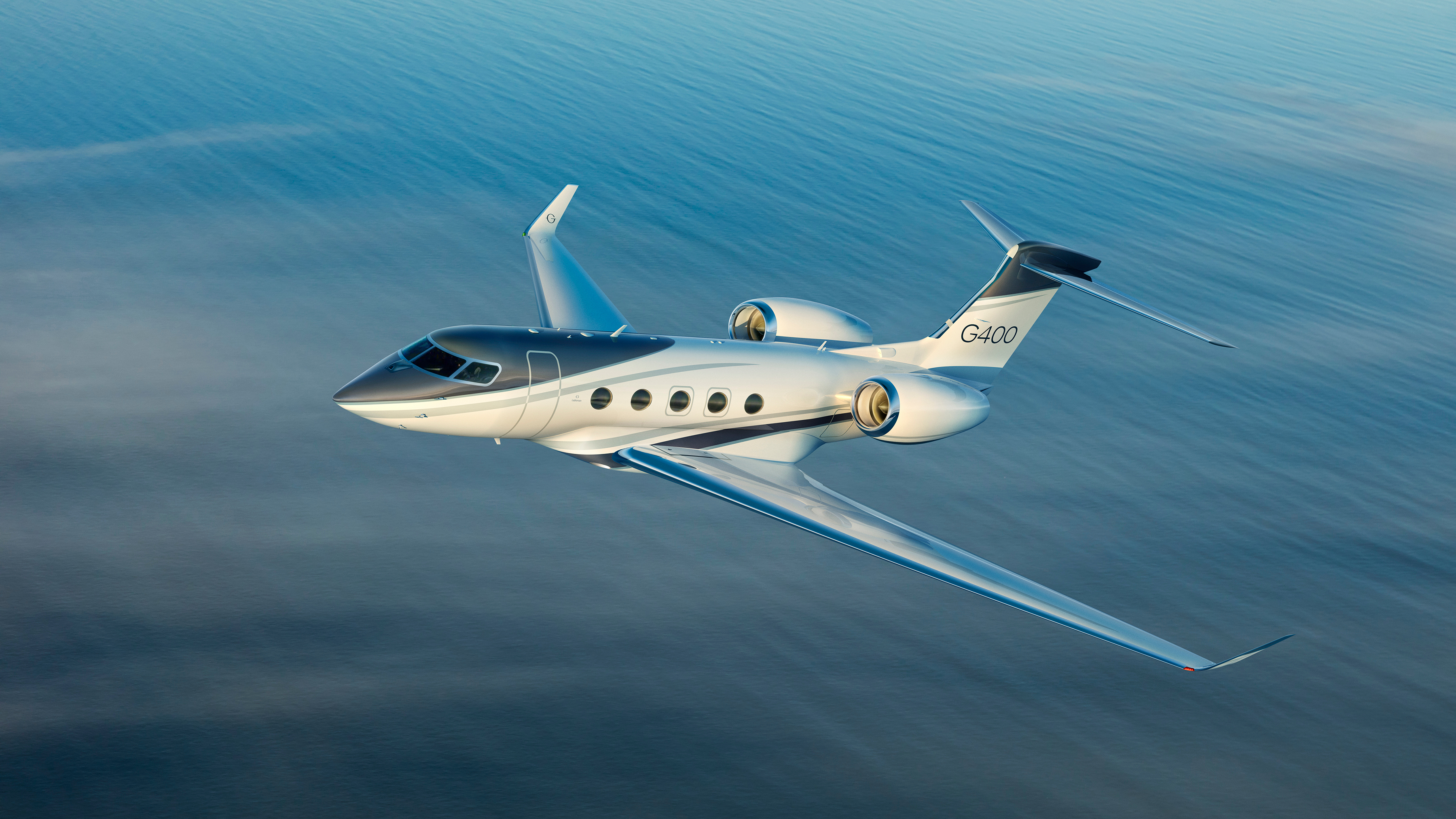
Gulfstream’s large-cabin G400 jet will fill a niche between the G280 and G500/G600. [Credit: Gulfstream Aviation]
Gulfstream has announced the first fully outfitted test aircraft in its next-generation G400 program completed its maiden flight, moving the large-cabin jet closer to certification.
The manufacturer Monday said the test article took off from Dallas Love Field (KDAL) in Texas and flew for about 2 hours and 46 minutes, reaching an altitude of 48,000 feet. The model is dedicated to evaluating cabin systems at altitude as well as testing functionality and comfort in flight. It flew in an 11-passenger configuration over two-and-a-half living areas.
Aviation Weekreported that the fully outfitted jet is the fourth and final model to join the G400 test fleet, according to Mark Burns, president of Gulfstream.
“The aircraft continues to perform exceptionally well as we advance through the rigorous certification program,” Burns said in a news release.
Still, Burns, speaking this week at the National Business Aviation Association Business Aviation Convention & Exhibition (NBAA-BACE) in Las Vegas, declined to predict when the G400 will be certified, according to Aviation Week. It was officially announced alongside the ultra-long range G800 in 2021, and Gulfstream at the time anticipated first deliveries in 2025.
These days, delays in aircraft certification programs are not uncommon. Dassault, for example, recently delayed certification of its Falcon 10X from 2027 to ’28 or ’29.
The first G400 test article flew in August 2024. According to Gulfstream, test aircraft have now completed high-altitude testing in Telluride, Colorado, cold-weather testing in Iqaluit, Canada, and “other validation efforts.”
The manufacturer also said Monday that one of its three experimental G400 test aircraft set a new city pair speed record between Miami and Las Vegas as it travelled to NBAA-BACE. It completed the flight in 4 hours and 8 minutes at an average speed of Mach 0.89, using a blend of sustainable aviation fuel (SAF), Gulfstream said. The aircraft and cabin mock-up are on display at NBAA-BACE alongside the G700, G800, G500, G600, and a new G300 mock-up.
The first G300 flew in December. Burns said a “second airplane will fly here very soon,” according to Aviation Week. A third G300 test article is in production by licensee Israel Aerospace Industries.
According to Aviation International News, Burns said Gulfstream’s production rate in 2026 will be about 160 jets. But it soon aims to reach at least 200 aircraft annually, which would be a company record.
What to Know About the G400
Gulfstream in 2021 billed the new G400 as the industry’s first new large-cabin aircraft in more than a decade. It is not a replacement for any model on the company’s roster. Rather, it will sit in the sweet spot between the super-midsize G280—slated to be replaced by the G300—and the large-cabin G500/G600. Reported list price is around $34.5 million.
The G400’s aerodynamic clean-wing design and Pratt & Whitney PW812GA engines are designed to reduce fuel burn, emissions, and noise. It also features Gulfstream’s advanced high-speed wing and swept winglets, introduced on the G500/G600, to boost efficiency.
At its long-range cruise speed of Mach 0.85, the jet is designed to fly up to 4,200 nm, enabling nonstop trips from New York to Geneva, Switzerland, or Miami to São Paulo. At its high-speed cruise of Mach 0.88, range decreases slightly to 3,950 nm. The jet’s top speed will be Mach 0.90, and it will cruise up to 51,000 feet.
Like the G800, the G400 will come equipped with Gulfstream’s Symmetry Flight Deck, which includes electronically linked active control sidesticks and 10 touchscreen displays. It will also include a Predictive Landing Performance System (PLPS) designed to give pilots advanced warning of potential runway excursions using real-time data.
For passengers, the G400 will offer what Gulfstream says is the largest cabin and lowest cabin altitude (3,255 feet at 41,000 feet) in its class. It will have seating options for up to nine, 11, or 12 passengers, sleeping up to five. The jet will offer the same cabin width as the G500/G600, with cabin height of 6 feet 2 inches and interior length more than 42 feet. Other cabin features include an air purification system and 10 panoramic oval windows.
Jack is a staff writer covering advanced air mobility, including everything from drones to unmanned aircraft systems to space travel—and a whole lot more. He spent close to two years reporting on drone delivery for FreightWaves, covering the biggest news and developments in the space and connecting with industry executives and experts. Jack is also a basketball aficionado, a frequent traveler and a lover of all things logistics.
Benjamin Glasgow McDaniel III, the self-named ‘Pilot Picasso,’ builds hours and creates artwork in the sky. Above is his breast cancer awareness ribbon. [Credit: Benjamin Glasgow McDaniel III]
Remember the first time you did laps in the pattern and couldn’t wait to see the track on the screen of your tablet at the end of the flight? If you flew well, you had a multilayered racetrack pattern of green.
Benjamin Glasgow McDaniel III, from Bentonville, Arkansas, has taken flight tracks to a higher level, using his G1000-equipped Cessna as a paintbrush to create specific designs as he flies.
“I’ve been flying since 2020,” said McDaniel, who has dubbed himself the “Pilot Picasso” on his website. “Sky art started as a way to build hours and stay sharp. I began with simple shapes and words, then more ambitious drawings, all flown by hand in a Cessna 182 RG, N1810R.”
McDaniel is a commercial pilot with approximately 1,830 hours, of which 855 are in the Cessna 182 RG. He holds both airplane single-engine land and sea, and multiengine land and sea, an instrument rating, and several instructor certificates.
No special equipment is required for the artwork.
Benjamin Glasgow McDaniel’s ‘Mona Lisa’ [Credit: Benjamin Glasgow McDaniel III]
“I fly the path by hand, solo, under normal visual flight rules,” McDaniel said. “Flight-tracking technology records the airplane’s position, and the resulting track creates the drawing. That is the artwork. It is different from traditional skywriting, which uses smoke.”
Some of his designs are skyborne re-creations of famous terrestrial works of art, such as Leonardo da Vinci’s Mona Lisa and Edvard Munch’s The Scream.
“All of my pieces so far have been noncommissioned,” he said. “They are ideas and concepts I wanted to fly in the sky myself. I hope each piece brings a smile to someone who might need it that day.”
Sometimes his designs carry an important message.
“One of my original pieces, You Are Loved, was flown for National Suicide Awareness and Prevention Month [in September]. I don’t think people are told they’re loved enough, so I put that message in the sky hoping it might reach someone who needed to see it.”
Benjamin Glasgow McDaniel’s ‘You Are Loved’ [Credit: Benjamin Glasgow McDaniel III]
Each of McDaniel’s designs is carefully planned on the ground, with safety in its execution being paramount.
“I start with an idea, then break it into a path the airplane can actually fly,” he said. “I draw the plan in ForeFlight with an Apple Pencil. A lot of the work is in preflight planning, figuring out headings, distances, turns, and aircraft performance that work in a Cessna 182 RG. If a design cannot be flown safely within the airplane’s performance capabilities, I change the design or leave it out. All of the tracks are hand-flown, and I fly these solo.”
The planning often takes longer than the flight itself.
“[It] usually takes a few hours, depending on the complexity of the piece,” McDaniel said. “You get one continuous path. One shot. No redos. You only get one try. Turn too early, too late, too sharp, or not sharp enough, and it stops looking like the drawing. Even a small deviation can change how the finished artwork looks. As the airplane flies, it is also a little like a snail leaving a trail. The path is the drawing.”
Favorite Pieces
McDaniel particularly likes drawing images that can make a positive impact on someone’s life, or at least bring a smile.
Benjamin Glasgow McDaniel’s Spider-Man [Credit: Benjamin Glasgow McDaniel III]
“You Are Loved, the breast cancer awareness ribbon, and World Unity were flown with that in mind,” he said. Then you have pieces like Spider-Man, the Mona Lisa, and The Scream, which are more about the joy of seeing something familiar drawn in the sky.”
McDaniel welcomes artwork requests and commission inquiries through his website.
Meg Godlewski has been an aviation journalist for more than 24 years and a CFI for more than 20 years. If she is not flying or teaching aviation, she is writing about it. Meg is a founding member of the Pilot Proficiency Center at EAA AirVenture and excels at the application of simulation technology to flatten the learning curve. Follow Meg on Twitter @2Lewski.
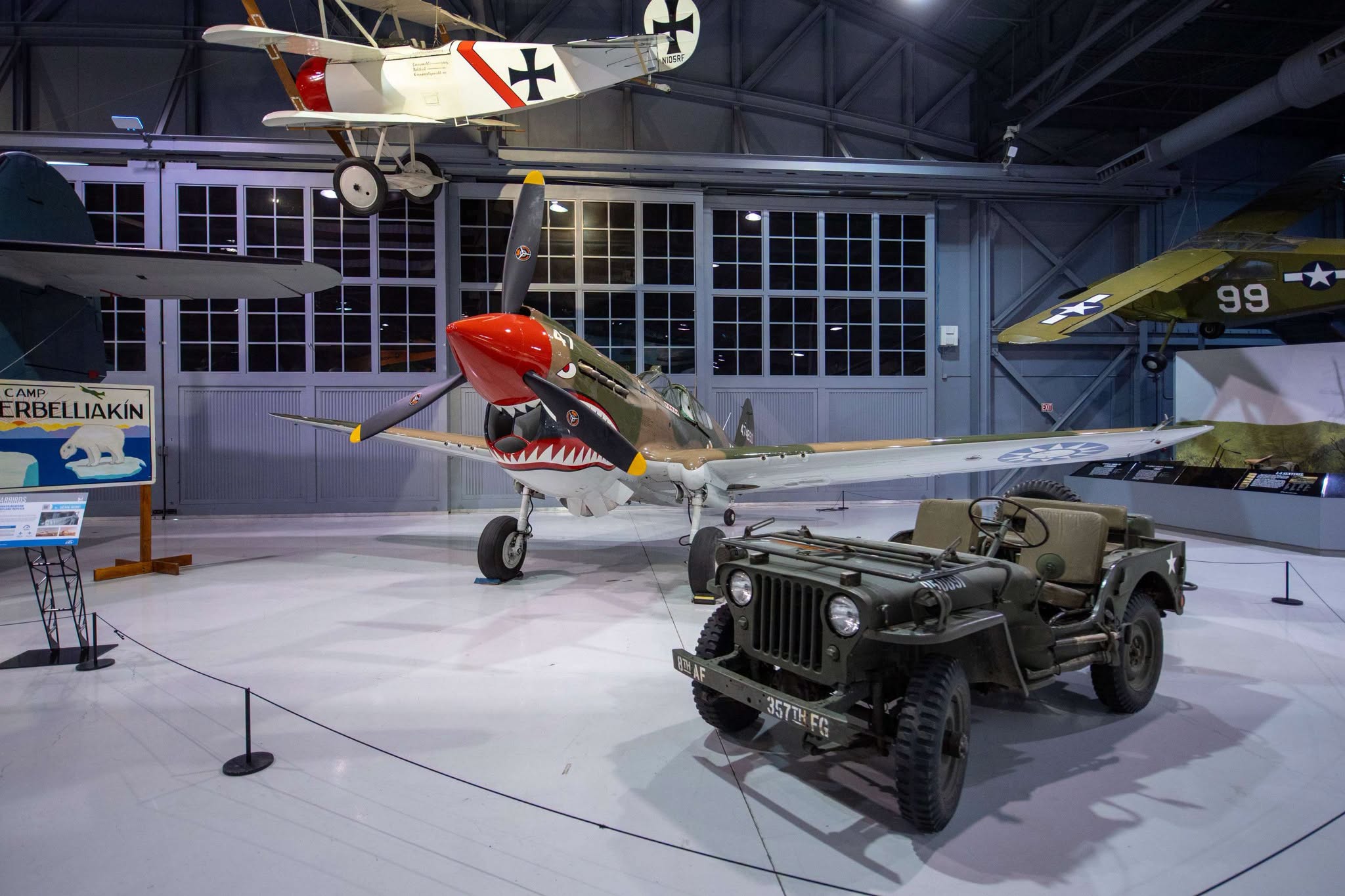
Visitors to the EAA Aviation Museum in Oshkosh, Wisconsin, can see the Curtiss P-40 Wildcat’s iconic shark mouth nose art and other relics of aviation history. [Credit: Experimental Aircraft Association]
The aircraft, which include a pair of historic replicas, a restored ultralight hang glider, and three World War II-era military aircraft on loan, have been placed in exhibits in recent weeks.
“The opportunity to be able to feature these marvelous aircraft as a part of our displays adds new stories to our already expansive collection,” said Chris Henry, EAA Aviation Museum director, in an announcement. “It is a testament to how whether you are a homebuilder, a restorer, or amateur aviator who dreams of flight, you have a true community at EAA.”
Aviation history buffs should keep an eye out for these six aircraft the next time they visit the museum.
Douglas World Cruiser
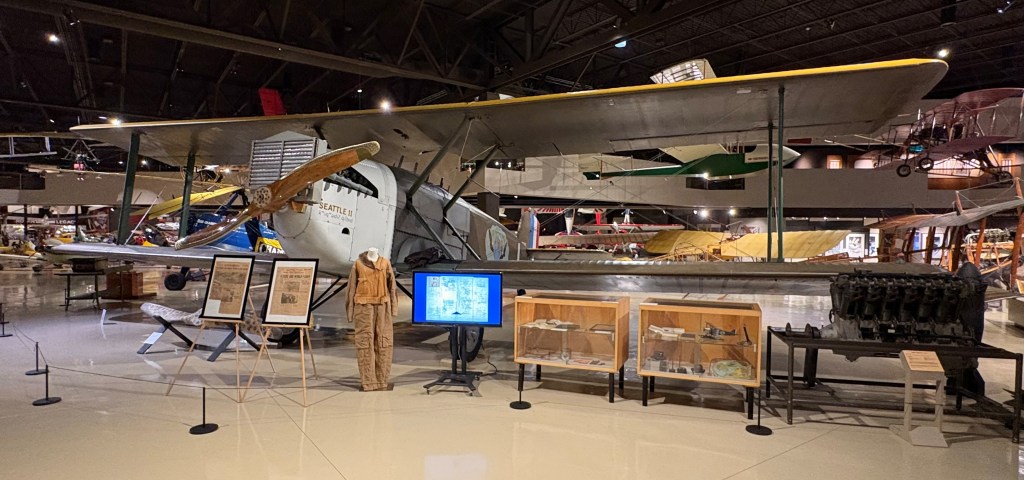
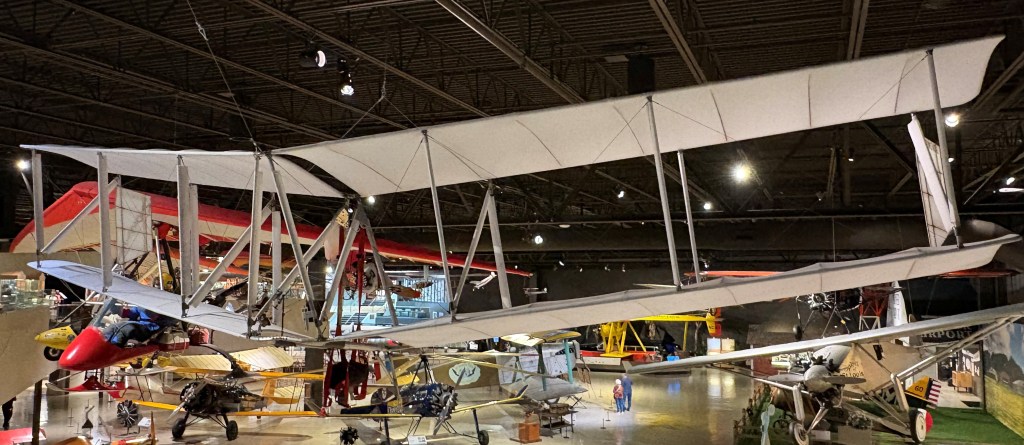
The Douglas World Cruiser is inarguably one of the most legendary aircraft in history. In 1924, a pair of them, flying for the United States Army Air Service, made the first successful flight around the world, taking off from Seattle and landing there five months later.
Now, a full-scale replica of one of the open-cockpit biplanes—aptly named Seattle—stands on display at the EAA Aviation Museum to honor the pioneering feat.
Full-scale replica of the Douglas World Cruiser [Credit: Dick Knapinski/EAA]
The original Seattle crashed in Alaska, having failed where its counterparts Chicago and New Orleans—both on display at other museums—succeeded. But EAA members Robert and Diane Dempster meticulously reproduced it from scratch, studying plans at the Smithsonian’s National Air and Space Museum and even visiting the crash site.
The project began in 2000, and the Dempsters began building the replica at their coffee shop in 2005. According to EAA, the build required a full-fledged team and even a forklift to handle its four 15-foot wings. The replica made its maiden flight in 2014. Earlier this year, it made an appearance at EAA AirVenture, to the surprise of many attendees.
Epps Monoplane
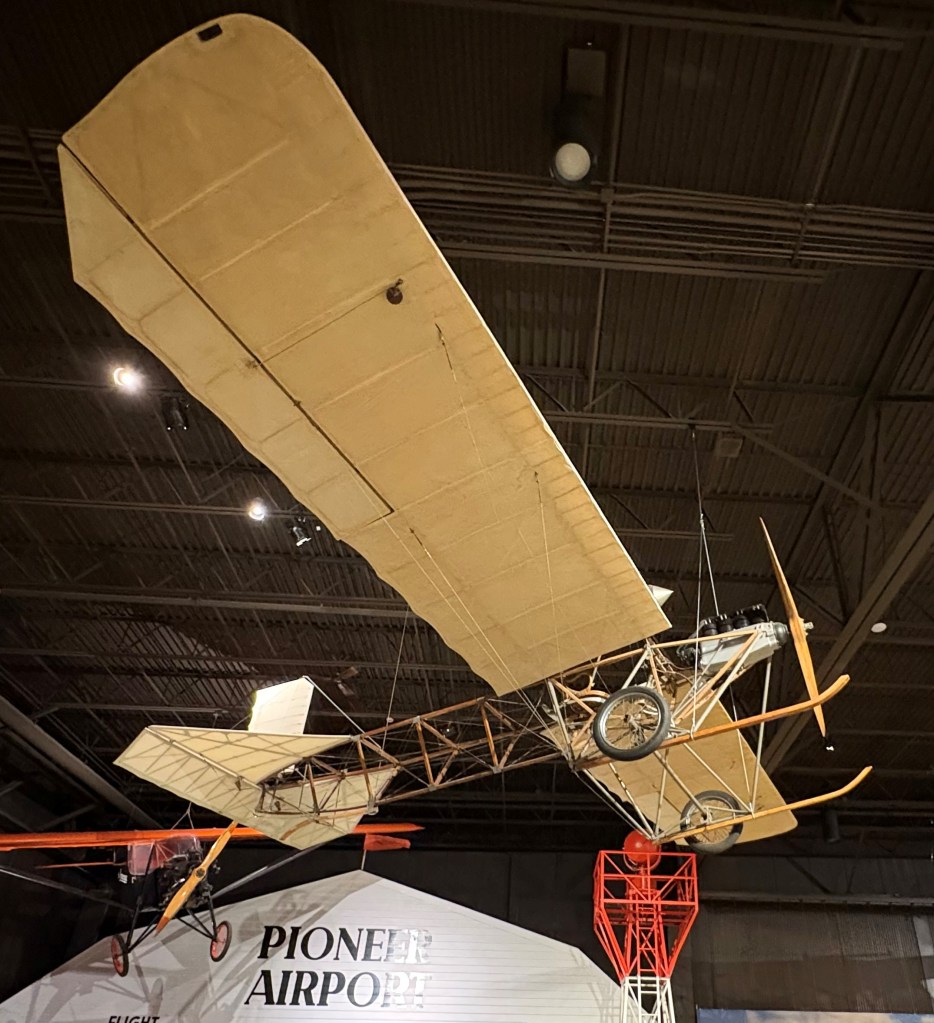
Turning back the clock further, EAA recently introduced a replica of the 1912 Epps Monoplane, built by Ben T. Epps, a self-taught mechanic and Georgia’s first recorded aviator.
The open-cockpit, wire-braced, mid-wing monoplane was built using scrap timber, cotton covering, bicycle wheels, and a low-horsepower engine.
Replica of the Epps Monoplane [Credit: Dick Knapinski/EAA]
Epps began flying homebuilt aircraft in 1907 and survived a series of crashes. The model he constructed in 1912 crashed the same year, but Epps would go on to build a single-seat flying machine in 1925 that he managed to sell for $1,000 to a buyer in New York, according to Athens-Ben Epps Airport (KAHN) in Georgia.
Replicas of Epps’ monoplanes are rare. One of the few on display is housed at Valiant Air Command Warbird Museum in Titusville, Florida, built by John Pruett.
Icarus II
In 2025, John Moody, considered the father of ultralight aviation, asked EAA to restore his original Icarus II.
Moody flew the foot-launched biplane hang glider, the first powered ultralight capable of taking off from level ground, at Oshkosh in 1976. Although it ultimately suffered damage, he disassembled the ultralight and stored some of its components for 49 years, according to Bill Darnell of EAA chapter 576650.
John Moody’s restored Icarus II [Credit: Dick Knapinski/EAA]
Darnell and the Michigan Ultralight Association Flying Club led the restoration of the Icarus II, which used a small, 10 hp gasoline engine attached between the wings. They picked up the remaining components from Moody’s home, replaced its fabric—using white polyester wedding dress lining that Moody had saved—built new ribs, cleaned and repaired the wing spars, and recovered the surfaces. Another ultralight legend, John Chapman, donated a new MAC-101 engine and mount.
Well over one dozen people were involved in the effort. The restored Icarus II now has a new home at the EAA Aviation Museum.
Curtiss P-40, Grumman F4F, and PBY-5A Catalina
Joining the two replicas and restored Icarus II at the museum are a trio of World War II-era airplanes.
The Curtiss P-40 Warhawk and Grumman F4F Wildcat are on loan from the Frasca Field Collection of vintage warbirds assembled by Rudy Frasca, founder of flight simulator designer Frasca International, and his family. The collection, housed at the Frasca Air Museum in Illinois, also comprises the Supermarine Spitfire, North American SNJ Texan Navy trainer, and Beechcraft T-34 Mentor.
Both the Warhawk and Wildcat could be spotted at Oshkosh earlier this year.
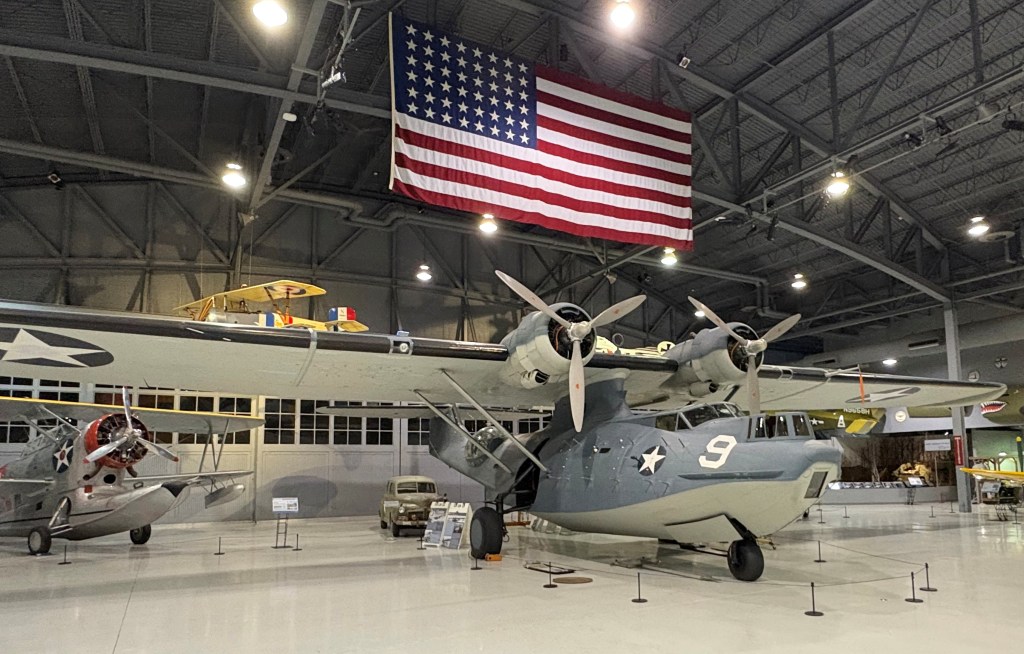
The amphibious Consolidated PBY-5A Catalina comes from the American Heritage Museum and Collings Foundation. The PBY-5A, which also appeared at this year’s AirVenture, will remain on display at the museum until the 2027 airshow.
PBY-5A Catalina on loan from the American Heritage Museum [Credit: Dick Knapinski/EAA]
The Warhawk features iconic shark mouth nose art and according to EAA helped more than 200 Allied pilots achieve ace status. The aircraft was produced between 1939 and ’44, and more than 13,000 were built, making the single-engine bomber one of the most widespread military aircraft of its era.
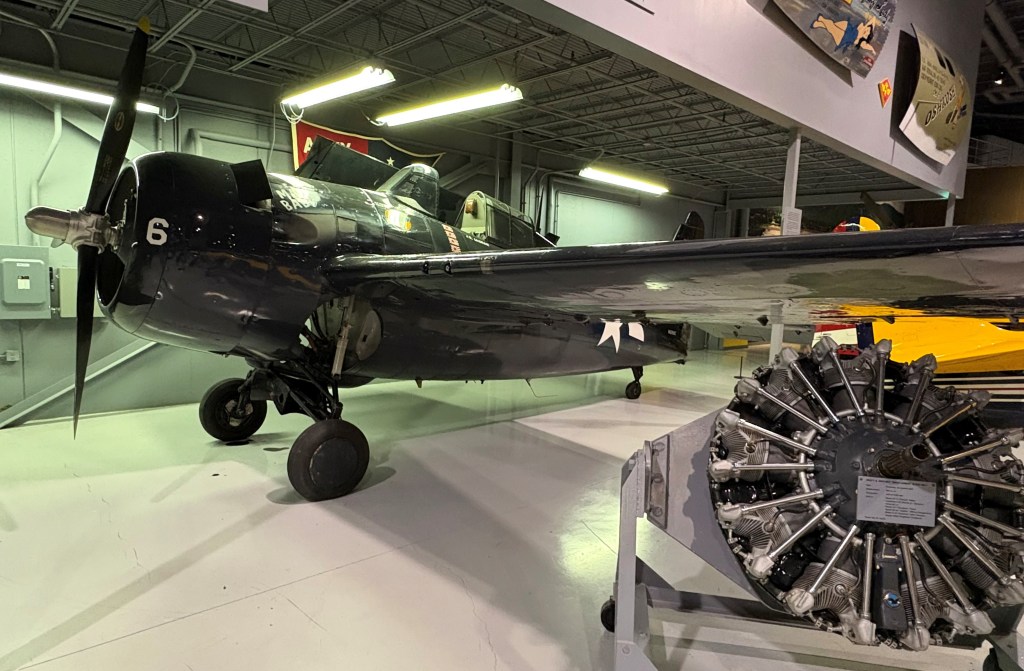
The loaned Wildcat is a model FM-2 license-built by General Motors. It served on the Navy’s frontline for all of WWII, making it the only fighter to do so. EAA noted the carrier-based warbird’s legendary win-to-loss ratio in the Pacific Theater. Many surviving Wildcats are stored in American museums, and a handful remain airworthy.
FM-2 Wildcat on loan from the Frasca Collection [Credit: Dick Knapinski/EAA]
The newly restored PBY-5A Catalina, which earned Grand Champion WWII honors during AirVenture 2026, was credited with sinking three German U-boats and badly damaging another, according to EAA, making it the Navy’s highest scoring U-Boat destroyer. It also played a key role in search and rescue operations. The model, Bu. No. 2459, is the oldest operational Catalina and has been flown continuously since its construction in 1941, per the American Heritage Museum.
Jack is a staff writer covering advanced air mobility, including everything from drones to unmanned aircraft systems to space travel—and a whole lot more. He spent close to two years reporting on drone delivery for FreightWaves, covering the biggest news and developments in the space and connecting with industry executives and experts. Jack is also a basketball aficionado, a frequent traveler and a lover of all things logistics.
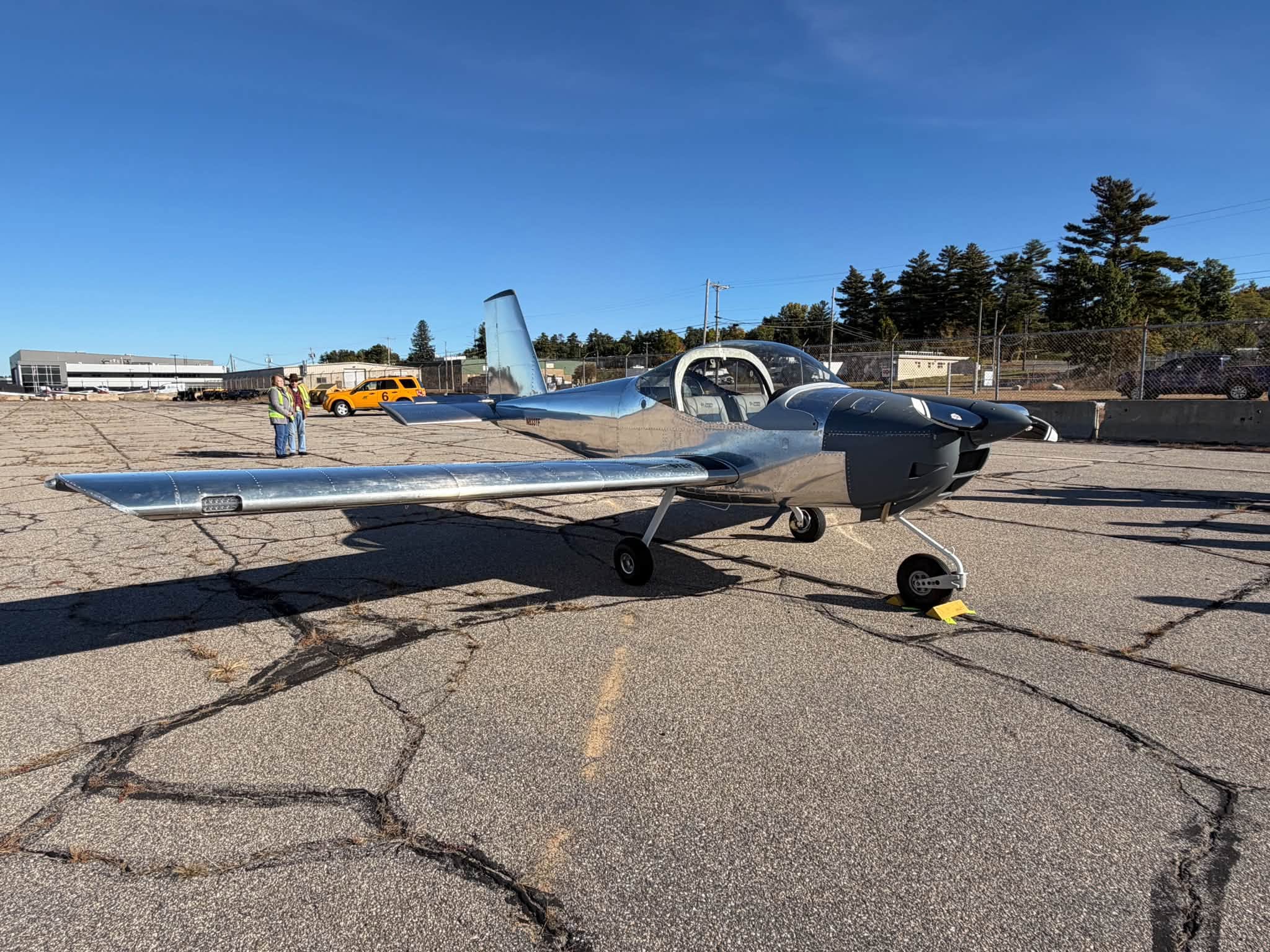
A Van's RV-12iS built by New Hampshire students [Credit: Manchester School District]
Students in New Hampshire’s largest school district have built their second fully functional aircraft as part of an innovative aviation program.
Earlier in October, the students from Manchester School of Technology (MST) unveiled their Van’s RV-12iS recreational airplane near the Aviation Museum of New Hampshire, located near Manchester-Boston Regional Airport (KMHT).
“On my first day at MST, I was thrilled to discover there was an RV-12. I was surprised the plane would be FAA-approved,” said Katrina Maglio, a 2025 graduate who is enrolled in the aviation program at Nashua Community College and works at Signature Aviation.
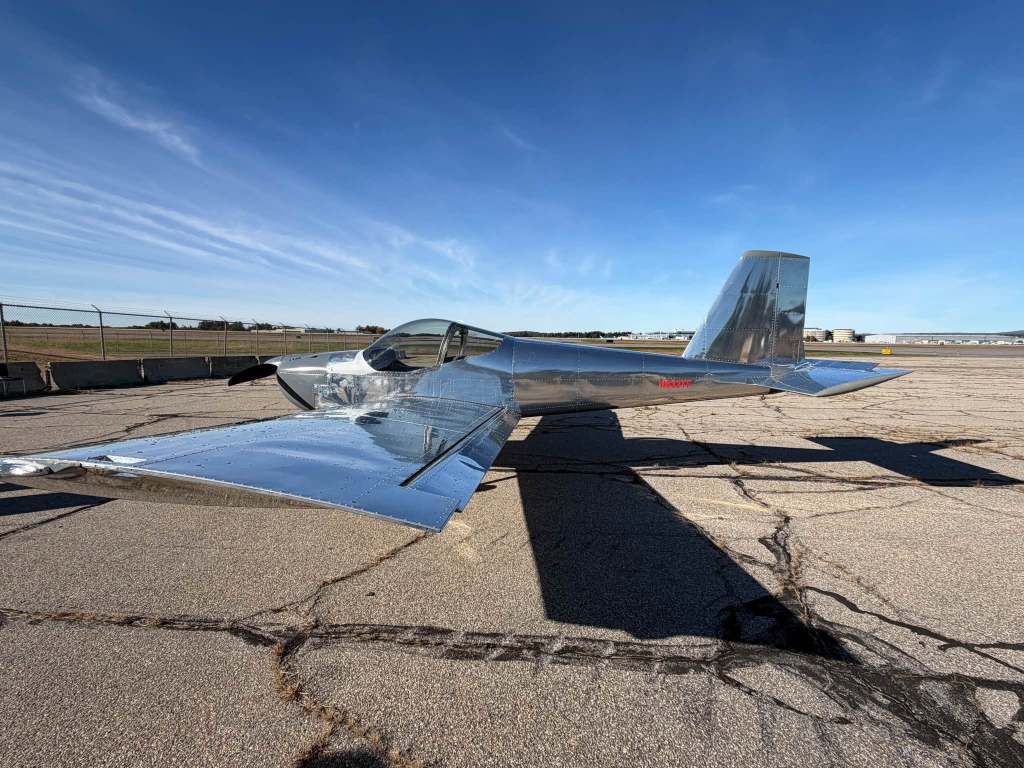
Van’s RV-12iS [Credit: Manchester School District]
The program gives high school students academic credit and technical skills through building the plane. This program is a partnership between the Manchester School District, the Aviation Museum of New Hampshire, and Tango Flight, a Texas-based nonprofit organization that works to expand educational opportunities through aircraft construction.
“It’s just amazing to be here and to see this come together when it was just in boxes in the school building. To see it come to fruition today is just incredible,” said Manchester Mayor Jay Ruais.
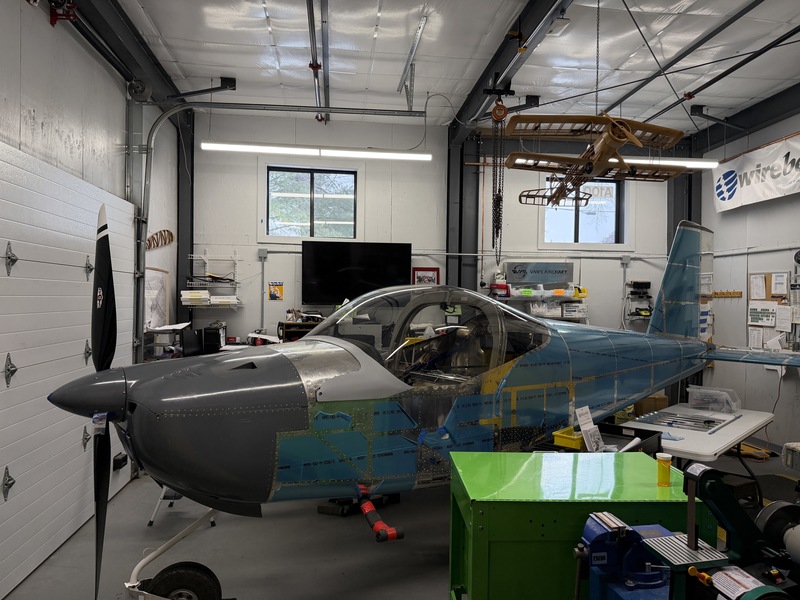
The work on the kitplane began in 2023, with almost 50 students contributing to the project over the last three years, under the supervision of an aviation instructor.
“It’s not just building a plane. It’s building a life and the mentors are all part of that, but the students are the core of it,” aviation instructor Jeff Sullivan said.
Aircraft during the build [Credit: Manchester School District]
The program began back in 2019 and combines project-based learning with classroom instruction. The aircraft is sold and the proceeds are reinvested into the next build.
“Aviation and aerospace is a major contributor to our quality of life in this state. Twenty-four percent of exports are aviation related,” said Jeff Rapsis, executive director of the Aviation Museum of New Hampshire.
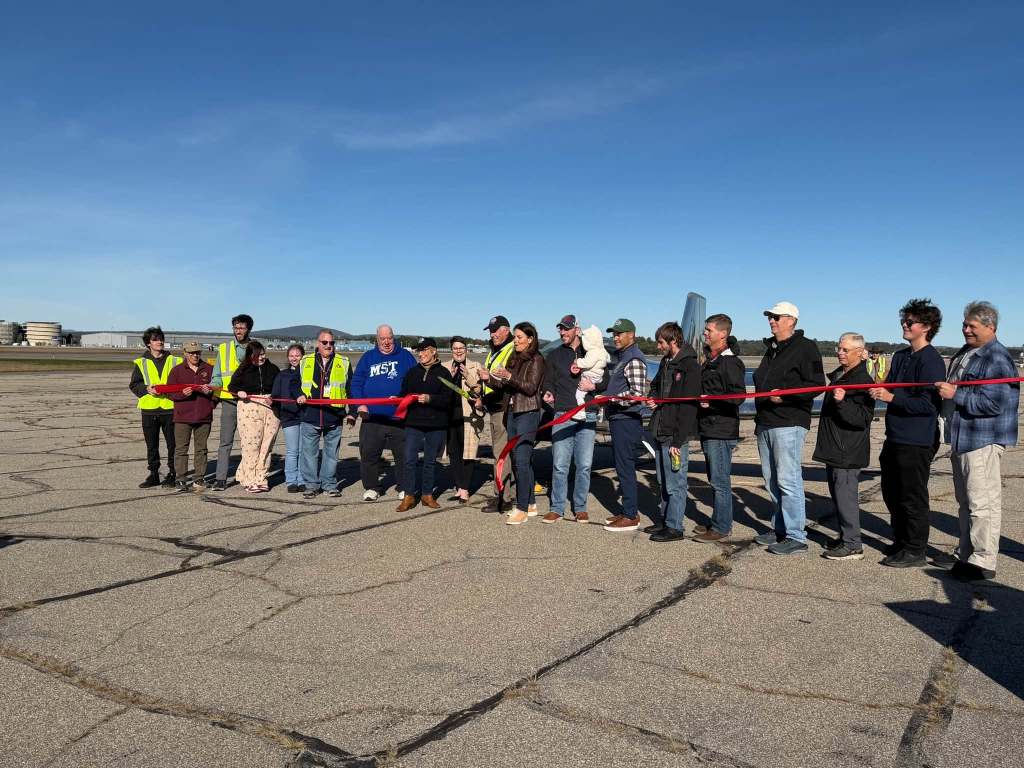
A ceremony was held where a water cannon salute was given, and students, volunteers, school and community members, and state and local leaders saw the plane.
Aircraft’s unveiling ceremony [Credit: Manchester School District]
“To all of the students here, building a plane is an incredible accomplishment,” New Hampshire Governor Kelly Ayotte said. “You have to really come together as a team to build it. For you to do something that you know people are going to be safe in… You’re building something that’s really important, and you did this, what an amazing accomplishment.”
The aircraft will be inspected by the FAA before it can fly, then complete its ground and flight testing. Once the tests are done, the aircraft will be sold through Tango Flight.
Two other schools in New Hampshire have similar programs, and the Aviation Museum of New Hampshire is looking for a fourth school to take part in either the Granite State or in Essex or Middlesex counties in Massachusetts.
Matt is the Social Media Editor for aviation brands. Previously, Matt worked in television news and spent the last decade working and interning in newsrooms across New England. He is excited to bridge his two passions of aviation and storytelling in this role.
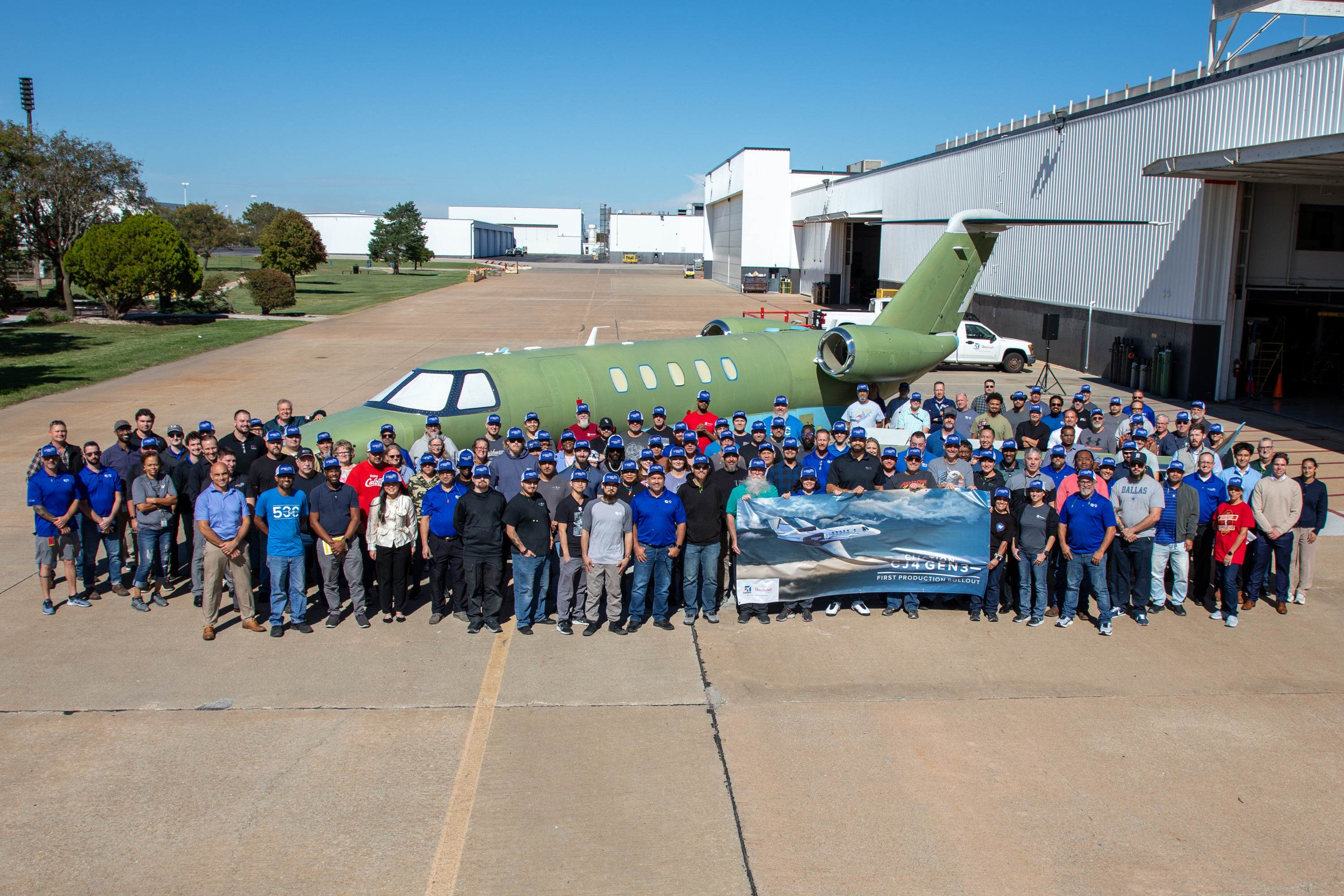
Textron Aviation employees celebrate the first Cessna Citation CJ4 Gen3 production unit rolling out of its facilities in Wichita, Kansas. [Credit: Textron Aviation]
Textron Aviation on Tuesday announced that the first production unit of the Cessna Citation CJ4 Gen3, the next generation of the manufacturer’s largest Citation light business jet, has rolled out from its facilities in Wichita, Kansas, ahead of planned entry into service in 2027.
Textron unveiled the twin-engine, single-pilot CJ4 Gen3 in October 2024 and announced its first prototype flight the same day. The company said Monday that a pair of test articles had racked up nearly 1,100 flight hours, up from 880 in July.
The first production Cessna Citation CJ4 Gen3 has officially rolled out. As the first next-generation Citation light jet to enter production, this milestone reflects the innovation behind the CJ4 Gen3.
The launch customer for the CJ4 Gen3, also announced in October 2024, is Ryan Samples, the founder and former president and CEO of fintech company BankOnIT. According to Lannie O’Bannion, Textron’s senior vice president of global sales and flight operations, Samples is also a “longtime Citation enthusiast.”
“The CJ4 has tremendous capability,” Samples said in a video shared by Textron in 2025. “It’s the perfect combination of performance, range, speed, and useful load. And the economics make sense—it’s not just about having a high-performance aircraft, but about having one that’s efficient and sustainable for business operations. That balance is critical because it allows us to operate at the highest level without unnecessary overhead or logistical challenges.”
Samples is also a 30-year member and trustee of the Aircraft Owners and Pilots Association, which said he flies a Beechcraft V35 Bonanza, CubCrafters Carbon Cub, and ICON A5 in addition to the CJ4.
He will be the first to take delivery of the Gen3, which was initially slated for a 2026 service entry. It is expected to be the first light jet to market that features Garmin Emergency Autoland.
Developing the CJ4 Gen3
Developed in response to customer feedback, the CJ4 Gen3 adds Garmin Autoland as well as Autothrottle and the new G3000 Prime flight deck. The upgraded system is designed to simplify pilot workflow and enhance situational awareness with touchscreen technology, advanced displays, and streamlined controls.
The aircraft is expected to feature a maximum range of 2,165 nm and top cruise speed of 451 ktas, with seating for up to 11 occupants and a 6,930-pound useful load. Compared to larger aircraft, it is designed to offer superior speed, range, and operating economics for owners, operators, corporate missions, and air ambulance, maritime patrol, search and rescue, and aerial survey applications.
In September, test pilots evaluated Garmin Autoland’s performance on one of the two test articles. The system successfully engaged navigation, communications, and landing procedures after the pilots activated it.
Other completed milestones include simulator tests; winglet certification tests for stalls, handling qualities, and takeoff and landing performance; and recent hot weather and electrical system certification testing.
The other two next-generation Citation light jets, the CJ3 Gen3 and M2 Gen3, also feature Garmin Autoland and are targeted for certification in 2027. They are in various stages of testing.
Textron said Monday that the CJ3 Gen3 has surpassed 60 flight test hours and advanced to landing and braking performance, while the M2 Gen3 is up to 75 flight hours and approaching simulated en route emergency activation, including airport selection and autoland to a full stop.
Jack is a staff writer covering advanced air mobility, including everything from drones to unmanned aircraft systems to space travel—and a whole lot more. He spent close to two years reporting on drone delivery for FreightWaves, covering the biggest news and developments in the space and connecting with industry executives and experts. Jack is also a basketball aficionado, a frequent traveler and a lover of all things logistics.
One thing many pilots have in common is the desire to seek continuous improvement. This may apply to our flying skills, ratings, endorsements, or airports where we are based.
It also applies to the aircraft we fly.
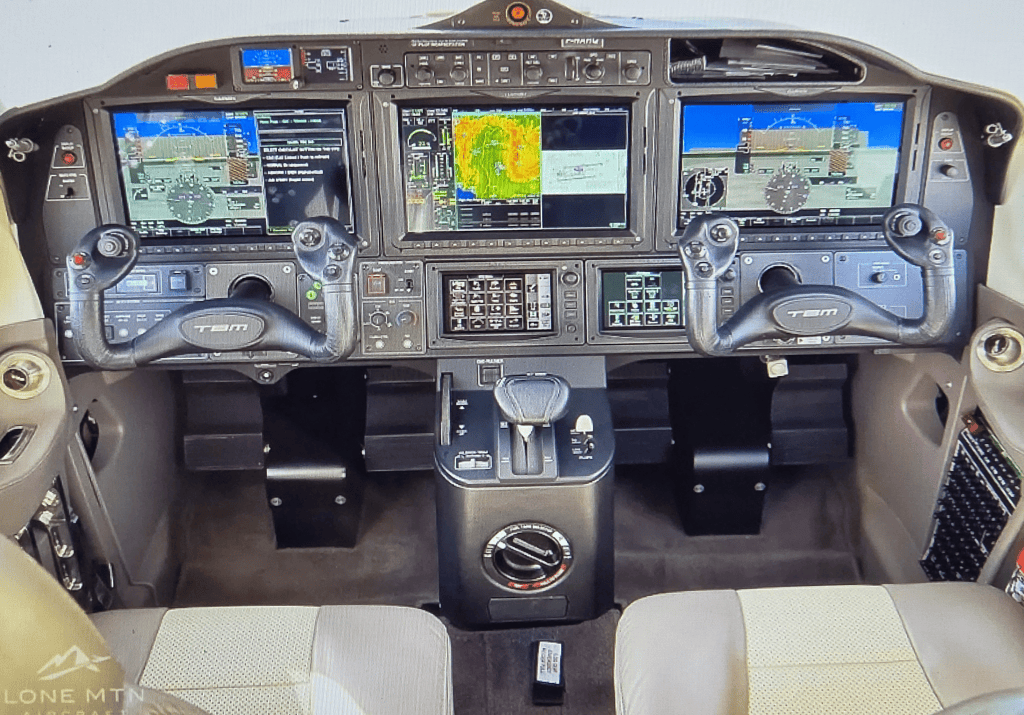
The TMB 960 comes with Garmin’s G3000 integrated flight deck. [Credit: Lone Mountain Aircraft]
No matter how much we love the Cessna 172 or Piper PA-28 trainer in which we earned our private pilot certificates, we almost always long for something with more speed, space, and useful load. After owning a basic piston single for a while, we tend to step up to complex, high-performance models.
The aircraft for sale today is waiting for you to decide that your speedy piston single or light twin is no longer fast enough.
Daher and its predecessor companies have been building and improving the TBM series of luxurious turboprop singles since the type’s introduction in 1994. As a result of steady, meticulous development, the TBM 960 is among the fastest, most technologically advanced single-engine civilian aircraft on the market.
No matter what your competitively minded friends are flying—short of a jet—you are almost guaranteed to be faster. My kids call this a “flex.”
On the purely practical side, this airplane is one of the best tools for serious travelers. Whether flying for business or vacation, the TBM provides pilots with the ability to operate from more airports than available to airliners, making out-of-the-way destinations easier to reach. Its performance also brings the goal of “beating the airlines” into the realm of possibility.
Or is that probability?
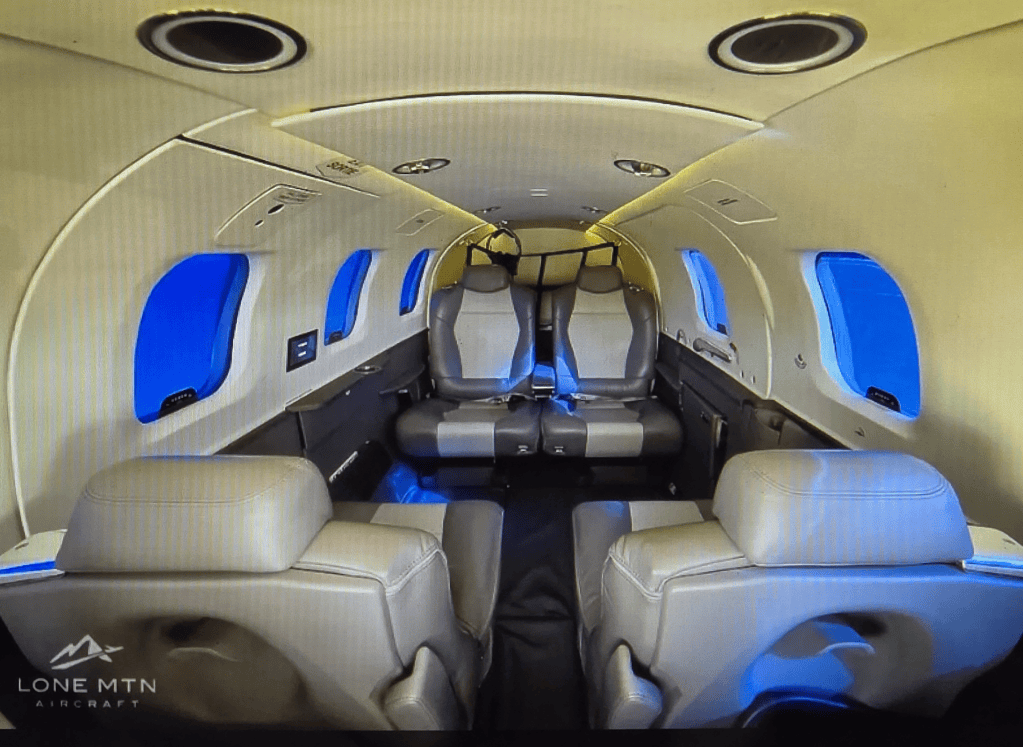
The TBM is known for its roomy, well-appointed, pressurized cabin. [Credit: Lone Mountain Aircraft]
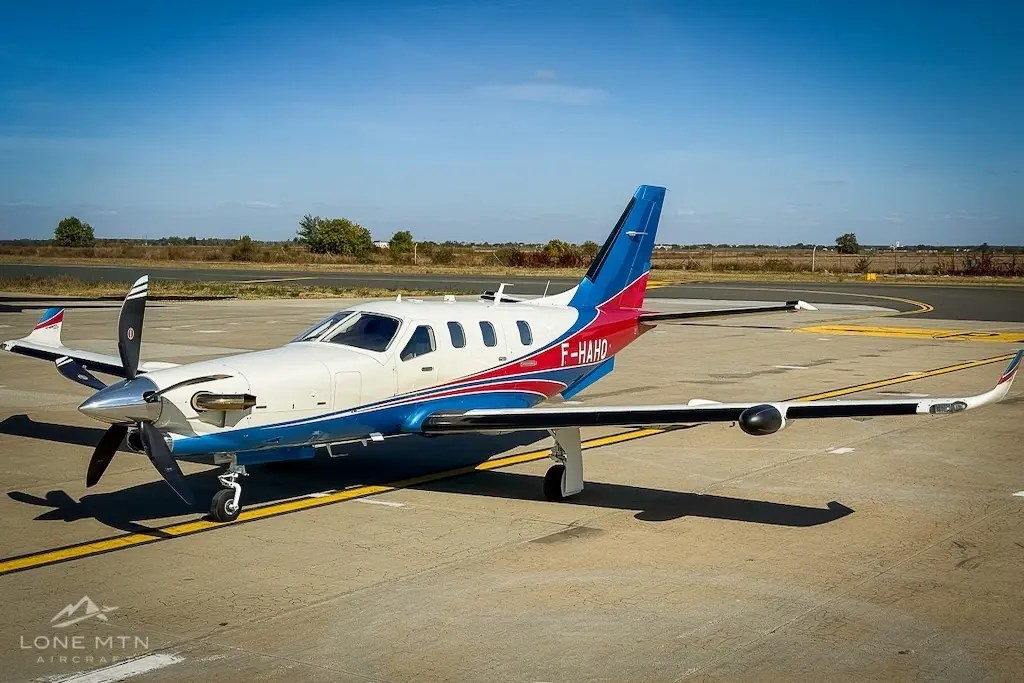
This 2022 TBM 960 has 860 hours on the airframe and 860 hours since new on its Pratt & Whitney Canada PT6E-66XT engine, which has a 5,000-hour TBO. The aircraft’s Hartzell Raptor five-blade composite propeller is featherable and reversible, and has electric blade deicing.
The panel features the Garmin G3000 integrated avionics suite, which includes dual GDU 1250W 12-inch primary flight displays with Synthetic Vision, single GDU 1250W 12-inch multi-function display, dual GTC 585 touchscreen controllers, dual GIA 64E nav/coms, dual GRS 79 AHRS with GMU 44 magnetometers, dual GDC 72B digital air data computers, GMA 36B audio controller, GTX 345R transponder with ADS-B In and Out, GTX 335R with ADS-B Out, GFC 700 autopilot with GMC 711 controller, Garmin autothrottle, HomeSafe Autoland, electronic stability protection, angle of attack indicator, GWX 8000 StormOptix Doppler weather radar, WX500 Stormscope, GSR 56 Iridium datalink fo satellite phone and worldwide weather, and GRA 55 radar altimeter.
Additional equipment includes flight into known icing (FIKI) certification with pneumatic deicing boots on wings, and tailplane leading edges, heated pitots and stall-warning vane, left and right heated windscreens, heated engine intake, seven fast-charge USB ports, and stowable cabin table.
Pilots who want to step up from piston aircraft and experience some of the best characteristics turbine power has to offer, including speed, comfort, and efficiency, should consider this 2022 TBM 960, which is available for $5.1 million on AircraftForSale.
If you’re interested in financing, you can do so with FLYING Finance. Use our airplane loan calculator to calculate your estimated monthly payments. Or, to speak with an aviation finance specialist, visit flyingfinance.com.
Jonathan Welsh is Lead Editor of Aviation Consumer and a private pilot who worked as a reporter, editor and columnist with the Wall Street Journal for 21 years, mostly covering the auto industry. His passion for aviation began in childhood with balsa-wood gliders his aunt would buy for him at the corner store. Follow Jonathan on Twitter @JonathanWelsh4
Honeywell Aerospace’s JetWave X will tap into existing and future satellites to provide global connectivity for Bombardier, Dassault, Gulfstream, and other business jet models. [Credit: Honeywell Aerospace]
The company said JetWave X, an upgrade to its JetWave satellite communications system that arrived in 2017, has entered service and is now available for order. Customers can contact Honeywell or authorized third-party channels to determine the installation timeline and availability for specific aircraft models. They can also independently check the supplemental type certificate (STC) status for their aircraft as the rollout progresses.
“Business jet owners, operators, flight crews, and passengers all benefit from JetWave X’s uninterrupted global connectivity,” said Adam Sheppard, general manager for services and connectivity at Honeywell Aerospace, in a news release. “As the need for high-speed data increases, JetWave X enables aircraft operators to deliver an internet experience that more closely resembles what users expect at home or in the office.”
According to its website, Honeywell is targeting STCs for the following business aircraft in 2026:
Boeing BBJ 737
Bombardier Challenger 300/350/3500
Bombardier Challenger 601/604/650
Bombardier Global 5000/5500
Bombardier Global 6000/6500
Bombardier Global 7500
Dassault Falcon 10X
Dassault Falcon 2000
Dassault Falcon 6X
Dassault Falcon 7X
Dassault Falcon 8X
Dassault Falcon 900
Embraer Praetor 500/600
Gulfstream G500
Gulfstream G550
Gulfstream G600
Gulfstream G650
Gulfstream G700
Gulfstream G800
Textron Cessna Longitude
The company has agreements with Dassault to line-fit and retrofit JetWave X on Falcon jets, and with Gulfstream to certify the system for the GIV, GV, G450, G500, G550, G600, G650 and G700. It also announced Monday a JetWave X Hatch Mount Antenna (HMA) for C-130 operators, supporting enhanced communications for military aircraft.
What Is JetWave X?
Claudio D’Amico, vice president of OEMs, partners, and fleets for business aviation at Viasat, said JetWave X is the first terminal able to use its full network and will provide “even more capacity, uncapped speeds, and increased network prioritization for an enhanced connectivity experience.”
The platform connects to Viasat’s satellite network—including its ViaSat-3 Ka-band, marking a first in business aviation—to provide consistent global coverage and up to 300 megabits per second (Mbps) download speed. The architecture is also designed to tap into legacy Global Xpress satellites and connect with future satellites as they launch.
A connectivity management system combines multiple satellite and air-to-ground links at different orbital altitudes into a single onboard network. It automatically prioritizes traffic by application type, tailoring bandwidth to different user groups and activities, such as streaming or video conferencing. The system is also designed to react in real time to outages or coverage gaps.
According to Honeywell, the upgrade to JetWave requires only minor structural and wiring modifications, which will make it fast and affordable for existing customers, who can take advantage of a trade-in program and other perks. The company is also offering incentives for early JetWave X adopters, including service discounts and one year of free data link.
According to Honeywell’s 35th annual Global Business Aviation Outlook, which has expanded to include turboprops and personal jets, the company projects about 14,000 total business aircraft deliveries, a 29 percent global fleet expansion, and a 34 percent rise in flight hours through 2035.
The outlook found that Europe accounts for 13 percent of global flight activity despite comprising about 10 percent of the global fleet, “reflecting the importance of cross-border connectivity.” Honeywell said the survey “helped to identify opportunities for investments” in enhanced aircraft connectivity offerings, among other areas, meaning there could be more to come.
Jack is a staff writer covering advanced air mobility, including everything from drones to unmanned aircraft systems to space travel—and a whole lot more. He spent close to two years reporting on drone delivery for FreightWaves, covering the biggest news and developments in the space and connecting with industry executives and experts. Jack is also a basketball aficionado, a frequent traveler and a lover of all things logistics.
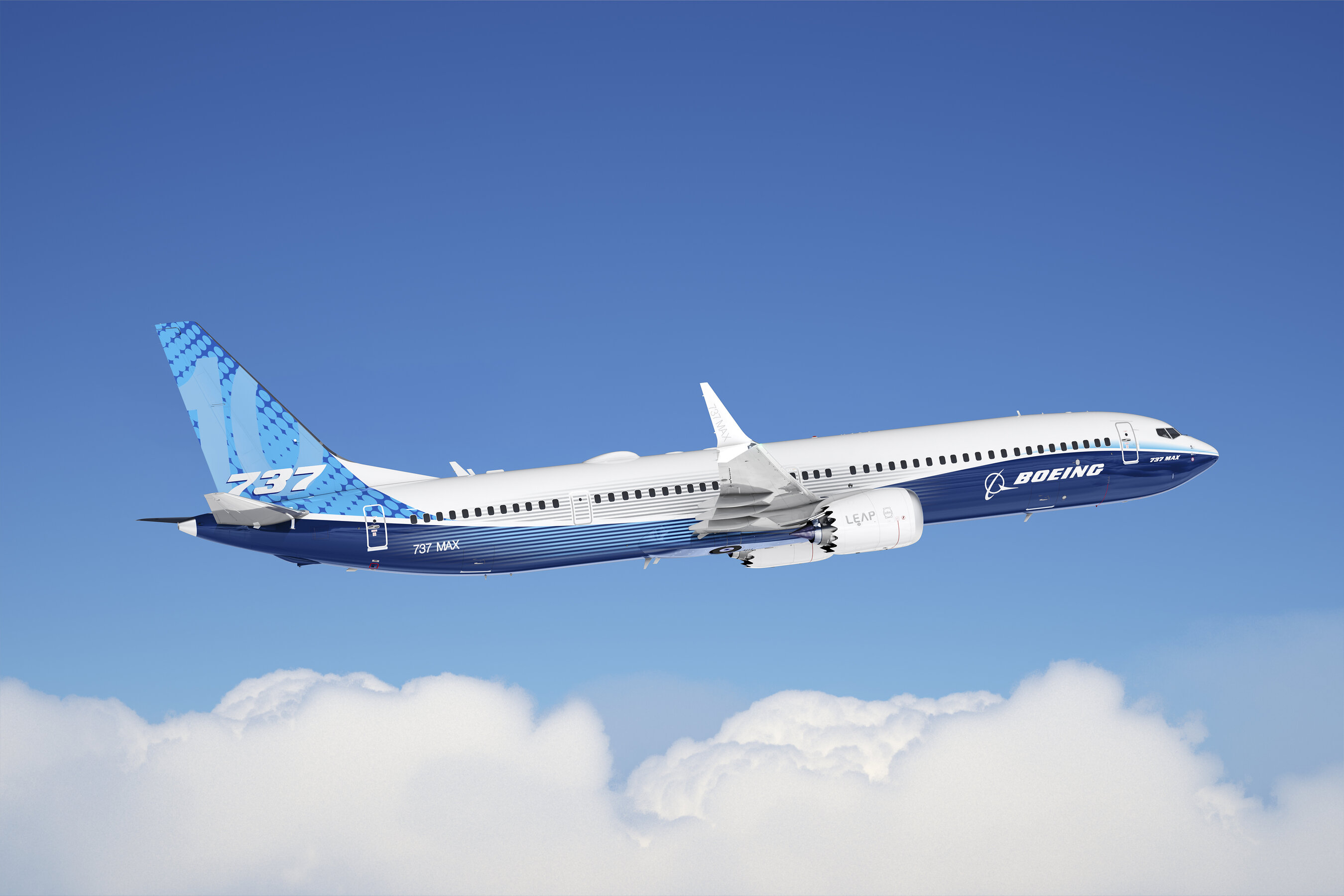
The 737-10 is the largest member of Boeing’s 737 Max family of single-aisle commercial airplanes. [Credit: Boeing]
After years of delays and safety reviews, the FAA on Tuesday granted certification to Boeing’s 737 Max 10, authorizing production and customer deliveries.
Boeing in a news release said the certification clears a path to deliveries of the largest member of the 737 Max family in the coming months. The type’s launch customer is WestJet, which said Tuesday that it anticipates first delivery early next year. Other customers, of which there are more than 30, include United Airlines, American Airlines, Delta Air Lines, Alaska Airlines, and Ryanair.
According to Boeing, the manufacturer has 1,555 orders for the 737-10 representing about 30 percent of its 737 Max order book. Reuters reports that Boeing has built a handful that are awaiting delivery.
Boeing said the Max 10 will become the “most efficient and flexible single-aisle airplane lineup in aviation.” The 737 Max family shares a common architecture, but the 737-10 is designed to seat from 135 up to 230 passengers. The 737-7, 737-8, and 737-9 max out at 160, 180, and 195, respectively.
In addition, the manufacturer said the Max 10 will offer the lowest per-seat costs of any single-aisle airplane, as well as range up to 3,100 nm without auxiliary fuel tanks, beating competitors by a few hundred miles. Technological advancements translate to a 20 percent reduction in fuel use and carbon emissions, it said.
“The 737-10 offers greater capacity, longer range, and the best seat economics in its class, a platform that will create more value and opportunities for airlines around the world,” said Stephanie Pope, president and CEO of Boeing Commercial Airplanes.
Long, Winding Road
The Max 10’s certification follows years of obstacles that have hindered Boeing’s ability to deliver it and the smaller 737-7, for which it obtained certification in August.
The FAA grounded 737 Max airplanes for nearly two years following fatal 737-8 crashes in 2018 and ’19 that killed a combined 346 people. The incidents were linked to erroneous angle of attack sensor data that activated the jets’ Maneuvering Characteristics Augmentation System (MCAS), a description of which Boeing removed from the Max 8’s manual before it entered service. Operators were given inadequate information about how to disable it.
The 737 Max program came under renewed scrutiny following the Alaska Airlines 737-9 door plug blowout in early 2024, resulting in a shorter grounding.
Boeing had to address requirements in the 2020 Aircraft Certification, Safety, and Accountability Act (ACSAA), which established additional requirements for safety assessments and human factors evaluations. According to the company, the 737-10 is the first commercial aircraft to be “certified to the full extent” of the ACSAA.
The manufacturer also had to make improvements required by the National Transportation Safety Board in relation to the 2018 and ’19 Max 8 accidents. Those include an enhanced angle of attack sensor within the aircraft’s updated flight control system, which according to Boeing is designed to reduce possibility of erroneous data and ease pilot workload in the case of a failure.
The new AOA system will become standard for all new 737 Max models and be retrofitted on in-service models. The FAA will mandate that any newly certificated 737 must incorporate the enhanced system and new crew-alerting protections beginning October 2027. By October 2029, existing aircraft must also be updated.
Boeing said the Max 10 certification program comprised more than 2,000 total flight hours and 1,000 ground test hours.
“Our flight test team ran a disciplined, methodical campaign to validate every system,” said Chris Payne, vice president and general manager of 737 airplane development programs for Boeing Commercial Airplanes. “That rigor gives us confidence as we move toward deliveries.”
Following additional delays to give Boeing time to redesign the 737-10’s engine anti-ice system, the manufacturer in September disclosed a previously unreported software glitch that emerged after an upgrade to the 737 Max flight management computer. The issue manifests when a pilot flying a precision approach with autopilot engaged initiates a missed approach and causes the jet’s automated flight guidance system to incorrectly drop from VNAV to basic pitch control—which requires the pilots to handle pitch and navigation adjustments—if the preprogrammed flight plan is changed.
The FAA said it would delay Max 10 certification until the glitch was investigated, but it ultimately found that it did not pose a safety of flight concern. However, United and Southwest Airlines—a major customer for the 737-7—said they would not accept delivery of 737 Max aircraft equipped with the software upgrade.
“The FAA’s decision follows a thorough review of the aircraft’s design and safety requirements,” said FAA Administrator Bryan Bedford on Tuesday. “We will continue to hold Boeing to the highest safety standards as the company begins production of the 737 Max 10.”
At the same time, the FAA has proposed certification reforms designed to reduce costs and delays. According to multiple reports, Boeing CEO Kelly Ortberg was among executives who met with Transportation Secretary Sean Duffy this month to discuss streamlining the airplane certification process.
Boeing has also faced delays in the certification of its 777-9, one of the largest commercial airplanes ever built.
Jack is a staff writer covering advanced air mobility, including everything from drones to unmanned aircraft systems to space travel—and a whole lot more. He spent close to two years reporting on drone delivery for FreightWaves, covering the biggest news and developments in the space and connecting with industry executives and experts. Jack is also a basketball aficionado, a frequent traveler and a lover of all things logistics.
The right CFI for you will take into account your capabilities and goals. [Credit: FLYING Archive]
Question: I am a Part 141 trained flight instructor, and I just landed my first job at a Part 61 flight school. I have three learners. All of them had other instructors who left for the airlines. I’ve been on the job for three weeks, and I keep getting pushback from the learners who keep telling me I’m too strict because I want them to use a syllabus and have more emphasis on the checklist. It’s just not how the previous CFIs did things. I don’t want to bad-mouth another CFI, but I’m getting tired of being the bad guy when I am trying to instill good habits. How do I fix this?
Answer: Ah, yes, the “ghost of CFI past.” Most instructors have encountered this. It’s like going on a date with someone who is on the rebound. You will hear about your predecessor. Comparisons will be made.
The fact of the matter is that most learners become attached to their CFIs and to some extent may resent anyone who replaces them. Focus on the task of teaching rather than competing with a ghost. You have to be patient.
As far as the use of the checklist goes, the best way to handle this situation is to bring out the Airman Certification Standards to show the client that they will be evaluated on their ability to use the checklist, then show them the value of its use. There’s so much to do procedurally in an airplane that it’s tough to remember all of it, so the use of the checklist is in their best interest.
The same can be said for the use of the syllabus. It’s a means of streamlining their education and making sure all the necessary material is learned in a logical fashion.
The challenge of learning through the “folklore” method is that a student pilot can go for their checkride only to discover that some of the required experience is missing—for example, the 3.0 hours of flight by reference to instruments required for the private pilot certificate.
After a few hours of positive results, the learners will likely forget about the previous instructor and become more focused on finishing their certificates.
Ask us anything you’ve ever wanted to know about aviation. Our experts in general aviation, flight training, aircraft, avionics, and more may attempt to answer in a future article. Email your questionshere.
Meg Godlewski has been an aviation journalist for more than 24 years and a CFI for more than 20 years. If she is not flying or teaching aviation, she is writing about it. Meg is a founding member of the Pilot Proficiency Center at EAA AirVenture and excels at the application of simulation technology to flatten the learning curve. Follow Meg on Twitter @2Lewski.
Cirrus has developed 24 simulator scenarios that put pilots’ real-world aeronautical decision-making skills
to the test. [Credit: Sean Siff]
For the last two decades, Cirrus Aircraft has been at the forefront of bringing new technology to the cockpit. One of its latest offerings is Mission Ready—a training and safety program specifically for SR owners to experience in a flight simulator environment.
The program, launched in March, lives within the manufacturer’s official pilot training curriculum, Cirrus Approach. This library of real-world flight training sessions paired with video learning takes a Cirrus pilot from their first flight all the way through their pilot’s certificate and instrument rating.
If you're not already a subscriber, what are you waiting for? Subscribe today to get the issue as soon as it is released in either Print or Digital formats.
Cirrus recognized that using advanced aviation training device (AATD) simulators can deliver experiences that can be flown deeper into a maneuver or scenario, past what is typically flown in the real airplane.
Although simulator training at flight schools around the country is expanding beyond recurrent instrument training, Mission Ready is a series of 24 individual cross-country flights with both VFR and IFR learning goals, so the scenario can be tailored to the pilot’s level of experience.
Cirrus Standardized Instructor Pilots (CSIPs) build the missions and include realistic ATC communication prompts for the instructor, integrated decision points, and instructor guidance to create a purposeful training scenario. The program transfers the weight of scenario creation away from the instructor, freeing them to better brief and deliver training to the student pilot.
Firsthand Look
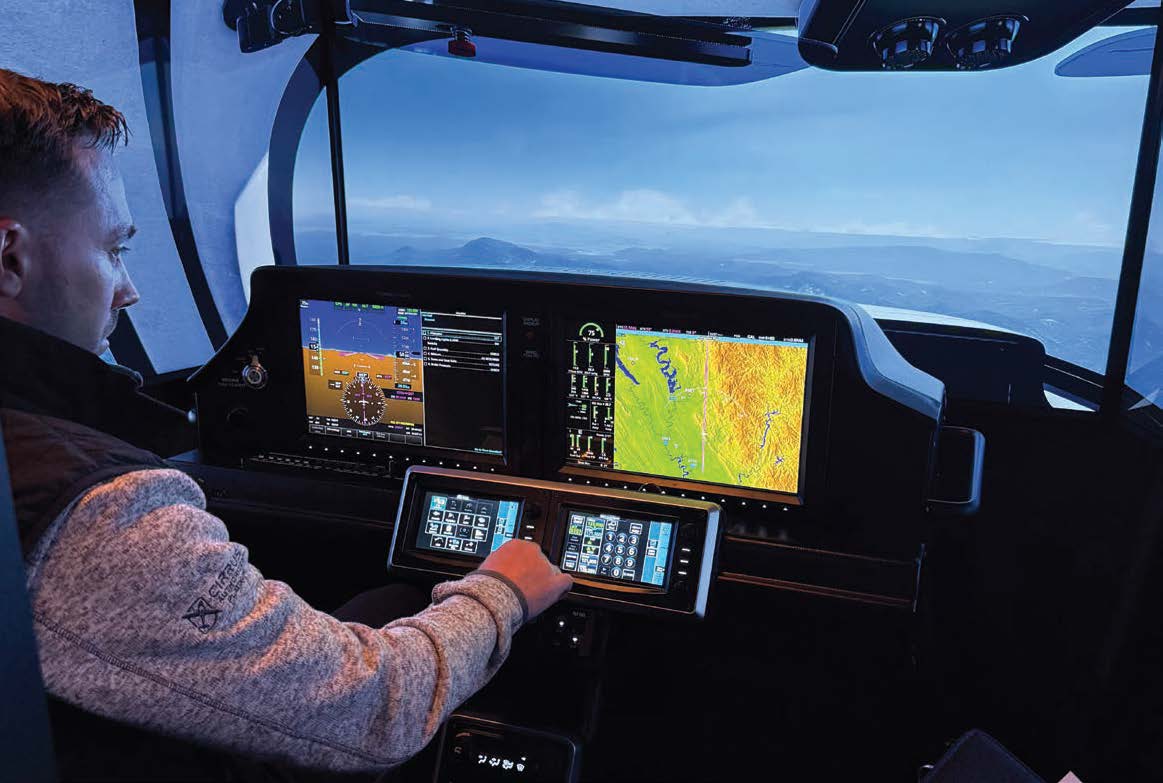
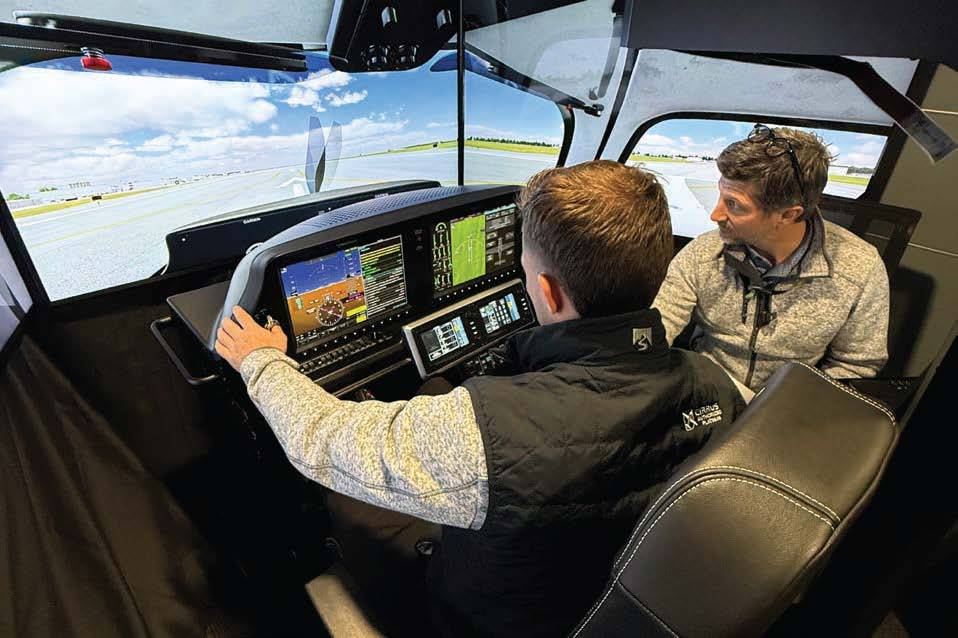
On an appropriately windy and rainy spring IFR day, I visited Mike Goulian Aviation’s Cirrus Training Center at Hansom Field (KBED) outside of Boston, as it had recently equipped the school with a new RealSimGear SR7x Pro. The SR7x Pro is a switch-for-switch replica of the SR22 G7, complete with the Garmin Perspective Touch avionics system.
Training on the SR7x, the pilot can reinforce the same flows and procedures used in the real airplane, making the flight time loggable.
Though the program is still new, Marc DeRose, Mike Goulian Aviation’s director of flight operations, has already seen the benefits of this training with both his students and instructors alike.
“It’s really about being more prepared before you ever get in the aircraft,” said DeRose, an experienced CFII and CSIP. “And our sim lets you practice real-world scenarios multiple times to help build improved decision making.”
Allowing me to observe a Mission Ready scenario, DeRose selected a student pilot from Mike Goulian Aviation to act as the pilot flying the sim. The student, a private pilot with hundreds of hours of flight time, was working on his Cirrus transition training.
DeRose and the student briefed on the scenario in the classroom before hopping into the sim. DeRose then selected the “Over the Hills” scenario, with the flight departing from McGhee Tyson Airport (KTYS) in Knoxville, Tennessee—home of the Cirrus Vision Center—to Asheville, North Carolina (KAVL).
Aptly titled, the scenario would cross some of the highest mountains in the Appalachian range with a planned cruising altitude of 9,000 feet. The RealSimGear SR7x uses a commercial license of X-Plane 12, so the weather simulated in the scenario and in the scenery below the airplane were very high quality, allowing the pilot to look out the windows to spot real-world landmarks.
Three 55-inch 4K TVs on the SR7x provide 180 degrees of peripheral vision, helping the pilot get into the zone and tune out distractions. Before the scenario, I flew a short test flight in the SR7x and was given an unexpected engine-out after takeoff. The triple screen setup enabled me to turn my head to the right and effectively look through the turn to sight the runway. I did not take my sight off my landing spot and was able to stay in the scenario without adjusting the sim camera, preserving my concentration.
Back in the simulator, with flight planning finished, the student received clearance to climb up to 9,000 feet from the approach controller (DeRose). Headed out over the Appalachians, the clearance between the mountains and the clouds seemed less than the forecasted conditions, but this was a flight under IFR, and both DeRose and the student settled into a comfortable conversation, reminiscent of the kind one might hear on any normal cross-country flight.
The light chatter was designed to set the student at ease and keep him lightly tasked while DeRose activated the first electrical issue with Alternator 2. Getting his attention, the student assessed the situation and began using the on-screen checklist. Keeping the autopilot on while running the checklist, he soon had to deal with the loss of the multi-function display (MFD). Next, yellow CAS messages appeared on the PFD, prompting him to go deeper into the SR22’s Abnormal Procedures checklist.
DeRose sat patiently watching the student from his instructor’s station. His many years of coaching college rowers at the highest levels helped him know what to say, but more importantly, how and when to say it. It served as a reminder that too much assistance in the moment would detract from the learning opportunity that the Mission Ready scenario was creating. DeRose let the student work out the next moves for himself.
Still on the way to Asheville, the electrical issue had not risen to an immediate emergency, but no sooner was the appropriate checklist completed than DeRose discreetly activated a slow but cascading engine power loss. Layered on top of the partial power loss were a few ATC instructions, consisting of small course corrections, adding to the student’s task load.
A few minutes into the partial power loss, it became apparent that a complete power loss was in the offing. The student decelerated to best glide speed and was now fully concentrating on looking for a potential landing location. But, as the scenario was designed, he was over mountainous terrain with very few options.
Starting a gentle series of turns and holding onto his decaying airspeed, he searched quickly for a landing spot. Terrain was rising on both sides of the SR22 as it was losing altitude, now just above the mountain ridges. With the MFD function restored, he used the navigation display to locate a potential airport ahead of his position about 8 miles away. But to make it to the airfield, he would have to coax the airplane over the final ridge. It was a difficult decision that had to be made quickly.
The SR22’s propeller was windmilling, as the engine was still technically running, but the airspeed was getting closer to stall speed. Until this point in the flight, saving the airplane seemed like a realistic option, but it was going to be close.
As the airplane neared the ridge, the student did his best to manage the situation. Other than acting as ATC, DeRose stayed mostly quiet, letting the student do the hard work on his own, simulating the challenge of being pilot in command.
In the time that it took to balance the challenges of the critical situation, including the running of an emergency checklist by memory, the SR22 had fallen below the 600 feet agl minimum for pulling the CAPS handle and activating the parachute. Adding to the difficulty was the changing height as the airplane flew over the dynamic terrain of the mountain range.
As the SR22’s stall warning sounded, the student reached above his right shoulder for the red CAPS handle, which requires the realistic 45 pounds of force, just like the real airplane.
Unfortunately, the airplane had descended to just a few hundred feet over the tree-lined ridge, giving the SR22 time to bob back and forth under the parachute before hitting the trees. There just was not enough altitude to effectively slow the airplane to a controlled landing under the partially deployed chute, reinforcing the importance of the 600-foot minimum agl for CAPS deployment.
The flight debrief was one of the most effective components of the Mission Ready scenario. DeRose discussed the challenges and takeaways with the student. From my observer’s perspective, I didn’t question the pilot’s decision to try to clear the ridge. Sympathetic to his plight and the challenges he had to deal with, I believe I would have also attempted to clear the ridge, too, had I been flying.
Clearly designed to test a pilot’s decision making, the Mission Ready scenario proved to be an effective reminder of how a worsening series of aircraft failures over the mountains can further reduce the options from which a pilot has to choose.
Prebuilt scenarios free instructors to focus on teaching instead of creating simulations. [Credit: Sean Siff]
“The combination of staying in front of the airplane, managing the airplane and terrain was really tough,” the student said. “It was task saturation for me. What I was called upon to do felt very realistic, even down to the graphics.”
DeRose said the feeling of being overwhelmed is a common outcome of the program’s design, intended to mirror the high-stress environment of an actual in-flight emergency.
“Instructors and students typically practice emergencies in a laboratory, with things happening quickly, but in order,” he said. “In a scenario like this, no one realistically has time to squawk 7700. The pilot has to focus on controlling the airplane. Pilots typically fall to their level of training in an emergency, and these scenarios allow Cirrus Flight Instructors the chance to evaluate where gaps exist in a pilot’s responses.”
Mission Ready accomplished the goal of pushing a pilot through their comfort zone, but productively, allowing time for the postflight debrief of the scenario to extract maximum value.
Another important theme of the Mission Ready program is continuous proficiency rather than periodic recurrency. Cirrus’ goal is to keep growing its overall training program.
“These scenarios allow the pilot to become the diagnostician, as they are pushed to assess the clues in real time,” DeRose said.
Raising the Bar
As a top-awarded Cirrus Training Center, Mike Goulian Aviation has shown a commitment to sim training, which was evident by the updates to the simulation rooms at both of its Massachusetts locations. Instead of shoehorning the sim equipment into an empty corner space, it installed blackout window blinds, dimmable ceiling lights, and dark wall paint to create a distraction-free classroom environment where immersion can be created when the pilot is behind the controls of the SR7x.
In addition, Mike Goulian Aviation instructors have been pooling their SR platform knowledge to provide feedback to RealSimGear to aid in the development of the platform.
Encouragingly, the Mission Ready program brings professional pilot-level simulator training to Cirrus pilots who reside near participating Cirrus Training Centers. When delivered in the ideal simulator classroom environment and with excellent instruction, the program can train in both VFR and IFR scenarios that pilots can add to their logbooks, providing an important incentive to justify the instructor and simulator rental costs.
Although I only observed one Mission Ready lesson, Cirrus noted that in many scenarios “pilots are given choices in how the mission is completed. This introduces an element of strategy and autonomy, encouraging experimentation, reflection, and engagement rather than rote execution.”
If you are interested in this training, contact your local Cirrus Training Center to see if it has an AATD flight simulator that is booking Mission Ready scenarios. Non-Cirrus pilots can schedule a Mission Ready sim lesson, too. All you need is a complimentary Cirrus Approach account to get started.
As a flight sim enthusiast, it is encouraging to see a forward-looking OEM like Cirrus embrace simulator training for private and instrument-rated general aviation pilots. Regardless of the challenges faced in a given Mission Ready scenario, there is an ideal starting point in the curriculum for pilots of all experience levels.
Read more about Cirrus’ Mission Ready scenarios here.
New Cirrus App
Earlier this summer, Cirrus announced a new experience called Let’s Go Fly that debuts on the Apple Vision Pro as an app for the mixed/extended reality headset.
Free to download, the app’s main feature is a seven-minute demonstration flight in the SR22T, designed to introduce the viewer to personal aviation by way of a sightseeing adventure over the American Southwest. Filmed in ultra-high-resolution, 180-degree, 3D video with spatial audio, the viewer will be brought into the flight in a novel and immersive way.
The experience serves as an entry point for curious potential pilots who are tech savvy and own an Apple Vision Pro.
In addition to the demo flight, Let’s Go Fly includes a full-size, built-to-scale, digital rendering of the SR Series and Vision Jet airplanes intended for the viewer to virtually explore from within the headset. Cirrus intends for this tool to assist its global sales team in introducing the manufacturer’s airplanes digitally when a real-world aircraft can’t be made available.
This column first appeared in the August Issue 973 of the FLYING print edition.
Sean Siff is a private pilot who has worked in marketing in the aviation industry. He’s an active flight sim user as he works to stay current in the airplane.
Sign-up for newsletters & special offers!
Get the latest stories & special offers delivered directly to your inbox.