Risk Management

Maintaining Safety Margins

Students of introductory biology learn a basic lesson about sensory perception in a quirky behavior found in certain amphibians that has become common lore. By now we all know that if a frog is placed in hot water, he will immediately jump out to safety. However, if the frog is placed in cool water that is gently heated to boiling, the frog does not perceive the gradual rise in temperature or the impending danger. Likewise, when a pilot is presented with a problem or emergency that is an obvious attention-getter, he or she will react quickly to solve the immediate threat-a frog leaping from scalding water.
Read More »

Will Training Reform Help Reduce Fatals?

The mantra “train the way you fly and fly the way you train” has been popular recently, yet we continue training pilots merely to pass the knowledge and practical tests, rather than on how they will operate in the real world. These tests emphasize rote knowledge and performance of specific maneuvers, rather than instructive scenarios emphasizing higher order pilot skills. This results in a pilots all-too-frequent failure to properly manage the risks inherent in typical general aviation flight operations. In an effort to bring focus to these issues and chart a course for beginning the reform process, the Society of Aviation and Flight Educators (SAFE) conducted a Pilot Training Reform Symposium in Atlanta, Ga., on May 4-5, 2011.

Read More »

Do You Need To Set Personal Minimums?

Those who successfully earn the private certificate or an instrument rating are told many things along the way. Among them is their hard-fought goal is a license to learn; they should carefully consider the first few hours they spend aloft without someone in the right seat; they should consider setting something called “personal minimums” for themselves. All of these suggestions can be helpful to someone who hasnt fully considered all the responsibilities and freedoms their new certificate or rating affords. Meanwhile, some would suggest the best advice a new pilot could receive is “just go fly.” Personal minimums, of course, generally are a set of conditions-not unlike the basic VFR weather minimums or the ceiling and visibility requirements for an instrument approach, but also involving other operational considerations-beyond which a pilot vows not to fly.

Read More »

Single-Pilot Jet Safety

In the last five years, a new crop of small light jets (I promise not to call them VLJs, or very light jets) has entered the marketplace. Aircraft such as the Cessna Model 510 Mustang, Embraer Phenom 100, and yes, the Eclipse 500 are now out there in the hundreds, and they have carved a successful market niche, albeit not the one envisioned by some observers. These airplanes are designed to be flown by single pilots and its fair to ask whether or not our training and safety model for these airplanes will be up to the task. The record so far looks good but we need to look below the surface for the entire story. We should be looking at a cohort of airplanes that are destined for an excellent safety record, if we assume they will reflect the record of previous turbojet models certified for single-pilot operations.

Read More »

The Psychology of Fuel Exhaustion

I need to wrap my head around how people run out of gas in airplanes.” Ive been saying that to myself (and my editor) for over a year, marveling at how almost half of all known engine failures are due to fuel mismanagement. Most of those result from fuel exhaustion: attempting to fly beyond the fueled range of the aircraft, or more simply, running out of gas. Very frequently the pilot almost makes it, landing just short of the planned destination. How could a pilot take off with less fuel than needed to complete a trip? Shouldnt it be a pilot imperative to have enough fuel not just to meet the preflight planning requirements of FAR 91.151 or 91.167 as appropriate, but also to be certain there would always be enough fuel on board to make it safely to an airport, regardless of the conditions encountered en route?

Read More »

Have FAA/Industry Safety Efforts Worked?

We in the general aviation (GA) community are fond of poking fun occasionally at the FAA. Most of the time, its to highlight a perceived and sometimes real tension between the community and the agency. Frequently, this takes the form of tired clichs such as, “Im from the FAA and Im here to help you,” or another mythical phrase such as, “Were not happy until youre not happy.” When I was FAAs lead GA executive in the early 2000s, my favorite became, “Weve just upped our standards, now up yours.”

Read More »

A Military Perspective On General Aviation

For most general aviation pilots, military aviation is something of a mystery. The equipment usually is different-though many civilian designs have been placed in military service-and its the rare GA pilot whose mission involves dropping or shooting things. Of course, the process of taking someone off the street and turning them into a pilot commanding several million dollars of often-lethal hardware-after only months of training and a few hundred hours of flight time-is much more refined than most civilian flight training.But military aviation can offer several lessons for general aviation, especially when considering risk management. And while civilian operations also are vastly different from the militarys, that doesnt mean the transfer of valuable lessons is one-way. After years of Marine Corps flying, I recently “transitioned” to general aviation. I learned a few things worth sharing.

Read More »

Trainings Future

The FAA rightly has taken its lumps on many things, leading to a healthy dose of skepticism among many in the industry whenever the agency tries something new. This is especially true whenever theres a rulemaking activity affecting general aviation training. I knew this, of course, when I began work as manager of the FAAs General Aviation and Commercial Division. After a few months in my new job, I began surveying the landscape, which included the Garmin 430 phenomenon (I installed one in my Bonanza, as well as a multifunction display and weather data link) and a visit to Cirrus highlighted the coming “glass cockpit” revolution.

Read More »

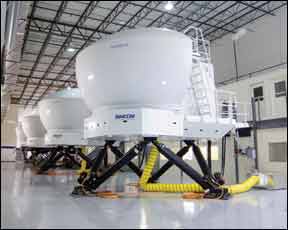
Sim-Based Training?

I fly regularly, adding about 400 to 500 hours per year these days in a combination of ferry and instruction work. So why do I even think about simulator-based recurrent training? What good does it do to fly a sim when I get 60 or 70 real IMC approaches each year, along with lots of flight planning in real life? While Im certainly not the most experienced pilot out there, I still go in for simulator-based recurrent training. By contrast, the average general aviation pilot flies nowhere near that much. Instead, he or she might reasonably ask, “If I get a BFR, isnt that enough? After all, I only fly locally and the occasional cross-country for a $150 hamburger.” There are two basic answers, which are both simple and complicated.

Read More »

Is See-And-Avoid Dead?

In August 8, 2009, a Piper PA-32R-300 Lance and a Eurocopter AS350BA collided over the Hudson River between New Jersey and Manhattan. The pilot and two passengers aboard the airplane, and the pilot and five passengers aboard the air-tour helicopter were killed. Both aircraft were substantially damaged. On September 14, 2010, the National Transportation Safety Board (NTSB) held a public hearing to approve its probable cause finding. The NTSB determined “the inherent limitations of the see-and-avoid concept…made it difficult for the airplane pilot to see the helicopter until the final seconds before the collision.” The NTSB also found fault with a Teterboro Airport (TEB) tower controller, who was on a personal telephone call as the Piper departed the facility.

Read More »
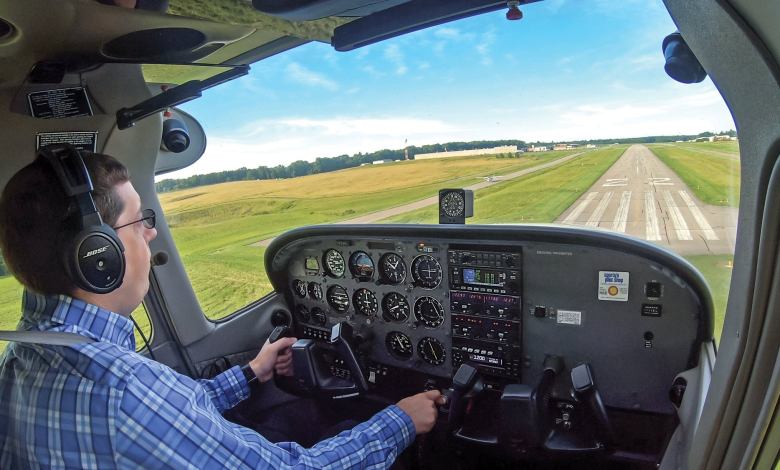
Pilot in aircraft
Sign-up for newsletters & special offers!

Get the latest stories & special offers delivered directly to your inbox.

SUBSCRIBE