Risk Management

Training For Risk Management

Todays typical flight training curricula are largely maneuver-based, with little emphasis on higher order pilot skills, especially risk management. At its heart, the typical curriculum is designed to train a pilot to pass the practical test for the certificate or rating he or she seeks. A rare curriculum includes training to identify, assess and mitigate risk. In previous articles, Ive asserted the root cause of many accidents-and perhaps most fatal accidents-is poor risk management (Aviation Safety, July 2010, “TAA Training”). I also postulated better risk management training, especially in risk mitigation, could be an effective way to reduce these accidents (Aviation Safety, September 2010, “Train to Mitigate Risk”).
Read More »

Right Seat Tips

General aviation is just as prone to pithy sayings as any other worthwhile endeavor. When it comes to managing risk and defining the top three riskiest things weve seen, they include taking off with air in the fuel tanks, a private pilot with a #2 Phillips screwdriver and two pilots trying to fly the same airplane at the same time. While statistics and common sense bear out the fact two pilots up front enhances safety, there remain numerous instances when this has not proven true. Not surprisingly, after accidents with two pilots onboard, the actions of the PIC get the most scrutiny when fault is being assigned.

Read More »

Train To Mitigate Risk

In the last decade, the general aviation fatal accident rate, which had been decreasing for some time, reached a plateau and has stubbornly resisted industry and FAA efforts to further reduce it. Hovering in the range of 1.20-1.38 fatal accidents per 100,000 flight hours, this safety record is widely considered a deterrent to general aviation growth and may be one of the reasons student starts have continued to decrease. As a community, we may have oversold the benefits of a new generation of technically advanced aircraft (TAA) to an emerging latent market of individuals who are not traditional enthusiasts and who wish to use these aircraft for safe transportation.

Read More »

TAA Training

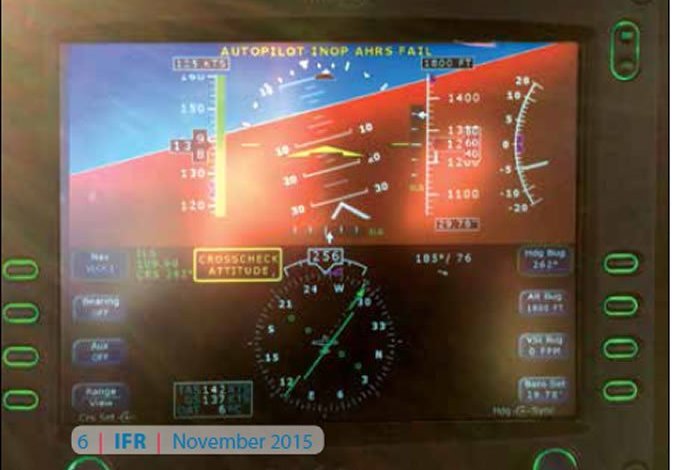
Its no great secret that nearly all new-production aircraft now have glass cockpits and advanced devices such as weather data link. Even technologies such as synthetic vision have become the new norm. In a way, the term technically advanced aircraft (TAA) has become a misnomer but it is still widely recognized as a tag line for a variety of related issues-including TAA training.

Read More »

Which ELT Is Best For You?

New motorcyclists often ask how much they should spend for a helmet. The flippant answer is, “How much is your head worth?” While not very satisfying, its true to a great extent: The helmets offering the best protection and comfort are typically the most expensive. This is largely true for ELTs; the solution most likely to enable a timely rescue under adverse conditions is probably going to cost a lot. As pilots, we constantly balance cost, risk, safety, practicality and utility. There are always trade-offs to weigh in making just about any decision. Now, we can add ELTs to the list of items whose cost we must balance against the risks well encounter and the degree of safety we want to achieve.

Read More »

Datalink Weather Brief

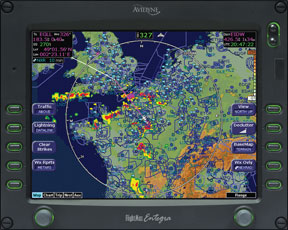
If youve flown much in front of a Garmin G1000 or Avidyne system equipped with datalinked weather, you know they can deliver nearly as much information as an FSS briefing or a Duat session. While datalink weather was never intended to substitute for a full weather briefing, the reality is many pilots use it that way. But does it substitute for a full-up weather briefing, practically or legally? The answer to the first question is “maybe,” but to the second, its a fuzzy “no.” Still, getting your weather brief literally “on the fly” in the cockpit can save a bunch of time. If the route is familiar and conditions relatively mild, the only thing youll miss is the FSS briefers closing plea for Pireps.

Read More »

Mid-Air Collisions: The Myth And The Math

Few chapters in the great book of safe flying are as incomplete and misleading as guidance for avoiding mid-air collisions. In over 50 years of active flying, I have not yet seen any information accurately describing a workable method ensuring awareness and avoidance of mid-air collisions for the general aviation pilot. In fact, the FAAs well-meaning rules and guidance may be dysfunctional seeds of disaster, sown early in a pilots flying career, later leading to a mid-air collision. Its actually a familiar story: Concepts based on intuitive assumptions-instead of empirical knowledge-so often become concrete and immutable. The pilots ability to see and be seen is one of the most profound of all safety myths, and understanding why pilots are not always able to meet this obligation will help avoid complacency, motivating us all to compensate for deficiencies in the system. Lets get started.

Read More »

Playing Mental Defense Against Accidents

Most pilots know a majority of mishaps can be traced back to a chain of events that, if broken, would have prevented the accident from happening. No doubt some could have been prevented if the pilot had been able to press pause, or activate an airframe parachute, when the flight started going south. While most of us dont have that option, we can pull a mental ripcord of sorts and stop a progression of poor decision-making from becoming catastrophic. While most pilots are familiar with the chain-of-events explanation as to how accidents happen, little time is spent trying to figure out how to break the chain, particularly when it involves a form of distorted decision-making. That is, of course, easier said than done. If it were an easy task, we wouldnt spend as much time reading about perfect-performing airplanes operating in ordinary circumstances plowing into terrain with tragic results. One place to start is to look at the chain of mental events leading up to an accident, rather than just the aerodynamic aspects of the flight. Doing so can provide some helpful insights toward identifying the bad link before it gets added to the chain.

Read More »

Why So Many CFITs?

Theres one undeniable constant in aviation: All accidents eventually terminate by contact with the surface of the planet. We have various ways of describing how that contact occurs, thus the somewhat oxymoronic phrase “controlled flight into terrain,” or CFIT. This category of accident is an attempt to explain the unexplainable: why pilots so often fly perfectly functioning airplanes into the ground, killing themselves and all aboard. However anomalous the concept, the occurrence of CFIT is anything but. Pilots fly into the ground-terrain, trees, obstacles, water-nearly as often as they stall or lose basic control of the airplane. As we reported in our January 2010 article on the causes of fatal accidents, stalls lead the list, but CFIT is essentially tied for second, along with loss of control.

Read More »

Wing Icing and Datalink Weather

Risk-and the management thereof-is a diffuse concept, for it remains true that one mans risk is anothers Saturday afternoon recreation. But its also true that in order to place degrees of risk into categories remotely capable of being ranked requires as much information as it is possible to have. It applies to airplane systems, to stick and rudder skills and above all, to weather. Weather has always been the stickiest thorn in the FAAs concept of “all available information.” Even in the era of five-minute Nexrad loops and ever more sophisticated ice prediction products, theres occasionally a large disconnect between what is expected to happen and what is really happening. The advent of real-time weather data in the cockpit has reduced the surprise factor, but it hasnt eliminated it. And it cuts both ways-having lots of information thats just wrong can be worse than having no information, and it can lure you into a decision you might not have otherwise made.

Read More »
Pilot in aircraft
Sign-up for newsletters & special offers!

Get the latest stories & special offers delivered directly to your inbox.

SUBSCRIBE