Risk Management

Proficiency Levels

Am I ready for this flight? Thats the question I found myself asking when I decided to resume flying in a rental aircraft after a six-month lapse. This was after selling the V35B Bonanza Id owned for eight years. Since I was due for a flight review anyway, I engaged an instructor and got checked out to fly a Cessna 172 from a local flight school. I was comfortable flying the Skyhawk after only an hour and three landings, despite not having flown in six months. That certainly wouldnt be the case for all the aircraft Im rated in: The last time I flew a jet was more than seven years ago.

Read More »

Pilot And CFI Profiles

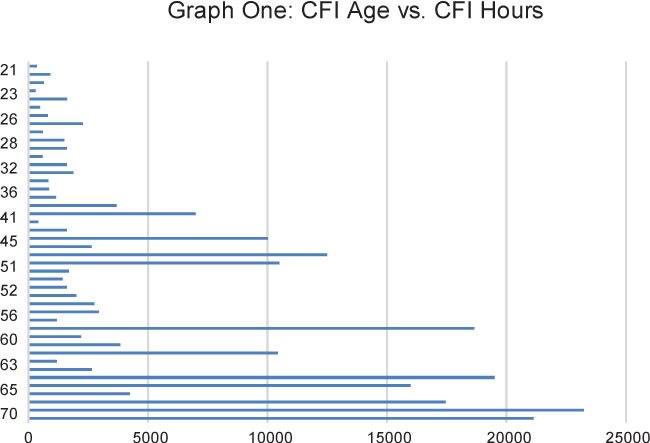
As I analyzed those 55 reports, built my spreadsheets, and did my statistical calculations, I discovered I needed to categorically reject my original supposition as to what I would find. It turns out the mean age of CFIs involved in a fatal accident is 44.4 years. Not even close to my hypothesis of 23.

Read More »

Another Myth Busted?

So, what does all this mean? Should primary students and those seeking advanced ratings, proficiency training or just a simple flight review pass up flying with the grizzled veteran in favor of the young whippersnapper? Maybe, but not necessarily based on the results from this research alone.

Read More »

Tools You Can Use?

So, youve decided the risk is worth it and youre going to execute a zero-zero or low-visibility takeoff. Youve thoroughly prepped the airplane, the cockpit and yourself for the operation, youve practiced it, you have a solid-gold takeoff alternate only a few miles away, with an ILS above minimums, and youre ready. One problem: The weather is so bad, you cant see more than one or two of the runway stripes at a time. Is that enough to help ensure directional control on the takeoff roll? Probably not.

Read More »

Werent TAAs Supposed To Improve Things?

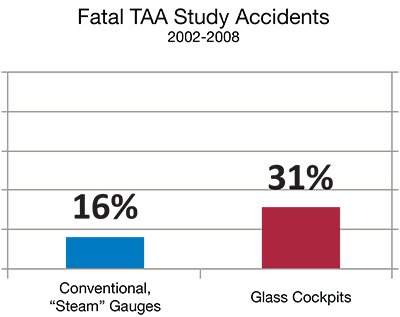
On November 8, 2014, the NTSB presented the fifth in a series of safety seminars focused on U.S. general aviation accidents. This event highlighted knowledge gained from NTSB accident investigations involving technically advanced aircraft (TAAs) and explored current government and industry efforts to prevent them, and the resources available to the pilot community.According to the NTSB, In recent years, the cockpits of many general aviation aircraft have undergone a transition from conventional analog flight instruments…

Read More »

Do Ya Feel Lucky?

According to the FAA, flight training has changed very little since the dawn of regulated aviation. In fact, a private pilot trained to standards outlined in the Civil Aeronautics Regulations, circa the 1940s, would likely do quite well in most operations required by todays practical test. This is because many of the basic skills needed to pilot an aircraft have changed very little. However, the development of new technologies and a rapidly evolving airspace system have outpaced current training methods. Moreover, the FAA and the flight training community now have over a centurys worth of experience upon which to draw when determining how best to train pilots. While the military and airline communities have leveraged this experience, the general aviation community has been slow to make use of the lessons learned.

Read More »

On A Mission: A Status Report

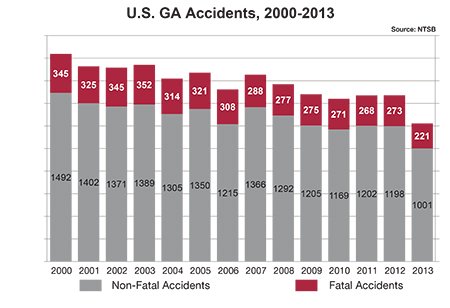
Its easy to fall into the trap of debating whether the U.S. general aviation accident rate is too high. Of course it is-all accidents are preventable by simply grounding the fleet. Somewhere between zero and what we have today-preferably on the lower end-is where we all would like to be. Were not even close to getting there, though, and rates arent coming down the way we would like.

Read More »

Zero-Zero Departures

Last year I read in a major aviation publication that lifting off in zero-zero conditions was one of the riskiest and dumbest decisions in all of flying. In late October 2014, I attended the annual convention of a major flying club, where I heard basically that same conversation and conclusion. If I had any hair on my shiny bald head, I would pull it out in frustration.

Read More »

Throttled

Engine failure. Take a breath and collect yourself. Hopefully you have a flow memorized to try and restore power, and maybe it includes the fuel selector, mixture control, boost pump, magnetos and more. But what about the throttle?

Read More »

The Ditching Option

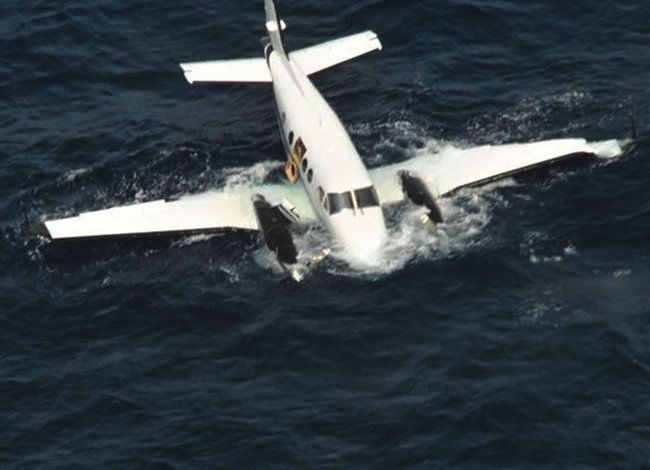
Let’s dispel some myths: Ditching done well is not all that dangerous. My recent ditching was devoid of actual trauma. Most people—about 90 percent—survive a ditching, and those who don’t are usually the ones who did not take basic steps to prepare. Some recent incidents and my own experience demonstrate ditching usually is very survivable and taking a few precautions can greatly enhance the possibility of a favorable outcome.

Read More »
Pilot in aircraft
Sign-up for newsletters & special offers!

Get the latest stories & special offers delivered directly to your inbox.

SUBSCRIBE