Risk Management

Real-World Takeoff Performance

1) A Piper PA-32R-300 Lance attempted to take off from a 3200-foot-long grass runway on a June morning with flaps retracted. It lifted off at the end of the runway, then descended into a shallow valley, touched down and lifted off a second time, before settling back to the ground and colliding with a barbed-wire fence. It was later determined to have been 188 pounds over its maximum gross weight with its center of gravity 0.15 inches aft of limits. Density altitude was about 1800 feet above field elevation.
Read More »

Flying For Money

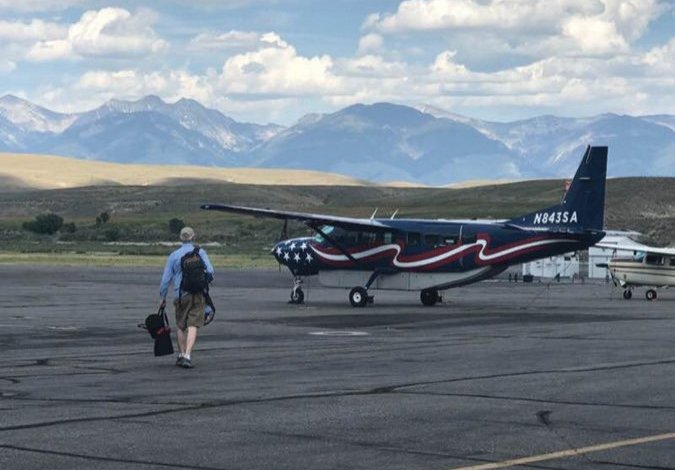
A year and a half ago, it dawned on me that what I most enjoyed about my previouscareer as a science communications consultant was when I got to commute to visit clients in my faithful Cessna 180. With some 1500 hours in my logbook-accumulated primarily on those business trips-I sent out my rsum to two area commercial operators. In response, I got two job offers. Wow. What a game-changer for me. I jumped into the Part 135 world with both feet and left my previous career behind. Now, with more than a year under my belt flying for money, I have been reflecting on how profoundly the move from Part 91 to Part 135 has affected my risk management experiences and choices.

Read More »

NTSB Reports

After maneuvering away from the airport, the Piper returned and executed a touch-and-go landing. Radar data indicate the airplane climbed to 900 feet msl at 80 knots of groundspeed before radar contact was lost. Witnesses observed the airplane flying normally, then saw the left wing separate from the fuselage, which impacted a field. Preliminary examination revealed the left wing main spar exhibited cracks from metal fatigue extending through more than 80 percent of the lower spar cap, and portions of the forward and aft spar web doublers. The right wing also exhibited fatigue cracks in the lower spar cap at the same hole location extending up to 0.047-inch deep. The 2007 airplane had accumulated 7690 flight hours since new. Weather at 0953 included wind from 260 degrees at seven knots, 10 statute miles of visibility and few clouds at 25,000 feet.

Read More »

Risk And Benefit

I much appreciated Robert Wright’s May 2018 article, Risk Assessment Tools. We use a version of a flight risk assessment tool in our flying club, and while I agree that numerical values should not be the sole criteria for the go, no-go decision, the process does provide a checklist of sorts for decision-making. The most valuable risk assessment tool I use is not found on any web site or aviation app, but is the application of a simple philosophy: If I have to analyze a go, no-go decision for more than a few seconds, it is a sure sign that the risk requires serious mitigation or a willingness to stay safely on the ground.

Read More »

Rationalization

People wouldnt fly personal aircraft-or participate in many other activities-if there werent benefits. Thats human nature. Some benefits we seek by taking risks are intangible and hard to quantify. Others can be readily identified and weighted. Its a calculus we all employ daily in mundane ways. However, the problem isnt that we fail to assess benefits when we analyze risk. Instead, the issue is the inaccurate values we assign on both sides of the equation.

Read More »

Braking Tactics

While conducting flight reviews and stage checks for students working toward various airman certificates, Im finding pilots who do not have a strong understanding of the operation and limitations of light aircraft braking systems. Ive also noticed many pilots misuse the brakes in landing and taxiing. For the former, brakes are incorrectly and/or unnecessarily applied immediately following landing. For the latter, excessive engine power requires the pilot to ride the brakes to control the airplane. Both are examples of poor technique.

Read More »

FAA Rolls Back Complex Airplane Checkride Rule

Less than a month after the April 4, 2018, fatal crash of a Piper Arrow during a commercial-pilot checkride, the FAA has changed its policy to no longer require a complex airplane (one with controllable-pitch propeller, flaps and retractable landing gear) for the commercial pilot-airplane or flight instructor-airplane certificates. The change comes via FAA Notice 8900.463,Use of a Complex Airplane During a Commercial Pilot or Flight Instructor Practical Test, dated April 24, 2018. The policy change reflects the lack of suitable aircraft.

Read More »

Mind The Gaps

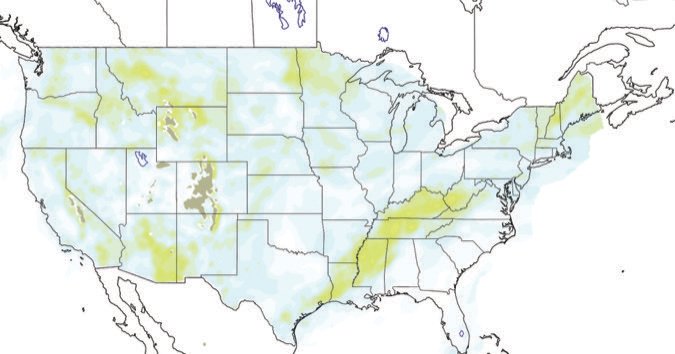
NY NEXRAD. There is a large wind farm nearby with turbines oriented from due north through southeast of the radar. The turbines are close enough (within 18 km) to cause spurious multipath scattering that extends well beyond the wind farm and contaminates data at multiple scanning elevation angles.ӟOur modern Nexrad (Next-Generation Weather Radar) system is still based on radar

Read More »

The Air Is A Fluid

Iwish I had read, or at least learned the material, in Mike Harts April 2018 article (Seeing The Invisible) before my husband and I departed on a flight from Santa Monica to Lone Pine, Calif., back in 1998. My excuse is that I had not yet earned my certificate. At the time, I blithely believed the plane simply went where you pointed it.

Read More »

Black-Hole Approach

For the last few years, my home airport has been a private, paved and lighted strip in a rural area. The pilot-controlled lighting is non-standard, however. For one, the systems intensity is relatively weak. For another, there seem to be fewer runway lights than at most other airports Ive used. And the light fixtures themselves seem located farther from the pavement than Im accustomed. Often, there are few other ground lights in the area to help provide perspective at night. The runway does not have a rotating beacon, only a dimly lit windsock that may or may not tell the truth. There are few obstructions in the area above a couple of hundred feet, although theres a tall tower about five miles north.

Read More »
Pilot in aircraft
Sign-up for newsletters & special offers!

Get the latest stories & special offers delivered directly to your inbox.

SUBSCRIBE