Risk Management

Known Deficiencies

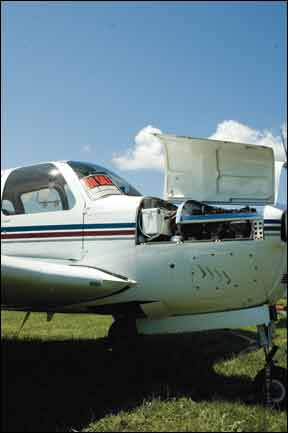
Under basic Part 91 rules for certified aircraft, everything aboard has to be documented and working. The aircraft can remain airworthy if failed equipment isn’t required for the operation, and is placarded and isolated from other systems. But an airplane is like any other mechanical contrivance: it’s subject to wear and tear: A system may function, but not as intended.A good example can be braking systems. Those on typical personal airplanes are hydraulically actuated, as…
Read More »

Long-Range Risks

After learning to fly, many pilots want to use their new skills to go places. Whether they rent or own an aircraft, and whether it’s a high-performance or a simple fixed-gear single, many pilots want to use their machines for on-demand transportation. It’s a natural desire for a freshly minted private pilot, and for a long time was general aviation’s bread and butter.

Read More »

Embracing Risk

It’s often difficult to compare the risks imposed by different activities, but it’s reasonable to state flying a certified single-engine airplane for an hour on a severe-clear day isn’t as risky as spending that same time performing low-level aerobatics in an Experimental airplane. At the same time, and according to John King of King Schools, “you’re more likely to have a fatality in a GA airplane than in a car” when traveling the same distance. If the added risk exposure we get from flying didn’t provide some benefit—more efficient transportation, for example, or pure enjoyment—we might not do it at all. But the simple enjoyment of boring holes in the sky and other benefits outweighs that risk for many of us.

Read More »

Real-World Risk Management

Regular readers of this journal are familiar with the series of articles I’ve written and advice I’ve given on the art and science of risk management. By now, you’re probably curious as to whether I actually use and implement the information and practices I recommend in my own aviating, or whether I’m merely speculating from some safe, lofty journalistic perch.

Read More »

Safer By The Hour?

Earlier this year, I passed the magical 1000 hours total time. I suspect I am safer. But whenever I read NTSB reports, they seem to cover the full range of pilot experience, so I have to question that assumption. Am I really safer or am I just likely to perform a different set of stupid pilot tricks to which pilots of my experience are prone? I certainly feel safer than I did at 100 hours, when I was still intimidated with how to enter the pattern at an unfamiliar airport. I also feel safer than I was at 500 hours, when my big concern was being able to fly an approach in actual IMC and how to properly enter a holding pattern using my fresh instrument rating. I know I can do these now, so I am a bit less intimidated.

Read More »

Avoiding Extreme Weather

As anyone who’s paid attention to Central U.S. weather the last few months knows, it’s been a particularly violent spring across “Tornado Alley.” Midwest storms made national news and reintroduced repeat targets—such as Moore, Okla. Well ahead of the storms and far in front of the inevitable miles of destruction images, Americans coast to coast shared ringside seats of the progressing destruction thanks to the coverage of storm chasers who shared real time some of the clearest videos and still images ever made of in-progress tornadoes. Most images came from a large contingent of ground-pounders but, more than ever before, much of the resulting imagery was captured through the efforts of people aboard aerial platforms, whether helicopter or fixed-wing.

Read More »

The Coming Airman Certification Standards

The practical test standards (PTS) spell out the requirements for successfully completing an FAA checkride for pilot certificates and ratings. They have been around for nearly 30 years and, while an improvement over the previous flight test guides, they did not fundamentally alter the manner in which the applicant demonstrates compliance with the regulations. The general aviation community and FAA are developing a new concept of airman testing that will be embodied in completely new airman certification standards (ACS). The ACS, when implemented, will require applicants to integrate their knowledge, skills and risk management proficiency to demonstrate to the examiner they can do more than just perform standard training procedures and maneuvers.

Read More »

NTSB To GA: You Can Do Better

The predominate causes of general aviation accidents aren’t a mystery. Each month in these pages, each year in the AOPA Aviation Safety Institute’s Nall Report and every day at the NTSB, mishaps are reviewed, dissected, catalogued and judged. The depressing thing about this process is the mind-numbing predictability of it all: Over time, some specific proportion of general aviation accidents will be caused by one thing while other causes will have their own percentage. The numbers don’t change that much from month to month, or year to year. It’s frustrating.

Read More »

Is Owning Safer?

Pilots decide to buy their own airplane for a variety of reasons. It could be a business decision, helping ensure coverage of a relatively wide sales area, or perhaps an aerial photography business. Specialized flight training—like acro, or a quicky instrument rating—also can be a reason. Recreation or personal transportation is yet another. One of my major motivations was safety.

Read More »

Using A Flight-Risk Assessment Tool

It’s impossible to deny the importance of risk management in maintaining safe flight operations. Accident data consistently show the root cause of some 75 percent of general aviation’s fatal accidents is the pilot’s poor or non-existent risk-management skills. Whether they were never properly trained to consider the consequences of their decisions, didn’t understand those consequences or minimized their importance, we’ll never know. But we do know that a large proportion of them could have been prevented if the accident pilots had performed even minimal analysis of the risks presented by their proposed flight.

Read More »
Pilot in aircraft
Sign-up for newsletters & special offers!

Get the latest stories & special offers delivered directly to your inbox.

SUBSCRIBE