Risk Management

Pilot-Related

It’s not a secret that the vast majority—almost 70 percent in 2010, according to the AOPA Air Safety Institute—of non-commercial general aviation accidents are caused by or result from loose nuts behind the wheel: pilots. According to the AOPA ASI 2011 Nall Report, which looked at all GA accidents during 2010, “Most pilot-related accidents reflect specific failures of flight planning or decision-making or the characteristic hazards of high-risk phases of flight.”

Read More »

Flying For Transportation

Each of us flies for different reasons. Many pilots started (or continue) as enthusiasts interested in airplanes as recreational machines. Others learned to fly as a prelude to a career in the cockpit. For many, aircraft primarily are a means of transportation for business or personal reasons. In fact, if I did not require an airplane for travel, I would not bother to fly any more. If you seek to use general aviation aircraft for travel, I believe a special approach to safety—implemented through targeted training and consistent flight operations—is required, especially if you are trying to meet any kind of schedule. Unfortunately, our training and operating procedures generally don’t prepare us for these flights. It is possible, however, to achieve high levels of safe utility, even with single-engine piston aircraft, if you employ a few simple techniques to achieve efficiency and reliability while managing risk.

Read More »

Experienced Decisions

Aeronautical decision-making, or ADM, wasn’t a big, formal deal back in the prehistoric times when I was doing my primary flight training. It was present, nonetheless, in many hangar-flying sessions and private discussions with other, more-experienced pilots. “Don’t run out of gas” and “Don’t mess around with weather” were chief among their warnings and war stories. Those cautions remain as valid today as they were then, of course. While I’ve never run out of fuel, or even been forced to make a precautionary landing to top off, the same can’t be said of many other pilots. Conversely, I’ve often diverted well out of my way, delayed or cancelled trips thanks to weather I simply didn’t feel I could handle. As a result, it could be said I’ve made good decisions. But all that’s in the past—what about the next set of decisions you and I will make? Will they be good ones or bad ones? What goes into aeronautical decision-making and how can we improve it?

Read More »

The WINGS Program

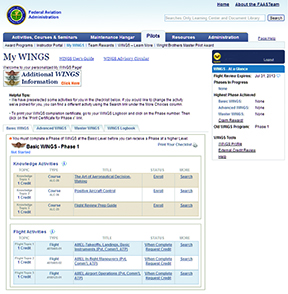
The FAA’s WINGS program has been a key element of joint agency/industry safety education efforts for many years. It is considered gospel among many general aviation safety advocates, and the program has indeed produced positive results. Yet, many are concerned it reaches only a fraction of those pilots who need it, and the positive safety results the program achieves would have resulted anyway because of the safety culture embraced by its current “church-goer” participants.

Read More »

Pilot-Related

We all want to fly safely, but it doesn’t work out that way sometimes. The accident record is filled with instances in which a pilot or two failed to fully implement that desire. Although pilots always are finding new ways to bend airplanes, that’s not the norm. Instead, too many accidents are repeats of pilots’ past poor performances: Sadly, we keep doing the same things, but expect different results.

Read More »

Ineffective Practical Test Standards

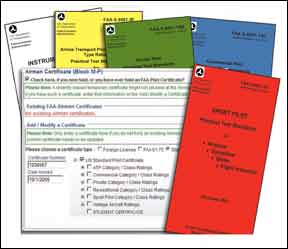
The FAA-prescribed practical test is the final hurdle every pilot must pass to earn a new certificate or rating, and the practical test standards (PTS) are where the requirements for success are spelled out. The PTS is what both aspiring pilots and examiners use to determine what’s to be done on a practical test and how. It’s supposed to be the final assessment of whether a pilot can conduct safe flight operations.

Read More »

Experimental Aircraft Safety

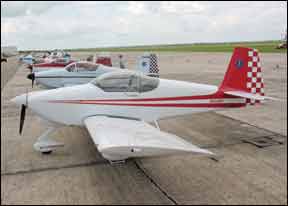
According to the NTSB, “Experimental amateur-built (E-AB) aircraft represent nearly 10 percent of the U.S. general aviation fleet, but these aircraft accounted for approximately 15 percent of the total—and 21 percent of the fatal—U.S. general aviation accidents in 2011.” With those numbers in mind, along with the fact E-ABs represent one of the fastest-growing portions of general aviation in the U.S., the NTSB last year initiated a major study of the segment.The study’s results were adopted by the NTSB in May 2012, after detailed analysis of accident records going back 10 years, in-depth investigations of all E-AB accidents during 2011, a broad survey of E-AB aircraft builders and wide-ranging discussions with industry. What, if anything, did they find? What were the study’s recommendations? Most important, can the study’s results be applied to those of us not flying so-called “homebuilt” aircraft?

Read More »

Is The LSA Safe?

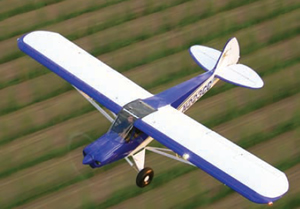
The aviation world rejoiced in the summer of 2004 when the FAA announced the long-awaited adoption of its light sport aircraft (LSA) rulemaking, and the sport pilot certificate. Small, simple aircraft manufactured to industry consensus standards instead of the agency’s regulations should be vastly less expensive than traditional entry-level aircraft. Pilots who self-certify medical fitness to fly on the basis of their state’s driver license requirements could avoid the expense of an FAA medical certificate (the same pilot self-certification of medical fitness to fly applying to private and higher pilots still applies to sport pilots). Overall, the price barrier to personal aviation should fall away, causing a resurgence in new pilot starts and a renaissance in recreational and entry-level career track flying.

Read More »

Automation—Friend Or Foe?

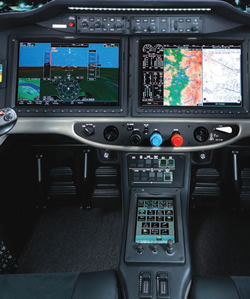
Automation is a routine part of our lives now, dictated by sweeping new technologies and consumer preferences. Arguably, the trend toward automation began in aviation in the 1970s. It has been debated and resisted by many in the aviation community, but the game has recently changed for both the airlines and general aviation. Yet, our culture is still firmly grounded in the Lindbergh white scarf era, aided and abetted by a pilot training system with roots traceable to the period just after that epic flight.

Read More »

Automation? Friend Or Foe?

Automation is a routine part of our lives now, dictated by sweeping new technologies and consumer preferences. Arguably, the trend toward automation began in aviation in the 1970s. It has been debated and resisted by many in the aviation community, but the game has recently changed for both the airlines and general aviation. Yet, our culture is still firmly grounded in the Lindbergh white scarf era, aided and abetted by a pilot training system with roots traceable to the period just after that epic flight.

Read More »
Pilot in aircraft
Sign-up for newsletters & special offers!

Get the latest stories & special offers delivered directly to your inbox.

SUBSCRIBE